What Are Moon Rocks? Bud, Oil, and Kief, and Why ‘50% THC’ Is a Math Problem
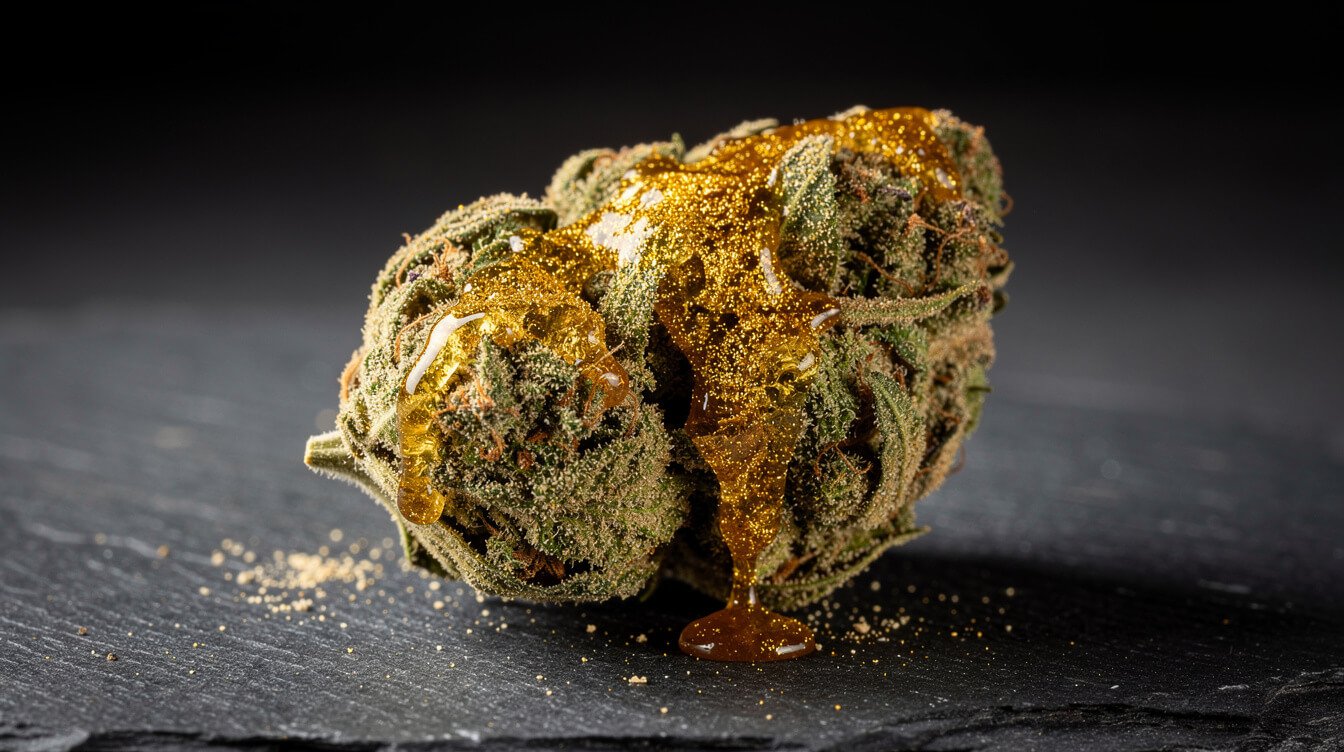
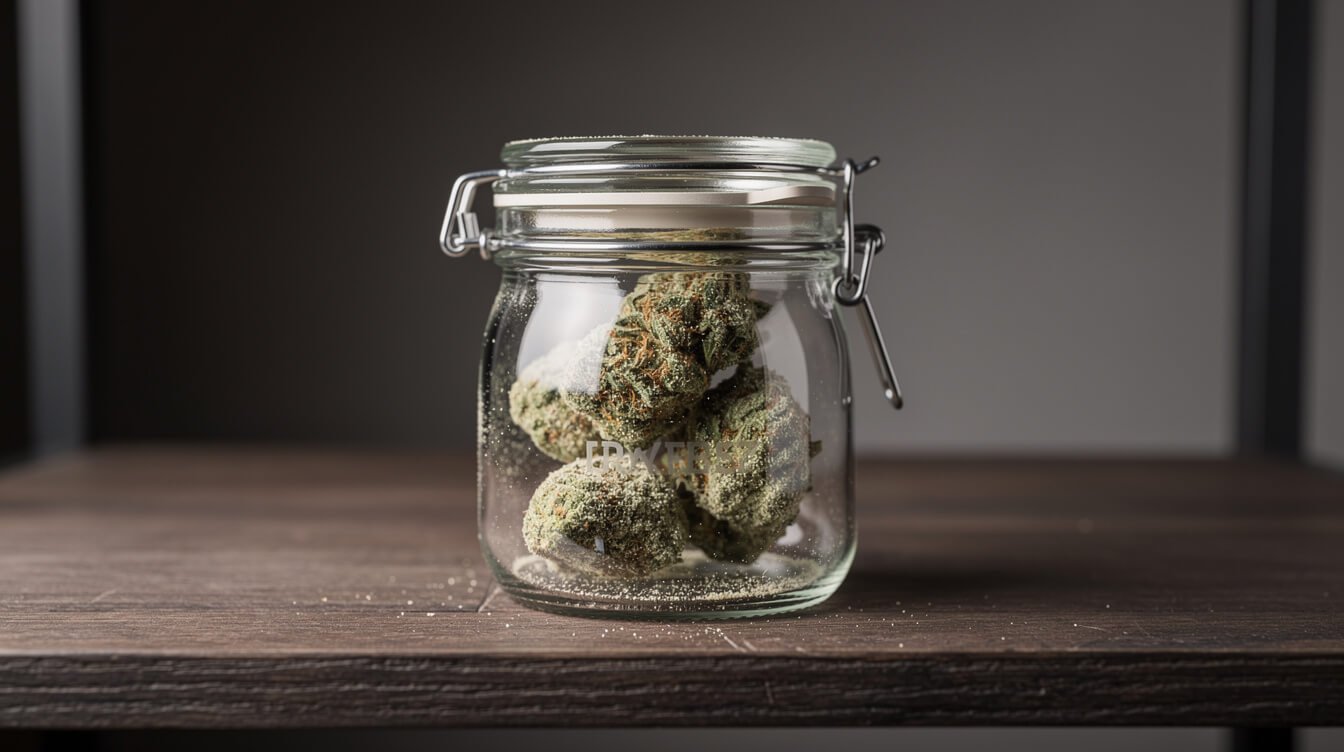
Moon rocks are cannabis buds that have been coated in cannabis oil and then rolled in kief, the loose trichome powder that collects at the bottom of a grinder. Three layers, one dense, sticky, sandy-looking nug. So, what are moon rocks, in plain terms? They’re stacked weed: flower, plus concentrate, plus more concentrate. That makes them a lot stronger than the bud they started as.
Here’s the nuance most pages skip. Nearly every site ranking for this question tells you moon rocks hit “50% THC” or more, and none of them shows where that number comes from. We did the math. It turns out “50%” is possible, but only when the coating outweighs the bud. Below: what’s actually in them, what that means for the potency claims, how people smoke them without clogging everything, how the moon rock concept works, and how to go slow if you ever try one. Adults 21+ only, and cannabis laws vary a lot by place, so know yours.
What are moon rocks? The short answer
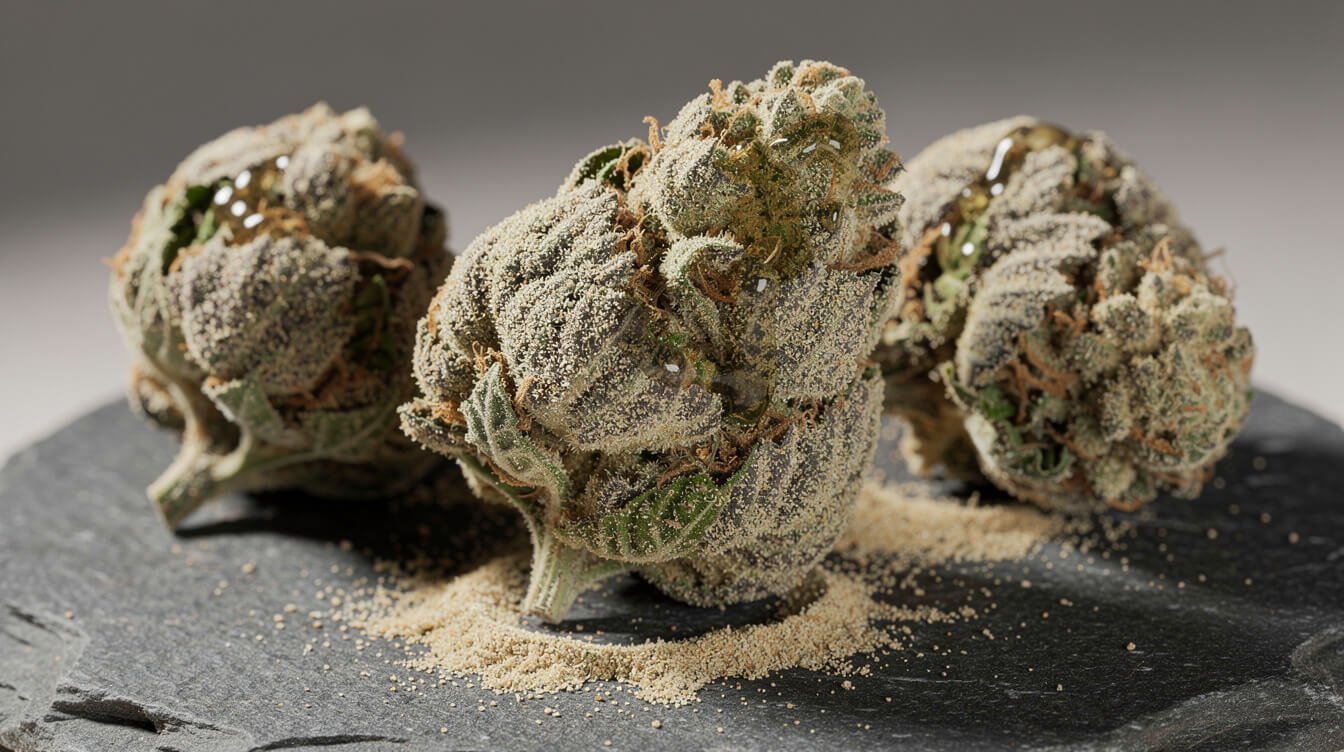
A moon rock is a cannabis bud that’s been coated in cannabis oil, then rolled in kief, and left to set. It’s not a strain and not a separate plant. It’s a preparation, closer to a recipe than a cultivar, and anyone using the name can mean slightly different ingredients and proportions.
The name comes from the look. A finished piece is a lumpy, greyish-tan nug covered in fine powder, more crater than flower. You can’t see much green, and it feels tacky because of the oil underneath. People also call them cannabis caviar. In practice that’s mostly a synonym, though some sellers use “caviar” for buds that skip the kief layer (more on that below).
Where the name came from
Origin stories in cannabis are usually unverifiable, and this one is no exception. Dictionary.com’s slang entry on moon rocks traces the term to the 1990s West Coast rap scene and says, with an explicit “allegedly,” that it was devised and popularized by Kurupt (of Tha Dogg Pound) and Dr. Zodiak, with a branded version sold later. That’s the version most of the internet repeats. Treat it as culture lore, not documented history.
One name, more than one drug
Ask “what are moon rocks” in the wrong context and you might get a very different answer. “Moon rocks” isn’t exclusively a cannabis word, and that matters for safety. Wiktionary lists it as street slang for a mixture of crack cocaine and heroin, and Dictionary.com notes it’s also used for crystal MDMA (“moon rock molly”). So if someone uses the phrase outside a labeled, legal cannabis context, you don’t actually know what’s being offered. Unlabeled and unknown is not something to experiment with. We ran into the same problem with “zaza,” which also names a non-cannabis drug. Slang drifts, and labels exist for a reason.
The three layers: bud, oil, and kief
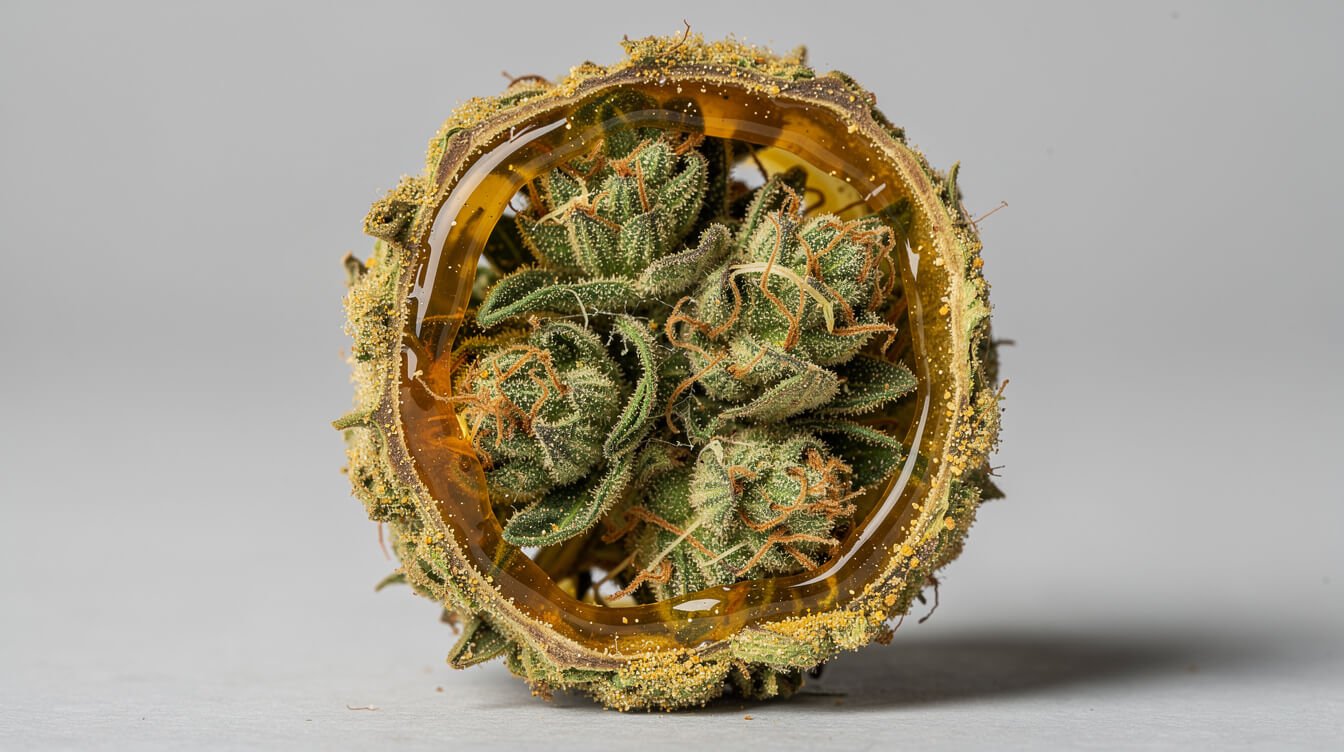
Each layer brings its own potency to the stack. Understanding them separately is the whole key to understanding the final number.
Layer 1: the bud
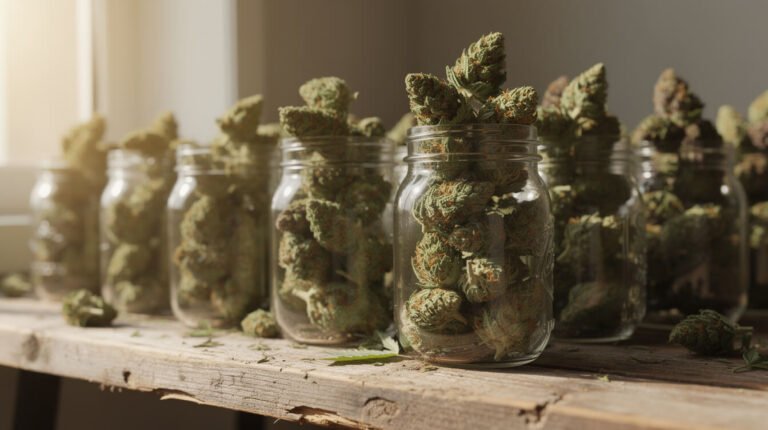
The core is regular dried cannabis flower. Labels on retail flower commonly claim THC somewhere in the high teens to mid-20s, but labels run optimistic. When researchers in Colorado bought 23 flower samples from 10 dispensaries and tested them by HPLC, the average came in at about 15% THC, and roughly 70% of samples tested more than 15% below the label (Schwabe et al., 2023). Keep that in mind, because the bud is usually the heaviest part of a moon rock.
Layer 2: the oil
The middle layer is a cannabis concentrate thin enough to coat a bud. Traditionally that’s described as “hash oil,” and some commercial makers say they use THC distillate. Solvent-based concentrates average 54% to 69% THC and can reach 80% or more, according to a 2021 review in the journal Nursing. If you want the longer story on concentrates, our guide to dabbing covers how they’re used, and what rosin is covers the solventless side.
Layer 3: the kief
The outer crust is kief: dry-sifted trichome heads, the resin glands where the plant makes most of its cannabinoids and terpenes. A 2021 review of cannabis processing methods puts dry-sieved kief at roughly 35% to 50% THC, depending on the starting material. We go deep on it in what kief is and why its potency numbers are all over the place. Pressed kief becomes hash, which we cover in how hash is made.
That kief layer also carries terpenes, so moon rocks often smell louder than the bud alone. If aroma is your thing, our terpene list explains what you’re smelling.
How much THC is in moon rocks? The “50%” math
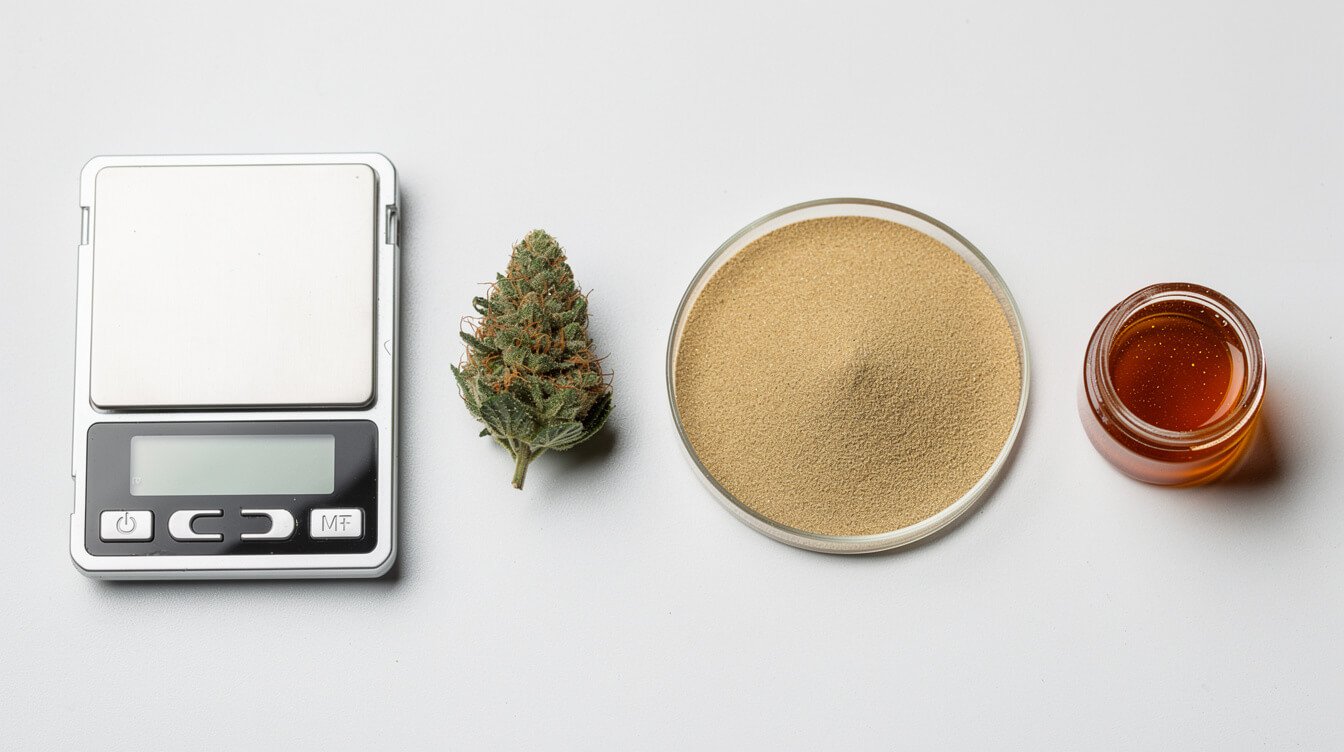
Search “what are moon rocks” and you’ll get a parade of confident numbers: “50% or higher,” “50% to 60%,” “40% to 50%,” “up to 80%,” and even “up to 90%.” These moon rocks THC claims rarely agree, and none of the pages we checked shows how it got there, and we couldn’t find any published lab survey of moon rock potency. Here’s how to reason about it yourself.
Why you can’t just add the percentages
A percentage describes THC relative to that ingredient’s own weight. A 20% bud plus 70% oil plus 45% kief is not 135% THC. That’s obviously impossible. The real answer is a weighted average: each layer contributes its THC in proportion to how much of the final weight it makes up.
Moon rock THC % = (bud grams × bud % + oil grams × oil % + kief grams × kief %) ÷ total grams
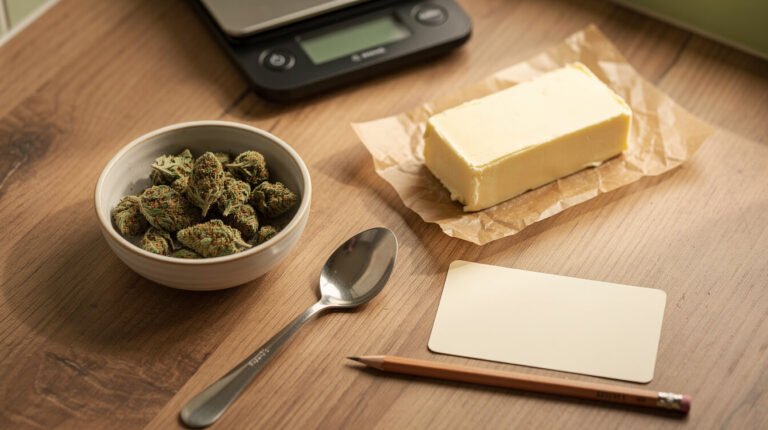
Plug in ordinary numbers: a 1.0 g bud at 20%, coated with 0.2 g of oil at 70% and 0.2 g of kief at 45%.
- Bud: 1.0 g × 20% = 0.20 g THC
- Oil: 0.2 g × 70% = 0.14 g THC
- Kief: 0.2 g × 45% = 0.09 g THC
- Total: 0.43 g THC ÷ 1.4 g = about 31%
That’s a big jump over the 20% bud you started with. But it’s nowhere near 50%.
What it takes to reach 50%
Same 20% bud, same 70% oil and 45% kief, but different amounts of coating:
| Coating per 1 g of bud | Coating share of final weight | Estimated THC |
|---|---|---|
| 0.1 g oil + 0.1 g kief (light) | 17% | ~26% |
| 0.2 g oil + 0.2 g kief (moderate) | 29% | ~31% |
| 0.5 g oil + 0.5 g kief (heavy) | 50% | ~39% |
| 1.0 g oil + 1.0 g kief (extreme) | 67% | ~45% |
| 1.0 g of 90% oil + 1.0 g of 50% kief (extreme, top-shelf inputs) | 67% | ~53% |
Read the bottom rows carefully. With realistic inputs, you only clear 50% when the oil and kief together outweigh the bud about two to one, and you’re using top-of-range concentrate. At that point you’re holding a ball of concentrate with some flower inside it. That’s possible, but it’s not the typical piece, and a label saying “50%+” deserves the same skepticism as any other potency label.
THCA, total THC, and the label
One more wrinkle. Kief and raw flower are mostly THCA, the acid form that turns into THC when heated, while distillate is usually already THC. When THCA converts it loses some mass, which is why labs report total THC = THC + (THCA × 0.877). A coating listed as “60% THCA” is roughly 53% total THC. If a label gives you THCA alone, do that conversion before you compare it to anything. Our kief explainer walks through the same math.
The honest takeaway: moon rocks are reliably stronger than the flower inside them, anywhere from about a third more to roughly double, and the exact number depends almost entirely on the coating ratio. If you’re in a legal market, a batch-specific lab result for that product beats any number on a blog, including ours.
Moon rocks vs caviar vs sun rocks vs plain concentrates
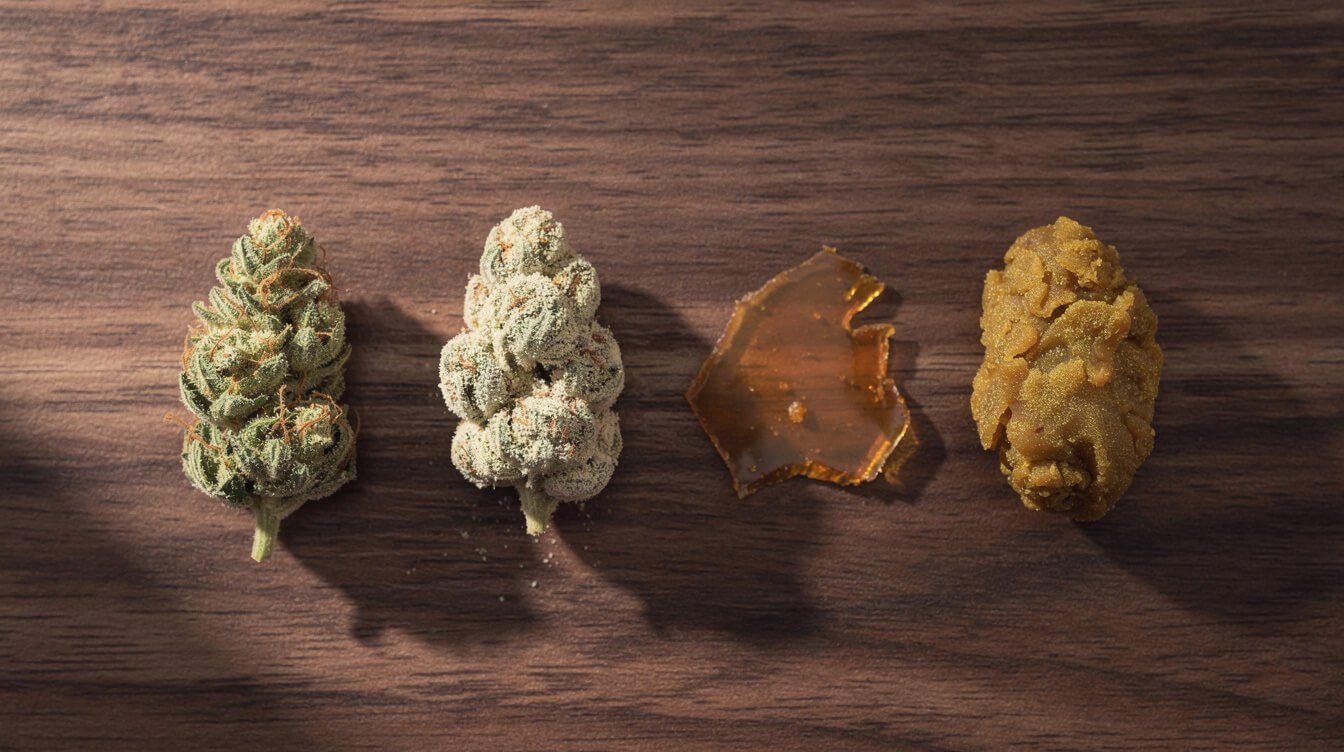
The names overlap, and sellers don’t agree on them. Here’s the general usage:
| Name | What it usually means | Strength vs flower |
|---|---|---|
| Moon rocks | Bud + oil + kief | Higher; depends on coating ratio |
| Caviar | Mostly a synonym; sometimes bud + oil, no kief | Higher |
| Sun rocks | A seller term for a “premium” moon rock (stronger bud or oil, sometimes a different coating) | Marketed as higher; no standard definition |
| Kief-dusted or “infused” pre-rolls | Ground flower with concentrate or kief added | Higher; same math applies |
| Concentrates (shatter, wax, rosin, live resin) | Extract only, no flower | Highest per gram |
“Sun rocks” deserves a caution. It’s a marketing name, not a defined product, and the claims attached to it (“60% to 80%”) have the same missing-math problem, only bigger. The useful question with any of these isn’t the nickname. It’s what’s in it, in what proportions, and whether there’s a lab result for the actual batch.
Where moon rocks fit: they sit between flower and pure concentrates. You get a flower-style smoke with a concentrate kicker. That’s appealing to some people and way too much for others.
GanjaTech, weekly
Cannabis, explained. In your inbox.
One email a week: the clearest explainers, honest gear picks, and what the science actually says. 21+ only. No spam, unsubscribe anytime.
How people smoke moon rocks, and why they clog and burn slow
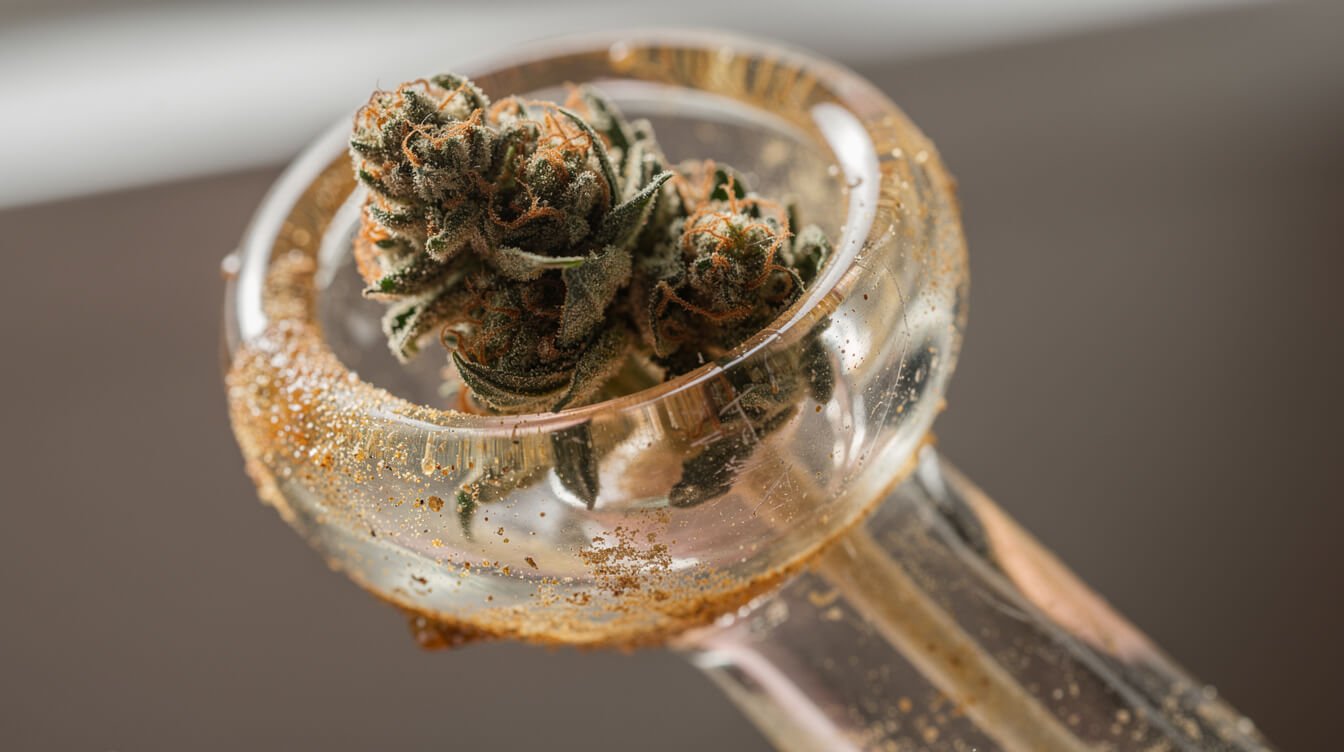
Moon rocks behave differently from plain flower, mostly because of the oil. Here’s what people report, and the physical reasons behind it.
They’re hard to light and slow to burn
The oil and kief layers make a dense, sticky piece with less air moving through it. People describe needing a longer, steadier light to get one going, and then a slow smolder once it does. That slow burn is part of the appeal and part of the trap, because each hit can carry more than you expect.
Glass is the usual choice
Most people use a small glass pipe or a water pipe, and break the piece up by hand or with a clean tool rather than putting it in a grinder. A common approach is to set a little moon rock on top of a bed of regular flower in the bowl, so the flower helps it burn evenly and keeps oil from pooling against the screen or hole. If you use a water pipe, our guide to bubblers covers the hand-sized middle ground.
Joints are possible but messy
Crumbled moon rock in a joint tends to run or canoe as the oil melts, and it can clog a filter. People who do it usually mix small pieces into regular ground flower. Blunts and spliffs behave similarly. See blunt vs spliff if you’re sorting out the difference.
Vaporizers: check the manual
Dry-herb vaporizers are built for plain flower, and a sticky oil-coated piece can gum up the chamber. Concentrate devices are built for extracts, not a flower core. Check what your device’s maker actually allows before putting a moon rock in it.
Expect more cleaning
Oil residue plus kief dust means a pipe resinates faster than with plain flower. Our pipe-cleaning guide has the alcohol-and-salt method. And if you do run a moon rock through a grinder, our grinder-cleaning guide will help you undo the damage.
And the safety part, in the same breath: smoke is smoke. The CDC notes that smoking cannabis can harm lung tissue regardless of the device, so glass and water don’t make it harmless.
How moon rocks are made: the concept
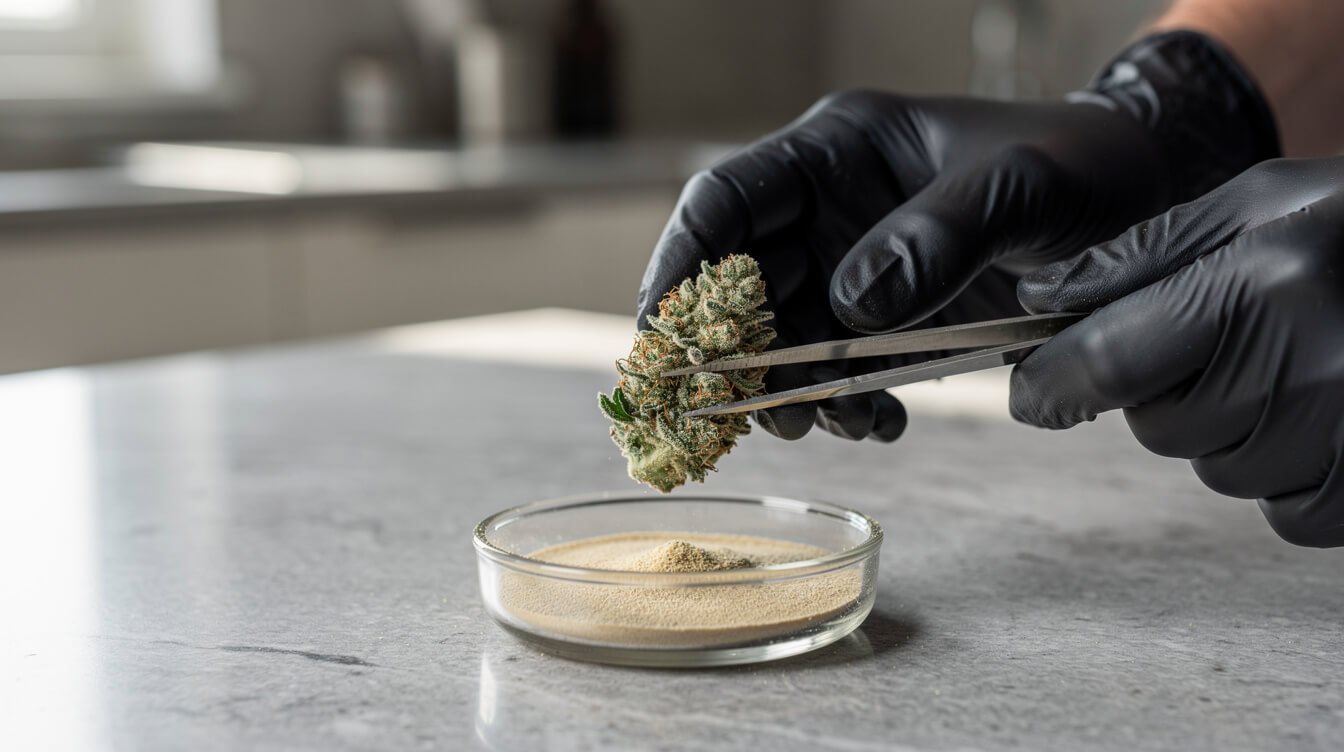
We’ll explain the idea, not hand out a recipe. Conceptually it’s three steps:
- Start with a bud. Usually a dense, well-cured nug.
- Coat it in oil. The bud gets dipped in or brushed with a cannabis concentrate thin enough to cling.
- Roll it in kief. The sticky bud picks up a heavy crust of kief, then it’s left to set and dry.
That’s the “how to make moon rocks” answer at the level you need to understand the product. Two things are worth saying plainly.
Never make the oil yourself with solvents. Butane and other solvent extraction at home is a real fire and explosion hazard, and it’s illegal in many places even where cannabis itself is legal. That’s licensed-lab work. If you want to understand solventless concentrates, start with rosin and hash.
Making moon rocks doesn’t create THC. It just stacks what you already had into fewer grams. A gram of moon rock contains more THC than a gram of the bud alone, but the total in your stash didn’t grow. The only thing that changed is how much lands in each bowl, which is exactly why they’re easy to overdo.
Going slow: dosing, tolerance, and greening out
This is the section that matters most. A pinch of moon rock can carry what a full bowl of flower would, and the slow burn makes it easy to keep pulling. If you’re 21+, in a place where it’s legal, and you decide to try one, here’s the responsible version.
- Use a tiny piece. Think a crumb on top of regular flower, not a whole nug.
- Take one hit, then wait. Inhaled THC acts fast. In a controlled study, blood THC and heart rate peaked within about 30 minutes (Spindle et al., 2018). Give it at least 10 to 15 minutes before deciding on another.
- Don’t stack it. Skip the dab, the edible, and the drink on the same night. Mixing is how a strong evening turns into a bad one.
- Know your tolerance honestly. If flower already hits you hard, moon rocks aren’t a level-up you need. If your tolerance has crept up and you’re reaching for stronger products to feel anything, a tolerance break works better than escalating.
- Never drive. Not after one hit, not “once it wears off a bit.” In that same study, some measured impairments lasted up to 6 hours on average. Plan to stay put.
If it’s too much
Overdoing a strong product can mean a racing heart, anxiety, dizziness, or nausea, which people call greening out. It’s miserable, but inhaled effects usually ease within a few hours. Sit or lie down somewhere safe, sip water, breathe slowly, and have someone sober nearby. If symptoms are severe, like chest pain, fainting, confusion, or nonstop vomiting, get medical help. In the US, Poison Control is 1-800-222-1222.
Store them like the concentrate they are
Kief dust and sticky oil make moon rocks messy and potent, so keep them in a sealed, labeled container, locked away from kids and pets. Store them cool and dark: in a study of hashish summarized in that processing review, light sped up THC breakdown and darkness extended its half-life by about 40%. Our guide to whether weed goes bad covers the rest. If a pet gets into cannabis, call your vet or the Pet Poison Helpline (855-764-7661).
Frequently asked questions
What are moon rocks compared with regular weed?
Regular weed is just dried flower. Moon rocks are that same flower with two layers of concentrate added, oil and kief, so each gram carries more THC. With typical coating ratios, the math lands somewhere around a quarter to a third THC, compared with a teens-to-20s bud.
What are moon rocks made of?
Three things: a cannabis bud, a coating of cannabis oil (hash oil or distillate, depending on the maker), and an outer layer of kief. Nothing else is supposed to be in them. If a product’s ingredients aren’t listed, you don’t really know what’s in it.
Are moon rocks really 50% THC?
Some can be, but only when the coating outweighs the bud roughly two to one and the oil is very strong. A lightly or moderately coated piece is more likely in the high 20s to low 30s. Use the weighted-average formula above, and trust a batch-specific lab result over a marketing claim.
Can you grind moon rocks?
You can, but you’ll regret it. The oil gums up the teeth and the kief cakes into every corner. Break them up by hand or with a clean tool instead.
How long does a moon rock high last?
It varies by person, tolerance, and how much you take. Smoked cannabis generally comes on within minutes and fades over a few hours. Stronger doses can feel longer and heavier. Inhaled timing is very different from edibles, which we cover in how long edibles last.
Are moon rocks legal?
It depends entirely on where you are, and laws change. Cannabis remains illegal in many places, and even where adult use is legal, rules for concentrates and infused products can differ from rules for flower. Check your local law before anything else. We don’t make legal calls for any specific place.
Do moon rocks go bad?
Like any cannabis product, they slowly lose potency and aroma with heat, light, and air. They can also mold if they’re stored damp. Keep them sealed, cool, and dark, and toss anything fuzzy or musty. Our guide to what moldy weed looks like shows you what to check.
Final thoughts: what are moon rocks, really?
Strip away the hype and the answer is simple: what are moon rocks? Bud, plus oil, plus kief, which stacks flower and concentrate into one dense, slow-burning nug. They’re genuinely stronger than plain flower. But the “50%” you see everywhere is a ceiling that only heavy coatings and top-shelf inputs reach, not a typical number, and now you know how to check the math yourself.
If you’re curious, treat moon rocks like the concentrate they mostly are. Use a crumb, not a nug, and wait between hits. Don’t mix, don’t drive, and know your local laws. Great plant. Respect it, and the experience is a lot better.
Before you go
Get the next explainer first
We publish a new one every day. The best of the week, plus what's new in the shop, lands in one short email.