T Break: How Long a Tolerance Break Really Needs to Be (What the Brain Scans Show)
A t break (short for tolerance break) is a planned pause from cannabis so the same amount works on you again. The honest answer on length: 2 days helps a little, about 3 weeks is the practical target for daily users, and about 4 weeks is the closest thing the research has to a full reset. Those numbers come from two small brain-imaging studies of heavy daily users. That’s why one site tells you 48 hours, another says 21 days, and a third hands you a chart. They’re all reading the same thin evidence differently.
This guide works through that evidence in plain English: what tolerance actually is, what each study measured (and didn’t), what the first week of a t break usually feels like, how to make one stick, and how to come back without your old dose flattening you. One caveat up front: this is adult (21+) education, not medical advice. If you’re trying to stop rather than pause, or the break feels harder than it should, that’s a conversation for a doctor.
What a t break is (and what it isn’t)
A t break is a voluntary, temporary stop. You set a length, you don’t use cannabis for that stretch, and then you come back on purpose, usually at a lower dose. The term comes from the community itself, not from medicine. University health centers adopted it later. The goal isn’t quitting, it’s re-sensitizing: getting back to the point where a small amount does what a big amount used to.
People take one for a handful of overlapping reasons:
- The effect faded. The usual amount barely registers, or the high is shorter and flatter than it used to be.
- Cost crept up. Using more to feel the same is the most expensive way to use cannabis.
- Habit check. Some people want to confirm cannabis is a choice and not a default.
- Life logistics. A new job, travel, a busy stretch, or a sleep reset.
Here’s what a t break is not: a detox or a drug-test plan. These two clocks get mixed up constantly, including on some university guides, which say 21 days because that’s roughly how long THC takes to leave a daily user’s system. Elimination and tolerance are different processes. THC metabolites hang around in fat tissue and show up on tests on their own timeline, which we cover in how long weed stays in your system. Tolerance is about your receptors, and they recover on a different schedule. A clean test doesn’t prove your tolerance has reset, and a reset tolerance doesn’t mean you’d pass a test.
How cannabis tolerance actually builds
THC produces most of its high by binding to CB1 receptors, part of the endocannabinoid system your body already uses for mood, appetite, and sleep. Flood those receptors often enough and the brain adapts the way it does to any constant signal: it turns the volume down. It pulls some receptors off the cell surface (downregulation) and makes the remaining ones less responsive (desensitization). Same dose, smaller response.
We can actually see this. In a 2012 PET-imaging study in Molecular Psychiatry, Hirvonen and colleagues found CB1 receptor availability about 20% lower in chronic daily smokers than in non-users. The drop was mostly in the cortex and tracked with years of smoking. A 2016 study by D’Souza and colleagues at Yale used a different tracer and found it 15% lower in cannabis-dependent men.
Tolerance doesn’t build evenly across effects, either. A 2018 systematic review of human studies by Colizzi and Bhattacharyya found the strongest tolerance in cognitive effects, with some evidence of full tolerance: regular users can show no measurable acute cognitive hit from a dose that would scramble a newcomer. The intoxicating “high,” the anxiety- and paranoia-type effects, and the heart-rate bump were blunted too, but only partly. That explains a common experience. A heavy user can feel clear-headed while still getting the racing heart, which is one reason “I can handle it” isn’t the same as “I’m unimpaired.”
Why tolerance seems to build faster now
Dose drives downregulation, and today’s doses are bigger. Daily dabs, high-potency carts, and 25%-plus flower all deliver more THC per session than the joints in older studies did. Nobody has run a clean head-to-head on tolerance speed by product type. Still, more THC hitting the receptors more often is exactly the setup the imaging studies describe. If most of your use is concentrates (see what dabbing actually is), plan for the longer end of any t break.
How long should a t break be? The 48-hour vs 21-day vs 4-week fight, resolved
The top-ranking pages for this question disagree, and each one cites real research. Here’s what they say next to what the studies actually measured.
| Claim you’ll see | Where it comes from | What the study actually showed |
|---|---|---|
| “Tolerance is back to normal after 48 hours” | D’Souza 2016 | After 2 days, CB1 levels were “still lower” than in non-users, just no longer statistically different. That was in 10 men, so a real gap could easily hide. |
| “Take 21 days” | University T-Break Guides | A program design choice (a 3-week workbook), justified by the THC-elimination clock rather than a receptor measurement. |
| “About 4 weeks for a full reset” | Hirvonen 2012 | Receptors returned to normal levels after roughly 4 weeks of monitored abstinence. The rescans actually happened anywhere from 13 to 32 days in, so “4 weeks” is an average, not a precise finish line. |
Read them together and a consistent picture appears. Recovery starts fast and finishes slowly. D’Souza saw receptors climbing within two days, and the authors themselves concluded they “may continue to increase over time.” By 28 days, the eight men who stayed abstinent the whole way looked like non-users. Hirvonen’s group landed in the same 2-to-4-week window with a different tracer and different subjects.
The caveat almost nobody mentions: both studies imaged receptors, not the high. Neither one dosed people after the break and asked how strong it felt. “Your receptors look normal” is an excellent proxy for “your tolerance reset,” but it’s still a proxy. Both studies also enrolled only men, and only heavy or dependent daily users. Nobody has imaged weekend users, so every “occasional users need 2–3 days” chart online is reasonable extrapolation, not measurement.
So how long should your t break be?
- 2–3 days: a real but partial dip, consistent with the fast early rebound. Useful for lighter users or as a regular maintenance pause.
- About 1 week: long enough to get past the worst of any withdrawal (more on that below) and notice a clear difference.
- About 3 weeks: the practical sweet spot for daily users. Recovery is well along, and it’s long enough to reset habits too.
- About 4 weeks: the closest thing to a measured full reset, and the one to aim for if you’re a heavy daily or concentrate user.
If you only remember one line: a short tolerance break helps, a 3-to-4-week t break is the reset, and nothing in the data says 48 hours wipes the slate clean.
What to expect on a t break, day by day

If you used lightly, you may feel nothing but a little bored. If you used daily, expect some withdrawal. It’s real, it’s usually mild to moderate, and it follows a predictable arc. The best-known timeline comes from a 2003 outpatient study by Budney and colleagues, who followed heavy users through 45 days of abstinence:
- Onset: usually days 1–3.
- Peak: days 2–6.
- Fade: most symptoms settled within 4–14 days.
The symptoms they tracked: irritability, anger, anxiety, restlessness, trouble sleeping, decreased appetite (with a little weight loss), shakiness, and stomach pain. The authors noted the size and timing looked comparable to tobacco withdrawal. Unpleasant, not dangerous for most people.
How common is it? A 2020 meta-analysis in JAMA Network Open by Bahji and colleagues pooled 47 studies (23,518 people) and found that 47% of regular or dependent users had cannabis withdrawal syndrome. That 47% gets quoted everywhere without the useful part: it was 17% in general-population samples, 54% in outpatient samples, and 87% in inpatient samples. So the heavier and more dependent the use, the likelier withdrawal is. A typical adult who uses most evenings sits much closer to the lower number than the scary headline.
The week-by-week shape
- Days 1–3: restless, short-fused, and not hungry. Falling asleep is harder. Cravings hit hardest at your usual session times.
- Days 4–7: the edge comes off. Many people get vivid, sometimes weird dreams. THC suppresses REM sleep, so stopping tends to bring a REM rebound.
- Week 2: mood and appetite mostly normalize. Sleep is often the last thing to settle.
- Weeks 3–4: receptor recovery is well along. Food, music, and boredom all feel a little more vivid, and you now have a choice about how you come back.
Two responsible notes. First, if symptoms are severe, last well beyond a couple of weeks, or you have a mental health condition cannabis was helping you manage, talk to a doctor before or during the break rather than toughing it out. Second, don’t swap one thing for another: leaning on alcohol or sleep aids to get through a t break just trades one tolerance for a new one.
GanjaTech, weekly
Cannabis, explained. In your inbox.
One email a week: the clearest explainers, honest gear picks, and what the science actually says. 21+ only. No spam, unsubscribe anytime.
How to make a t break actually stick

Most failed tolerance breaks fail in the first three days, at the exact hour you’d normally use. There’s decent evidence that structure helps. In a 2025 study in the Journal of American College Health, Fontana, Budney, and colleagues offered young adults a free 21-day T-Break Guide with daily tips. People who used the guide “a lot” completed the full 21 days 84% of the time, versus 57% for those who didn’t use it. That’s a bivariate comparison, not a randomized trial, so motivated people may simply use guides more. Still, the direction is clear.
What works, in practice:
- Pick a length and write down the end date. “A while” is not a plan. “Back on the 22nd” is.
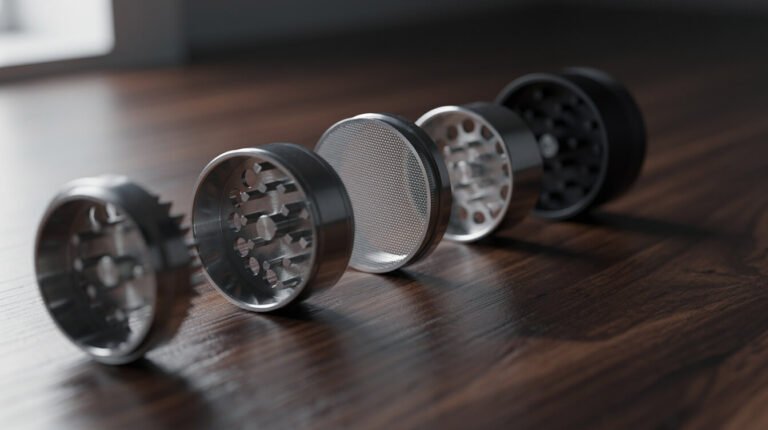
- Clear the deck. Put your stash, grinder, and pieces out of sight, or give them to a friend to hold. Friction beats willpower.
- Replace the ritual, not just the weed. If 9 p.m. was your session, 9 p.m. now needs something else: a walk, a shower, a show, a call. The empty slot is where most t breaks die.
- Move every day. Even 20–30 minutes of walking helps with restlessness and sleep.
- Protect sleep. Same bedtime, cool and dark room, less caffeine after noon. Expect the dreams and don’t read too much into them.
- Eat on a schedule. Appetite cues go quiet for a few days, so eat at mealtimes rather than waiting to feel hungry.
- Taper first if you’re a heavy user. Cutting back over 3–5 days, or stepping down from concentrates to flower first, can soften the first week.
- Tell one person. A friend who knows can check in on day 3.
Why the reason for your t break matters
Here’s the finding no other t-break page mentions. In a 2023 study in Drug and Alcohol Dependence, Ansell and colleagues followed 170 young adults who use cannabis recreationally for six months. Those who took a break specifically to lower their tolerance showed more hazardous use and higher cannabis use disorder scores at follow-up. Those who took longer breaks for other reasons (money, work, health, wanting a change) showed less.
It’s one observational study, so it doesn’t prove t breaks cause anything. A plausible reading: a break taken only to make the next high hit harder can end in a bigger comeback. The practical takeaway is to give your t break a second reason beyond the high. Pay attention to how sleep, money, and mornings feel without cannabis, and let that shape how you come back.
Coming back after a t break without overdoing it

This is where people undo a month of work in one night, or worse, have a genuinely bad time. Your receptors have recovered, but your habits still remember your old dose. Your old dose is now a big dose. Treat the first session back like you’re a much lighter user, because pharmacologically you are.
- Inhaled: one or two small puffs, then wait at least 15–30 minutes before deciding on more. Puff size matters more than people think. Bigger draws deliver more THC and a stronger high, which we dig into in what a blinker is.
- Edibles: go back to a low starting dose, whatever you used to take, and wait the full window before more. Edibles can take up to 2 hours to kick in and longer to peak (see how long edibles last).
- Potency: start with moderate-THC flower, not a dab or a high-potency cart.
- Setting: at home, nowhere to be, no driving. Driving high is impaired driving.
- Don’t stack: skip alcohol on the first night back. The combination hits harder than either one alone.
If you do overshoot, it’s uncomfortable rather than dangerous for most healthy adults: racing heart, anxiety, dizziness. Our guide to greening out covers what helps, what doesn’t, and the red flags that mean you should call for help.
How to keep the reset longer
The fastest way to lose the benefits of a t break is to return to daily use at your old amount. Keep some cannabis-free days every week, use the smallest amount that does the job, and save higher-potency products for occasions. Many regular users keep a recurring short break, a couple of days each month, so they never need a long one.
Can’t do a full t break? How to slow tolerance instead
Not everyone can or wants to stop completely. A partial approach won’t give you the reset of a 3-to-4-week t break, but anything that puts less THC on your receptors less often slows the slide, and that’s what the imaging studies tell us drives tolerance.
- Add off days. Two or three cannabis-free days a week is the simplest lever.
- Drop a session. Cut the first one of the day, or whichever is pure habit.
- Use less per session. Smaller bowls, smaller edible doses, fewer puffs.
- Take smaller puffs. In a 1995 smoking study by Azorlosa and colleagues, bigger puffs raised both blood THC and the high, while holding the smoke in raised blood THC but not the high. Long holds add exposure without adding much effect.
- Step down in potency. Swap concentrates and carts for moderate flower most days.
- Use later, not all day. Keeping cannabis to the evening shrinks total exposure.
What about switching to CBD during a tolerance break? CBD doesn’t activate CB1 receptors the way THC does, so it’s unlikely to keep THC tolerance high. But the claim you’ll see, that CBD eases t-break withdrawal, rests mostly on a 2018 mouse study in which the animals were withdrawing from a synthetic lab cannabinoid and received injected CBD. That’s a long way from a person and a tincture. Also, some CBD products carry trace THC, which matters if a drug test is part of why you’re pausing. Our CBD vs THC breakdown covers how the two actually differ.
T break FAQ

Will a 2-day t break do anything?
Some, yes. Receptor recovery starts within about 48 hours, so a weekend off can take the edge off a creeping tolerance, especially for lighter users. Just don’t expect a full reset. In the study behind the “48 hours” claim, receptors were still below normal at day 2.
Is a 1-week t break long enough?
For occasional and moderate users, a week usually brings a clear difference, and it gets daily users past the worst of withdrawal. For a heavy daily user, a week is a good start, but 3–4 weeks is where the imaging studies saw receptors back to normal.
Will a t break help me pass a drug test?
Not on any reliable schedule. That’s a separate clock. Detection depends on how often you use, your body fat, and the test type, and urine tests can stay positive for weeks in heavy daily users. See our detection-window guide for the real numbers.
Why am I having such vivid dreams on a t break?
THC suppresses REM sleep, the stage where most vivid dreaming happens. When you stop, REM often rebounds for a while. Vivid or strange dreams are one of the most commonly reported t-break experiences and usually settle within a week or two.
How often should you take a t break?
There’s no studied schedule. A sensible pattern for regular users is a short break of a couple of days every month plus a longer 3-to-4-week t break whenever the usual amount stops working. Without any breaks, it’s easy for a daily habit to drift toward higher doses without you noticing.
What if I can’t get through a t break at all?
That’s worth paying attention to, not feeling ashamed about. If you keep restarting on day 2 or 3, or cannabis is affecting work, sleep, or relationships, talk to a doctor. The free, confidential SAMHSA National Helpline (1-800-662-4357) can also point you toward support. Needing help with a break doesn’t mean you have to quit forever. It means you deserve a plan that works.
Final thoughts
A t break is one of the few cannabis topics where the science is simple once you line it up. Tolerance is your CB1 receptors turning the volume down. Recovery starts within days and is essentially complete around 3–4 weeks for heavy daily users. The 48-hour, 21-day, and 4-week camps are each holding one piece of the same small dataset. Pick the length that fits how you use, give the break a reason beyond the next high, and come back low and slow. Your first session after a real tolerance break should feel like the plant did when you first met it.
Great plant. Respect it, know your local laws (they vary a lot by place), and enjoy it responsibly. If you want to go deeper on what actually shapes the experience once you’re back, start with our terpene reference.
Before you go
Get the next explainer first
We publish a new one every day. The best of the week, plus what's new in the shop, lands in one short email.