What Is a Blinker? The Vape Slang, the Battery Light, and Why It Hits So Hard
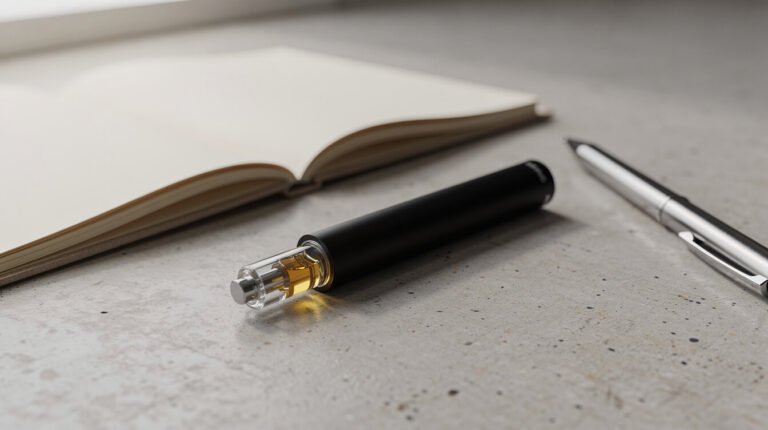
What is a blinker? It’s vape slang for one long, continuous hit, held until the pen’s battery cuts out and its little light starts blinking. That blink is the battery’s automatic shutoff kicking in. So “hitting a blinker” just means pulling for as long as the hardware will let you, which also makes it the biggest single dose your pen can deliver in one go.
That’s the short answer. The nuance most explainers skip: how long that actually is (it depends on your battery), why one draw hits so much harder than a joint hit, what the research says about long pulls, and what the blinking light is really telling you. What is a blinker in practice? A hardware limit that turned into a flex. Here’s the honest version, from the desk that would rather you enjoy the evening than spend it on the bathroom floor.
What is a blinker? The slang, explained
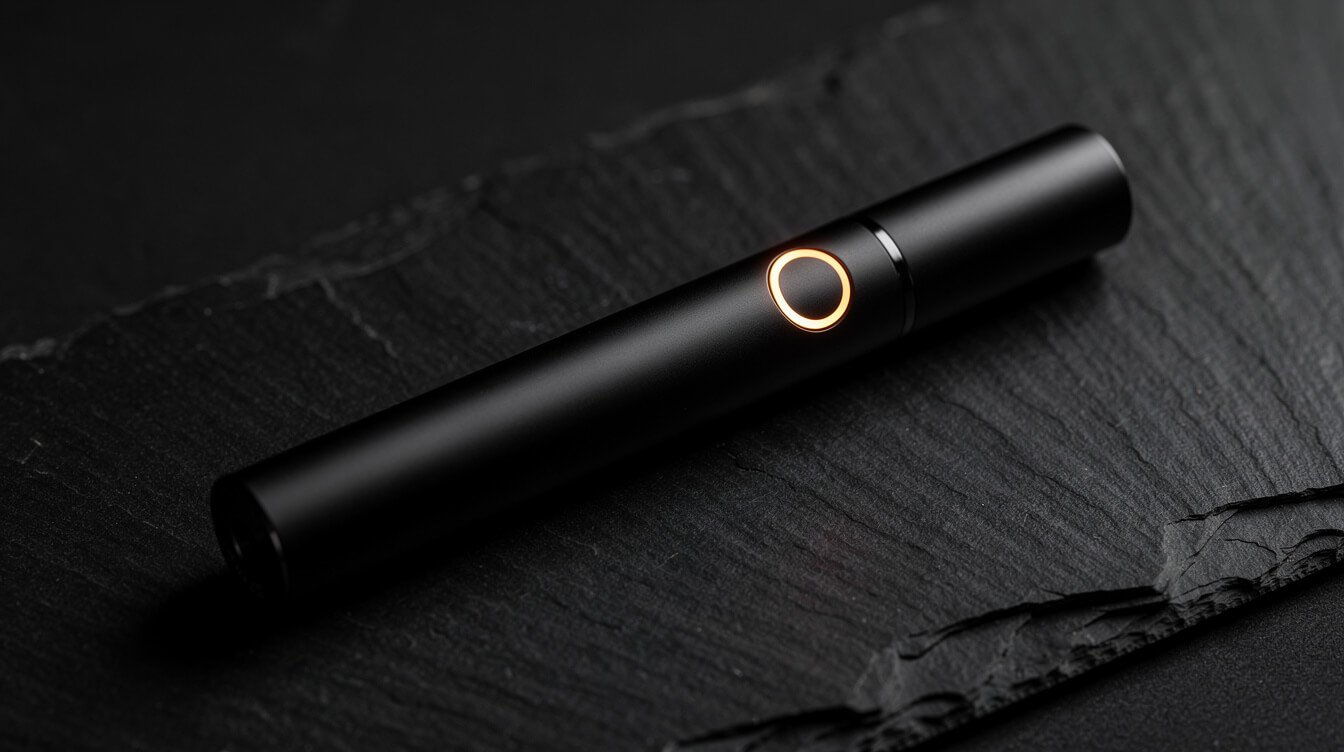
In cannabis culture, a blinker is one uninterrupted draw on a vape pen or dab pen that lasts until the battery’s safety timer stops the heat and the LED flashes. Wiktionary’s slang entry puts it plainly: it’s “a situation where the light of a dab pen or vape starts blinking, which happens when the user takes an extremely long hit.” The same entry logs the spinoff double blinker, which means hitting blinkers on two pens at once.
You’ll hear it as a verb phrase (“hit a blinker,” “rip a blinker”) and as a noun (“that was a blinker”). It’s tied closely to the penjamin crowd and the rest of weed-pen slang, and it lives in the same meme world where a long pull gets treated like a feat of lung capacity.
Where the term came from
Nobody has a clean origin story, and we’re not going to invent one. The earliest dated citation on Wiktionary is a January 2023 post about hitting “2 back to back blinkers off the dab pen,” and by then the phrase was clearly already common. “By the early 2020s” is the honest date. You’ll also hear it in nicotine-vape circles now. Whichever scene said it first, the term crossed over, because both kinds of pens have the same kind of battery timer.
The other blinkers (quickly)
If you landed here from a different search: a blinker is also a car’s turn signal, and blinkers are the eye cups racehorses wear to keep them looking straight ahead. Same word, same idea of a flashing light or a narrow focus. For the rest of this page, we’re talking about the vape kind.
Why the light blinks: the battery cutoff, explained
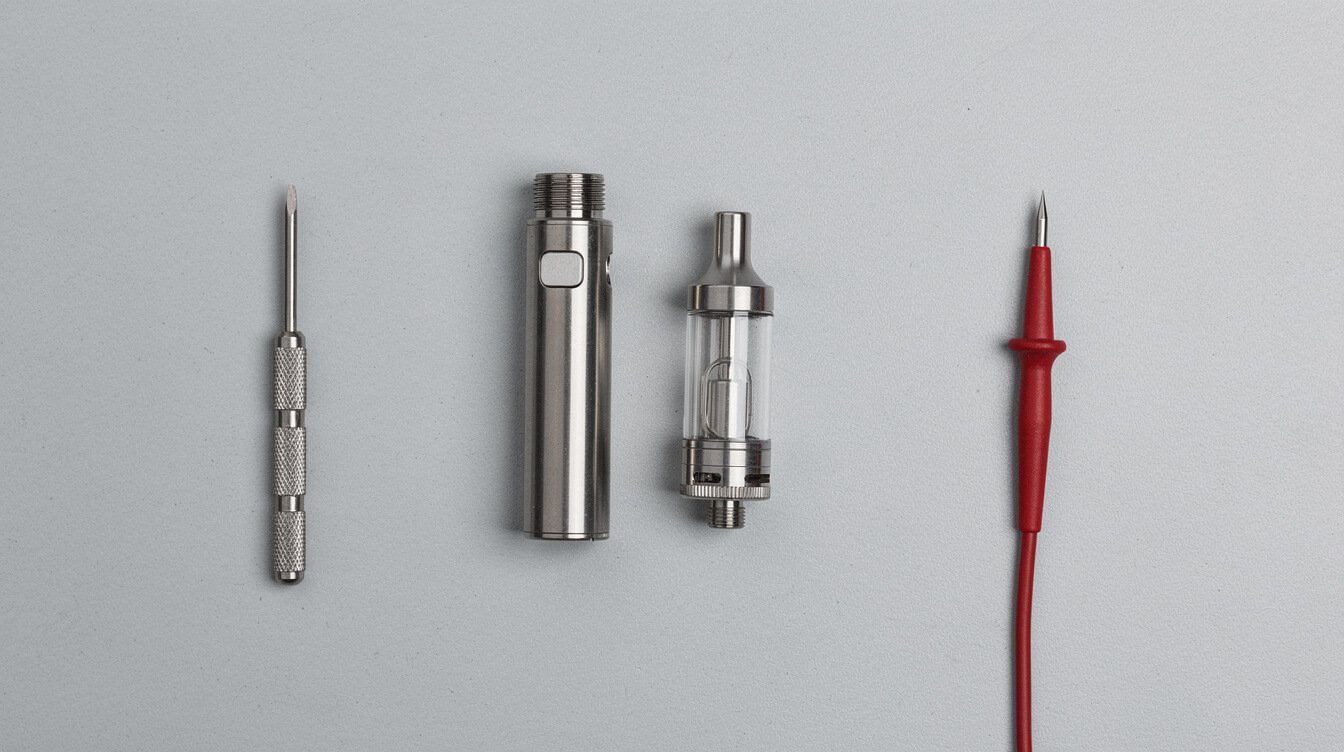
A vape pen is a small battery feeding power to a heating coil. While you draw (or hold the button), the coil heats the oil in the cartridge and turns it into vapor. If nothing stopped it, a coil could keep heating indefinitely: running hotter and hotter, draining the battery, and scorching whatever’s left on the wick.
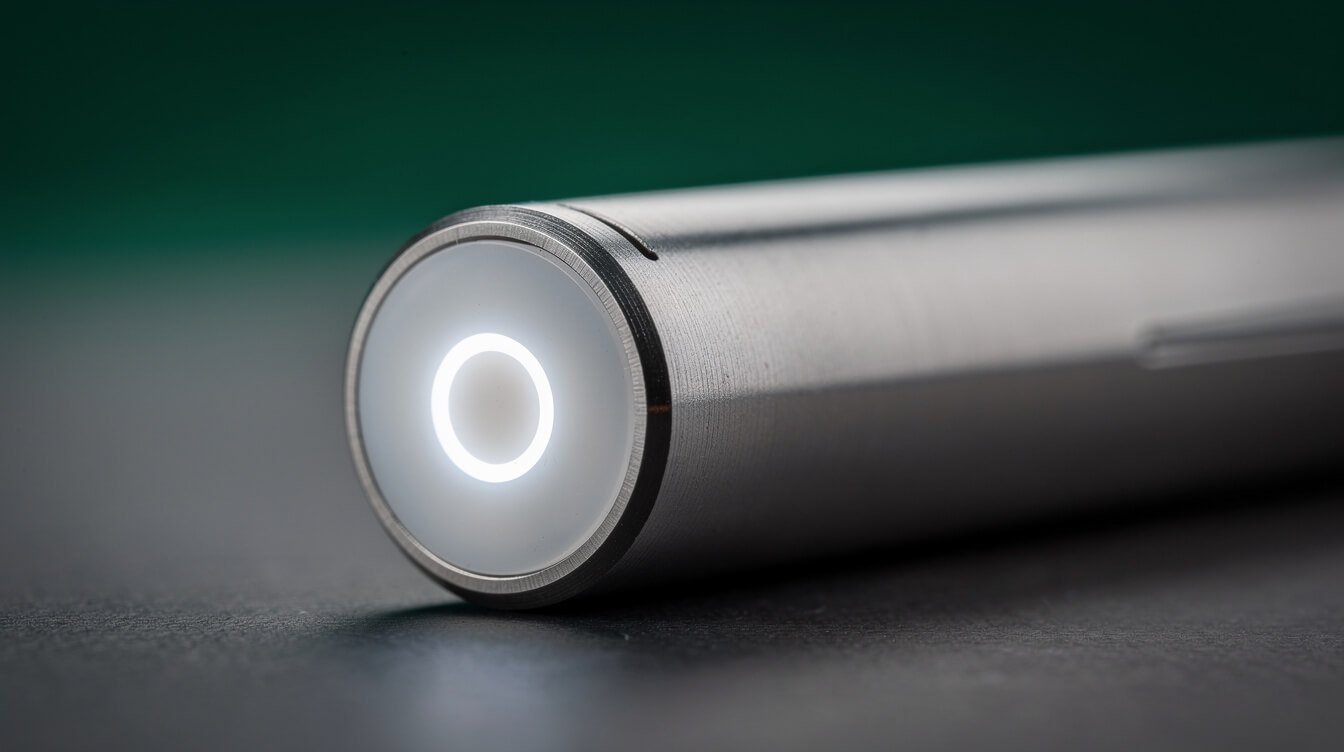
So nearly every pen battery has a built-in timer. Draw past the limit and the battery cuts power to the coil and signals that it did, usually by flashing the LED. That’s the blink. It’s not a reward light and it’s not a level-up. It’s a protection circuit doing its job.
The blink isn’t always a blinker
Batteries use their one little light to say several different things, so a flashing LED doesn’t always mean you hit the timer. Depending on the device, blinking can also mean:
- Low battery: often a set number of flashes when you try to draw.
- Bad connection: the cartridge isn’t seated or the threads are dirty.
- Short circuit: the battery detected a fault in the cart and refused to fire.
- Power on/off or voltage change: the click-pattern confirmations many button batteries use.
Your manual is the only reliable decoder. If a pen blinks on a short, normal draw, that’s a hardware message, not a blinker.
How long is a blinker?
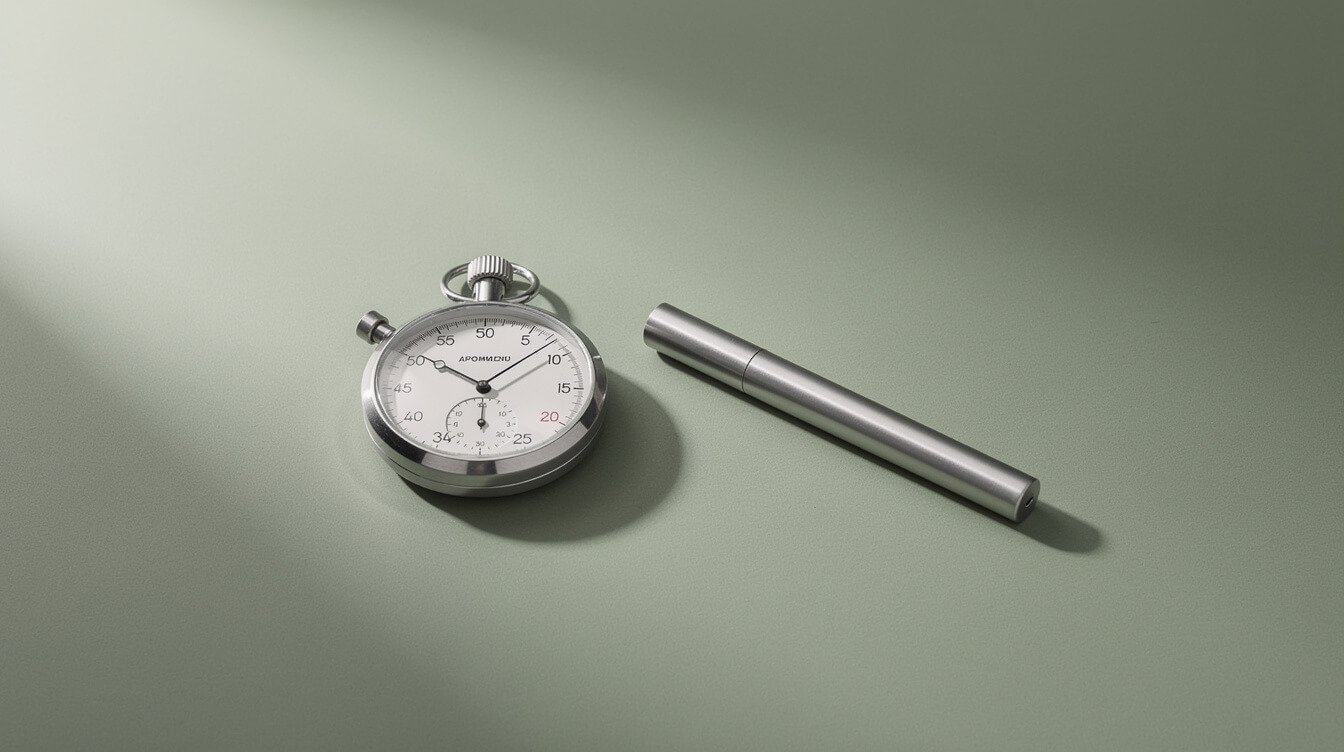
Ask what is a blinker in seconds and the honest answer is: as long as your particular battery allows, and that varies. Cutoff timers are a firmware setting chosen by the manufacturer, not an industry standard. Across common pen batteries, they typically land somewhere around 5 to 15 seconds. One competitor states 8–10 seconds as the number, and that’s a reasonable guess for many pens. But “check your device” is the real answer, because a blinker on one battery can be half the length of a blinker on another.
For comparison, here’s what a normal hit looks like in the real world. A 2025 study (a preprint, not yet peer reviewed) timed 456 puffs from 100 user-posted THC vaping videos. The average puff was 3.68 seconds, with no real difference between cartridges and disposables. The researchers also noted extended puffing, coughing, and complaints about harsh vapor.
So a blinker isn’t a slightly longer hit. On a battery with a 10-second cutoff, it’s roughly two and a half to three normal puffs packed into one breath. On a 15-second battery, it’s closer to four.
Why the same “blinker” can mean very different doses
Seconds aren’t milligrams. How much THC a blinker delivers depends on things the word doesn’t capture:
- The oil’s potency: concentrate carts (distillate, live resin, and the like) often run far stronger than flower. Read the label’s THC percentage.
- The battery’s voltage: higher settings make more vapor per second (and run the coil hotter).
- How hard you pull: a gentle sip and a full-lung draw over the same 10 seconds aren’t the same hit.
- Your tolerance: a daily user and someone on their third-ever session are in different worlds.
Why blinkers hit so hard

Two lines of research explain why one blinker can flatten someone who’s fine after a few puffs of a joint.
1. Bigger draws deliver more THC, and the high tracks it
The internet has a popular claim (including on the competitor currently ranking at #2) that most cannabinoids are absorbed in the first 3–5 seconds of a draw, so longer hits “don’t actually work better.” The study we could find points the other way. In a controlled lab study, Azorlosa and colleagues (1995) varied puff size while holding everything else constant. Bigger puffs (30, 60, and 90 mL) produced dose-related increases in blood THC and in how high people said they felt.
The same paper tested the other half of the blinker ritual, holding it in. Breath-holds of 10 or 20 seconds raised blood THC a bit, but they didn’t raise the subjective high compared with exhaling right away. The caveats: this was smoked flower, with seven regular users per experiment, three decades ago. Still, the direction is clear. A bigger pull is a bigger dose. Holding it in mostly isn’t.
2. Vapor hits harder than smoke at the same dose
A Johns Hopkins crossover trial, Spindle et al. (2018), gave 17 adults who rarely use cannabis the exact same THC doses, both vaporized and smoked. At 10 mg, drug-effect ratings averaged 69 vaporized vs 46 smoked (out of 100). At 25 mg, peak blood THC was 14.4 ng/mL vaporized vs 10.2 smoked. Vaporized 25 mg also brought the most adverse effects: one participant vomited, and another experienced hallucinations.
Important caveat: that study used a dry-flower vaporizer, not an oil cart, so it doesn’t measure pens directly. What it does show is that inhaled vapor is an efficient way to deliver THC. Combine that efficiency with the largest single draw your battery allows, plus concentrate-strength oil, and you get the blinker’s reputation.
3. It all lands fast
In the same Hopkins study, blood THC and heart rate peaked within about 30 minutes and were back to baseline in 3–4 hours. Inhaled cannabis doesn’t make you wait the way edibles do (we laid out the very different edible timeline here). If a blinker was too much, you’ll know within minutes, not hours, and stacking a second one “because the first didn’t hit yet” is how a fine night tips over.
GanjaTech, weekly
Cannabis, explained. In your inbox.
One email a week: the clearest explainers, honest gear picks, and what the science actually says. 21+ only. No spam, unsubscribe anytime.
Blinkers, coughing, and your cart
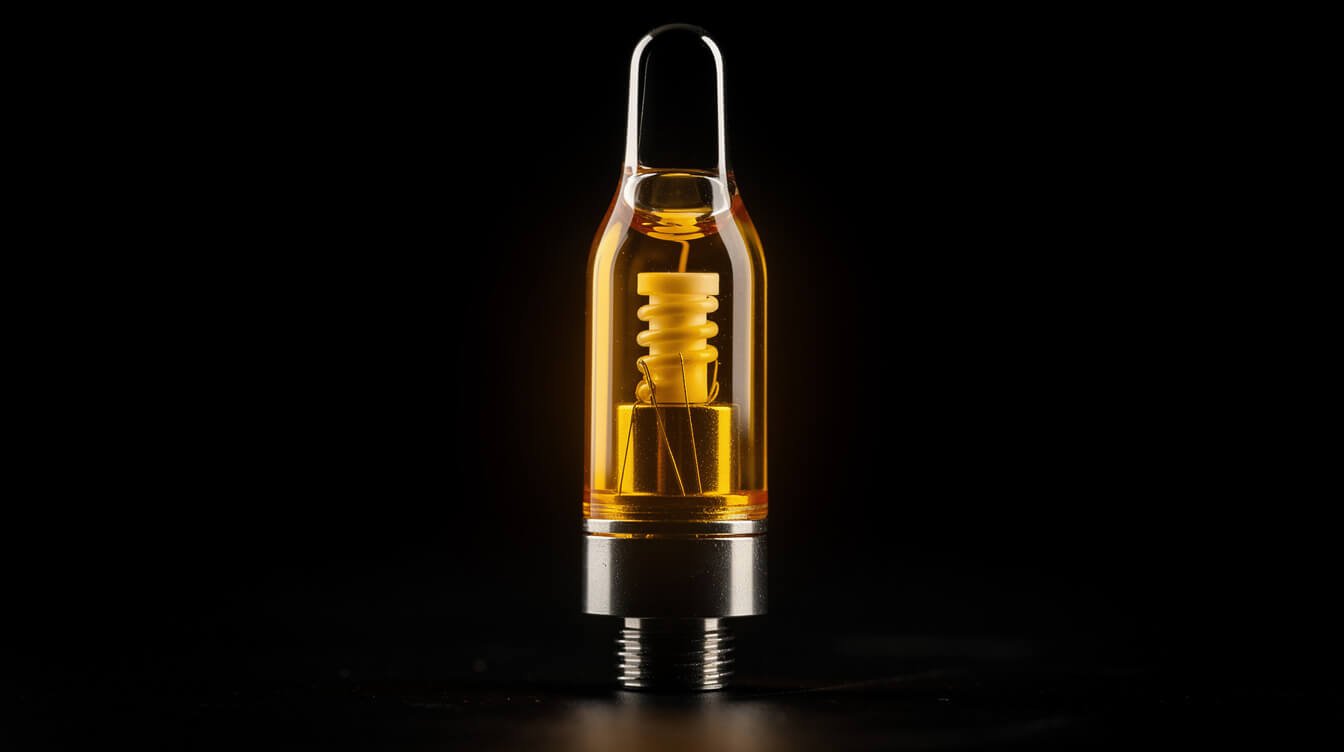
Even setting dose aside, the cutoff exists because long draws are hard on hardware. Researchers have started noticing that too.
What long draws do to the coil
A 2025 review of cannabis concentrate vaping chemistry calls out blinkers by name. It notes that vaping styles which rely on the battery cutoff to end the hit “can reflect extensive puff duration times” that “may impact temperatures relevant to promoting chemical reactions.” The same review identifies inefficient wicking as “a major cause of toxicant formation.” When thick oil can’t wick fast enough, part of the coil runs dry and overheats. The review also lists terpene breakdown products found in concentrate vapor, such as isoprene and methacrolein.
Read that carefully: may, not proven to. Research on what people actually inhale from cannabis carts is still early. But a scorched, harsh, or metallic-tasting hit is your mouth reporting the same thing the review describes. A coil pushed past its comfortable range is no longer just vaporizing oil.
The coughing fit
A blinker also delivers a lot of hot vapor in one breath, which is why it so often ends in a coughing fit. Coughing isn’t a sign the hit “worked better.” It’s your airway objecting to the volume and the heat.
The cart question nobody should skip: EVALI
Any honest vape explainer has to mention EVALI (e-cigarette or vaping product use-associated lung injury). In 2019–2020, CDC counted 2,807 hospitalized cases or deaths, including 68 confirmed deaths as of February 18, 2020. The main culprit was vitamin E acetate, an additive used to thicken some THC oils. It turned up in lung-fluid samples from 48 of 51 EVALI patients tested, and in none of the comparison group.
The takeaway isn’t panic, and it isn’t a claim that any vape is “safe.” It’s this: a cart with no verifiable lab testing is an unknown, and a blinker is the way to inhale the most of that unknown in one breath. Never add anything to a cart or battery that the manufacturer didn’t intend.
Blinker vs a normal hit, side by side
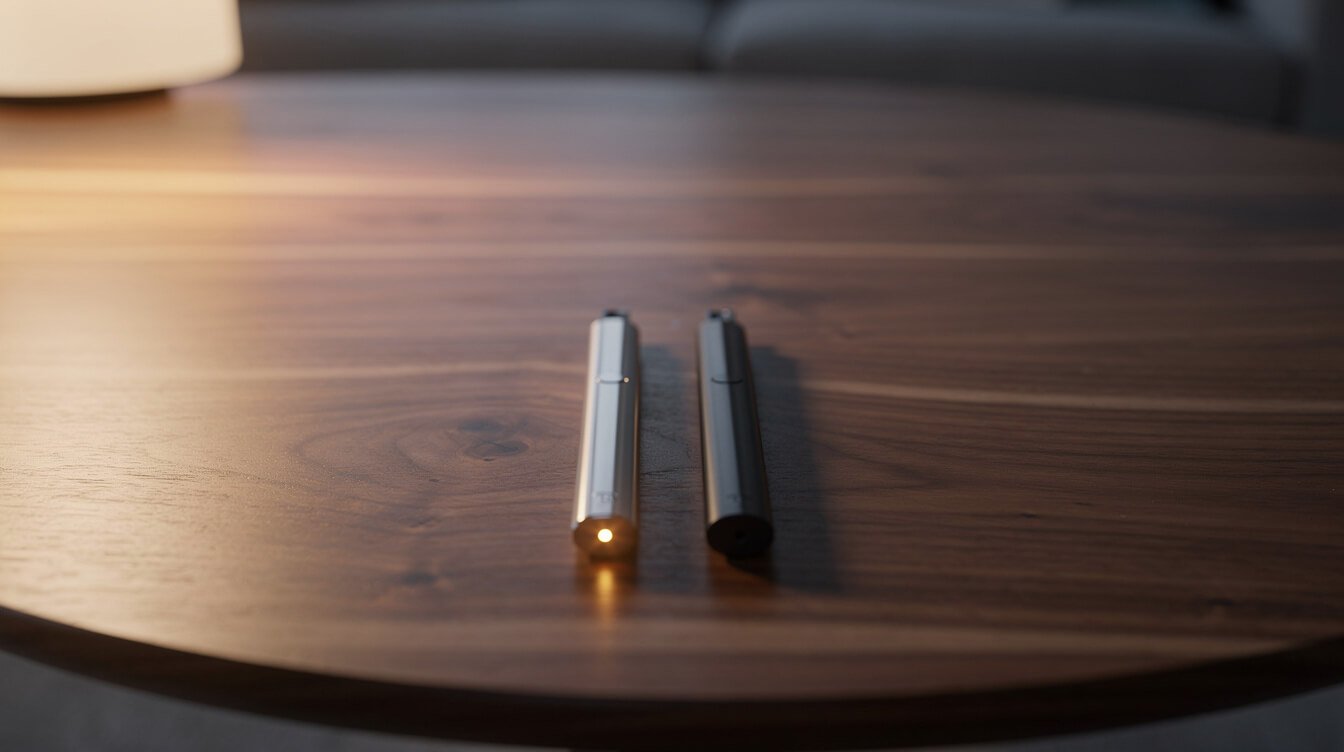
If someone asks what is a blinker compared with a normal hit, this is the honest answer, with the numbers where research has them and plain-language estimates where it doesn’t.
| Normal hit | Blinker | |
|---|---|---|
| Draw length | About 3–4 seconds (3.68 s average in the 2025 video study) | Until the cutoff, roughly 5–15 seconds depending on the battery |
| Dose | One “unit,” easy to stop after | Roughly 1.5–4 average puffs’ worth of draw in one breath; bigger draws mean more THC (Azorlosa 1995) |
| How fast it lands | Within minutes; peaks inside ~30 minutes | Same timeline, just more of it at once |
| Harshness | Usually smooth | Often a coughing fit; can taste scorched |
| Coil and cart | Within the coil’s comfort zone | Hardest on the coil; long draws may push temperatures where breakdown reactions start |
| Beginner fit | Good: take one, wait, decide | Poor: you can’t take back a dose you already inhaled |
| Control | You decide when to stop | The battery decides for you |
That last row is the whole thing. A normal hit is a decision you make. A blinker hands the decision to a timer that was designed to protect the coil, not you.
If you’re going to hit one anyway: harm reduction
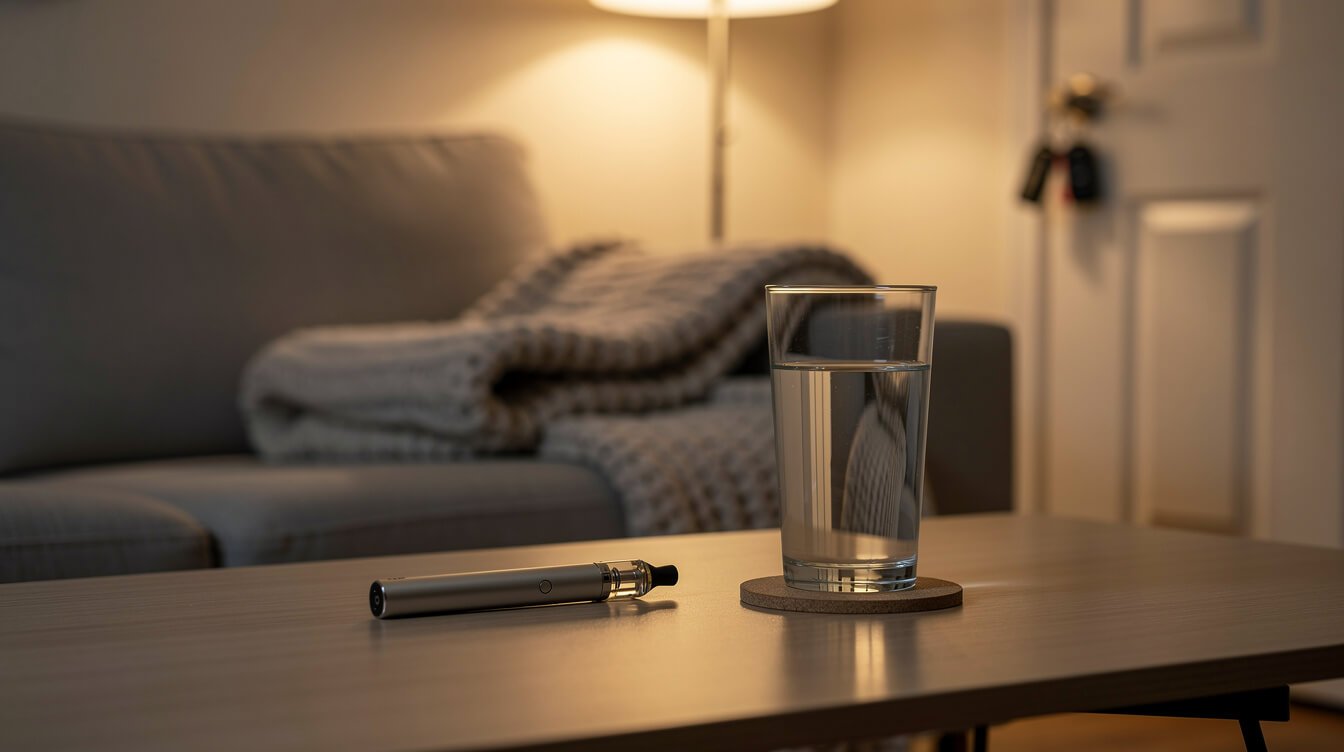
Adults are going to do adult things. If a blinker is on the menu, here’s how to keep it a story and not a mess. This is for adults 21+ only, and cannabis laws vary a lot by state and country, so know yours.
- Sit down first. A big inhaled dose can bring a head rush and dizziness, especially if you stand up quickly afterward. Be seated before, during, and for a while after.
- One, then wait at least 20–30 minutes. Inhaled THC builds over minutes; in the Hopkins study it peaked within about half an hour. Give the first one time to fully arrive before you even think about another.
- Know the cart’s potency. Read the label. A blinker on a high-potency concentrate cart and one on a mild flower vape are not the same event.
- Skip the double blinker and the challenge round. Peer pressure plus potency is the classic setup for greening out. You don’t owe anyone a demonstration.
- Don’t mix with alcohol. Stacking the two makes a rough night far more likely.
- Never before driving. Driving high is impaired driving. Wait it out, or get a ride.
- Have water and a calm plan. If it’s too much, the move is a quiet room, slow breathing, and time. Our greening-out guide covers what helps, what doesn’t, and the warning signs that mean call for help.
If you’re newer to cannabis, the simplest move is to skip blinkers entirely. A 3-second hit tells you more about a cart than a 12-second one, and you get to stop. If you want a refresher on how the two main cannabinoids feel different, start with our CBD vs THC effects breakdown.
If you take any medications or have a heart or lung condition, talk to a doctor or pharmacist before using cannabis at all, not just before big hits.
Blinker FAQ

What does hitting a blinker mean?
It means taking one continuous draw on a vape or dab pen until the battery’s timer cuts the power and the LED flashes. It’s the longest single hit the device allows.
Does a blinker get you higher?
Generally, yes, because it delivers more THC in one go. In controlled studies, bigger puffs produced higher blood THC and a stronger high. Holding the hit in afterward didn’t make people feel higher, though. “Higher” also isn’t the same as “better”: bigger doses bring more anxiety, dizziness, and the chance of overdoing it.
What is a double blinker?
Hitting blinkers on two pens at the same time, so twice the dose in one breath. It’s mostly a meme stunt, and it’s the fastest route to a too-much evening on this page.
Is hitting a blinker bad for your pen?
It’s the hardest thing you can ask of the coil. Long draws heat it the most, and when thick oil can’t wick fast enough the coil can run partly dry. That’s where burnt, harsh, or metallic hits come from. The cutoff exists precisely to stop the hardware overheating.
What is a blinker on a dab pen vs a nicotine vape?
The term and the battery behavior are the same: a long draw until the light flashes. The difference is what’s in the tank. On a cannabis cart or dab pen (a concentrate device; here’s what dabbing actually is), a blinker is a big THC dose. On a nicotine vape, it’s a big hit of nicotine. The slang crossed over, but the substances don’t behave alike.
Why is my pen blinking when I didn’t hit a blinker?
Probably a hardware message: low battery, a poorly seated cart, dirty threads, or a short the battery detected. Check the manual’s light codes.
What is a blinker, really? Final thoughts
Strip away the memes and a blinker is a battery’s safety timer that people started treating like a finish line. The light means “stop,” not “nice.”
The research lines up behind that. Bigger draws deliver more THC and a stronger high. Vapor hits harder than smoke at the same dose. Everything inhaled arrives within minutes. Long, cutoff-length pulls may push a coil into temperatures where its contents start breaking down. None of that makes a blinker the end of the world for an experienced adult who knows their cart. All of it makes it a bad idea for a beginner, a bad idea before driving, and a bad idea as a dare.
Take the hit you want, not the one the battery allows. Know your cart, know your laws, and enjoy it like an adult.
Before you go
Get the next explainer first
We publish a new one every day. The best of the week, plus what's new in the shop, lands in one short email.