What Is Live Resin? What “Live” Actually Certifies
Short version: live resin is a cannabis concentrate made from flower that was flash-frozen right after harvest instead of being dried and cured. That is the whole definition. The word “live” certifies one thing only — the starting material never dried — and it tells you nothing about potency, purity, or quality.
That last part is where most explanations of what is live resin quietly mislead people. “Live” sounds like natural, raw, and clean, so readers assume it means solvent-free. It doesn’t. Live resin is a solvent extract, usually made with butane or propane. A well-made cured concentrate can easily beat a badly made live one.
So here’s the honest version: what freezing actually preserves, why drying and curing drive those compounds off in the first place, how live resin gets made, how to verify the solvent was properly purged, and who this stuff is genuinely worth it for. Laws differ everywhere — concentrates in particular are regulated separately from flower in a lot of places, and are flatly illegal in others — so check your own before anything else. This is for adults 21+, and it’s education, not a buying guide.
The short answer: what is live resin?
Asked plainly and answered plainly: what is live resin? It is a concentrate whose starting material was frozen instead of dried.
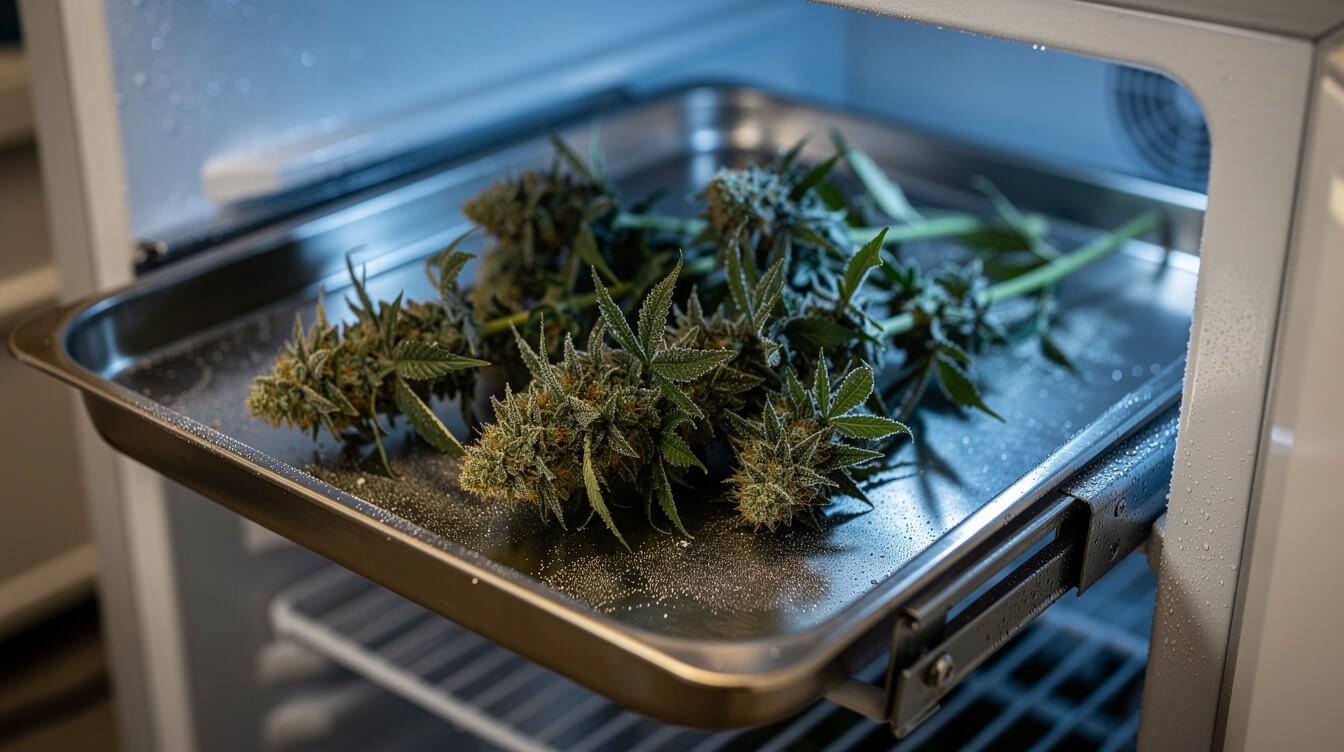
Live resin is a hydrocarbon extract made from fresh frozen cannabis — plants harvested and put into a freezer within hours, typically at around -20°F to -80°F, and kept frozen until extraction. Normal concentrates start from flower that went through the standard post-harvest path: trim, hang, dry for a week or two, then cure in jars for weeks. Live resin skips both of those steps entirely.
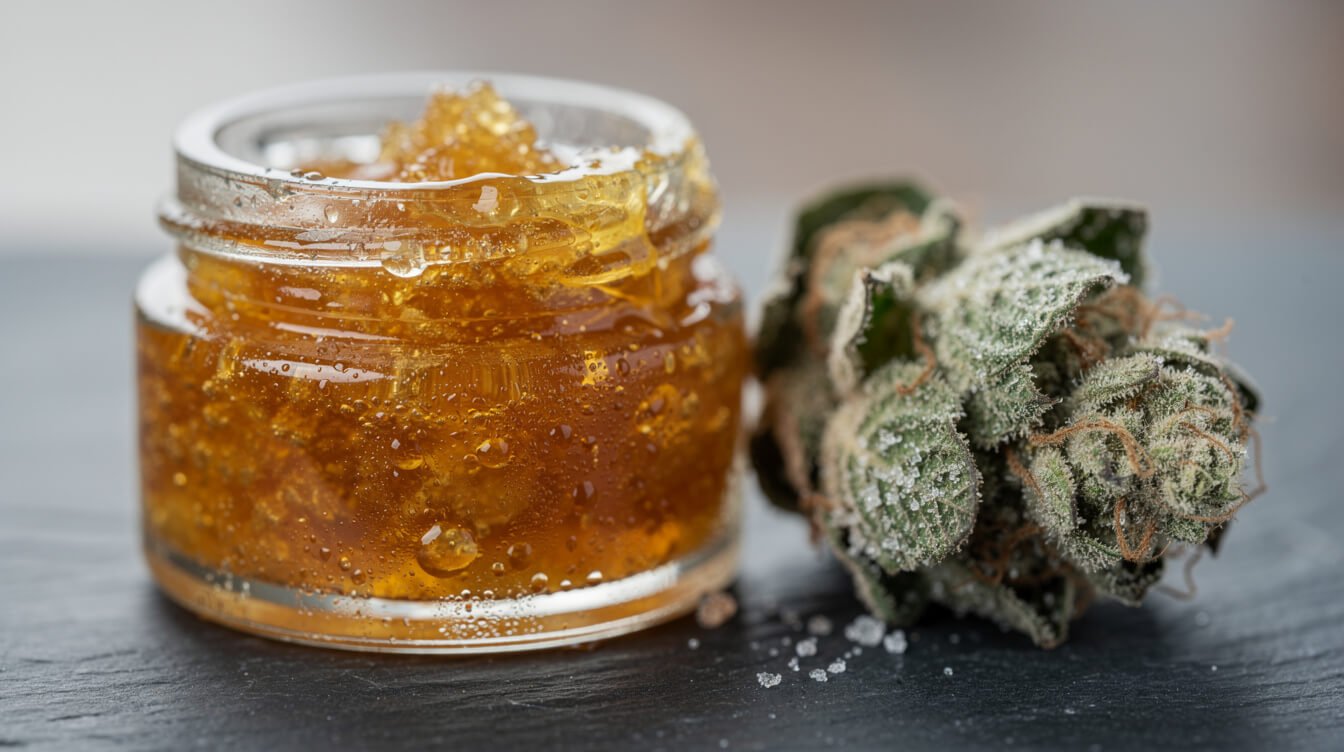
Everything else about it is ordinary concentrate production. The frozen plant material goes into a closed-loop extraction system, a liquefied hydrocarbon solvent strips the resin off the plant, the solvent is recovered and purged off, and what’s left is a sticky, aromatic, amber-to-pale-gold extract. Depending on how it’s finished, the same batch can end up as sauce, badder, sugar, or diamonds sitting in a pool of terpene-rich liquid.
The texture names are mostly marketing and post-processing, not chemistry. A jar labeled “live badder” and a jar labeled “live sauce” may have come off the same run and been whipped or left to separate. What they share is the only part that matters to the definition: the plant was frozen, not dried.
Where the resin itself comes from
The resin in “live resin” isn’t a product of the extraction. It’s already on the plant — in the trichomes, the stalked glandular heads that cover mature flower and carry nearly all of the cannabinoids and aromatic compounds. Extraction is just a way of collecting them. If you’ve ever looked at buds under a loupe and watched the heads go from clear to cloudy, you’ve been looking at the raw material; our guide to reading trichomes to know when to harvest covers that in detail.
This matters for a practical reason. Live resin can’t rescue mediocre input. Freezing preserves what was there at the moment of harvest — it doesn’t add anything. Flower picked too early, grown badly, or harvested with a thin terpene profile makes thin, unremarkable live resin. Garbage in, frozen garbage out.
What “live” actually certifies (and what it doesn’t)
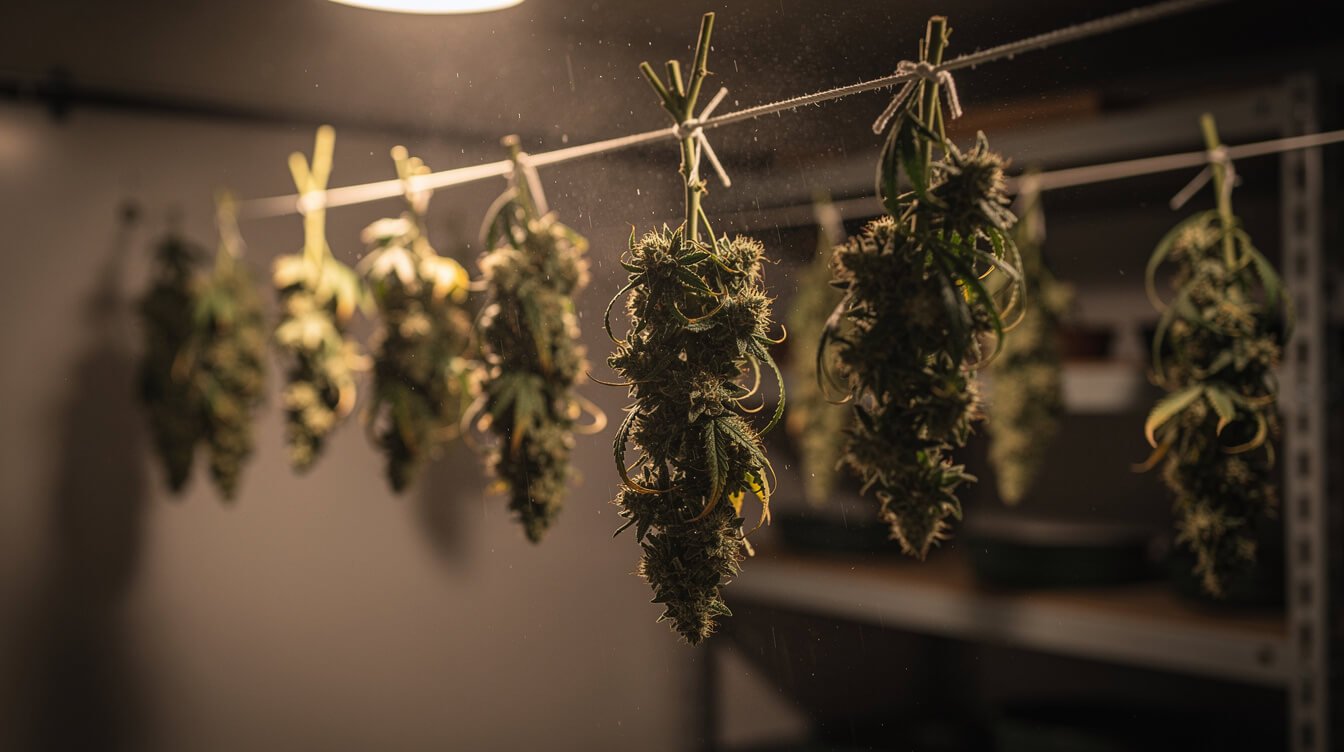
Treat “live” as a single checkbox on a spec sheet, not a grade. Here is exactly what the word guarantees and what it leaves wide open.
What “live” tells you: the starting material was fresh frozen rather than dried and cured. That’s it. One variable.
What “live” does not tell you:
- Whether solvents were used. Live resin is solvent-extracted. “Live” and “solventless” are different claims, and plenty of people conflate them.
- How clean it is. Purge quality is a separate question, answered by a lab test, not by a label.
- How strong it is. Cannabinoid content depends on the input material and the process, and is printed on the test results — not implied by the word.
- Whether it was grown well. Freezing preserves the input; it doesn’t improve it.
- Whether it was stored properly. Terpenes keep evaporating after packaging. A jar that sat warm on a shelf for a year is not what it was on day one.
Almost every page competing for this query has a section titled something like “benefits of live resin” or “is live resin stronger,” which quietly reframes a processing choice as a quality tier. It isn’t one. It’s a tradeoff, and the tradeoff has a real cost — fresh frozen material is bulkier, more perishable, and demands cold handling all the way through, which is why live products generally carry a premium. You’re paying for aroma retention, not for a better plant.
Why freezing preserves terpenes that drying and curing drive off
This is the actual mechanism, and it’s the part nearly every competing article skips or hand-waves. The reason freezing matters is that the compounds responsible for cannabis aroma are not all equally willing to stay put.
Terpenes are volatile organic compounds, which is a chemist’s way of saying they evaporate readily at everyday temperatures. But they don’t evaporate at the same rate. The lighter ones — the monoterpenes, built from two isoprene units — are small, less dense, and boil at lower temperatures. Myrcene, limonene, the pinenes, and terpinolene are all in this group. The heavier sesquiterpenes, built from three units, are bulkier and cling on much harder. Caryophyllene, humulene, and bisabolol are the usual examples.
Now look at what conventional post-harvest actually asks of the plant. Drying cannabis properly means a week or two in moving air. Curing means several more weeks in jars with regular burping. That’s four to eight weeks of continuous, gentle evaporation — which is wonderful for smoothness, chlorophyll breakdown, and smoke quality, and simultaneously a slow leak of exactly the lightest aromatic compounds.
The loss isn’t speculative; it’s why a drying room smells so strongly. That smell is terpenes leaving the plant and entering your nose. Reported figures for total terpene loss across drying and curing vary widely with method, temperature, and humidity, but the direction is never in dispute, and the losses are concentrated in the monoterpene fraction. The heavy sesquiterpenes largely survive. The light, bright, citrus-and-pine top notes are what thin out.
Freezing stops that clock. Cold slows volatility to near nothing, and because the material never sits in warm moving air for weeks, the monoterpene profile at extraction looks much closer to the profile of the living plant. That’s the entire pitch for “live,” and when people describe live resin as smelling more like a fresh plant than like cannabis product, this is why. It isn’t mystical. It’s a boiling-point story.
Two useful consequences follow. First, live resin’s advantage is specifically an aroma and flavor advantage, not a potency one — THCA doesn’t meaningfully evaporate during a normal dry, so cured material doesn’t lose cannabinoids the way it loses light terpenes. Second, the advantage is perishable. Those same monoterpenes that drying would have driven off are still volatile once they’re in a jar, which is why live products want cold, dark, airtight storage, and why they fade faster than distillate. If the general principle of cannabis degrading over time is new to you, our piece on whether weed goes bad walks through the same chemistry on the flower side, and our practical reference on terpenes and their reported effects breaks down the individual compounds named above.
Worth saying plainly: skipping the cure is not strictly an upgrade. Curing does real work that freezing doesn’t replicate. For smokable flower, a proper cure is the difference between harsh and pleasant. Live resin doesn’t need that work because nobody is combusting the plant material afterward — it gets thrown away. If you’re growing, don’t read this as permission to skip curing your own harvest; the trim-and-dry path and humidity-controlled storage still exist for good reasons.
How live resin is made — and yes, it uses solvents
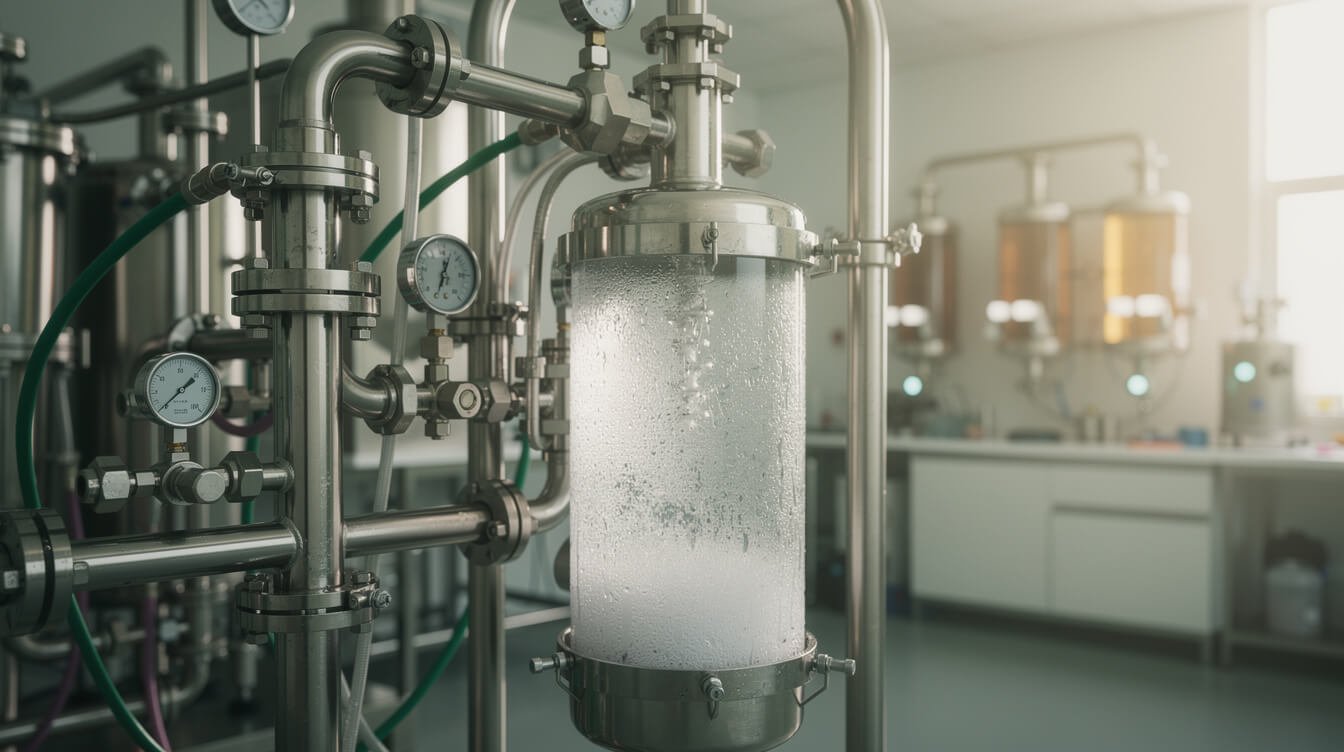
Anyone asking what is live resin eventually arrives here, so let’s be unambiguous: live resin is made with hydrocarbon solvents — butane, propane, or a blend of the two, sometimes called BHO or PHO depending on which dominates. It is not a solventless process. Saying so out loud is the single most useful sentence available on this topic, because the marketing around “live” pushes the opposite impression.
Here’s the sequence, start to finish:
- Harvest and freeze fast. Plants are cut and moved into freezing within hours, usually without a full manicure, since there’s no drying stage where trim would matter. Speed is the whole game — the clock on terpene loss starts at the cut.
- Keep it frozen, and keep it cold through the handoff. Fresh frozen material is wet and fragile. Thaw it and refreeze it and you get ice damage, degradation, and a muddier extract.
- Load a closed-loop system. The frozen material is packed into a column inside a sealed stainless steel system. “Closed-loop” means the solvent is contained and recovered for reuse rather than vented — safer, more consistent, and the industry norm in regulated production.
- Wash with chilled solvent. Liquefied hydrocarbon passes through the column and dissolves the resin off the plant. The wash runs cold and fast, which helps leave behind water-soluble compounds and unwanted plant material.
- Recover the solvent. Most of the solvent is pulled back out and returned to the system, leaving a crude extract.
- Purge. The extract goes into a vacuum oven at low heat — commonly in the range of roughly 85°F to 105°F for butane — under vacuum, for hours to days. Vacuum lowers the solvent’s boiling point so it can leave without cooking off the terpenes you froze the plant to protect. This step is the entire safety question, which is why the next section is about verifying it.
- Finish and package. Depending on handling, the extract is whipped into badder, left to separate into sauce, or allowed to form THCA crystals (“diamonds”) in a terpene-rich liquid. Then it’s jarred cold.
Two notes on that list. The low-heat purge is a genuine tension in the process: purging harder removes more residual solvent but costs you volatile terpenes, and purging gently preserves aroma but demands more time under vacuum to reach the same cleanliness. A competent extractor resolves that with time, not temperature. And none of this is a home project. Hydrocarbon extraction involves pressurized flammable gas in volumes that have destroyed buildings and injured people; it is done in purpose-built, ventilated, permitted facilities for a reason, and attempting it in a kitchen or garage is genuinely dangerous. We’re explaining how it works, not how to do it.
GanjaTech, weekly
Cannabis, explained. In your inbox.
One email a week: the clearest explainers, honest gear picks, and what the science actually says. 21+ only. No spam, unsubscribe anytime.
How to check a live resin was purged properly
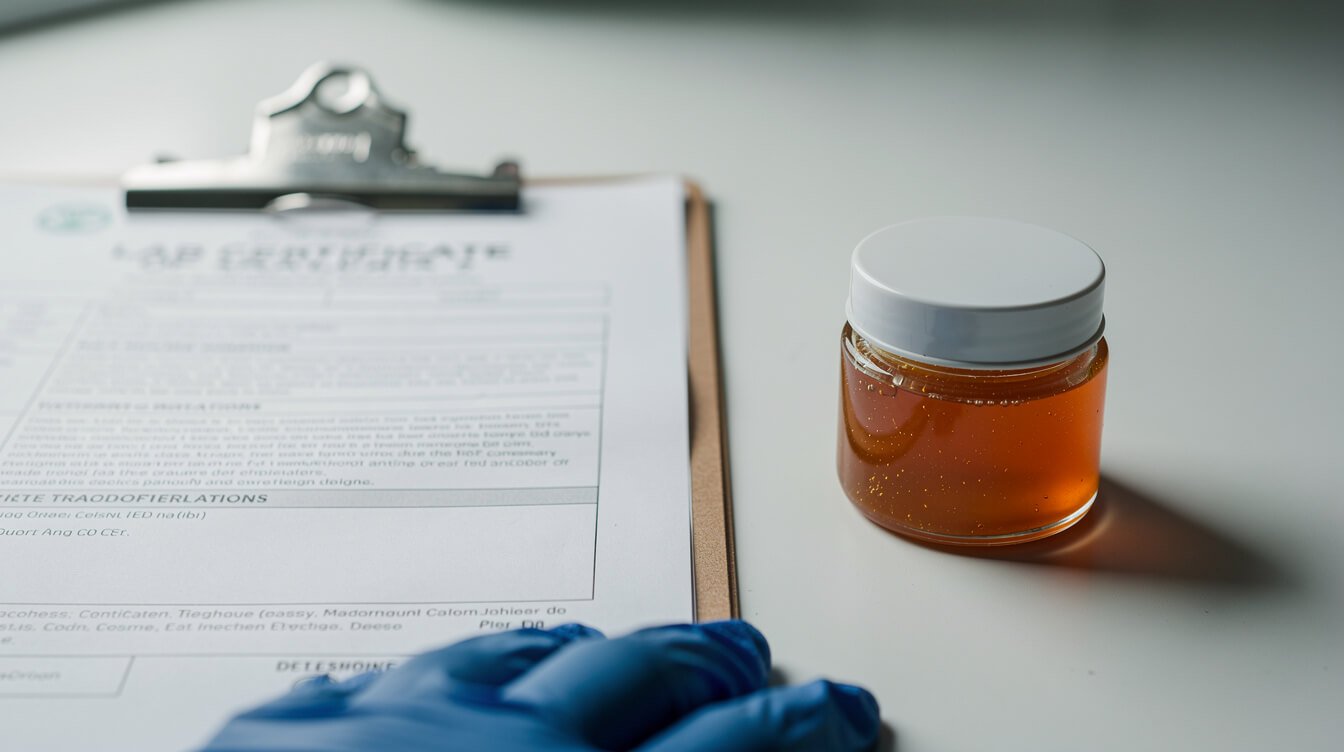
Here’s the gap that surprised us most while reading the pages that currently answer what is live resin. Several of the top pages mention residual solvents. Not one of them tells you how to actually check. The closest any of them gets is a passing note that regulated products “can only contain a certain level” of residual solvent — true, and useless to a reader holding a jar.
The answer is the certificate of analysis, or COA. In regulated markets, a batch of concentrate is lab-tested before sale, and the results are published — usually behind a QR code on the package, or searchable by batch number on the producer’s site. You do not need to interpret chemistry to use one. You need to check five things.
1. Does a residual solvents panel exist at all?
A COA can cover potency only. Potency tells you cannabinoid percentages and nothing about cleanliness. Look specifically for a section headed “residual solvents” — and if the document only shows cannabinoids, you have learned nothing about the purge.
2. Does the batch number on the panel match the jar in your hand?
This is the check people skip. A producer can display a clean COA for a different, older batch. The batch or lot number printed on the package should appear on the document. If it doesn’t match, the document isn’t about your product.
3. Does the panel say “Pass,” and against what limit?
Residual solvent panels list each solvent tested, the amount detected, and the action limit it’s measured against. You want “Pass,” and you want to see butane and propane specifically on the list, since those are what live resin is made with. Note that the limits themselves are set by jurisdiction and differ substantially between states and countries — so a “Pass” is a pass against local rules, not a universal standard. Don’t let anyone quote you a single magic number; look at what limit the lab actually tested against.
4. Is “ND” or “<LOQ” present, and do you know what it means?
“ND” means not detected. “<LOQ” means below the limit of quantitation — present in principle, too little to measure reliably. Both are good outcomes. What you don’t want is a blank cell, a dash, or “not tested” sitting where a result should be.
5. How old is the test, and who ran it?
Check the test date against the packaging date, and check that the lab is a third party rather than the producer’s own in-house bench. An independent, accredited lab and a recent date are the two things that make the rest of the document worth reading.
Beyond the paperwork, your senses are a crude but real backstop. A harsh chemical bite on the inhale, a taste people often describe as lighter-fluid-adjacent, or an extract that bubbles and sputters oddly at low temperature are all reasons to stop. They are not diagnostic — plenty of clean extract tastes sharp if you run it too hot — but combined with a missing or mismatched COA, they’re enough to put the jar down. And if a product in a regulated market has no accessible test results at all, that absence is itself the answer.
Live resin vs cured resin, distillate, and live rosin, briefly
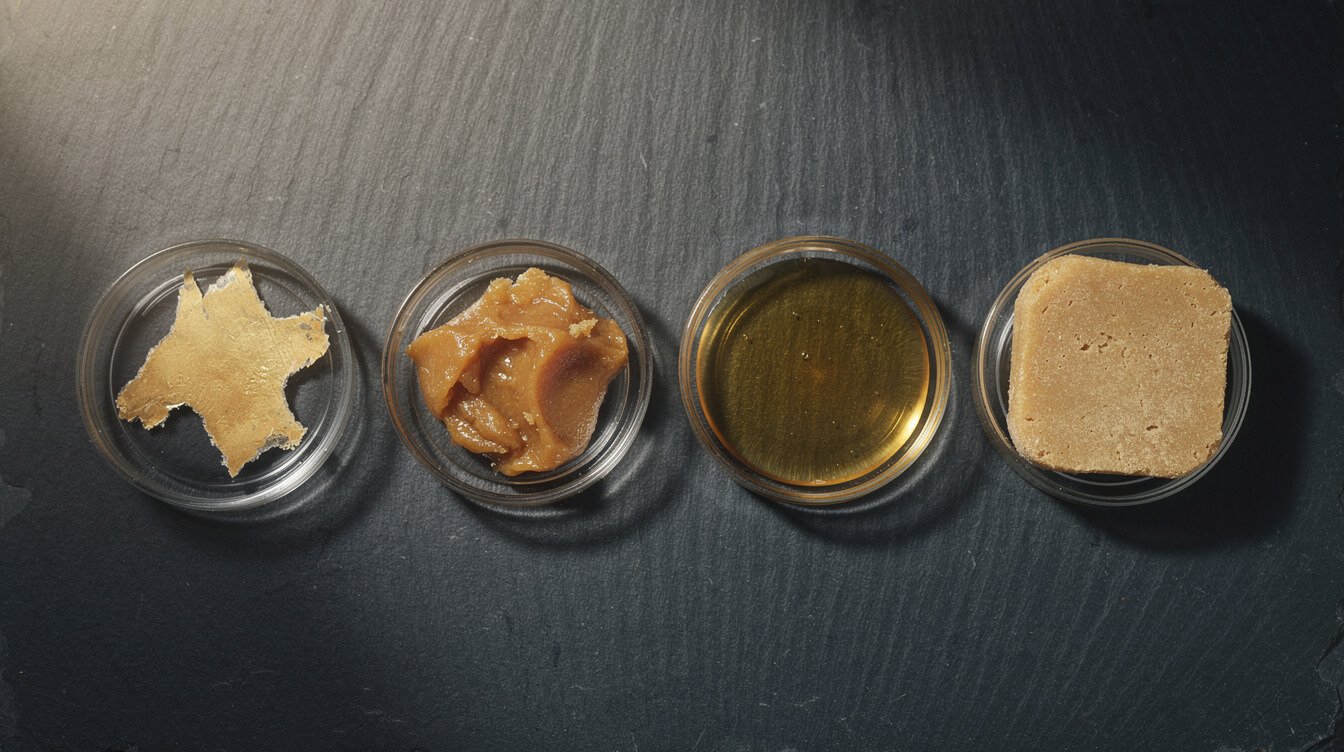
Quickly, because these each deserve their own full treatment rather than a table buried in a definitional post: cured resin is the same hydrocarbon process run on dried and cured flower, so it keeps the heavy terpenes and loses much of the light fraction — less aromatic, cheaper, often perfectly good. Distillate goes the opposite direction entirely: it’s refined by boiling-point separation into near-pure cannabinoid, which strips essentially all aroma out, and any flavor you taste in a distillate product was added back afterward. Live rosin is the one most often confused with live resin, and the distinction is the important one — it starts from the same fresh frozen material but is made solventless, by washing the trichomes off with ice water and then pressing the resulting hash with heat and pressure. Same “live” input, completely different extraction. And plain rosin is pressed from cured flower or cured hash, which is why “rosin” and “live rosin” are not interchangeable terms either, however often they’re used that way.
If you take one thing from that paragraph: live describes the input, resin versus rosin describes whether a solvent was involved. Those are two independent axes, which is exactly why the four names confuse everyone.
If you want that comparison properly worked out rather than summarized, we built the full grid in live resin vs rosin — two variables, five names, and why live rosin costs roughly double.
Who live resin is actually for (and who should skip it)
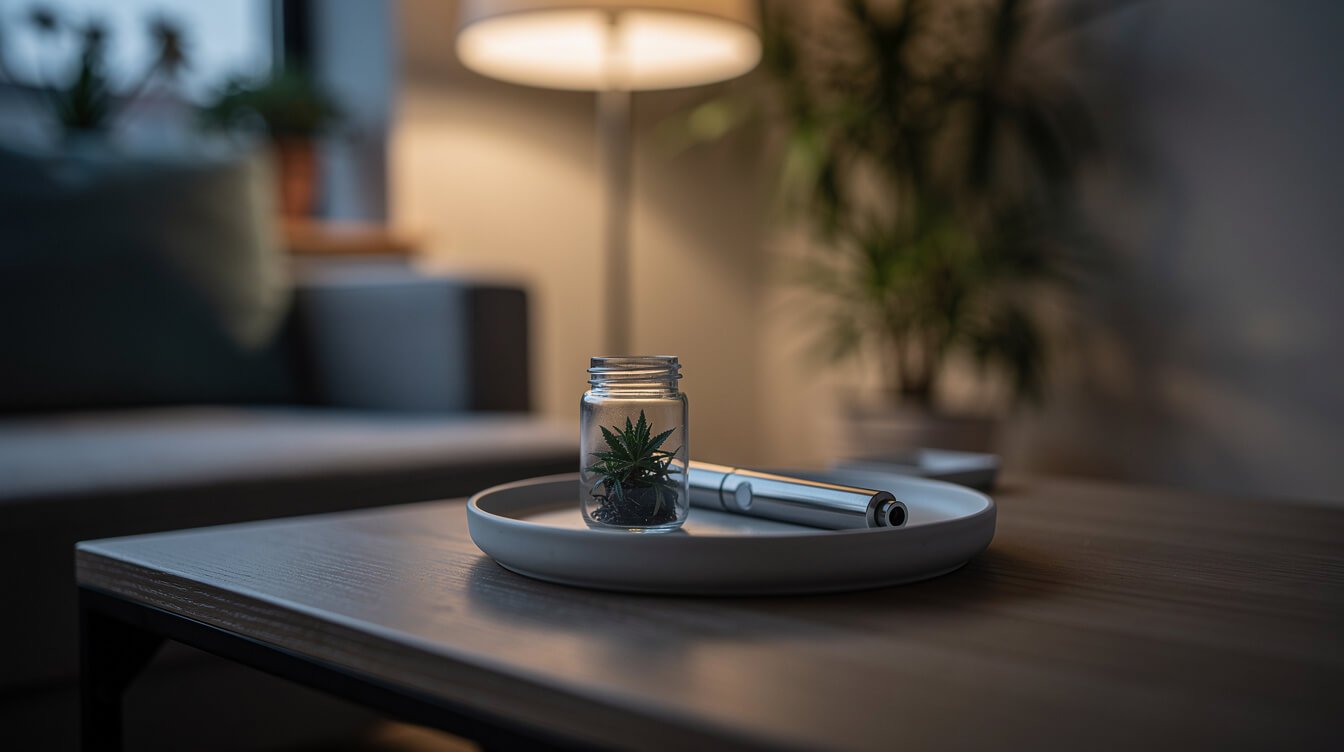
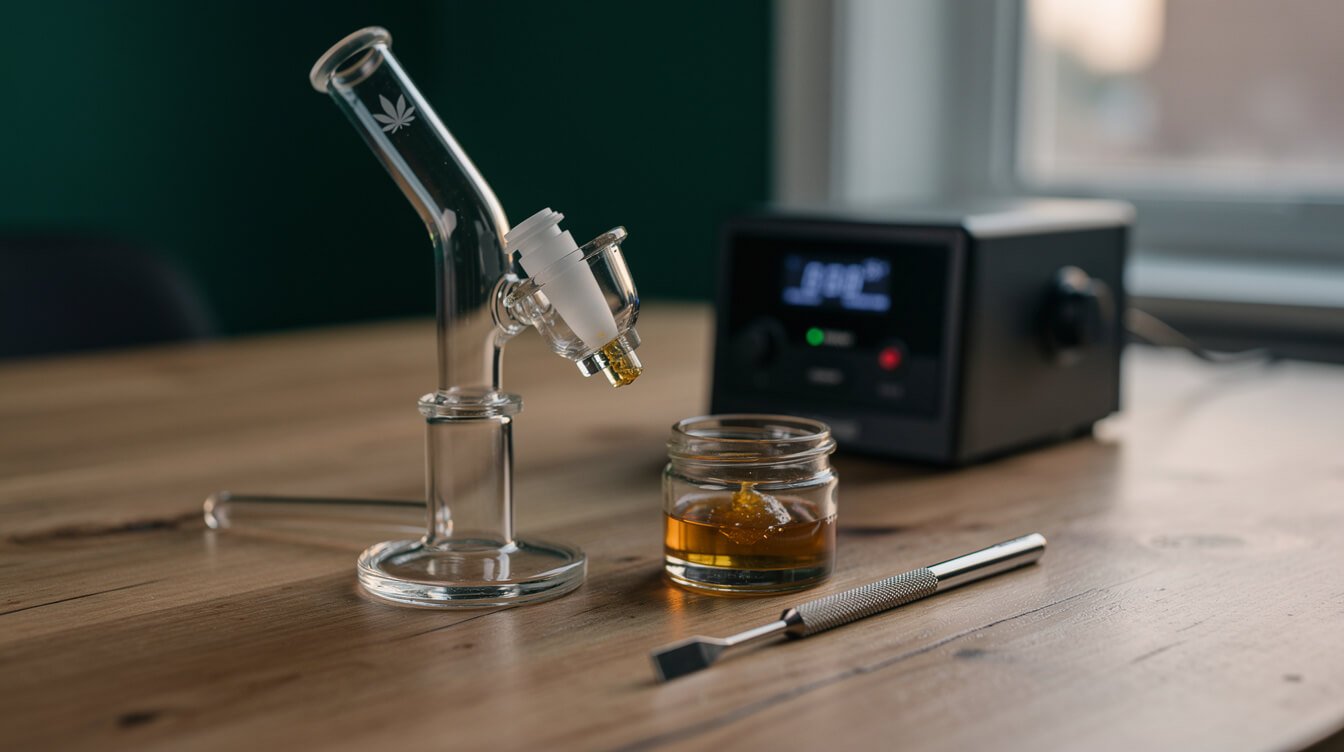
Live resin is worth the premium if what you’re chasing is aroma and flavor fidelity — if you care about the difference between “smells like weed” and “smells like that specific plant,” and you have a setup that can show it to you. That means low-temperature consumption. Run live resin hot and you incinerate the exact compounds you paid extra for, which is a genuinely common and expensive mistake.
It’s a poor fit if you’re new to concentrates, if your priority is value per gram, if you buy in quantity and store for months, or if your hardware runs hot and uncontrolled. In those cases cured resin gives you most of the experience for less money, and loses less when it sits.
And the responsible part, which is not optional with this category. Concentrates are dramatically more potent by weight than flower — that’s the definition of a concentrate, not a selling point. If you’re used to flower, the amount that corresponds to a familiar experience is much smaller than instinct suggests, and the dose step between “pleasant” and “far too much” is correspondingly tiny. Start with an amount smaller than you think is reasonable, wait, and reassess. Inhaled onset is fast, which cuts both ways: you’ll know quickly, but you also can’t take it back. Don’t drive. Don’t mix it with alcohol and assume the two add up predictably. Tolerance shifts over time and resets faster than people expect after a break.
Effects vary enormously between people and we’d be making things up if we told you how it will land for you — what’s reported anecdotally isn’t a prediction, and nothing here is medical guidance. If you have a health condition or take medication, that’s a conversation for a doctor, not a blog post. And legality genuinely differs: plenty of places that permit flower treat concentrates as a separate category with separate rules or prohibit them outright. Know your own jurisdiction’s position before anything else.
What is live resin: the questions people still ask
So what is live resin, in one sentence?
A concentrate made from cannabis that was flash-frozen at harvest instead of dried and cured, extracted with hydrocarbon solvents. The freeze is the only thing the word “live” promises.
Is live resin stronger than other concentrates?
Not inherently. Cannabinoid content depends on input material and process, and live resin often tests somewhat lower in total cannabinoids than distillate precisely because more of its mass is terpenes and other plant compounds. Check the COA rather than the adjective.
Is live resin solventless?
No. This is the most common misunderstanding about it. Live resin uses hydrocarbon solvents. Live rosin is the solventless one.
Why does live resin cost more?
Fresh frozen material is heavier with water, more perishable, and has to stay cold through every handoff, so yield per pound and logistics both work against it. You’re paying for preserved aroma and the handling that protects it.
Does live resin go bad?
It degrades rather than spoils. Terpenes keep evaporating and cannabinoids slowly oxidize, so an old jar is less aromatic and less distinctive than a fresh one. Cold, dark, airtight, and minimal air space slow it down.
What does “full spectrum” mean on a live resin label?
Loosely, that the extract retains a broad range of the plant’s compounds rather than being refined down to isolated cannabinoids. It’s a descriptive marketing term with no fixed legal definition, so treat it as a hint about intent, not a specification.
Can you make live resin at home?
You can freeze your own harvest; you should not attempt hydrocarbon extraction. Pressurized flammable solvent outside a permitted, ventilated facility is a serious fire and explosion risk, and it’s also illegal in many jurisdictions regardless of local cannabis status.
Do live resin vape carts count as live resin?
Sometimes. “Live resin cart” is used loosely, and some products labeled that way contain only a fraction of live material blended with distillate. The ingredient breakdown, where disclosed, tells you more than the front of the box.
The honest summary
So, what is live resin when you strip the marketing off it? A solvent extract made from flash-frozen flower, and “live” certifies the freeze and nothing else. The freeze preserves light monoterpenes that four to eight weeks of drying and curing would otherwise carry off, which is why it smells closer to a living plant — a real, specific, chemically explicable advantage, and a narrow one. It’s still hydrocarbon-extracted, its cleanliness lives on a lab report rather than on a label, and a thoughtfully made cured concentrate beats a careless live one every time.
Which makes the useful question not “what is live resin” but “is aroma fidelity what I’m buying, and can my setup actually deliver it?” If yes, it’s worth the premium. If no, you’re paying for volatile compounds you’ll destroy on the first hit. Either way: read the COA, start lower than feels necessary, store it cold, and know your local laws. Good plant. Worth understanding properly.
Before you go
Get the next explainer first
We publish a new one every day. The best of the week, plus what's new in the shop, lands in one short email.