What Is Rosin? The Cannabis Kind, Explained (Not the Violin Stuff)
If you searched what is rosin and landed on a page about violin bows, you are not going crazy — and Google is not confused either. The word belongs to at least four different things, and only one of them has anything to do with cannabis. So let’s clear that up first, then get to the honest version of the cannabis answer, which is simpler than most sites make it and more useful than any of them tell you.
Here is the whole thing in one line: rosin is a cannabis concentrate made with nothing but heat and pressure. No butane, no propane, no ethanol, no CO2 — you squeeze the resin out of the plant material and that is the product. Everything else you have read about rosin is a detail hanging off that one sentence.
The short answer: what is rosin?
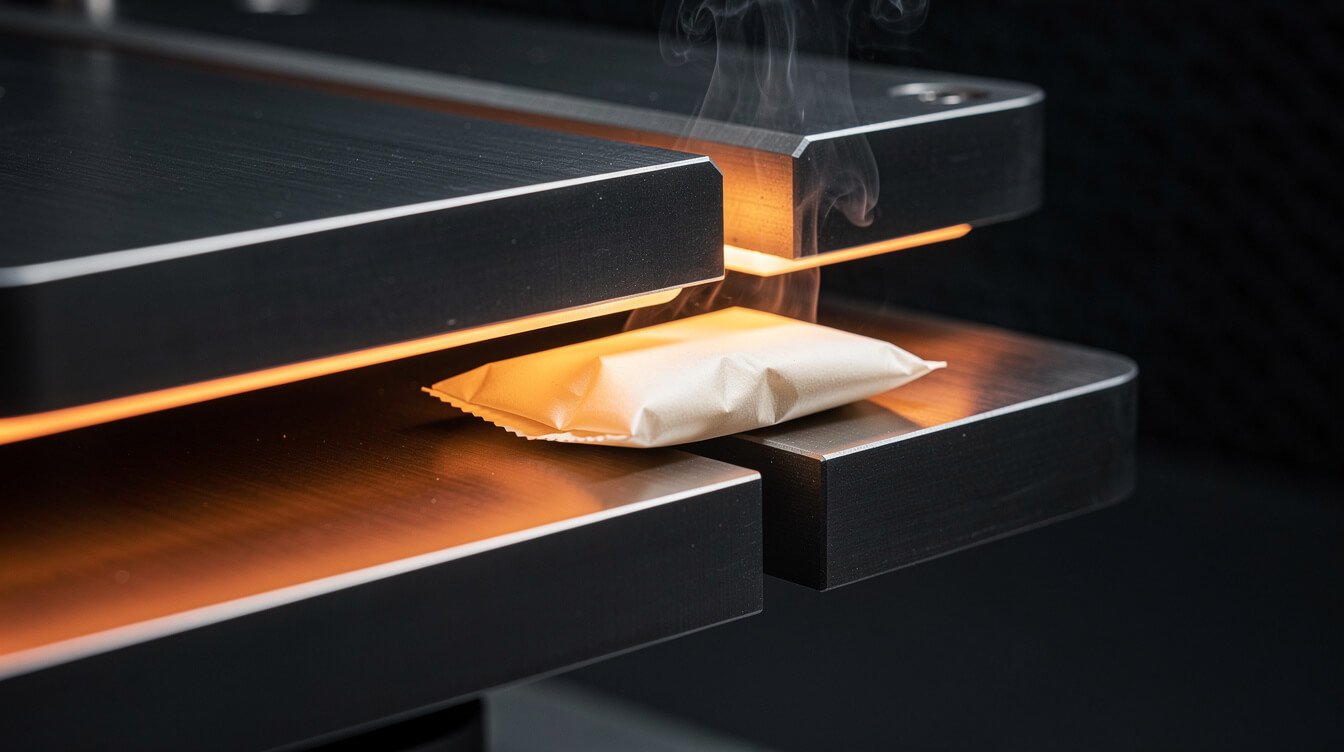
Rosin is a solventless cannabis concentrate: cannabis material is wrapped in parchment, placed between two heated plates, and squeezed under several tons of pressure until the resin liquefies and flows out. You collect what came out. That is rosin.
Solventless is the word that matters. In every other major concentrate category, something is introduced to strip the resin off the plant — hydrocarbons like butane and propane, ethanol, or supercritical CO2 — and then that something has to be removed again before anyone can safely use the product. Rosin skips both halves of that problem. Nothing is added, so nothing has to be purged.
So when someone asks what is rosin and gets a ten-paragraph answer, the length is usually padding. The mechanism is heat plus pressure, full stop. The topic only feels complicated because one word covers products of wildly different quality, and what separates them is not the process — it is what went into the press.
One contrast worth drawing immediately, since it is where most of the confusion starts: live resin is a solvent extract, made with hydrocarbons. “Live” describes fresh-frozen starting material and says nothing about solvents. Rosin and resin are two different questions.
Rosin vs rosin: the violin, the pine, and the grip bag
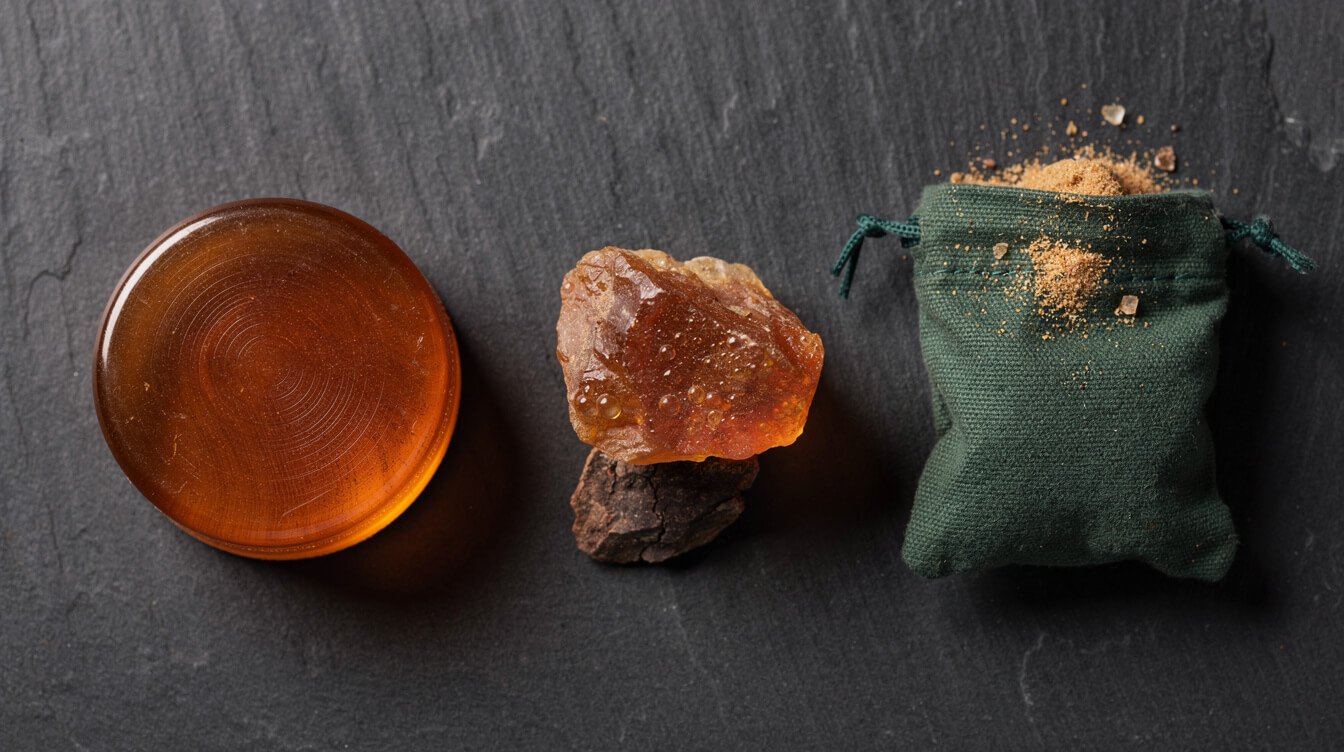
A good chunk of the results for what is rosin are not about cannabis at all, and that is not a glitch. Search the bare word and you will get a cake of amber stuff that violinists rub on their bow hair, the sticky block that baseball pitchers, gymnasts, and bull riders use for grip, the flux in electronics solder, and raw pine resin from a tree. All of those are the original rosin. Cannabis rosin is the newcomer, by a few centuries.
Classic rosin comes from conifers. Pines and larches produce a liquid resin; heat it, drive off the volatile fraction — turpentine — and what stays behind is a hard, brittle, amber solid. A dictionary definition puts it exactly that way: a solid form of resin, obtained from liquid resin by vaporizing its volatile components. That solid is rosin, also called colophony.
Here is the part every cannabis page treats as a fun fact and then drops, which is a shame, because it is what makes the shared name stop feeling arbitrary. Pine rosin and cannabis rosin carry the same name because they are the same kind of substance arrived at the same kind of way: plant resin, concentrated by heat into a sticky-to-solid mass. Cannabis makes resin too — the frosty coating on good flower is exactly that — and pressing it out with a hot plate is recognizably the move a turpentine distiller was making three hundred years ago.
And then the nuance nobody bothers with, which is the best part. The two are chemically unrelated — pine rosin is mostly diterpene acids like abietic acid, cannabis rosin is cannabinoids and terpenes — and their goals are exact opposites. Pine rosin is defined by having lost its volatiles: driving off the turpentine is what turns sap into a grippy solid. Cannabis rosin is prized for keeping its volatiles, because the volatile fraction is the terpenes, and the terpenes are the aroma and most of the character. Same name, same family of process, opposite priority — which is why a violin cake and a jar of rosin look alike and behave nothing alike.
Rosin vs resin: one letter apart, and the same word underneath
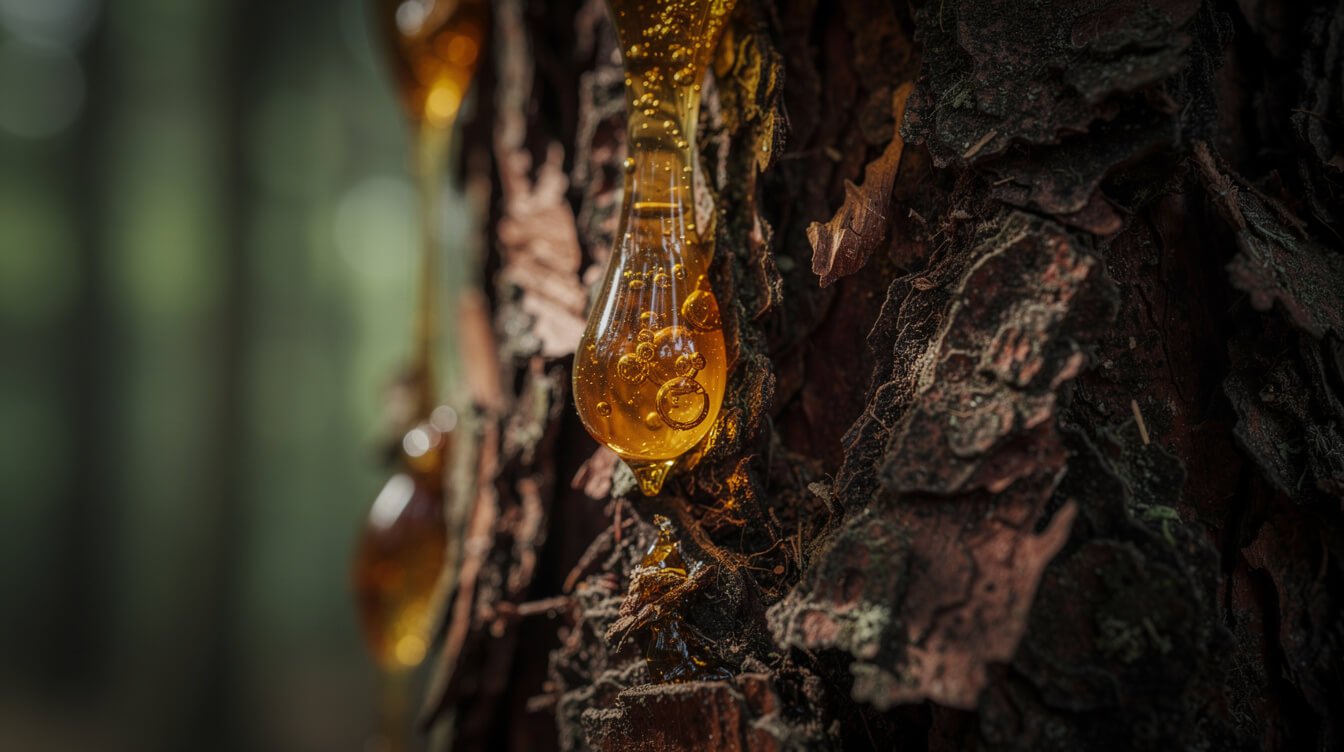
Every explainer on this topic says some version of “rosin with an O, resin with an E” and leaves it there, as if the near-identical spelling were an unlucky accident. It is not an accident. Rosin and resin are the same word.
“Rosin” came into English from Old French raisine and rousine, both variants of résine — which is where “resin” came from too. They are what linguists call a doublet: one root word that entered the language twice by different routes, then drifted apart. “Resin” kept the general sense of the sticky stuff a plant makes; “rosin” narrowed to the hardened, concentrated solid you get from it.
That history turns out to describe the cannabis usage almost perfectly:
- Resin is what the plant produces. On a living cannabis plant it lives in the trichomes — the stalked glands that make flower look frosted. That is the raw material for every concentrate there is.
- Rosin is what you get when you press that resin out of the plant material with heat. The verb is the whole difference.
Three other terms get dragged into the same confusion, so here they are plainly:
- Live resin — a hydrocarbon extract made from fresh-frozen plants rather than dried ones. A solvent was used. Covered properly in our live resin explainer.
- Reclaim, sometimes called “res” — the dark tar in a used pipe or banger. Combustion residue, not a product anyone makes on purpose, and not rosin by any definition.
- Live rosin — pressed, solventless, made from fresh-frozen material. Yes, it exists, and no, it is not live resin. More on it in the next section.
So if you remember one thing about what is rosin versus resin: rosin is pressed. Resin is either what the plant made or what a solvent pulled out of it. Two independent questions — whether the material was fresh or dried, and whether a solvent was involved — and the names unhelpfully mix them together.
What you pressed decides the grade: flower rosin, hash rosin, live rosin
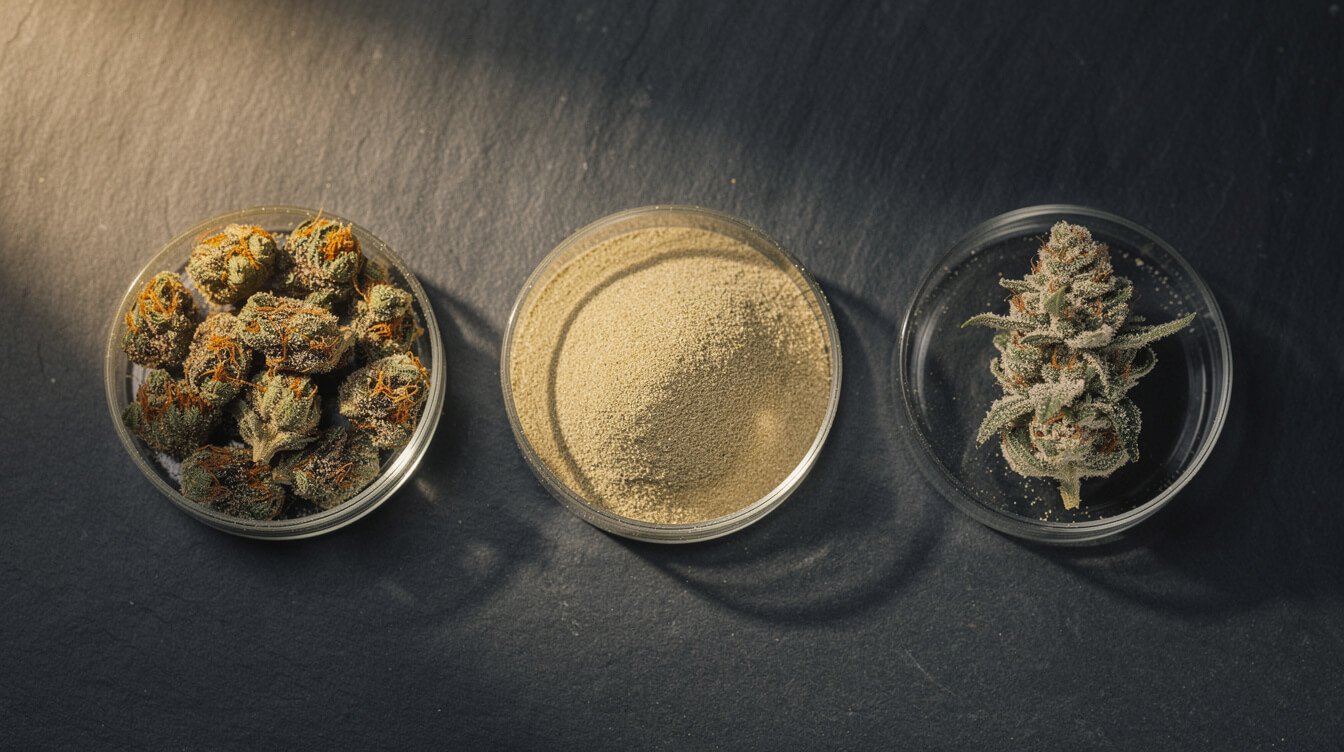
If you take one idea away from what is rosin as a question, take this one — it is the thing that makes a menu readable, and it is genuinely missing from the pages ranking for this query. The process never changes: heat, pressure, parchment. The starting material is the entire quality ladder. Three rungs:
Flower rosin
Dried, cured flower goes straight into the press. Simplest, cheapest, most common — and when a label says “rosin” with no qualifier, this is almost always it. It also carries everything that was in the flower: plant lipids, waxes, and chlorophyll ride along with the resin, which is why flower rosin runs darker and tastes more vegetal. Perfectly good product. Bottom rung.
Hash rosin
Here the flower is first washed in ice water to knock the trichome heads loose, and that sifted hash — bubble hash — goes in the press. The wash has already discarded most of the plant matter, so what comes out is cleaner, lighter, and more aromatic. “Hash rosin” is the single most useful phrase in this topic for reading a label, and it appears on almost none of the pages competing for this keyword.
Live rosin
Same as hash rosin, except the plants were frozen at harvest instead of dried and cured, and the ice-water wash happens on that fresh-frozen material. Freezing preserves the lightest, most volatile terpenes that normally evaporate during drying and curing, so live rosin is the loudest-smelling thing in the category. Top rung, priced like it.
The naming trap: live rosin and live resin are not the same product. “Live” describes the input — fresh-frozen rather than dried. “Resin versus rosin” describes whether a solvent was involved. Two independent axes, which is why the four possible names sound like variations on one thing when they are not. Live rosin is solventless. Live resin is not.
Practical upshot at a counter: find the qualifier before you look at anything else. Unqualified rosin is flower rosin, hash rosin is a real step up, and live rosin is a step up again. The price gaps between them are not marketing — they reflect genuinely different labor and material loss, which the yield section below makes concrete.
And if the resin-versus-rosin naming is still the part tripping you up, live resin vs rosin lays out the two variables that generate all five names, plus how to actually check a solventless claim.
GanjaTech, weekly
Cannabis, explained. In your inbox.
One email a week: the clearest explainers, honest gear picks, and what the science actually says. 21+ only. No spam, unsubscribe anytime.
How rosin is actually made (and the hair-straightener story that started it)
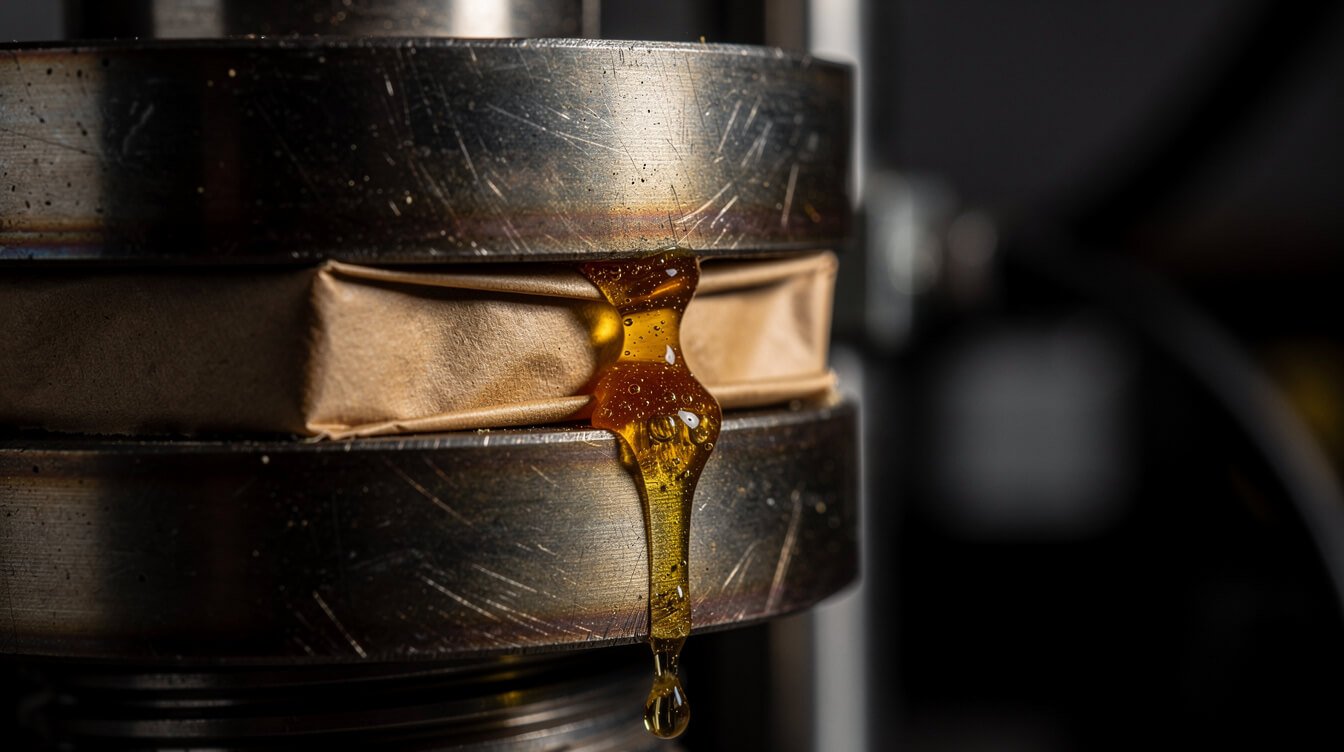
Rosin is one of the few things in cannabis with a traceable origin story, and it is pleasingly low-tech. Around 2015, a grower posting as Soilgrown Solventless — widely credited as Phil Salazar — put a lump of hash between two pieces of parchment, clamped a cheap hair straightener on it, and squeezed. Amber oil came out, and he posted it. Within a couple of years there was an industry of purpose-built presses and solventless was a premium tier.
The mechanical answer to what is rosin is that same idea with control added:
- Prep the material. Flower presses best at roughly 62% relative humidity — too dry and it crumbles and scorches, too wet and you get steam and a cloudy product. For hash and live rosin, the input is dried or fresh-frozen material washed in ice water.
- Bag it. The material goes into a mesh filter bag rated in microns — commonly around 25–37 micron for flower and 25–45 for hash. Smaller holes hold back more plant material: cleaner product, lower yield. Larger holes do the reverse.
- Wrap it. Parchment paper, folded so the oil has somewhere to run.
- Press it. Where the real decisions happen. Flower is typically pressed around 180–220°F for one to three minutes. Hash goes cooler, roughly 140–180°F, because trichome heads give up their resin far more easily than whole flower does — and heat is what degrades the terpenes you paid for.
- Collect it. Scrape the oil off the parchment with a cold tool; chilling the parchment first makes it behave.
- Cure it, or don’t. Fresh off the press it is a runny sap. Jarred and held cool for a few days — a “cold cure” — it often homogenizes into an opaque badder. That is a texture change driven by temperature history, not a quality upgrade.
The tradeoff buried in step four is the most useful fact about pressing, and not one page currently ranking for this keyword states it: low and slow gives lighter color, better aroma, and less oil; hot and fast gives more oil, darker color, and flatter flavor. Every press temperature is a position on that line, and commercial flower rosin that looks dark and tastes like nothing was usually pressed hot on purpose, because yield pays the bills. Same heat-versus-degradation logic as decarb temperature and time: you need enough heat to do the job, and every degree past that costs you something.
Treat those numbers as the ranges people actually work in, not a recipe. Every press, bag, and batch behaves a little differently, and anyone handing you one exact setting for all material is guessing.
One genuine point in rosin’s favor, stated carefully: it is the one concentrate process that is not inherently hazardous to perform. Hydrocarbon extraction involves pressurized flammable gas and is emphatically not a home project — we explain how it works, not how to do it. A rosin press is a hot plate and a hydraulic jack; the hazards are a burn and a crush injury, which is a different category of risk. That is a safety observation, not a recommendation, and it says nothing about legality — see below.
Can you press rosin at home? An honest yield expectation
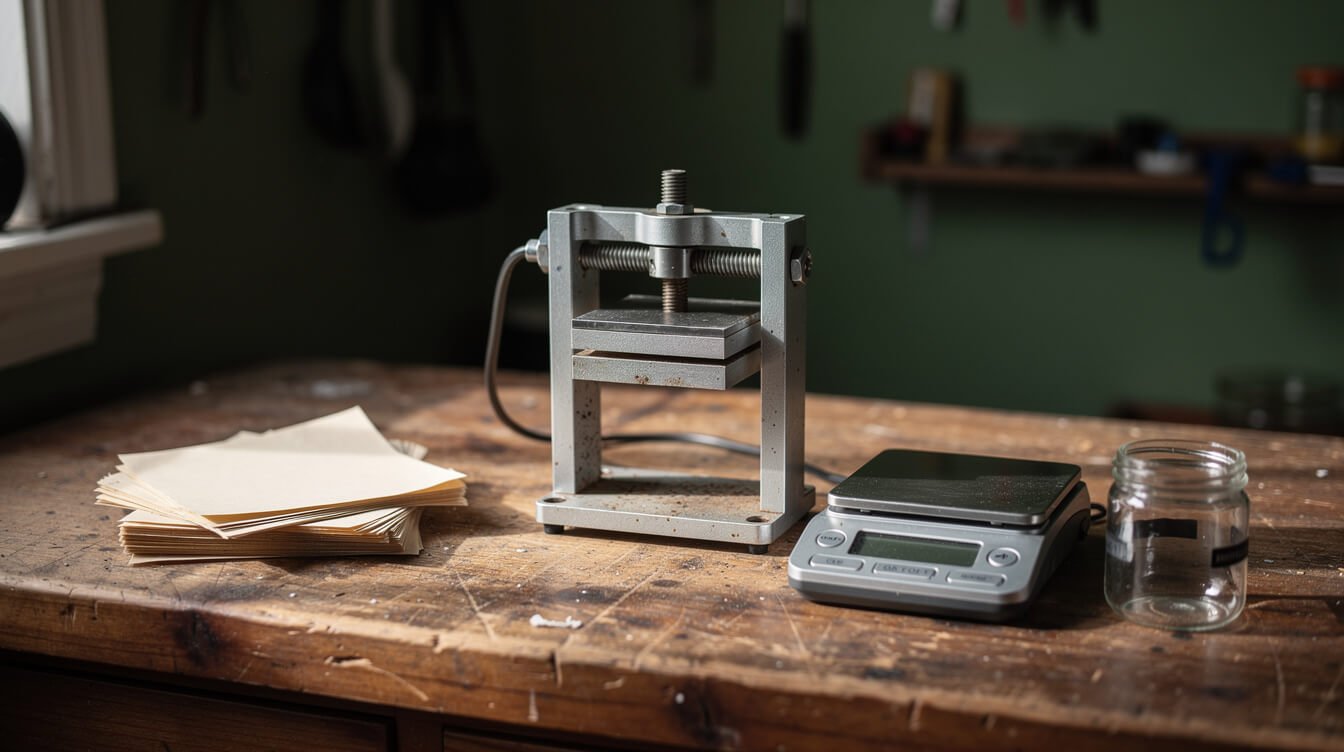
Nearly everyone who asks what is rosin ends up asking whether they can make it. Every article tells the hair-straightener story and then shows a photo of a commercial press; nobody tells you what you will actually get, because a storefront has no reason to. Here are real numbers.
Hair straightener. It works, in the sense that oil comes out. Expect single-digit percentages by weight, wildly inconsistent results, and a real chance of scorching, because a styling tool runs near 300–400°F and has no business touching cannabis resin. Fine as a one-time experiment with a gram you already legally have. Not a method.
A small 2–5 ton press with decent flower. Roughly 10–20% by weight is realistic, and good material in a well-dialed press can reach the mid-twenties. Ten grams of flower gets you around one to two grams of rosin. Old, dried-out flower or trim lands at the bottom of that range or below — resin content is what you are extracting, and trim simply has less of it per gram.
Hash rosin is where the numbers get dramatic and misleading. Quality ice-water hash presses at 60–80% or better, which sounds like a different universe — but you had to make the hash first, and washing flower into hash typically returns only single-digit to low-teens percentages by weight. Chain the two steps and the arithmetic is uncomfortable: end to end from the same flower, hash rosin yields less total oil than flower rosin does. You are not gaining quantity, you are trading it for cleanliness and aroma. That is the real reason hash rosin costs what it costs, and no page on this SERP will write it.
Which leads to the honest conclusion about home pressing: at small scale it is not a money-saving move once you count the press, the bags, the parchment, and the material you feed it. It is a control move — your input, your temperature, and a chance to find out what your own flower actually tastes like without a commercial yield target in the way.
The realistic free starting point for material you already have is the kief in the bottom chamber of a good weed grinder — sifted trichome material, which is to say unpressed hash. A few weeks of normal use in a four-piece grinder is enough to press something. And upstream quality matters more than the press does: properly cured flower presses cleanly, while anything dried too fast or stored badly gives up darker, flatter oil no matter what you do with the dial.
A necessary note before anyone orders a press: cannabis laws vary enormously by state and country, and concentrates are frequently regulated separately from flower. Some places that permit flower restrict or prohibit making concentrates at home, and concentrate possession limits are often counted differently and set much lower. Owning a press is not the question — what you do with it is. Check your own local law first, and never assume a rule from somewhere else applies to you.
How to tell good rosin from bad, and what to look for on a label
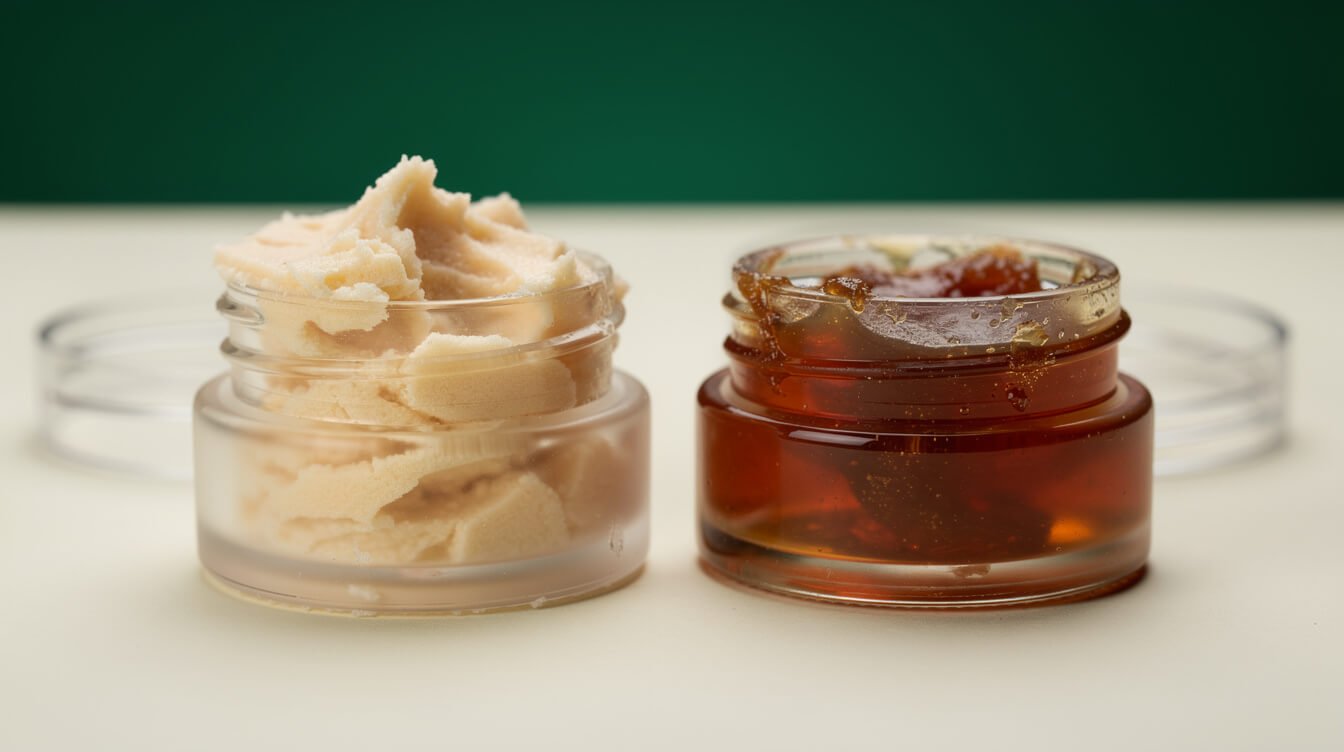
By this point what is rosin is settled, and the practical question is which rosin is worth your money. Three signals, in descending order of how much they actually tell you.
Smell is the real test. Rosin should smell like the plant it came from, immediately and strongly. Flat, hay-like, or faintly burnt-popcorn aromas mean heat damage, old material, or both. It is the most reliable read available to someone holding a jar, because terpenes are the first thing a hot press or a long shelf life destroys.
Color is a weak signal, and a gameable one. Pale blonde to light amber generally indicates a cooler press and cleaner material; dark green or brown often means a hot press, aged flower, or plant matter coming through the bag. “Generally” is doing real work there — light rosin can be made from mediocre material, and bag appeal is something producers optimize for deliberately. Color is a hint, not a grade.
Texture tells you almost nothing about quality. Badder, sap, shatter-like, sugar — consistency outcomes driven by cure technique and temperature history. A whipped badder is not better than a sap. It is just a badder.
Reading the label
- Find the qualifier. Flower rosin, hash rosin, or live rosin? Unqualified “rosin” means flower rosin. This is the first thing to look for and the most commonly skipped.
- Micron size, if listed. Lower numbers mean a more selective filter.
- A dated certificate of analysis. Solventless means no residual solvent, because none was used — but that is the only contaminant category the process rules out. Pesticides, heavy metals, and microbial contamination concentrate right along with the resin, and a press does nothing about any of them. The panel still matters, and so does its date.
- Terpene content, not just THC. A producer who lists terpene percentages at all is competing on the thing rosin is actually good at. Our terpene reference covers what the names mean.
- Cold-cured or fresh-pressed, if stated — useful context for the texture, nothing more.
Storage is simple and people still get it wrong: cold, dark, airtight, used reasonably soon. Terpenes are volatile by definition, and the aroma you paid for walks out at room temperature — the same degradation logic behind does weed go bad, only faster. One specific don’t: do not put a humidity pack in with a concentrate. Those are engineered for flower moisture content and have no useful role in a jar of rosin.
What is rosin: the questions people still ask
So what is rosin, in one sentence?
A cannabis concentrate produced by pressing cannabis material between heated plates, using only heat and pressure and no solvent of any kind.
Is rosin stronger than other concentrates?
Not because it is rosin. Concentration depends on the starting material and how selectively the resin was separated; a well-made hash rosin and a well-made solvent extract land in broadly similar territory. More usefully: potency is not a good axis for choosing. Every concentrate is far more concentrated than flower, so the practical dose step is tiny — much smaller than people coming from flower expect. Start well below what seems reasonable, wait, and do not drive.
Is rosin cleaner or safer than a solvent extract?
No solvent is used, so there is no residual solvent to purge or test for. That does not stretch to “clean.” Pesticides, heavy metals, and mold present in the plant end up in the rosin, often at higher concentration than in the original flower. Solventless rules out exactly one contaminant category; everything else depends on how the cannabis was grown, which is what a lab panel is for.
Why does rosin cost more?
Yield and labor. Solventless recovers less of the plant’s resin than hydrocarbon extraction does, hash rosin requires an entire ice-water wash before the press ever runs, and live rosin adds freezing and fresh-material handling. The price reflects material loss, not a marketing tier.
Can I really press rosin with a hair straightener?
Yes, badly. It is how the category started, and it is a legitimate way to see the process with your own eyes using material you already lawfully possess. Expect low, inconsistent yield and a real risk of scorching, since styling tools run far hotter than rosin wants.
Is rosin the same as live rosin?
Live rosin is a type of rosin — the kind pressed from ice-water hash made from fresh-frozen plants. All live rosin is rosin. Most rosin is not live rosin.
What about the rosin for violin bows?
Different substance, shared name, real reason: both are plant resin concentrated by heat into a solid. Pine rosin is made by driving the volatile fraction off; cannabis rosin is made trying to keep it.
Final thoughts: rosin, honestly
The answer to what is rosin is one sentence long — heat and pressure, no solvent — and almost everything that makes the topic feel complicated is really a question about what went into the press. Flower, then sifted hash, then fresh-frozen hash: that is the ladder. Once you can spot the qualifier on a label, the category stops being confusing and the prices start making sense.
It is a likeable corner of cannabis, too. The whole thing started with a hair straightener and a piece of parchment, the technique rewards patience over equipment, and the best version is the one that smells the most like the plant it came from. If you grow, pressing your own kief is the cheapest way to find out what your flower is really carrying.
The usual, and we mean it: this is adult-use information for people 21 and over, nothing here is medical advice or a health claim — talk to a doctor for anything in that territory — and cannabis laws differ sharply from one place to the next, with concentrates very often regulated on their own stricter terms. Know your local rules, start smaller than your instinct says, never drive, and enjoy it responsibly.
Before you go
Get the next explainer first
We publish a new one every day. The best of the week, plus what's new in the shop, lands in one short email.