Best LED Grow Light for One Plant (No Tent, No Overkill)
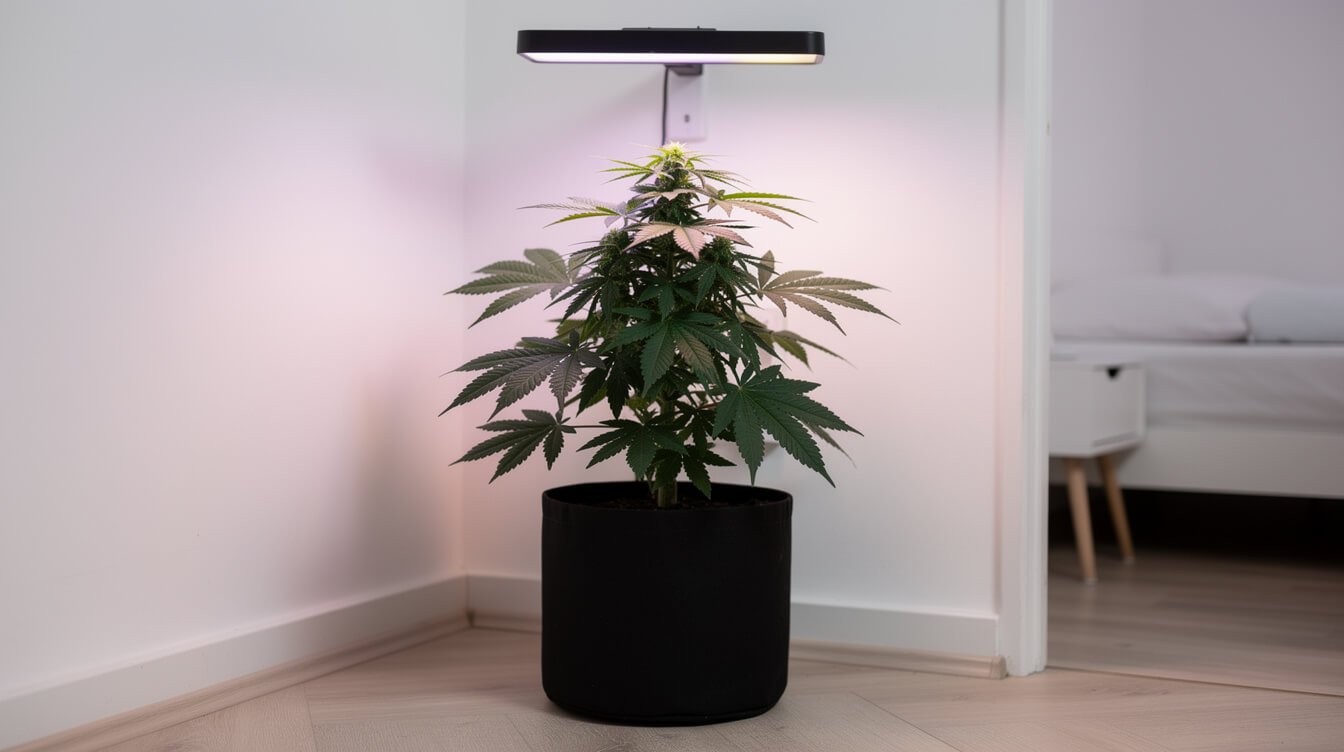
If you’re growing one cannabis plant — not a tent, not a room, just one plant in a corner — you need the best LED grow light for one plant, not the best light for a tent. Most “best grow light” guides are useless for this because they’re written for people building a 4×4 tent with 450+ watts of light and a full ventilation stack. You don’t need any of that. You need enough light for one plant, in a small footprint, without buying gear sized for a setup you don’t have.
This guide answers the question we saw asked, almost word for word, in a grower forum thread: what’s the cheapest, simplest light that’s actually enough for one plant, with no tent and no space to hang a big panel? Below are real budget tiers, the wattage math that actually applies to a single plant, and what multi-plant features you can skip entirely.
Why one plant needs a different light than a full tent setup
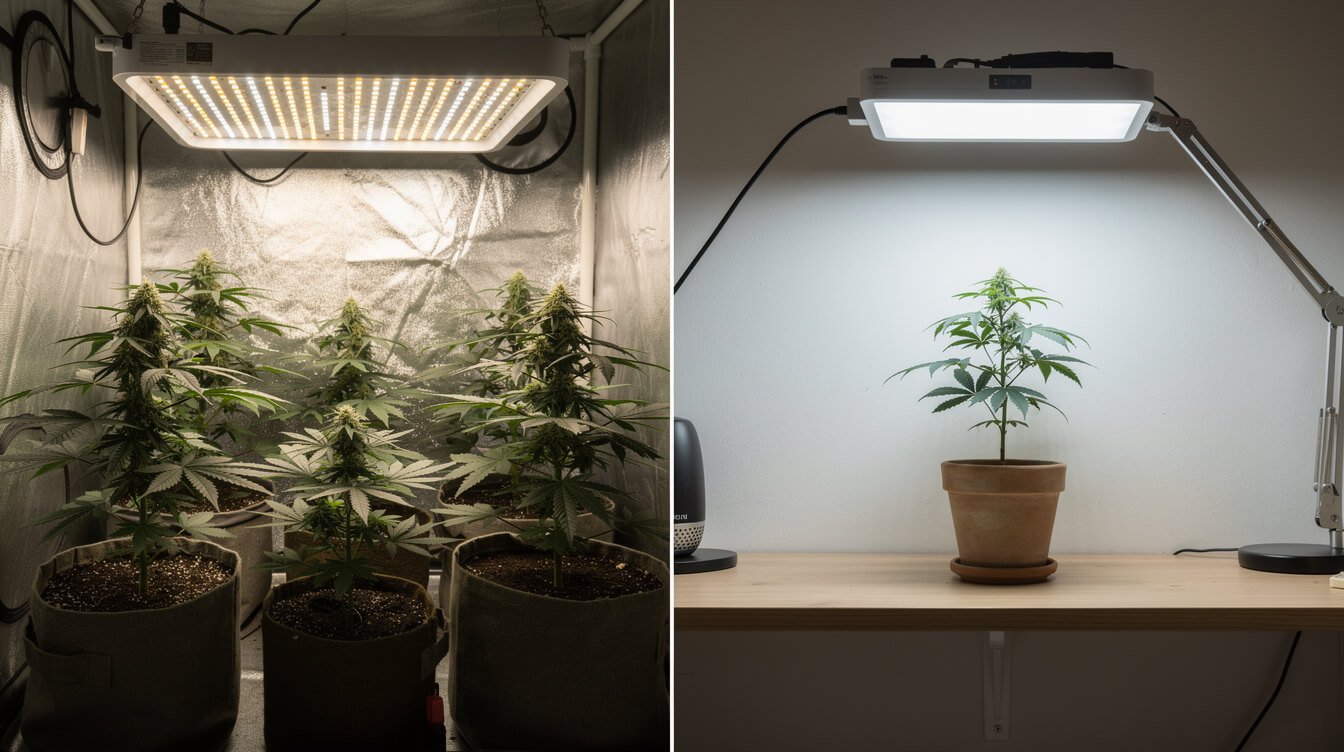
Grow light guides are built around tents, because that’s where most of the LED market’s revenue is. A 4×4 tent holding four to six plants genuinely needs 450-600 watts of quality LED to fill that canopy edge to edge. Manufacturers spec their fixtures for that footprint, and every “best grow light” roundup inherits that assumption — Spider Farmer SF-series, HLG Blackbird, Mars Hydro FC series, all sized and priced for multi-plant tents.
One plant in a 2×2 space, a closet corner, or a shelf next to a window doesn’t need that. It needs light dense enough to cover roughly a 2-foot circle, not a 4-foot square. Buying tent-sized gear for one plant means paying for coverage you’ll never use and generating more heat than a small, unventilated space can handle comfortably.
The forum thread that inspired this guide is a good example: a grower with one plant in a bedroom, no tent, and reptile terrarium lights nearby asking what would actually be “good enough” without buying a full panel. Replies ranged from “a $60-100 compact LED bar” to “a used $50 panel off a resale marketplace” to “skip the reptile light entirely, it’s not built for this” — real growers converging on the same answer this guide lands on, without a single one of them recommending tent-scale gear.
The three real constraints for a single-plant grower
- Space — often a shelf, closet, or corner, not a dedicated tent
- Budget — one plant doesn’t justify a $200+ quantum board
- Discretion — many single-plant growers specifically don’t want a visible tent or reflective panel
There’s also a fourth constraint that rarely gets named directly: patience with complexity. Tent-scale guides assume you want to learn about daisy-chaining fixtures, zoning multiple lights, and tuning a dimmer curve across a canopy. A single-plant grower usually wants to plug in one light, point it at one plant, and get on with their day. That’s a legitimate preference, not a compromise — and it should shape which fixture you buy, not just the wattage.
The wattage math for a single plant (per-plant PPFD, not per-tent)
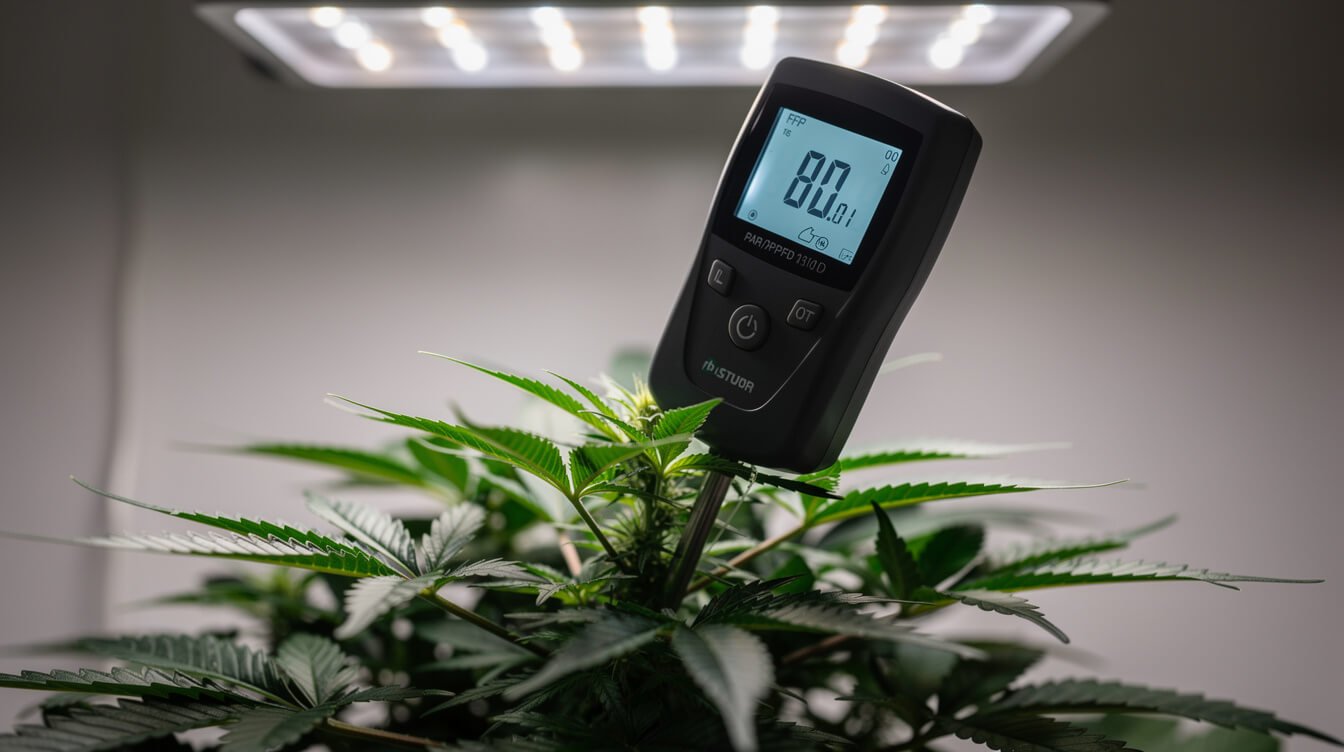
Grow light wattage numbers are almost always quoted per tent, which makes them meaningless for a single plant unless you convert them. Here’s the actual math.
Cannabis wants roughly 600-900 μmol/m²/s of PPFD (photosynthetic photon flux density) at the canopy during flowering, less during veg (300-500 μmol/m²/s). A quality modern LED delivers somewhere around 1.5-2.5 μmol/J of efficacy, and a single plant’s canopy — once it’s filled out — covers roughly 2 to 2.5 square feet, not the 16 square feet of a 4×4 tent.
Run the numbers and a single plant in flower needs somewhere in the neighborhood of 100-150 real watts of quality LED positioned correctly above it, not the 450+ watts a tent guide will tell you to buy. That’s the entire reason “best grow light” roundups don’t work for you — they’re solving for 8x the canopy area you actually have.
What actually changes the math
- Growth stage — seedlings and early veg need far less (even a 30-45w fixture can carry a seedling), flowering needs the most
- Hang height — a light held too high wastes intensity; most compact single-plant fixtures want to sit 12-18 inches above canopy
- Reflectivity of the space — a closet with light-colored walls returns more usable light than an open room corner
The takeaway: don’t buy on watts alone, and don’t buy based on a spec built for a tent 6-8x the size of your grow space.
A worked example, because “100-150 watts” is still vague
Say you’re growing one plant on a 2×2-foot shelf. That’s 4 square feet of usable space, but the plant’s actual canopy — the leafy part that matters — will realistically fill about 2 to 2.5 square feet of it once mature. Target 700 μmol/m²/s at the canopy for flower (a reasonable mid-point, not the max). Multiply that by the canopy area and divide by a modern LED’s typical efficacy (roughly 2.0 μmol/J for a decent — not flagship — diode), and you land close to 105-130 actual watts delivered at the canopy. Add a margin for light lost to spread and imperfect positioning, and 100-150 real watts is where the math consistently lands, which is exactly why that range shows up across every budget and mid-range tier in this guide, not as a coincidence.
The marketing-watts trap
Almost every LED grow light sold online lists two numbers: an inflated “equivalent wattage” (often 2-4x the real draw, based on comparing to old HPS bulbs) and the actual wattage the fixture draws from the wall. A listing that says “1000w LED” is very often a 100-150w real-draw fixture — which, per the math above, may be exactly correct for one plant. Don’t dismiss a listing for looking “too small”; check the actual watt draw (usually buried in the specs) before ruling it out.
Budget pick: best LED grow light for one plant under $70
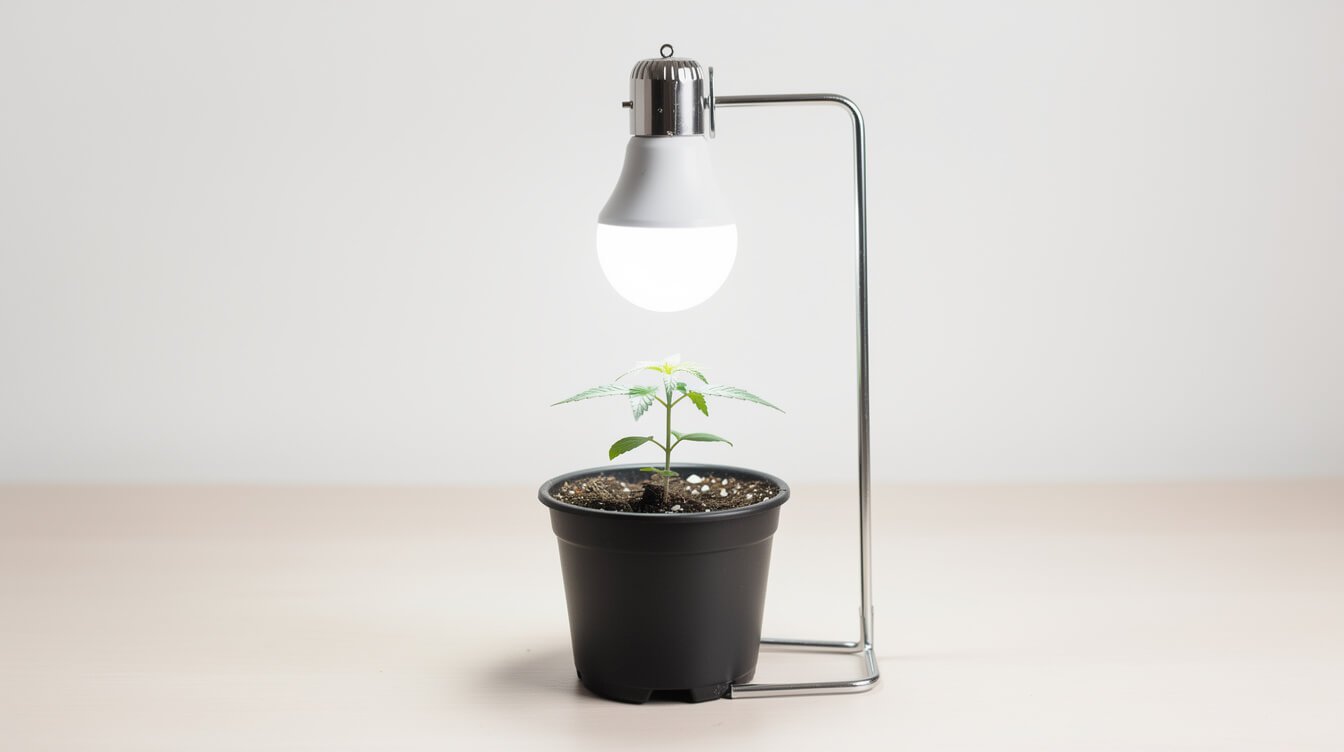
For a grower who wants to spend as little as possible and still get a real result, the target is a 75-100 watt LED fixture in the $40-70 range. This is the tier real single-plant growers actually land on — not the cheapest clip-on “grow bulb” sold for houseplants (those are usually 15-30w equivalent and undersized even for veg), but a genuinely rated LED panel or bar sized for one plant.
What to look for at this price:
- Full-spectrum white LED (not old-style purple/pink diodes — full spectrum grows better and doesn’t tint your whole room)
- Rated actual wattage (not “equivalent to 600w HPS” marketing language — check the actual draw)
- A simple hanging kit or clamp, since you’re mounting to a shelf or closet rod, not a tent frame
This tier will comfortably carry one plant through veg and produce a real, smokeable harvest through flower — it won’t rival a $300 quantum board’s yield, but it’s genuinely enough light for one plant, which is the entire point.
This is also the exact tier real growers land on when they ask this question in public. In the same forum thread this guide is built around, the most-recommended fixture wasn’t a premium panel — it was a compact adjustable LED bar that regularly sells for under $100 with a promo code, described by multiple people actually running it as “excellent,” “very little heat even at full power,” and good enough to carry a plant through several full grows. A secondhand quantum-style panel in the same wattage range, picked up used for $50 or less, came up almost as often. The pattern across every real recommendation: buy for the wattage math, not the brand name, and don’t be afraid of a secondhand fixture from a reputable line — LEDs have no moving parts to wear out and typically outlast several grow cycles.
Mid-range pick: best LED grow light for one plant with room to grow
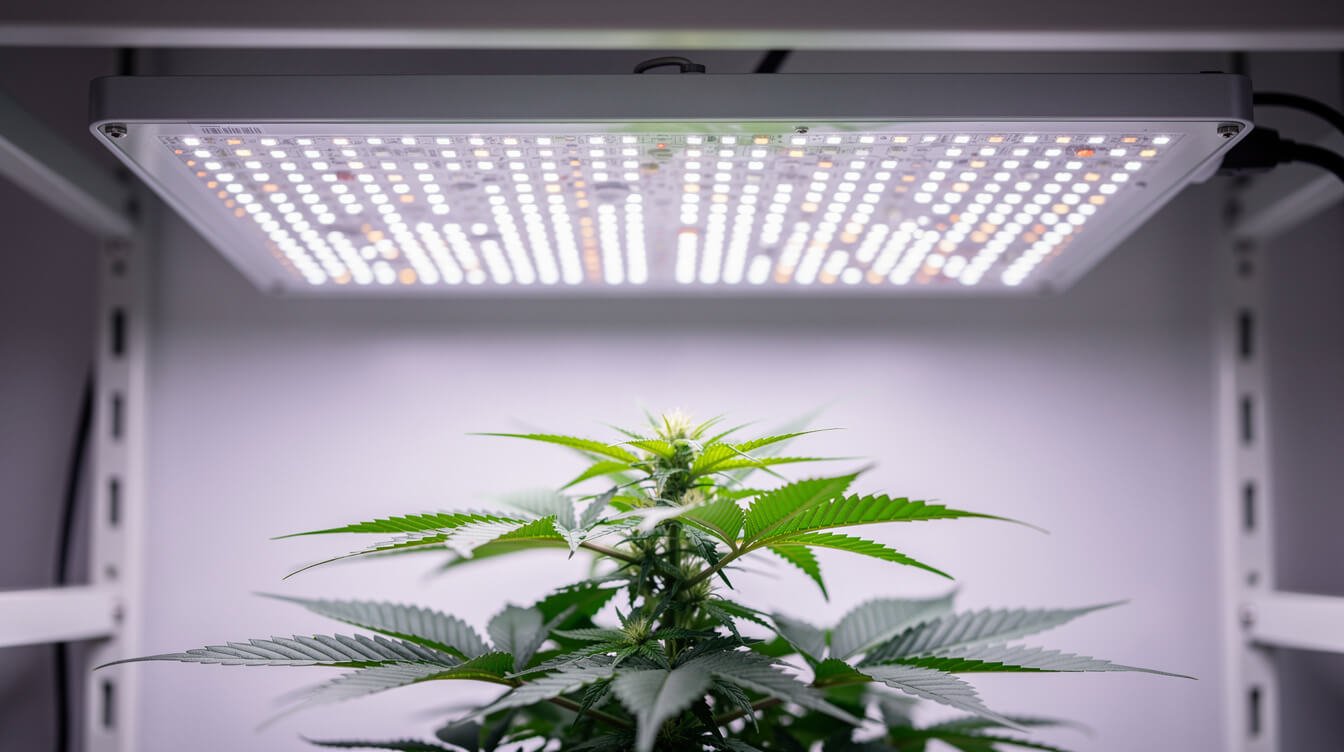
If your budget stretches to $90-150, a compact quantum-board-style fixture in the 100-150w range is the sweet spot for a single plant. This is the tier where you start seeing meaningfully better bud density and terpene development, because the diode quality and spectrum tuning are better than budget-tier panels, even at similar wattage.
What the extra money buys you:
- Samsung or similar branded diodes (more efficient per watt than generic diodes)
- A dimmer, so you can run it lower during seedling/early veg and turn it up for flower — useful in a small space where you can’t just move the light farther away
- Better heat dissipation, which matters more in an unventilated closet or bedroom corner than it would in a tent with exhaust fans
This is also the tier most single-plant growers land on if they plan to grow more than once — the fixture will comfortably scale to two small plants later if your setup grows.
The other thing worth paying for at this tier: a driver (the internal component that converts wall power to the LED’s operating voltage) rated for continuous duty rather than the cheapest available part. Budget-tier fixtures sometimes cut corners here, and a failing driver is the most common reason a “great light” dies after a year of daily use. It’s not something you can inspect before buying, so lean on reviews that specifically mention months or years of use, not just unboxing impressions.
GanjaTech, weekly
Cannabis, explained. In your inbox.
One email a week: the clearest explainers, honest gear picks, and what the science actually says. 21+ only. No spam, unsubscribe anytime.
No-tent / stealth-friendly pick
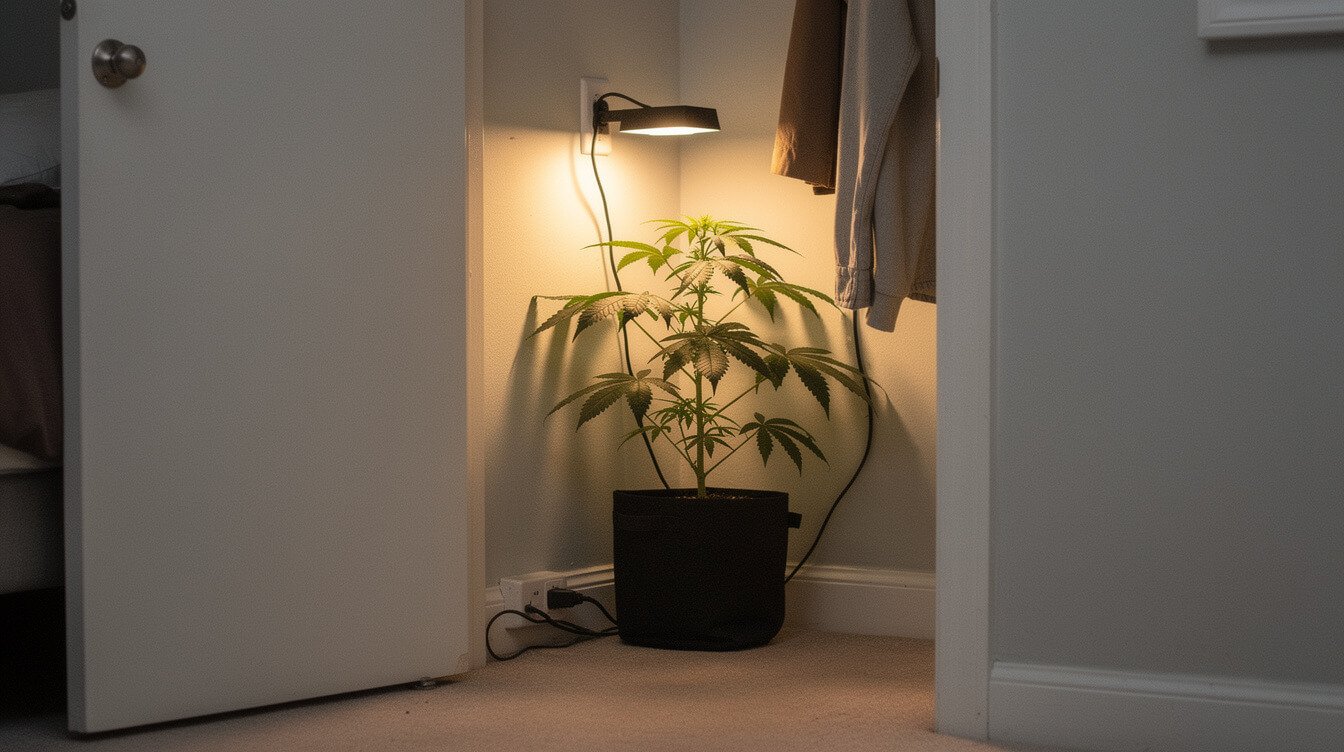
Some single-plant growers aren’t just avoiding a tent for cost reasons — they specifically don’t want a visible panel, reflective mylar, or a boxy tent frame in a bedroom or shared space. For that setup, prioritize a fixture that’s flat, low-profile, and can mount flush to a shelf underside or closet ceiling rather than hanging on cords in open air.
A few things matter more here than in a standard setup:
- Light containment — a closet with a door that closes, or a dark-colored sheet/curtain, does more for discretion than any specific fixture
- Noise — most compact single-plant LEDs are passively cooled (no fan), which matters if the plant is in a bedroom
- Smell, not light, is usually the real discretion problem — a small carbon filter matters more for stealth than the light choice does
If you’re growing where a full tent genuinely isn’t an option, a closet, an unused corner behind furniture, or the top of a wardrobe with the fixture mounted underneath the shelf above all work — the plant doesn’t know the difference between a $300 tent and a cleaned-out closet, as long as the light and airflow are right.
Airflow still matters even without a tent. A single small clip fan moving air across the plant (not blasting it directly) does two jobs at once: it strengthens stems as the plant flexes against the breeze, and it prevents the still, humid microclimate around dense foliage that invites mold late in flower. This is the one piece of gear worth adding to a no-tent setup even on the tightest budget — it’s inexpensive, quiet at low speed, and meaningfully lowers the risk of losing a plant to bud rot right before harvest.
What to skip (features built for multi-plant setups you don’t need)
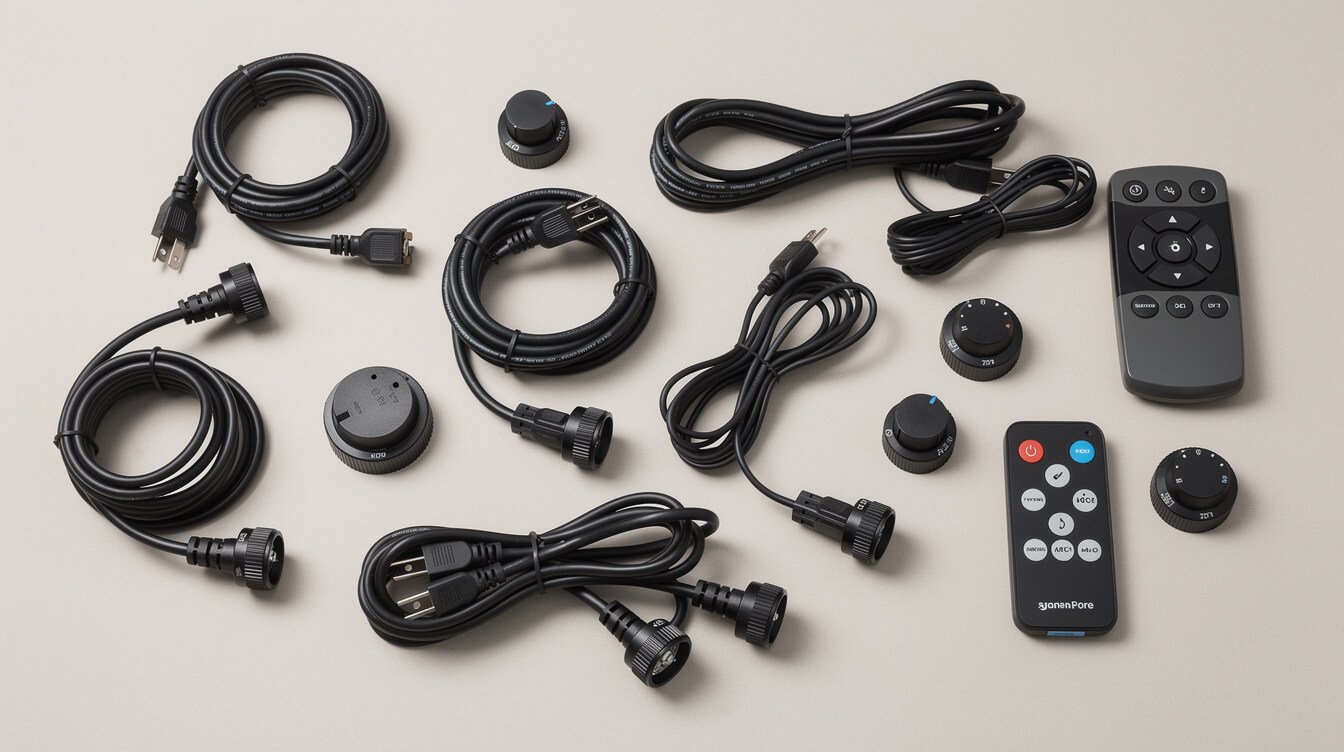
A lot of what gets marketed as a “premium feature” on grow lights only matters at tent scale. Skip paying extra for:
- Daisy-chain capability — lets you link multiple fixtures together on one controller. Irrelevant with one light.
- App/Bluetooth scheduling across zones — nice for someone running four tents, pointless complexity for one plant on a lamp timer.
- Massive footprint ratings (4×4, 5×5) — you’re paying for diodes and coverage you’ll never use. A fixture rated for a 2×2 footprint is the correct size.
- Commercial-duty cooling (multiple fans, heat sinks sized for 300w+ draw) — a 100-150w fixture doesn’t need it, and fans add noise you don’t want in a bedroom setup.
The instinct to “buy a bit more than I need just in case” is understandable, but with grow lights it usually means overpaying for coverage and dealing with more heat and light spill than a small space wants.
One thing not to skip: a basic timer
The one accessory worth buying regardless of budget tier is a simple mechanical or digital outlet timer. Cannabis needs a strict light schedule — 18 hours on/6 off during veg, a hard 12/12 split to trigger and sustain flowering — and manually flipping a switch at the right hour every day for weeks is where most single-plant grows quietly go wrong. A $10-15 timer removes the single biggest human-error risk in the entire process, and it’s a much better use of a tight budget than any feature on the “skip” list above.
Frequently asked questions
Can a regular LED bulb work for one plant?
A standard household or “full spectrum” LED bulb sold for houseplants generally isn’t enough for cannabis past the seedling stage — the actual usable light output is too low. It’s genuinely enough to get a seedling started, but plan to move to a real grow-rated fixture before flowering, or expect a very small, underdeveloped harvest.
How close should the light be to one plant?
Most compact single-plant LED fixtures in the 75-150w range want to sit roughly 12-18 inches above the canopy, closer during seedling stage and slightly farther as the plant fills out and light intensity needs to spread. Check your specific fixture’s manufacturer guidance — “hang height” varies with diode density and driver wattage.
Is one plant with a small light actually worth it, or should I just do a tent?
If you only want to grow one plant, ever, a small dedicated fixture is the better call — a tent is optimized for multi-plant canopy coverage and airflow, and running one plant in a 4×4 tent means most of your light and space go unused. Scale the gear to the grow, not the other way around.
Does one plant under a small light still need a carbon filter?
Light output has nothing to do with smell — that’s a ventilation and filtration question, separate from the grow light choice. A single plant can absolutely still smell strong during flower regardless of what light you use above it.
Will a cheap LED light “burn” my plant?
Actual light burn (bleaching at the very top of the canopy) is caused by hanging any light — cheap or expensive — too close to the plant, not by the fixture being budget-tier. It’s more common with budget lights specifically because manufacturer hang-height guidance is often vague or missing; when in doubt, start higher than you think you need to and lower the fixture gradually over a few days while watching the top leaves for stress.
How long will a budget single-plant LED actually last?
A reasonably well-made 75-150w fixture from a known grow-light brand typically runs for several years of regular use — LEDs themselves degrade very slowly, and the driver is usually the first part to fail, if anything does. The main variable is how much heat the fixture sheds; a passively cooled light run in a warm, poorly ventilated closet will stress its components faster than the same light in a room with normal airflow.
Final thoughts
The “best LED grow light” conversation online is almost entirely written for tent-scale growers, which leaves single-plant growers either overpaying for coverage they don’t need or underbuying because the wattage numbers don’t make sense at their scale. Once you convert the math to what one plant’s canopy actually needs — roughly 75-150 real watts depending on budget and stage — the decision gets a lot simpler: pick the tier that fits your budget and space, skip the multi-plant features, and put the money you save toward getting the fixture height and PPFD right instead.
Curious how the broader buying process works once you’re ready to compare more fixtures side by side? Our full guide to picking a grow light covers spectrum, PPFD, and brand-agnostic buying criteria in more depth. And if this is your first plant ever, our honest first-grow walkthrough covers everything else — soil, watering, and the mistakes most beginners make before they even get to lighting.
Before you go
Get the next explainer first
We publish a new one every day. The best of the week, plus what's new in the shop, lands in one short email.