Stainless Steel Weed Grinder: Is It Actually Worth the Upgrade?
A stainless steel weed grinder costs two to four times more than an equivalent aluminum one, and most of the marketing copy pushing you toward it treats aluminum like a hazard. It isn’t. Stainless is genuinely better at a few specific things — it just isn’t the universal safety upgrade the grinder sites imply, and almost none of them explain what “stainless steel” actually means once you’re past the marketing page. Here’s the honest answer, then the grade-level detail nobody else bothers with.
The quick answer: when stainless is worth it, when it isn’t
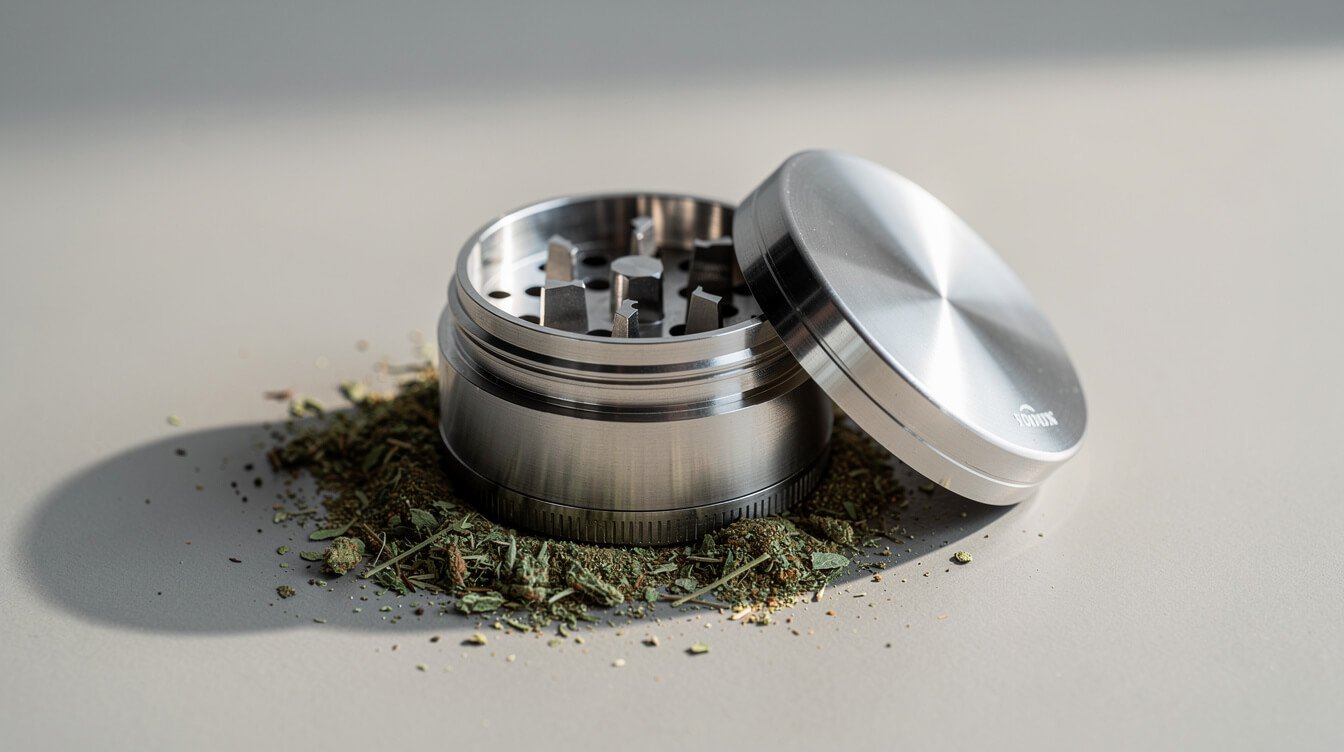
Stainless steel earns its price premium if you grind daily, you’re rough on gear, or you want a grinder that will genuinely outlast a decade of use without the teeth dulling. It’s also the better call if you’re bothered by the idea of any metal flecks in your flower, even though — as we’ll get into — that risk is smaller than it sounds for any reputable brand.
It’s not worth it if you grind a few times a week, you’re not precious about gear, and you’d rather put the price difference toward better flower or a nicer grind mechanism in a mid-range aluminum piece. Hard-anodized aluminum from a real brand lasts years of normal use, and the “aluminum flakes in your weed” scare that sells a lot of stainless grinders is mostly about cheap, unanodized aluminum — not the aluminum grinders worth buying in the first place.
The honest short version: stainless buys you longevity and peace of mind, not a fundamentally different or safer grinding experience. Think of it the same way you’d think about a $300 chef’s knife versus a $40 one — both cut an onion fine, but one of them is still sharp after a decade of daily use and the other needs replacing. That’s the actual trade you’re making, not a safety upgrade.
What “stainless steel” actually means — 304 vs. 316 vs. 430 grade
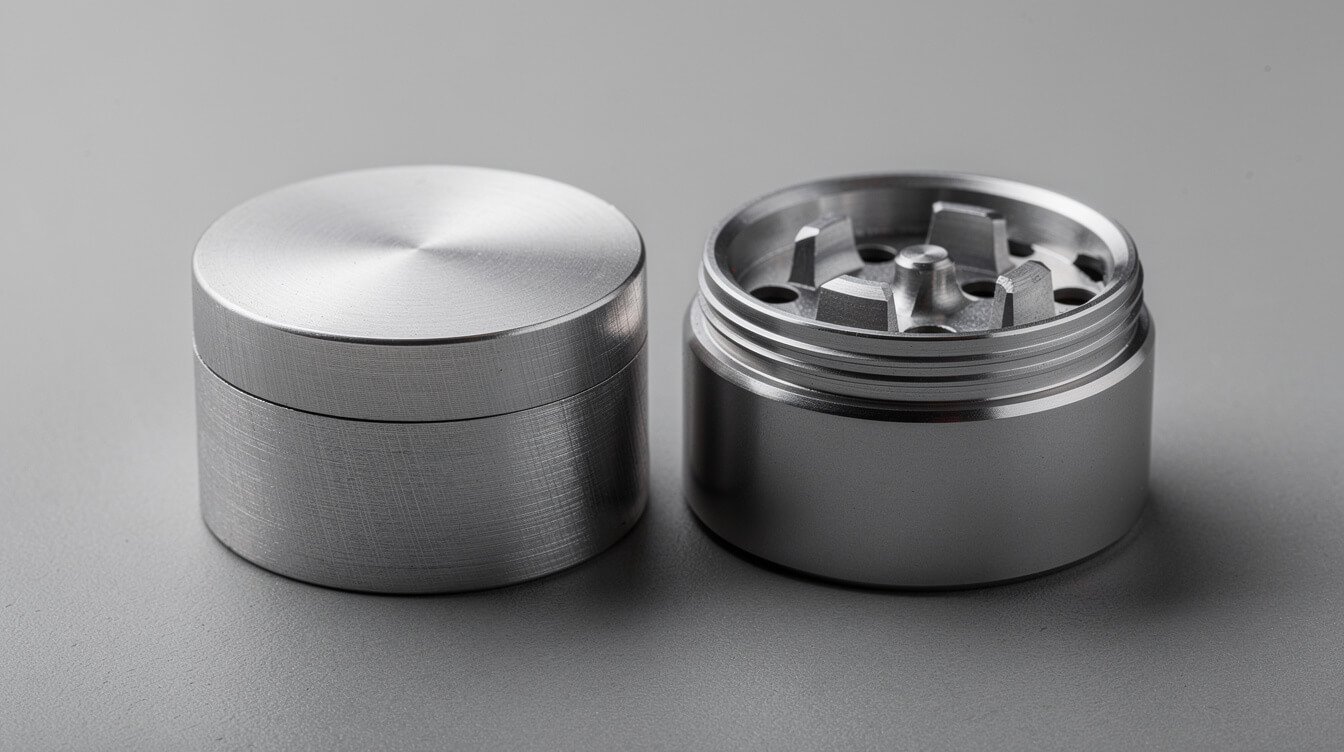
This is the part almost every grinder review skips entirely: “stainless steel” isn’t one material. It’s a family of steel alloys, and the grade printed (or not printed) on the box tells you more about a grinder’s durability and feel than the word “stainless” ever will.
304 stainless — the food-grade standard
304 is the same grade used in most kitchen sinks, cookware, and food-prep equipment. It’s non-magnetic, highly corrosion-resistant, and the safe default for anything that touches something you’re going to consume. Most of the better stainless grinders on the market use 304, even when the listing just says “surgical-grade” or “food-grade” instead of naming the number.
316 stainless — the upgrade you rarely need
316 adds molybdenum, which improves resistance to chloride and acidic corrosion — the kind of thing that matters on a boat deck or surgical implant, not a grinder that dries out between sessions. A handful of premium grinders use 316 as a marketing point. It’s not wrong, it’s just solving a corrosion problem your grinder was never going to have in the first place.
430 stainless — the budget grade to watch for
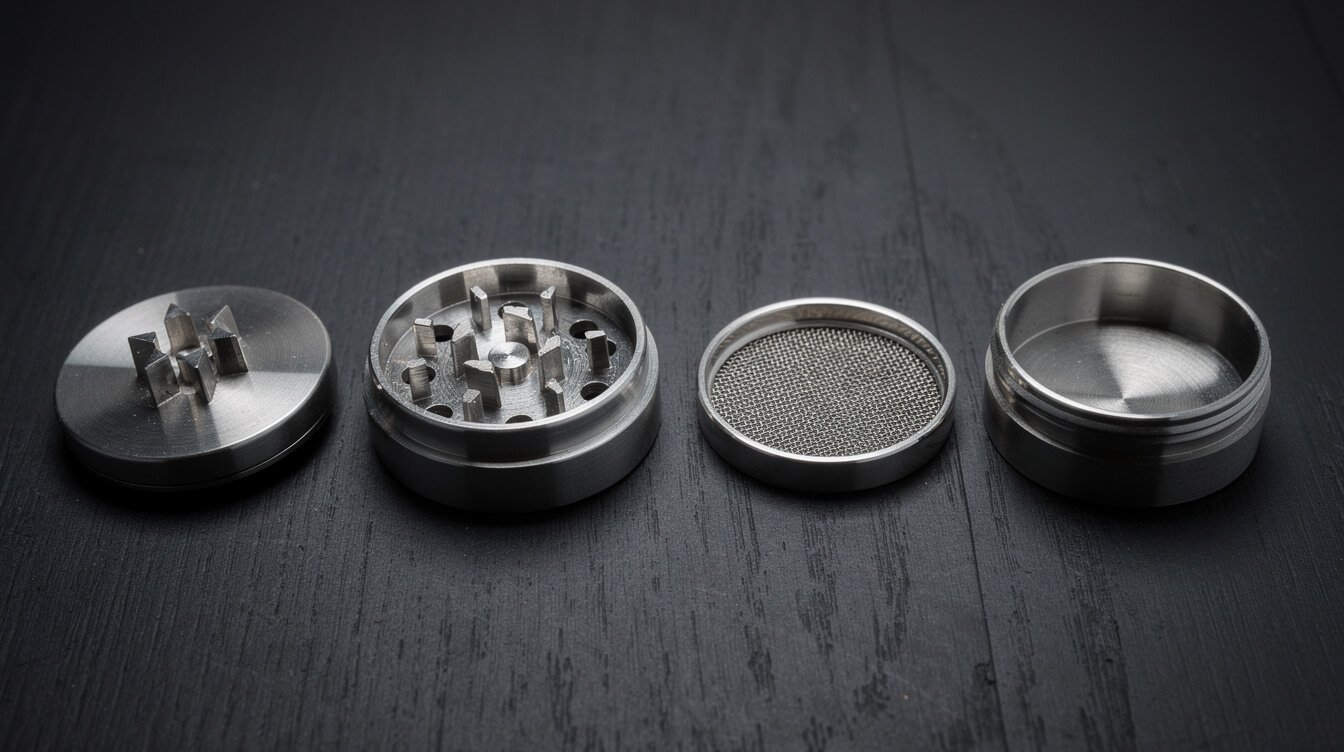
430 is a cheaper, magnetic stainless alloy with less chromium and no nickel. It resists rust reasonably well in dry conditions but is more prone to pitting from acidic residue over time — which matters more than it sounds, since cannabis resin is mildly acidic. Budget “stainless steel” grinders that don’t specify a grade are frequently 430, dressed up in stainless branding without the corrosion resistance that name implies.
Why manufacturers don’t always list the grade
Grade numbers cost a manufacturer nothing to print, so when a listing leaves it out, it’s usually because the grade wouldn’t help the sale. A brand using genuine 304 almost always says so, because it’s a real differentiator worth the extra machining cost. A brand quietly using 430 has every incentive to just say “stainless steel” and let the word do the marketing work the number would undercut. This isn’t universal — some smaller brands simply don’t think to list it — but as a rule of thumb, the absence of a grade number correlates more often with the cheaper alloy than with an oversight.
The takeaway: the word “stainless” on a product page is doing a lot of unearned work. If a listing won’t tell you the grade, assume it’s the cheaper one — and if you already own a grinder without a listed grade, the magnet test in the next section will tell you in about ten seconds.
Is aluminum actually unsafe, or is that just marketing?
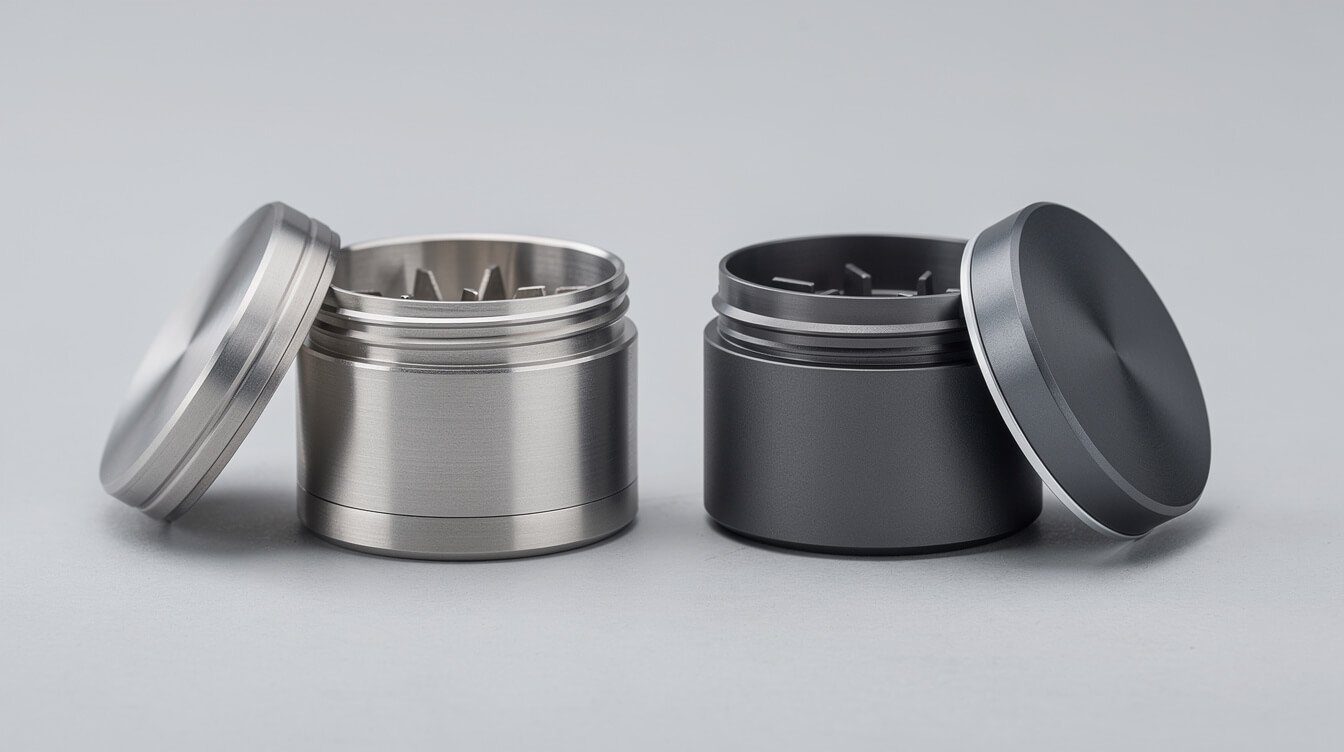
Fact-check time, since this is the claim doing most of the selling. The concern is real but overstated: soft, unanodized aluminum (or aluminum with worn-off anodizing) can shed microscopic metal particles onto ground flower over years of heavy use, mostly at the teeth, where metal-on-metal contact happens thousands of times. That’s a documented, physical wear process — not a myth.
What gets exaggerated is the health framing. There’s no research showing trace aluminum flecks from a worn grinder pose a meaningful health risk when combusted or vaporized at the quantities involved — this is a durability and grind-quality issue (dull teeth, gritty texture, uneven burn) dressed up as a safety one by sites that also happen to sell stainless grinders. We’re not making a medical claim either way — there’s no cited toxicology data here worth leaning on, in either direction, and if you have specific health concerns about metal exposure, that’s a conversation for a doctor, not a grinder review.
The practical version: a quality hard-anodized aluminum grinder from a real brand will outlast most users’ patience before it degrades enough to matter. A $12 unbranded aluminum grinder from a gas station is a different story — thinner walls, softer alloy, and anodizing that wears through in months instead of years — but that’s a “buy cheap gear” problem, not an “aluminum” problem. The same logic applies in reverse: a $15 no-name “stainless” grinder off a marketplace listing isn’t automatically safer or more durable than a well-made anodized aluminum one from an established brand. Brand and build quality predict longevity better than the base metal alone does.
Grade, magnetism, and kief screen performance
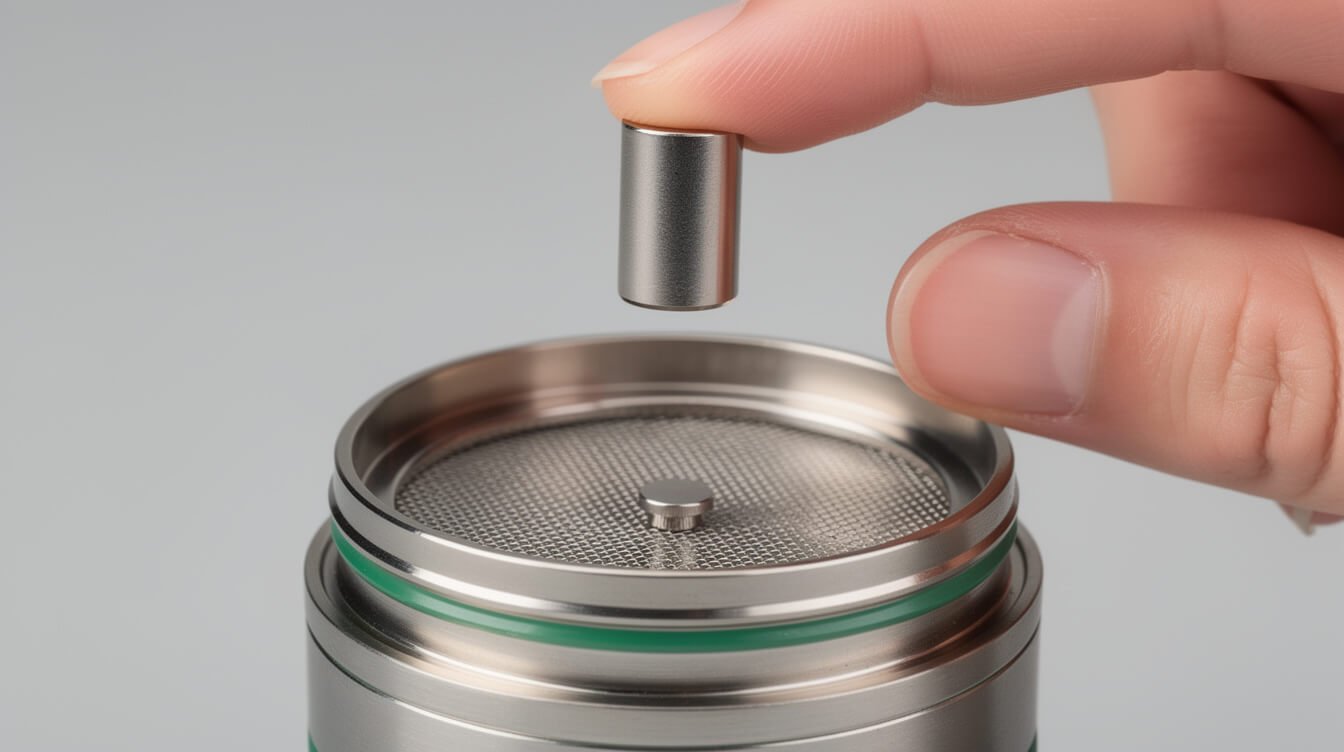
Here’s a genuinely useful trick almost no gear guide mentions: you can tell a lot about your grinder’s steel grade with a $2 refrigerator magnet.
304 and 316 stainless are austenitic grades — they’re non-magnetic (or only very weakly magnetic after machining stress). 430 is ferritic and strongly magnetic. Hold a magnet to the body and the kief screen: a strong pull almost always means 430, a weak or absent pull points to 304/316.
Why this matters beyond bragging rights: kief screens see the most repeated friction and moisture exposure of any part in the grinder, since that’s where fine trichome heads and residual plant oils collect and sit. A lower-grade, magnetic screen is more prone to pitting and corrosion right where you need consistent mesh performance most. If your grinder’s kief catch is losing its shimmer or looking dull and speckled faster than the rest of the piece, grade is a more likely explanation than “normal wear” — and it’s a legitimate reason to pay up for a 304 screen even on an otherwise mid-range grinder.
There’s a second, smaller effect worth knowing: some users report a faint metallic taste from lower-grade magnetic stainless after months of heavy use, most likely from micro-pitting exposing fresh metal surface to resin. It’s anecdotal, not something we’d call a documented pattern, but it’s consistent with the same pitting mechanism described above, and it’s one more reason the magnet test is worth thirty seconds of your time before you commit to a grinder you’ll be using daily for years.
GanjaTech, weekly
Cannabis, explained. In your inbox.
One email a week: the clearest explainers, honest gear picks, and what the science actually says. 21+ only. No spam, unsubscribe anytime.
Corrosion and resin buildup over years of use
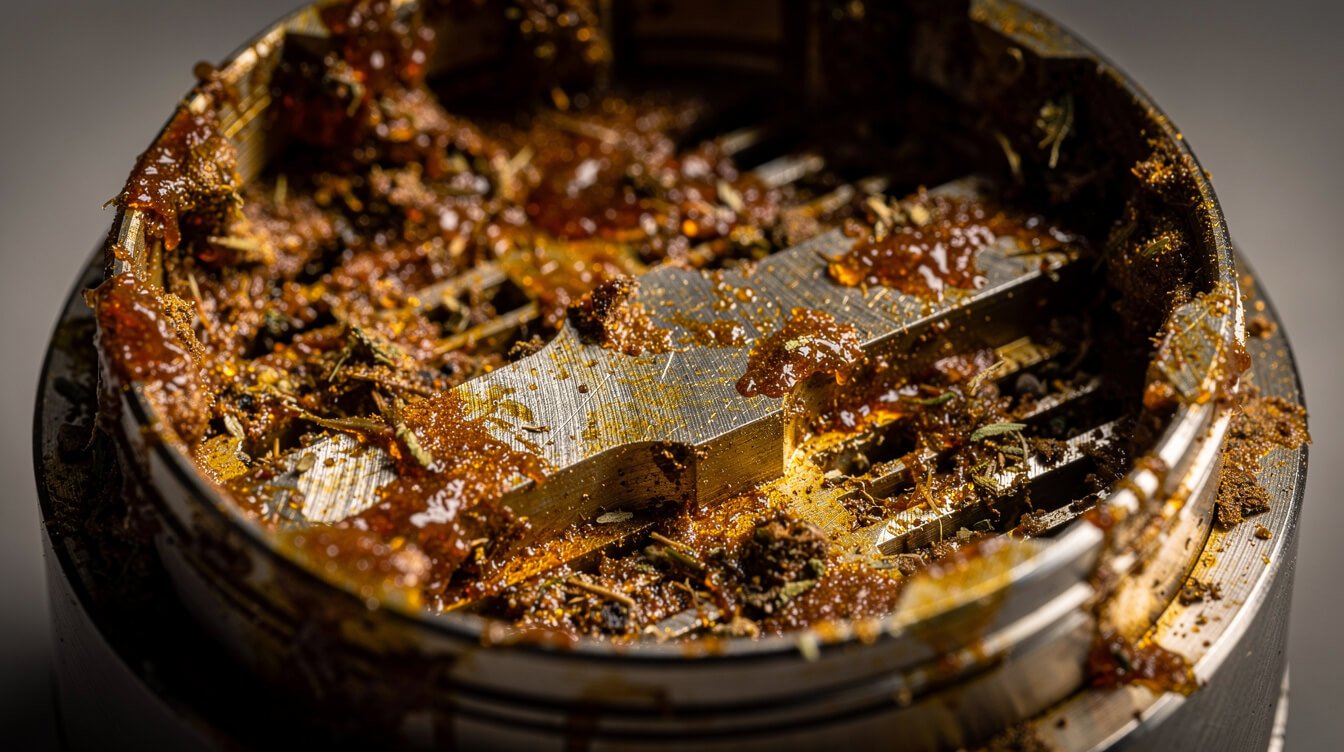
Stainless doesn’t rust the way bare steel does, but “stainless” doesn’t mean “immune.” Cannabis resin and terpenes are mildly acidic, and left to sit — especially in a humid climate or a grinder that never gets fully dried after cleaning — that residue can eventually etch a dull, matte patina into lower-grade stainless, or in rare cases contribute to light pitting on 430-grade parts.
304 and 316 handle years of resin exposure with essentially no corrosion, which is the actual argument for spending more — not that aluminum is dangerous, but that a good stainless grinder will still be performing identically in a decade, while sticky buildup left uncleaned is what actually damages any grinder, metal or otherwise, over time. If you’re already using one of these daily, our guide to curing cannabis the right way covers the moisture-control habits that also keep your gear from gumming up between sessions.
Climate matters more than most buyers expect. In a humid environment, condensation inside a sealed grinder chamber is a bigger corrosion driver than the resin itself — moisture sits against the metal for hours between uses instead of evaporating quickly the way it does in a dry climate. If you live somewhere humid and grind daily, that’s a legitimate, non-marketing reason to prioritize 304 over 430, independent of how careful you are about cleaning.
The real lesson: buildup and trapped moisture, not the metal itself, are what age a grinder. Grade determines how forgiving your grinder is if you’re not perfectly diligent about drying it after every clean.
Best stainless steel grinders worth buying
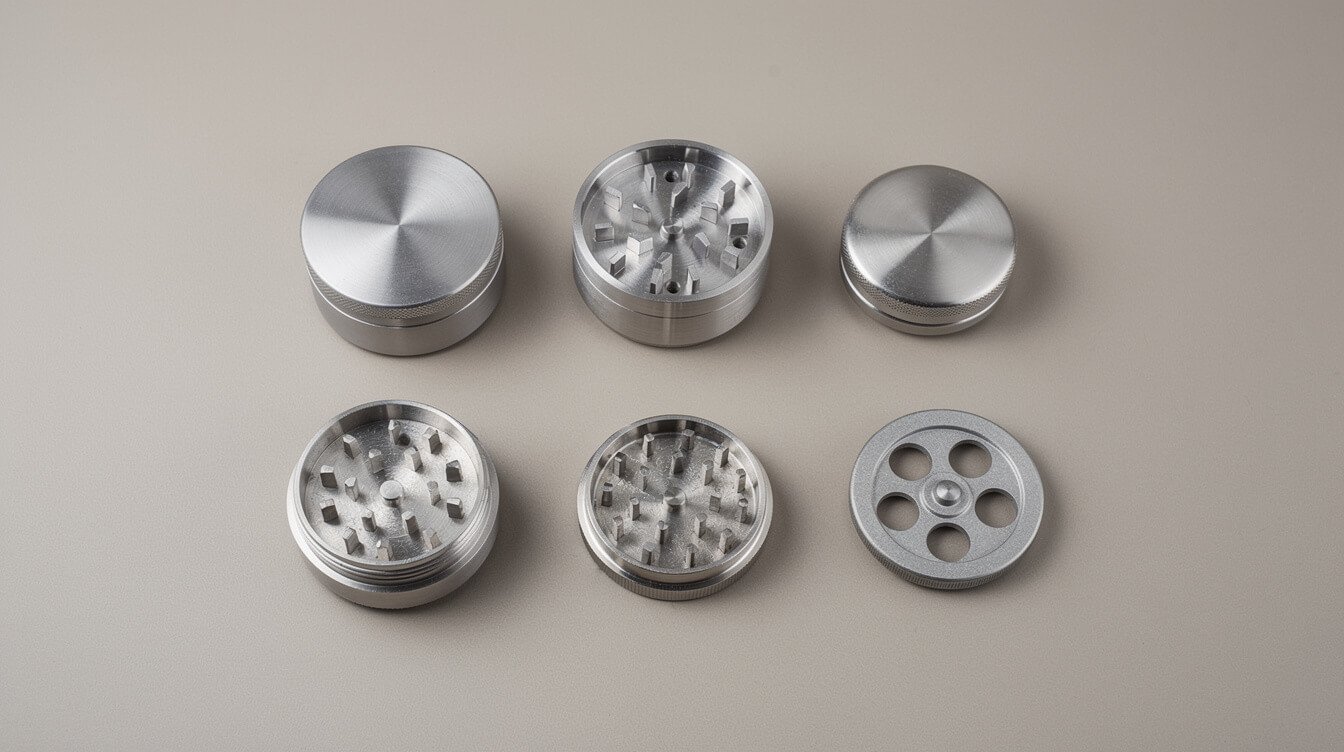
A few picks that actually specify their grade and back it up in practice, at different price points and use cases:
- Best all-around: a mid-size (2.2–2.5″) four-piece 304 stainless grinder with a removable kief screen. This is the sweet spot for daily use without paying the full premium-brand markup — you get the corrosion resistance that actually matters long-term, a kief chamber for the days you want it, and a size that works solo or shared without feeling bulky in a pocket or bag.
- Best threadless design: a magnetic-close, threadless stainless grinder. The trade you’re making here is speed and reliability for a real price premium — a threadless design can’t strip or cross-thread the way a screw-top eventually can after years of one-handed opening, and it’s genuinely faster in daily use. Worth it if you grind multiple times a day; overkill if you grind occasionally.
- Best toothless/milling design: a stainless milling-plate grinder that shears rather than tears the flower. This style produces a noticeably more uniform grind and is gentler on trichomes than a toothed design, which matters if you’re vaping and want consistent airflow. Interchangeable plates let you dial grind size up or down without buying a second grinder.
- Best budget-conscious pick: a basic three-piece 304 grinder without the interchangeable plates or magnetic hardware. You’re paying specifically for the grade here, not the extras — it looks and feels less premium than the options above, but a genuine 304 three-piece will still outlast a comparable aluminum piece by years, which is the whole point of buying stainless in the first place.
Skip anything marketed simply as “stainless steel” with no grade listed and a price that seems too low for the claim — that’s almost always 430 wearing a nicer name, and you’re paying stainless prices for aluminum-tier corrosion resistance.
Cleaning stainless steel without damaging the finish
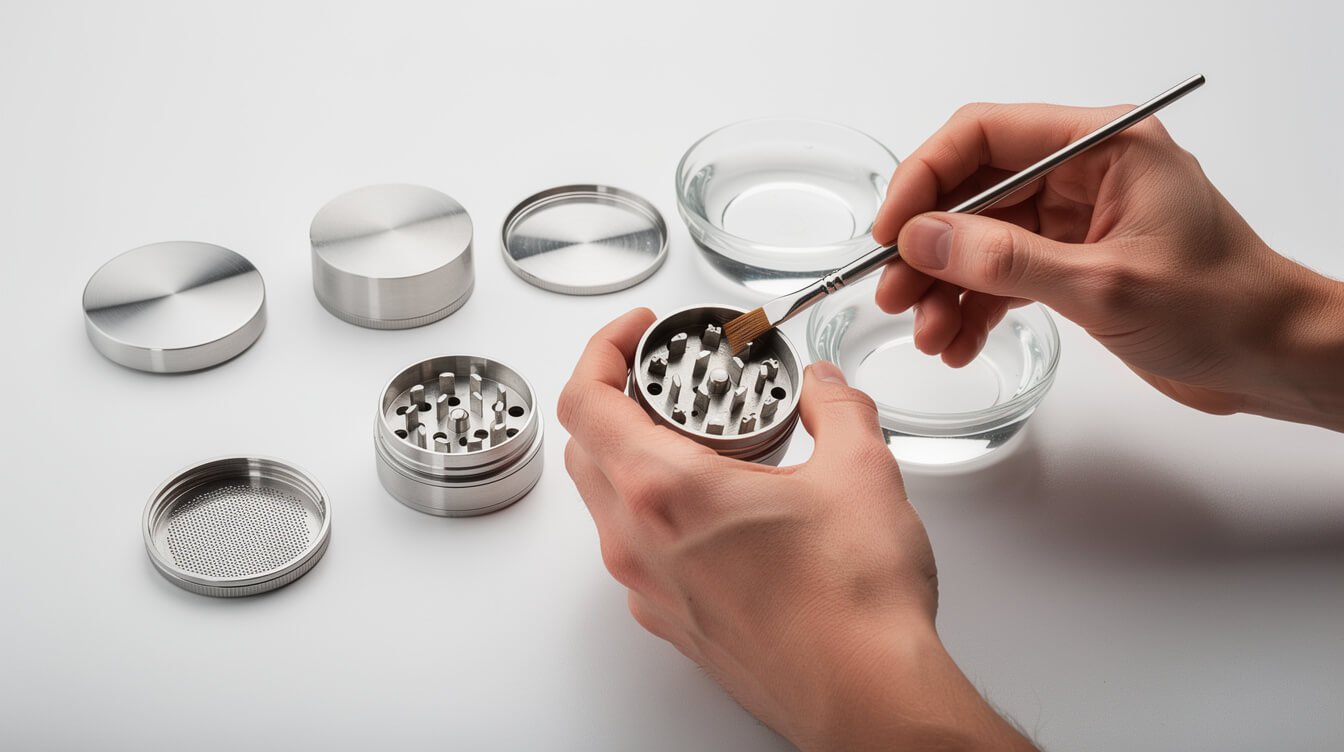
Stainless is more forgiving to clean than aluminum, but it’s not indestructible. A few rules that keep the finish and the grind quality intact for years:
Use isopropyl alcohol, not household cleaners
A 90%+ isopropyl alcohol soak (30–60 minutes for heavy buildup) dissolves resin without pitting the metal. Skip bleach, ammonia-based cleaners, or anything chlorine-based — chloride exposure is exactly what degrades even 316-grade corrosion resistance over time.
Dry it completely before reassembling
This is the step most people skip, and it’s the one that actually causes corrosion. Trapped moisture between plates, in threads, or on a kief screen is what starts the pitting process on lower-grade stainless — not the resin itself. Air-dry fully or wipe dry with a lint-free cloth before putting it back together.
Skip the ultrasonic cleaner unless it’s rated for it
Ultrasonic cleaners are popular for grinders, but cheap units can drive cleaning solution into micro-gaps around threads and magnets faster than it evaporates back out. Fine for an occasional deep clean on a simple design; skip it for anything with embedded magnets or multiple fine mesh layers unless the manufacturer specifically says it’s safe.
A soft brush beats scraping
A small brass or nylon brush (many grinders ship with one) clears resin from teeth and screens without scratching the finish. Metal picks or knives will scratch through a polished or brushed finish and give resin more surface texture to grip on the next use.
FAQ: stainless steel weed grinder questions, answered
Is a stainless steel grinder really better than aluminum?
Better at resisting wear and corrosion over years of heavy use — not better at the actual grind quality, which depends more on tooth design and grade of finish than the base metal. For light or moderate use, a quality aluminum grinder performs identically for years.
How do I know what grade my grinder actually is?
Check the product listing for a specific number (304, 316, 430). If it’s not listed, a magnet test is the fastest home check: strong pull suggests 430, weak-to-none suggests 304/316.
Can a stainless steel grinder rust?
True rust (iron oxide) essentially doesn’t happen on any stainless grade under normal use. What can happen on lower grades is pitting or a dull patina from prolonged acidic resin exposure combined with trapped moisture — preventable with the drying habit above.
Is stainless steel safer for your health than aluminum?
We’re not going to make a health claim here either way — this is a durability and grind-consistency difference, not a medical one. If you have specific concerns about metal exposure, that’s worth raising with a doctor rather than settling by grinder material.
Does a magnetic stainless grinder mean it’s low quality?
Not automatically — magnetism just indicates a ferritic grade like 430 rather than 304/316. It’s a reasonable budget option if you clean and dry it consistently; it’s just the more failure-prone choice if you tend to let buildup sit.
Final thoughts on the stainless steel upgrade
The honest case for a stainless steel weed grinder isn’t that aluminum is dangerous — it’s that a real 304 or 316 grinder, kept dry and cleaned with alcohol instead of scraped, will look and perform the same in ten years as it does on day one. That’s a legitimate reason to spend more if you grind daily. It’s not a reason to panic about the aluminum grinder you already own and like.
If grind mechanism and material tradeoffs are still what you’re weighing, our full best weed grinder guide breaks down 2-piece vs. 3-piece vs. 4-piece designs and where stainless fits into the bigger picture. And once you’ve got flower ground and ready, our honest step-by-step joint guide is the natural next stop.
Prefer to support the desk directly? Check out the GanjaTech culture merch shop — no coupon codes for grinders here, just apparel for people who actually know the plant.
Before you go
Get the next explainer first
We publish a new one every day. The best of the week, plus what's new in the shop, lands in one short email.