How to Roll a Joint Without a Filter: The Honest Step-by-Step
Learning how to roll a joint without a filter is one of those small cannabis skills that sounds harder than it is. A filter — the little rolled paper tip at the mouth end, also called a crutch — makes rolling easier, but plenty of people roll happily without one every day. The trick is knowing what the filter was doing for you, then compensating with a couple of small technique changes.
Here’s the honest version: no hype, no cliché, just the real steps, the trade-offs most guides skip, and the safety stuff worth knowing before you spark up. First-timers and old heads both welcome. And before we start — cannabis laws vary a lot by state and country, so know your local rules, and this is adults-only (21+) territory.
Should you roll a joint without a filter? The honest answer
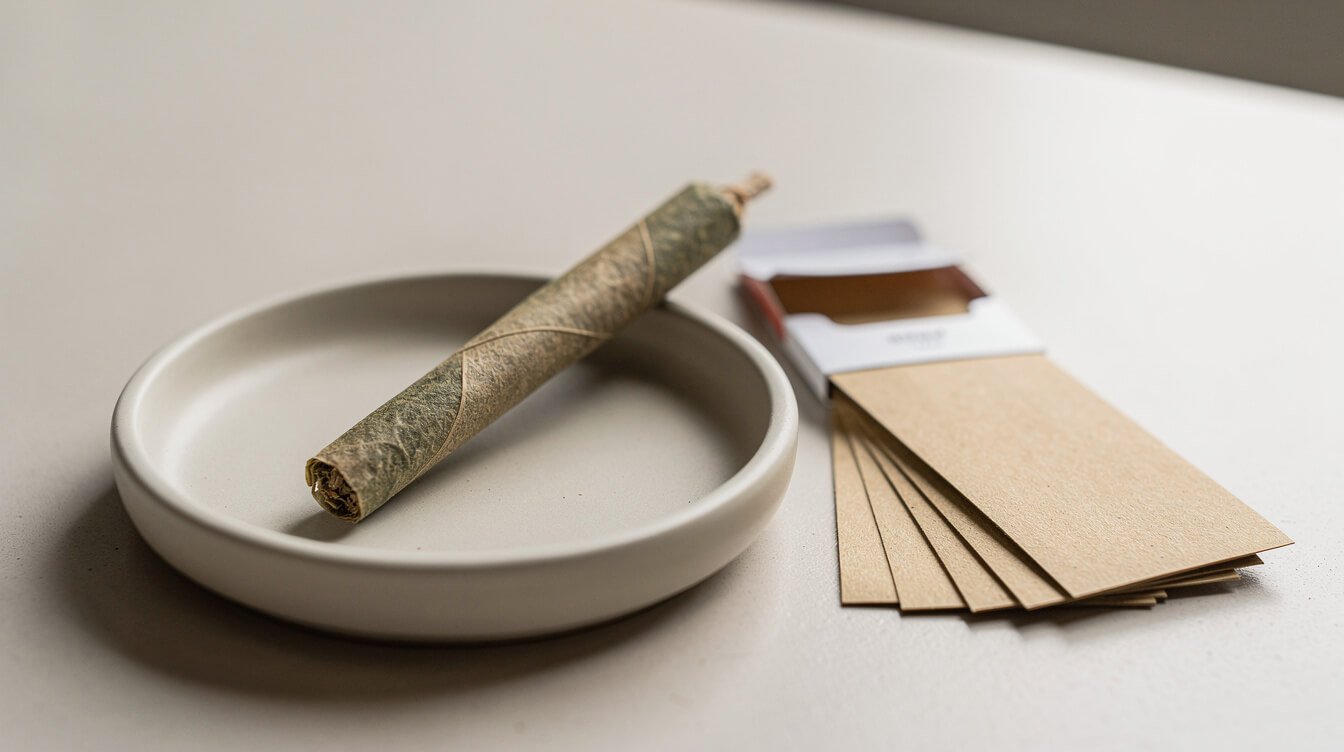
Sometimes you just don’t have card handy, and rolling a joint without a filter is completely doable. But it’s worth understanding what you’re giving up, because the filter isn’t just decoration.
A crutch does three quiet jobs:
- Structure. It gives you something firm to roll around, so the mouth end holds its shape instead of collapsing.
- Airflow. It keeps the very end open so the joint draws smoothly and doesn’t clog.
- A buffer. It stops loose ground flower — the little bits people call “scooby snacks” — from getting pulled into your mouth, and it keeps your fingertips off the hottest part at the end.
Roll without one and you lose those three things. That’s fine, as long as you adjust: pack a touch more carefully, twist the mouth end so nothing pulls through, and accept that the last third of a filterless joint gets warm and a little harsh. Many people actually prefer a small filterless “pinner” for a quick solo session. For sharing, a crutch keeps things tidier. Neither is wrong — it’s preference, not a rule.
One myth worth clearing up: skipping the filter does not make a joint “stronger.” The strength of what you feel comes from the flower and how much you smoke, not from whether there’s a paper tip at the end. A filterless joint just burns a little hotter toward the mouth end — that’s a texture difference, not a potency one. So choose based on comfort and what you have on hand, not on chasing a bigger effect.
If you’re brand new to all of this, it helps to understand what cannabis actually is before you get into rolling technique — the format you smoke changes the experience as much as the plant does.
What you’ll need
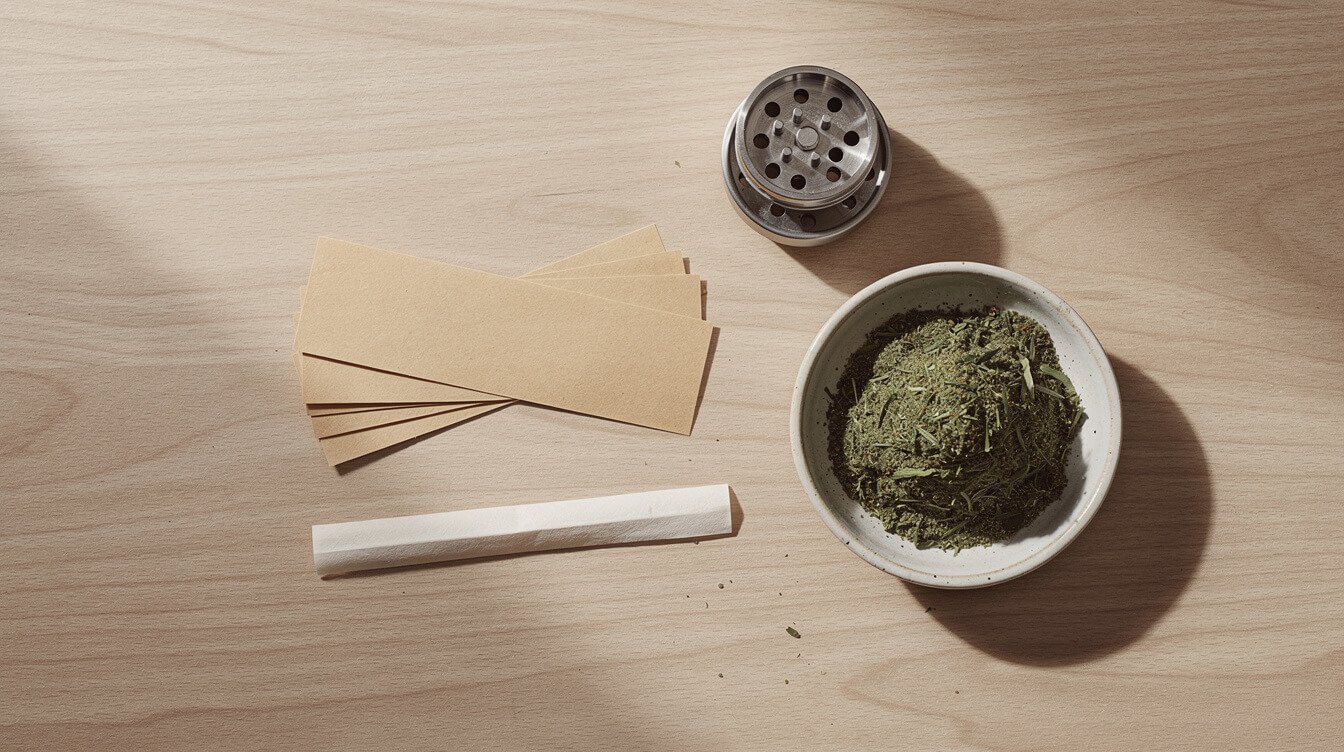
You need surprisingly little. Don’t let anyone talk you into a drawer of gadgets — one good plant’s worth of flower and a decent paper is genuinely enough.
- Rolling papers. Thin, slow-burning papers are your friend. Unbleached or rice papers burn evenly and don’t add much flavor. A standard 1¼ size is the easiest to learn on; king size is more forgiving of a loose pack but uses more paper.
- Ground cannabis. Roughly a half-gram to a gram for a standard joint. Break it up evenly — a grinder is ideal, but clean fingers or scissors work. You want a consistent, fluffy grind, not powder and not chunks.
- A flat, clean surface. A tray, a book, a plate — anything to catch stray herb and give you a stable base.
- Patience. Your first filterless joint might look like a lumpy carrot. Your fifth will look like a joint. That’s just the learning curve.
Skip anything damp, and don’t grind so fine that the material packs into a dense plug — an over-ground joint is the number-one cause of a joint you can’t draw through.
How to roll a joint without a filter, step by step
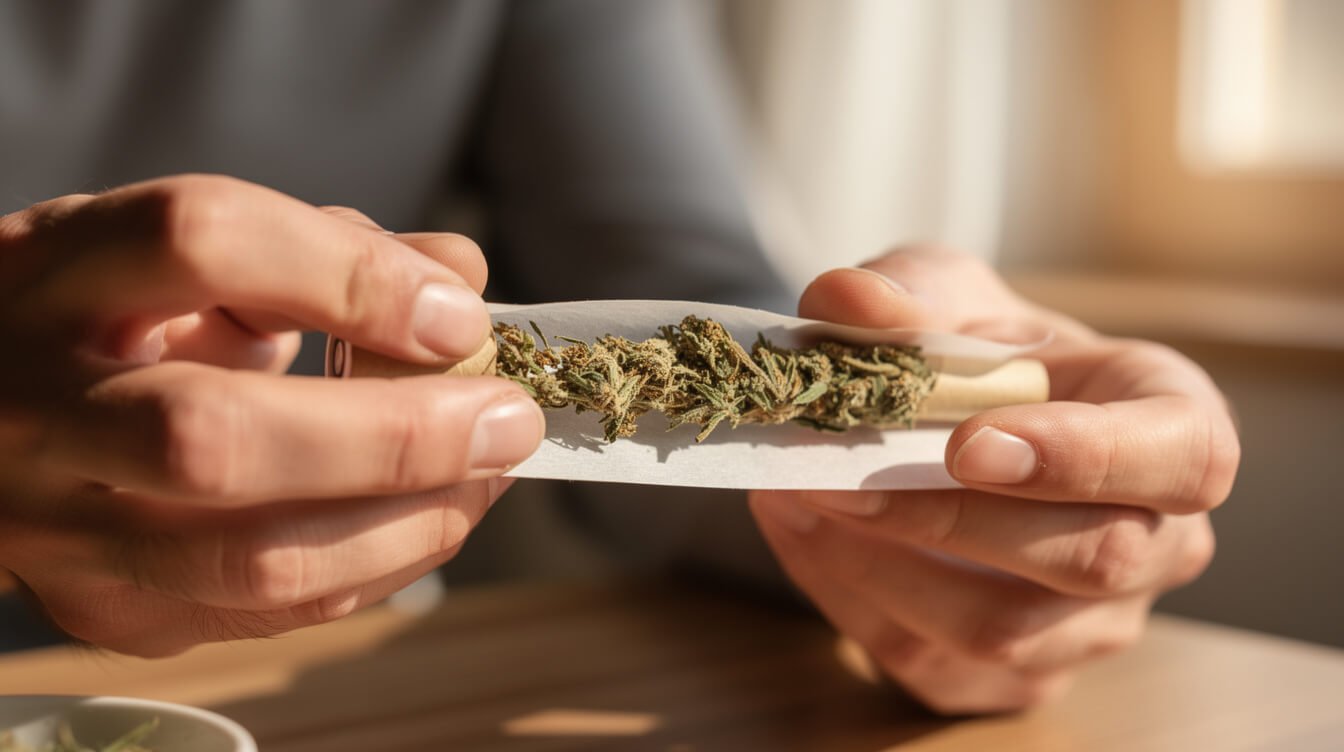
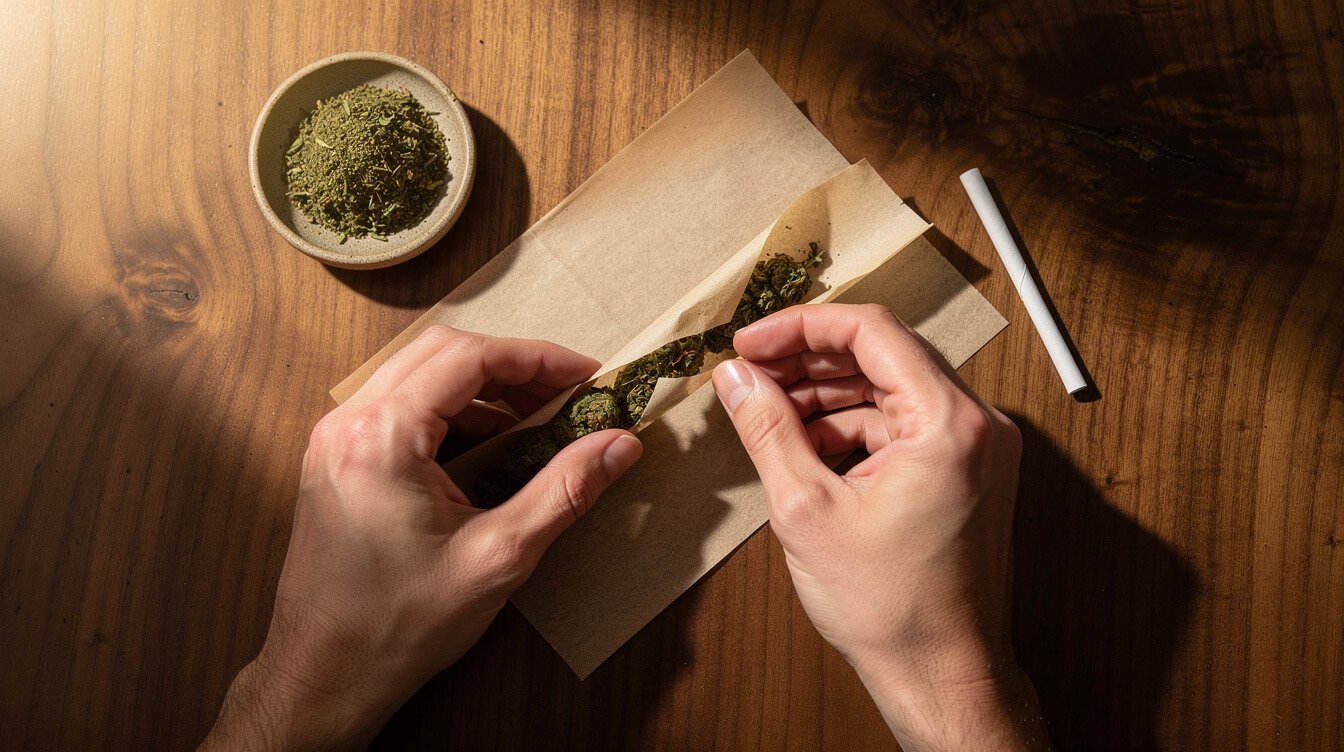
This is the core of it. Rolling a joint without a filter follows the same moves as any joint — you’re just paying a little more attention to the mouth end. Take it slowly the first few times.
Step 1: Shape the paper into a cradle
Hold the paper lengthwise with the glue strip up and facing you, on the far edge. Fold it gently into a soft “V” or “U” — a cradle for the herb. Don’t crease it hard; you want a curve, not a fold line.
Step 2: Load the herb evenly
Lay your ground cannabis along the cradle in an even line. Even distribution is everything here. Leave the mouth end (the end you’ll draw from) slightly less packed, and give yourself a little empty paper at the very tip. Don’t overfill — a joint that’s stuffed corner to corner never rolls cleanly.
Step 3: Shape and pack lightly
Pinch the paper between your thumbs and forefingers and roll it back and forth a few times to settle the herb into a firm, even cylinder. Firm, not crushed. You’re shaping it, not compressing it into a stick.
Step 4: Tuck the near edge
This is the make-or-break move. Tuck the edge closest to you down and around the herb, so the paper wraps into a tube. Use your thumbs to guide the tuck the whole length of the joint at once, evenly. Roll it up toward the glue strip, keeping tension consistent from end to end.
Step 5: Lick and seal
Lightly moisten the glue strip — a little goes a long way — and press it down as you finish the roll. Seal along the whole seam, not just the middle. Let it set for a few seconds.
Step 6: Twist the tip and firm the mouth end
Because there’s no crutch, give the far tip a gentle twist to close it (that’s where you’ll light it), and lightly pinch or twist the mouth end so loose bits can’t pull through when you draw. Some people fold a tiny amount of the mouth-end paper inward to create a mini lip. If the pack feels loose, tap the lit-end down gently on the tray to settle it before you twist.
That’s a finished filterless joint. Rolling is a hands-on skill — if your first few are uneven, that’s completely normal and it clicks fast with practice.
Papers matter more than the gadgets
If you want an easy win before you touch technique, upgrade your paper. The paper is the one variable that changes every single joint, and it costs almost nothing to get right. You genuinely do not need expensive gear to roll one good joint — but a good paper earns its keep.
A quick, honest breakdown of what’s out there:
- Rice papers. Very thin, near-flavorless, slow and even burn. They can be a little slippery for absolute beginners, but they’re what a lot of experienced rollers settle on.
- Hemp papers. Slightly more texture, a touch more grip, forgiving to roll, mild flavor. A great learning paper and an easy everyday choice.
- Wood-pulp papers. The classic thicker white papers. Easiest to handle, but they burn faster and add a bit more of a papery taste. Fine to learn on; most people graduate off them.
- Unbleached vs. bleached. Unbleached (the brown ones) skip the whitening process. Many people prefer them for a cleaner burn and no real downside.
Size matters too. A 1¼ is the sweet spot for one or two people and the best size to learn a filterless roll on. King size gives you more room and hides a loose pack, but it’s more paper and more smoke. Whatever you pick, store papers somewhere dry — a damp paper tears and seals badly, and it’s the quiet reason a lot of “bad rolls” go wrong.
GanjaTech, weekly
Cannabis, explained. In your inbox.
One email a week: the clearest explainers, honest gear picks, and what the science actually says. 21+ only. No spam, unsubscribe anytime.
What to use instead of a filter (and what to skip)
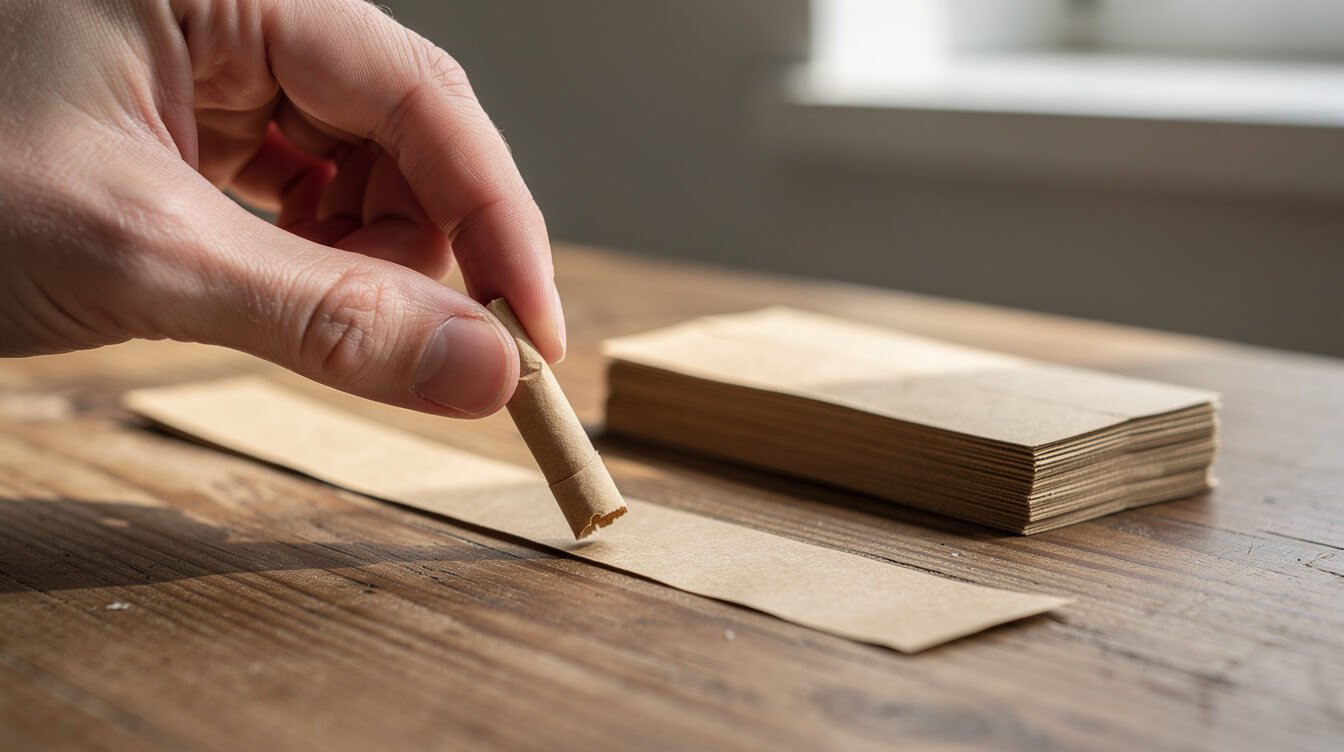
If you decide you’d rather have a tip after all, you don’t need to buy pre-made crutches. But this is exactly where a lot of guides give sketchy advice, so here’s the responsible version.
Good, safe options:
- A strip of thin, unbleached card — the kind many natural rolling-paper packs include as a tear-off flap. Roll it into a small cylinder and place it at the mouth end.
- A clean, unprinted piece of thin cardstock — a plain index card or the plain part of a paper packaging insert works in a pinch.
What to skip: Don’t use anything glossy, waxy, colored, or printed with ink — receipts, magazine paper, business cards, or gum wrappers. When those burn or heat up near your mouth, they can release chemicals you don’t want to inhale. “It was in my pocket” is not a good enough reason. If the only thing you have is questionable, roll it filterless instead — that’s the cleaner choice.
And a quick reframe worth internalizing: a paper crutch is not a health filter. It doesn’t clean the smoke or remove anything harmful — it’s a spacer and a mouthpiece. Smoking anything means inhaling combustion byproducts, filter or not. If that matters to you, that’s a real thing to weigh, and a doctor is the right person for health questions.
Fixing the three most common problems
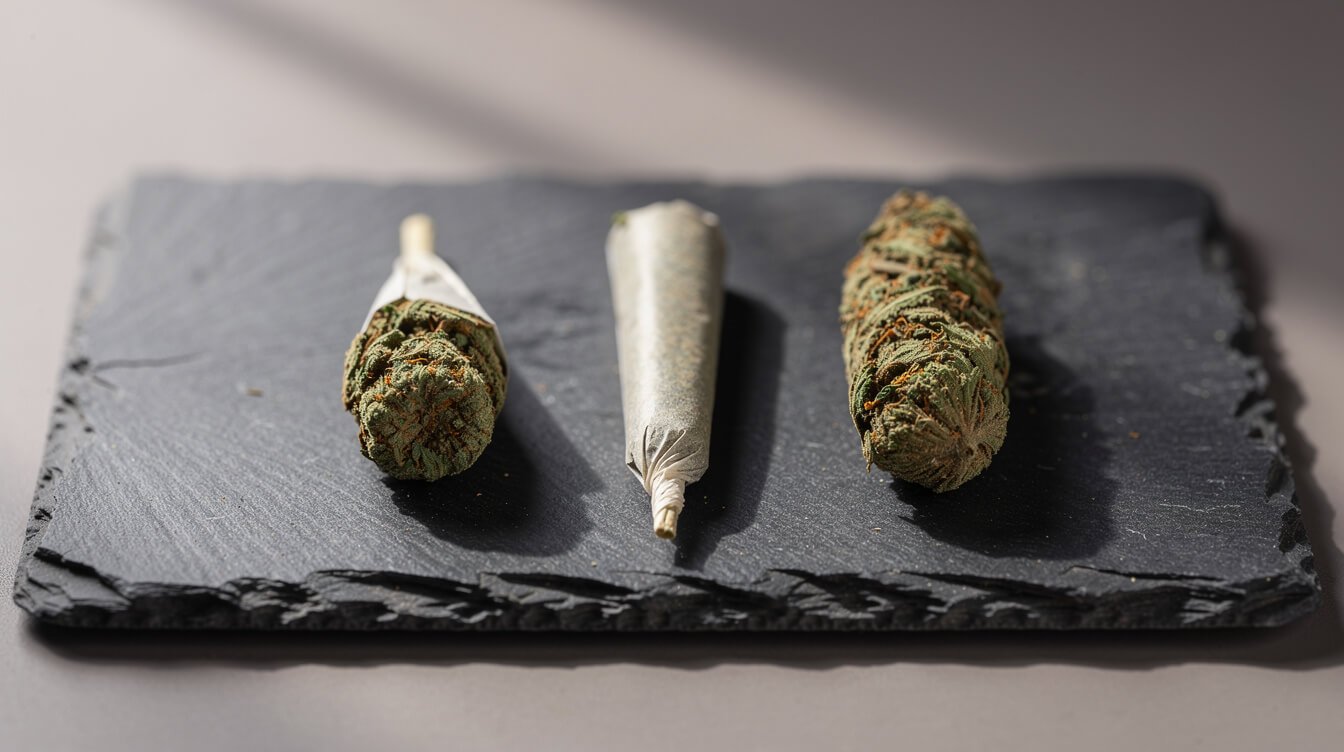
Filterless joints fail in predictable ways. Here’s how to diagnose and fix each one.
Problem 1: It “canoes” (burns unevenly down one side)
Canoeing usually means uneven packing or an uneven roll — one side has more air, so it burns faster. Fixes: distribute the herb more evenly next time, roll with consistent tension, and moisten (very lightly) the fast-burning side to slow it down mid-smoke. A slightly damp environment and a slower, more even pack prevent most of it.
Problem 2: Bits pull through into your mouth
This is the classic no-filter complaint. The fix is at the mouth end: twist or pinch it a little tighter, leave that end slightly less densely packed so airflow is gentle, and don’t grind your flower into dust. A firmer twist at the mouth end does most of the work a crutch would have done.
Problem 3: It’s too tight to draw
If pulling on it feels like a thick milkshake, you packed too hard or ground too fine. You can sometimes save it by gently rolling it between your fingers to loosen the pack, or rolling a thin object down the outside. Next time: grind a touch coarser and pack with a lighter hand. Airflow beats density every time.
A few habits that make every joint better
Once you can roll a filterless joint that draws and burns, these small habits separate a decent joint from a genuinely good one. None of them cost anything.
- Mind your grind. Consistency beats fineness. A fluffy, even grind gives you airflow; dust gives you a plug. If you’re grinding by hand, aim for rice-to-lentil sized pieces, and pick out any stems — they poke through paper.
- Respect moisture. Flower that’s slightly too dry crumbles and canoes; too damp and it won’t stay lit. Properly cured flower rolls best, which is one more reason cure and storage matter as much as the grow.
- Roll on a tray. A lip or edge catches the herb you drop — and you will drop some. It also keeps your workspace from becoming a scavenger hunt.
- Let the seal set. Give the glue a few seconds after sealing before you light or twist. A rushed seam is a seam that unrolls.
- Light it evenly. Rotate the tip in the flame as you take the first slow pulls so the whole cherry catches at once. An evenly lit joint is half the battle against canoeing.
Small stuff, but it compounds. A person who does these five things rolls a better filterless joint than someone with a drawer full of accessories who skips them.
Frequently asked questions
Can you smoke a joint without a filter?
Yes. A filter (crutch) is a convenience, not a requirement. Millions of people roll filterless. You just twist the mouth end to keep loose material out and accept that the last stretch runs a little warmer.
What can I use instead of a filter if I don’t have one?
A rolled strip of thin, unbleached, unprinted card is the standard homemade crutch. Avoid anything glossy, inked, waxed, or colored — those aren’t safe to heat near your mouth. If in doubt, roll it filterless.
Does a filter make a joint safer or “healthier”?
No. A paper crutch is a mouthpiece and a spacer — it doesn’t purify smoke or remove harmful compounds. Smoking involves inhaling combustion byproducts regardless. For any health question, talk to a doctor rather than relying on a rolling tip.
Why does my filterless joint keep getting soggy?
Usually too much moisture on the seal, or drawing too hard on a loosely packed mouth end. Use a light touch when you lick the glue, twist the mouth end a bit firmer, and let the seam set before you light up.
How much cannabis goes in a standard joint?
Roughly a half-gram to a gram for a 1¼ paper. If you’re new to a particular flower, start low and go slow — you can always roll another, and edibles and unfamiliar strains hit differently. Know your tolerance, and never drive after using.
Which paper is easiest for a beginner?
A 1¼ hemp or wood-pulp paper. Both have enough grip and body to forgive a shaky first roll, while a 1¼ size keeps the amount of herb manageable. Once your hands know the motion, thinner rice or unbleached papers give a cleaner, slower burn.
Do I have to twist the ends of a filterless joint?
You should at least twist the lighting end so it holds together and gives you something to light. Twisting or firmly pinching the mouth end is optional but strongly recommended without a crutch — it’s the single move that keeps loose bits out of your mouth.
Is it legal to roll and smoke a joint?
It depends entirely on where you are. Cannabis laws differ by state and country, and “legal to possess” isn’t the same as “legal to consume in public.” Check your local laws — never assume it’s legal where you live. For a plain-language overview, see our take on how legal marijuana actually is.
The bottom line
Rolling a joint without a filter comes down to three habits: pack evenly, keep airflow open, and twist the mouth end so nothing pulls through. Do those and a filterless joint smokes just fine — a little warmer at the end, but perfectly good. Add a homemade crutch only if you want the extra structure, and only from clean, unprinted card.
Like most things with this plant, it rewards a little patience and a little respect. Great for a slow evening — not for driving, and always within your local laws and your own tolerance. If you enjoyed the straight-talk approach, stick around and read another explainer, or grab some GanjaTech culture gear to rep the credible-and-chill side of cannabis. And if you’re curious where a session might take your head, we broke down whether cannabis actually makes you more creative.
Before you go
Get the next explainer first
We publish a new one every day. The best of the week, plus what's new in the shop, lands in one short email.