Decarb Temperature and Time for Edibles: The Trade-Off Nobody Explains
Ask five sites for the right decarb temperature and time for edibles and you’ll get five different single numbers — 220°F, 240°F, 250°F, none of them wrong, all of them incomplete. The honest answer is that there isn’t one correct number. There’s a curve: lower and slower preserves flavor and terpenes but takes longer; higher and faster is quicker but costs you some of what made the flower worth decarbing in the first place. Here’s the real trade-off, the chemistry behind it, and a default that works if you just want to get cooking.
The quick answer: decarb temperature and time for edibles
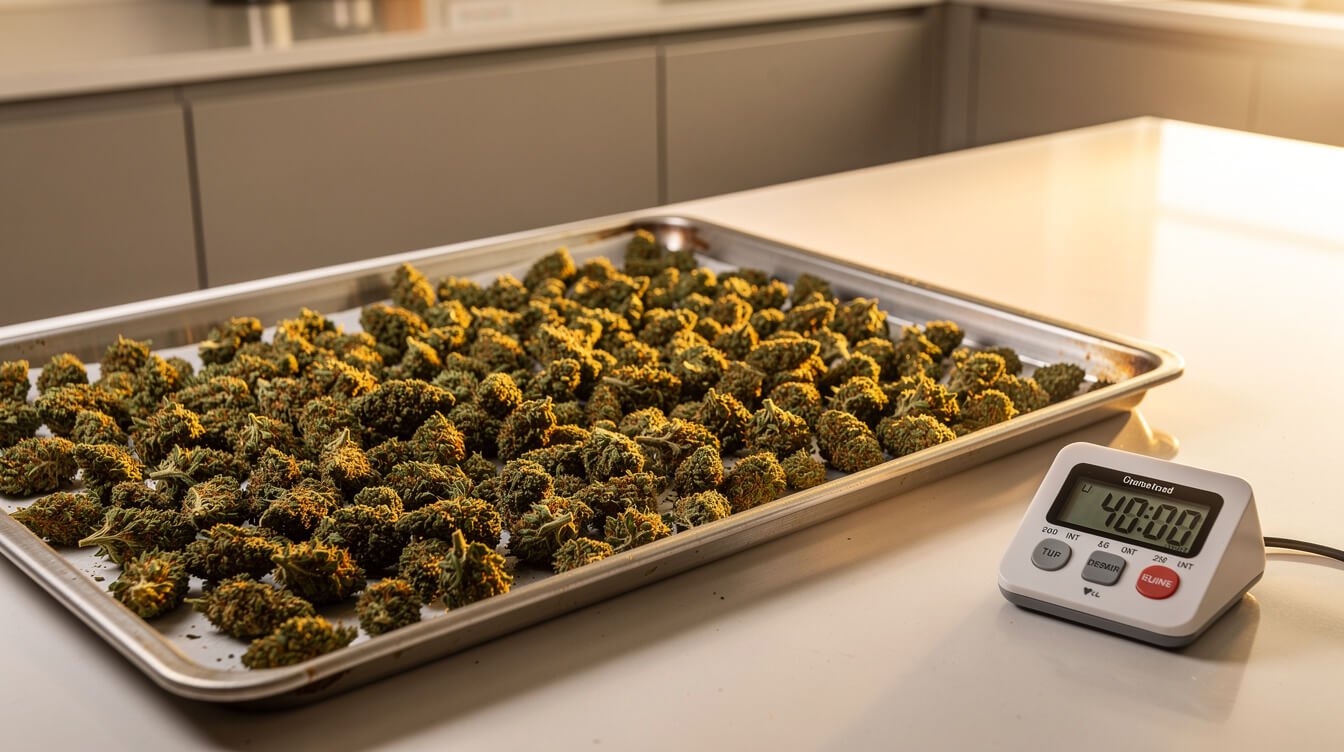
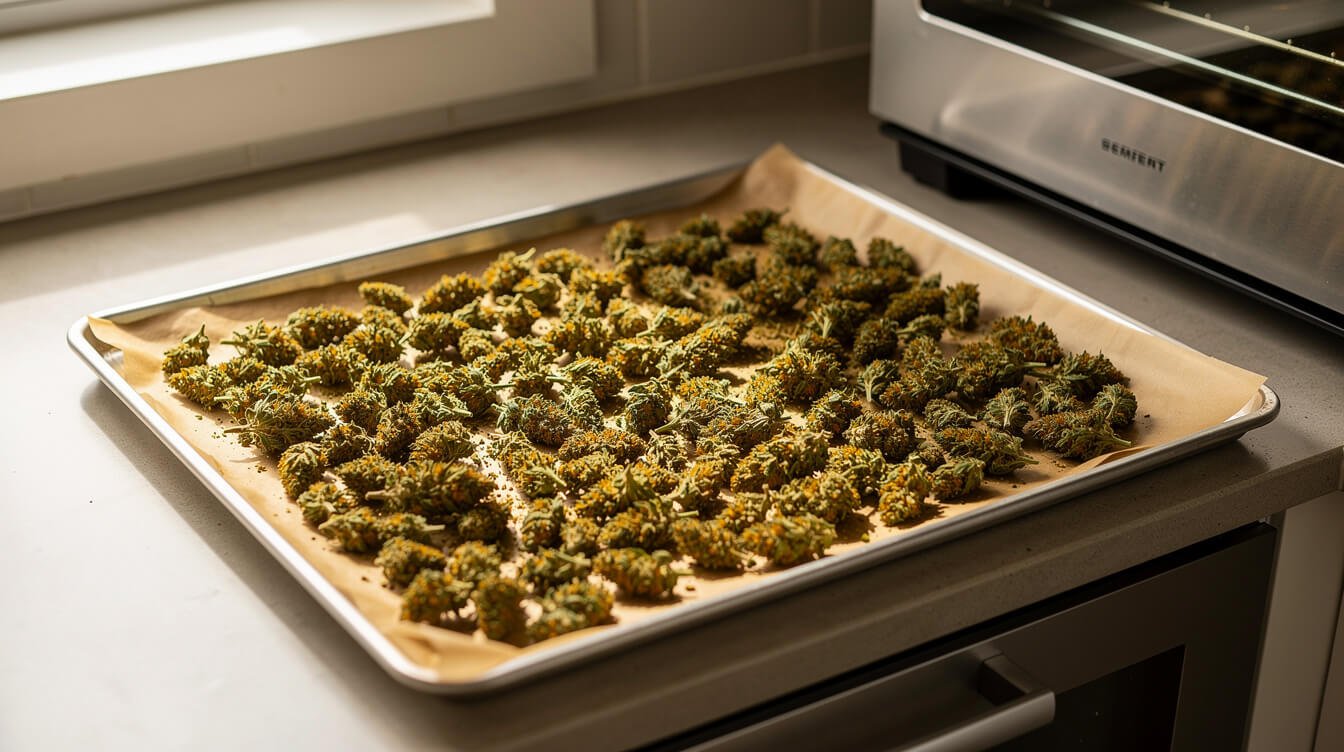
If you want one reliable default: 240°F (115°C) for 40 minutes, flower broken into small (not powdered) pieces, spread in a single layer on a parchment-lined sheet, stirred once at the halfway point. That’s a solid middle ground — full decarboxylation of THCA to THC without cooking off the bulk of your terpenes.
That’s the answer for someone who just wants to make cannabutter tonight. The rest of this guide is for the person who wants to know why that number works, and how to shift it deliberately if flavor or speed matters more to you.
At a glance, the three approaches this guide walks through:
- Low and slow (200–220°F, 45–60 min): best aroma and flavor retention, needs an oven thermometer and patience
- Balanced default (240°F, 40 min): full conversion, solid flavor retention, minimal babysitting
- High and fast (270–300°F, 10–18 min): quickest full conversion, most terpene loss, best for flavor-masked recipes or batch processing
Why “one right temperature” is a myth — the actual trade-off
Decarboxylation is a chemical reaction, not a switch. Raw flower contains THCA (tetrahydrocannabinolic acid) — the non-intoxicating acid form of THC. Heat strips a carboxyl group off that molecule (releasing it as CO₂) and converts it into THC, the form your body actually absorbs and feels. That reaction follows standard chemical kinetics: the hotter you run it, the faster it happens. Lower heat gets you there too — it just takes longer.
Terpenes don’t play by the same rules. They’re small, volatile aromatic compounds, and most of them start evaporating at temperatures well below where cannabinoids finish converting. The longer cannabis sits in a hot oven, and the higher that oven runs, the more terpene content boils off into your kitchen instead of staying in your butter or oil.
So you’re really balancing two curves against each other: a conversion curve that wants heat and time, and a preservation curve that wants the opposite. There’s no temperature that maximizes both. That’s the trade-off nobody puts on the label — competitor guides on this topic largely hand you one chart and call it settled science, when it’s really a decision you get to make based on what you’re optimizing for.
Terpenes don’t all evaporate at once, either — they have different reported boiling points, which is part of why “just don’t go over 300°F” is an oversimplification. Alpha-pinene is reported to boil around 312°F (156°C), myrcene around 330°F (166°C), and linalool higher still, closer to 388°F (198°C). None of those are hard cutoffs — volatile compounds evaporate gradually well below their full boiling point, especially over 30-60 minutes of sustained heat — but it explains why a fast, hot decarb hits some terpenes harder than others. A strain whose aroma leans heavily on the more volatile terpenes will lose more character to a rushed high-heat decarb than one built around sturdier ones.
This matters for dosing consistency too, not just flavor. An underdecarbed batch doesn’t just taste “greener” — it delivers less usable THC per gram than you’re accounting for, which is exactly how people end up redosing an edible that “isn’t working” and then getting hit much harder once the full batch’s delayed effects stack up. Getting the decarb step right is part of the same start-low-go-slow discipline that applies to eating the edible itself.
Low and slow: better flavor, more patience required
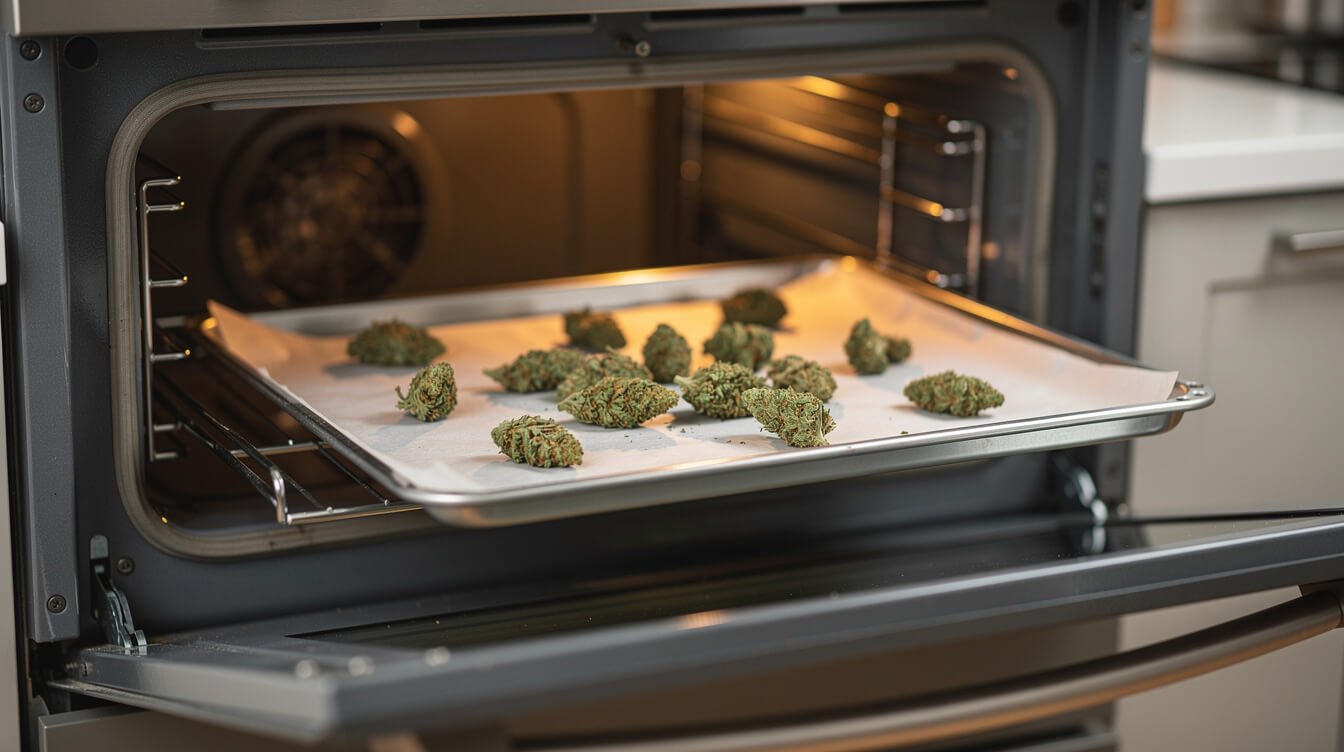
Running toward the bottom of the range — roughly 200–220°F for 45–60 minutes — gives terpenes the gentlest possible treatment. You’ll notice it most in the finished product: edibles made from low-and-slow decarbed flower tend to carry more of the strain’s original aroma and a rounder, less “green” or “burnt” flavor, since fewer of the volatile aromatics have cooked off before the flower even hits your fat or alcohol.
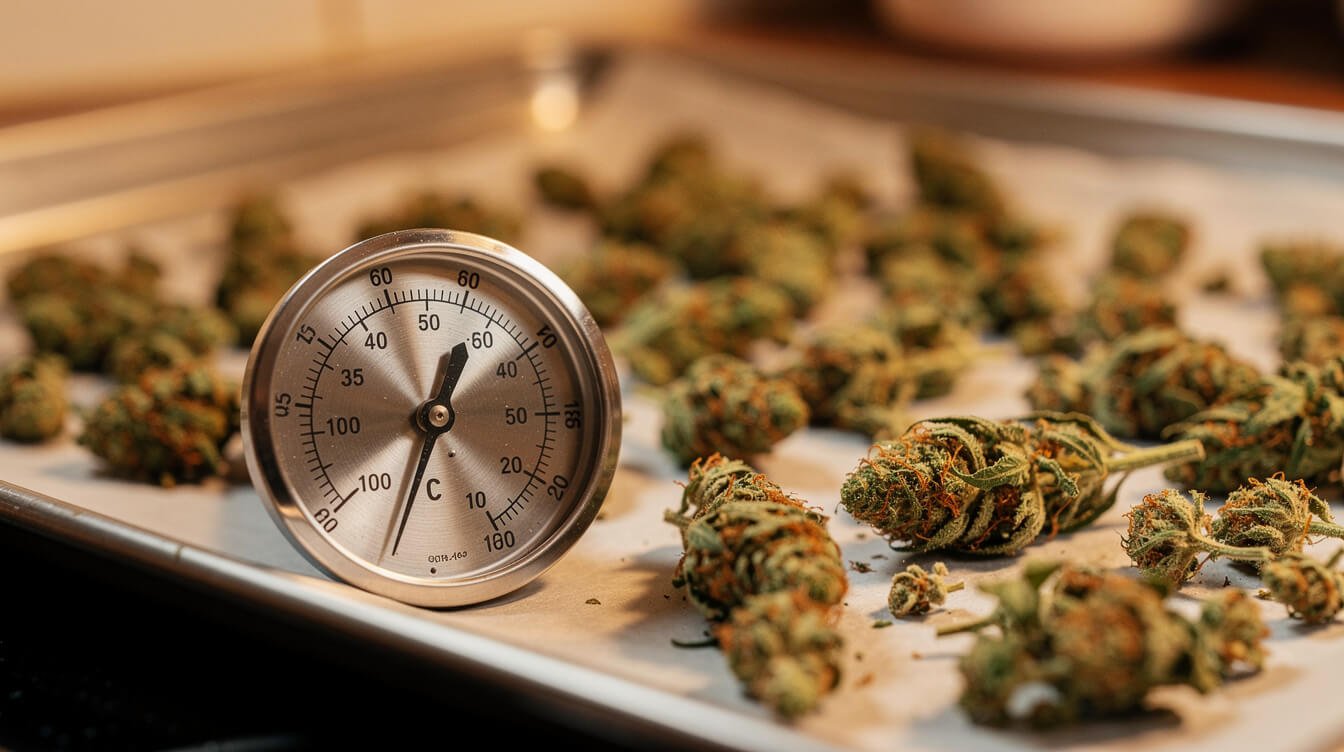
The catch is patience and precision. Home ovens are notoriously imprecise at the low end — many drift 15–20°F from what the dial says — so an oven thermometer isn’t optional at this range; it’s the difference between a proper low-and-slow decarb and an accidental under-decarb that leaves a chunk of your THCA unconverted. If flavor is your priority — you’re making a dish where the cannabis taste is supposed to show up, not hide under chocolate — this end of the range is worth the extra 20 minutes and the thermometer.
High and fast: quicker, but what you lose in terpenes
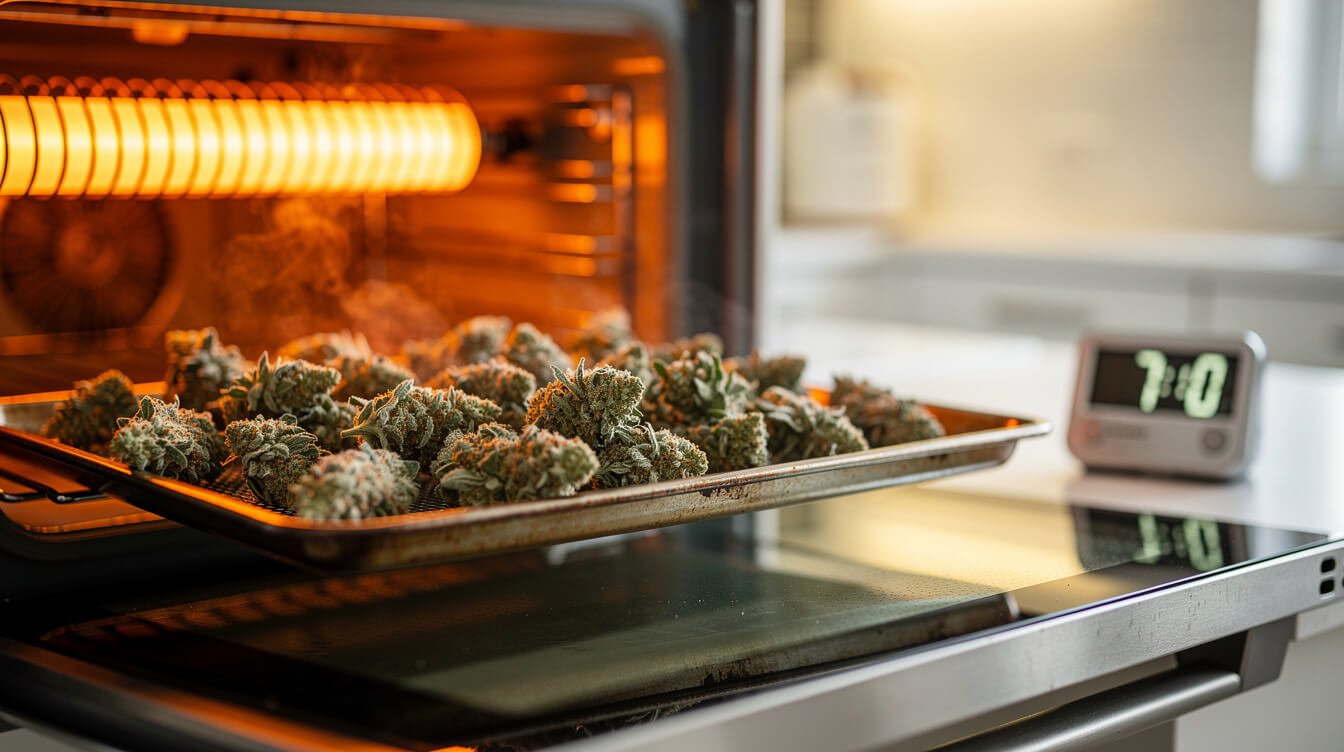
Push toward 270–300°F for 10–18 minutes and you’ll get a full decarb in a fraction of the time. That’s genuinely useful if you’re batch-processing a lot of flower, or you just don’t have an hour to babysit an oven. The cost is real, though: this range sits right at and above where the more volatile terpenes are substantially gone before the cannabinoids finish converting, and go much past 300°F and you risk degrading cannabinoids too — not just losing aroma, but actually cooking away potency you were trying to preserve in the first place.
High-and-fast makes the most sense when the finished product is going to mask flavor anyway — a strongly flavored infused chocolate, a spiced dish, anything where “tastes like weed” isn’t the goal. It’s a legitimate choice, not a shortcut for people who don’t know better — it’s just optimizing for speed and potency-per-minute over aroma.
GanjaTech, weekly
Cannabis, explained. In your inbox.
One email a week: the clearest explainers, honest gear picks, and what the science actually says. 21+ only. No spam, unsubscribe anytime.
Step-by-step: decarbing in the oven
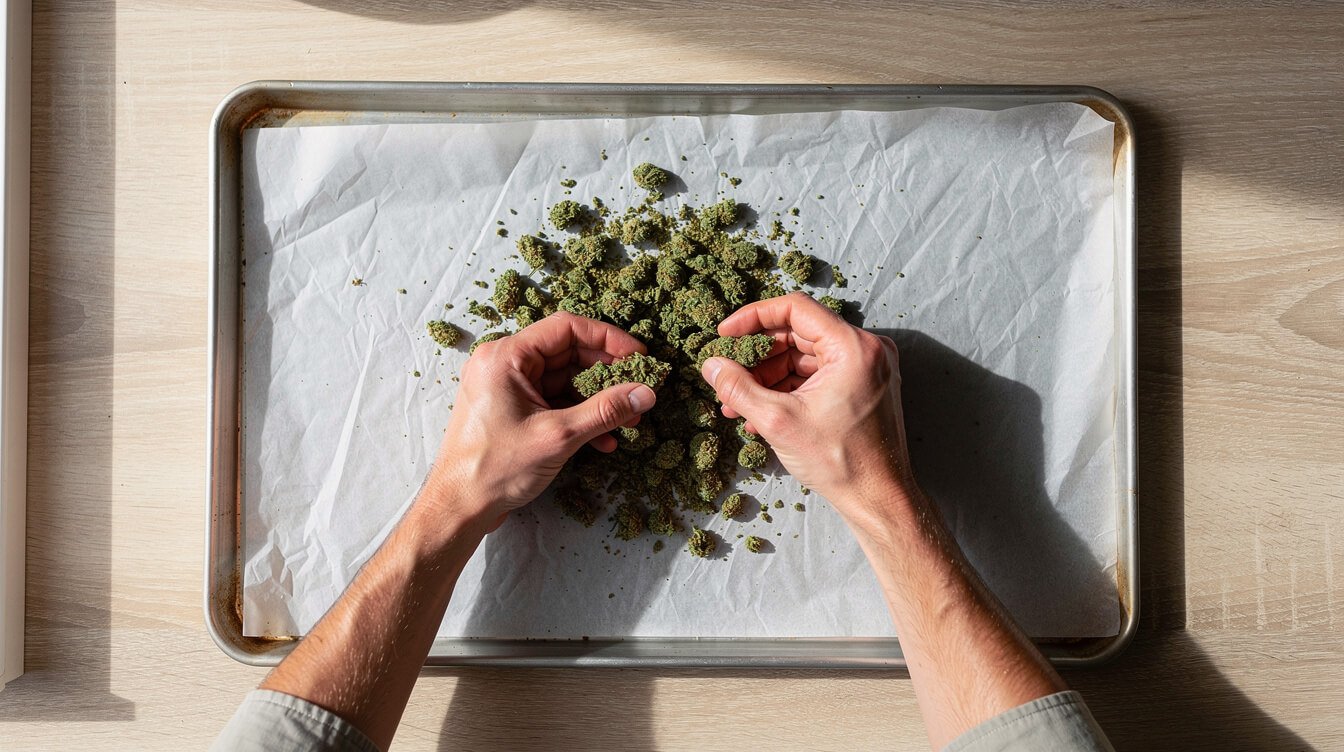
Whichever end of the range you pick, the process itself doesn’t change:
- Preheat properly. Give your oven the full preheat time, and if you’re running the low end of the range, verify the actual temperature with an oven thermometer rather than trusting the dial.
- Break the flower down — don’t grind it to dust. Small, roughly pea-sized pieces expose enough surface area for even heating without turning into powder that scorches fast and unevenly.
- Spread it in a single layer on a parchment-lined baking sheet. Overlapping flower decarbs unevenly — the pieces underneath run cooler and slower than the ones on top.
- Cover loosely with foil or a second sheet if you want to cut down on the smell (and slightly reduce terpene loss), leaving a little room for airflow.
- Stir once at the halfway mark so every piece gets even exposure, then let it finish without opening the oven repeatedly — every open door drops the internal temperature and adds unplanned time.
- Cool completely on the sheet before handling. Decarbed flower is more fragile, and it keeps offgassing lightly for a few minutes after it comes out.
If this is your first time running a particular temperature/time combination, jot down what you used and how the batch turned out — color, smell, and how the finished edible actually hit. Home ovens vary enough from unit to unit that your own notes, built over two or three batches, will be more useful than any single number in this guide.
From there it’s ready for infusion — butter, oil, or alcohol, however you’re planning to extract it. If you haven’t made your infusion yet, our guide to making cannabutter with shake picks up exactly where this step leaves off.
One variable worth accounting for: moisture content. Freshly cured flower with a bit of moisture left in it decarbs a little slower than bone-dry trim or shake, since some of that early heat goes into driving off water before the conversion reaction really gets going. If you’re working with noticeably moist material, lean toward the longer end of whichever time range you picked rather than pulling it the moment the clock hits your target — use the color and texture cues below as the real finish line, not just the timer.
How to tell it’s done (color, smell, texture cues)
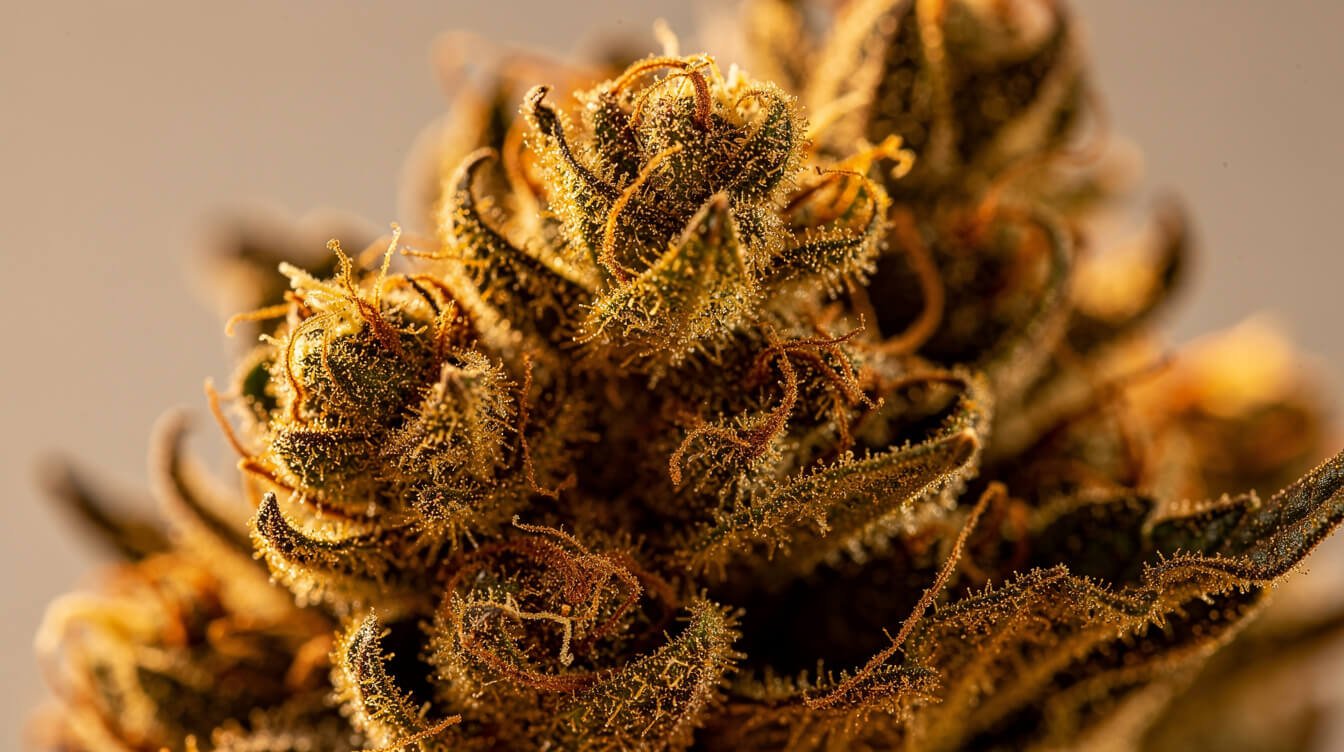
You don’t need a lab to know you nailed it — your senses will tell you:
- Color: properly decarbed flower turns a light, even golden-brown — think toasted, not burnt. Patchy color usually means uneven heat exposure or pieces that were too large.
- Texture: it should feel dry and slightly brittle, crumbling between your fingers rather than staying springy like fresh flower.
- Smell: the aroma shifts from bright and “green” to something toastier and nuttier. A sharp, acrid, or genuinely burnt smell means you’ve gone too far, at least at that spot on the tray.
- Sound: some people listen for it — a faint, quiet crackle as the trichomes lose moisture partway through. It’s subtle, and not something to rely on alone, but it’s a real sign the reaction is actively happening.
If you’re chasing terpene preservation, you’re aiming to catch it right as it crosses from “green and springy” into “toasted and dry” — not further.
Common mistakes: underdecarbing vs. scorching
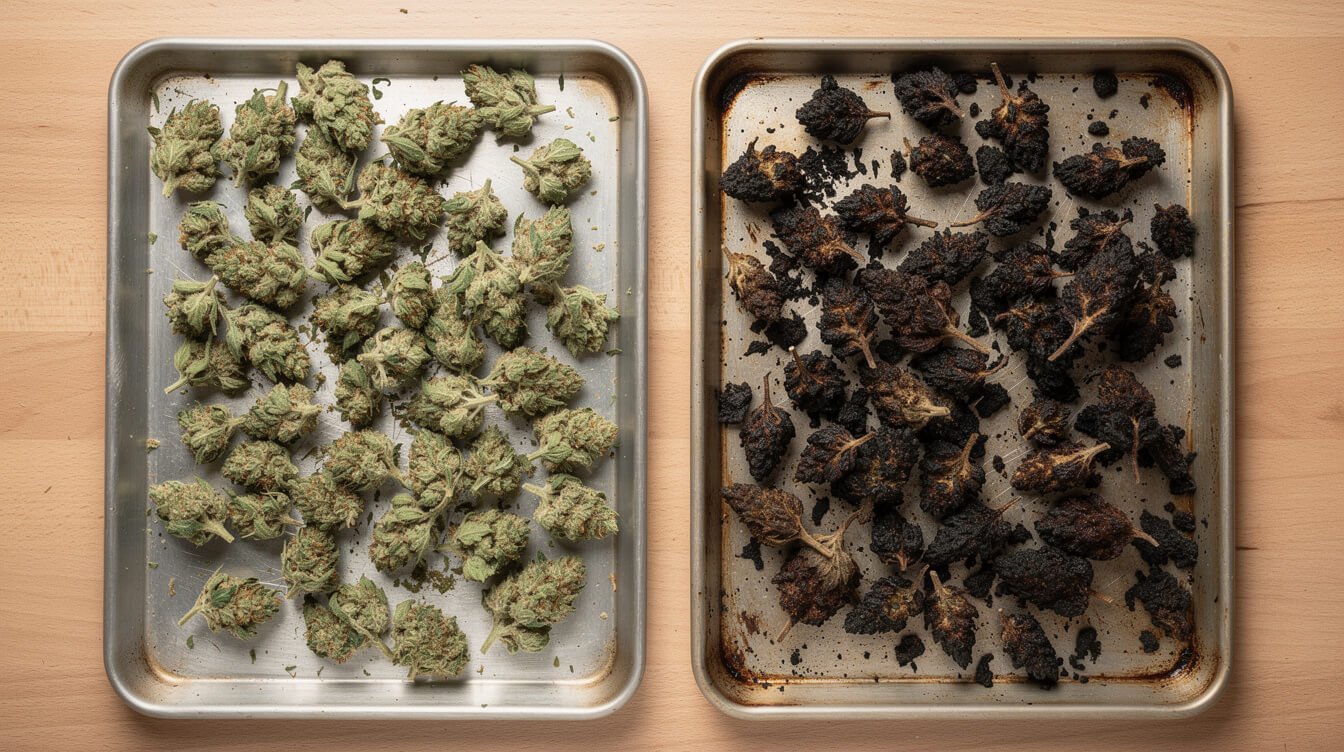
The two failure modes sit at opposite ends of the same mistake — not respecting the temperature/time relationship:
Underdecarbing happens when the temperature is too low, the time too short, or the oven runs cooler than the dial claims. THCA never fully converts, so the edible comes out weaker and less predictable than expected — the classic “I didn’t feel anything” edible complaint. If your flower still looks and smells mostly like raw cannabis after your planned time, it’s not done; give it more time rather than cranking the heat to compensate.
Scorching happens from too-high heat, too-long a run, powder-fine grinding, or an overloaded tray with poor airflow. Beyond degrading potency, it also produces a genuinely harsh, burnt flavor that’s hard to mask in a finished edible. If any part of your tray smells sharply burnt partway through, pull it, stir, and check — don’t wait for the timer.
A third, quieter mistake: overcrowding the tray or sealing it too tightly. A packed, overlapping layer traps moisture and heats unevenly, so the pieces in the middle can stay underdecarbed while the edges scorch — the worst of both problems on a single sheet. Give the flower room, and if you’re covering it, leave a gap for moisture to escape rather than sealing it airtight.
Both mistakes come from the same root cause: treating decarb as “set it and forget it” instead of a reaction you’re actively managing. A cheap oven thermometer and a timer solve most of it.
Does the trade-off change for tinctures and other infusions?
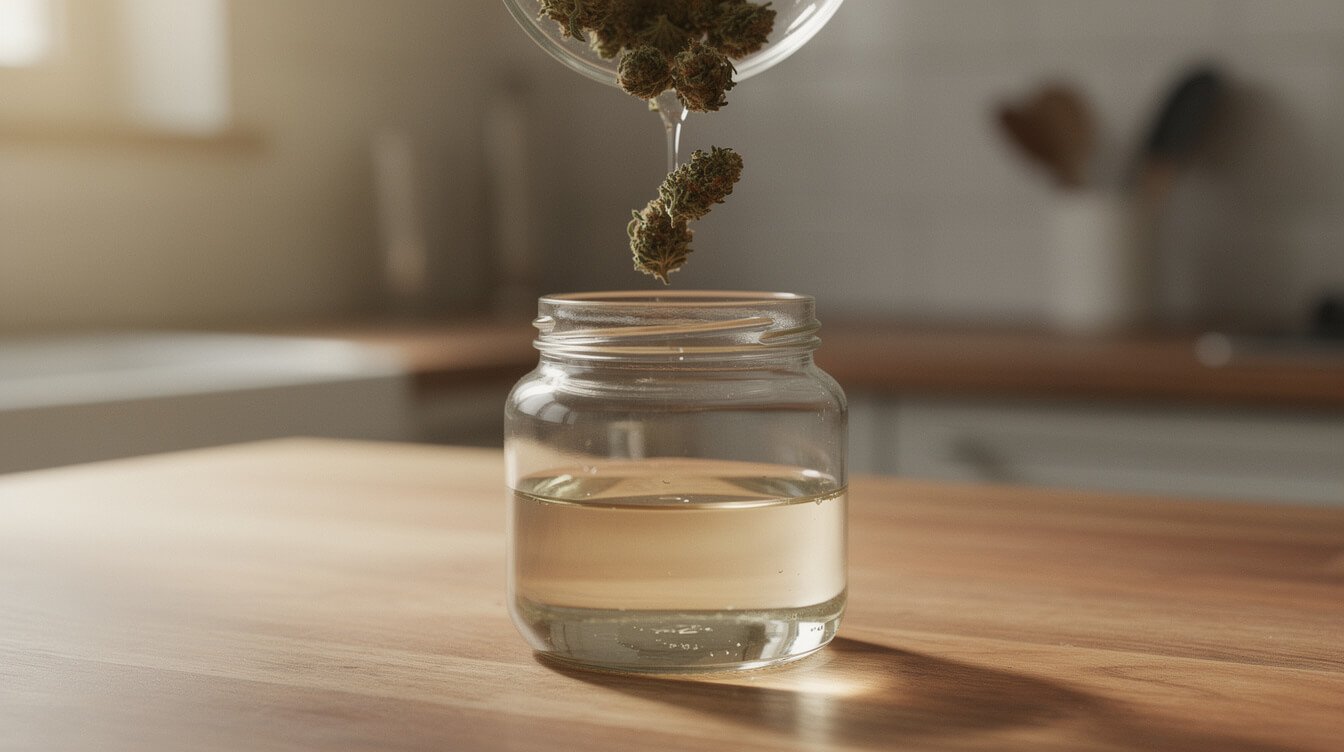
The oven step is identical whether you’re headed for butter, oil, or a high-proof alcohol tincture — decarboxylation happens before infusion, regardless of what you’re infusing into. Where the trade-off shows up differently is in how forgiving the infusion itself is of terpene loss. Fat-based infusions like butter and oil carry aroma well, so flavor loss from a faster decarb is more noticeable in the finished product. Alcohol tinctures are often taken in small drops under the tongue or mixed into a drink, where the raw plant flavor gets diluted or masked anyway — which makes tinctures one of the more forgiving formats for leaning toward the faster, high-heat end of the range if speed matters more to you than preserving aroma.
Frequently asked questions about decarb temperature and time for edibles
Can you decarb in a slow cooker or sous vide instead of an oven?
Yes — both are popular alternatives specifically because they hold a more precise, stable temperature than most home ovens, which helps with the low-and-slow approach in particular. Sous vide setups (flower sealed in a bag, submerged in temperature-controlled water) are especially good for consistency, since water holds temperature far more evenly than air.
Does grinding before or after decarbing matter?
Break flower down before decarbing for even heat exposure, but stop short of a fine grind — too much surface area accelerates both the conversion and the terpene loss, and increases scorching risk. A coarse, uneven grind afterward for infusion is fine.
Do CBD-dominant and high-THC flower decarb the same way?
The reaction is the same chemistry, but CBDA is somewhat more heat-stable than THCA, so CBD-focused decarbs are sometimes run a little longer at a similar or slightly lower temperature. If you’re working with a CBD-dominant cultivar, lean toward the longer end of whichever range you pick.
Is it safe to decarb on the stovetop instead of the oven?
It’s possible, but much harder to control — stovetop heat is uneven and easy to spike, which raises scorching risk. The oven (or a water-bath method like sous vide) gives you far more reliable control over both temperature and time, which is most of what determines the result.
Can you over-decarb flower to the point of losing potency?
Yes. Decarboxylation converts THCA to THC, but pushing well past that point — too hot, too long — starts degrading the THC itself into other compounds, which is part of why very high, prolonged heat can leave you with weaker results despite “cooking it more.” More heat and time past full conversion isn’t extra insurance; it’s a slow potency leak.
Is store-bought “pre-decarbed” flower or distillate already good to go?
Products explicitly labeled decarboxylated or sold as distillate/isolate have already gone through this conversion, so you can generally infuse them directly without repeating the oven step — re-decarbing already-converted THC doesn’t add potency and risks degrading it instead. If a product doesn’t say either way, treat it as raw and decarb it yourself; it’s a low-cost step to skip only when you’re sure it’s already been done.
Final thoughts on decarb temperature and time for edibles
There’s no universally “correct” number here — just a trade-off between flavor and speed that you get to choose based on what you’re making. Want the most aroma and the roundest flavor in the final product? Go low and slow. Batch-processing flower for something where taste won’t show through anyway? Go higher and faster. Either way, the two things that actually matter are respecting the temperature you set and watching the process instead of walking away — that’s what separates a clean decarb from an underpowered or scorched one.
Once your flower is decarbed, the terpene-preservation logic carries straight into your infusion choices too — our practical guide to terpenes and their effects is a good next stop if you want to understand what you’re actually protecting when you decarb gently. And if you’re ready to put decarbed flower to work, our culture shop has the gear worth having on hand for the next batch.
Laws around growing, possessing, and using cannabis vary significantly by state and country — know your local rules before you start. This is general education, not medical advice; talk to a doctor about any health-related questions.
Before you go
Get the next explainer first
We publish a new one every day. The best of the week, plus what's new in the shop, lands in one short email.