How to Make Weed Brownies (Dosed the Way the Lab Does It)
Here’s the honest answer up front. Learning how to make weed brownies comes down to four things: know roughly how strong your cannabutter is, swap it into a good fudgy brownie, cut the pan into exactly equal pieces, and eat less than you think you should. The baking part is easy. The dosing part is where homemade brownies get their reputation, and it’s fixable with a ruler and some basic math.
The brownie is also, quite literally, the lab’s choice. The Johns Hopkins researchers who measured how oral THC behaves in people gave their volunteers cannabis-infused brownies. So we know more about how a weed brownie kicks in, peaks, and wears off than almost any other edible, and we’ll use that data below. For adults 21+ only, and only where it’s legal. Laws vary a lot by state and country, so check yours first.
How to make weed brownies: the short answer
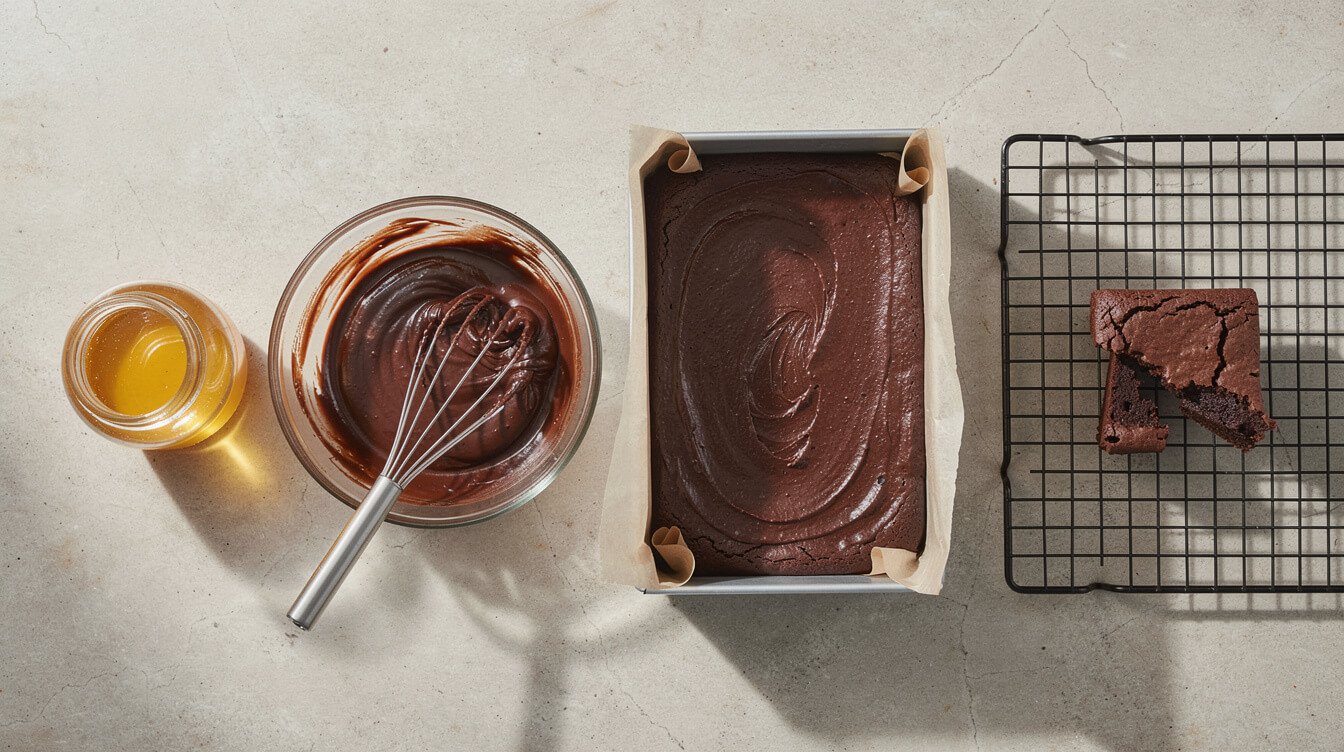
Every weed brownie, from a boxed mix to a pastry-chef recipe, follows the same path:
- Decarb the flower. Raw cannabis is mostly THCA, which doesn’t do much when you eat it. Gentle oven heat converts it to THC. Our decarb temperature and time guide covers the trade-offs.
- Infuse it into fat. THC dissolves in fat, not water, so you make cannabutter (or canna oil) first.
- Estimate the potency. Work out the maximum milligrams of THC per tablespoon of butter before it goes anywhere near the batter.
- Bake a real brownie. Replace some or all of the recipe’s butter with the infused butter, mixed thoroughly.
- Cut evenly and write the number down. Total mg ÷ pieces = mg per piece. Label the container.
- Test one small piece and wait. At least three hours before you even think about another.
If you’ve read our five-step guide to making edibles, this is the same framework with brownie-specific numbers. This page focuses on what’s particular to brownies: a recipe by weight, a table for mg per square, why the corner piece sometimes hits harder, and what the brownie studies say about timing.
One thing to decide before you start: how strong you want each square to be. Pick that number first and work backwards. Most people get this the wrong way round. They dump a whole batch of butter in, then discover each square is 30 mg.
Before you bake: get a number for your cannabutter
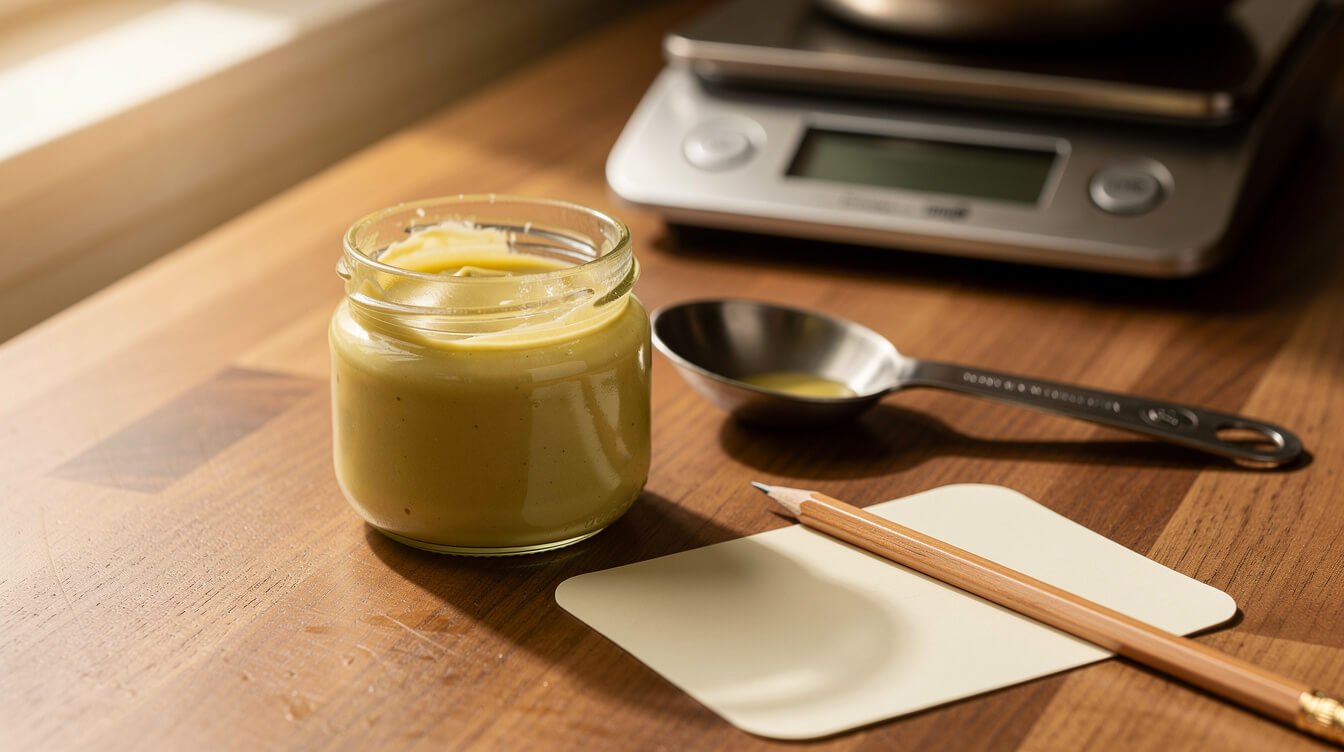
This page is about how to make weed brownies, not cannabutter. Our step-by-step cannabutter guide handles the decarb, the low simmer, and the straining. What you need from that process is one number: the maximum mg of THC per tablespoon of your butter.
The math is short:
Grams of flower × 1,000 × THC fraction = maximum mg of THC in the butter. Divide by the tablespoons of butter you made to get the maximum mg per tablespoon.
Example: 3.5 grams of flower at 20% Total THC is 3.5 × 1,000 × 0.20 = 700 mg. Infused into one cup of butter (16 tablespoons), that’s about 44 mg per tablespoon, at most. If you’re converting from eighths or ounces, our grams-in-an-ounce guide has the weights.
Two details matter here:
- Use Total THC, not THCA plus THC. If your label lists only THCA, multiply it by 0.877 and add the small THC number. The edibles guide explains why that 0.877 exists. If the label already says “Total THC,” use it as-is.
- It’s a ceiling, not a dose. Decarb is never perfect, and not every milligram makes it from the plant into the butter. Your butter is probably weaker than the math says. Treat the number as an upper limit that keeps you safe, not a lab result.
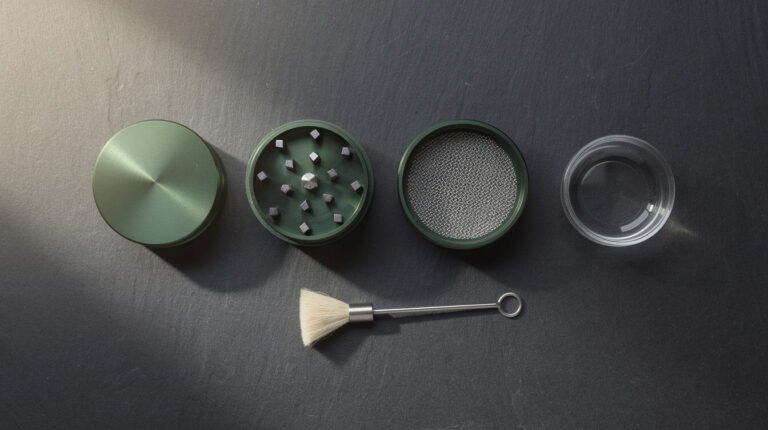
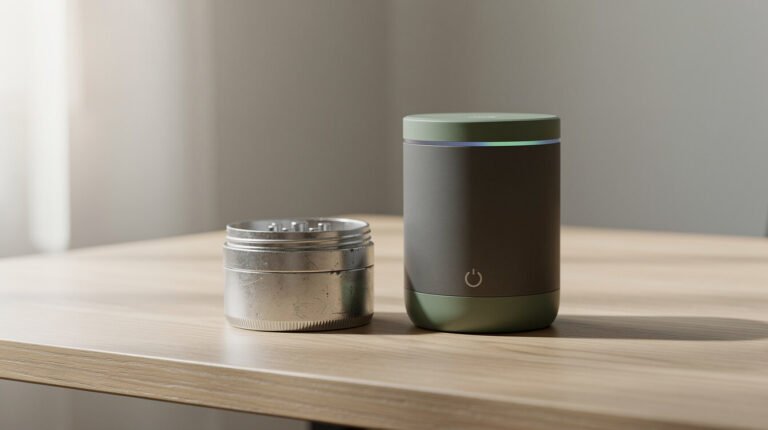
Write the number on the jar. You’ll need it in the table below. For a fudgy brownie, grind the flower coarse, not to powder. A decent grinder helps, and fine dust strains out badly and makes the brownies taste grassy.
The recipe: fudgy weed brownies, by weight
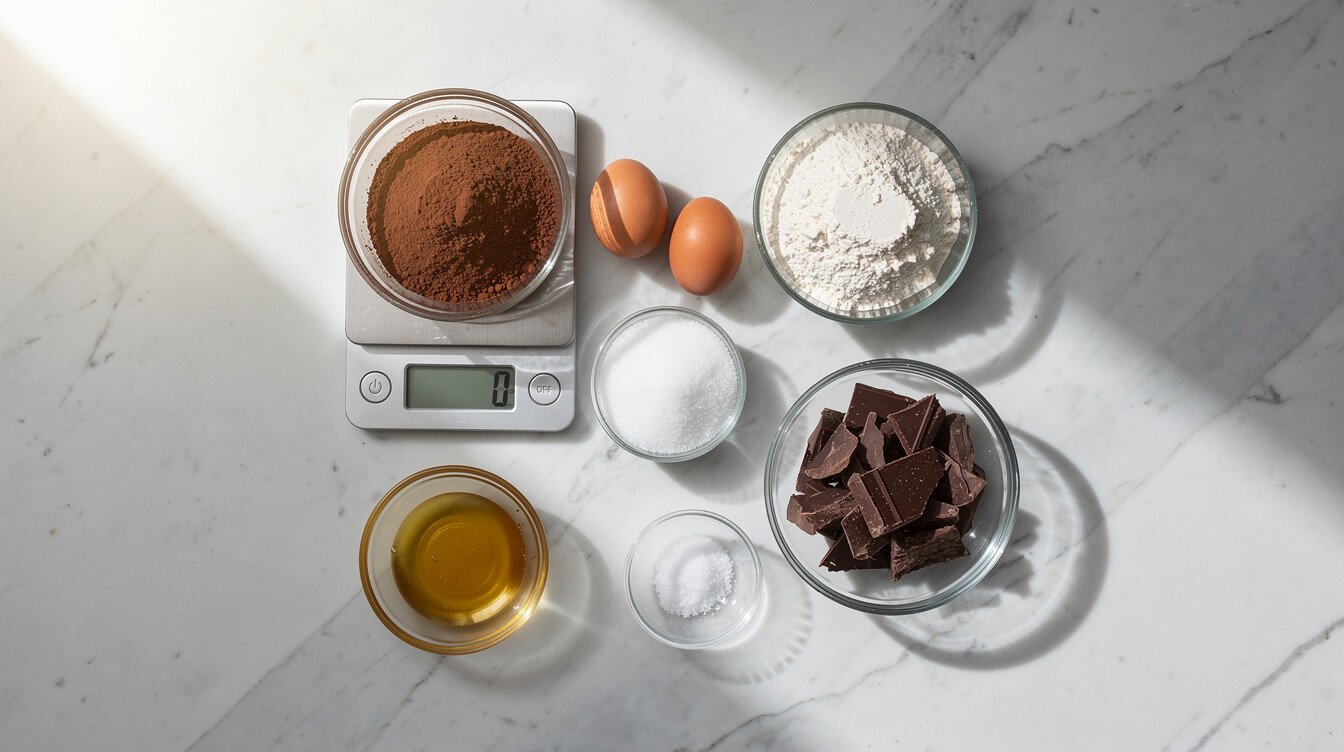
This is a dense, chocolate-forward brownie. Strong cocoa and a little brown sugar cover the herbal taste well, and a fudgy batter carries fat evenly. That matters more than you’d think, as the next sections explain. Weigh the ingredients if you can. A kitchen scale is the single most useful tool for dosing.
Yield: one 8×8-inch pan, 16 squares (2 × 2 inches)
Prep: 15 minutes | Bake: 25–32 minutes | Cool: about 2 hours
Ingredients
- 113 g (8 tablespoons / ½ cup) butter total, made up of cannabutter plus plain unsalted butter (see the table in the next section for the split)
- 150 g (¾ cup) granulated sugar
- 75 g (⅓ cup, packed) light brown sugar
- 45 g (½ cup) unsweetened cocoa powder, Dutch-process or natural
- ½ teaspoon fine salt
- 2 large eggs, room temperature
- 2 teaspoons vanilla extract
- 65 g (½ cup) all-purpose flour
- 85 g (½ cup) chopped dark chocolate or chocolate chips
Method
- Prep the pan. Heat the oven to 325°F. Line an 8×8-inch metal pan with parchment, leaving an overhang on two sides so you can lift the slab out later.
- Melt the butters together. Put the cannabutter and plain butter in a saucepan over low heat (or microwave in short bursts) until just melted. Don’t let it boil or brown. You’re combining them, not cooking them.
- Whisk in the sugars, cocoa, and salt while the butter is warm. Whisk for a full minute until it looks like wet sand turning glossy. This is the step where the infused fat gets spread through everything.
- Let it cool slightly. It should feel warm, not hot, so the eggs don’t scramble.
- Add the eggs one at a time, then the vanilla, whisking hard after each until the batter is thick, shiny, and pulls away from the bowl. No oily streaks or pooling. If you see a slick of fat, keep whisking.
- Fold in the flour with a spatula until no dry streaks remain. Then fold in the chocolate. Don’t overmix.
- Spread it evenly. Push the batter into the corners and level the top with an offset spatula or the back of a spoon. An even layer means even squares.
- Bake 25–32 minutes, until the top is set and crackly, and a toothpick from the center comes out with a few moist crumbs. If you have an instant-read thermometer, the center should be around 195–200°F.
- Cool completely, about 2 hours at room temperature, or 1 hour plus 30 minutes in the fridge. Warm brownies smear and cut unevenly.
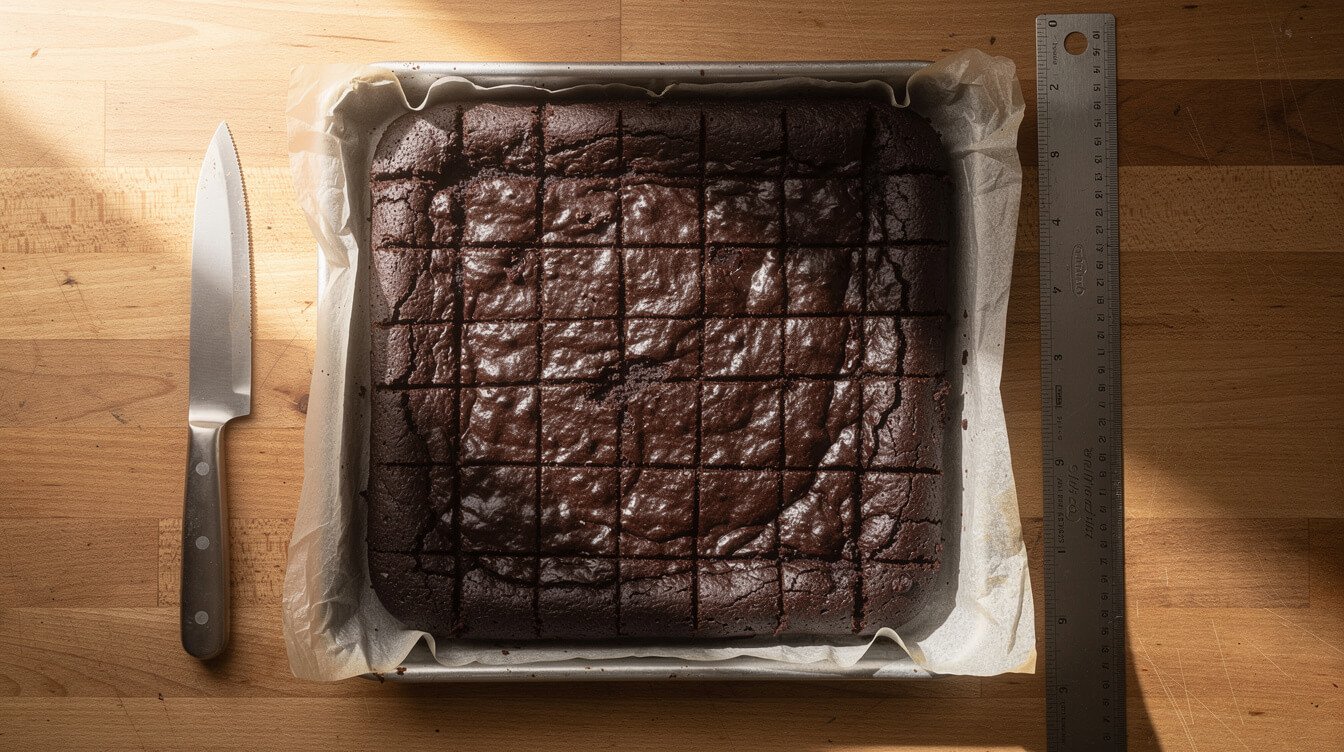
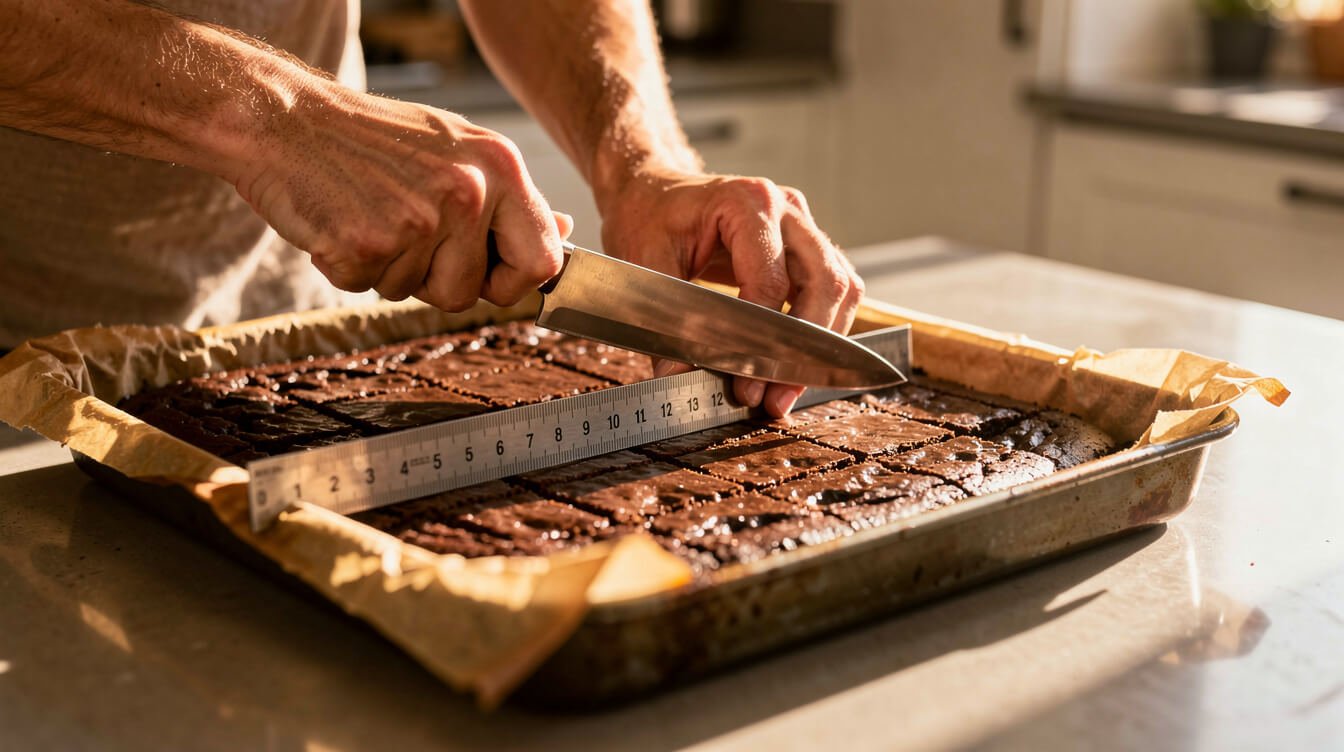
- Lift, measure, and cut. Lift the slab out by the parchment, mark every 2 inches along each side with a ruler, and cut a 4×4 grid. Then label the container (more on that below).
That’s the whole bake. Most of the craft in how to make weed brownies is everything on either side of the oven: the number going in and the cut coming out.
How strong is each brownie? The dose table
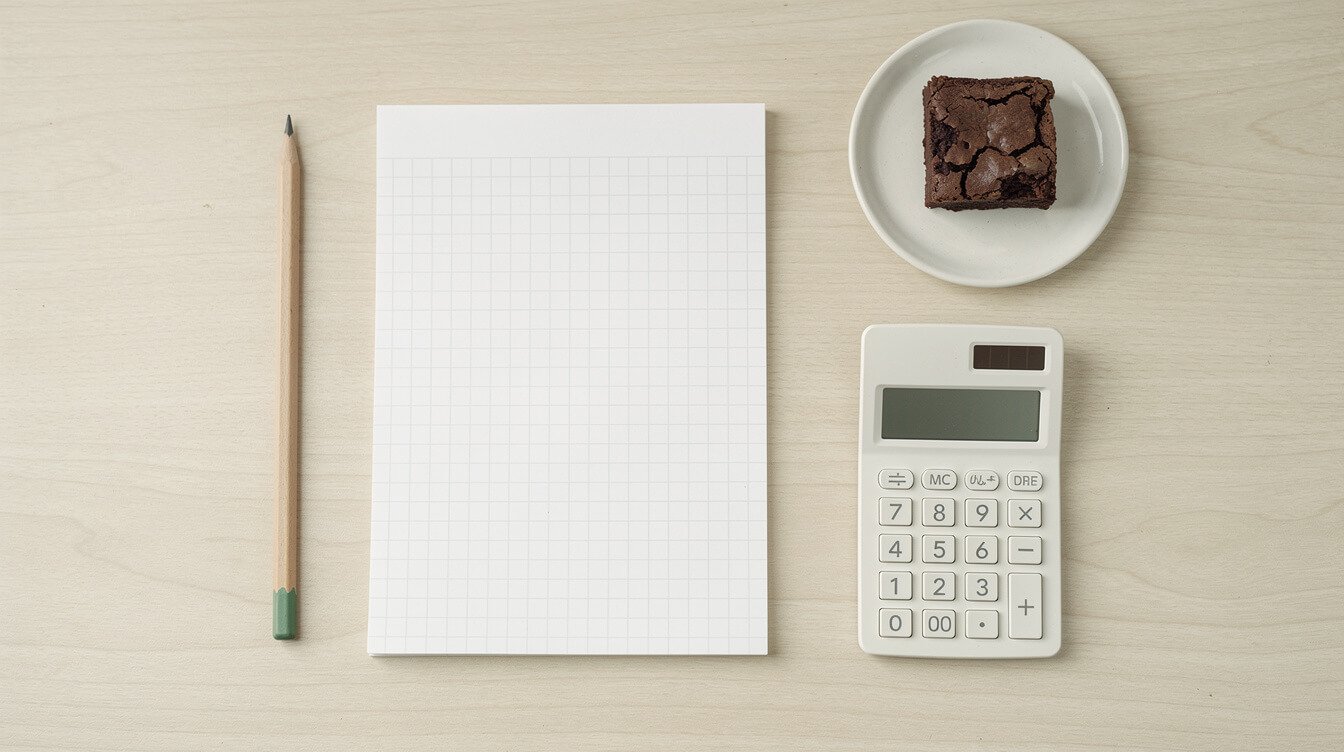
Here’s the table almost no recipe gives you. It assumes cannabutter with a ceiling of 40 mg THC per tablespoon, close to the 44 mg example above. The rest of the recipe’s 8 tablespoons is plain butter. Every number is a maximum per piece.
| Cannabutter in the pan | Batch ceiling | 9 pieces | 12 pieces | 16 pieces | 24 pieces |
|---|---|---|---|---|---|
| 1 tbsp (+ 7 tbsp plain) | 40 mg | 4.4 mg | 3.3 mg | 2.5 mg | 1.7 mg |
| 2 tbsp (+ 6 tbsp plain) | 80 mg | 8.9 mg | 6.7 mg | 5 mg | 3.3 mg |
| 4 tbsp / ¼ cup (+ 4 tbsp plain) | 160 mg | 17.8 mg | 13.3 mg | 10 mg | 6.7 mg |
| 8 tbsp / ½ cup (all infused) | 320 mg | 35.6 mg | 26.7 mg | 20 mg | 13.3 mg |
If your butter isn’t 40 mg per tablespoon, scale the table. At 20 mg/tbsp, halve every cell. At 80 mg/tbsp, double it. The formula never changes:
(Tablespoons of cannabutter × mg per tablespoon) ÷ number of pieces = maximum mg per piece
A few things jump out of the table:
- The all-infused pan is strong. A full half cup of 40 mg butter, cut into 9 big squares, puts each piece near 36 mg. In the Johns Hopkins brownie study (more below), 25 mg already caused marked impairment in infrequent users. That’s how people get flattened by “just one brownie.”
- The sweet spot for a first batch is 2 tablespoons in a 16-piece pan. That’s about 5 mg per square at the ceiling, so the realistic dose is probably lower. It’s easy to eat half, or a whole one once you know how it lands.
- Change the strength with the butter ratio, not the knife. Cutting tiny pieces from a strong pan works on paper. In practice, people eat two.
A quick sanity check against a well-known published recipe: ½ gram of 20% flower is 100 mg for the whole pan, or about 6 mg per piece across 16. Same math, smaller batch. Whatever you land on, write “max X mg per piece” on the container while you still remember.
GanjaTech, weekly
Cannabis, explained. In your inbox.
One email a week: the clearest explainers, honest gear picks, and what the science actually says. 21+ only. No spam, unsubscribe anytime.
How to make weed brownies so every square is the same strength
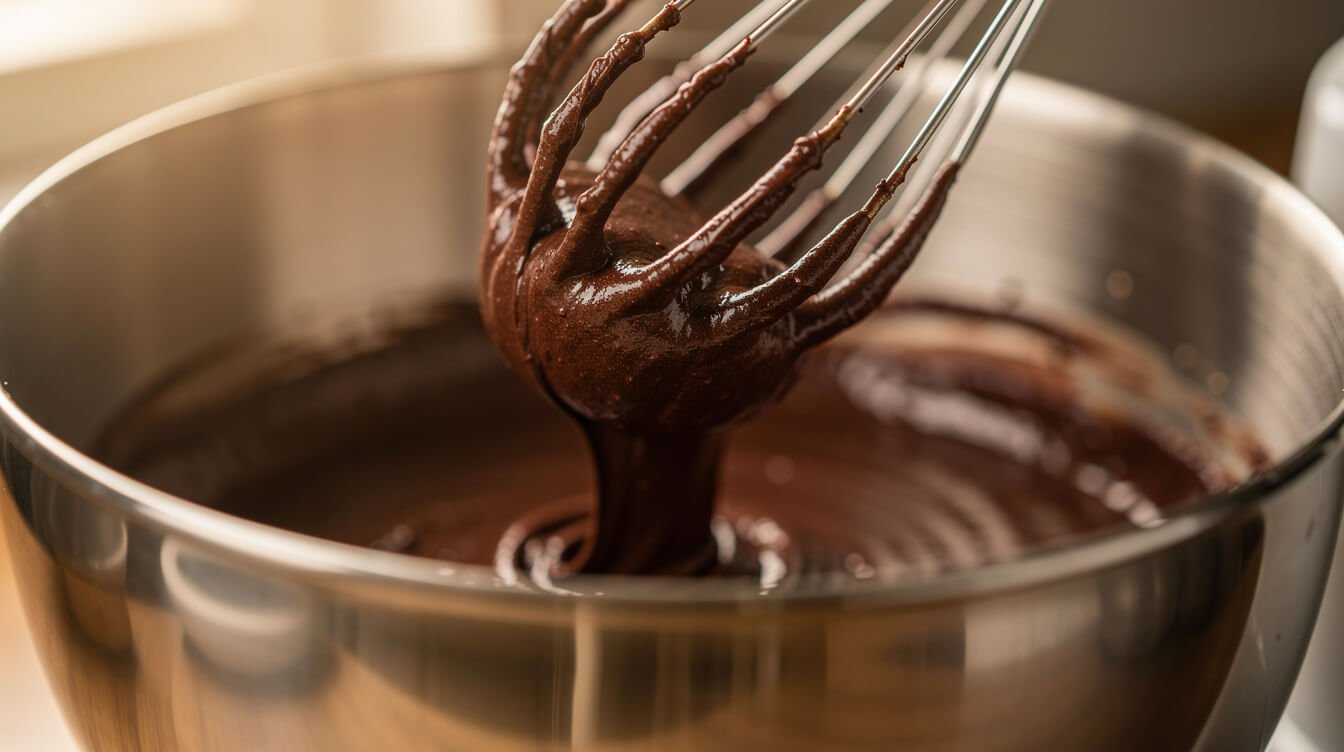
Ask around and you’ll hear it: one brownie did nothing, and the next one off the same tray knocked someone sideways. That isn’t bad luck. There are three ways a pan ends up with hot spots.
1. The fat didn’t fully mix
THC lives in the fat. If the cannabutter and plain butter weren’t completely combined, or if the batter “broke” and fat pooled, the THC goes wherever that fat goes. That’s why the recipe melts both butters together and whisks them into the sugar for a full minute before the eggs. A glossy, uniform batter with no oil slick is your visual check for even dosing. With a boxed mix, the same rule applies. Melt the infused fat completely and stir until there are no streaks.
2. The batter wasn’t level
Batter poured into the middle of the pan and left there bakes into a slab that’s thicker in the center. Equal-looking squares from the middle contain more batter, and more THC, than squares from the edge. Spread it into the corners and level the top.
3. The pieces weren’t the same size
This is the big one. Eyeballing a 4×4 grid easily produces pieces that differ by a third or more in size, and their dose differs by the same amount. Use a ruler and mark the cuts before you slice. For extra precision, weigh the whole cooled slab, divide by the number of pieces, and trim each piece to that weight. It’s a little fussy, but it’s the difference between a predictable dose and a gamble. Don’t toss the edges unless you’ve accounted for them. They contain THC too, so trimming them off changes your mg per piece.
Does baking at 350°F burn off the THC?
This one comes up constantly, and the short answer is no, not in any meaningful way. The oven air may be 325–350°F, but the inside of a moist brownie never gets close to that. The water in the batter keeps the interior cool while it evaporates. Baking thermometer maker ThermoWorks puts the center of a done fudgy brownie at around 200°F. That’s cooler than a typical decarb oven. The edges and top crust get hotter, but they’re a small share of the pan. The bigger potency losses happen earlier, in decarb and infusion, not in the bake.
The same physics explains why you can’t skip the decarb and let the oven do it. In a 2016 study of decarboxylation kinetics, THCA converted to THC far faster at the hot end of the tested range (176°F to 293°F) than at the cool end. A brownie’s center only reaches the low end of that range, and only for the last few minutes of the bake. Raw flower stirred into batter mostly stays THCA.
How much weed brownie should you eat, and how long does it take?
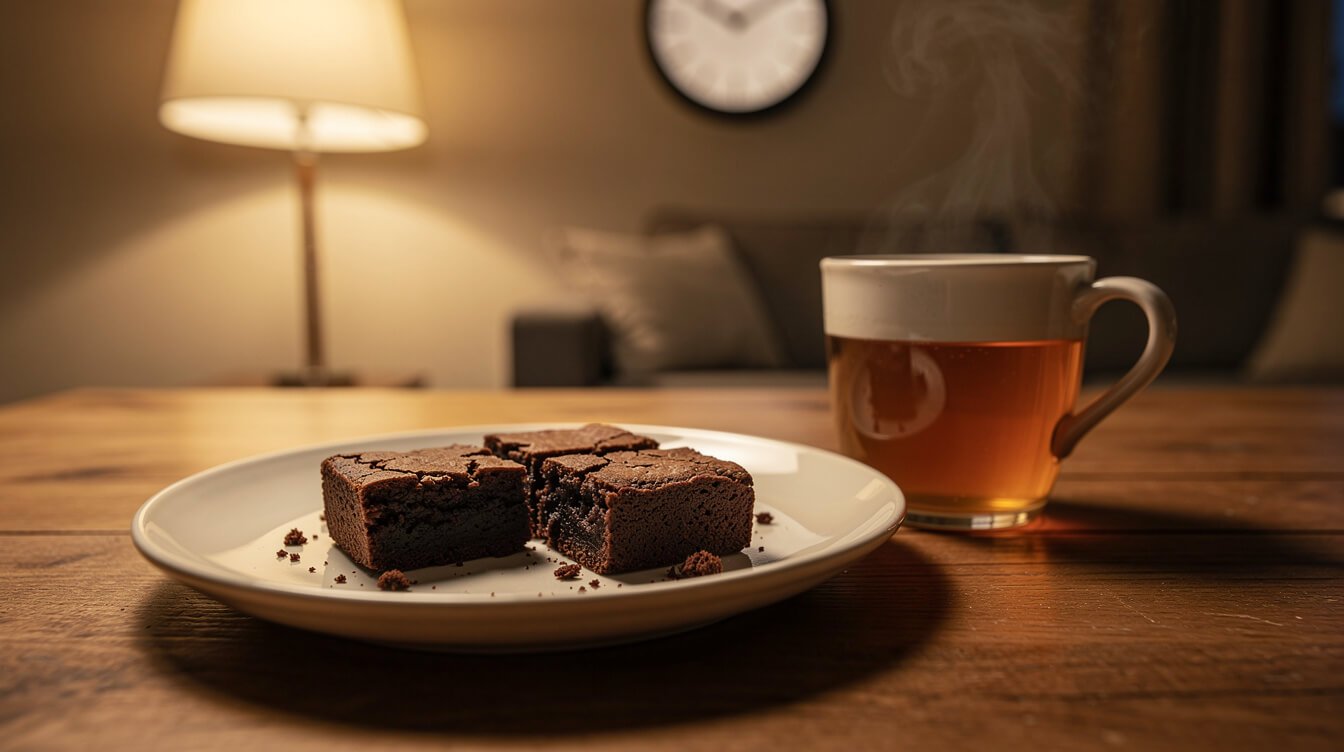
Here’s where the lab data earns its keep. Three Johns Hopkins studies dosed healthy adults with cannabis brownies and measured what happened, hour by hour.
- Onset: 30–60 minutes. Peak: 1.5–3 hours. In Schlienz et al. (2020), 17 adults who hadn’t used cannabis for at least 60 days ate brownies with 0, 10, 25, or 50 mg of THC. At every active dose, effects didn’t show up until 30–60 minutes after eating and peaked at 1.5–3 hours.
- Dose matters a lot. In that study, 10 mg produced effects people could clearly feel and a higher heart rate, but no measurable drop on cognitive and psychomotor tests. At 25 and 50 mg, effects were “pronounced,” and performance was markedly impaired.
- Duration: 6–8 hours. An earlier brownie study, Vandrey et al. (2017), found subjective and performance effects peaked at 1.5–3 hours and lasted 6–8 hours.
That leads to a simple plan for your first square:
- Start with about 2.5–5 mg (at the ceiling). That’s half or one square from the 2-tablespoon row of the table. If your squares are around 10 mg, start with a quarter or half.
- Wait three hours. Lots of recipes say to wait 60–90 minutes before having more. The data says 90 minutes is when you’re just entering the peak window. Eating a second piece then is the classic way to stack two doses on top of each other.
- Plan for the whole evening. Effects can run 6–8 hours. No driving, no work, nothing you’d need to be sharp for. Impaired driving is illegal everywhere.
- Keep the rest of the night simple. Skip alcohol, which stacks with THC. If you take any medication, ask a pharmacist or doctor about interactions first.
One myth worth killing: taking CBD won’t bring a brownie down. In a 2023 Hopkins trial, a brownie with 20 mg THC plus 640 mg CBD produced higher blood THC levels and stronger effects, including more anxiety, than the same THC alone. Our full edible timeline goes deeper on onset, peak, and comedown. If a square turns out to be too much, here’s what actually helps when you green out and when to get help.
Tolerance, body weight, and whether you’ve eaten all change how a brownie lands, which is why the first square is a test, not a verdict. Once you know how one square feels, you have a real dose for that batch.
Storing weed brownies safely around kids and pets
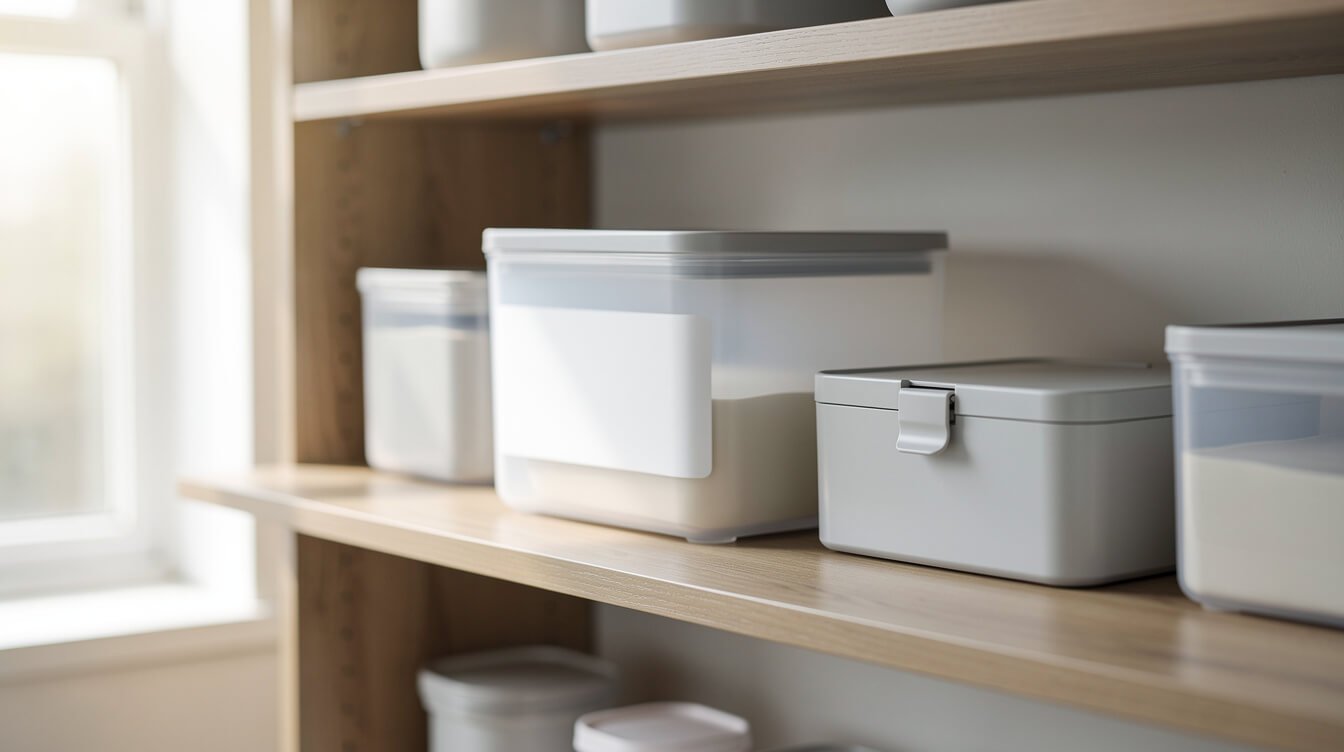
A weed brownie looks exactly like a regular brownie. That’s the whole problem.
Kids. National Poison Data System records analyzed by Tweet et al. (2023) found reported edible-cannabis exposures in children under six rose from 207 in 2017 to 3,054 in 2021, an increase of 1,375%. 97.7% happened at home, and 22.7% of the children were admitted to the hospital.
Dogs (and other pets). Brownies are a double hazard. Chocolate contains theobromine and caffeine, which the Pet Poison Helpline lists as causing vomiting, a racing heart, tremors, and seizures. THC adds its own risks. The Helpline specifically names brownies and pot butter as common ways pets get poisoned, with signs that can start anywhere from 5 minutes to 12 hours after eating and last up to several days.
The storage rules that actually work:
- Label every container with “Contains THC,” the max mg per piece, and the date. Put it on the container itself, not a sticky note nearby.
- Store them apart from regular food, in an opaque container, in a locked box or a high cabinet. Not the cookie jar, and not the counter.
- Never serve them to anyone who doesn’t know, and never bring them anywhere kids might find them. Selling edibles typically requires a license where it’s allowed at all, so this is a make-for-yourself recipe.
- Keep them airtight. They’ll stay fresh at room temperature for a few days, longer in the fridge.
If a child eats one: call Poison Control at 1-800-222-1222 right away. Call 911 if they’re hard to wake, having trouble breathing, or having a seizure. If a pet eats one: call your vet, the ASPCA Animal Poison Control Center at (888) 426-4435, or the Pet Poison Helpline at 855-764-7661. Both are open 24/7 and may charge a consultation fee. Tell them it was a chocolate brownie with THC, since chocolate and THC are separate poisoning risks.
Weed brownie FAQ
How much weed do you put in brownies?
Work backwards from the dose you want. For 16 squares at about 5 mg each, you need about 80 mg of THC in the pan. At 20% Total THC, that’s roughly 0.4 grams of flower, since 0.4 × 1,000 × 0.20 = 80. A full gram of 20% flower is a 200 mg ceiling, or 12.5 mg per square across 16. Most people add far more than they need.
Will weed brownies get you high if you don’t decarb?
Much less, and unpredictably. Raw flower is mostly THCA, and as covered above, the center of a baking brownie doesn’t get hot enough for long enough to convert much of it. Decarb first. The decarb guide has the temperatures and times.
How long do weed brownies take to kick in?
In the Hopkins brownie studies, effects started 30–60 minutes after eating and peaked at 1.5–3 hours. Some people feel it later than that. That’s why the advice is to wait three hours before having more.
Can I use a boxed brownie mix?
Yes. Swap the oil or butter the box calls for with melted cannabutter or canna oil (all of it or part of it, following the table). The dose math is identical. Whisk the infused fat in thoroughly, spread the batter evenly, and cut with a ruler. Box mixes are a perfectly good base. The mix isn’t where dosing goes wrong.
How to make weed brownies without cannabutter?
Use canna oil instead. A neutral oil like canola, or coconut oil, infused the same way works well, especially with box mixes that already call for oil. Some recipes infuse the flower directly in the brownie’s own butter and strain it before mixing. That also works, as long as you decarb first and do the same math. Stirring raw ground flower straight into batter is the one shortcut that doesn’t work well.
Why didn’t my weed brownies work?
The usual suspects: the flower wasn’t decarbed (or was badly overdone), the starting material was weaker than you assumed, the butter was simmered too hot, the dose was simply low, or you didn’t wait long enough. Tolerance matters too. Don’t make the next batch twice as strong on a guess. Raise the cannabutter by one row in the table and test again.
Final thoughts
That’s how to make weed brownies that behave: know your butter’s ceiling, choose the mg per square before you bake, mix the fat in completely, level the pan, cut with a ruler, and write the number on the container. The recipe is the easy part. The ruler and the label are what make it a responsible edible instead of a gamble.
Then respect the timeline the lab measured: 30–60 minutes to start, 1.5–3 hours to peak, and an evening’s worth of effects. Start with one small square, wait three hours, and keep the rest locked up and labeled, away from kids and pets.
Great plant, great dessert. Know your laws, keep it 21+, and enjoy it responsibly.
Before you go
Get the next explainer first
We publish a new one every day. The best of the week, plus what's new in the shop, lands in one short email.