Best Electric Weed Grinder: Who Actually Needs One
An electric grinder promises the same thing every year: press a button, get perfect flower, skip the wrist work. Some of that is true. A lot of it is marketing copy written by someone who has never actually run a sticky, resin-heavy cultivar through a $30 motor.
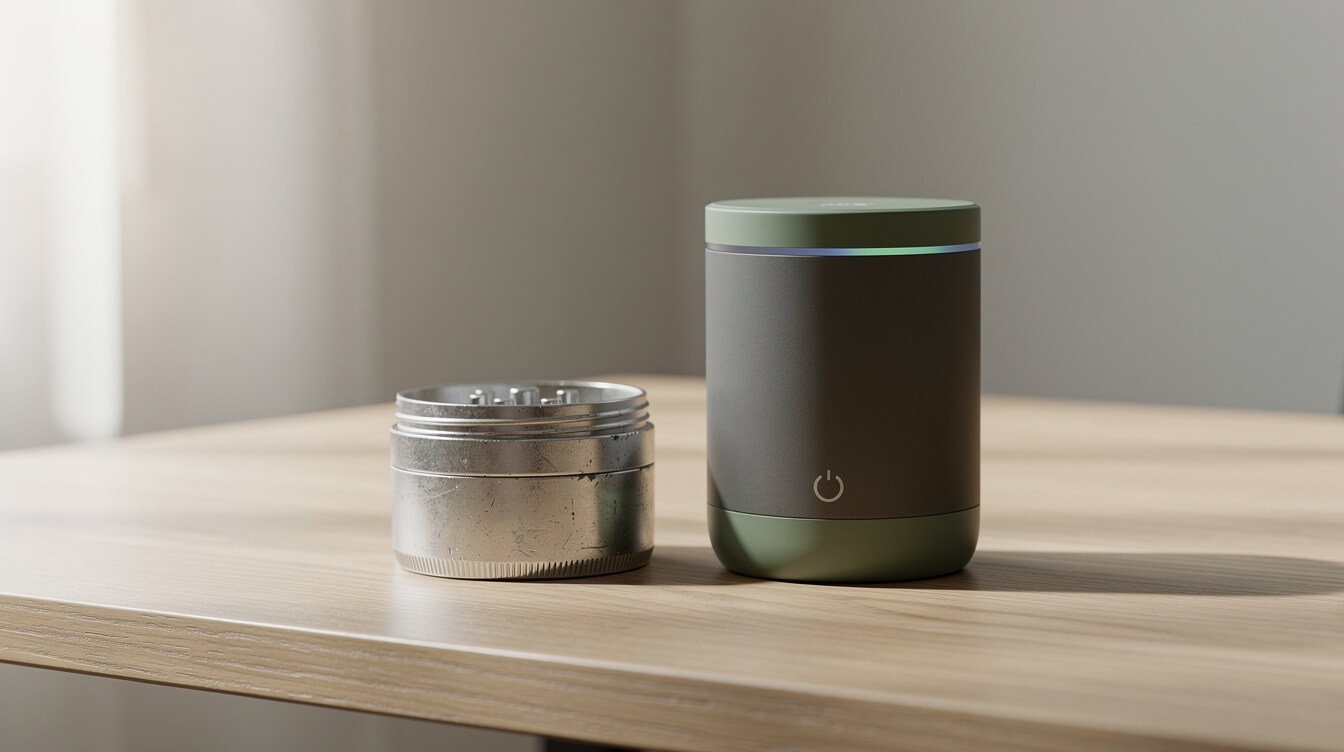
Here’s the honest version. A good best electric weed grinder pick genuinely changes the experience for a specific slice of users — people with limited grip strength, people grinding in bulk, people who vape and want dead-consistent particle size. For everyone else, a $40 manual grinder does the same job for less money, less noise, and zero charging anxiety. This guide is about figuring out which one you actually are, not talking you into buying gear you don’t need.
Electric vs. manual: who actually needs the upgrade
Start with the honest baseline: most people who smoke or vape flower do fine with a manual grinder. Twisting a lid for five seconds isn’t a real burden for the average adult with normal hand function. If that’s you, an electric grinder is a convenience purchase, not a necessity — nothing wrong with buying one anyway, but go in knowing that’s what it is.
The upgrade earns its keep in three situations. First, volume: if you’re grinding half an ounce at a time for a batch of pre-rolls or a stash jar, a motor saves real time and hand fatigue that a hinge and some teeth can’t. Second, consistency for vaporizers: dry-herb vapes are picky about particle size, and a handful of electric models use adaptive milling that reads flower density and adjusts, something no manual grinder does. Third — and this is the one most “best of” lists skip — physical limitation. If twisting hurts or isn’t possible, electric stops being a luxury and starts being the thing that lets you use flower at all.
Outside those three cases, the pitch gets weaker fast. Electric grinders add a battery to babysit, a motor that can jam on dense, sticky nugs, and a price tag that’s usually double or triple a comparable manual grinder. None of that is a dealbreaker, but it’s the trade you’re making.
A quick gut-check, side by side:
- Speed: electric wins for a single load — a few seconds versus a dozen twists. For grinding an ounce at once, electric’s lead widens considerably.
- Upfront cost: manual wins clearly. A solid manual grinder runs $20–50; a genuinely good electric model starts around $60 and climbs past $150 for automated features.
- Reliability over years: manual wins. There’s no motor, no battery, and no charging port to eventually fail. A well-made aluminum or zinc-alloy grinder can outlast several electric models.
- Effort required: electric wins, obviously — that’s the entire point of the category.
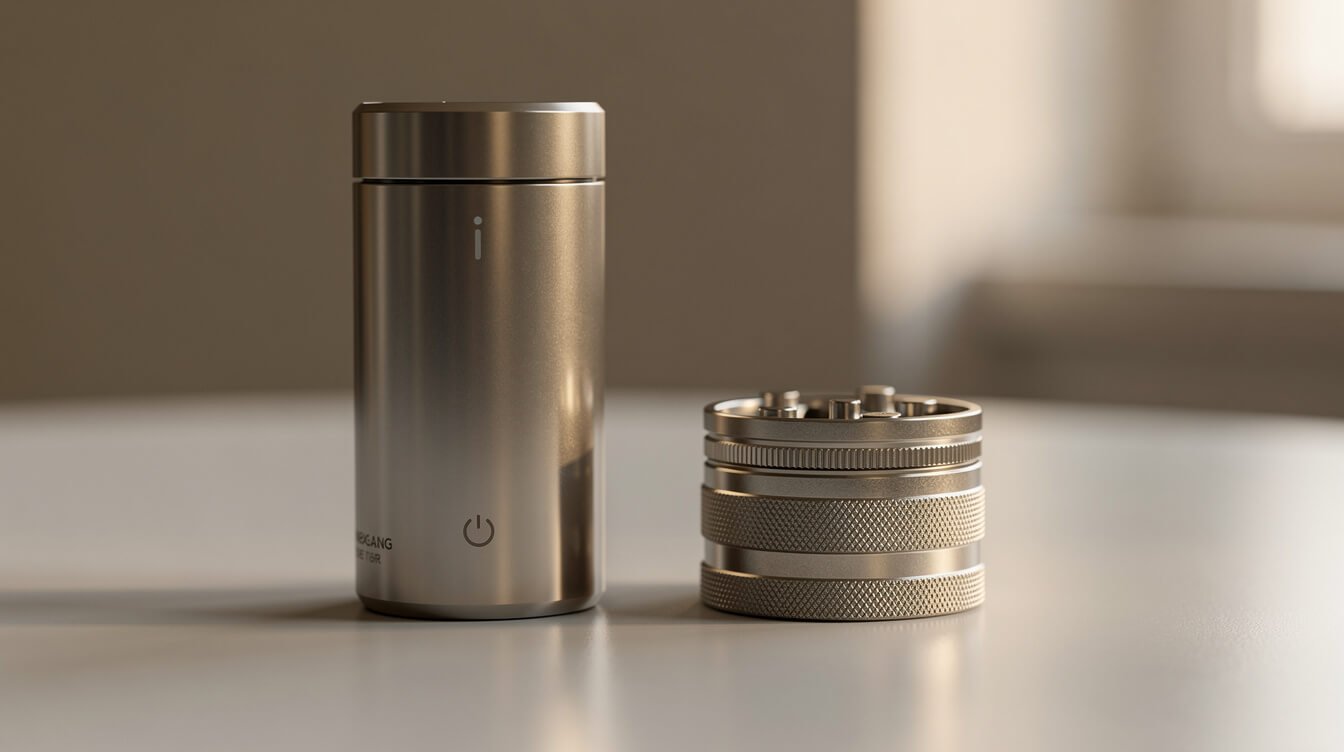
- Kief and trichome collection: manual wins in most cases, since premium manual grinders are built around fine mesh screens that electric designs usually skip in favor of speed.
Nobody wins on every axis, which is exactly why “who actually needs one” is the right question, not “which one is objectively better.”
Accessibility: when electric grinders actually help
This is the use case competitor “best electric grinder” roundups mention in a single throwaway line and then never come back to, which is strange, because it’s the strongest reason to actually buy one.
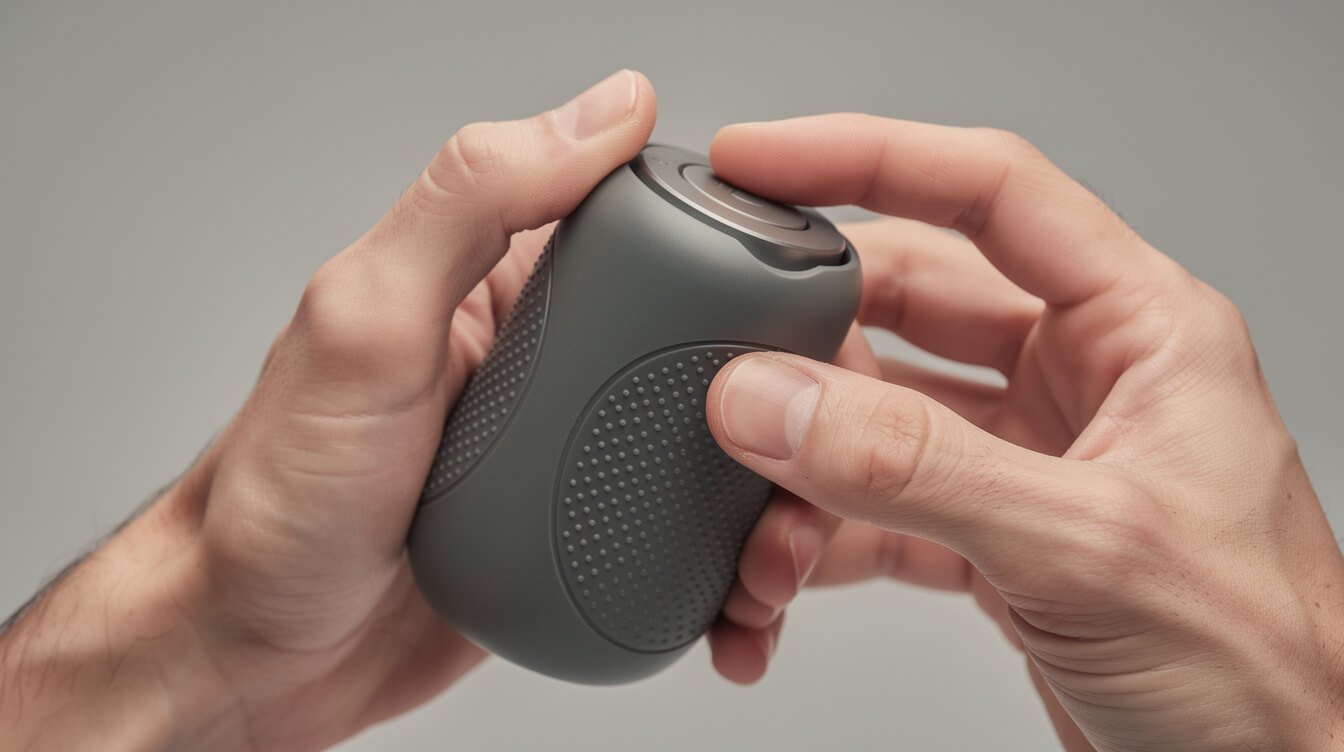
If you deal with arthritis, tendonitis, limited grip strength, or any condition that makes a repeated twisting motion genuinely difficult, a one-button electric grinder removes that step entirely. Load the chamber, press the button, done — no torque required. Some higher-end models go further and pair automatic grinding with automatic cone-filling, which cuts out packing and rolling too, not just the grind.
That combination matters more than it sounds like on paper. Grinding is one motion, but rolling a joint also involves pinching paper, distributing flower evenly, and twisting a filter or tip into place — several fine-motor steps stacked together. A grinder that also fills a pre-rolled cone removes most of that chain at once, which is a genuinely different experience than just automating the grind and leaving the rest manual.
Weight and grip design matter almost as much as the button itself. A device that’s heavy, has a slick housing, or requires pinching a narrow lid to open still creates friction for someone with limited hand strength, even if the grinding mechanism itself is push-button. Before buying for this reason specifically, look for models described as having a wide, textured grip and a chamber that opens with a light push or slide rather than a twist-and-pull motion.
Two honest caveats. First, this is a practical accessibility note, not medical advice — we’re not qualified to tell you what device is right for your specific condition, and if you’re choosing gear around a diagnosed mobility issue, it’s worth a quick conversation with your doctor or an occupational therapist about what grip and motion patterns to avoid. Second, “electric” doesn’t automatically mean “accessible.” Some models still require pinching a small chamber shut, twisting a cap to lock it, or navigating fiddly buttons — read the actual mechanism before assuming button-operated means effortless.
Battery life and charging: realistic expectations
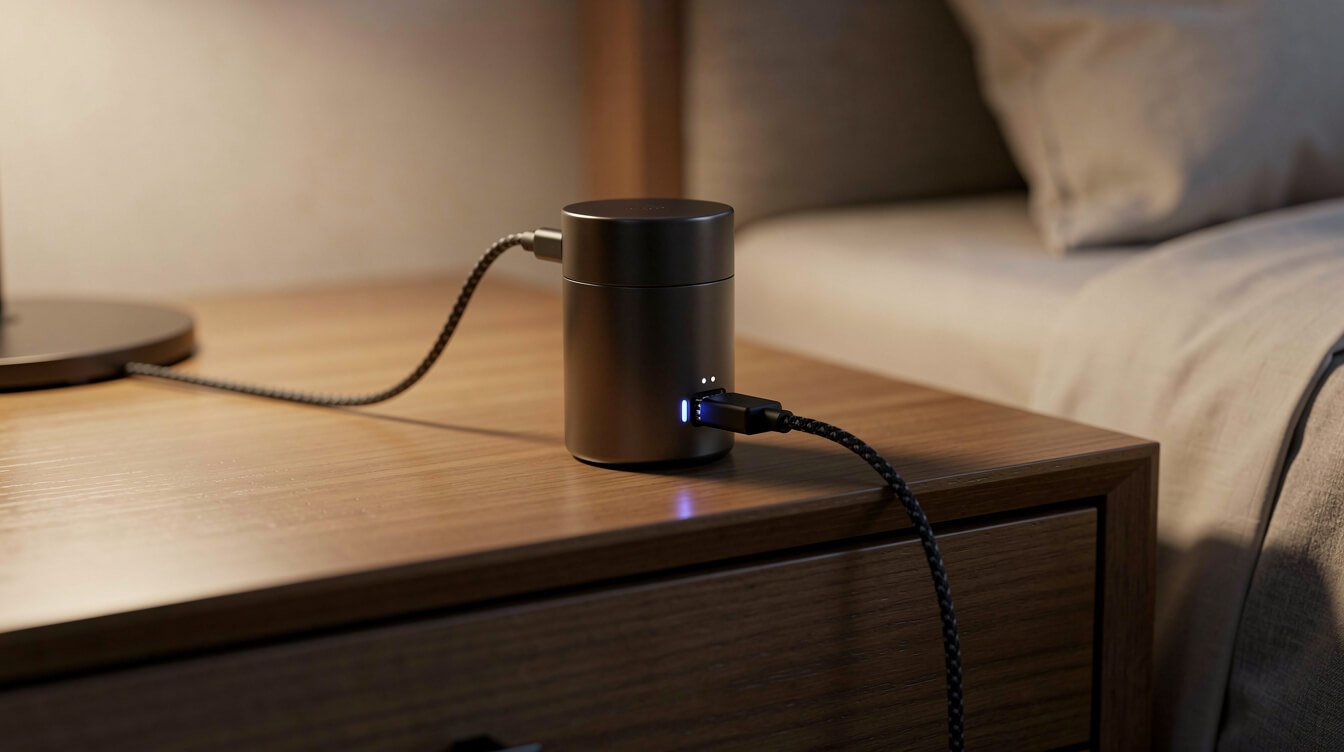
Marketing copy loves round numbers. Real use is messier. Here’s what actually holds up across most electric grinders on the market right now:
- USB-C is the standard worth insisting on. Anything still using disposable batteries or a proprietary charging dock is a sign of an older or cheaper design — avoid it unless the price is genuinely disposable-cheap.
- A charge realistically lasts a week of normal use, not a month. Most mid-range electric grinders get 15–25 grinds per charge. Daily users will be charging weekly; occasional users might stretch it to two or three weeks.
- Dense, sticky flower drains the battery faster than dry, crumbly flower. The motor works harder, pulls more current, and heats up more. If you’re mostly grinding resin-heavy cultivars, expect the low end of any battery estimate.
- Full charge time is usually under an hour with USB-C, which matters more than the headline “grinds per charge” number, honestly — a fast top-up beats a big battery you have to plan around.
The practical takeaway: keep the cable somewhere you’ll actually use it, the same way you would with a phone or a vape. An electric grinder that’s dead when you need it is worse than a manual one that never needed power in the first place.
A few other real-world battery quirks worth knowing before you buy: lithium-ion batteries lose charge capacity in cold storage, so a grinder left in a car or an unheated space over winter may show weaker performance than the spec sheet promises. And if you travel with one, know that most airlines and the TSA treat a small lithium-ion battery inside a grinder the same as any other lithium device — fine in a carry-on, generally restricted in checked luggage. Worth checking your specific airline’s rules and the cannabis laws of your destination before packing one for a trip, since both apply.
Grind consistency: does electric actually beat manual?

Sometimes. This is the most overstated claim in the category, so it’s worth being precise about where electric actually wins and where it doesn’t.
A well-made manual grinder with sharp, diamond-cut teeth produces excellent, consistent flower — assuming the person using it grinds evenly and doesn’t over-twist. That’s the catch: manual consistency depends on technique. Grind too aggressively or unevenly and you get a mix of powder and chunks regardless of how good the grinder is.
Electric grinders remove the technique variable. A basic blade-based electric model still produces variable results — some flower gets pulverized near the blade while larger pieces near the edge stay chunkier, similar to a kitchen spice grinder. The models that genuinely outperform manual grinders are the ones using sensor-adjusted or toothless milling systems, which read flower density and modulate speed or pressure in real time rather than just spinning at one fixed speed. That’s a meaningfully different mechanism, not just “manual, but motorized.”
For vaporizer users specifically, consistency matters more than it does for a bowl or joint, since uneven grind size creates uneven airflow and hot spots in the oven chamber. That’s the one case where paying for a genuinely well-engineered electric grinder — not just any electric grinder — has a real, measurable payoff.
There’s also a third mechanism worth knowing about beyond blades and milling plates: helix-style extrusion, where flower is pushed through a twisting internal blade as you turn (or motorize) the top cap. It produces a coarser, more torn texture rather than a cut one, which some dry-herb vape users prefer because it opens up airflow through the bowl. None of these three mechanisms is universally “the best” — they produce genuinely different textures, and which one you want depends on whether you’re packing a bowl, rolling a joint, or loading a vaporizer oven.
GanjaTech, weekly
Cannabis, explained. In your inbox.
One email a week: the clearest explainers, honest gear picks, and what the science actually says. 21+ only. No spam, unsubscribe anytime.
What actually matters when choosing one
Skip the “top 10” format for a second and focus on the handful of specs that actually predict whether you’ll like the thing in six months:
- Motor power and stall resistance. Cheap electric grinders bog down on sticky, dense flower — read reviews specifically for mentions of jamming or stalling on resinous cultivars, not just “worked great” testimonials.
- Chamber and blade material. Stainless steel or hardened alloy blades hold an edge and don’t gum up as fast as softer metals. If you’re the type who’d also consider a stainless steel manual grinder, that same durability logic applies here.
- Removable, dishwasher-safe or easily wipeable parts. Sticky residue builds up fast, and a chamber you can’t fully open and clean will smell and grind worse within weeks.
- Kief or pollen retention, if you care about it. Most electric models sacrifice kief collection for grinding speed — if that golden layer matters to you, check specifically before buying, since it’s the single biggest trade-off versus a premium manual grinder.
- What it’s actually for. A grinder built for cone-filling and automatic dispensing is a different tool than one built purely for fast, even grinding into a bowl. Match the feature set to how you actually consume, not to whichever model has the flashiest marketing video.
Price is a real signal here, more than in most gear categories. Sub-$30 electric grinders are usually fine for occasional, light use and not much else. The $60–150 range is where motor quality, build materials, and genuine consistency improvements start showing up. Above that, you’re generally paying for automation features — cone-filling, app-connected sensors — rather than a fundamentally better grind.
Two more practical factors rarely make it onto spec sheets but affect daily use a lot: noise and size. A motorized grinder is audible — not loud, but not silent either — which matters if discretion is part of why you’re grinding in the first place. And a fully automated, cone-filling unit is noticeably bigger than a pocket-sized manual grinder; it’s a countertop or drawer item, not something that rides along in a jacket pocket. If portability matters to you as much as convenience, a compact push-button model without the extra automation features is usually the better fit than the largest, most feature-packed option on the shelf.
Maintenance and cleaning electric grinders
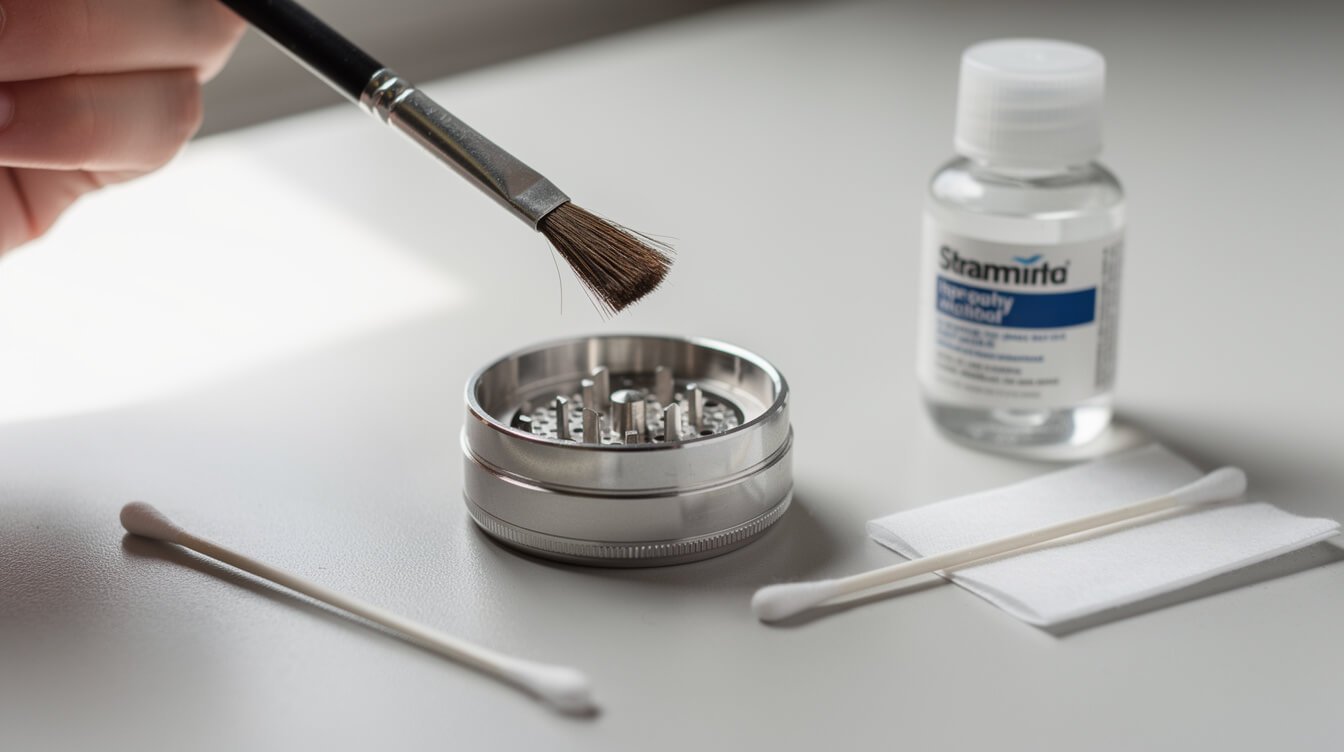
An electric grinder that never gets cleaned turns into a slow, sticky, bad-smelling motor within a month or two — resin buildup on the blades and chamber walls is the single biggest cause of stalling and uneven grinds, more than any spec on the box.
A workable routine: after every few uses, pop the chamber open (if the design allows it — check before buying) and wipe out visible residue with a dry brush or a cotton swab. Every couple of weeks, a light wipe with isopropyl alcohol on a cloth handles the sticky film that a dry brush can’t. Never submerge the motor housing or charging port in liquid, and let any alcohol-cleaned parts dry completely before reassembling.
If a model doesn’t let you access the actual grinding chamber for cleaning — some fully sealed designs don’t — that’s worth knowing before you buy, not after the grind quality starts dropping three months in.
A couple of longer-term habits pay off too. Store the grinder somewhere dry rather than a humid bathroom cabinet, since moisture accelerates residue turning gummy inside the chamber. And if the model has a removable battery or a visible charging port, keep that area completely dry and free of resin — a sticky charging port is a common, avoidable reason electric grinders stop holding a charge reliably well before the motor itself fails.
Frequently asked questions
Is an electric grinder actually better than a manual one?
Not universally — it depends on what you’re optimizing for. For raw grind quality, a well-made manual grinder used correctly holds its own against most electric models. Electric wins on convenience, volume grinding, and accessibility for anyone who finds twisting difficult or painful.
How long do electric grinder batteries actually last?
Expect roughly 15–25 grinds per charge on a typical USB-C model, which usually works out to about a week of normal daily use before it needs a top-up. Dense, sticky flower will drain it faster than dry flower.
Are electric grinders worth it for occasional users?
Usually not, purely on cost-benefit. If you’re grinding once or twice a week, the convenience gain is small relative to the price jump over a manual grinder, and you’re adding a battery to maintain for something you rarely use.
Do electric grinders ruin trichomes or reduce potency?
Aggressive, poorly designed blade grinders can shred trichomes along with the flower, same as an overly rough manual grind. Toothless milling and sensor-adjusted electric models are generally gentler on trichomes than basic blade designs, but “electric” alone doesn’t guarantee better preservation — the mechanism matters more than the power source.
Is it legal to buy an electric weed grinder?
The grinder itself is a legal accessory anywhere it’s sold. What varies by state and country is cannabis itself — always check your local laws before assuming legality, since they differ widely even across the US.
Are electric grinders noisy?
Most run at a low, audible hum for the few seconds it takes to grind — comparable to an electric toothbrush, not a power tool. It’s not silent, but it’s rarely disruptive unless discretion is a specific priority for you.
Can I bring an electric grinder on a flight?
The small lithium-ion battery inside is generally fine in carry-on luggage under standard airline rules, similar to a vape or phone battery, but confirm with your specific airline before travel. Separately, check the cannabis laws of your destination — a legal accessory doesn’t make cannabis itself legal to bring along.
Final thoughts
The honest answer to “should I get an electric weed grinder” is: probably not, unless you fall into one of the specific groups where it genuinely earns its price — limited grip strength, high-volume grinding, or vaporizer users who want sensor-level consistency. If that’s you, spend in the $60–150 range where the motor and materials are actually good, and treat cleaning as non-negotiable maintenance, not an afterthought.
If none of that describes you, a well-made manual grinder will do the same job, forever, without a charging cable. Neither choice is wrong — just be honest with yourself about which problem you’re actually solving.
Curious about the gear side of things beyond grinders? Our guide to rolling without a filter is a natural next stop, or browse the rest of the GanjaTech blog for more honest, no-hype explainers.
Before you go
Get the next explainer first
We publish a new one every day. The best of the week, plus what's new in the shop, lands in one short email.