CBD vs THC Gummies: What’s Actually Different (and Which One You Want)
Here’s the honest answer, then the nuance: CBD vs THC gummies comes down to one fact. THC gets you high. CBD doesn’t. Everything else — how each one feels, how you dose it, whether it shows up on a drug test, whether it’s even legal where you live — flows from that single difference.
If you’ve stood in front of a gummy shelf (or a browser tab) trying to figure out which jar is right for tonight, this is the straight version, no clinical jargon and no sales pitch.
CBD vs THC gummies: the 30-second answer
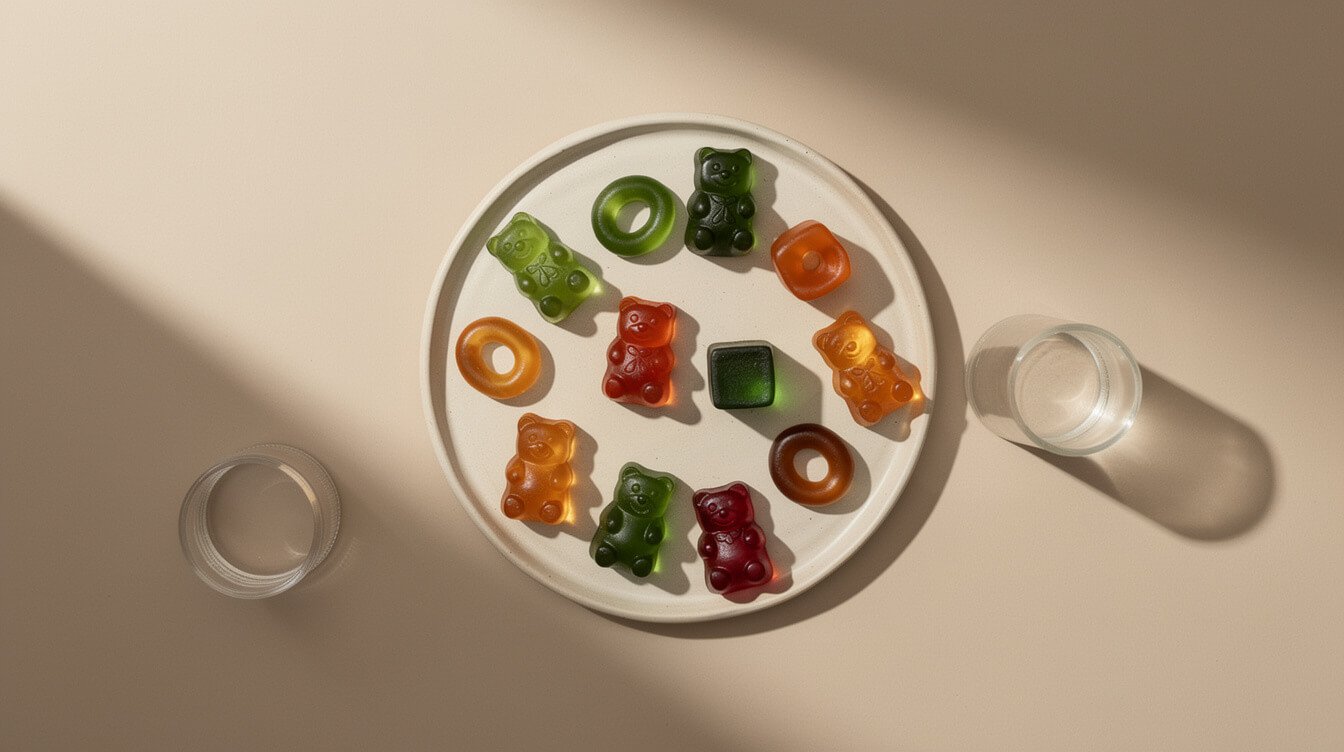
THC gummies are intoxicating. CBD gummies are not. THC is the compound that produces the “high” — the euphoria, the altered sense of time, the giggles, sometimes the couch-lock. CBD interacts with your body’s endocannabinoid system too, but through a different pathway, so it doesn’t produce that head-change. People describe it as taking the edge off rather than turning anything up.
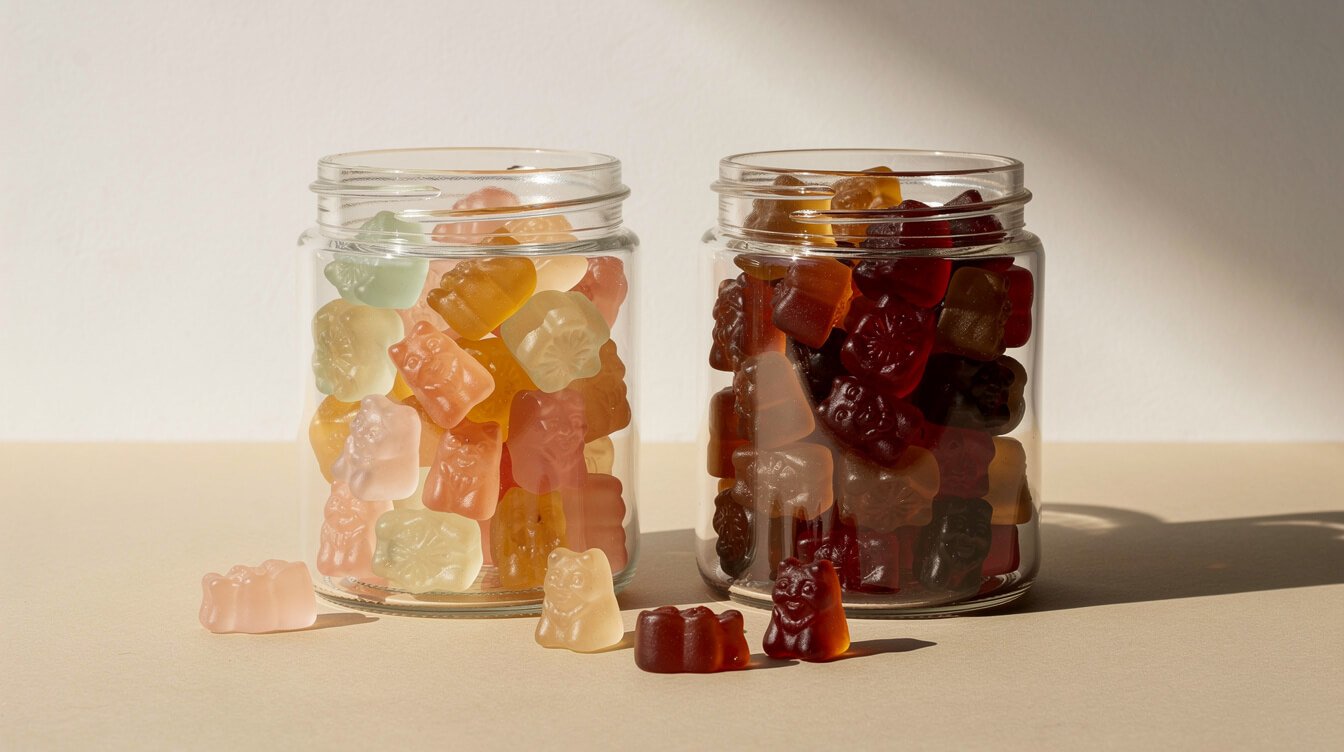
Both come from the cannabis plant. Both can be pressed into the exact same gummy shape, the exact same flavor, sometimes the exact same jar. The label — not the appearance — is the only reliable way to tell them apart, which is exactly why reading it matters (more on that below).
Where the two actually come from matters too. CBD gummies are almost always made from hemp — cannabis bred to be low in THC and high in CBD, which is what makes it legal to sell broadly. THC gummies are made from cannabis grown for the opposite reason: high THC content, sold exclusively through state-licensed cannabis programs. Same plant family, bred and regulated in completely different directions.
Quick version, side by side:
- CBD gummies: no high, reported to help some people feel calmer, widely legal if hemp-derived, low drug-test risk
- THC gummies: intoxicating, reported euphoric or relaxing effects, restricted to state cannabis programs, will likely show up on a drug test
That’s the skeleton. Now the parts that actually decide which jar you reach for.
How they actually feel different, gummy form vs smoking

A CBD gummy is reported by many people to feel like a gentle dial-down — shoulders drop a little, racing thoughts quiet, nothing dramatic. You can generally still drive, work, or hold a conversation without anyone noticing. There’s no ceiling you’re worried about hitting, because there’s no high to overshoot.
A THC gummy is a different animal entirely. Reported effects include a real head-change: euphoria, a warped sense of time, increased appetite, and — if you take too much — anxiety or a racing, paranoid feeling that’s genuinely unpleasant. This is not a “start your workday” product. It’s a “nowhere to be” product.
The other big difference is speed. Smoking or vaping THC hits in minutes because it goes straight into your bloodstream through your lungs. An edible has to survive your stomach and liver first, which is slower and converts THC into a metabolite (11-hydroxy-THC) that many people report as more intense and longer-lasting than the smoked version. Same compound, different ride — which is exactly why “I’ll just take the same amount I’d smoke” is a common first-timer mistake.
CBD doesn’t have that intensity curve to worry about, because there’s no psychoactive ceiling in the first place. That asymmetry — one side has a real overshoot risk, the other doesn’t — is the single most useful thing to understand before you eat either one.
Tolerance plays into this too. Someone who smokes flower regularly often has a built-up THC tolerance, which doesn’t automatically transfer 1:1 to edibles — the different metabolite means a seasoned smoker can still get caught off guard by a THC gummy. CBD tolerance works differently; most people report needing to adjust their dose upward slowly over weeks of regular use to keep feeling the same calming effect, not because of any dependency risk, just simple physiological adaptation.
Flavor and formulation add another layer of variation that has nothing to do with CBD or THC directly. Cannabis-derived terpenes — the aromatic compounds also found in fruit, pine, and herbs — are sometimes added back into gummies for flavor and are reported by some to shape how “up” or “mellow” an effect feels, independent of the cannabinoid dose itself. Two THC gummies with the same 5mg dose can genuinely feel different depending on their terpene profile, which is part of why “just try a few brands” is realistic advice, not a cop-out.
Reading a gummy label: mg CBD vs mg THC, and what “ratio” means
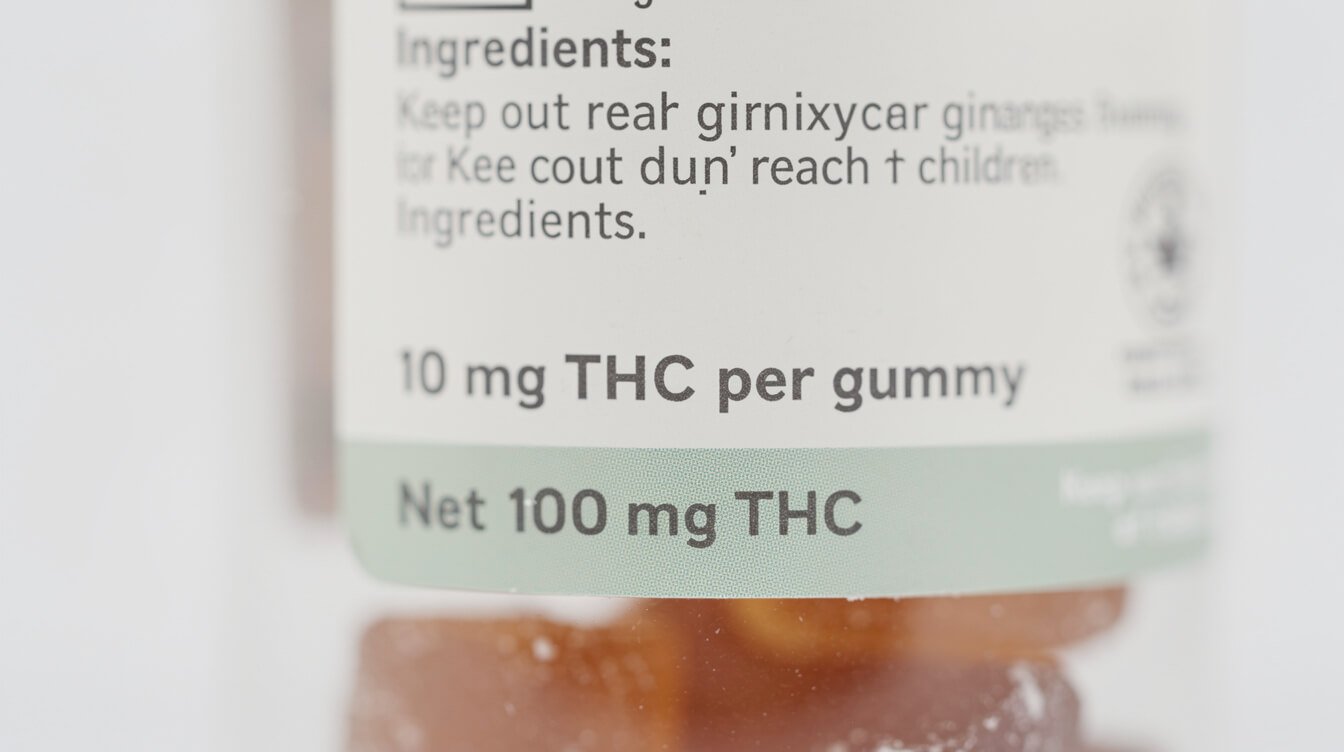
Every legitimate gummy should list milligrams per piece, not just per package. A jar that says “300mg” on the front but “10mg per gummy, 30 gummies” in the fine print is telling you the true per-dose number in small type on purpose — read past the headline number.
Three label types you’ll run into:
- CBD-only: lists CBD content (often 10-50mg per gummy), should show 0.3% THC or less if it’s hemp-derived, ideally links to a third-party lab report (a “Certificate of Analysis” or COA)
- THC-only: lists THC content (usually 2.5-10mg per gummy in legal-market products), sold only through state-licensed dispensaries
- Ratio products (like 1:1 or 5:1 CBD:THC): contain both, in the labeled proportion — a 1:1 gummy with 5mg CBD and 5mg THC will feel noticeably milder and shorter than a straight 5mg THC gummy, since CBD is reported by some research to soften THC’s intensity
Two label habits worth building. First, always check for a QR code or link to a lab report — legitimate hemp-derived CBD products should be able to show you what’s actually in the jar, because the CBD market isn’t as tightly regulated as the licensed THC market. Second, ignore “up to Xmg” marketing language on the front of the box and find the actual per-serving number, usually printed near the nutrition-style panel on the side or back.
You’ll also see “full-spectrum,” “broad-spectrum,” and “isolate” on CBD labels specifically, and the difference is worth knowing before you buy. Full-spectrum keeps the plant’s other cannabinoids and terpenes intact, including trace THC — some people report this combination (often called the entourage effect) feels more effective than CBD alone, though the research is still developing. Broad-spectrum keeps those other compounds but strips the THC out. Isolate is pure CBD and nothing else. None of these labels appear on legal THC-only gummies, since those are sold as a single regulated product with a state-tested potency number, not a spectrum choice.
Start low, go slow: the edible dosing trap
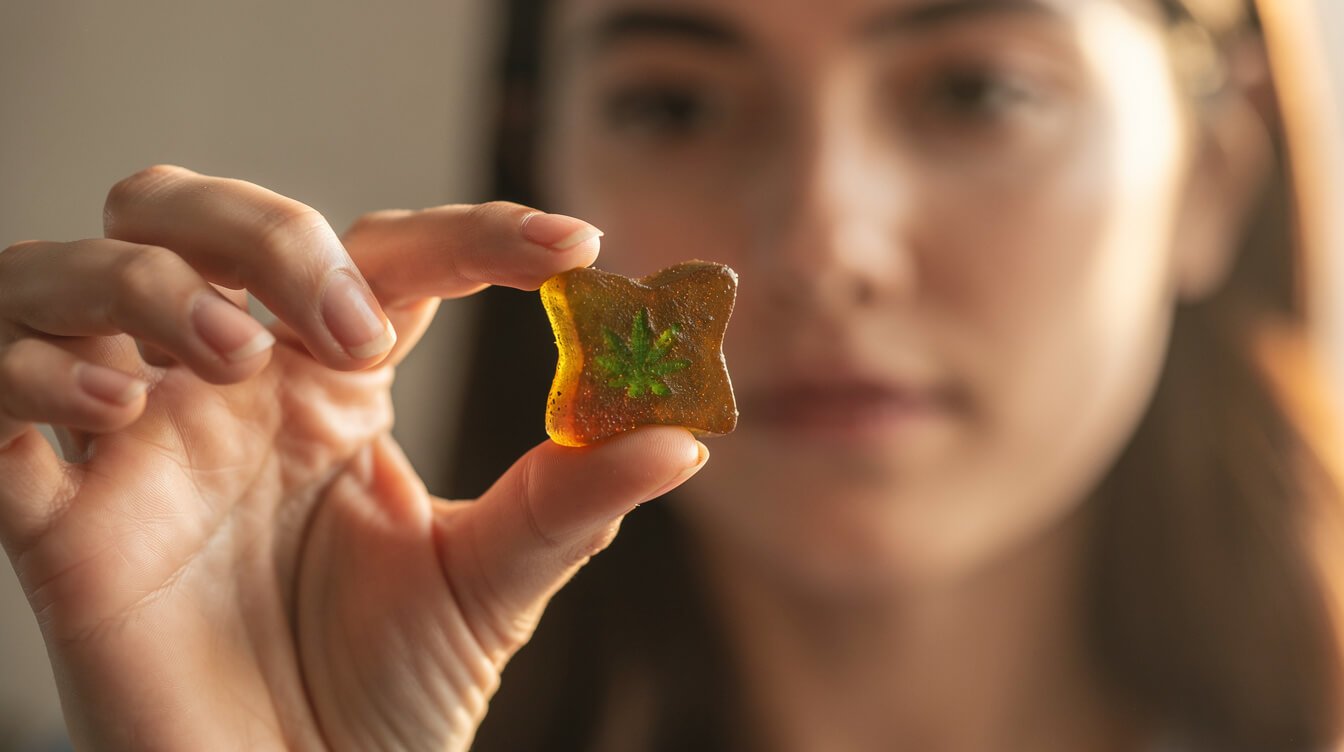
This is the section that actually matters if you only read one. Edibles — CBD or THC — typically take 30 to 90 minutes to kick in, sometimes longer if you’ve eaten a big meal beforehand. That delay is where most bad experiences come from, and it’s almost entirely a THC problem, not a CBD one.
The pattern is predictable: someone eats a THC gummy, feels nothing after 30 minutes, assumes it “didn’t work,” and eats a second one. Then both doses land at once, an hour later, at double the strength they meant to take. We covered this exact trap in more detail in our cannabutter dosing guide — the physiology is identical whether the THC is baked into butter or pressed into a gummy.
The fix is unglamorous but it works every time: take one dose, set a timer, and wait a full two hours before deciding whether you need more. If you’re new to THC edibles, 2.5-5mg is a reasonable starting point — not the 10mg “standard” dose most packages default to. You can always eat more next time. You cannot un-eat a gummy.
CBD doesn’t carry this same risk, since overshooting a CBD dose just means a slightly stronger version of “calm,” not an unwanted high. But the same patience still applies if you’re trying to figure out your ideal dose — give it the full window before topping up, so you actually know what one dose does for you.
What’s in your stomach changes the timing, too. Taking a gummy on an empty stomach tends to hit faster and can feel more intense; taking it after a full meal slows absorption and can push onset closer to the 90-minute mark, sometimes further. Neither is “wrong,” but knowing that variable exists explains why the same gummy can feel different from one night to the next, and it’s one more reason not to judge a dose too early.
One more responsibility beat, because it matters: don’t drive or operate anything heavy after a THC edible, and give it real time to fully wear off — a THC gummy’s effects can run 4-8 hours, longer than most people expect walking in.
Neither gummy is risk-free just because it’s candy-shaped. THC’s most commonly reported side effects are dry mouth, red eyes, a faster heart rate, and short-term memory fuzziness — uncomfortable at a high dose, not dangerous, and they fade as the gummy wears off. CBD is generally well tolerated but can cause drowsiness or mild digestive upset, and it’s processed by the same liver enzyme system (cytochrome P450) that metabolizes a long list of prescription drugs, including some blood thinners, seizure medications, and antidepressants — the same pathway behind “grapefruit warning” labels. If you’re on prescription medication, that’s a real reason to check with a pharmacist or doctor before adding CBD gummies to the mix, not a reason to panic.
Alcohol is the other mix worth naming directly: combining either compound with alcohol amplifies the sedating, coordination-dulling effects of both, more noticeably with THC. And store both the way you’d store any medication or alcohol — out of reach of kids and pets, since a gummy doesn’t look any different from candy to either one.
GanjaTech, weekly
Cannabis, explained. In your inbox.
One email a week: the clearest explainers, honest gear picks, and what the science actually says. 21+ only. No spam, unsubscribe anytime.
Will CBD or THC gummies show up on a drug test?
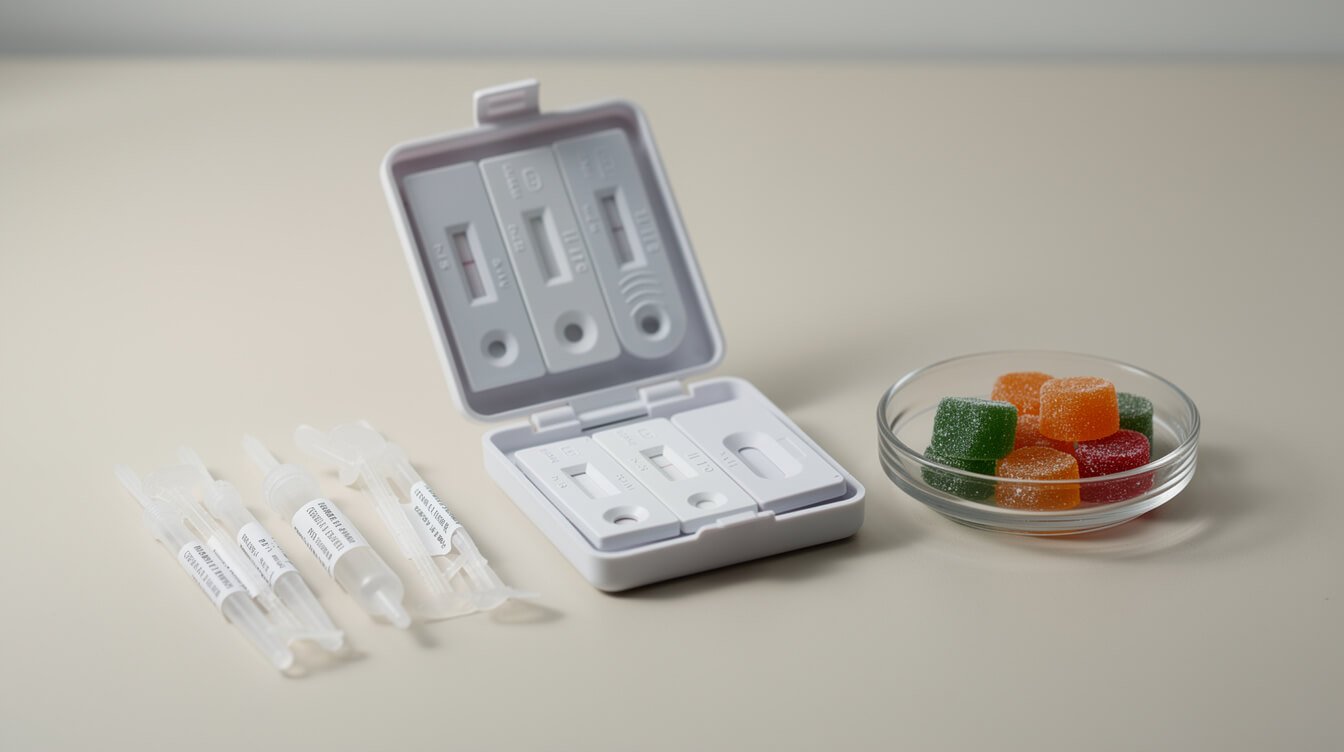
Short version: THC gummies, yes, almost certainly. CBD gummies, usually no — with an important asterisk.
Standard drug tests screen for THC metabolites, not CBD. A THC gummy will build up detectable metabolites the same way any other form of THC does — we go deep on how long that window actually lasts in our detection-timeline guide, but the short version is it can be days to weeks depending on frequency of use.
The CBD asterisk: hemp-derived CBD products are allowed up to 0.3% THC by federal definition, and the CBD supplement market is loosely regulated. Some products contain more trace THC than the label claims, and eating enough CBD gummies over time can theoretically build up enough trace THC to trigger a positive result — rare, but documented. If a drug test is a real concern (a safety-sensitive job, a custody situation, anything with consequences), look for products labeled “broad-spectrum” or “THC-free,” which are made to strip THC out entirely, rather than “full-spectrum,” which intentionally keeps the whole cannabinoid profile including trace THC.
The test type matters too. Urine tests (the most common) and blood tests look back a shorter window than hair tests, which can reflect months of history. THC edibles specifically tend to produce a strong initial metabolite spike, so if you’re weighing whether to eat a THC gummy before any kind of screening, the honest answer is: don’t, full stop, rather than trying to time it precisely.
Are CBD and THC gummies legal where you live?

This is genuinely the messiest part of the whole topic, and it changes by state (and sometimes by city), so treat this as a starting framework, not a final answer for your specific address.
Hemp-derived CBD (0.3% THC or less) is federally legal and widely available, including online and in general retail — but individual states can and do add their own restrictions on top of that. THC gummies are a different story: federally restricted, and legal only through state-licensed cannabis programs in states that have legalized recreational or medical use. Buying a THC gummy legally means buying it from a licensed dispensary in a state where that’s allowed — not from a gas station, a random website, or a friend, regardless of what the label says.
We wrote a full breakdown of the patchwork state-by-state legal landscape if you want the longer version. The one-line takeaway here: never assume a product is legal to buy, possess, or bring across state lines just because it was legal where you bought it. Check your own state’s current rules before you buy anything, every time — the laws genuinely do shift year to year.
Traveling with either one deserves its own caution. THC gummies bought legally in one state are not automatically legal to carry into, or through, a state where cannabis isn’t legal — crossing state lines with THC products can be a federal issue regardless of either state’s individual law, since federal law still governs interstate transport. Hemp-derived CBD travels more easily, but airport security and international borders are still a different risk category entirely; TSA’s own guidance focuses on federal legality, and international travel can mean a foreign country’s much stricter cannabis laws apply the moment you land.
Frequently asked questions about CBD vs THC gummies

Can I take CBD and THC gummies together?
Yes — that’s essentially what a “ratio” product is. Some people also take CBD alongside a separate THC gummy, reporting it softens the THC high. Effects vary person to person, so if you’re combining them for the first time, start with less of both than you think you need.
Do CBD gummies get you high at all?
No. CBD is non-intoxicating. It doesn’t produce the euphoria, altered perception, or “stoned” feeling associated with THC, regardless of how much you take.
Why do THC gummies hit so much harder than smoking the same amount?
Your liver converts THC into 11-hydroxy-THC during digestion, a metabolite many people report as more potent and longer-lasting than what you get from smoking. It’s a different chemical experience from the same starting compound, not just a slower version of the same high.
Are CBD gummies actually regulated?
Not consistently. The hemp-derived CBD market has looser oversight than the licensed THC dispensary market, which is why checking for a third-party lab report (COA) matters more with CBD products than with dispensary-bought THC ones.
How long do CBD or THC gummies stay potent once opened?
Both degrade slowly over time, especially with heat, light, and air exposure. Most CBD and THC gummies hold their labeled potency well for 6-12 months if kept in an airtight container somewhere cool and dark — a pantry shelf, not a sunny windowsill or a hot car.
Can CBD gummies cause a false positive on a drug test?
It’s uncommon but not impossible, mainly with full-spectrum products that legally contain trace THC. If a false positive would be a serious problem for you, choose broad-spectrum or isolate CBD gummies, which are made to contain no detectable THC at all.
Do I need a medical card to buy THC gummies?
It depends on your state. Some states sell THC gummies to any adult 21 and older through recreational dispensaries; others restrict THC products to registered medical patients only. CBD gummies (hemp-derived) generally don’t require any card at all, since they’re federally legal as a general retail product.
Can I bring CBD or THC gummies on a plane?
Hemp-derived CBD gummies are generally treated as federally legal, but TSA officers aren’t cannabis experts and enforcement can vary, so pack the original labeled packaging. THC gummies are the bigger risk — TSA screens for security threats first, but state and federal cannabis law can still apply, and flying into or out of a state where THC isn’t legal adds another layer of risk. When in doubt, don’t fly with THC products.
Final thoughts: which cbd vs thc gummy fits your night
The whole decision collapses to one question: do you want to feel high tonight, or don’t you? Run through it fast — anywhere to be or drive later means CBD or nothing; trying to function with a little less edge means CBD; a genuine head-change on a night with nothing planned means THC, dosed low and given the full two-hour window before you consider more; want something in between, means a 1:1 ratio gummy in a state where THC products are legally available; might get drug tested, means THC gummies are a hard no and CBD should be broad-spectrum or THC-free.
None of this is medical advice, and neither compound treats a diagnosed condition — if you’re using either one to manage a real health issue, that’s a conversation for your doctor, not a blog post. Get the high/no-high call right for your night, respect the dose, respect your local laws, and either gummy can be a genuinely good time — or a genuinely good wind-down — without any drama.
Want more of this — straight answers, no hype, no fear-mongering? Browse the rest of the GanjaTech explainers for the science, the growing, and the culture side of the plant.
Before you go
Get the next explainer first
We publish a new one every day. The best of the week, plus what's new in the shop, lands in one short email.