How long does weed stay in your system? A straight timeline (and the detox myths)
So you want to know how long does weed stay in your system — and you want a straight answer, not a fear-mongering lecture or a wall of hedging. Here it is: for most people, THC and its byproducts are detectable for a few days to a few weeks after your last session, depending mostly on how often you use and which test is looking. A one-time joint and a daily habit are not the same math. This guide walks through the real timeline, the science behind why weed lingers, what actually moves the needle, and why almost every “flush it out fast” trick you have read about does not reliably work.
Quick, honest framing before we dive in: this is educational, harm-reduction information for adults, not legal or medical advice. Cannabis laws — and workplace testing rules — vary a lot by state and country, so never assume your situation matches someone else’s. If a test result carries real stakes for your job, health, or freedom, talk to a qualified professional. With that said, let’s get into it.
The short answer: how long does weed stay in your system?
Drug tests do not actually look for the “high.” They look for THC and, more often, its fat-soluble metabolite — a byproduct your liver makes called THC-COOH — which hangs around long after the effects wear off. That is the key to the whole timeline: you can feel completely sober and still test positive, because the metabolites are still being released from storage.
Here is a realistic detection-window cheat sheet, drawn from published research on cannabis testing. Treat these as typical ranges, not guarantees — individual bodies vary.
| Test type | Typical detection window | Best for detecting |
|---|---|---|
| Urine (most common) | 3 days to 30+ days | Past use, scaled by frequency |
| Blood | ~2 to 12 hours (up to ~30 days in heavy users) | Recent use |
| Saliva | Same day to a few days | Recent use |
| Hair | Up to ~90 days | Long-term, repeated use |
Notice the enormous spread on the urine row. That is not sloppy science — it is because frequency of use changes everything. We will break down each test below, but if you only remember one thing: the more often you consume, the longer weed stays in your system, because the metabolites build up in body fat faster than your body clears them.
Feeling high vs. testing positive: two different clocks
Before the timeline gets confusing, it helps to separate two things that people constantly blur together: how long the effects last, and how long the plant stays detectable. They run on completely different clocks.
The effects — the actual high — depend heavily on how you consume. Smoking or vaping hits within minutes, peaks in roughly 10 to 30 minutes, and mostly tapers off within 1 to 3 hours. Edibles are a different animal: onset is slow (often 30 minutes to 2 hours as your liver processes the THC), the peak is stronger and later, and effects can linger 4 to 8 hours or more. This is exactly why the golden rule for edibles is start low and go slow — people redose because “nothing’s happening,” then get hit by a double dose an hour later.
Detection, on the other hand, runs for days to weeks after every trace of that feeling is gone. So the effects clock might be measured in hours while the detection clock is measured in days — and that mismatch is the whole reason a sober person can still fail a test. One quick responsibility note that lives in the effects clock, not the detection one: impairment and reaction time can be affected for hours, so a slow evening at home is one thing and getting behind the wheel is another. Plan accordingly.
Why THC lingers: the fat-soluble catch most people miss
When you smoke, vape, or eat cannabis, THC enters your bloodstream and does its thing — then your body immediately starts breaking it down. The liver converts THC into metabolites, the main one being that THC-COOH we mentioned. This byproduct is inactive (it does not get you high), but it is the flag that most drug tests wave.
The catch is chemistry: THC and its metabolites are fat-soluble. Instead of washing straight out in your urine like a water-soluble substance would, they bind to fat molecules and get tucked away in your body’s fat tissue. From there, they leach back out slowly over days and weeks, which is exactly why the detection window stretches so long for regular users. Your body is not holding onto a high — it is slowly emptying a reservoir.
This single fact explains most of what follows. It is why body composition matters, why frequent use extends the timeline, and why chugging water the morning of a test does almost nothing to the fat-stored reserve. If you want the broader primer on the plant and its chemistry, our explainer on what cannabis actually is is a good companion read.
Detection windows by test type
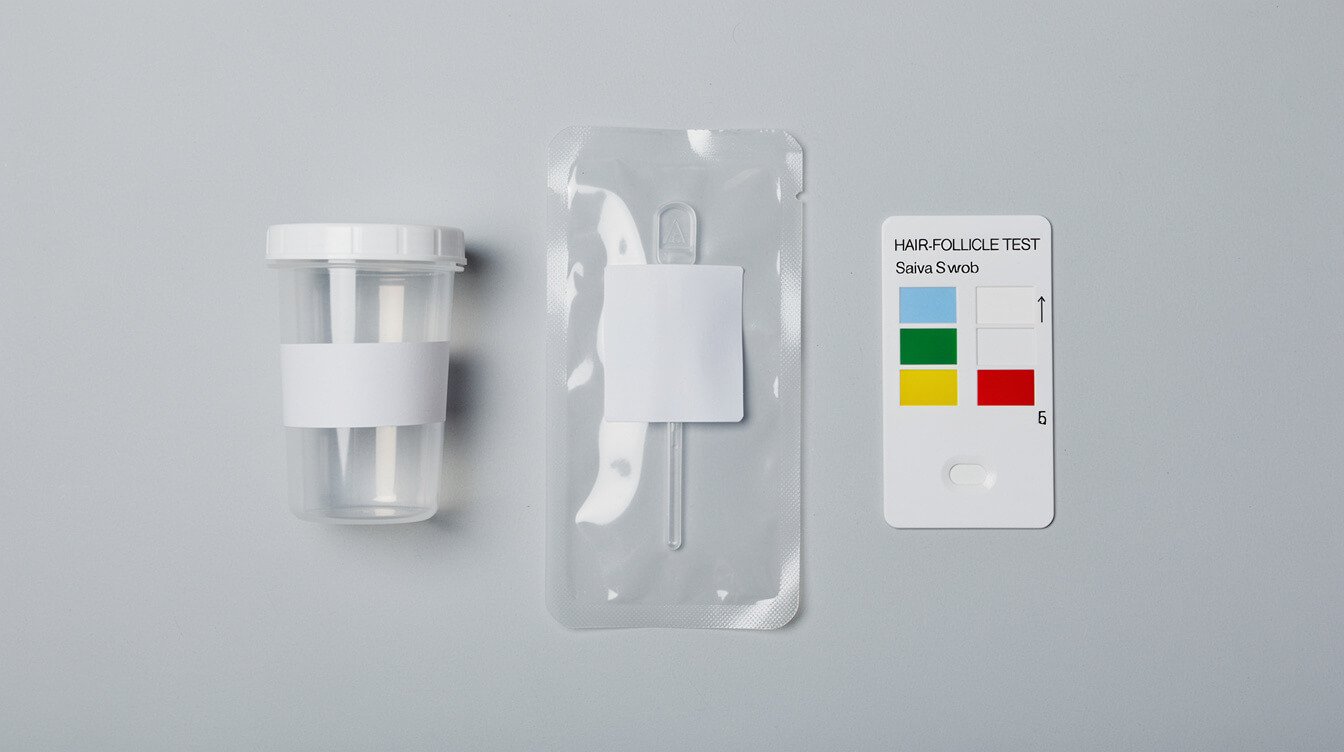
“How long does weed stay in your system” has no single answer because it depends on what is doing the looking. Each test measures a different thing over a different window.
Urine tests
Urine is by far the most common cannabis test — it is cheap, non-invasive, and it catches past use rather than just recent use. A widely cited 2017 review lays out roughly these windows after last use:
- Single use (one joint, say): around 3 days
- Moderate use (about 4 times per week): 5 to 7 days
- Daily use: 10 to 15 days
- Chronic heavy use (multiple times per day): more than 30 days
Those tiers are the clearest illustration of the frequency effect. An occasional weekend user and a daily consumer can both be honest about “not being high,” yet one clears in under a week and the other can take a month or more.
Blood tests
Blood tells a shorter, more recent story. THC itself typically shows up in blood for only about 2 to 12 hours after use, which is why blood draws are more about “used recently” than “used this month.” In chronic heavy users, though, THC has been detected in blood up to around 30 days later, since the fat reservoir keeps topping the level back up. Blood tests are less common for routine screening and more likely in medical or roadside-investigation contexts.
Saliva tests
Saliva (oral fluid) testing has a short window — often same-day, sometimes stretching to a couple of days in frequent users. THC can enter saliva directly from smoking or eating, so these tests skew toward catching recent use. One quirk worth knowing: secondhand smoke exposure can put trace THC in your mouth, but the metabolites that tests key on generally only appear when you have personally consumed.
Hair tests
Hair follicle tests have the longest memory — up to about 90 days. After use, cannabinoids reach the hair follicle through the tiny blood vessels feeding it, and because hair grows slowly, that record sits there for months. Hair tests are better at spotting a pattern of repeated use than a single session; one-off use often does not deposit enough to reliably register. They are also the least common of the four.
GanjaTech, weekly
Cannabis, explained. In your inbox.
One email a week: the clearest explainers, honest gear picks, and what the science actually says. 21+ only. No spam, unsubscribe anytime.
What actually changes how long weed stays in your system

Two people can smoke the same joint and clear it on completely different schedules. Here are the factors that genuinely drive how long weed stays in your system — roughly in order of impact.
- Frequency and duration of use. The biggest lever by far. Occasional use barely builds a reserve; daily long-term use loads up the fat stores, so clearance takes much longer.
- Body composition. Because metabolites bind to fat, higher body-fat percentage generally means a larger reservoir and a slower release. This is a tendency, not a rule you can game.
- Metabolism and genetics. A faster metabolic rate can process and clear byproducts somewhat quicker. Genetics influence the enzymes that break THC down, which is part of why the timeline is so individual.
- Potency and dose. More THC in equals more metabolites to clear. Today’s high-potency flower and concentrates load more than the milder stuff from decades past.
- Consumption method. Smoking and vaping hit fast and fade in the blood relatively quickly; edibles are metabolized through the liver and can produce metabolites that stick around a little differently. Either way, the metabolite is what the test sees.
- Hydration and lifestyle. Real but minor. Being reasonably hydrated and active supports normal metabolism; it does not flush a fat-stored reserve on command.
There is also the test’s own cutoff level — the concentration at which a result flips from negative to positive. A standard urine screen commonly uses a 50 ng/mL cutoff. Sit below it and you read negative even if trace metabolites are present; sit above it and you read positive. Different tests use different thresholds, which adds yet another reason the “window” is a range, not a stopwatch.
Edibles, CBD, and secondhand smoke: the tricky cases
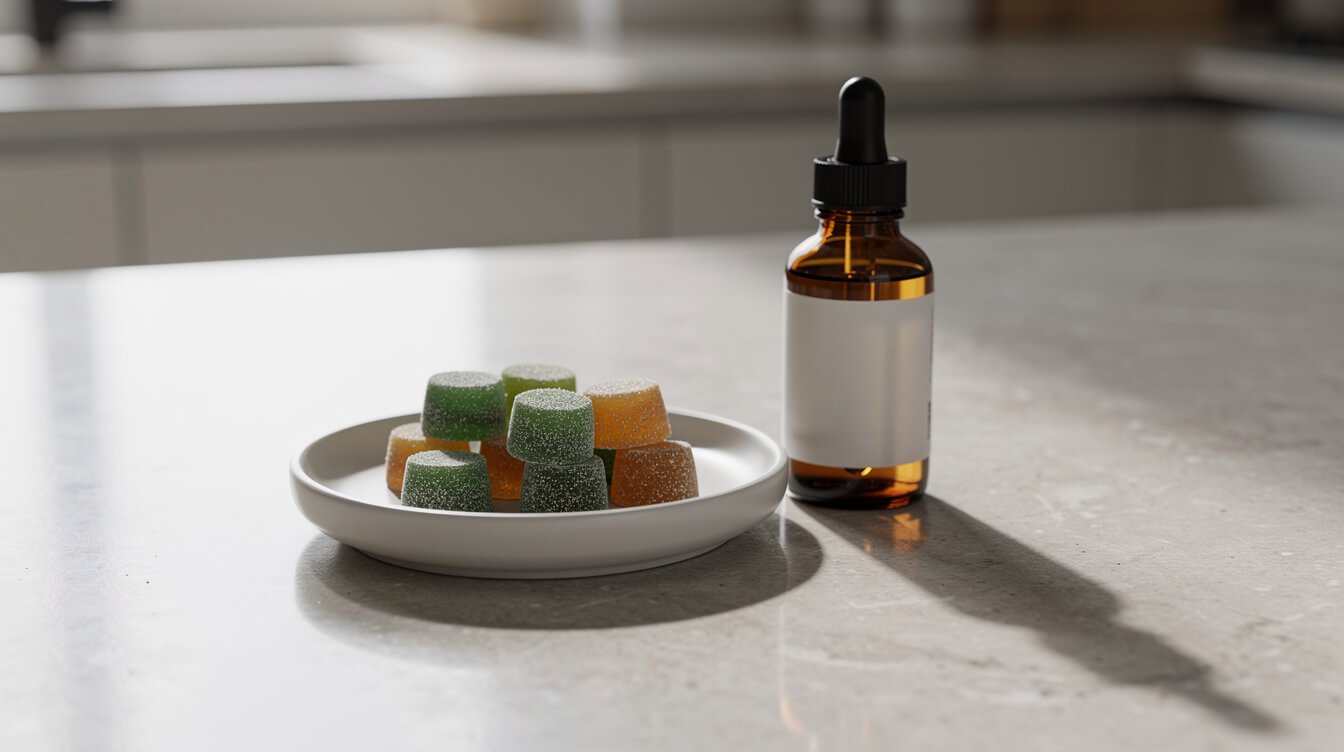
A few situations trip people up more than the basic timeline does. Worth knowing the honest answers.
Do edibles show up on a drug test? Yes. It is the same THC and the same metabolites, just delivered through your digestive system instead of your lungs. “It was only a gummy” does not change the chemistry. Edibles onset is slower and the effects last longer, but for testing purposes they are treated like any other route.
Can CBD make you test positive? Pure CBD (cannabidiol) is not what standard tests look for — they target THC and THC-COOH. But here is the honest caveat: many CBD products, especially full-spectrum ones, contain trace amounts of THC. Use enough of a THC-containing CBD product regularly and it is possible to accumulate enough to trigger a positive. Product labels are not always accurate, either. If you are subject to testing, that is a real consideration. (For more on the compounds, see our take on CBD in everyday products.)
Will secondhand smoke fail you? Realistically, no — not from normal exposure. You would need to be stuck in an extreme, unventilated, hotbox-level situation for prolonged periods to approach a standard cutoff, and even then it is unlikely. Passing someone at a concert is not going to light up a urine screen.
Do these tests measure impairment? No — and this is a big one. A positive cannabis test tells you someone used at some point in the detection window, not that they are impaired right now. Because metabolites linger for weeks, you can test positive long after any effects are gone. That gap between “detectable” and “impaired” is exactly why cannabis testing policy is so debated.
The detox myth: can you flush THC out faster?
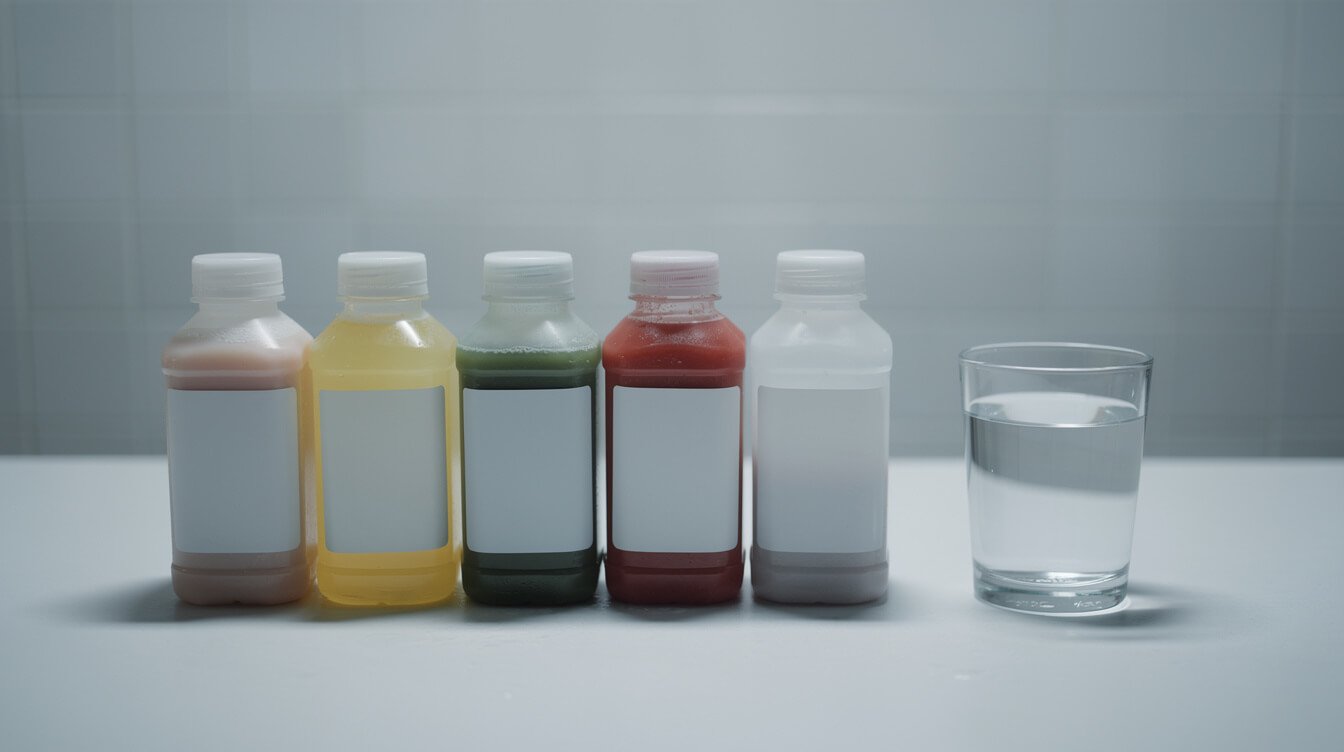
Time for the part the internet gets most wrong. The honest answer, backed by how the science actually works: there is no reliable shortcut to make THC leave your system dramatically faster. Once the metabolites are stored in fat, your body clears them on its own schedule, and that schedule is stubborn.
Here is what the popular “detox” advice really does:
- Detox drinks and kits mostly work by temporary dilution, not by removing metabolites. Their effect — if any — is short-lived and inconsistent, and labs know to watch for it.
- Chugging tons of water can dilute a urine sample, but many tests measure creatinine and specific gravity precisely to catch dilution. An over-diluted sample can be flagged as invalid and require a retest — sometimes a worse outcome than the original.
- Exercise, a balanced diet, and normal hydration support your body’s normal clearance, but they will not slash a multi-week window down to a day. There is even some evidence that intense exercise shortly before a test can briefly nudge stored metabolites back into the blood.
The one thing that genuinely works is not glamorous: time, plus not adding more. Every day without use is a day your body spends emptying the reservoir. For a heavy long-term user, meaningful clearance is measured in weeks, not hours — and no drink changes that. We are not going to hand out tips for beating a specific test; that is a game with real consequences we would rather you avoid. The responsible move is to plan around the real timeline, not to gamble on a myth.
Frequently asked questions
How long does weed stay in your system after one time?
For a genuine one-off use, urine tests typically clear in around 3 days, give or take. Occasional single use builds very little metabolite reserve, so it leaves relatively fast compared with regular use.
How long does THC stay in your system for a daily user?
Daily users commonly stay detectable in urine for 10 to 15 days after stopping, and heavy multiple-times-a-day users can exceed 30 days. The fat-stored reserve is the reason the tail is so long.
Does drinking water flush weed out of your system?
Not meaningfully. Water can temporarily dilute a urine sample, but it does not remove the metabolites stored in fat — and heavy dilution can get a sample flagged as invalid. Time is what actually clears it.
How long is weed detectable in a hair test?
Up to about 90 days, which is the longest window of any common test. Hair testing is better at revealing a pattern of repeated use than catching a single session.
Can I test positive if I only use CBD?
Pure CBD should not trigger a standard test, but many CBD products contain trace THC. Regular use of a THC-containing product can, in some cases, build up enough to register — so read labels and know your product if testing is a factor.
How long does weed stay in your saliva for a mouth-swab test?
Usually same-day, sometimes stretching to a couple of days for frequent users. Saliva tests are built to catch recent use, so their window is one of the shortest — which is part of why they are increasingly popular for roadside and workplace screening where “used recently” is the real question.
Final thoughts: know your timeline, respect your context
So, how long does weed stay in your system? Long enough that “I feel sober” and “I will test clean” are two very different statements. The real drivers are frequency of use, your body, the dose, and which test is looking — with detection running from a few hours in blood to roughly three months in hair. The metabolites are fat-soluble, they leave on their own schedule, and the detox industry mostly sells you around that fact rather than solving it.
The grown-up takeaway is simple: understand the timeline honestly, remember that laws and testing rules differ everywhere — our overview of how cannabis legality varies is worth a look — and make decisions with the real numbers in front of you, not the myths. Great plant, real chemistry, worth respecting.
If you like your cannabis facts straight — no hype, no fear, no cliché — that is the whole point of GanjaTech. Browse more explainers like our honest walk-through of rolling a joint without a filter, or stick around and get the next one straight from the desk.
Before you go
Get the next explainer first
We publish a new one every day. The best of the week, plus what's new in the shop, lands in one short email.