How to Make Cannabutter With Shake: Potency, Decarb, and Dosing Done Right
If you ended up with a bag of shake instead of pretty buds — the loose leaf, small bits, and kief that fall to the bottom of a jar or a grinder — you might be tempted to just toss it. Don’t. Shake is exactly what you want for cannabutter, and knowing how to make cannabutter with shake specifically (not just “weed” in general) is the difference between a clean, evenly dosed batch and a bitter, unpredictable one.
Here’s the honest answer: shake behaves differently than flower. It’s got more plant matter per gram of usable cannabinoids, it’s grassier if you don’t strain it well, and — the part almost nobody talks about — its potency is basically a guess unless you know exactly what went into that bag. This guide covers the real method: decarbing shake correctly, making the butter, estimating potency when you’re working blind, straining it clean, and dosing what you end up with responsibly.
Shake vs. flower: what changes when you make cannabutter with shake
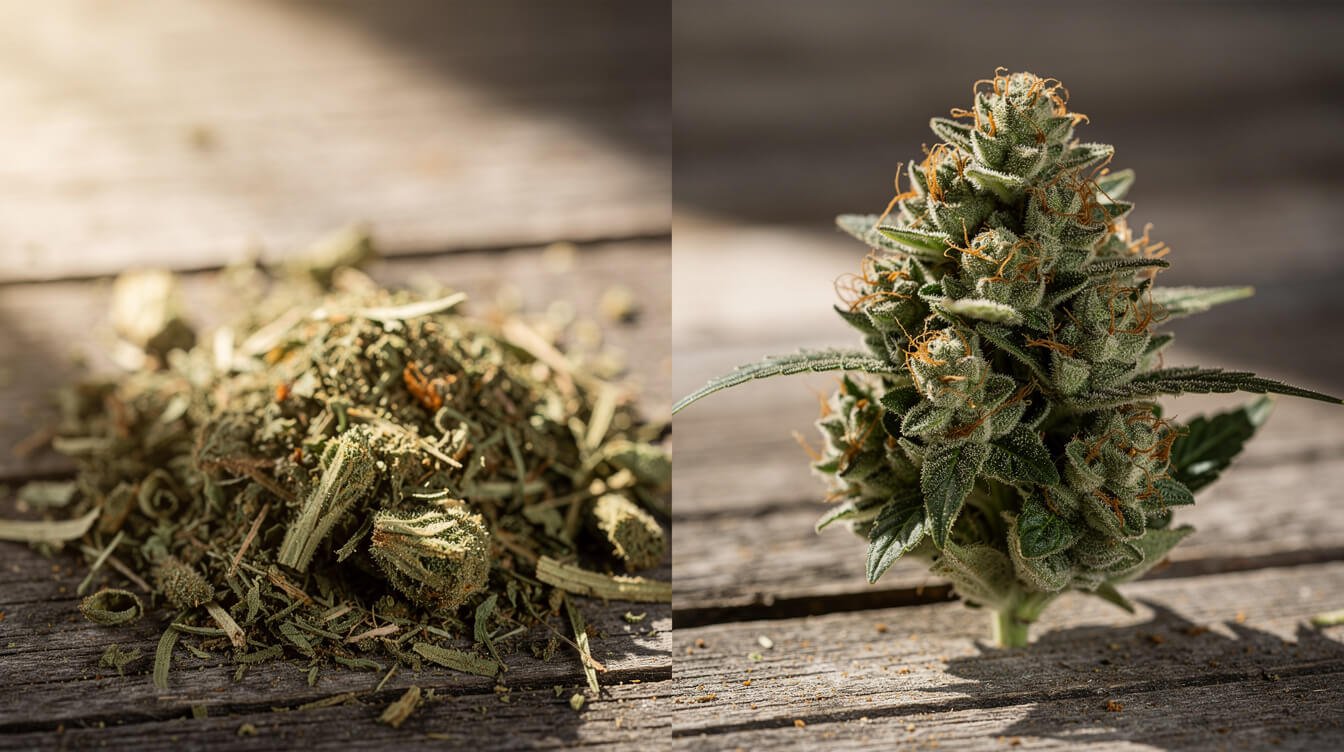
Shake — sometimes called trim — is the leftover material from processing cannabis: small leaves, loose bits that break off buds in transport, kief that collects at the bottom of a grinder or jar. It’s not “bad” weed. It comes from the same plant as the bud sitting next to it. But three things are genuinely different when you cook with it instead of whole flower.
More plant matter, less cannabinoid density
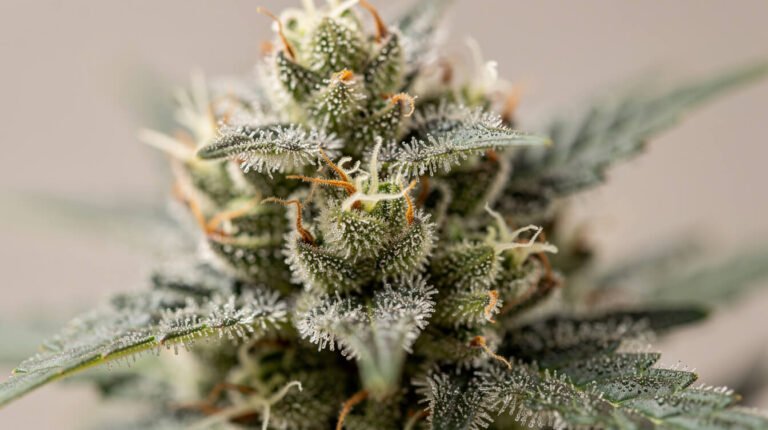
Trichomes — the crystal-coated structures that hold most of the THC and CBD — concentrate more heavily on flower than on sugar leaf and trim. Gram for gram, shake usually needs more volume to hit the same potency as an equivalent weight of bud. That’s not a dealbreaker, it just changes your math (more on that below).
Grassier, more vegetal flavor
Shake has a higher ratio of leaf-to-flower material, and leaf carries more chlorophyll. Chlorophyll is what gives under-strained cannabutter that bitter, “cut grass” aftertaste. It’s manageable — good straining fixes most of it — but it means shake-based butter rewards a little extra patience at the straining step.
Inconsistent source, inconsistent potency
If your shake came from a single strain you bought specifically for this, you’re in decent shape. If it’s the accumulated bottom-of-the-jar material from six months of different buys, you’re working with an unknown blend. That’s the single biggest variable in this whole process, and it’s why the dosing section later in this guide matters more than the recipe itself.
Where shake actually comes from
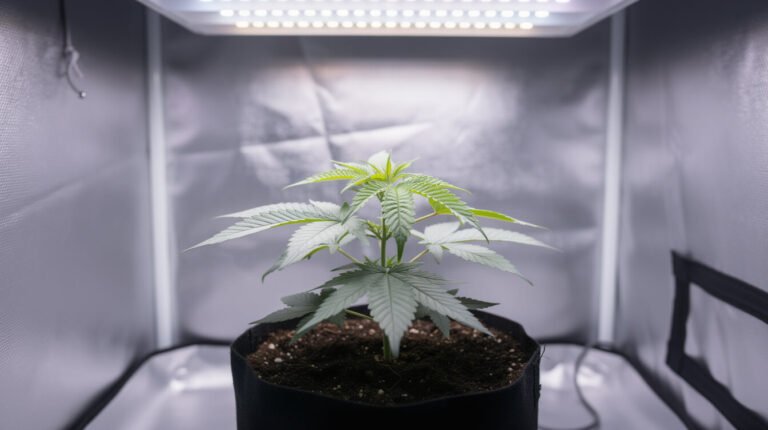
Two common, legal sources: your own trim if you grow at home (the small leaves and popcorn buds trimmed off during harvest), or trim sold directly by a dispensary — many legal shops sell shake and trim by the ounce, usually at a noticeably lower price per gram than whole flower, since it’s a byproduct rather than the main product. Either way, treat it the same in the kitchen: same decarb rules, same cautious approach to potency. If you grew it yourself, save the trim from your next harvest instead of tossing it — it’s the same plant, just less photogenic.
Decarb first — 240°F, about 40 minutes, and why it matters
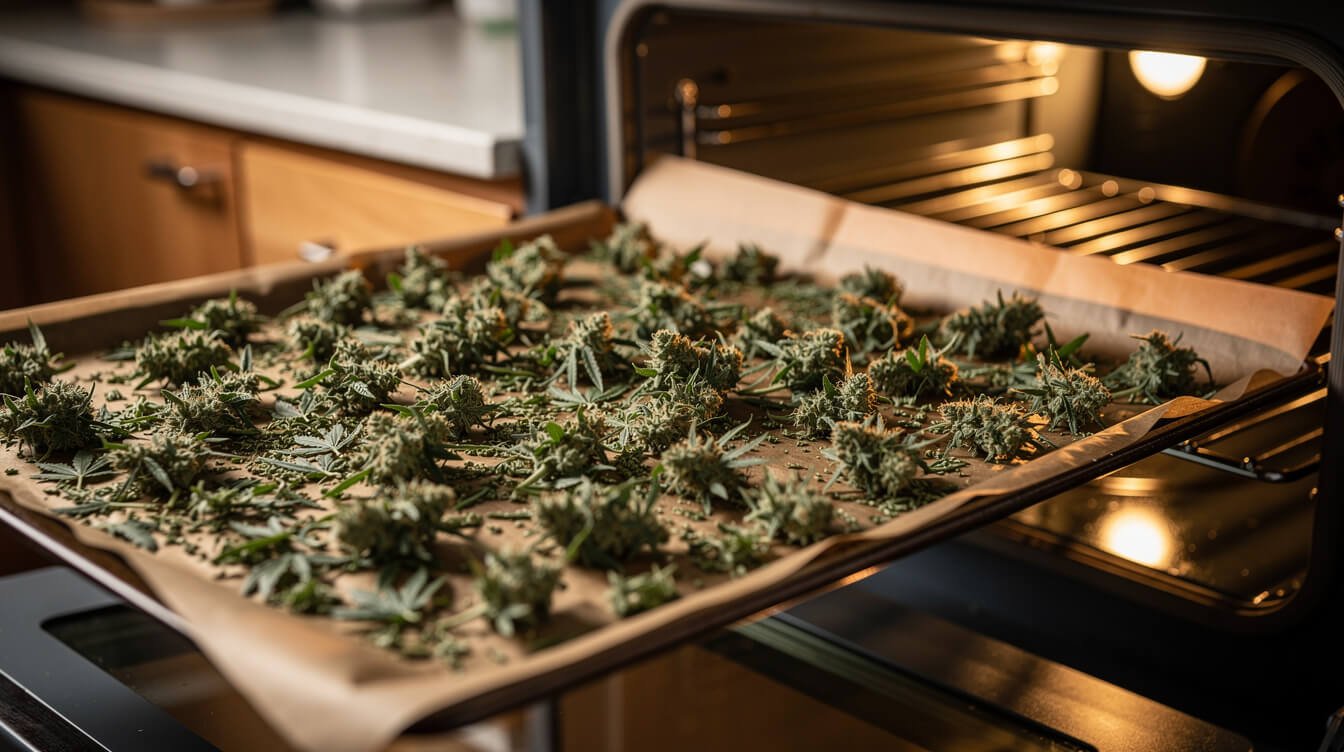
Skip this step and your cannabutter will barely do anything. Raw cannabis contains THCA, not THC — and THCA doesn’t get you anywhere close to the reported effects people associate with cannabis. Decarboxylation (decarb) is the process of applying heat to convert THCA into THC, and it has to happen before the cannabis goes anywhere near your butter.
The standard method:
- Preheat your oven to 240°F (115°C). Low and steady beats hot and fast — high heat degrades cannabinoids instead of activating them.
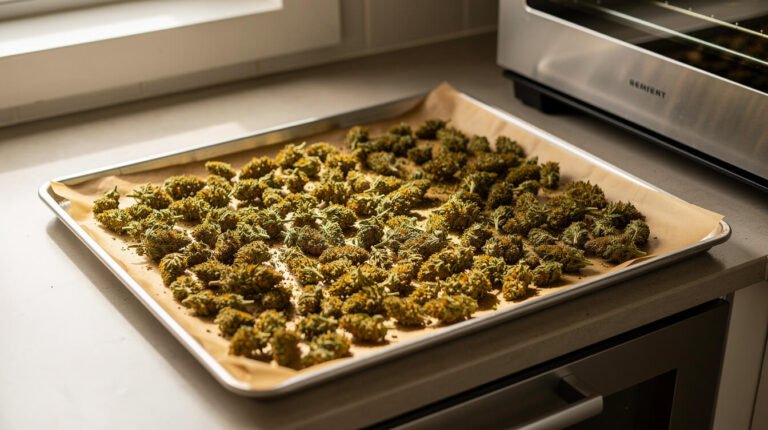
- Break up the shake by hand (no need to grind it fine) and spread it evenly on a parchment-lined baking sheet.
- Bake for 35–45 minutes, stirring gently every 10–15 minutes so it browns evenly instead of scorching at the edges.
- You’ll know it’s done when it’s dry, light-to-medium brown, and smells noticeably toasted rather than “green.”
Shake decarbs a little faster than dense buds because it’s already broken up and has more surface area exposed to heat — that’s one of the few advantages it has over flower. Keep an eye on it after the 35-minute mark instead of walking away for the full window.
Two things that go wrong here
Too hot, too fast: cranking the oven to “speed things up” pushes past the point where THCA converts to THC and starts breaking THC down further into CBN, a milder, sleepier cannabinoid. That’s not necessarily bad if that’s the effect you want, but it’s not what most cannabutter recipes are aiming for. Uneven spread: shake clumps more than ground flower because it’s a mix of leaf sizes. Break up any dense clumps by hand before it goes in the oven, or you’ll get scorched edges and undercooked centers on the same tray.
A smell test is the most reliable readiness check: raw cannabis smells green and grassy; properly decarbed shake smells toasted, almost like dried herbs left in an oven — closer to tea than to fresh-cut grass.
Decarbing is the one step you cannot shortcut. Everything downstream — potency, effect, dosing accuracy — depends on getting this part right.
How to make cannabutter with shake: the butter method, step by step
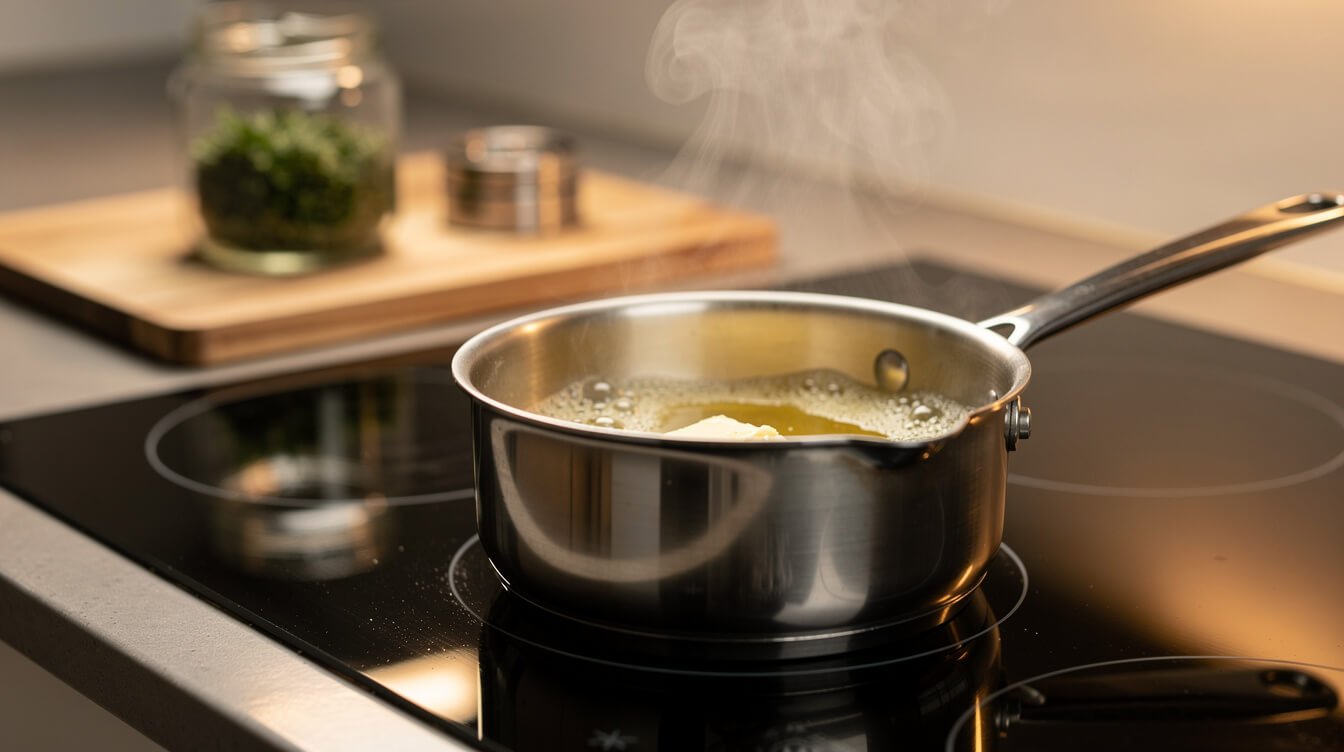
Once your shake is decarbed, the actual butter-making is straightforward. This is the classic stovetop simmer method, and it works well for trim because the long, gentle cook time gives the cannabinoids time to fully bind to the fat despite the extra plant material.
- Combine butter and water in a saucepan. Use a 1:1 ratio by volume — for example, 1 cup butter to 1 cup water. The water regulates the temperature and helps prevent scorching; it cooks off by the end.
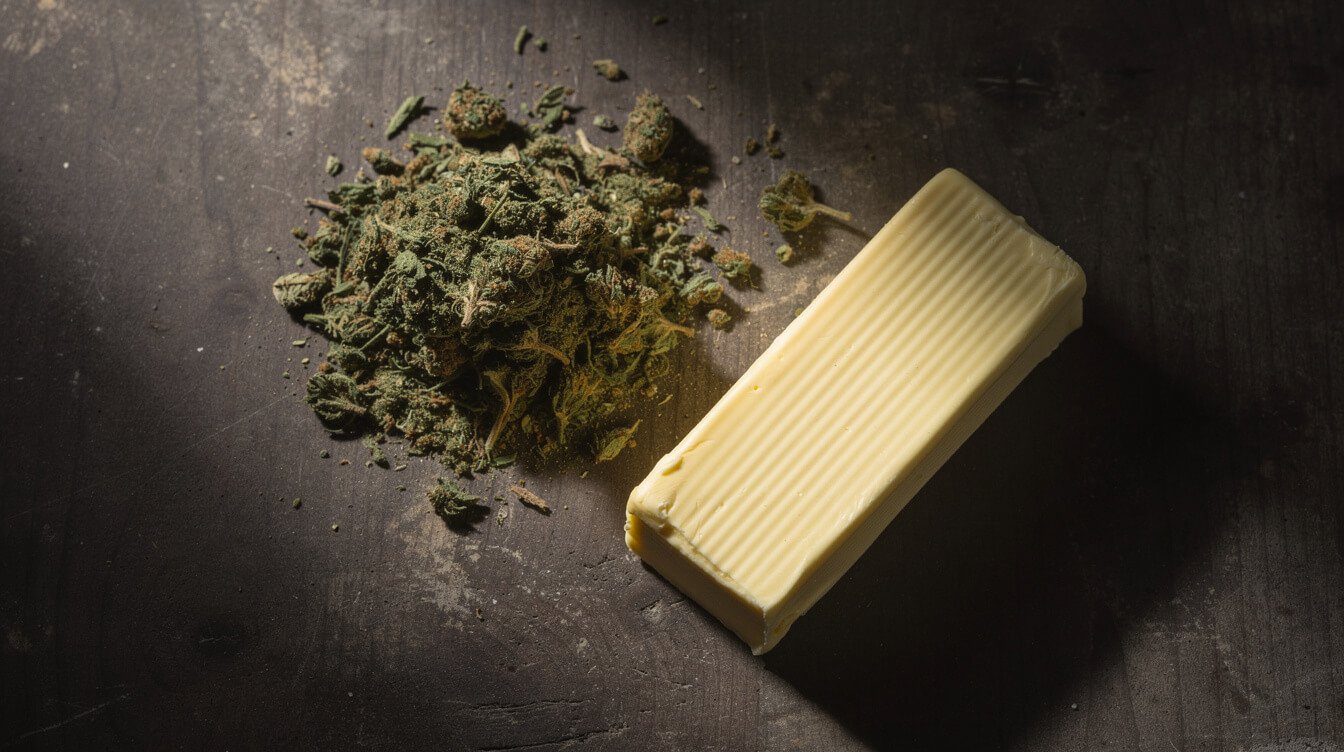
- Add your decarbed shake. A common starting ratio is about 1 cup of decarbed shake per 1 cup (2 sticks) of butter, but see the potency section below before you commit to a ratio — with shake, “how much” matters less than “how strong.”
- Simmer low, 2–3 hours. Keep it at a bare simmer — small bubbles, never a rolling boil. Stir occasionally. The mixture should stay just below 200°F the entire time; a kitchen thermometer removes the guesswork.
- Watch the water level. If it’s cooking down too fast and looks like it’s about to dry out, add a splash more water. You want it to reduce slowly, not disappear.
- Cool slightly before straining — enough that it’s safe to handle, but still liquid enough to pour.
Prefer a slow cooker or double boiler? Both work with the same ratios and roughly the same low-and-slow logic — just hold the temperature low (slow cooker on “low,” lid slightly ajar to let moisture escape) for 4–6 hours instead.
What you’ll need
- A heavy-bottomed saucepan (thin pans scorch faster, which matters more with the extra plant matter in shake)
- A kitchen thermometer — cheap, and the single best tool for avoiding a burnt batch
- Cheesecloth or a nylon straining bag, plus a fine mesh strainer
- An airtight glass container for the finished butter
Butter choice matters more than people think
Unsalted butter is the default for a reason — it lets you control salt separately in whatever you bake with it later, and its milkfat content (roughly 80%) binds cannabinoids efficiently. Some people substitute coconut oil, which has an even higher fat content and can extract slightly more efficiently, though it comes with a coconut flavor that doesn’t disappear. For shake specifically, a higher-fat option like European-style butter (82–86% fat) can modestly improve extraction, since fat — not water — is what THC actually binds to.
Estimating potency when your shake is a mystery bag
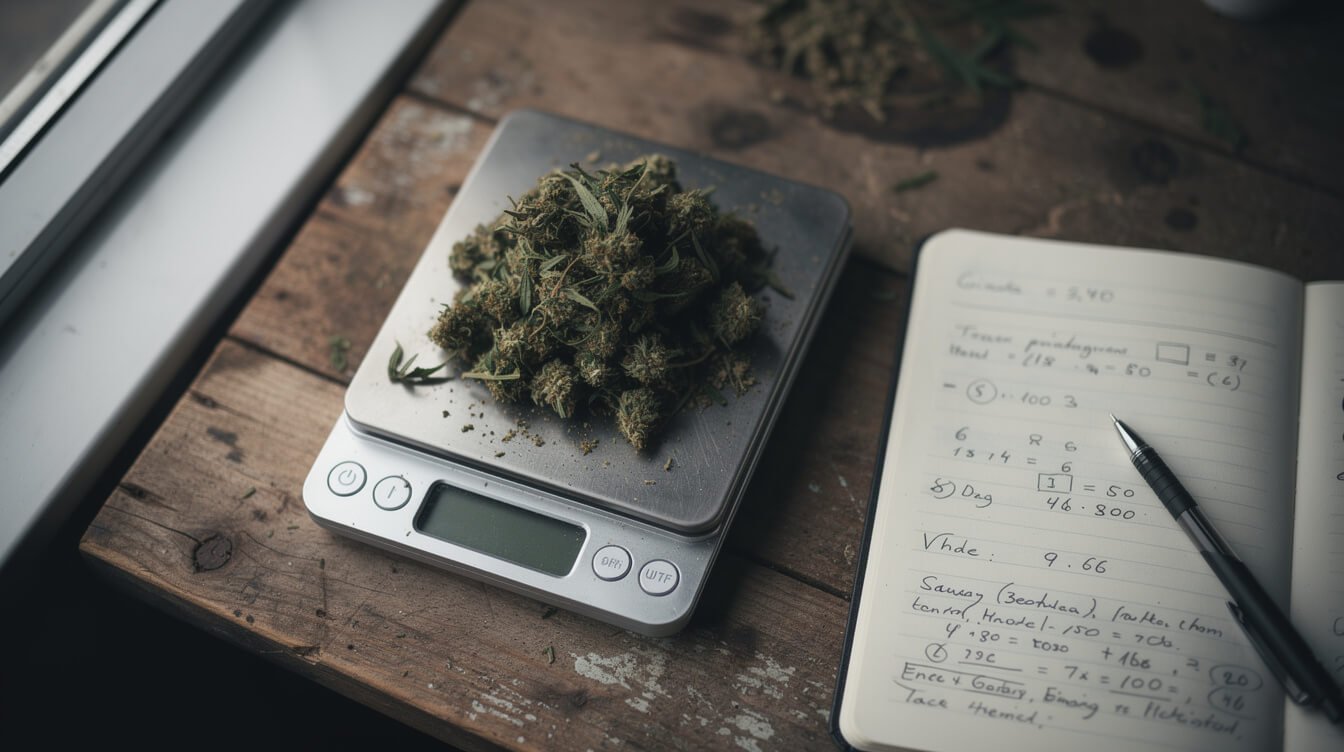
This is the step most recipes skip entirely, and it’s the one that matters most for shake specifically. If you bought flower and know its lab-tested THC percentage, you can calculate potency with real precision. If your shake is the accumulated leftovers from months of different strains, you’re estimating — and you should treat the result as a rough range, not a fact.
The general math
The simplified formula cannabis cooks use: (grams of cannabis) × (THC % as a decimal) × 1000 = total mg of THC available. Not all of it transfers into the fat — real-world efficiency in a home kitchen typically runs 60–75%. So a working formula looks like:
Total available THC (mg) × 0.7 (average transfer efficiency) ÷ number of servings in your final butter = approximate mg per serving
When you don’t know the THC percentage
For unlabeled shake, a reasonable — and deliberately conservative — planning assumption is 5–10% THC by weight, since trim typically tests lower than the bud it came from. Use the low end of that range for your first batch. You can always eat more of a mild edible next time; you can’t undo a strong one.
The only way to know for sure
If this is a recipe you’ll make regularly, a cheap potency test strip or a local lab test (where available and legal) on a sample of your shake removes the guesswork completely. Worth it if edibles are becoming a habit rather than a one-off project.
A worked example
Say you use 14 grams (a half-ounce) of shake, conservatively estimated at 7% THC: 14g × 0.07 = 0.98 grams of THC, or roughly 980mg total. At 70% transfer efficiency, that’s about 686mg of THC actually making it into your butter. If that butter goes into a batch of 24 cookies, that’s roughly 29mg of THC per cookie — a genuinely strong dose for most people, well above the 5–10mg most guides consider a moderate starting point. This is exactly why the math matters before you eat: it’s easy to accidentally end up with an edible several times stronger than intended when you’re estimating from unlabeled shake.
If that worked example surprises you, that’s the point — it’s a very common miscalculation, and it’s precisely why starting with a small test portion (below) matters more than getting the ratio “right.”
GanjaTech, weekly
Cannabis, explained. In your inbox.
One email a week: the clearest explainers, honest gear picks, and what the science actually says. 21+ only. No spam, unsubscribe anytime.
Straining out the plant matter for a cleaner taste
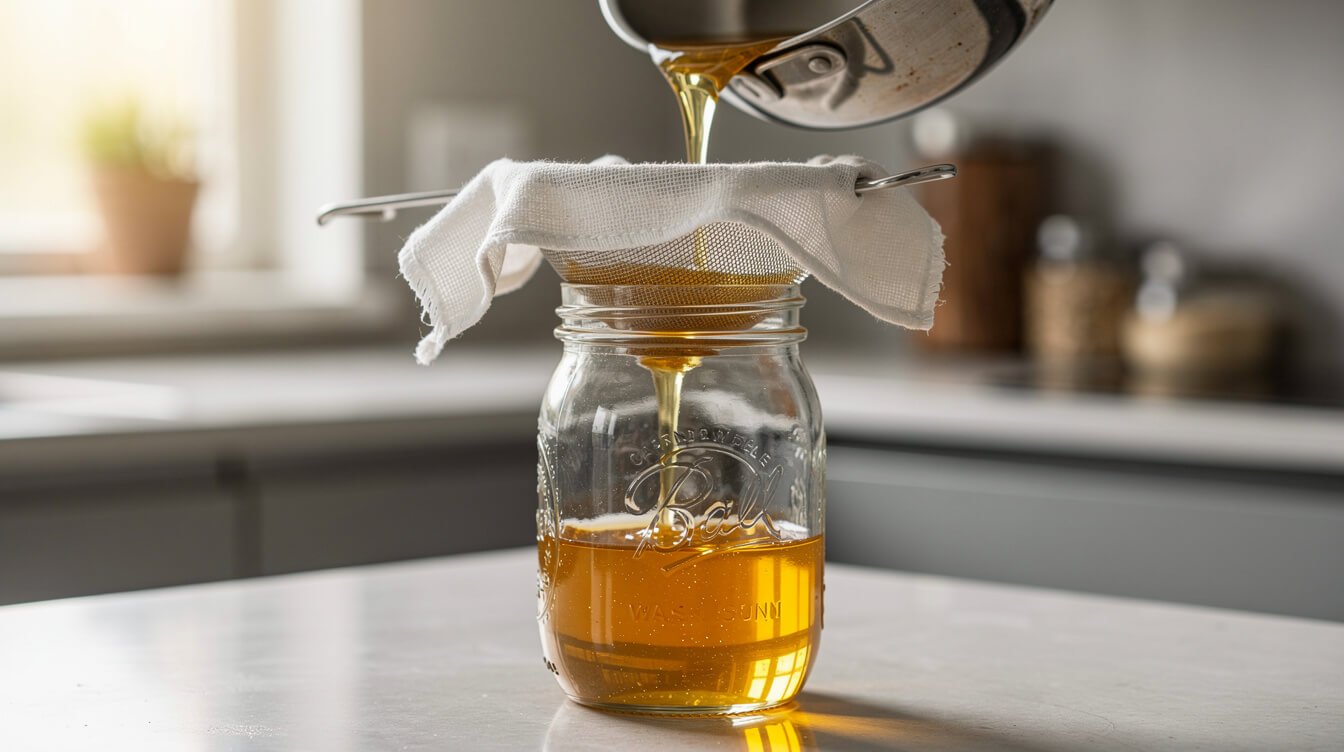
This is where shake-based butter earns its reputation for being harsher than flower-based butter — and where careful technique closes that gap almost completely.
- Use a fine layer, not just cheesecloth. Line a mesh strainer with a few layers of cheesecloth, or better, a paint strainer bag (food-safe nylon mesh bags, inexpensive and reusable) — they catch fine plant particles that cheesecloth alone lets through.
- Don’t squeeze aggressively. It’s tempting to wring every drop of butter out of the plant matter, but squeezing pushes chlorophyll and plant solids through the strainer along with the fat. A gentle press with the back of a spoon is the ceiling — stop there.
- Strain twice for shake. Because trim carries more fine particulate than flower, a second pass through a clean strainer noticeably improves both clarity and flavor.
- Chill, then skim. Refrigerate the strained liquid for a few hours. The butter solidifies on top and any remaining water settles below — lift the butter disc off and discard the water.
Dosing edibles responsibly — start low, go slow, mind the onset
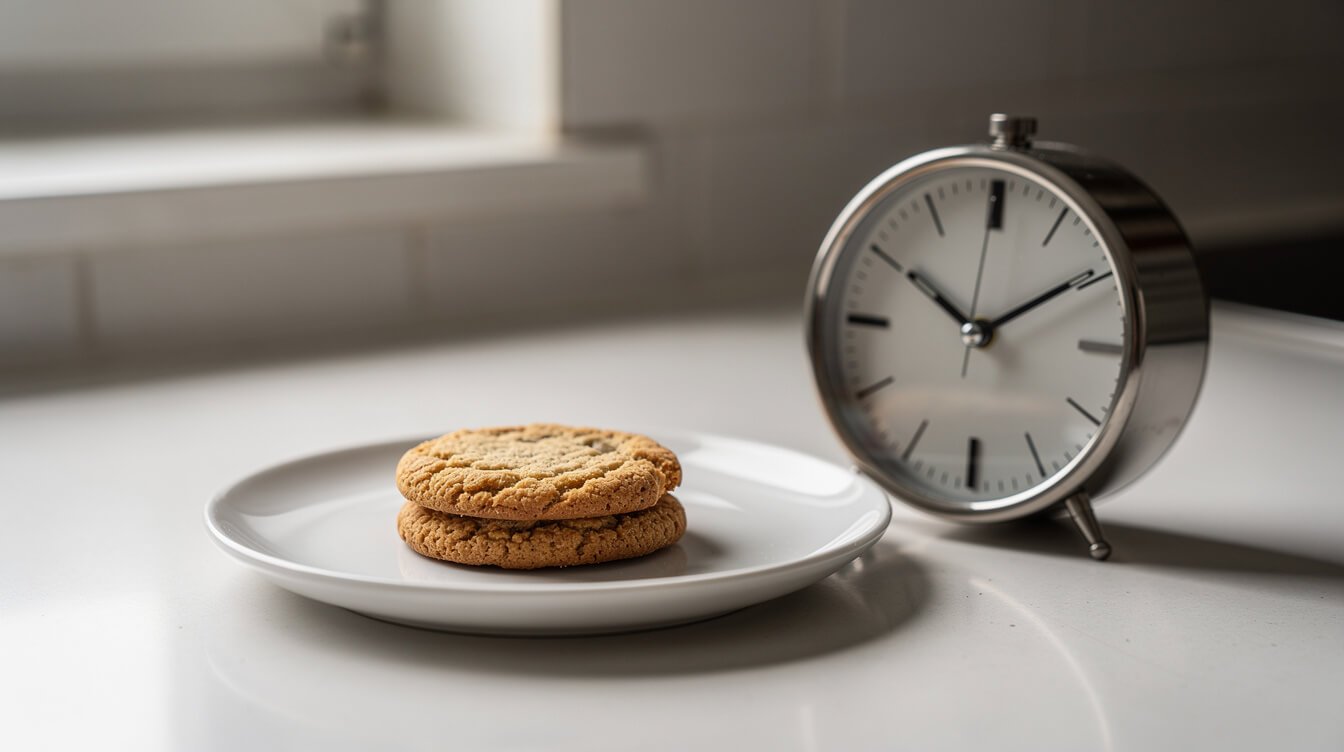
This is the section that matters more than any technique above it. Edibles are reported by many people to feel different from smoking or vaping — often described as a heavier, longer-lasting body effect — and that comes down to how the body processes THC when it’s eaten versus inhaled. That difference is exactly why edible dosing trips people up.
Onset is slow — and that’s the whole risk
Where inhaled cannabis is typically felt within minutes, edibles commonly take 30 minutes to 2 hours to be felt, depending on your metabolism, what else is in your stomach, and how the batch itself was made. The single most common edibles mistake is eating a normal amount, feeling nothing after 20–30 minutes, eating more, and then having both doses hit at once.
What “start low, go slow” actually means
- Start with a small amount of your finished butter in a test recipe — a single cookie or a spoonful stirred into something, not a whole pan of brownies eaten at once.
- Wait at least 2 full hours before deciding whether to have more, since that covers the slow end of the onset window.
- Keep finished edibles clearly labeled and stored well out of reach of anyone else in the house, including pets — homemade edibles are easy to mistake for regular baked goods.
- Never drive or operate machinery after consuming, and don’t combine edibles with alcohol — the two can amplify each other unpredictably.
Body weight, tolerance, and an empty stomach all move the needle
The same dose can feel different from one session to the next depending on your tolerance, whether you’ve eaten recently, and general metabolism — this is normal and part of why a “standard” dose doesn’t exist the way it does with, say, a canned beverage. It’s also why the guidance is consistently “start low” rather than a single fixed number: what’s mild for a regular consumer can be a lot for someone new, and vice versa after a tolerance break.
These are reported effects and general harm-reduction practices, not medical guidance — if you have questions about how cannabis interacts with a health condition or medication, that’s a conversation for a doctor, not a blog post. And remember: cannabis laws vary significantly by state and country, including rules around home cultivation, possession limits, and edibles specifically — know what applies where you actually are.
Storage, shelf life, and quick answers
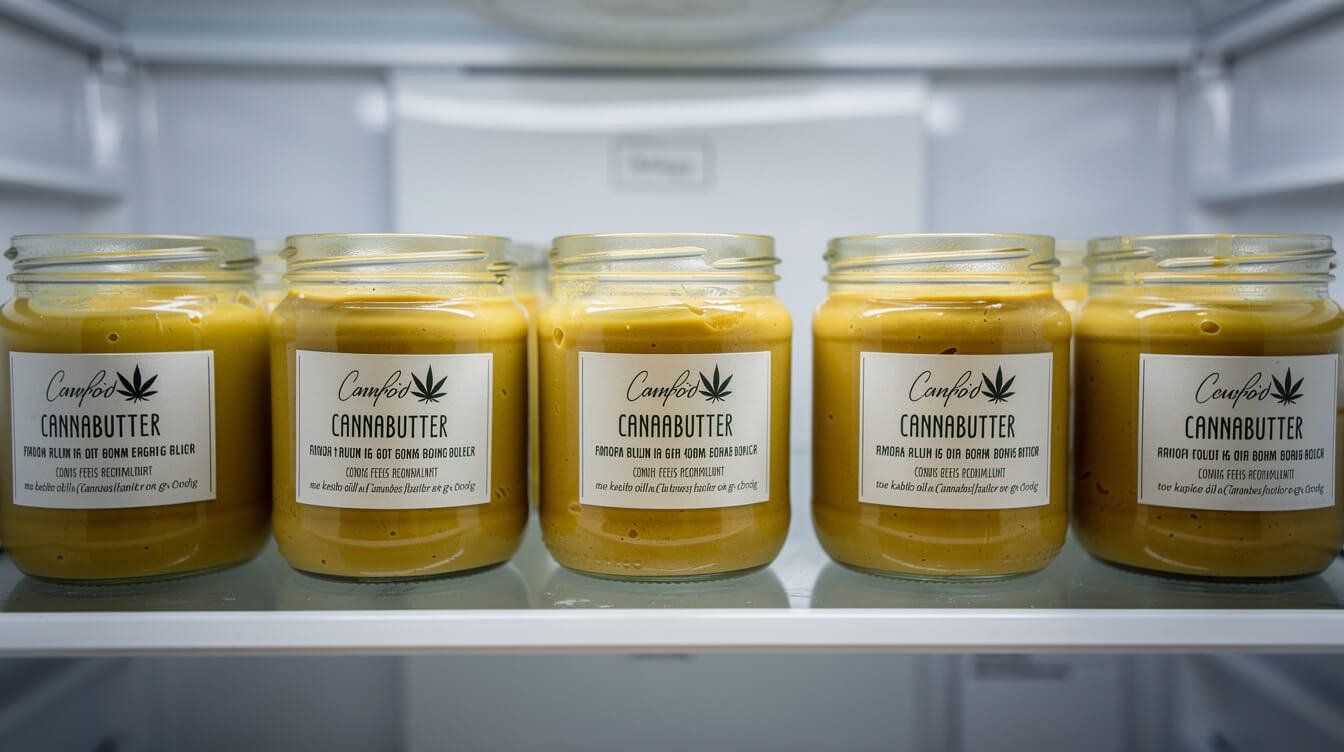
Properly strained cannabutter stores well, and how you store it affects both safety and potency retention.
- Refrigerator: 2–3 weeks in an airtight container.
- Freezer: up to 6 months without major potency loss — portion it into tablespoon-sized cubes first so you can thaw only what you need.
- Light and heat are the enemy. THC degrades gradually into CBN with UV exposure and heat, which shifts the effect profile over time. Store it opaque, sealed, and cold.
Quick answers
Can I use shake straight from the freezer without decarbing? No — decarb is a chemical conversion, not a freshness step. Skipping it means little to no effect regardless of how much shake you use.
Does shake need to be ground up first? Not finely — a rough hand-break is enough for both decarb and the simmer. Fine grinding mostly just adds more fine particulate that’s harder to strain out later.
Can I mix strains of shake in one batch? Yes, and most people do — just remember it makes potency estimation even rougher, so lean conservative on your first test dose.
Cannabutter from shake isn’t a compromise recipe — done right, it’s arguably the more resourceful way to make it, since you’re getting a useful ingredient out of material that would otherwise go to waste. Decarb properly, respect the potency guesswork, strain twice, and dose like you’re not sure how strong it is — because with shake, you genuinely aren’t.
Curious how long any of this sticks around afterward — especially since edibles are metabolized differently than smoking? We broke down how long weed stays in your system, the honest timeline instead of the myths. And if flower (not shake) is more your speed for a session, here’s how to roll a joint without a filter, done right.
Before you go
Get the next explainer first
We publish a new one every day. The best of the week, plus what's new in the shop, lands in one short email.