Male vs Female Cannabis Plants: How to Tell, and When
If you’re growing from seed, telling male vs female cannabis plants apart is the most useful skill you can pick up in your first month. Get it right and you harvest buds. Miss it, and one overlooked plant can seed the whole tent.
Here’s the honest answer up front: you tell them apart by looking at pre-flowers — tiny early sex organs that appear at the plant’s nodes, where a branch meets the main stalk. They usually show up somewhere between weeks three and eight from germination. Males grow small, smooth, rounded pollen sacs. Females grow slimmer, teardrop-shaped bracts with one or two wispy white hairs poking out of the top.
That’s the whole trick. The rest of this guide is the nuance most pages skip: exactly where on the plant to look, when to start looking, why your seeds probably aren’t going to hand you a male at all, what a hermaphrodite is and why it’s the more likely problem, and how to actually remove a male without doing the one thing you were trying to avoid.
Male vs female cannabis plants: the short answer
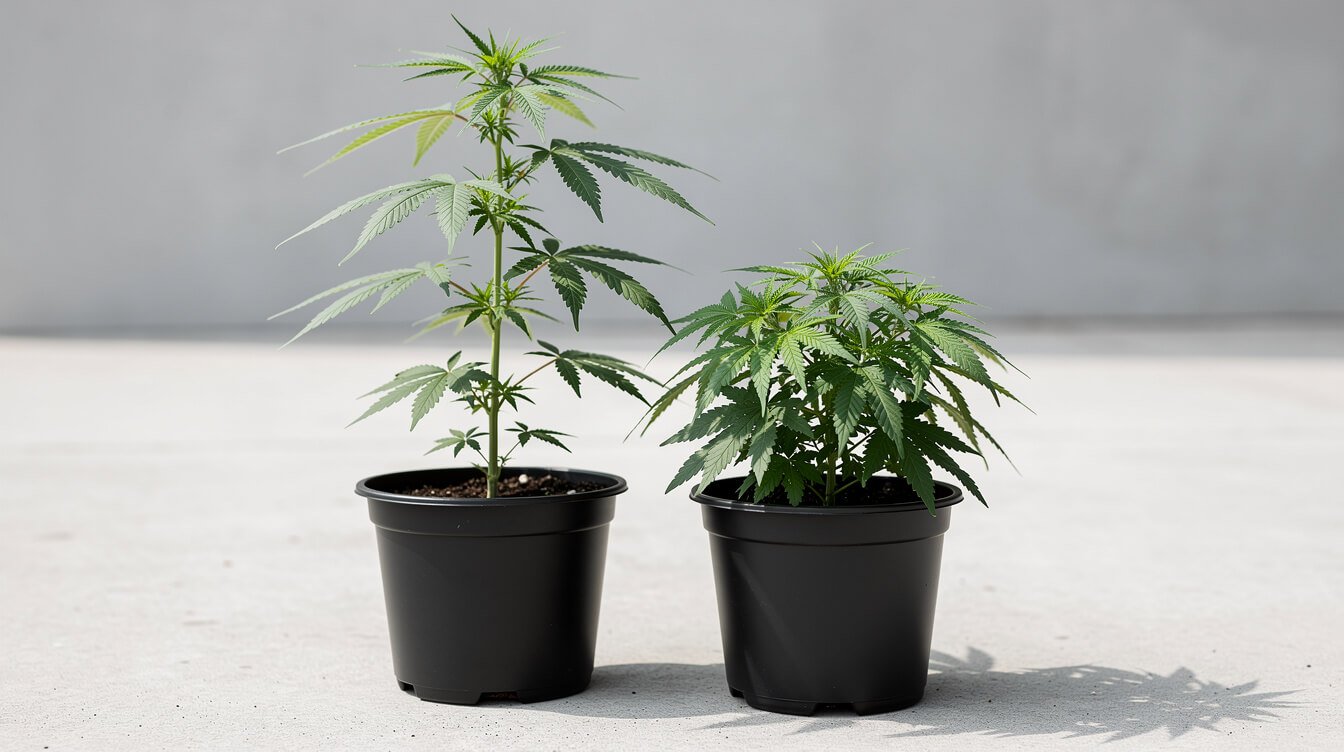
Cannabis is usually dioecious, which is botany’s way of saying the male and female reproductive parts normally grow on separate plants — unlike a tomato, where every flower has both. Sex is largely down to chromosomes, the familiar XX and XY arrangement, though cannabis is noticeably more flexible about expressing it than that tidy summary suggests. More on that flexibility in a minute, because it’s the part that actually bites home growers.
What each one does:
- Female plants produce the flowers people smoke. Left unpollinated, they keep pouring energy into resinous, trichome-covered bracts — what growers call sinsemilla, literally “without seed.”
- Male plants produce pollen. No buds, no meaningful resin. Their job in nature is to find females, and they’re very good at it.
- A pollinated female switches priorities. She starts building seeds instead of stacking flower, and both the yield and the chemistry of the bud change.
That last point is the reason anyone cares. Pollination isn’t a cosmetic problem. Research on cannabinoid-focused hemp has reported that pollination can cut cannabinoid content in female flowers substantially — one 2023 study put the drop as high as around 56 percent. Treat that as a ceiling rather than a promise, since it varies with genetics and how thoroughly a plant gets hit, but the direction is never in dispute. Seeded bud is weaker bud.
So for almost every home grower, the goal is simple: an all-female room. If you’re starting from scratch and haven’t picked genetics yet, our guide to the best beginner strains to grow indoors covers which plants forgive the most mistakes while you’re learning to read them.
When and where a plant actually shows its sex
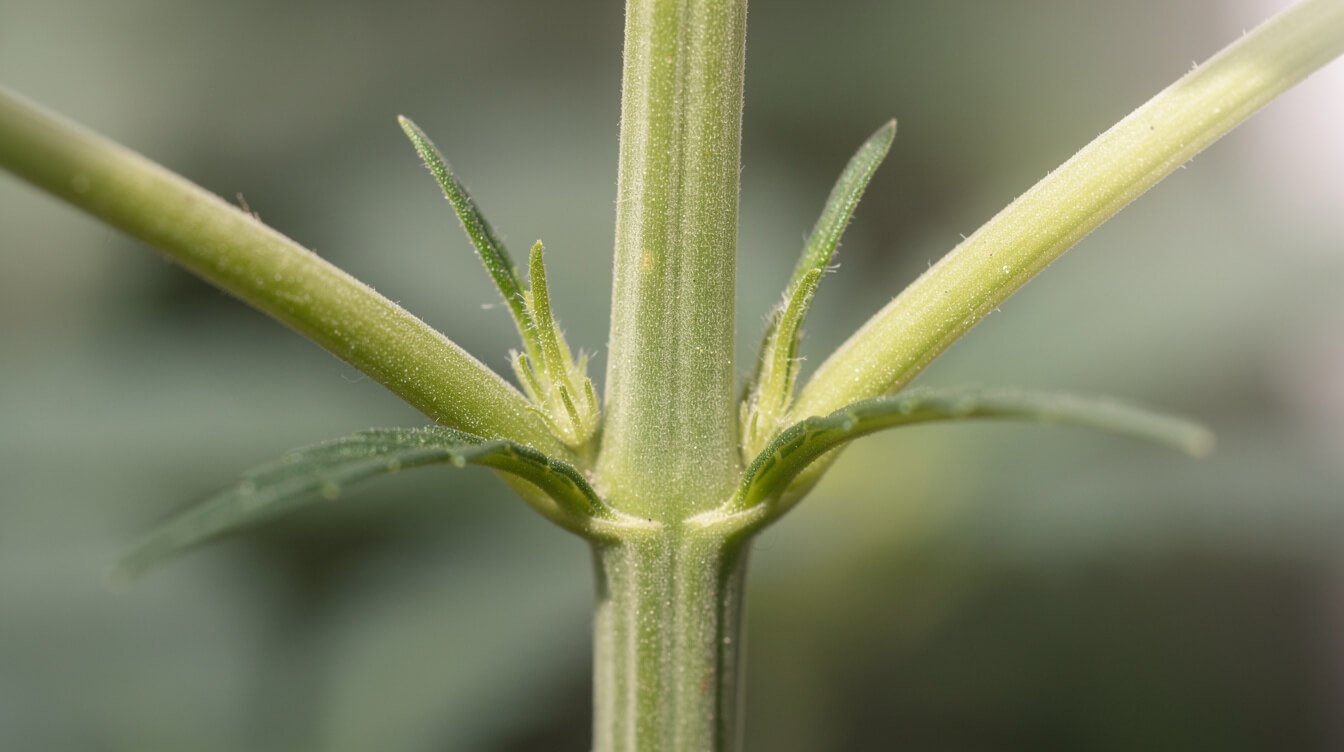
Everything about male vs female cannabis plants comes down to two variables: where you look, and when. Start with where.
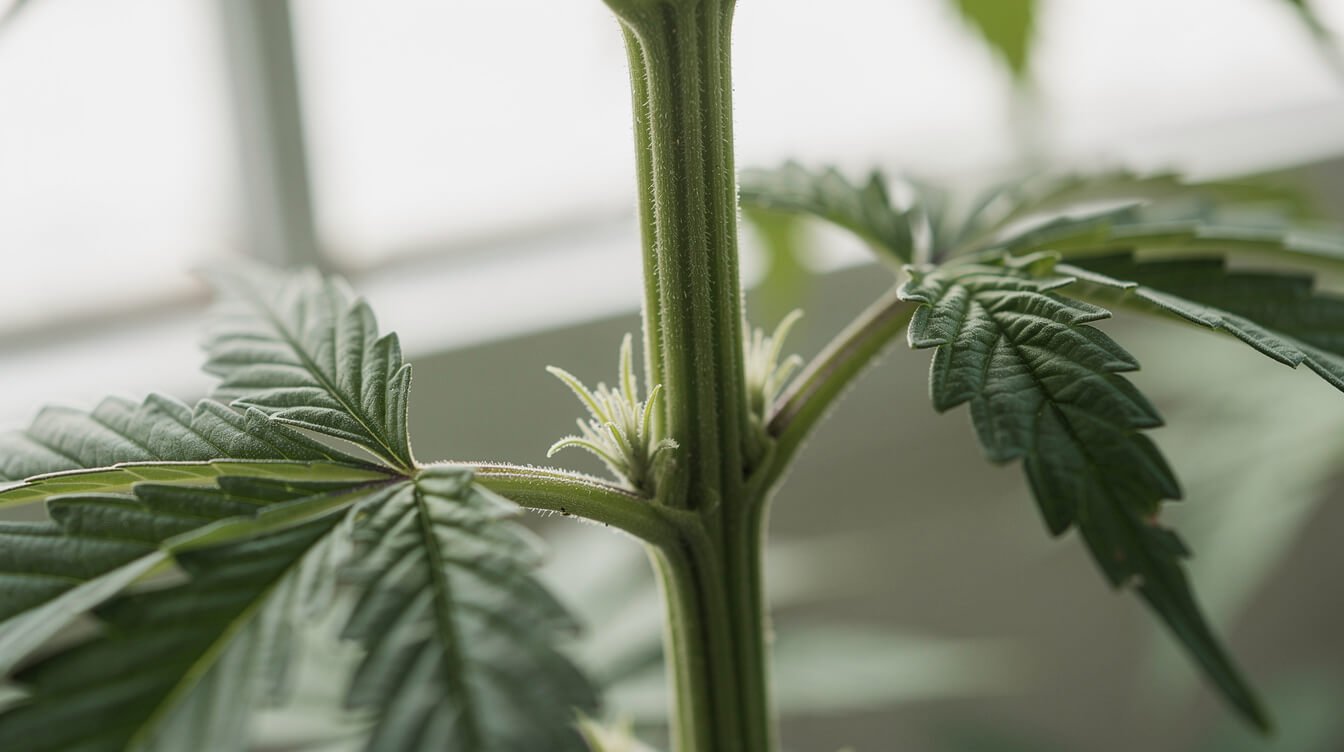
You’re looking at nodes — the V-shaped junction where a branch meets the main stalk. Pre-flowers show up there, and in practice they concentrate between roughly the fourth and sixth nodes, usually toward the top of the plant where the light is strongest. They can also turn up on one random lower branch and nowhere else, so check the whole plant before you conclude anything.
They are small. Genuinely small — a millimeter or two when they first appear. A cheap jeweler’s loupe or a phone macro lens is worth more here than any amount of squinting.
Rough timeline from germination, assuming a standard photoperiod plant:
- Weeks 1–2: nothing to see. Don’t bother looking. Your seedling is busy with roots.
- Weeks 3–4: males often reveal first. A smooth little sac at a node is your earliest realistic signal.
- Weeks 4–6: the usual window for females. A narrow bract appears, and the white hair may take a few more days to emerge after it.
- By week 8: essentially every vegetative plant has told you what it is.
Strain, light intensity, and how hard you’ve been pushing the plant all shift those numbers. Treat them as a window, not a schedule. If you germinated recently and want to line this up against the rest of the early calendar, our walkthrough on how to germinate cannabis seeds covers days one through fourteen in detail.
Autoflowers are on a tighter clock
Here’s something the big guides mostly skip. Autoflowers start flowering based on age rather than on a light-schedule change, which means you don’t get to park them in veg while you wait for a verdict. A photoperiod plant can sit under 18 hours of light for weeks while you watch. An auto is typically already entering flower around weeks three to four from sprout — right when sex becomes visible.
Practically, that means two things. Start checking autos earlier, around week three. And if you find a male, deal with it immediately, because the buffer between “I can see it” and “it’s mature enough to matter” is much thinner than with a photoperiod grow.
The lab option, honestly
You can skip the guessing entirely. A qPCR test on a single leaflet looks for Y-chromosome sequences and can sex a plant as early as a week from germination, though accuracy improves if you wait until week three. Labs charge roughly $10 to $15 per plant; growers with their own qPCR setup run it for under $5 a sample.
Is that worth it? For a commercial operation holding fifty plants in a veg room for six weeks, absolutely — it’s floor space and nutrients recovered. For a three-plant home grow, almost never. You’d spend more on testing than on the seeds, and you’ll learn to read pre-flowers anyway. Know the option exists, then skip it.
What a male cannabis plant looks like
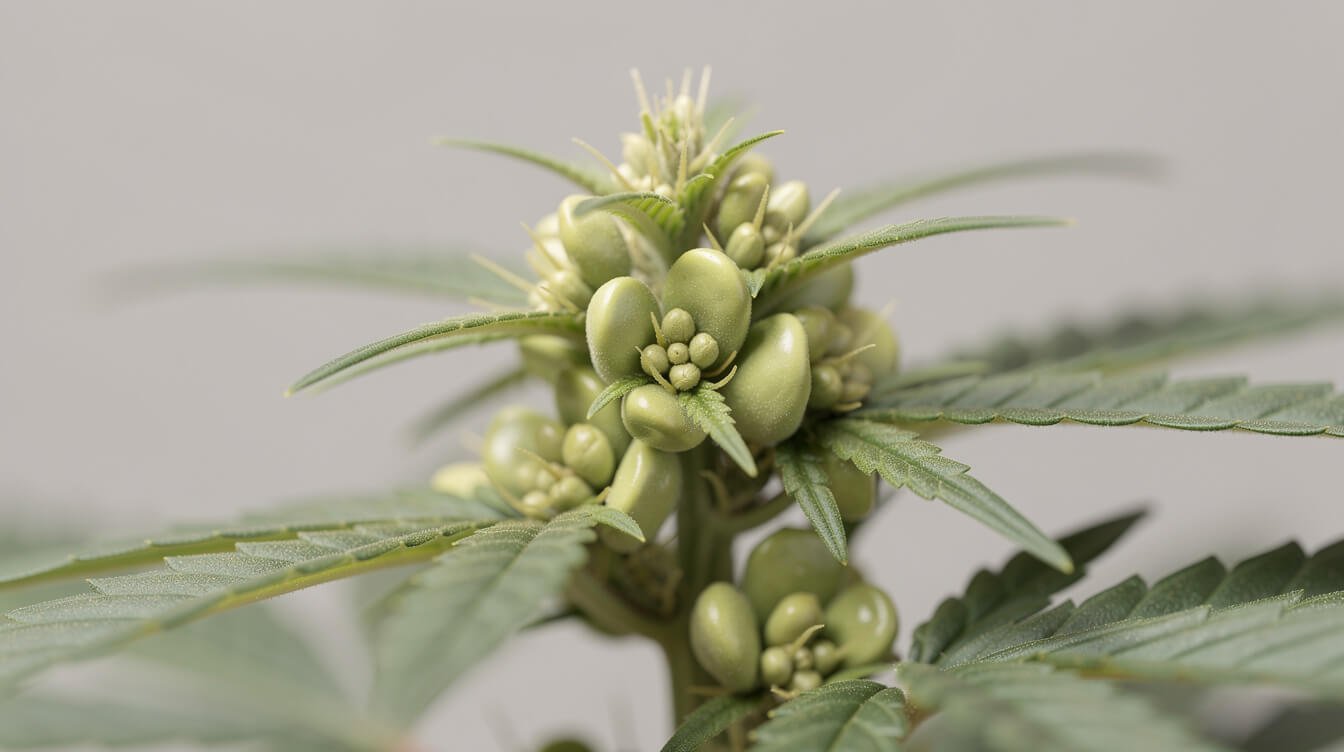
A male pre-flower is a small, smooth, rounded sac — most people land on “spade-shaped,” like the suit on a playing card. It often sits on a tiny stem of its own, which is one of the more reliable tells, and it is completely bald. No hair, no wisp, nothing emerging from the tip.
As the plant matures, those single sacs multiply into clusters that hang at the nodes and look unmistakably like little bunches of grapes. Once you’re seeing several smooth sacs stacked together with no white hairs anywhere on the plant, you have your answer and you can stop deliberating.
What about the secondary signals you’ll read about — that males are taller, lankier, thicker-stemmed, and carry fewer leaves? They’re real tendencies and they’re nearly useless in practice. They only mean anything when you’re comparing plants of identical genetics grown side by side under identical conditions. Two different cultivars will differ in height and stem width for reasons that have nothing to do with sex. One tall plant in a tent of short ones tells you approximately nothing.
The same caution applies to the crossed-stipule trick. Stipules are the thin, hair-like growths flanking the node. Females do cross theirs more often than males, so it’s a mild hint when you’re stuck — but there are plenty of male plants with long, crossed, textbook-female-looking stipules. Never cull on stipules alone. Confirm with the pre-flower, or wait a week and look again.
When in doubt, waiting is almost always correct. A male that’s a week further along is dramatically easier to identify, and it is nowhere near releasing pollen yet.
What a female cannabis plant looks like
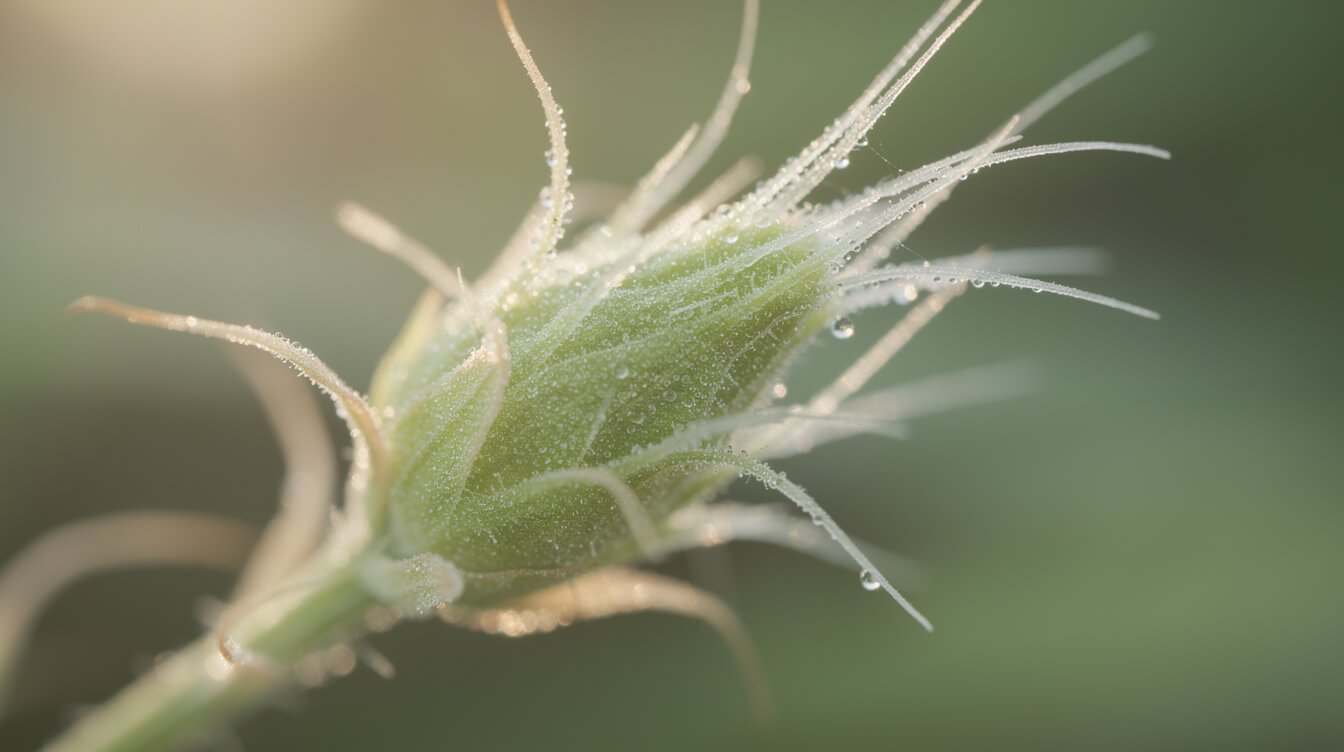
A female pre-flower is longer and narrower than a male’s, often with a slightly fat base tapering to a point — a teardrop rather than a ball. The giveaway is the hair: one or two fine, wispy white strands emerging from the tip. Those are stigmas, though every grower you’ll ever meet calls them pistils. They are white or sometimes faintly pink, and they are never green. If you see green growth poking out, you’re looking at new leaf, not a stigma.
Two things trip people up here. First, the hair is often late. A female bract can sit there hairless for several days before anything emerges, which is exactly when anxious growers misread it as a male sac. If the shape is long and narrow rather than round and smooth, be patient. Second, one confirmed hair is conclusive. Males don’t produce stigmas. A single white wisp ends the investigation.
Worth knowing the vocabulary, since it turns up everywhere and the popular terms are technically wrong. What growers call a “calyx” is properly a bract — a modified leaf structure that swells, stacks, and coats itself in resin. Buds are essentially bracts piled on bracts. The true calyx is a tiny thing hidden at the base. Nobody’s going to correct you at a grow shop, but it’s useful to know when you’re reading botanical sources.
One thread connects sexing to everything that comes later: those bracts are where trichomes develop, and reading them is how you know when to harvest. And they are also precisely the structures that catch pollen. Pollen lands on a stigma, travels down, and a seed starts forming inside the bract that would otherwise have become your bud.
GanjaTech, weekly
Cannabis, explained. In your inbox.
One email a week: the clearest explainers, honest gear picks, and what the science actually says. 21+ only. No spam, unsubscribe anytime.
Hermaphrodites, nanners, and the feminized-seed reality
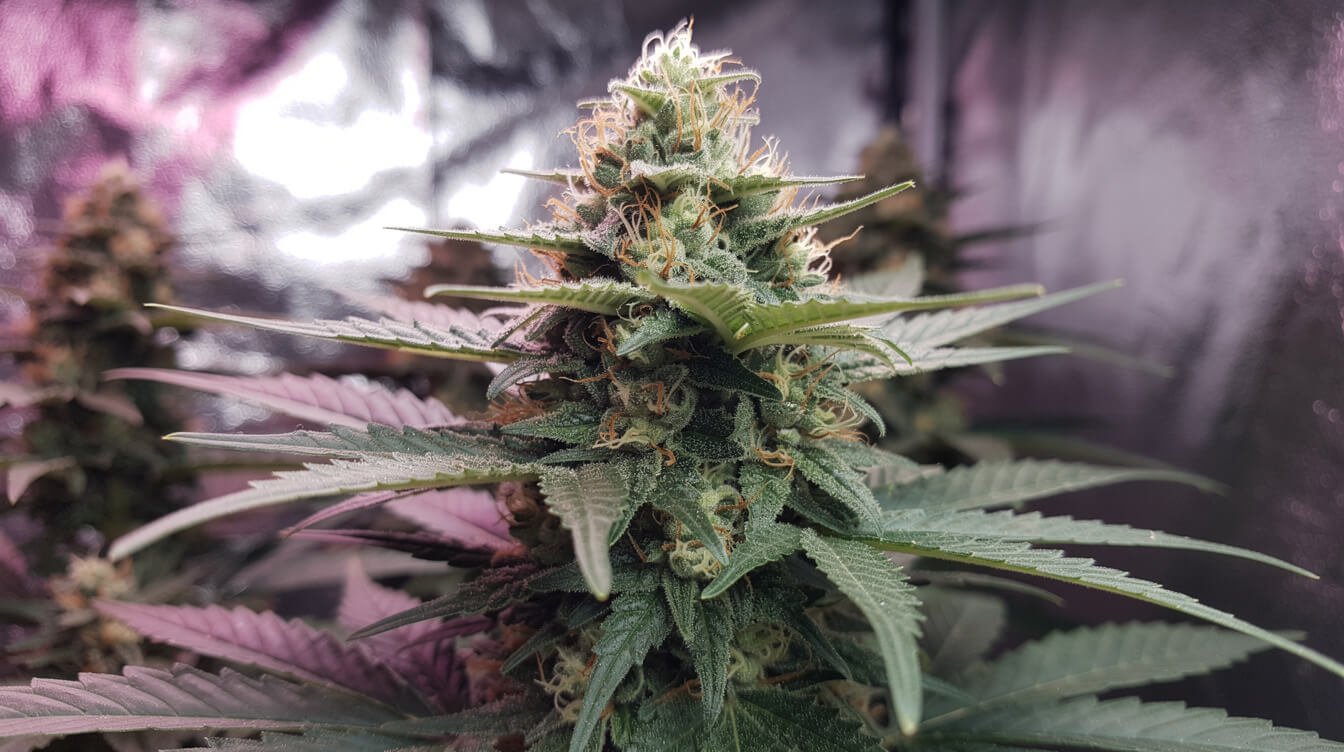
Time for the reframe that most articles on this topic bury. If you planted feminized seeds — and most home growers do, because that’s what the seed catalogues overwhelmingly stock — you will probably never see a male plant. Feminized seed is bred to produce female plants, and it does, reliably. Regular, non-feminized seed is the roughly 50/50 coin flip everyone describes.
So if you’re growing feminized seed, the male-hunting exercise above is mostly insurance and education. Your real risk is different: it’s your own female plant deciding to grow pollen.
Cannabis sex expression is more plastic than a simple XX/XY story implies. Under enough stress, a genetically female plant can produce male parts. Two versions:
- A true hermaphrodite grows recognizable pollen sacs alongside its flowers — the same smooth sacs described above, just on a plant that’s also making bud.
- “Nanners” are the more common and sneakier one: yellow, banana-shaped anthers that push directly out from inside the buds. They skip the sac entirely and can shed pollen fast, sometimes before you spot them.
What triggers it is usually some combination of genetics and stress, and the stressors are the ordinary ones:
- Light leaks during the dark period — the single most common cause in home tents. A glowing power LED, an unzipped corner, a phone flashlight during lights-off.
- Heat stress, especially a hot canopy in a small tent with weak extraction.
- Severe feeding mistakes in either direction. Worth learning to read the plant early; our guide on how to fix nutrient burn on cannabis covers the overfeeding side.
- Physical damage — rough training, broken branches, root disturbance.
- Leaving plants well past their harvest window, which can trigger a late survival-mode scramble to self-pollinate.
The practical upshot: run a genuinely dark dark period, keep temperatures sane, and inspect your buds during weeks four through six of flower, not just your nodes during veg. A stable environment prevents more of this than any amount of vigilance does. Our honest first-grow walkthrough for growing cannabis indoors goes through dialing that environment in.
Found a male? How to pull it without pollinating everything
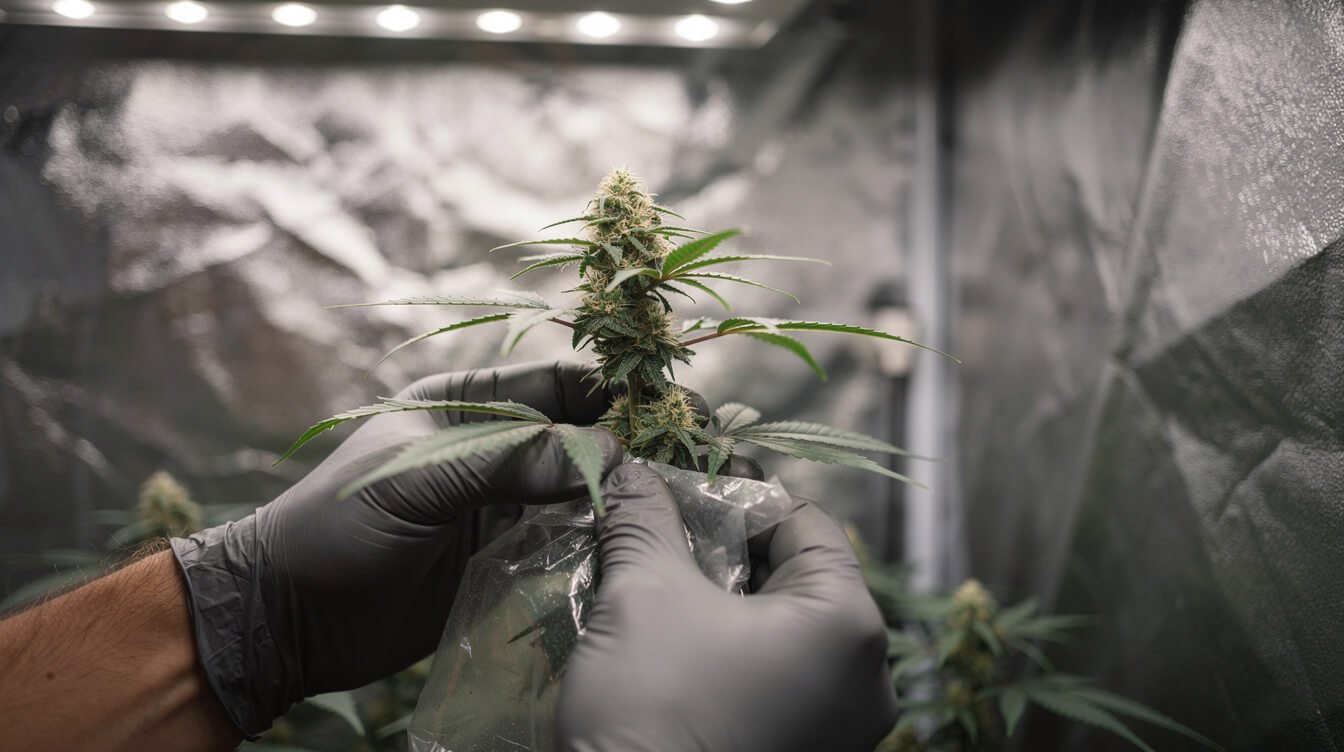
This is where most guides stop at “remove it” and leave you to work out the rest. The removal is the risky part — you can absolutely pollinate your own room in the act of taking a male out of it.
You do have time. Male plants typically don’t release pollen until roughly four to five weeks after flowering has been triggered, so a male you catch as a pre-flower during veg is a long way from doing damage. That said, physically jostling a plant with mature-looking sacs can shake pollen loose early, which is exactly the accident you’re trying to avoid.
A sane protocol:
- Confirm first. Multiple smooth sacs, zero white hairs. If you’re unsure, wait a week — an unconfirmed male is not an emergency.
- Mist it lightly with plain water before you touch it. Water damages pollen viability, and a damp plant sheds far less into the air. It’s a thirty-second step that meaningfully lowers the risk.
- Bag before you cut. Slip a plastic bag over the plant or branch, cut inside the bag, then seal it. Don’t carry an open male plant past your females.
- Take the shortest route out of the room, and if you can, do it with fans off so you’re not running an air current through the tent while you work.
- Wash your hands and change your shirt before handling any female plant. Pollen is fine, sticky, and happy to ride on fabric. This is the step people skip and regret.
- Check the room again in a few days. If one plant from a batch of regular seed turned out male, look closely at the others.
One legal note worth flagging, because it catches people out: in most places with a home-grow allowance, a male plant still counts against your plant limit. It’s a plant. Cannabis laws differ enormously by state and by country, and plant counts, whether growing is permitted at all, and what “a plant” even means are all local questions. Check your own rules before you assume anything — nothing here is legal advice, and none of it should be read as assurance that growing is legal where you live.
And if you get pollinated anyway?
Don’t panic-harvest. Seeded bud is a disappointment, not a write-off. It’ll be less potent and annoying to break up, and you’ll be picking seeds out for weeks, but it still cures and still smokes. Finish the grow, take the lesson, and cure it properly anyway. A lightly seeded plant caught late in flower is often barely affected in the upper colas.
Male vs female cannabis plants: the myths worth dropping
A few things get repeated constantly and are worth clearing out.
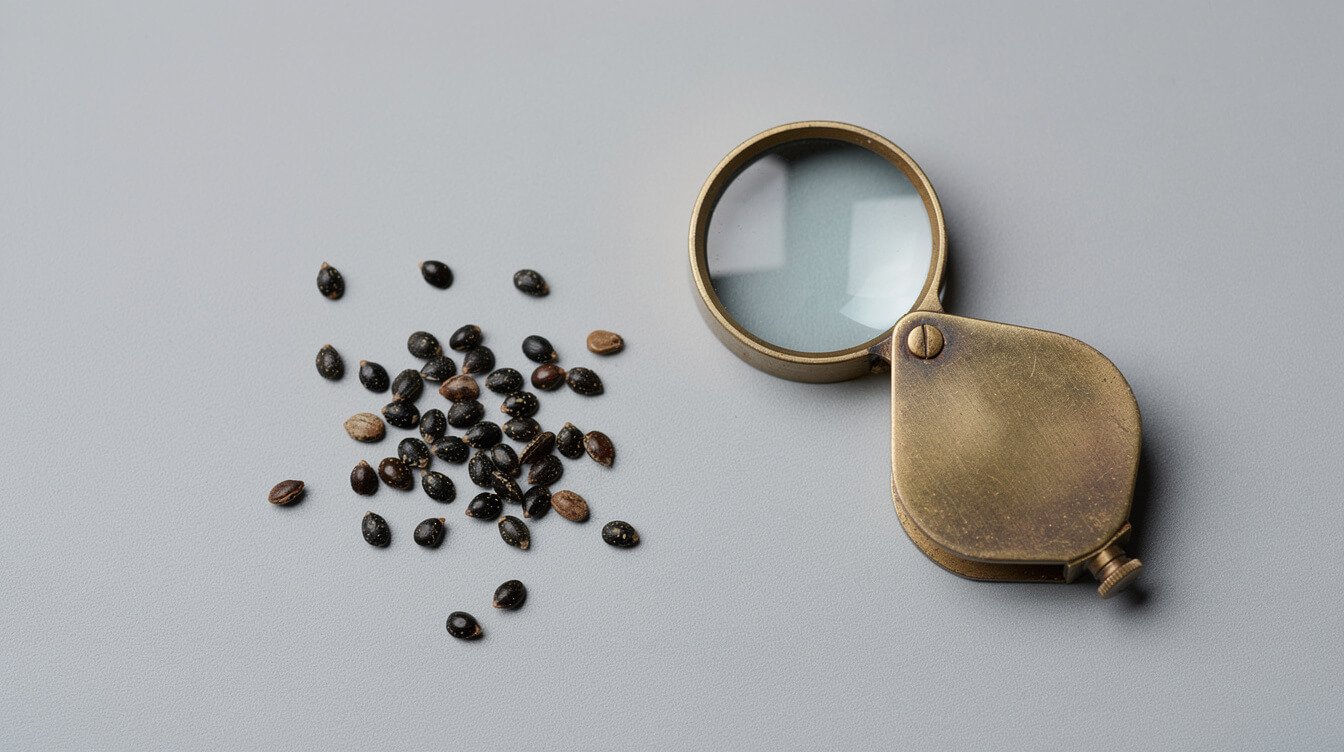
“You can sex a seed by looking at it.” You can’t. Not by size, not by shape, not by the dark tiger-stripe pattern, and not by whether the base looks round or pointed. This one has been circulating for decades and it has never held up. A plump, dark, mature-looking seed tells you it’s likely to germinate well. It tells you nothing about sex.
“Indicas and sativas differ in how they express sex.” No. Separately, the indica/sativa framing is a weaker predictor of effect than people assume — the chemistry matters more, which is why we keep a practical reference on terpenes and their reported effects. Either way, it has nothing to do with plant sex.
“Male plants are useless.” Only if breeding doesn’t interest you. Males carry half the genetics of every seed ever made, they’re the whole point of a pollen collection, and outside the flower world they’re the traditional fiber plant. What’s true is narrower: males are useless for your bud harvest, and they’re actively harmful sitting in a flowering room full of females.
“You have to wait for flowering to know.” Not true, and it’s the belief that costs beginners the most. Pre-flowers reveal sex during veg, weeks earlier. You can also force the answer by flipping to a 12/12 light schedule and watching the first fortnight — but that’s a blunt instrument, and it commits the whole room to flower.
“A hermaphrodite means bad genetics.” Sometimes. More often it means a light leak. Blame your tent before you blame your breeder.
“Cloning resets sex.” It doesn’t. A clone is genetically identical to the mother, so a cutting from a female is female — which is exactly why taking clones is such a clean way to sidestep this whole question once you have a plant you like.
Frequently asked questions
How early can you tell male vs female cannabis plants?
Visually, around week three at the earliest, and that’s usually a male. Most plants are readable between weeks four and six, and nearly all have declared themselves by week eight. A qPCR lab test can do it from a single leaflet as early as week one, with better accuracy from week three.
Do female plants ever grow pollen sacs?
Yes, under stress — that’s a hermaphrodite. Sacs alongside flowers, or yellow banana-shaped anthers pushing out of the buds. Light leaks during the dark period are the most common trigger in home tents.
Can one male ruin a whole grow?
It can seed a whole grow, which is not quite the same as ruining it. You’ll lose potency and gain a tedious job picking seeds out. Catch a male during veg and the risk is close to zero — pollen release generally comes four to five weeks into flowering.
Are feminized seeds ever male?
Rarely, but the rate isn’t zero. Testing work has shown lab screening can catch a single male seed in batches of fifty to a hundred, which tells you both that stray males exist and that they’re uncommon. Give feminized plants a quick node check anyway — it costs you a minute.
What do the white hairs mean?
They’re stigmas, and they mean female. Full stop. They catch pollen in nature. They’re white or faintly pink, never green, and they only appear on female plants.
Should I just flip to 12/12 to find out?
You can, but it’s heavy-handed. Flipping commits every plant in the room to flowering, and you’ll still be removing males from a room that’s already started — with the extra hazard of jostling pollen loose. Reading pre-flowers in veg is cheaper, earlier, and safer.
The short version
The entire male vs female cannabis plants routine, condensed: check the nodes, roughly the fourth through sixth, from week three onward. Round and smooth and bald means male. Narrow and teardrop-shaped with a white hair means female. Ignore height, stem width, and leaf count — they’re noise across different genetics. When you’re unsure, wait a week; the plant gets clearer, and nothing bad happens in the meantime.
If you planted feminized seed, expect all females and watch for stress-induced nanners in mid-flower instead. Run a properly dark dark period and you’ve prevented most of what can go wrong here.
It’s a straightforward skill that feels impossible for about two weeks and then becomes automatic. Once you’ve spotted your first confirmed male, you’ll never mistake one again. Know your local laws, keep it 21+, and enjoy the grow.
Before you go
Get the next explainer first
We publish a new one every day. The best of the week, plus what's new in the shop, lands in one short email.