How to Cure Buds in Jars Properly: A No-Equipment Troubleshooting Guide
If you dried your cannabis right and then dumped it straight into a jar and forgot about it, you’re not curing — you’re just storing slightly damp weed and hoping for the best. Learning how to cure buds in jars properly is less about owning fancy equipment and more about three things: how full you pack the jar, how often you open it, and knowing what you’re smelling when you do. None of that requires a hygrometer, though one makes it easier.
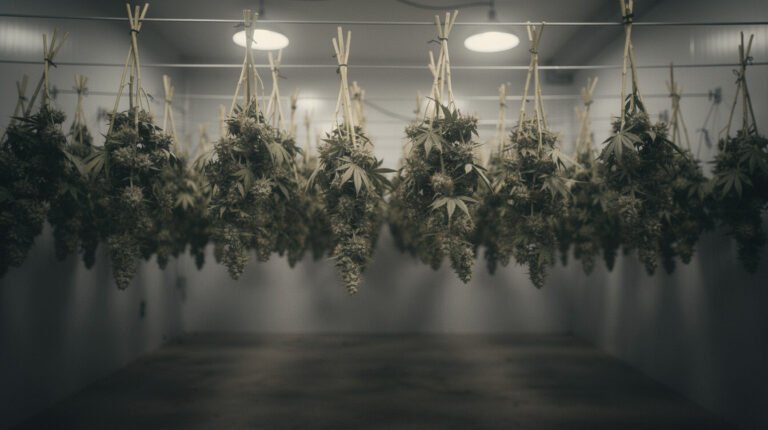
This isn’t a replacement for a full dry-to-cure walkthrough — if you haven’t dried your buds yet, start with our full guide to curing cannabis the right way first. This is the troubleshooting layer: the specific jar-stage questions that trip people up on their first (or fifth) cure, answered with your senses instead of a $15 gadget.
How to cure buds in jars properly — the basics
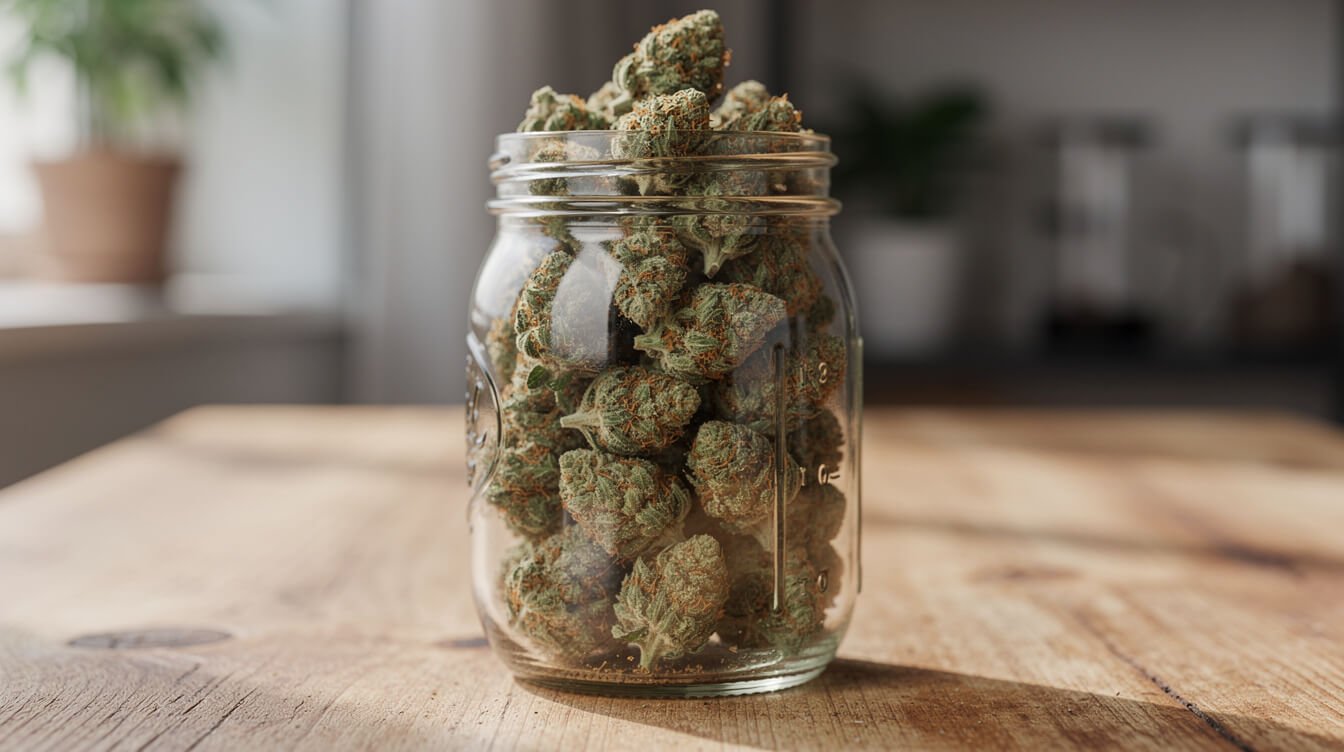
Drying gets rid of the water inside the plant fast enough that mold doesn’t get a foothold. Curing is slower and more deliberate — it’s the weeks-long process where trapped moisture inside the stem and bud core migrates outward through the jar, chlorophyll continues to break down, and the harsh, hay-like edge mellows into something smoother and more flavorful. You’re not drying the bud further in the jar. You’re letting the moisture that’s still inside it redistribute evenly, which is why sealing buds too dry or too wet both cause problems.
Every jar-curing question people ask — how full to pack it, how often to burp it, what that smell means — comes back to managing that moisture exchange. Too much moisture with no escape route breeds mold. Too little means the slow chemical process that builds flavor stalls out before it really starts. The jar is just the container; burping (briefly opening the lid) is how you control the humidity inside it without a machine doing the work for you.
How full to pack your jars (and why overfilling ruins the cure)
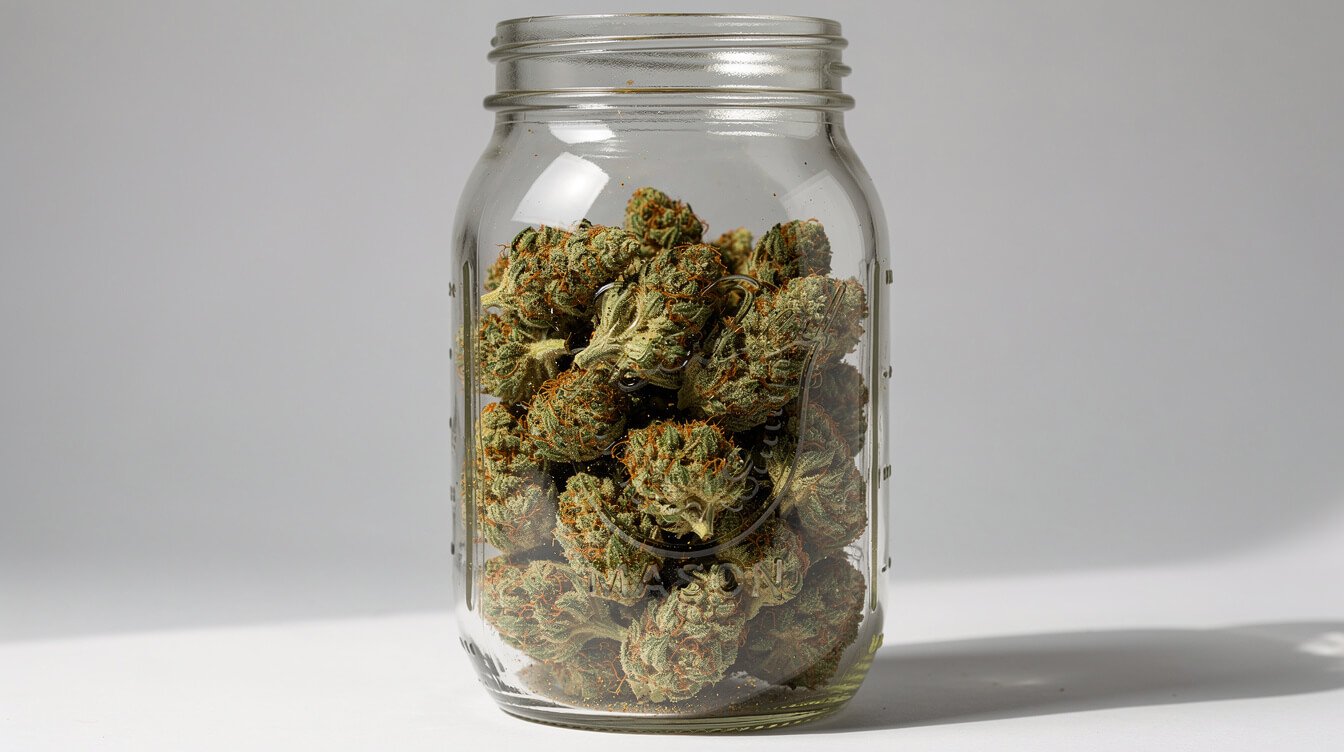
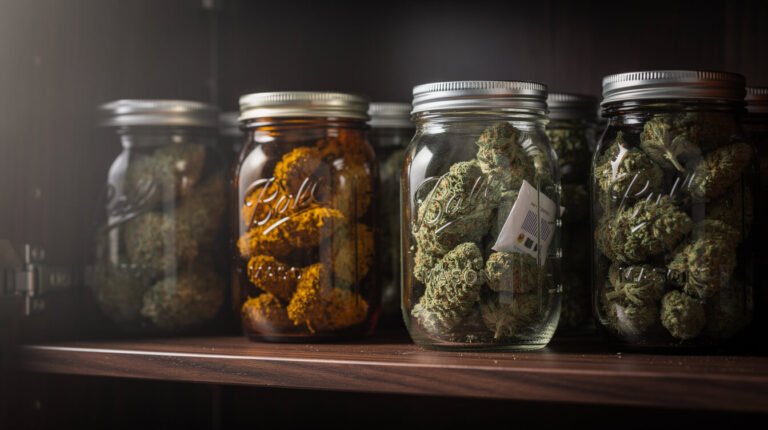
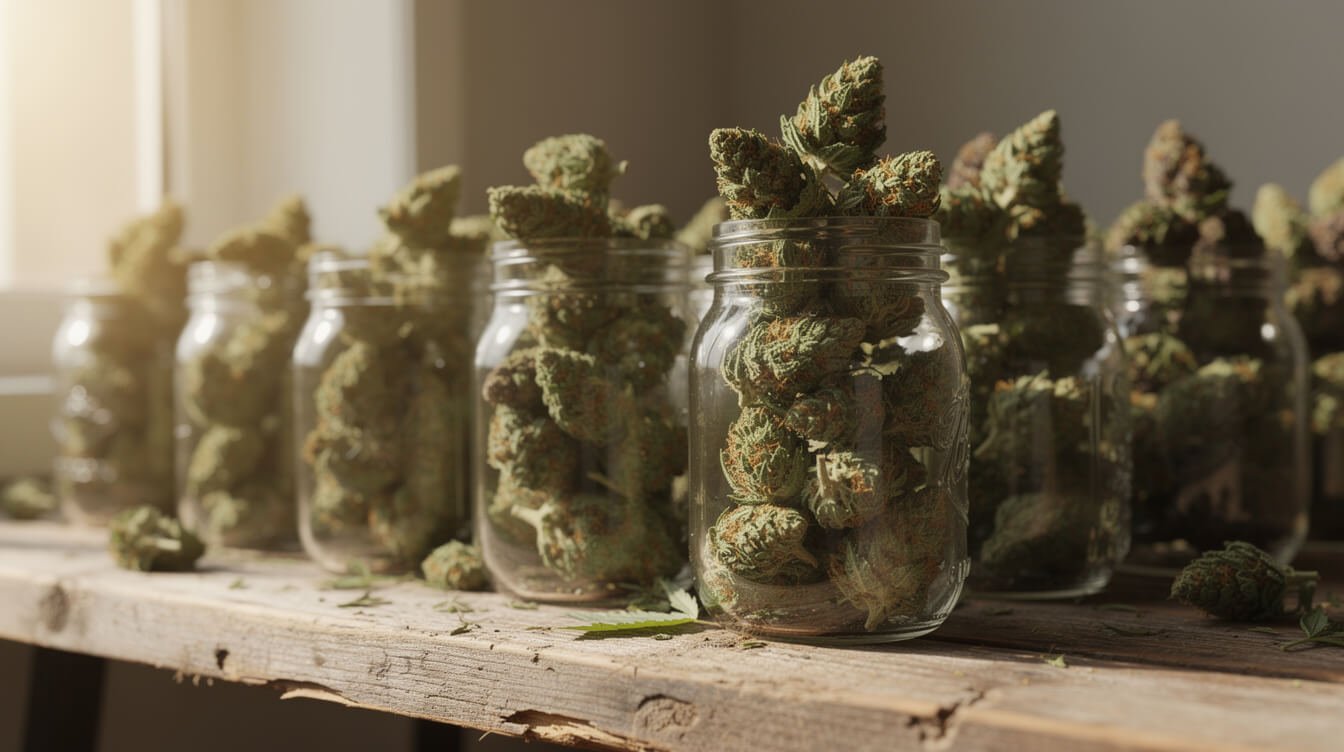
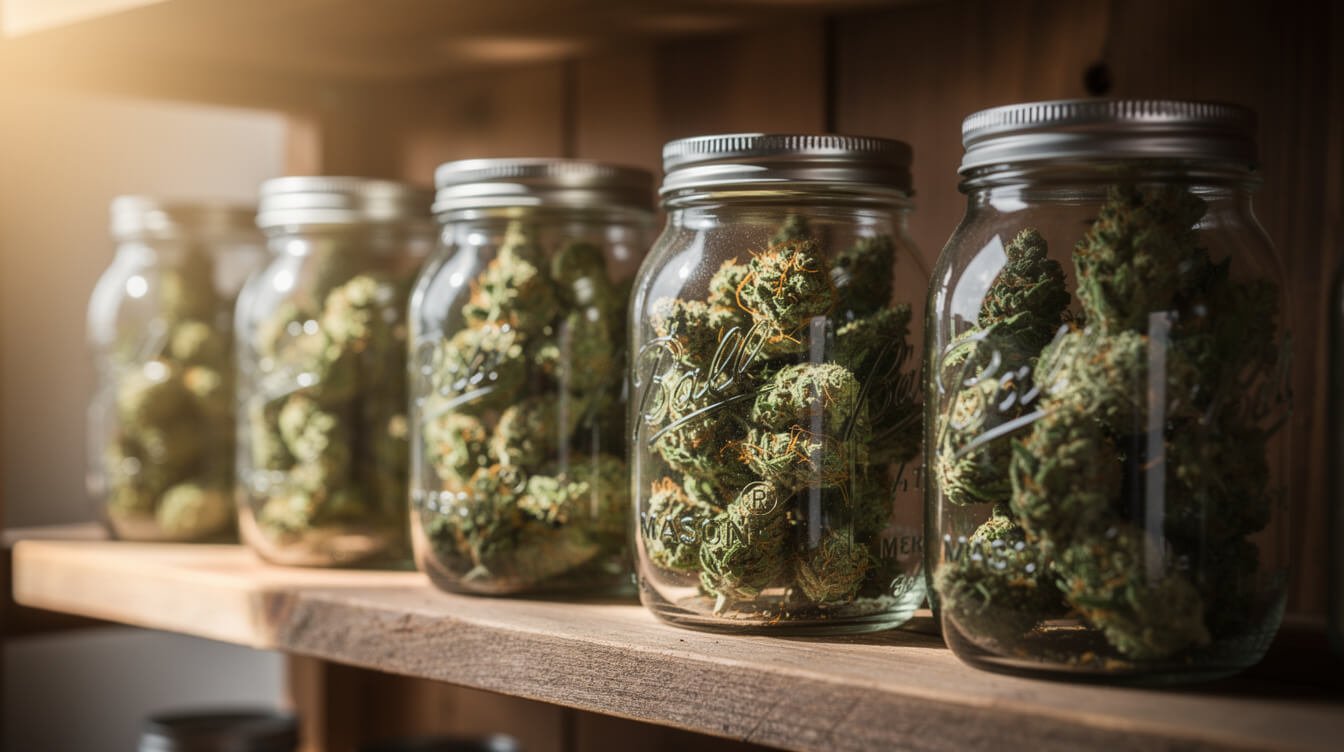
Fill jars to roughly three-quarters full — packed loosely enough that buds aren’t crushing each other, with visible air space above them. That air space matters more than most first-timers expect: it’s the buffer that lets humidity equalize between the buds and the air pocket instead of trapping moisture directly against bud-to-bud contact points, which is exactly where mold starts.
Overfilling is the single most common jar-curing mistake. A jar packed to the brim has almost no air exchange, so any pocket of slightly-too-wet bud stays wet against its neighbors with nowhere for that moisture to go. It also makes it harder to actually inspect and smell each bud when you burp, since everything is wedged together. If you’ve got more dried flower than one jar comfortably holds at three-quarters, use a second jar rather than cramming — wide-mouth quart mason jars are the standard for a reason, and it’s cheaper to buy an extra jar than to lose a batch to mold.
On the other end, don’t jar buds that are barely dry just to get the process moving faster. If a stem still bends instead of snapping (more on the snap test below), it needs more air-drying time before it goes anywhere near a sealed jar.
Burping schedule for beginners (no hygrometer required)
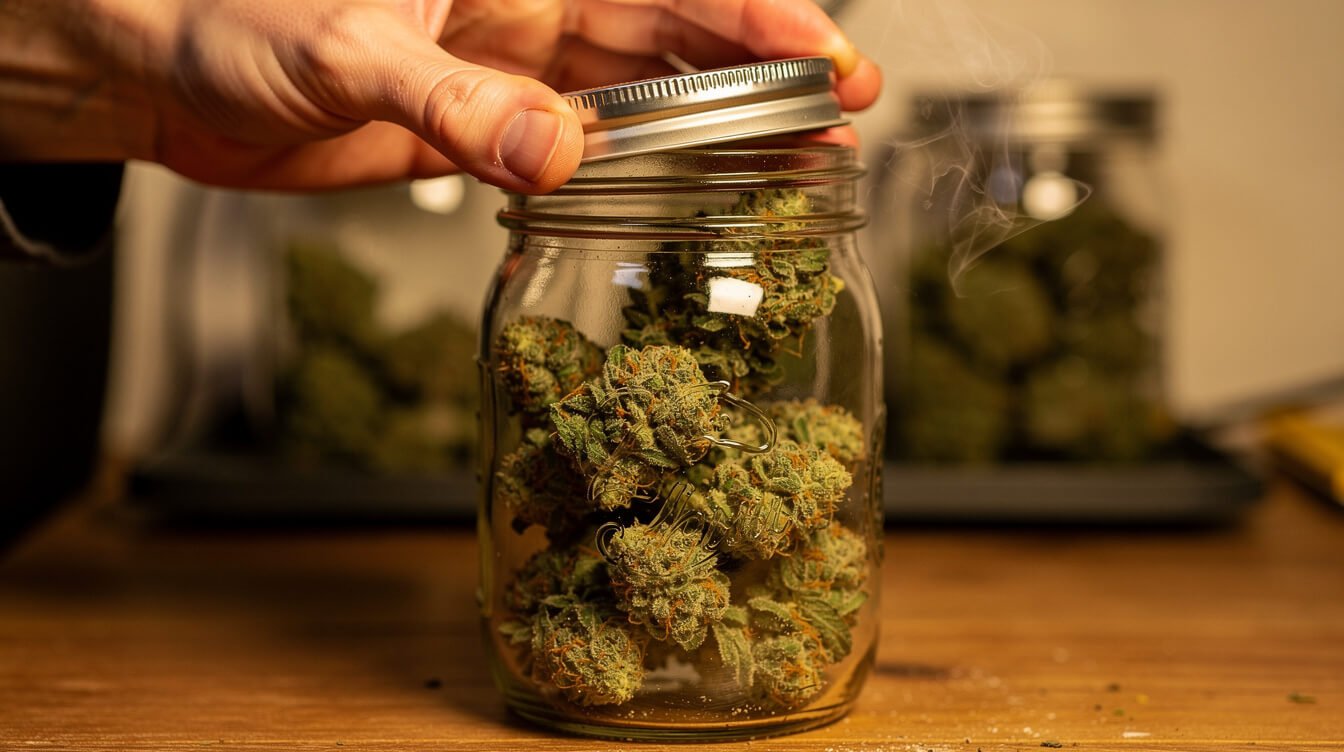
“Burping” just means opening the jar for a few minutes to swap out the air inside — releasing built-up humidity and letting fresh air in before resealing. A simple beginner schedule that works without any equipment:
- Week 1: Open the lid for 5–10 minutes, once or twice a day. This is the highest-risk window since the buds still hold the most moisture.
- Week 2: Cut back to once every 2–3 days, 5 minutes each time.
- Weeks 3–4: Once a week is usually enough. By this point the moisture inside the bud has mostly equalized.
You don’t need a percentage reading to know if you’re on track — you need your nose and your fingers. Every time you burp, take a quick sniff and give a bud a gentle squeeze. If it feels slightly springy and the smell is green and slightly grassy (not sharp, not sour, not musty), you’re in good shape and can stick to the schedule above. If buds feel noticeably damp or the jar smells strongly of wet hay when you crack the lid, burp more often and longer until it eases off. If everything feels dry and a bit crumbly with almost no smell escaping, you’re burping too often or too aggressively and drying the cure out early — pull back to once a week.
A two-week minimum cure is the bare floor for a noticeable improvement in smoothness. Three to four weeks is where most home growers land for a real difference in flavor, and some push a slow cure to two months or longer for specific cultivars. There’s no universal finish line — it’s a curve of diminishing returns, and “good enough to enjoy” comes well before “as good as it’ll ever get.”
Mold vs. “must” smell — how to actually tell the difference
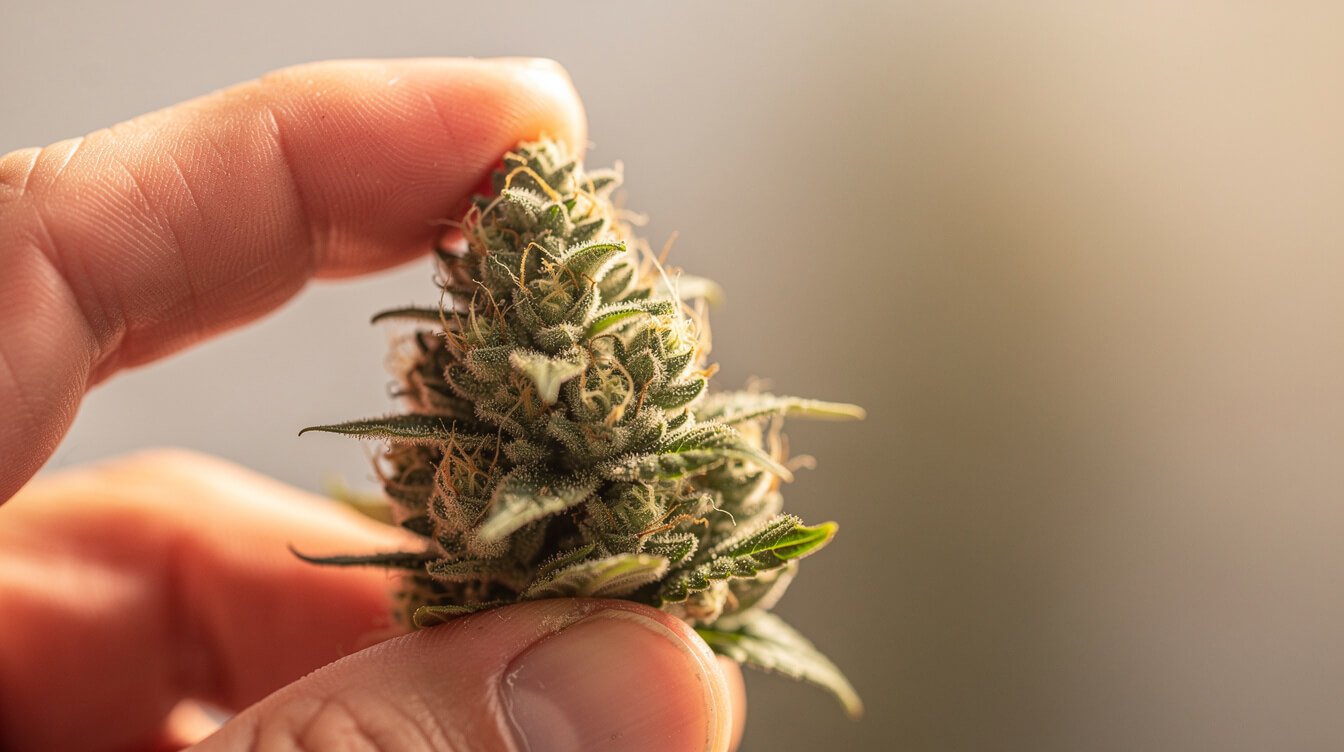
This is the question that causes the most first-timer panic, and it deserves a straight answer instead of vague reassurance. A curing jar that’s slightly too humid will smell like wet hay, damp grass, or a musty basement — unpleasant, but it’s a moisture problem you fix by burping more, not a reason to throw the batch out. That smell should visibly improve within a day or two of more frequent burping.
Actual mold is a different signal entirely, and it’s usually visual before it’s fully committed to smell:
- Look for it first: white, gray, or dark fuzzy spots, especially near the stem where buds are denser and slower to dry. Powdery mildew looks almost like a light dusting of flour or ash. A magnifying glass or phone camera zoom helps if you’re not sure.
- The smell is sharper, not just staler: think ammonia, sourness, or a rotting-vegetation edge — distinct from “damp towel,” closer to “something’s actually gone bad.”
- Texture changes: mold-affected spots often feel slightly slimy or unusually soft compared to the rest of the bud, rather than just damp.
If you see visible mold on any bud, don’t try to salvage just that one and keep the rest jarred together — remove and discard the affected bud, and inspect every other bud in that jar closely before rejarring the rest. If the musty smell persists after several days of aggressive burping with no visual mold and no sour or ammonia edge, it’s very likely just moisture, not contamination — but when you’re genuinely unsure whether it’s mold, don’t guess and don’t smoke it. That’s not a call worth gambling your health on.
GanjaTech, weekly
Cannabis, explained. In your inbox.
One email a week: the clearest explainers, honest gear picks, and what the science actually says. 21+ only. No spam, unsubscribe anytime.
When to switch to humidity packs instead of manual burping
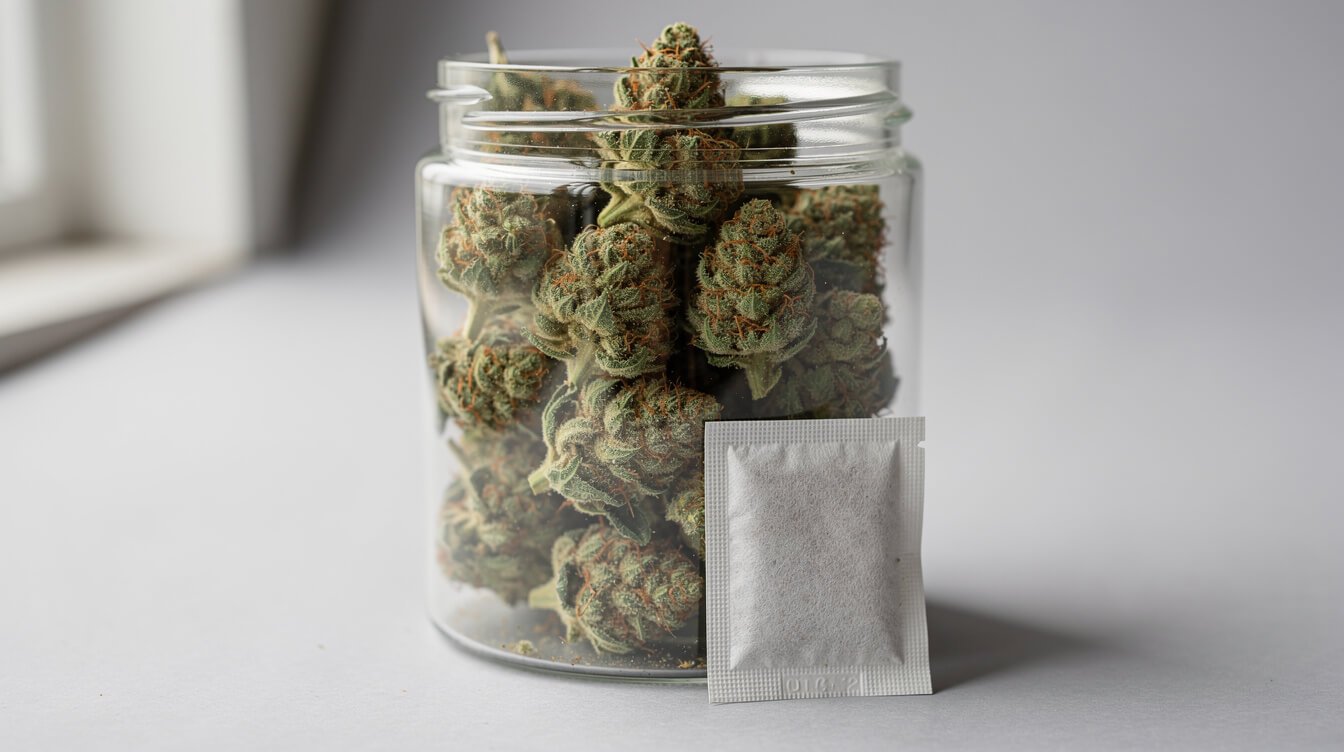
Two-way humidity packs (the small Boveda-style packets rated for around 58–62% relative humidity) aren’t required — growers cured cannabis in jars for decades with nothing but attention and a burping schedule. What a pack buys you is consistency: it actively pulls moisture out of air that’s too humid and releases moisture back in if the jar gets too dry, so it buffers small mistakes instead of requiring you to catch every fluctuation yourself.
They’re genuinely worth the low cost in a few specific situations: your first one or two cures while you’re still learning what the right smell and texture feel like, batches you plan to store for a long time before using, or if you live somewhere with a very dry or very humid climate that makes manual burping less predictable. Drop one pack per quart jar once the buds have made it through the highest-risk first week without mold, and check it occasionally — a pack that’s fully saturated (feels like a firm, crystallized disc instead of a soft gel packet) has done its job and needs replacing.
If you’ve done a few cures by feel and know your own space, plenty of experienced growers skip packs entirely and go back to jars and a nose. Neither approach is “the correct one” — a pack removes guesswork, manual burping builds the instinct to recognize problems on your own.
Signs your buds are properly cured (look, smell, snap test)
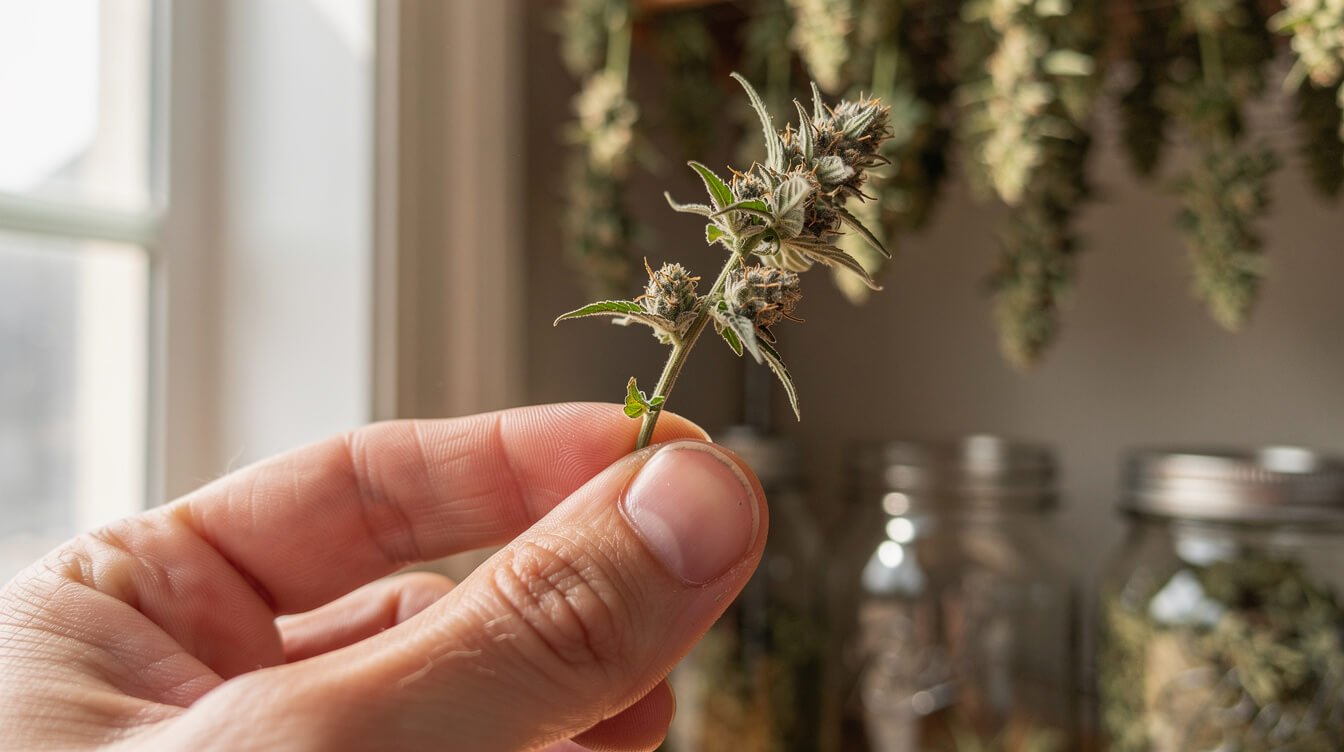
Three checks tell you almost everything, and none of them need equipment:
- The snap test: bend a small stem. It should snap cleanly with an audible crack, not fold or bend like fresh wood. A stem that still bends means there’s more internal moisture than the cure has fully redistributed yet.
- Smell: a well-cured jar smells distinctly of the cultivar’s own terpene profile — sweet, earthy, sharp, fuel-like, whatever that specific strain leans toward — rather than a flat, grassy hay smell. That shift is a real sign that chlorophyll breakdown and terpene expression have had time to happen; it isn’t just a cosmetic change.
- Texture: buds should feel dry on the outer layer but still have a slight give and a little spring-back when gently squeezed — not crunchy or dusty, and not spongy or damp.
If a jar passes all three, you’re at a genuinely usable point — burping can taper to occasional maintenance rather than a fixed schedule from here. Curing doesn’t have a hard finish line the way drying does; it’s a curve where the biggest gains happen in the first month and smaller, slower improvements continue well beyond that if you choose to let it ride longer.
Frequently asked questions about jar curing
Can I cure buds in a bag instead of a jar?
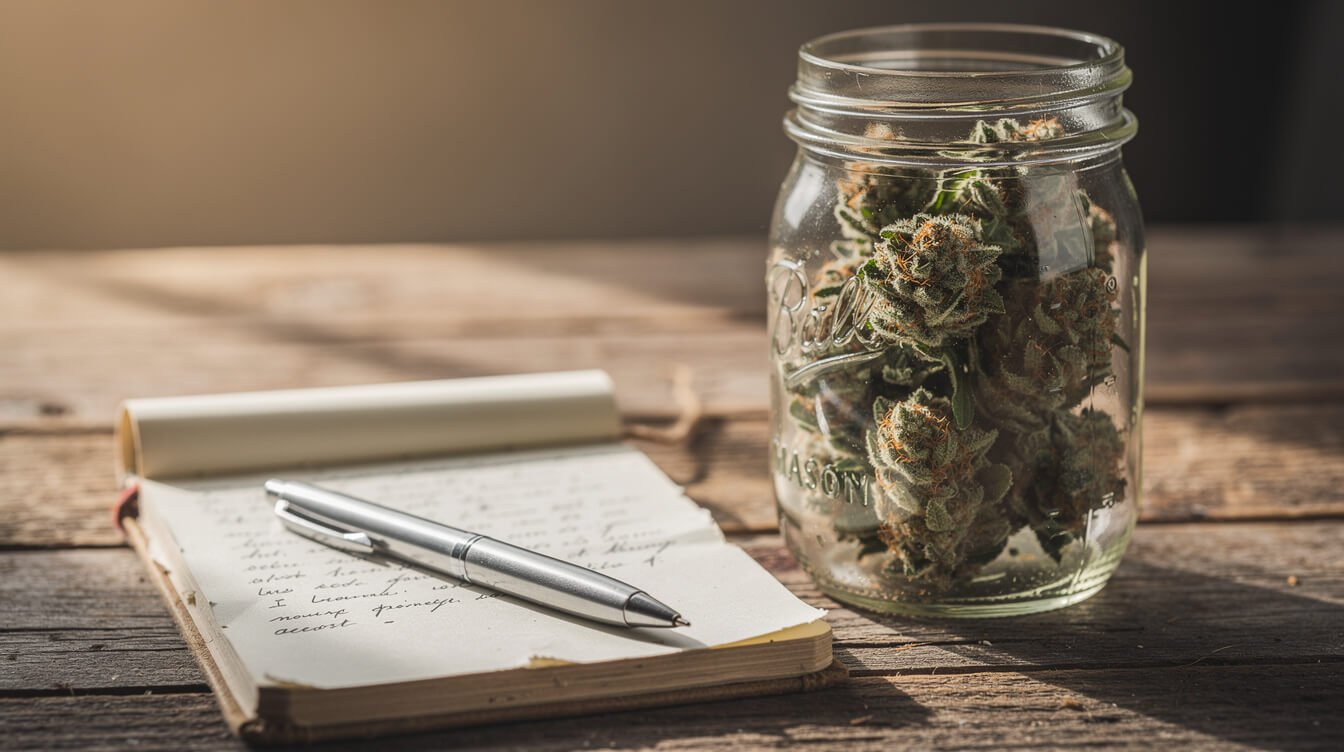
Not well. Plastic and mylar bags don’t hold a stable shape, which means the buds inside shift and compress against each other with every handling, crushing trichomes and flattening bud structure in a way a rigid jar avoids. Bags also make it much harder to actually see and smell what’s happening inside, since you can’t easily inspect without fully opening them. Glass jars are the standard for a reason: rigid, inert, reusable, and easy to check at a glance.
What size jar should I use for a small harvest?
Match the jar to the amount of dried flower, not the other way around. A wide-mouth quart (32 oz) jar suits roughly an ounce of dried bud at the three-quarters-full fill line; a pint jar works for smaller amounts. Using one oversized jar for a small harvest leaves too much air relative to bud mass, which can dry the cure out faster than intended and forces more frequent burping to compensate.
Can you over-cure cannabis?
Not in the sense of it becoming dangerous, but a cure that runs for many months in a jar that’s opened too rarely can slowly lose terpenes and mellow flavor intensity over time, even while staying perfectly safe to use. If you’re curing for the long haul — beyond two or three months — moving buds to a cool, dark, airtight container for long-term storage (or a freezer in a sealed bag for very long storage) preserves quality better than an indefinitely open-ended jar cure.
Does the type of jar lid matter?
A standard two-piece canning lid (flat disc plus screw band) works fine and is what most home growers already have on hand. What matters more than the lid style is a clean, tight seal with no warping — a lid that doesn’t seal fully lets humidity escape unpredictably between burps, which defeats the purpose of a controlled cure.
Common jar-curing mistakes and quick fixes
Jarred buds too soon, before they passed the snap test
Pull them back out and let them air-dry a few more hours to a day on a screen or paper before rejarring. Going back to open air won’t hurt anything — it’s far better than sealing in excess moisture and creating a mold risk.
Forgot to burp for several days
Open the jar, check for the mold signs above, and if it’s just a stronger-than-usual must smell, burp for 10–15 minutes instead of the usual 5 and repeat daily until it clears. One missed burping window rarely ruins a cure on its own — consistent neglect over a week or more is what actually causes problems.
Buds cured too fast and turned crumbly or harsh
That usually means burping was too frequent or the buds were slightly underdried going in, so moisture left the jar faster than the slow chemical process that builds smoothness could keep up. There’s no way to redo a rushed cure, but it’s a useful signal to burp less often and for shorter windows on your next batch.
Different strains cured together in one jar
Keep cultivars in separate jars whenever possible. Different bud density and moisture content mean they don’t dry or cure at the same rate, and mixing them makes it much harder to judge a consistent burping schedule or read any one strain’s snap test and smell accurately.
Is it legal to cure and store cannabis this way?
Laws around growing, curing, and storing your own cannabis vary significantly by state and country, and some places restrict home cultivation entirely even where possession is legal. Check your local regulations before you start a grow or a cure — nothing here assumes it’s legal where you live.
Final thoughts on how to cure buds in jars properly
Jar curing rewards attention more than equipment. Pack to three-quarters full, burp on a schedule that eases off as the weeks go by, and trust your nose and fingers over a fixed calendar date — a musty smell that fades with more burping is normal moisture management, while visible fuzz or a sharp, ammonia-like edge is the actual line to worry about. Get those two things right and a hygrometer becomes a nice-to-have, not a requirement.
None of this is medical advice — if you have questions about cannabis and your health, talk to a doctor.
Haven’t dried yet? Start with our full guide to curing cannabis the right way for the complete dry-to-jar process. If you’re earlier than that, our honest first-grow walkthrough covers everything before harvest. And if the terpene talk above had you curious what’s actually driving that smell shift, our practical terpene reference breaks it down. Prefer to support the desk directly? Check out the GanjaTech culture merch shop — no coupon codes for jars here, just apparel for people who actually know the plant.
Before you go
Get the next explainer first
We publish a new one every day. The best of the week, plus what's new in the shop, lands in one short email.