Zaza Meaning: The Weed Slang, Where It Came From, and the Gas-Station “ZaZa” That Isn’t Weed
Zaza meaning, in one line: “zaza” (or just “za”) is slang for top-shelf, exotic cannabis flower, the frosty, loud-smelling stuff people brag about. The word is a clipped, doubled-up version of “exotic” (ex-za-tic → za → zaza), and hip-hop carried it into everyday talk around 2020–2021. That’s the definition most people want. But the zaza meaning has a second, unrelated branch you should know about: “ZaZa” is also a brand name for tianeptine, a gas-station product the FDA warns about, and it is not weed at all. This guide covers both, plus the part every slang explainer skips: whether “zaza” weed is actually any better.
Quick framing first. This is an explainer for adults, 21 and over. Cannabis laws vary a lot by state and country, so nothing here assumes it’s legal where you live. And we don’t point anyone toward sellers, prices, or products.
Zaza meaning: the short answer (and the slightly longer one)
The short answer: when someone says they’re “smoking zaza,” they mean good weed. Really good weed, or at least weed they want you to think is really good. Wiktionary defines zaza simply as “exotic marijuana,” and that’s a fair one-line summary of how the word gets used.
The slightly longer answer is that the word does three jobs at once:
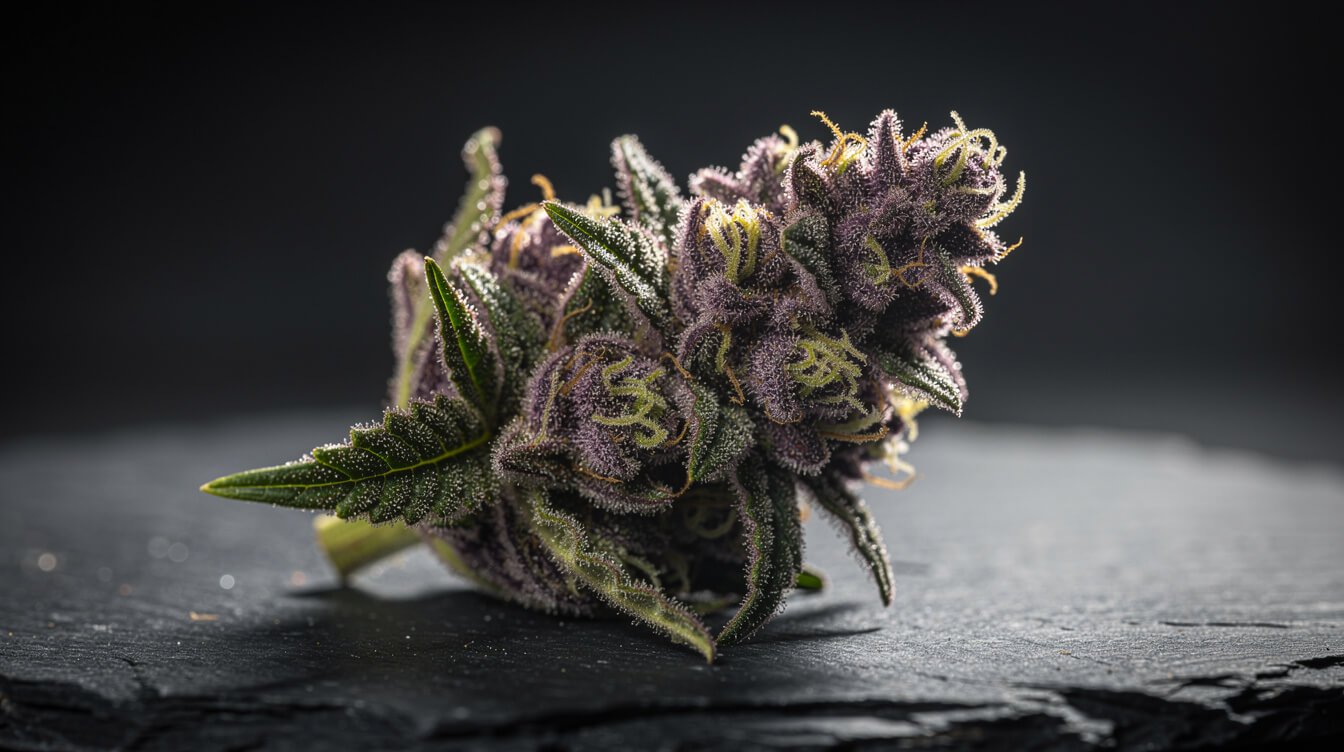
- It signals quality. Zaza is the opposite of “mids” or “reggie.” It implies dense, sticky, trichome-heavy buds with strong aroma and serious bag appeal.
- It signals status. Calling your weed zaza is partly a flex, the same way someone might call a sneaker “grails.” It says you have access to the good stuff.
- It’s fun to say. Doubled sounds (think “choo-choo,” “bling-bling”) stick in the ear, and rappers love a word that lands on a beat.
Over the last few years, that third job has started to swallow the first. Online, plenty of people now say “zaza” for any weed, ironically or not. A meme about “going days without zaza” isn’t claiming lab-grade flower. It’s just a funny word for cannabis. So the honest zaza meaning today is a spectrum: from “the best flower I’ve ever had” to “weed, but make it sound cool.”
Then there’s the branch that matters most for safety. In convenience stores and smoke shops, “ZaZa” (often “ZaZa Red”) is the name on small bottles of tianeptine, a drug that acts on opioid receptors. Health agencies, including the FDA, call it “gas station heroin.” Same word, completely different substance. We’ll spend a full section on it below, because mixing these two up is how people get hurt.
Where “zaza” came from: exotic → za → zaza

The cleanest explanation of the word’s origin comes from the dictionary, not the dispensary. Wiktionary lists “zaza” as a reduplication of “za,” which itself comes from an apheretic pronunciation of “exotic.” Apheresis just means dropping the front of a word (the way “because” becomes “’cause”). So “exotic” gets clipped down to its stressed middle, “-zo-” or “-za-,” and then doubled for rhythm. Exotic → za → zaza.
That tracks with how the culture talked before “zaza” took over. “Exotic” or “exotics” was already standard shorthand for designer, indoor-grown, often purple or candy-scented strains, as opposed to commercial-grade bud. “Za” was the cooler, shorter way to say it. “Zaza” was the version that sounded best in a verse.
The hip-hop timeline
Nobody can point to a single inventor, and we’d be skeptical of anyone who claims to. What’s documented is the moment the word went mainstream:
- Late 2020: Brooklyn drill was everywhere. A 2022 Rolling Stone feature on the scene describes Fivio Foreign’s viral “Big Drip” video as showing a crew “smoking zaza in front of a Shake Shack.” That quote is one of the citations Wiktionary uses for the word.
- February 2021: 6ix9ine released a single titled “Zaza”. Wikipedia notes the title is slang for cannabis. Whatever you think of the artist, a song literally named after the word put it in front of millions of listeners who had never heard it.
- 2021 onward: TikTok, memes, and endless lyrics finished the job. By then “zaza” was national slang, not regional.
That fast spread is exactly why the zaza meaning got fuzzy. When a word goes from a scene’s inside language to a meme in about a year, it loses its precision. The people who first said “zaza” meant something specific. The internet mostly means “weed.”
If you’ve noticed that cannabis slang keeps doing this, you’re right. The same thing happened with the penjamin meaning (a joke name for a vape pen) and with the blinker, a vape term that started as a hardware warning light and became a dare.
The zaza meaning on the quality ladder: mids, loud, exotic, and za
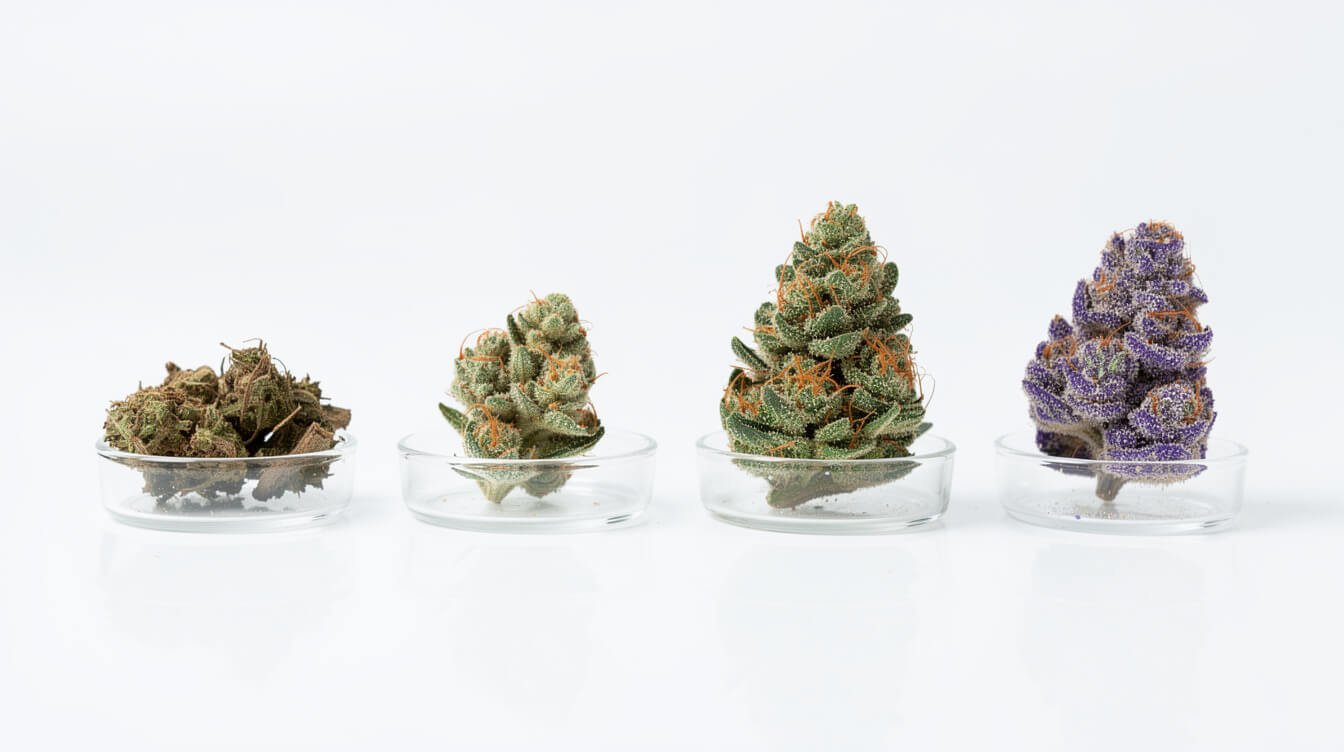
Part of understanding the zaza meaning is knowing what it’s being compared to. Cannabis slang has always had an informal quality ladder. The exact words change by region and decade, but the rungs look roughly like this:
| Slang | What people usually mean | The vibe |
|---|---|---|
| Schwag / brick / reggie | Low-grade, often compressed, seedy, dull-smelling flower | Old-school, mostly used as an insult now |
| Mids | Middle-of-the-road flower: fine, forgettable | Mild shade (“it’s mids”) |
| Loud / fire / gas | Strong-smelling, potent-feeling flower | Praise, often about smell (“loud” = you can smell it across the room) |
| Exotic / exotics | Designer genetics, indoor-grown, bag appeal | The category “zaza” grew out of |
| Za / zaza | The top rung, or anything someone wants to sound like the top rung | Status plus fun |
Two things stand out. First, almost every rung is described by smell and looks, not by a lab number. “Loud” is literally a smell word. “Exotic” is about rarity and appearance. Second, the top of the ladder is the least precise word on it. “Mids” means something fairly consistent. “Zaza” can mean anything from a carefully grown, slow-cured jar to a regular bag described by a hopeful friend.
That’s worth keeping in mind whenever you hear the word, especially in marketing. Some hemp and cannabis companies now use “zaza” as a product-line or menu label, the same way a restaurant might write “artisan” on a sandwich. It’s a vibe word, not a grade. No regulator, lab, or industry standard defines what “zaza” means, so it can be printed on anything.
Is zaza actually better weed? What the science says
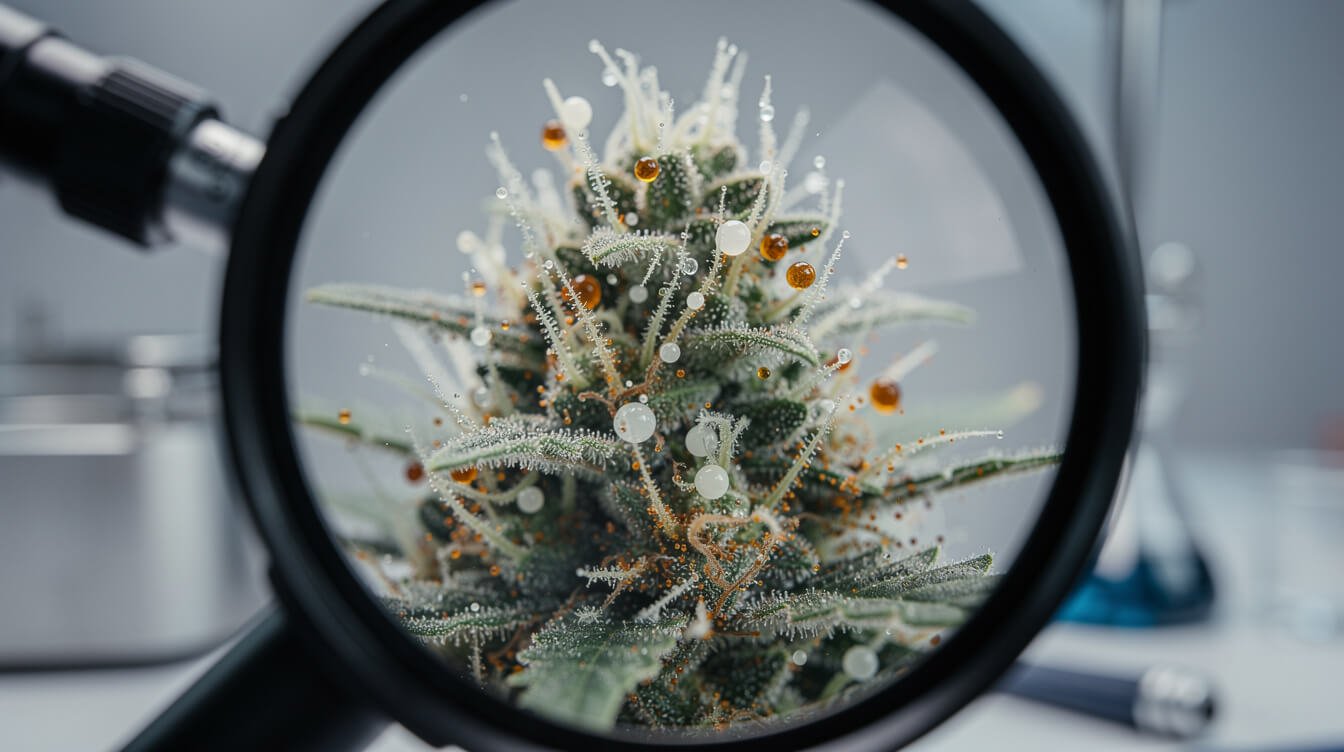
The zaza meaning promises quality, so does it deliver? Here’s the honest answer: sometimes, but not because of the word, and not usually for the reason people think. The slang treats “zaza” as “more THC.” The research says the things people actually notice about premium flower, mainly the smell, mostly come from somewhere else, and the THC numbers people chase are shakier than the labels suggest.
The smell people call “zaza” isn’t mostly terpenes
Most cannabis content will tell you aroma comes from terpenes like myrcene, limonene, and caryophyllene. Terpenes matter (we cover them in our list of terpenes and effects), but two studies from the same research group complicate that story in a way that’s directly relevant to “exotic” weed.
- A 2021 study in ACS Omega (Oswald et al.) found that cannabis’s classic “skunky” smell comes mainly from a family of volatile sulfur compounds, led by 3-methyl-2-butene-1-thiol, not from terpenes. Those compounds rose sharply in the last weeks of flowering, peaked during curing, and then dropped after just one week of storage.
- A 2023 follow-up (Oswald et al., Minor, Nonterpenoid Volatile Compounds Drive the Aroma Differences of Exotic Cannabis) compared varieties with very different aromas and found their terpene profiles were remarkably similar. The distinct citrus, sweet, and “chemical” scents tracked with minor non-terpene compounds instead, including a new class of sulfur compounds behind citrus notes and skatole behind the chemical, savory funk. The authors conclude that terpenes’ importance to cannabis aroma “has been overemphasized.”
Translation for the zaza meaning: the “loud” nose people prize in exotic flower is real chemistry, but it’s driven by trace compounds that are fragile. They depend on genetics, finishing, and curing, and they fade with time and handling. That’s why a properly cured jar can smell incredible while the same strain, dried fast and stored badly, smells like hay. It’s also why “zaza” is a statement about a specific batch, not a strain name you can count on.
The THC number is shakier than the label
Zaza culture leans hard on potency. The problem is that potency labels are less reliable than most people assume. In a 2023 PLOS ONE study titled “Uncomfortably high”, researchers bought 23 flower samples from 10 Colorado dispensaries and tested them with HPLC. The average measured THC was about 15%. Roughly 70% of samples tested more than 15% below their labeled potency, and three had only about half the labeled maximum. It’s a small, single-region study, so treat it as a warning sign rather than a national verdict, but it matches long-running industry complaints about “lab shopping.”
So a jar with a huge number on it isn’t automatically zaza, and a jar with a modest number isn’t automatically mids. If you want to judge flower for yourself, look at things you can actually check: frosty, intact trichomes, a strong and specific smell when you open the jar, a proper cure (springy, not crispy or damp), and zero signs of mold. Our guide to what moldy weed looks like is worth a read here, because “frosty” and “fuzzy” can look similar at a glance.
And the strain name tells you less than you’d hope
A 2021 Nature Plants study (Watts et al.) genotyped more than 100 cannabis samples and found that “Sativa” and “Indica” labels were genetically indistinct on a genome-wide scale. The labels tracked a handful of terpenes instead. If the most famous labels in cannabis are that loose, a pure hype word like “zaza” is looser still. (More on that in what’s stronger, sativa or indica.)
One last point, and it’s the responsible one. If something genuinely is stronger than you’re used to, treat it that way. Smaller hits, longer pauses. The “zaza” label is no reason to take a bigger hit than usual, and if you overdo it, our guide to greening out walks through what helps.
GanjaTech, weekly
Cannabis, explained. In your inbox.
One email a week: the clearest explainers, honest gear picks, and what the science actually says. 21+ only. No spam, unsubscribe anytime.
Gas station zaza: the “ZaZa” that isn’t weed at all
This is the section most weed-slang explainers rush through, and it’s the most important one. If you search the zaza meaning today, three of the top four results are addiction-treatment centers, and they aren’t writing about cannabis. They’re writing about tianeptine.
What tianeptine is
This is the zaza meaning that can actually hurt you. Tianeptine is a drug sold as an antidepressant in some countries. According to the FDA’s May 2025 letter to health care professionals, it is a full mu-opioid receptor agonist, meaning it acts on the same receptors as opioids. It is not approved by the FDA for any use in the U.S. and doesn’t meet the legal definition of a dietary ingredient. Even so, it’s marketed as a “nootropic,” a “research chemical,” or a supplement, and sold at convenience stores, gas stations, vape shops, and online. The FDA lists Zaza among the product names, alongside Tianaa, Neptune’s Fix, Pegasus, and TD Red. Mayo Clinic’s overview also names “ZaZa” and “Tianna Red.”
Why health agencies are alarmed
- The doses are wild. The FDA notes case reports of U.S. consumers taking 50 mg to 10,000 mg a day, roughly 1.3 to 250 times the typical labeled daily dose in countries where it’s prescribed. A 2023 review titled “From Antidepressant Tianeptine to Street Drug ZaZa” notes that tolerance builds quickly, so people chasing the effect keep escalating.
- The harms are opioid-like. Reported adverse events include agitation, confusion, drowsiness, rapid heart rate, high blood pressure, vomiting, slowed breathing, coma, and death. Stopping after regular use can bring withdrawal that resembles opioid withdrawal.
- Calls are climbing. A CDC analysis of poison center data found just 11 tianeptine exposure calls nationwide from 2000 to 2013, then a sharp rise from 2014 to 2017. The FDA reports 151 cases in 2020 alone.
- What’s in the bottle may not match the label. This one connects straight back to cannabis.
The synthetic cannabinoid twist
In 2023, New Jersey’s poison center saw a cluster of severe illness tied to Neptune’s Fix, another tianeptine product. The CDC’s report describes 17 adults (ages 28–69). All had altered mental status, eight had seizures, 13 were admitted to intensive care, and seven needed a breathing tube. When lab scientists tested the bottles, they found synthetic cannabinoids (MDMB-4en-PINACA and ADB-4en-PINACA) that weren’t on the label.
Synthetic cannabinoids are lab-made chemicals sometimes sold as “legal weed,” but they are not cannabis, they are not THC, and they can be far more dangerous. They’ve also turned up sprayed onto low-THC hemp flower sold as weed, which is a big part of how to tell if weed is laced (and why looks alone won’t do it). So a person could hear “zaza,” assume “weed,” and end up with a product containing an opioid-acting drug plus undeclared synthetic cannabinoids. That’s the worst possible misreading of a slang word.
On legality: as of the FDA’s 2025 letter, tianeptine isn’t federally scheduled, but that has never meant “approved” or “safe,” and state rules differ and keep changing. The practical guidance is simpler than the law: don’t take it.
How to tell which “zaza” someone means
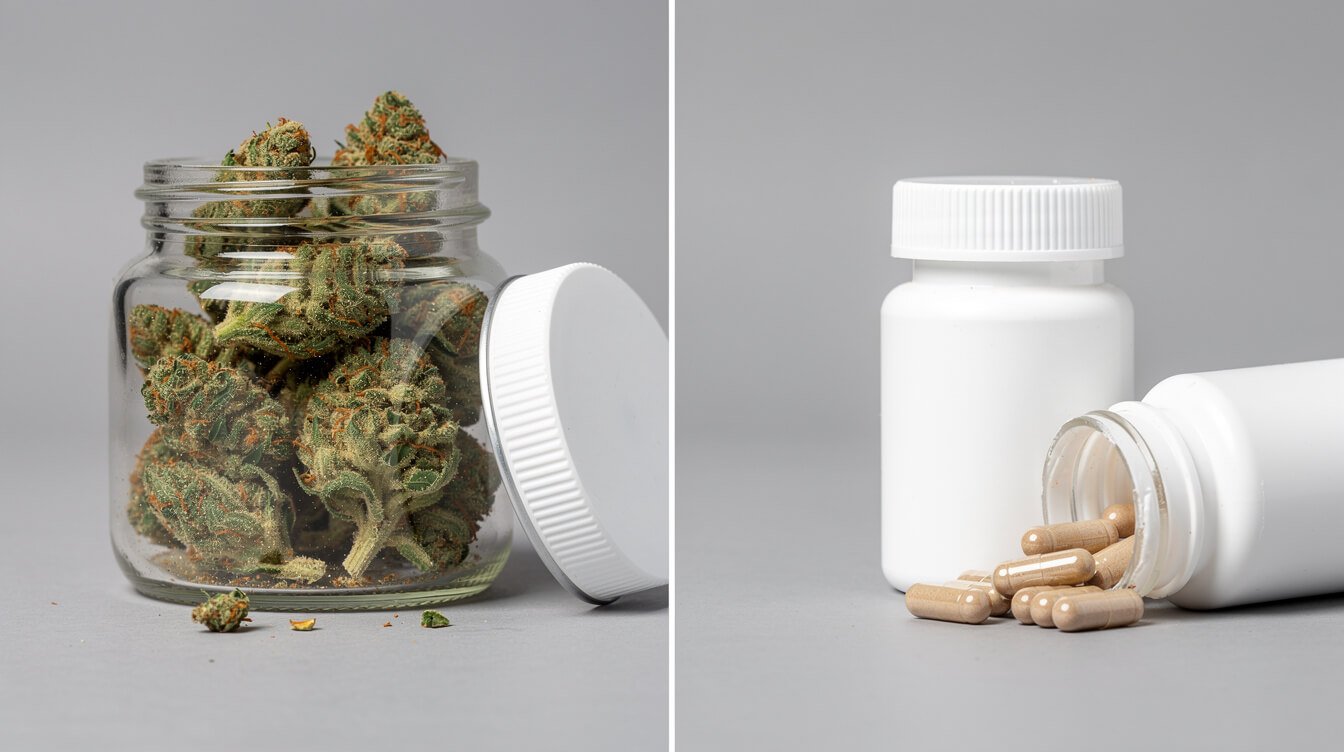
In real life, context almost always settles it. Here’s a quick way to read the zaza meaning in any given sentence:
| Clue | Probably weed slang | Probably tianeptine |
|---|---|---|
| Verb | “Smoking zaza,” “rolling up za,” “this za is loud” | “Taking ZaZa,” “a bottle of ZaZa,” “ZaZa pills” |
| Form | Flower, a jar, a joint, a blunt | Capsules, tablets, powder, liquid “shots” |
| Packaging | A jar or bag (in legal markets, a state-required label) | Small bottles sold as a supplement, “focus,” or “mood” product |
| Where it’s mentioned | Lyrics, memes, cannabis culture | Poison center alerts, FDA warnings, recovery-center pages |
| Capitalization | Usually lowercase | Often “ZaZa” or “ZaZa Red” (a product name) |
A rule of thumb: if it’s smoked, it’s slang. If it’s swallowed from a supplement bottle, treat it as tianeptine until proven otherwise. Don’t let the name, the bright packaging, or a store shelf convince you otherwise. The NJ health department’s tianeptine alert puts it well: just because something is conveniently sold doesn’t mean it’s safe.
If someone has taken gas station zaza
- Emergency signs (very slow or stopped breathing, unresponsiveness, a seizure, chest pain): call 911.
- Questions or a possible poisoning: call Poison Help at 1-800-222-1222 (US). It’s free, confidential, and open 24/7, and the FDA points health care providers to the same line.
- Naloxone: the NJ health department advises carrying it and using it when someone’s breathing is depressed, noting “some evidence” it may help with tianeptine toxicity. That evidence is limited, so call 911 even if you use it.
- Regular use: don’t quit cold turkey on your own. Withdrawal can be severe, so talk to a doctor about a plan. SAMHSA’s free, confidential helpline is 1-800-662-4357.
None of this is medical advice. It’s the same guidance public health agencies give, collected in one place. For anything about your own health, talk to a doctor.
Zaza in the culture: memes, lyrics, and “days without zaza”

Back to the fun side, because the cultural zaza meaning is genuinely interesting. The word has gone through the same life cycle as a lot of slang: insider term, rap hook, meme, then ironic everyday word.
A few patterns you’ll run into:
- “Za” on its own. The short form is just as common, especially in lyrics (“rolling up za”). It means the same thing.
- Exaggeration memes. Jokes about someone being “X days without zaza” or acting unhinged “because they ran out of za” are everywhere. They lean on the word’s drama: zaza as the thing you can’t live without. Read them as comedy, not a lifestyle guide.
- Ironic downgrade. Calling obviously mid weed “zaza” is its own joke, like calling a gas-station burrito “cuisine.”
- Branding. Once a word is that popular, merch, menus, and product lines pick it up. That’s how a slang word ends up printed on jars, and sadly how it ended up on tianeptine bottles too.
There’s a real question under all the jokes: does constant “zaza” talk push people toward stronger and stronger flower? Possibly. Status slang does reward potency. But the healthier way to be into cannabis culture is to care about how flower is grown, cured, and stored, and how it actually smells, not just to chase the biggest number. If you’ve been smoking a lot of “zaza” and it barely does anything anymore, that’s tolerance, not bad weed. Our t break guide covers how long a reset actually takes.
And because the word shows up in so much youth-facing content, one clear line: GanjaTech is for adults, 21 and over. If you’re a parent who heard “zaza” at home, the FAQ below is for you.
Zaza meaning FAQ

What is the zaza meaning in plain English?
Zaza is slang for high-quality, “exotic” cannabis flower. It’s a doubled, clipped form of “exotic” (exotic → za → zaza), and today people also use it loosely for any weed. Separately, “ZaZa” is a brand name for tianeptine, an unapproved, opioid-acting drug sold in some stores. That one isn’t cannabis.
What does “za” mean?
The same thing as zaza: exotic or top-shelf weed. “Za” came first, and “zaza” is the doubled version.
Is zaza a strain?
No. It’s a quality label, not a genetic strain. Some companies use “zaza” as a product-line name, but no standard defines it, so it tells you nothing measurable about what’s in the jar.
Is zaza stronger than regular weed?
Not necessarily. The word implies potency, but research shows THC labels are often inflated, and the qualities people prize, especially aroma, come largely from minor compounds that depend on growing and curing. Judge the flower, not the name.
Is gas station zaza the same as weed?
No. Gas station “ZaZa” products contain tianeptine, which acts on opioid receptors. The FDA warns against all tianeptine products, and some have been found to contain undeclared synthetic cannabinoids. If you’re looking up the zaza meaning because of a bottle or pill, that’s the one you’re dealing with.
Does tianeptine show up on a drug test?
The FDA notes that tianeptine may not show up on routine drug screening panels. That isn’t a selling point. It means doctors may miss it, so tell medical staff exactly what was taken. (For cannabis itself, see how long weed stays in your system.)
I heard a teenager say “zaza.” What should I know?
Most likely they mean weed slang picked up from music or social media, but it’s worth gently checking which zaza they mean, because the tianeptine products are sold in places teens can walk into. Talk calmly and specifically rather than lecturing. For health concerns, talk to your pediatrician or family doctor. If a child may have swallowed something, call Poison Help (1-800-222-1222) or 911.
Is zaza legal?
For cannabis, it depends entirely on where you are, since laws differ by state and country and keep changing. For tianeptine, it’s not FDA-approved for any use, and state rules vary. Either way, check your local laws and don’t treat a store shelf as proof something is legal or safe.
Final thoughts on the zaza meaning
The zaza meaning is simple at its core: exotic weed, with “exotic” clipped and doubled into a word that sounds great in a song. It went national through Brooklyn drill and a 2021 single, then memes stretched it until it could mean any weed at all. As a quality claim it’s pure vibe. Real quality lives in the trichomes, the cure, and a smell that comes from fragile trace compounds, not from a label or a nickname.
The part to remember is the other zaza. If it comes in a capsule or a little bottle from a gas station, it isn’t weed. It’s tianeptine, an opioid-acting drug the FDA warns about, sometimes cut with synthetic cannabinoids. Enjoy the slang, judge the flower with your own eyes and nose, never drive high, and know your local laws. Great plant. Respect it, and don’t let a fun word talk you into something that isn’t.
Before you go
Get the next explainer first
We publish a new one every day. The best of the week, plus what's new in the shop, lands in one short email.