Why Does Weed Smell Like Skunk? It’s Sulfur, Not Myrcene (and It Fades Fast)
Why does weed smell like skunk? The short version: it’s sulfur. A family of sulfur compounds called thiols, led by one with a mouthful of a name, 3-methyl-2-butene-1-thiol, is what gives a lot of cannabis that unmistakable skunky punch. It isn’t myrcene, and it isn’t “skunky terpenes,” which is still what the top Google result tells you. Terpenes are the background music. The sulfur is the lead vocal, even though it’s there in trace amounts.
That answer is only a few years old, and it comes with nuance most pages skip. Two research groups found it separately and don’t fully agree on how dominant it is. The skunk note also fades within weeks, and a lot of today’s weed barely has it. Below: the chemistry, the timeline, the myths, and a safety note about skunk smells that aren’t weed.
Quick framing: this is for adults 21+. Cannabis laws vary by state and country, so know yours.
Why does weed smell like skunk? The short answer
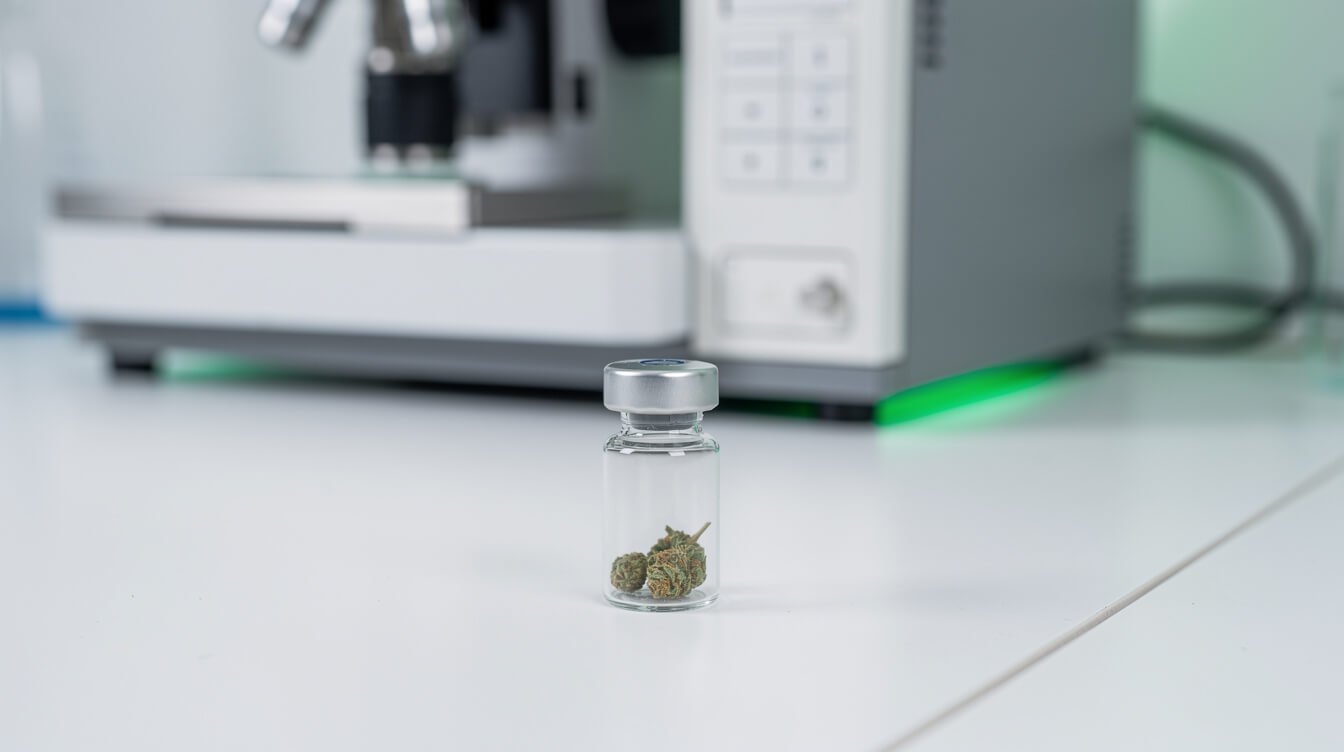
In November 2021, a team led by analytical chemist Iain Oswald published a study in ACS Omega that finally pinned down the skunky part of cannabis aroma. They ran flower from 13 commercial cultivars through a two-dimensional gas chromatograph fitted with a sulfur-specific detector, which is basically a nose that only notices sulfur. It found a new family of volatile sulfur compounds (VSCs) that all share a five-carbon chemical group called a prenyl group. The standout was 3-methyl-2-butene-1-thiol, which chemists shorten to 321MBT or “prenylthiol.”
Three findings make the case:
- It tracked the smell. A four-person panel scored each cultivar’s skunky pungency from 0 to 10. The more 321MBT a sample had, the higher it scored. The top scorer, Bacio Gelato, had the most. Two cultivars with no detectable sulfur compounds scored a flat zero.
- Taking it out killed the skunk. The researchers mixed the ten most abundant aroma compounds from Bacio Gelato, mostly terpenes, at their real concentrations. It smelled “mildly reminiscent” of the flower but had none of the pungent skunk character. Adding a trace of 321MBT produced, in their words, an immediate change that “strongly emulated the scent of the flower.”
- It’s absurdly potent. The same molecule is what makes “skunked” beer skunky, and brewing researchers put its flavor threshold in beer at roughly 1 to 7 nanograms per liter (2025 beer-aroma review). That’s a few parts per trillion. A molecule doesn’t need to be abundant to dominate a smell if your nose can pick it up at that level.
Here’s the full study, if you want to read it yourself: Oswald et al., 2021, ACS Omega. One honest disclosure: the authors worked for Abstrax, a company that makes aroma compounds for the cannabis industry. That doesn’t make the chemistry wrong, but it’s worth knowing who did the work.
So the one-line answer to why weed smells like skunk is this: skunky weed contains sulfur compounds that are chemical cousins of what skunks spray, and your nose is wired to notice sulfur at tiny concentrations. Everything below is the nuance.
The myrcene myth: why so many pages still blame terpenes
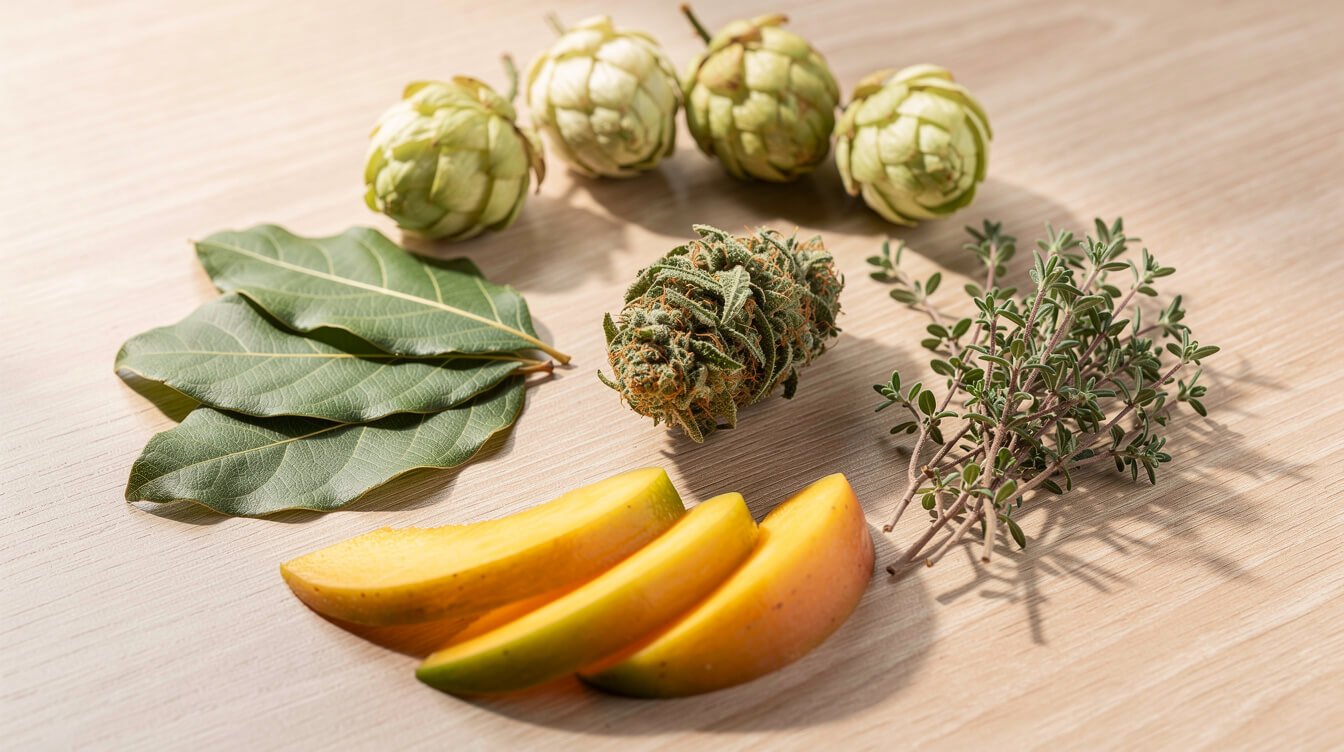
Search this question and you’ll still find confident answers that the skunk smell comes from myrcene, the terpene also found in bay leaves, thyme, hops, and mango, or from unnamed “skunky terpenes.” It’s an understandable mistake.
Why terpenes got the credit
Terpenes are by far the most abundant aroma compounds in cannabis. Oswald’s paper notes that individual terpenes like myrcene, pinene, limonene, and caryophyllene can each make up more than half of a sample’s measured aroma compounds. When you measure what’s in the air around a bud, terpenes dominate the chart. For decades, analysts had good tools for terpenes and poor tools for trace sulfur compounds, so the stuff they could measure got the blame.
The problem is that “most abundant” and “most noticeable” aren’t the same thing. Myrcene smells earthy, musky, a little herbal. Nobody sniffs a bay leaf or a mango and thinks “skunk.” The reverse-engineering experiment above is the cleanest rebuttal: a mix of the main terpenes at realistic concentrations didn’t smell skunky until the thiol went in.
The part most pages miss: two labs, two pictures
The Oswald group wasn’t alone. A separate team led by Jacek Koziel at Iowa State, working with odor-consulting firms, linked 321MBT to the skunky note of hemp and cannabis in public disclosures in March and April 2021, months before the Oswald paper. In a 2022 ACS Omega viewpoint (Koziel et al., 2022), they described sampling air in a Texas hemp drying trailer and sniffing each compound as it came off the instrument.
Their result adds a real twist. In that room, 321MBT was there and smelled “skunky, foul,” but it was a second-tier odorant, masked by a first tier led by myrcene, alpha-pinene, and limonene. The investigator didn’t perceive any skunky character on site at all. Their conclusion was that the ranking “could reasonably be expected to change” with variety, season, growing, and processing conditions.
Put the two papers together and you get the honest answer to why does weed smell like skunk in one jar and not the next. 321MBT is the skunk, and both groups agree on that. Terpenes are still the bulk of the smell, and whether the skunk note breaks through depends on how much thiol a given plant makes compared with how loud its terpenes are. If you want the terpene side of the story, our list of terpenes and their aromas covers the major ones.
Weed vs an actual skunk: chemical cousins, not twins
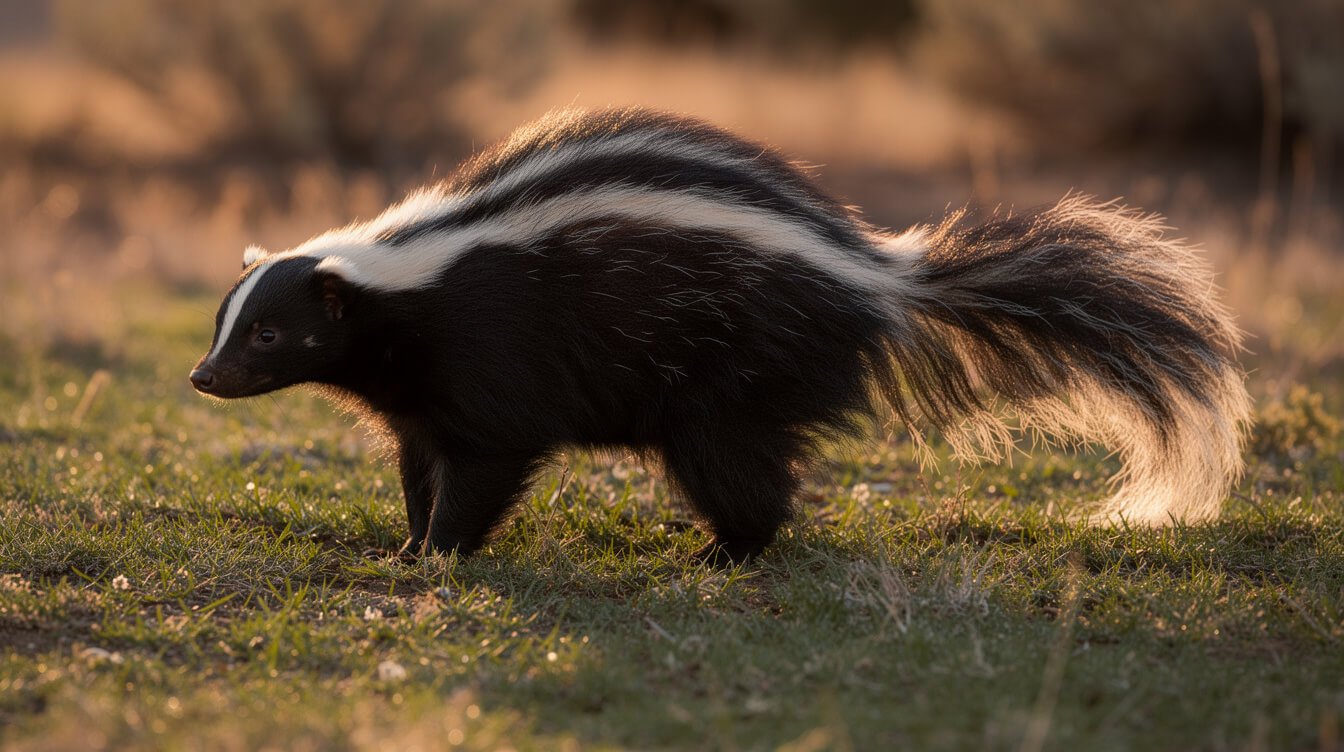
So does weed smell like skunk because it contains skunk spray? Not quite. The molecules are related, not identical.
What’s actually in skunk spray
Chemists spent more than a century on skunk spray. According to a University of Bristol Molecule of the Month write-up, the striped skunk’s main ingredients are two thiols, (E)-2-butene-1-thiol and 3-methyl-1-butanethiol, plus 2-methylquinoline. In the 1980s, chemist William Wood found a second class of ingredients: thioacetates, less smelly molecules that slowly break down in water and release the thiols again. That’s why a dog that got sprayed can suddenly reek again days later after a bath or a rainstorm.
How close cannabis gets
Line up the names and the family resemblance is hard to miss:
- Skunk: 3-methyl-1-butanethiol
- Cannabis: 3-methyl-2-butene-1-thiol
Same five-carbon skeleton, same sulfur-hydrogen group on the end. The cannabis version just has one double bond. It’s close enough that when Oregon State researchers built a 2025 cannabis aroma vocabulary (Isaacson et al., 2025), the reference sample they used to train tasters on “skunky” was a dilute solution of the skunk molecule, 3-methylbutanethiol. Panelists described it as “natural gas, burnt rubber.”
The parallel goes one step further. Oswald’s team also found a cannabis thioacetate, 3-methyl-2-butenyl acetothioate, which they called VSC5. It’s the same kind of molecule Wood found in skunks. In their storage test, it was the one sulfur compound that didn’t drop off after the flower went into jars. Whether it releases thiols the way skunk thioacetates do hasn’t been tested, so treat that as an interesting open question, not a finding.
The beer and garlic connection
If 321MBT sounds familiar to beer people, it should. It’s the compound behind “lightstruck” or skunked beer. Light hitting beer triggers a reaction between hop-derived bitter acids and riboflavin, which splits off a fragment that combines with sulfur to form 321MBT. That’s why serious beer comes in brown bottles. And here’s a fun overlap: hops (Humulus lupulus) are in the same plant family as cannabis, Cannabaceae. Our weed plant ID guide covers how the two cousins look alike, too.
Oswald also noted that cannabis’s prenyl sulfur compounds are structural cousins of the allyl sulfur compounds in garlic, which is why some of them smell savory or “alliaceous.” The paper went on to speculate about garlic-style health benefits. That’s an untested hypothesis, not a finding, and we’re not going to dress it up as one. The same goes for claims you’ll see elsewhere that skunky weed is “full of antioxidants.” Nobody has shown that.
Why does such a tiny amount matter? Smell scientist Pamela Dalton of the Monell Chemical Senses Center put it simply to NPR: “We are extremely sensitive to sulfur compounds. So if you have a range of compounds in your cannabis, it’s likely that what you’re going to smell first are the sulfur compounds.”
When the skunk shows up: late flower, peak at cure, gone in weeks
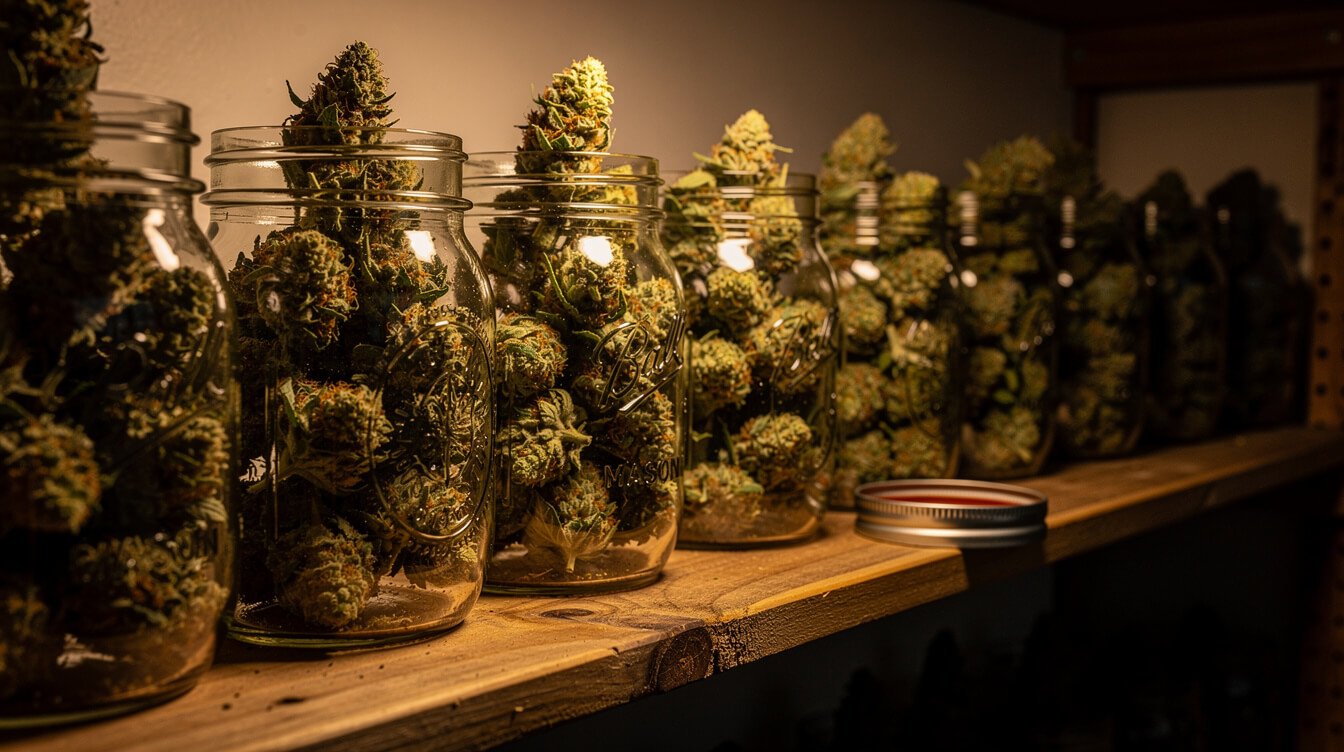
Ask a grower why does weed smell like skunk some weeks and not others, and the answer is timing. The skunk note isn’t constant. It has a life cycle.
During the grow
Oswald’s team grew four clones of an OG variety indoors and sampled a flower from each plant every week of bloom. They didn’t detect any of the skunky sulfur compounds until week 7 of flowering. From there, concentrations climbed fast through week 10, when the plants were harvested. The researchers note the rise came with a sharp increase in skunky pungency. If you’ve ever had a grow go from “plant smell” to “the whole hallway smells” in the final stretch, that’s this.
During the dry and cure
The plants were hung for 11 days at about 22 °C (72 °F) and 45% relative humidity. At the end of that dry, 321MBT and two related compounds hit their highest levels of the whole experiment. That lines up with the folk wisdom that freshly dried, freshly cured flower is the loudest it will ever be. Our guides on how to dry cannabis and how to cure cannabis cover the process itself.
After it goes in the jar
Then it falls off a cliff. The buds were trimmed and stored in mason jars at room temperature. Ten days later, every sulfur compound except the thioacetate VSC5 had dropped substantially, and the smell had faded with it.
The retail samples told the same story. One Gelato lot was tested twice: four days after its packaging date and again 46 days after. Its 321MBT dropped several-fold, and its panel score fell from 8.9 to 2.6. The researchers also saw a general pattern of older packages scoring lower.
How fast does it escape? When the team left a vial of their reconstructed aroma uncapped, the 321MBT note was “almost undetectable” within about 15 to 20 minutes. This molecule is built to fly.
What this means for storage
A few practical takeaways, keeping in mind that some of this is the researchers’ observation rather than a controlled storage trial:
- Airtight beats loose. The authors noticed that their oldest sample, sealed in a plastic jar under a heat-sealed foil lid, still had more sulfur compounds than younger samples in zip-top mylar bags. They flagged packaging as a likely factor, not a proven one. Airtight glass is the easy default.
- Open less, open briefly. Every time the lid comes off, the most volatile part of the aroma leaves first.
- Grind right before use. Breaking the flower releases volatiles. That’s the logic in our grinder guide, and the sulfur data backs it up.
- Losing the skunk isn’t spoilage. A jar that’s gone from skunky to mellow has lost its most volatile notes. That’s normal aging, not mold or degradation of the cannabinoids. If you’re wondering whether old flower is still fine, our does weed go bad explainer covers what actually breaks down and when, and our piece on humidity packs covers moisture control.
One more data point: the team also tested three butane-extracted concentrates. All three kept high levels of both 321MBT and VSC5 and scored 9.6 to 9.8 for pungency. Concentrates can carry the skunk right through extraction, which won’t surprise anyone who has opened a jar of dab material.
GanjaTech, weekly
Cannabis, explained. In your inbox.
One email a week: the clearest explainers, honest gear picks, and what the science actually says. 21+ only. No spam, unsubscribe anytime.
Not all weed smells like skunk (and skunky doesn’t mean stronger)

If you’ve noticed that a lot of modern weed smells more like candy, citrus, or gas than skunk, you’re not imagining it.
Some cultivars barely make the sulfur at all
In the 2021 study, 2 of the 13 cultivars (Black Jack and Gouda Berry) had no detectable skunky sulfur compounds and scored zero on pungency. Black Jack was described as “mild, woody.” So cannabis doesn’t automatically smell like skunk. Some plants make a lot of these thiols, some make a trace, and some don’t make enough to measure. Age and storage then subtract from whatever was there.
Breeding has been moving away from it
NPR’s 2025 reporting from a Maryland grow facility described a market trend away from the classic skunk toward profiles that skew “berry to citrus, lemon lime, cherry,” often layered on a “gas” base. One longtime cannabis educator dubbed the current dominant profile “Runtzacakelato” (Runtz, cake, gelato). The exotic, candy-forward profiles have their own chemistry story too. A 2023 follow-up from the Oswald group found that very different-smelling exotic cultivars had surprisingly similar terpene profiles, and minor non-terpene compounds drove the differences. We dig into that in our zaza meaning explainer.
The Oregon State lexicon study backs up the general pattern with a trained panel. Across 91 samples, panelists more often tagged THC-dominant flower as skunky, musty, and animalic. CBD-dominant flower drew more citrus, fruity, and candy descriptors. The same study is also a caution against over-reading chemistry: neither the terpene profiles nor the sulfur profiles it measured strongly predicted what people actually smelled.
Does skunky weed mean stronger weed?
No, and this is the myth worth killing. “Loud” smell gets treated as a proxy for potency, but nothing in the sulfur research ties 321MBT to THC content. The THC-dominant vs CBD-dominant difference above is about chemotype, not about whether one 25% jar outsmells another 18% jar.
There’s also direct evidence that aroma and potency are separate qualities. A 2022 study of cannabis competition entries in Oregon (Plumb et al., Psychoactives) had 276 adult volunteer judges rate 278 lab-tested samples blind. Pleasant aroma predicted pleasant subjective effects. THC potency, THC dose, and terpene content didn’t. One of the authors’ takeaways was that, like coffee and tea, aroma may be a better quality signal than the potency number.
The practical takeaway: let your nose tell you whether you’ll enjoy a jar, but not how strong it is. Dose by the label and your own experience, start low, and wait before going again. Our guide to how long a weed high lasts has the timing.
“Skunk” the nickname: strains, slang, and the UK meaning

“Skunk” isn’t just a smell descriptor. Depending on where you are, it’s a strain family or a slang word.
The strain name
In the US, “Skunk” mostly points to a lineage of hybrids, the best known being Skunk #1, an Afghan-and-Colombian-derived hybrid that seed companies describe as one of the most influential crosses ever made, sitting in the family trees of a huge number of later strains. Classic-strain origin stories come mostly from seed companies and are hard to verify, so we’ll skip the garage lore. The name itself tells you what breeders were selecting for: pungency. NPR’s growers said the same thing about that era. The classic smell was “what cannabis breeders and growers in the past were going for.”
The UK slang
In Britain, “skunk” has a broader meaning: strong, indoor-grown, seedless herbal cannabis (sinsemilla), whether or not it smells especially skunky. That’s the sense you’ll see in UK news and on UK treatment-center pages. The underlying data comes from police seizure studies. A 2018 analysis of samples seized in England in 2016 (Potter et al., Drug Testing and Analysis) found sinsemilla had a median of 14.2% THC with minimal CBD, and that it had become the dominant form on the market. The authors raised concerns about what high-THC, low-CBD cannabis means for people prone to THC’s psychological side effects.
So when a British headline says “skunk,” read it as “high-potency herbal cannabis,” not as a claim about smell chemistry. The smell and the strength just happen to share a nickname. Legal status is its own question and varies by country.
What else smells like skunk (and when to worry)

“What smells like skunk but isn’t skunk?” is one of the top related searches for this topic, and the answer matters for more than curiosity.
The usual suspects
- An actual skunk. Obvious, but skunk spray carries a long way and lingers. It also comes back when sprayed surfaces get wet, thanks to those thioacetates.
- Skunked beer. A clear or green bottle left in the sun or under store lights can develop 321MBT, the same molecule as skunky weed.
- Cannabis. Growing, drying, freshly opened, or being ground. Remember it’s loudest late in flower and right after cure.
- Skunk cabbage. It’s a wetland plant named for exactly what you think.
- Natural gas. This is the one to take seriously.
The gas-leak rule
Natural gas has no smell on its own. Utilities add sulfur-based odorants called mercaptans, which are thiols, the same broad chemical family as skunk spray and skunky weed. That’s deliberate. US federal pipeline rules (49 CFR 192.625) require gas in distribution lines to be odorized so a person with a normal sense of smell can detect it at one-fifth of the concentration where it could ignite. Utilities usually describe it as rotten eggs or sulfur, but plenty of people perceive it as skunky.
So here’s the rule: if you smell skunk or sulfur indoors and there’s no obvious source, treat it as a possible gas leak, not as a neighbor’s weed. Gas utility guidance (for example, NW Natural’s) is consistent: leave right away even if the smell seems mild. Don’t flip light switches, use a lighter, start a car, or use your phone inside. Once you’re a safe distance away, call 911 and your gas utility’s emergency line. It costs nothing to be wrong, and a lot to guess wrong the other way.
Why does weed smell like skunk: FAQ
Why does weed smell like skunk if it’s a plant?
Plenty of plants make sulfur compounds. Garlic, onions, hops, and durian all do. Cannabis makes a family of prenylated sulfur compounds, led by 3-methyl-2-butene-1-thiol, that are close chemical cousins of the thiols in skunk spray. They mostly show up in the last weeks of flowering.
Is the skunk smell from terpenes?
Not mainly. Terpenes like myrcene, pinene, and limonene make up most of the aroma by volume and shape the overall profile. But mixes of the major terpenes at realistic levels don’t smell skunky without the sulfur compound. Terpenes can mask the skunk note, though, which is why some plants with plenty of thiol don’t smell very skunky.
Does skunky weed mean it’s stronger?
No. No published study links the skunky sulfur compounds to THC content, and a blind study of 278 competition samples found pleasant aroma, not THC potency, predicted pleasant effects. Smell tells you about aroma and freshness. The lab label tells you about potency.
Why does my weed smell less skunky after a few weeks?
Because 321MBT is extremely volatile. In the 2021 grow trial, it peaked at the end of the dry and cure and dropped substantially within 10 days in jars at room temperature. A retail Gelato lot went from a pungency score of 8.9 to 2.6 between day 4 and day 46 after packaging. Airtight storage and opening the jar less often help.
Is weed smell the same thing as skunk spray?
No. Skunk spray’s main thiols are (E)-2-butene-1-thiol and 3-methyl-1-butanethiol. Cannabis’s main one is 3-methyl-2-butene-1-thiol. They’re related, and a tiny difference in structure is enough to make two molecules smell alike without being the same thing.
What smells like skunk but isn’t weed or a skunk?
Skunked beer, skunk cabbage, and natural gas, whose added odorant is also a sulfur compound. Smell it indoors with no clear source? Leave, then call 911 and your gas utility from outside.
Is the skunk smell harmful?
The sulfur compounds are present in trace amounts, and their health effects haven’t been studied, so we won’t claim harms or benefits either way. Secondhand smoke is a separate question. Talk to a doctor about specific health concerns.
Final thoughts
So, why does weed smell like skunk? Because cannabis makes trace amounts of sulfur compounds, mainly 3-methyl-2-butene-1-thiol, that are close cousins of skunk spray’s thiols and the same molecule that skunks a sunlit beer. Your nose is tuned to catch sulfur at parts-per-trillion levels, so a trace is enough to take over the room. Terpenes are the bulk of the aroma, and they can drown the skunk out, which is why the same plant can smell different in different conditions.
The nuances are the useful part. The skunk note shows up late in flower, peaks right after the cure, and fades within weeks. Some cultivars barely make it at all, and breeding has been drifting toward fruit and candy anyway. The smell says nothing reliable about strength. And if you catch a skunky whiff indoors with no plant in sight, think gas leak first. If you want to go deeper on the other half of the aroma story, start with our terpene reference. Respect the plant, know your local laws, and enjoy it like an adult.
Before you go
Get the next explainer first
We publish a new one every day. The best of the week, plus what's new in the shop, lands in one short email.