Is Weed a Stimulant or Depressant? The Honest Answer Is ‘It Depends on the Dose’
Is weed a stimulant or depressant? Neither, cleanly. Cannabis does things from both columns: it can relax you and make you sleepy like a depressant, while also speeding up your heart and, at low doses, lifting your mood like a stimulant. Which side you feel depends mostly on the dose, then on you, your tolerance, and the setting.
That’s the answer, and it isn’t a dodge. Drug-recognition programs give cannabis its own category for exactly this reason, and a controlled lab study found a clear flip point between a calming dose and an uneasy one. Below: what the three drug “buckets” actually mean, why weed acts like a depressant, why it acts like a stimulant, whether it counts as a hallucinogen, and what the dose study found. This is written for adults 21+, and it’s about how the plant works, not medical advice.
Is weed a stimulant or depressant? The short answer
The quick version, in the order most people need it:
- Depressant-like effects: relaxation, heavy limbs, drowsiness, slower reaction time, and that “melting into the couch” feeling. These get stronger as the dose goes up.
- Stimulant-like effects: a faster heart rate, talkativeness, euphoria, and racing thoughts. At higher doses some people get anxiety or a jittery, on-edge feeling.
- Hallucinogen-like effects: time stretching, music and food feeling more intense, and a dreamy shift in perception. Actual hallucinations are uncommon.
A 1986 review that Google’s AI answer still cites put it plainly: “like alcohol, marijuana acts as both stimulant and depressant.” The same review notes it is “not a narcotic,” which matters later when we get to the opioid question.
The reason you keep seeing confident one-word answers is that most pages on this topic are written to fit cannabis into a box. Rehab pages tend to file it under depressants. Dispensary blogs like to say “sativa = stimulant, indica = depressant.” Both are tidier than the evidence. The honest answer is that THC hits a receptor system spread across your brain and body, and it pushes different dials in different directions at the same time.
So if you came here with a practical question, like “will this keep me up?” or “will this calm me down?”, the useful answer is about how much, not which category. We’ll get to the numbers.
What “stimulant,” “depressant,” and “hallucinogen” actually mean
These words get thrown around loosely, so it helps to pin them down. They’re pharmacology shorthand, grouping drugs by what they do to the central nervous system (your brain and spinal cord):
- Stimulants speed the system up. Think caffeine, nicotine, cocaine, and amphetamines: higher heart rate and blood pressure, more alertness, less sleepiness.
- Depressants slow it down. Alcohol, benzodiazepines, and barbiturates reduce brain activity, which shows up as relaxation, sedation, slower reflexes, and at high doses, slowed breathing.
- Hallucinogens change perception. LSD, psilocybin, and mescaline alter what you see, hear, and feel, sometimes to the point of perceiving things that aren’t there.
“Depressant” doesn’t mean “makes you depressed”
This trips a lot of people up. In pharmacology, “depressant” means it slows nervous-system activity, the way a brake pedal “depresses” speed. It says nothing about mood. Alcohol is a depressant, and people still get loud and giddy at a bar. Whether heavy cannabis use is linked to low mood over time is a separate, long-term question. The research on that shows associations, not a simple cause, and if your mood is the concern, that’s a conversation for a doctor, not a drug-category chart.
Where cannabis actually sits in official schemes
The most practical classification system in the US is the one police drug-recognition experts (DREs) use. According to the International Association of Chiefs of Police, which runs the program, DREs sort drugs into seven categories: CNS depressants, CNS stimulants, hallucinogens, dissociative anesthetics, narcotic analgesics, inhalants, and cannabis. Cannabis gets its own slot because its pattern of effects doesn’t match any of the other six well enough to share one.
That’s the most useful one-line rebuttal to anyone who insists weed “is” a depressant. The people whose job is to recognize drug impairment by its signs decided it needed its own category.
The three-bucket model (stimulant, depressant, hallucinogen) is a teaching shortcut. It works fine for caffeine or alcohol. It works badly for cannabis, which has effects from all three columns.
Why weed acts like a depressant
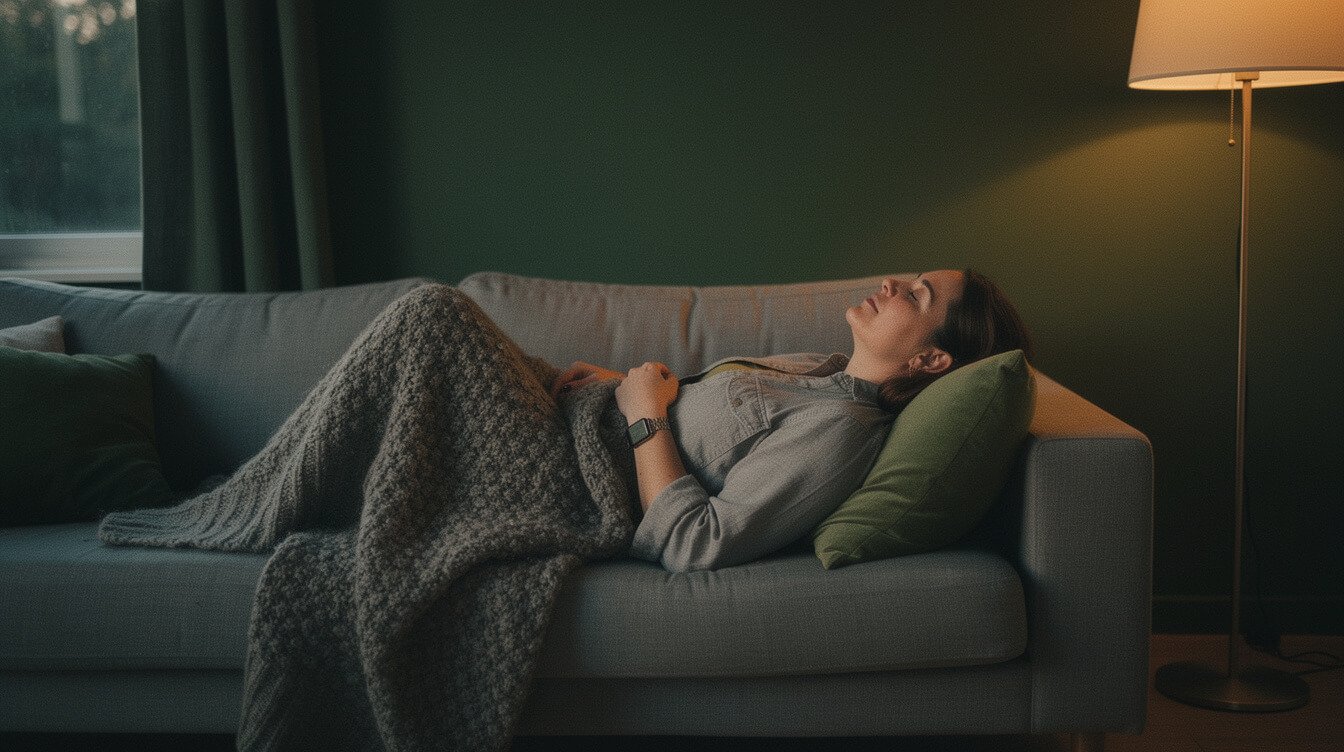
The depressant side is the one most people recognize. THC binds to CB1 receptors, which are dense in brain areas that handle movement, coordination, memory, and timing. Turning those dials produces the classic heavy, slowed-down feeling.
The DEA’s own marijuana fact sheet lists “sedation” first among short-term physical effects, alongside disinhibition and relaxation on the mental side. In practice, the depressant-like profile looks like this:
- Relaxation and body heaviness. Muscles feel loose, and moving around feels like more effort than it’s worth.
- Drowsiness. This climbs with dose. A lot of people find a bigger dose, especially an edible, ends in sleep.
- Slower reactions and coordination. This is the part that matters for driving. Even when you feel fine, reaction time and lane control are measurably worse while you’re high.
- Short-term memory lapses. Losing the thread mid-sentence is a CB1 effect in the hippocampus, not a character flaw.
Why this matters when you mix
Because cannabis has real depressant-like effects, stacking it with actual depressants adds up. Alcohol is the big one, and we cover what the studies show in our guide to weed and alcohol. The same caution applies to sleep aids, benzodiazepines, opioids, and anything else that says “may cause drowsiness” on the label. If you take prescription meds, ask your doctor or pharmacist about interactions before combining them with cannabis.
The depressant side also explains why the “couch lock” stereotype exists. But calling cannabis a depressant and stopping there misses half the picture, because the heart is doing something very different.
Why weed acts like a stimulant
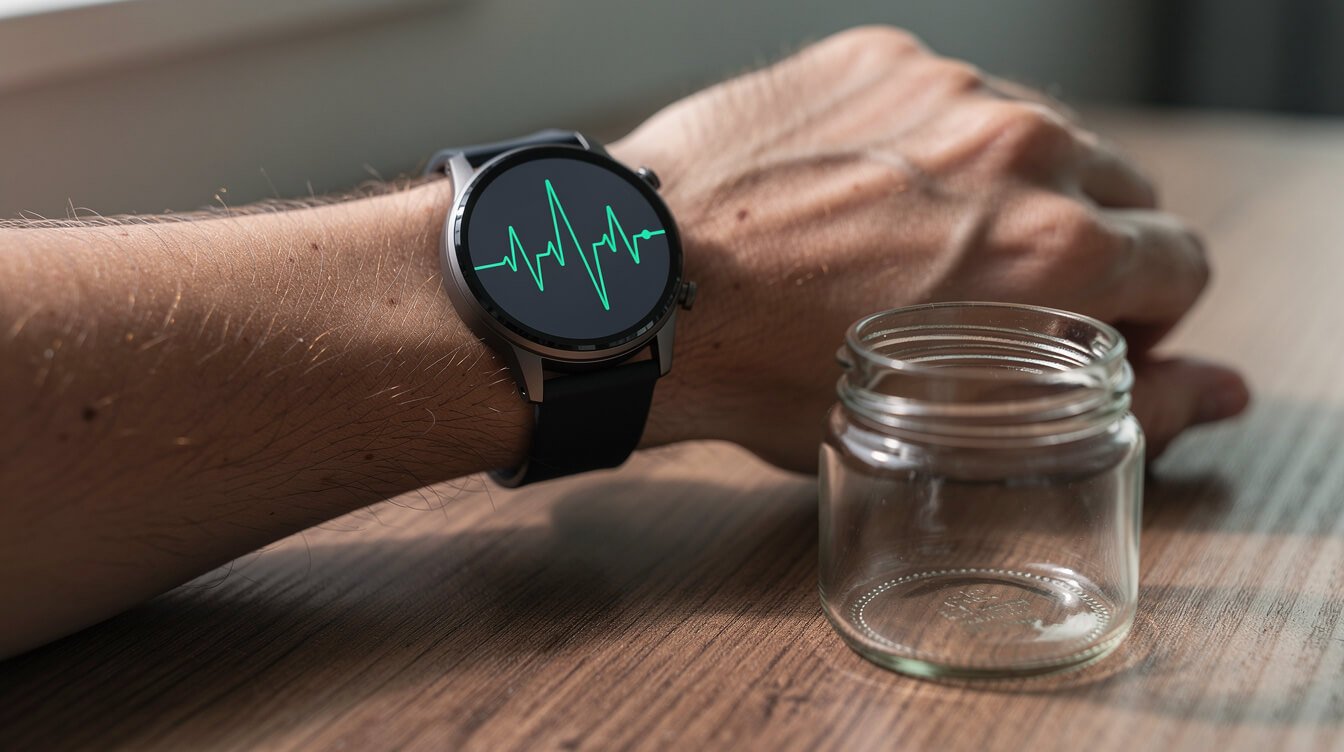
Here’s what the “it’s just a depressant” crowd leaves out. THC reliably raises your heart rate, which is a textbook stimulant sign.
A 2002 review in the Journal of Clinical Pharmacology summarized decades of human lab work: marijuana and THC increase heart rate, slightly raise blood pressure while lying down, and sometimes cause a sharp blood-pressure drop when you stand up. That drop is the head rush or dizziness some people get when they stand quickly while high. Cardiac output goes up. The DEA fact sheet lists “increased heart rate” right next to “sedation,” which sums up this whole topic.
So you can feel mentally slowed down while your heart is working harder. That combination is a big part of why cannabis doesn’t fit either box.
The mental stimulant side
The heart isn’t the only stimulant-like effect. People commonly report:
- Euphoria and talkativeness, especially early in the high or at modest doses
- Racing or looping thoughts, where one idea spins off into five
- Heightened senses: music sounds richer and food tastes better (the munchies have their own science, which we break down here)
- Anxiety or a jittery edge at higher doses, which is the stimulant side going too far
Tolerance changes the heart side fast
The same review found that tolerance to most of the cardiovascular effects “appears rapidly.” With repeated use, heart rate actually slows and the standing-up blood-pressure drop goes away. That’s one reason a daily user and a once-a-month user can describe the same joint so differently. More on that in the section on what tips the balance.
One honest safety note: the faster heart rate doesn’t matter much for most healthy adults, but the review flags that it adds cardiac work for people with existing heart disease. If that’s you, talk to your doctor before using cannabis.
GanjaTech, weekly
Cannabis, explained. In your inbox.
One email a week: the clearest explainers, honest gear picks, and what the science actually says. 21+ only. No spam, unsubscribe anytime.
Is weed a hallucinogen?

Sort of, in a mild way, and mostly not in the way people mean. At normal doses cannabis changes perception but rarely produces true hallucinations.
The perception shifts are real and common:
- Time distortion. Five minutes feels like twenty. This is one of the most consistent effects of THC.
- Sensory intensity. The DEA describes “enhanced sensory perception, giving rise to increased appreciation of music, art, and touch.”
- A dreamy, slightly unreal feel, especially with a big dose or an edible that hits harder than expected
Full hallucinations, where you see or hear things that aren’t there, are a different matter. The DEA fact sheet says “illusions, delusions, and hallucinations are rare except at high doses.” A controlled study gave 22 healthy volunteers intravenous THC and found it altered perception, increased anxiety, and produced euphoria. It also produced brief psychosis-like symptoms that faded as the drug wore off. That was a pure, fast-acting dose delivered straight into a vein, which isn’t how people normally use cannabis, but it shows the hallucinogen-like side scales with dose.
Is weed a psychedelic?
Not in the classic sense. Psychedelics like psilocybin and LSD mainly act on serotonin 5-HT2A receptors. THC acts on cannabinoid receptors. The experiences overlap a little (altered time, intensified senses), but the mechanism and the typical intensity are different. DREs keep “hallucinogens” and “cannabis” in separate categories for that reason.
If someone has frightening perceptual changes, paranoia, or confusion after using cannabis, that’s usually a sign of too much THC. Our guide to greening out covers what helps and when to get medical help. People with a personal or family history of psychosis should talk to a doctor before using THC. That caution is about an association researchers take seriously, not a guarantee either way.
Is weed a stimulant or depressant? It depends on the dose

“It depends on the dose” can sound like hand-waving, so here’s the study that turns it into something measurable. Most pages on this topic call the low-dose/high-dose flip “anecdotal.” It isn’t.
In 2017, researchers at the University of Chicago ran a double-blind, placebo-controlled study with 42 healthy adults aged 18 to 40. They were light, occasional users, averaging about once a month. Each person got a capsule containing 0 mg, 7.5 mg, or 12.5 mg of oral THC. Two and a half hours later, they went through the Trier Social Stress Test, a standard lab stressor that involves giving a mock job interview and doing mental arithmetic in front of stone-faced evaluators.
What the two doses did
- 7.5 mg THC significantly reduced self-reported distress after the stress task, compared with placebo. People also rated the task as less threatening afterward. That’s the calming, depressant-like direction.
- 12.5 mg THC increased negative mood overall, both before and during the task, and people rated the upcoming task as more threatening. It also made their performance worse. That’s the anxious, over-stimulated direction.
The gap between those doses is only 5 mg. The authors concluded that a low dose “produces subjective stress-relieving effects in line with those commonly reported among cannabis users, but that higher doses may non-specifically increase negative mood.”
How to read it without over-reading it
Some honest limits apply. This was 42 people, all light users, taking oral capsules in a lab. A daily user’s flip point would likely sit higher because of tolerance. Smoking or vaping hits faster and is harder to measure than a capsule. And 7.5 mg is not a magic number for you. The point is the shape: the same drug moved people in opposite emotional directions depending on how much they took.
Finding your own flip point
You can’t look your flip point up. You find it by changing one thing at a time. Keep the product and the setting the same, start with a small amount, and note how you feel at the peak: calm and loose, or tight and buzzy? If it’s the second, your next session gets less, not more. If it’s the first and you want more effect, go up in small steps on a later day, not by taking a second dose in the same session. A notes app works fine. After a few sessions, most people can see where “relaxed” turns into “too much” for them, and that line is more useful than any category label.
For the practical takeaway, the edible version of “start low, go slow” exists for exactly this reason. Our edible timeline guide covers onset and peak, so you don’t stack a second dose before the first has landed.
What tips it one way or the other: strain, CBD, setting, tolerance
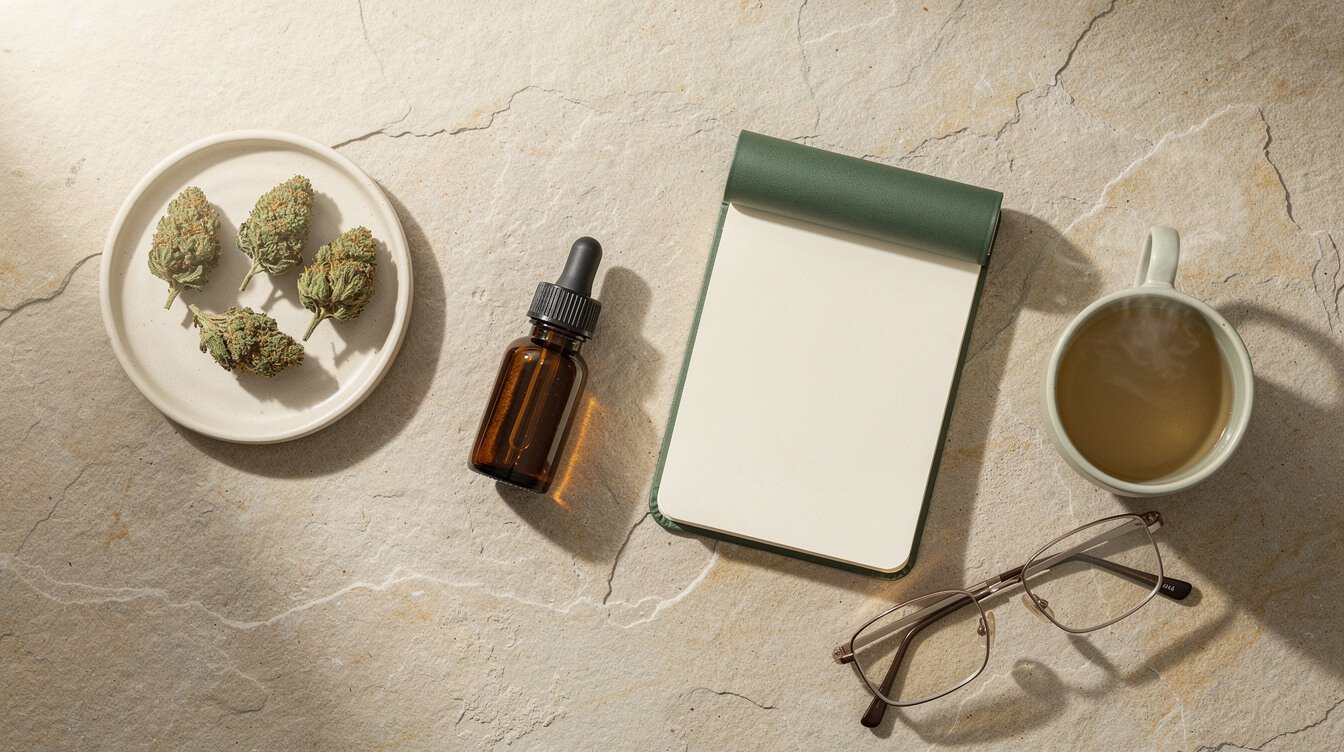
Dose is the biggest lever, but it isn’t the only one. Here’s what else changes whether a session feels more “up” or more “down.”
Strain labels: weaker than you’ve been told
The dispensary shorthand is “sativa = energizing, indica = sedating.” It’s mostly marketing. The labels started as botanical descriptions of plant shape, and modern cultivars are so crossbred that the name on the jar is a poor predictor of chemistry. We dig into this in sativa vs indica and indica vs hybrid. If anything predicts feel beyond THC content, the best candidate is the terpene and cannabinoid profile, and even that evidence is thinner than the marketing suggests. Our terpene reference separates what’s measured from what’s claimed.
CBD: not the “off switch” people hope for
CBD often gets sold as something that softens THC’s edge. The newer controlled data is more complicated. In a 2023 Johns Hopkins trial, a CBD-dominant brownie (20 mg THC plus 640 mg CBD) raised blood THC levels and increased self-reported anxiety, sedation, and heart rate compared with the same 20 mg of THC alone. The likely reason is that CBD slows how the liver breaks THC down. A separate 2023 trial with vaped cannabis found that adding CBD did not reduce THC’s effects. Our CBD vs THC effects breakdown has the full side-by-side.
Tolerance
Regular use dulls many of THC’s effects, including the heart-rate jump, as that cardiovascular review noted. A daily user might feel mostly the mellow side of a dose that would put an occasional user on edge. If the effects you’re after have faded, a tolerance break resets more than you’d think, and faster than most people expect.
Setting, mood, and expectations
The 1986 review made a point that still holds: “expectations and past experience with marijuana have often influenced results more than pharmacological aspects have.” The same dose can feel social and bright at a relaxed dinner and tight and anxious in a crowded, unfamiliar room. If you tend toward anxiety, a calm place, a lower dose, and people you trust stack the odds toward the mellow side.
How you take it
Inhaled THC hits within minutes and fades within hours, so it’s easier to stop at “just enough.” Edibles take much longer to start, last longer, and are easy to overshoot, and overshooting is how most people end up on the anxious, over-stimulated side.
Frequently asked questions

Is weed a stimulant or depressant, officially?
There’s no single official answer, which is the point. Police drug-recognition experts put cannabis in its own category, separate from both CNS depressants and CNS stimulants. Many health sites file it under depressants because sedation is common, but THC also raises heart rate, so “neither, cleanly” is the most accurate answer.
Is weed a depressant like alcohol?
Partly. Both slow reaction time and impair coordination, and both can make you drowsy. But alcohol doesn’t speed up your heart the way THC does, and the two act on different receptor systems. Their effects do stack when combined, which is why mixing them catches so many people out.
Is weed a stimulant like caffeine?
Not really. Weed shares the higher heart rate, and low doses can feel bright and chatty. But caffeine doesn’t cause sedation or memory lapses, and THC usually doesn’t improve focus the way caffeine does for most people.
Is indica a depressant and sativa a stimulant?
That’s the popular shorthand, but the labels don’t reliably predict chemistry or effect. Dose, THC content, and your own tolerance matter more than the word on the jar.
Is weed an opioid or narcotic?
No. Opioids act on opioid receptors, and THC acts on cannabinoid receptors. The DRE system lists “narcotic analgesics” and “cannabis” as separate categories. The 1986 review states plainly that marijuana “is not a narcotic.” It can still add to the drowsiness of opioids if you combine them, so don’t mix them without a doctor’s guidance.
Can weed keep you awake?
It can. A small dose, a strong stimulant-like reaction, or anxiety from too much THC can all keep some people up, while a bigger dose puts others to sleep. Your own pattern is the best guide.
Is it safe to drive if weed feels like a stimulant to me?
No. Feeling alert doesn’t mean you aren’t impaired. Reaction time and coordination are affected regardless of how “up” you feel. Don’t drive high, and plan your ride before you start.
Final thoughts
So, is weed a stimulant or depressant? It doesn’t fit the question cleanly, because the question assumes a drug pushes your whole nervous system in one direction. THC doesn’t. It relaxes muscles and slows reactions while raising heart rate, and it can calm you at one dose and rattle you at a slightly bigger one. The people who classify drugs for a living gave it its own category, and that’s the most honest answer you’ll get.
For the practical version: if you want the mellow side, keep the dose modest, be patient with edibles, pick a calm setting, and don’t expect a strain name or a splash of CBD to do the work for you. If you want to get to know a new product, start low and take notes. And whichever way it hits you, the car keys stay in the drawer.
Cannabis laws vary by state and country, so know the rules where you live. Great plant. Respect it, know your dose, and enjoy it responsibly.
Before you go
Get the next explainer first
We publish a new one every day. The best of the week, plus what's new in the shop, lands in one short email.