Why Does Weed Make Your Eyes Red? It’s Not the Smoke (or Your Blood Pressure)
Here’s the straight answer: THC widens the tiny blood vessels on the surface of your eyes. More blood sits in those vessels, so the whites look pink or red. It isn’t mainly the smoke, and it isn’t really “weed lowers your blood pressure” either, though that’s the line you’ll find on most of page one. If you searched why does weed make eyes red, you’ll get the mechanism below, along with what the lab studies measured, why edibles and vapes do it too, and what actually helps. You’ll also get the part most guides skip: clear eyes don’t mean you’re sober.
Quick framing before we start. This is an explainer for adults 21+, cannabis laws vary by state and country, and none of this is medical advice. If your eyes hurt, your vision changes, or the redness won’t go away, see an eye doctor.
Why does weed make eyes red? The short answer
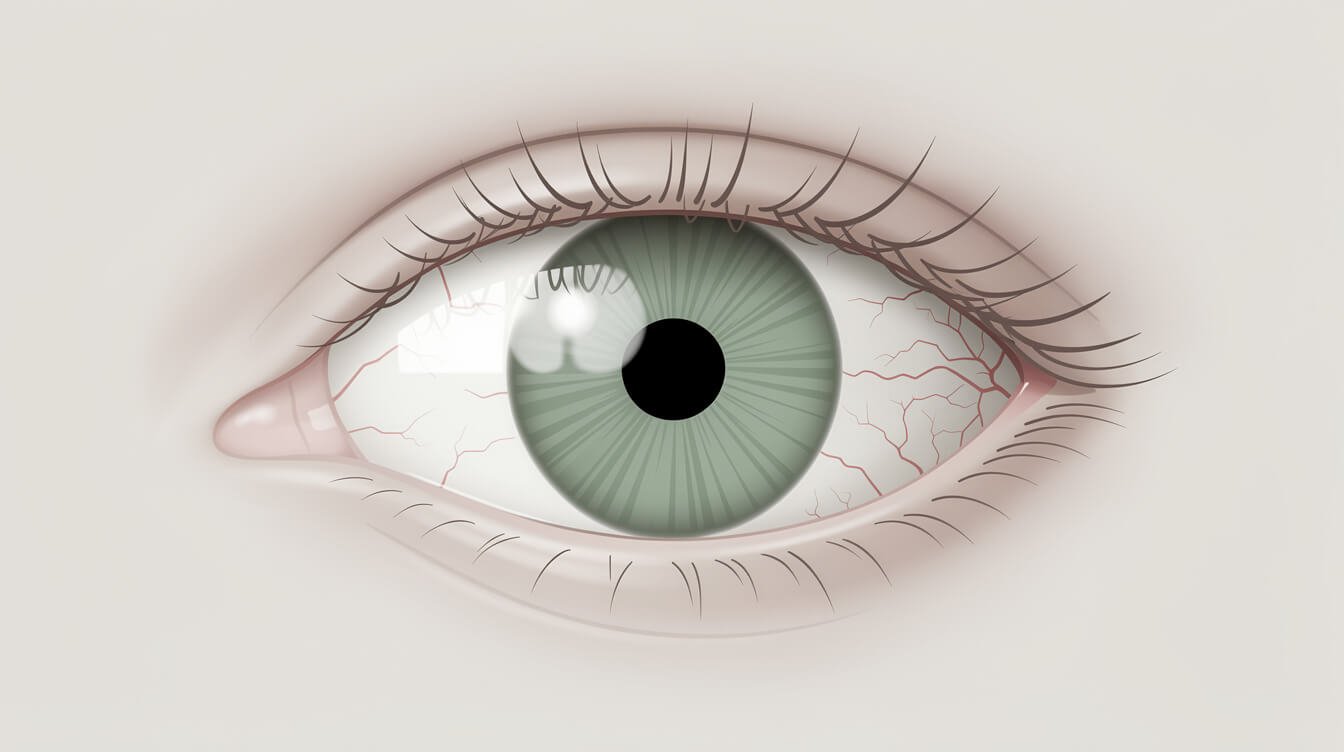
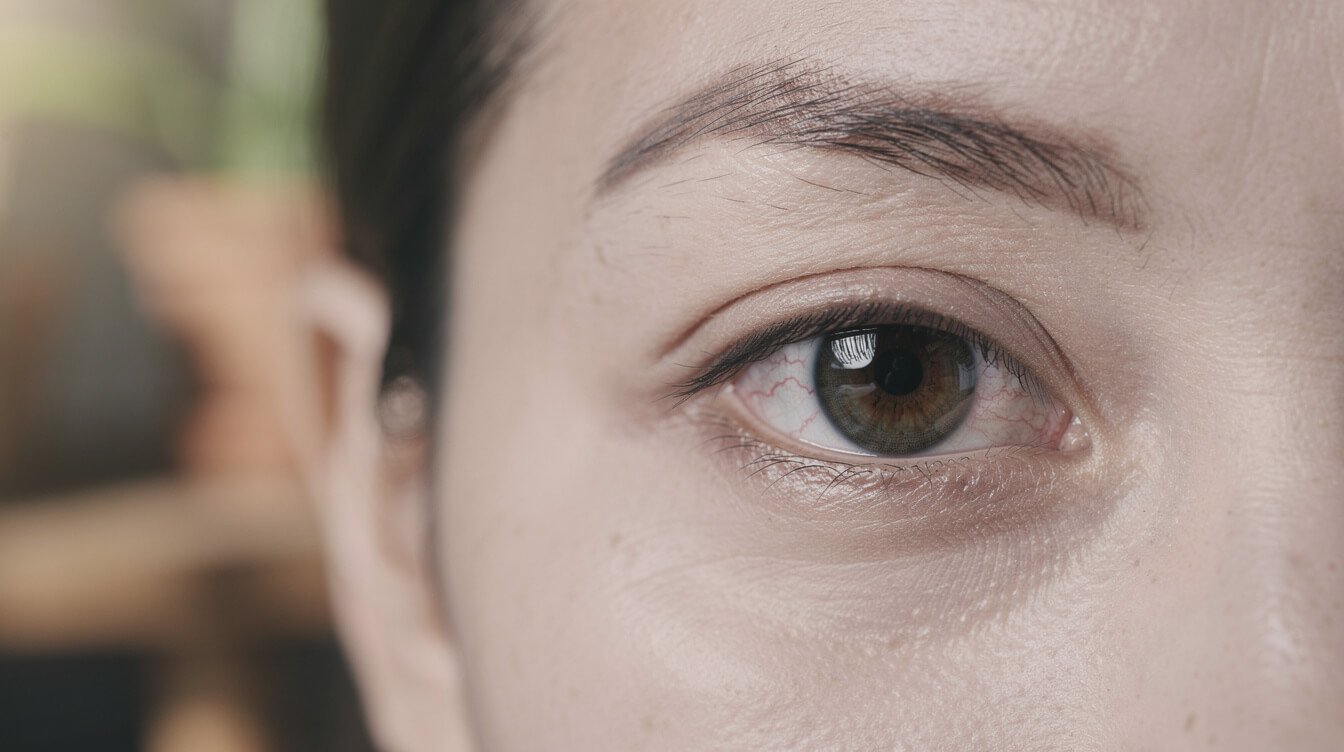
The white of your eye is covered by a thin, clear membrane called the conjunctiva. It’s threaded with very small blood vessels. Most of the time those vessels are narrow enough that you barely see them. When they widen, more blood fills them and the white of the eye turns pink or streaky red. Doctors call it conjunctival injection or hyperemia. Everyone else calls it bloodshot.
THC, the main intoxicating compound in cannabis, makes small blood vessels relax and widen (vasodilation). It does this across the body, not just in the eyes. A classic review of cannabis and the heart, Jones 2002, describes the overall pattern in people: heart rate goes up, the heart pumps more blood per minute, and peripheral vascular resistance goes down. That last part means the small vessels have opened up. Your eyes are just the one place where you can actually watch it happen in a mirror.
A 2024 ophthalmology review, Bondok and colleagues, puts it plainly. Smoked cannabis causes “acute, transient conjunctival injection,” and THC most likely does it by acting on cannabinoid receptors in eye tissue, which increases blood flow to the conjunctiva. The exact receptor pathway in the human eye surface hasn’t been mapped as cleanly as the cardiovascular picture, and the dose-response data the review leans on come from animals. The overall direction isn’t in doubt, though. More THC on board means wider vessels and redder eyes.
Two things follow from this, and they explain most of what people notice:
- It’s dose-linked. In a Norwegian study of 589 drivers who tested positive for THC only, blood THC concentration tracked with conjunctival injection, one of the few clinical signs that did.
- It’s temporary. As THC levels fall, the vessels narrow again and the whites clear up. No lasting damage has been tied to this everyday redness.
It’s not the smoke: vapes and edibles redden eyes too
The old assumption was that smoke irritates your eyes and that’s the whole story. Smoke does irritate eyes; the American Academy of Ophthalmology lists it as a common cause of red eyes. But if smoke were the main driver, smoke-free methods should leave your eyes clear. They don’t.
The cleanest evidence comes from a Johns Hopkins crossover trial, Spindle 2018. Seventeen healthy adults (mean age 27) who rarely used cannabis each smoked and vaporized cannabis at 0, 10, and 25 mg THC on separate days. One of the things they rated was “dry, red, and/or irritated eyes” on a 0–100 scale. The results:
- Vaporized 10 mg and 25 mg raised that eye rating significantly above placebo (means of about 19 and 25, versus about 2 on placebo).
- Smoked 10 mg and 25 mg nudged it up too (about 13 and 16), but not by enough to reach statistical significance in a study this small.
So the method with no smoke produced the bigger eye effect. The likely reason is the same one the study’s authors highlight. Vaporizing delivered more THC into the blood than smoking the same dose (peak blood THC at 25 mg: about 14.4 ng/mL vaporized vs. 10.2 ng/mL smoked). That’s what you’d expect if THC, not combustion, is doing the work. One caveat: the questionnaire bundled “dry, red, and irritated” into a single item, so it’s a self-rating of eye discomfort, not a photo-graded redness score.
McGill’s Office for Science and Society made the same point back in 2018 in a short piece titled “It’s Not the Smoke from a Joint That Makes Your Eyes Red”. Their test is simple: use a non-smoked method and check the mirror.
Smoke still matters at the margins. A hotboxed car or a room full of smoke adds plain old irritation on top of the THC effect, and so does tobacco if you roll it into a spliff (we break down the differences in blunt vs spliff vs joint). Think of it as two layers. THC opens the vessels from the inside, and smoke can irritate the surface from the outside.
The “it lowers your blood pressure” myth most guides repeat
Almost every top-ranking page says some version of this: THC lowers your blood pressure, which makes your blood vessels dilate, which makes your eyes red. It sounds tidy, but the cause and effect run backwards, and in most healthy adults the premise doesn’t hold up.
What actually happens to blood pressure
Widening blood vessels is what can lower blood pressure, not the other way around. And in people, the drop usually doesn’t show up while you’re sitting still:
- Jones 2002 sums up the human data. THC raises heart rate, slightly increases blood pressure when you’re lying down, and only “on occasion” causes a big drop when you stand up (orthostatic hypotension). The review notes that animals respond differently, with slower heart rates and lower blood pressure as the typical pattern. A lot of the “lowers blood pressure” lore traces back to those animal results.
- In a Hopkins oral-dosing trial, Schlienz 2021, brownies with 10, 25, and 50 mg THC pushed peak heart rate from about 70 to 76, 80, and 83 beats per minute. Seated blood pressure didn’t change significantly at any dose.
- Among drivers who tested positive for THC in a two-year forensic study, Declues 2018, 94% had red eyes and 88.5% had a raised pulse. Blood pressure was called “a poor indicator” of THC, and about half the drivers had high readings.
Where the blood-pressure story is partly right
Blood pressure can drop, especially when you stand up fast. That’s the head-rush, lightheaded moment some people get, and it’s a real part of greening out. A 1980 study of 18 people with glaucoma, Merritt and colleagues, did record falling blood pressure 60 to 90 minutes after smoking, along with faster heart rates and frequent postural dizziness. So “THC can lower blood pressure” is true for some people some of the time. The red eyes just don’t depend on it. Your eyes go red even when your blood pressure is normal or a little high, because the vessels in the eye have widened locally.
Why does this matter if your eyes are red either way? Because the wrong mechanism leads to wrong advice, like “drink water to bring your blood pressure up and your eyes will clear.” There’s no good evidence for that. The redness fades as THC levels fall, and the next sections cover what actually changes that timeline.
Red eyes vs. lower eye pressure: two different effects
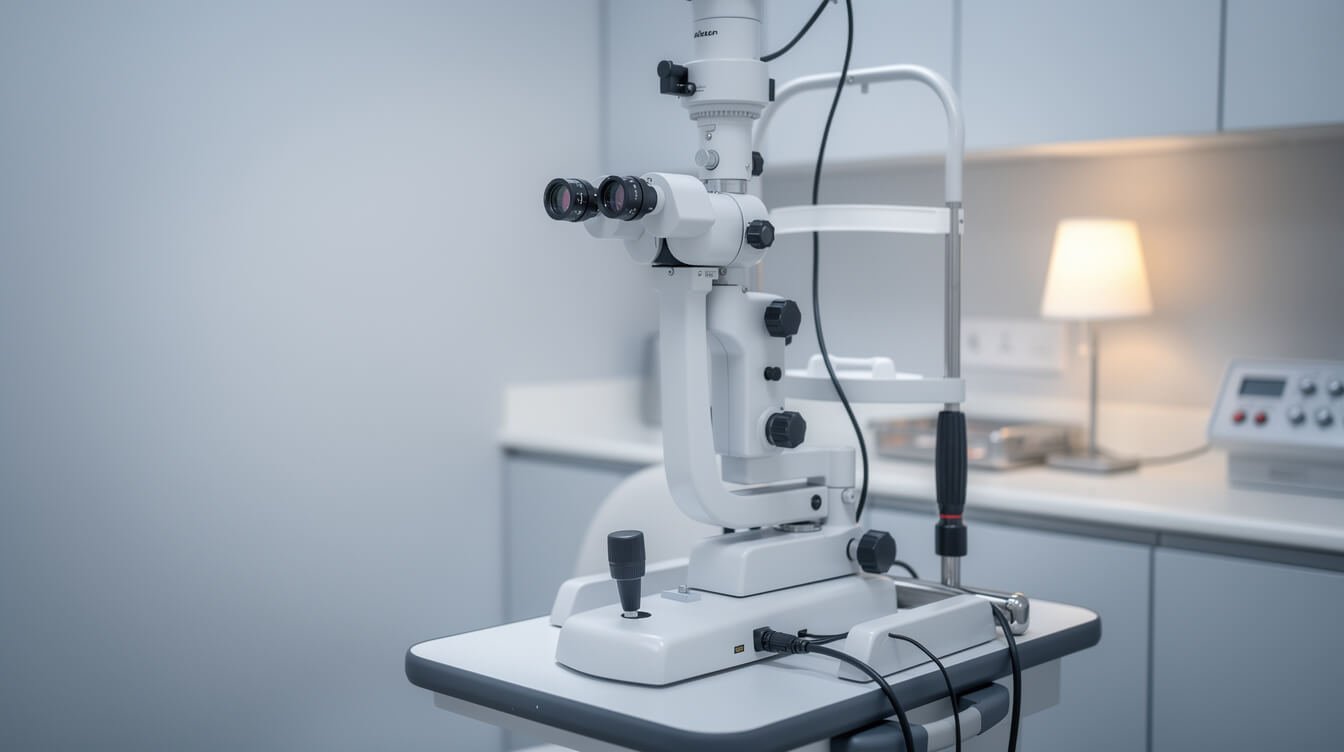
Several guides mash two separate things together: red eyes and lower intraocular pressure (IOP). Some even claim the lower pressure is what turns the eyes red. These are different effects in different parts of the eye.
- Redness happens on the surface, in the conjunctival blood vessels over the white of the eye.
- Intraocular pressure is the fluid pressure inside the eyeball. It’s set by how much clear fluid (aqueous humor) the eye makes and drains.
THC can affect both at once. That’s why they show up together, but one doesn’t cause the other. The IOP effect is well documented and short. It goes back to Hepler and Frank’s 1971 report in JAMA. In a small 2006 crossover trial, Tomida and colleagues, a 5 mg under-the-tongue THC dose lowered eye pressure at the two-hour mark, and it was back to baseline after four hours.
That short window is the reason the glaucoma talk needs a fence around it. The American Academy of Ophthalmology does not recommend marijuana as a glaucoma treatment. The pressure drop lasts only about three to four hours, and the same dose acts on your brain and heart all day long. The 2024 Bondok review reaches the same conclusion: cannabinoids aren’t a first-line treatment for any eye condition. If you have glaucoma or high eye pressure, that’s a conversation for your eye doctor, not a strain menu.
For everyone else, the takeaway is simpler. Red eyes after a session aren’t a sign that something is “working” on your eyes. They’re a visible side effect of THC on your blood vessels.
GanjaTech, weekly
Cannabis, explained. In your inbox.
One email a week: the clearest explainers, honest gear picks, and what the science actually says. 21+ only. No spam, unsubscribe anytime.
Do edibles make your eyes red? And what about CBD?
Edibles
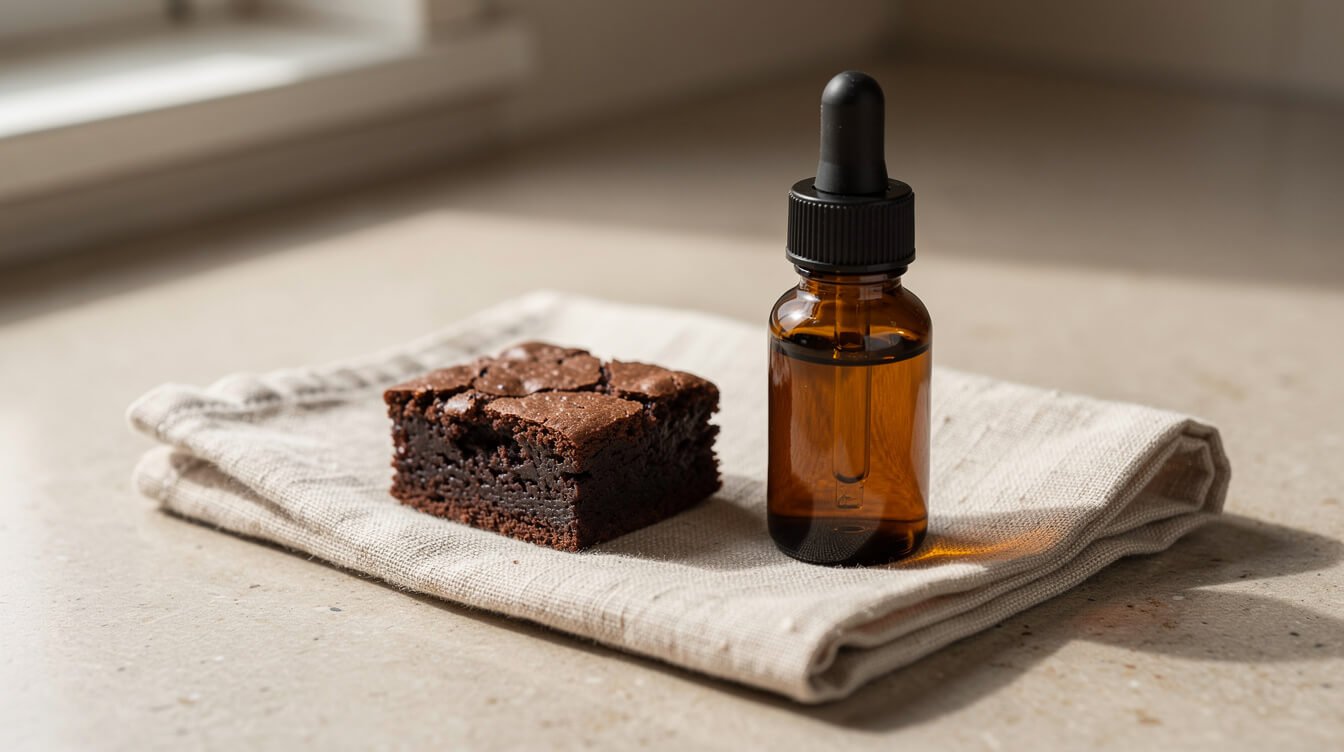
Short answer: they can, because the mechanism is THC in your bloodstream, not how it got there. The honest caveat is that the controlled studies on edibles rarely score eye redness directly. The Schlienz brownie trial’s questionnaire didn’t include an eye item at all. What the studies do show is the timing of the cardiovascular effects that go with it.
In Newmeyer 2017, a roughly 54 mg THC oral dose raised heart rate significantly at 1.5 and 3 hours. With smoked or vaporized cannabis, the jump came at 30 minutes. So if an edible reddens your eyes, expect it later and on the edible’s schedule. It typically comes on 30 to 60 minutes after eating and peaks around 1.5 to 3 hours, per Schlienz. Our edible timeline walks through the full curve. How red you get still comes back to dose. A strong edible is still a strong dose of THC, whatever form it comes in.
CBD
The studies that tie cannabis to red eyes are THC studies. CBD doesn’t act like THC at the CB1 receptor (the basics are in CBD vs THC effects), and it doesn’t share THC’s eye-pressure effect either. In the same Tomida trial, 20 mg of CBD didn’t lower eye pressure, and 40 mg briefly raised it. There isn’t good human evidence that CBD alone turns eyes red.
The practical catch is that many “CBD” or hemp products contain some THC, and labels aren’t always accurate. If a CBD product reddens your eyes, the THC in it is the likeliest reason.
How long red eyes last, and why some people get redder
The timeline
For inhaled cannabis, the redness generally follows your blood THC level. In the Spindle trial, blood THC and heart rate both peaked within about 30 minutes and were back to baseline within 3 to 4 hours. The eye-discomfort ratings also peaked early, within the first hour and a half. For most people, that means the red fades over a few hours after smoking or vaping. With edibles, the whole curve shifts later and stretches longer.
Here’s the important part. In that same study, some subjective effects and measured impairment lasted up to 6 hours on average. Your eyes can clear up well before your brain does. More on that below, and in our breakdown of how long a weed high lasts.
Why some people get redder than others
- Dose. This is the big one. More THC means more redness, whether that comes from bigger hits, stronger flower, concentrates, or a heavy edible. Concentrates and long draws are an easy way to take more than you meant to (the blinker explainer covers why puff size matters so much).
- Route. Per milligram, vaporized cannabis delivered more THC to the blood than smoked cannabis in Spindle’s trial, so a vape can redden your eyes more than you’d guess.
- Tolerance, partly. Jones describes fast tolerance to most of THC’s early cardiovascular effects with repeated use. Don’t count on it, though. In Newmeyer’s study, frequent and occasional users had similar heart-rate jumps, and 94% of THC-positive drivers in the Declues data still had red eyes. A tolerance break resets a lot of things, but it doesn’t make you immune to redness.
- Dry eyes. Cannabis users often report dry eyes. In mice, THC reduced tear production through CB1 receptors on the nerves that drive the tear gland, though only in males. That’s a mouse result, not a human one, but it fits the dry, gritty feeling many people describe. Dry eyes irritate easily, and irritation adds its own redness.
- Everything else that reddens eyes. Fatigue, allergies, contact lenses, smoke, and dry indoor air all add up. A late night plus a smoky room plus a strong dose stacks the deck.
One more question people ask: does strain matter? There’s no good evidence that a given strain, terpene profile, or “indica vs sativa” label changes eye redness apart from how much THC you actually take in. If one strain seems to redden your eyes more, its THC content (or how hard you hit it) is the likelier explanation. Our terpene reference covers what terpenes can and can’t be credited with.
What actually helps (and the eye-drop fine print)

Since the redness is a temporary vessel effect, the most reliable fix is time. Beyond that, a few things genuinely help with comfort, and one popular fix comes with warnings almost nobody prints.
The low-risk options
- Lubricating eye drops (artificial tears). They ease dryness and grit. The AAO suggests up to four times a day, and preservative-free versions if you use them more often. They won’t “whiten” your eyes the way decongestant drops do, but they’re the option eye doctors tend to prefer.
- A cool compress. A cool, damp washcloth over closed eyes for a few minutes feels good and is another AAO home-remedy staple.
- Less smoke in the air. Open a window, skip the hotbox, and keep the smoke out of your face. That at least takes away the irritation layer.
- A smaller dose next time. It’s the only thing that really prevents red eyes.
Redness-relief (“whitening”) drops: read this first
Classic redness-relief drops use a decongestant, most often tetrahydrozoline. It squeezes the surface vessels narrow and works fast. According to the American Academy of Ophthalmology:
- When the drops wear off, eyes can come back redder than before (“rebound redness”), and regular use can leave you with eyes that stay red.
- Use them only occasionally, and not for more than 72 hours.
- People with narrow-angle glaucoma shouldn’t use decongestant drops at all, because of the risk of a serious emergency called angle-closure glaucoma.
- A newer decongestant, brimonidine, carries a lower risk of rebound redness. A 2020 clinical review, Hosten and Snyder, explains why: older α1-type decongestants are the ones linked to rebound and to fading effectiveness.
And one warning that isn’t a joke: never swallow eye drops, and never put them in anyone’s food or drink. Tetrahydrozoline taken by mouth can cause sleepiness, dangerously slow heart rate, low blood pressure, and breathing problems. According to Poison Control, US poison centers logged 771 tetrahydrozoline eye-drop exposures in 2023, and about 40% involved children 5 or younger. These bottles often don’t have child-resistant caps, so store them like you store your edibles: locked up and out of reach. If someone swallows them, contact Poison Control right away (1-800-222-1222 or webPOISONCONTROL) instead of waiting for symptoms.
Clear eyes don’t mean you’re good to drive
This is the part that matters most. Red eyes are one of the most consistent signs of recent THC use. Police drug evaluators are trained to look for them, and studies like Hartman 2016 found that eye exams combined with balance and coordination tests made the best cannabis-impairment indicators. But redness tells you nothing about whether you’re still impaired. Drops can hide the red in minutes, and on their own your eyes may clear hours before your reaction time and judgment recover (in Spindle’s data, impairment lasted up to six hours on average). Whiter eyes don’t make you a safer driver. Wait it out, get a ride, and remember that driving while impaired by cannabis is illegal in every US state, whatever the local rules on possession say.
Why does weed make eyes red? Red-eye FAQ

Why does weed make eyes red in some people but not others?
Mostly dose and route. Someone who took a couple of small hits might barely change, while someone who took a big vape draw or a strong edible goes visibly pink. Baseline eye dryness, allergies, fatigue, contact lenses, and smoky air add to the effect. Tolerance may blunt it a little, but in the driver data almost everyone with THC in their blood still had red eyes.
Why does weed make eyes red even when I vape instead of smoke?
Because THC widens the vessels from inside your bloodstream. Smoke isn’t required. In the Spindle trial, vaporized cannabis actually produced the bigger eye rating, probably because it delivered more THC to the blood than smoking the same dose.
Can red eyes from weed damage my eyes?
The everyday redness is temporary and fades as THC wears off. Nobody has shown lasting harm from that alone. Ongoing redness, pain, blurred vision, light sensitivity, or discharge isn’t a normal weed effect, so get checked. The AAO also recommends seeing a doctor if redness lasts more than about a week. Long-term heavy use has been linked to dry-eye complaints and other eye findings in the research literature, which is one more reason to keep the dose sensible.
Is it the THC percentage or the strain?
It’s the amount of THC you actually absorb, which depends on potency and on how much you take in. Strain names and indica/sativa labels aren’t reliable predictors on their own (see which is stronger, sativa or indica).
Does drinking water or eating help?
Staying hydrated is fine for comfort, and a snack won’t hurt (the munchies will probably suggest one anyway). Neither has been shown to clear red eyes faster. The redness tracks THC levels, so time is the real fix.
Why does weed make eyes red if it also lowers eye pressure?
They’re separate effects. Redness comes from widened surface vessels, and the pressure change happens inside the eye. THC happens to cause both at once. Neither one makes the other happen, and neither is a reason to use cannabis for an eye condition without your doctor’s input.
Does mixing weed and alcohol make it worse?
Alcohol can redden eyes on its own, and the combination raises impairment in ways that go well beyond appearance. Our guide to weed and alcohol covers what crossfading actually does.
Final thoughts
So, why does weed make eyes red? It’s THC widening the small blood vessels on the surface of your eyes, the most visible clue that THC is working throughout your circulation. It isn’t mainly the smoke, since vapes and edibles do it too. It isn’t really about your blood pressure crashing, since seated blood pressure barely moves in most healthy adults. And it isn’t the eye-pressure effect either, which happens inside the eye and wears off within a few hours. The redness is dose-linked, temporary, and harmless on its own.
For comfort, use lubricating drops and a cool compress, and give it time. Treat whitening drops as an occasional fix: watch for rebound redness, skip them if you have narrow-angle glaucoma, and keep the bottle locked away from kids. And whatever your eyes look like, don’t let them decide when you’re ready to drive. Your eyes can clear up long before you’re actually sober.
Before you go
Get the next explainer first
We publish a new one every day. The best of the week, plus what's new in the shop, lands in one short email.