How to Pack a Bowl: The Step-by-Step, Plus the Airflow Physics and Dose Math Most Guides Skip
Here’s how to pack a bowl, the short version: grind your flower to a medium, fluffy texture, drop one slightly bigger piece over the hole, fill the bowl loosely to the rim, tap it down once, and test the draw before you light it. That’s the whole job. The rest of this guide covers the nuance most guides skip, like why some bowls clog and others won’t stay lit, why the layering advice online contradicts itself, and how much flower actually belongs in there. That last one matters more than anything else on this page.
Quick framing: this is for adults 21+ where cannabis is legal. Laws on cannabis and on pipes and bongs (paraphernalia in a lot of places) vary by state and country, so know yours.
How to pack a bowl: the short answer
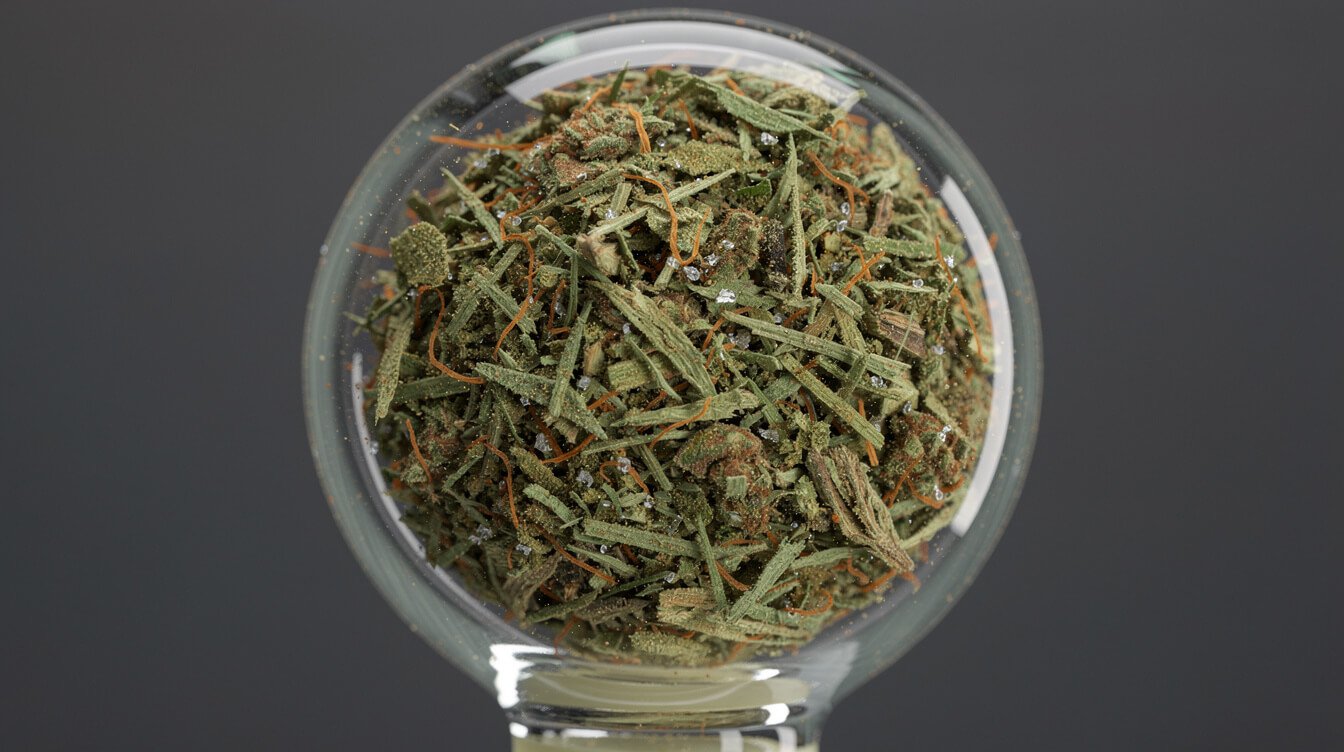
A “bowl” is the little basin on a pipe, bong, or bubbler that holds the flower. “Packing” it just means loading it so air can pull evenly through the plant material while it burns. Get the airflow right and everything else (flavor, smoothness, how long it stays lit) follows.
Here’s the 30-second version:
- Grind medium. Fluffy and even, not powder, not chunks.
- Plug the hole. Set one pea-sized piece (or a screen) over the bottom hole so fine bits don’t get sucked through.
- Fill loosely to the rim. Drop pinches in, don’t stuff.
- Tap once, gently. A light press with a fingertip or the flat end of a lighter. Firm enough that it doesn’t fall out when tipped, loose enough to breathe.
- Dry-pull test. Draw through it before lighting. You should feel steady, slightly resisted airflow, like sipping through a straw.
If the dry pull feels like breathing through a pillow, it’s too tight. If it feels like nothing’s in there, it’s too loose. Fix it now, not after you light it.
And one rule that sits above all five steps: pack less than you think. We’ll get to the numbers in the dose section, but a small, well-packed bowl beats a heaping one every time.
What you need (and what’s optional)
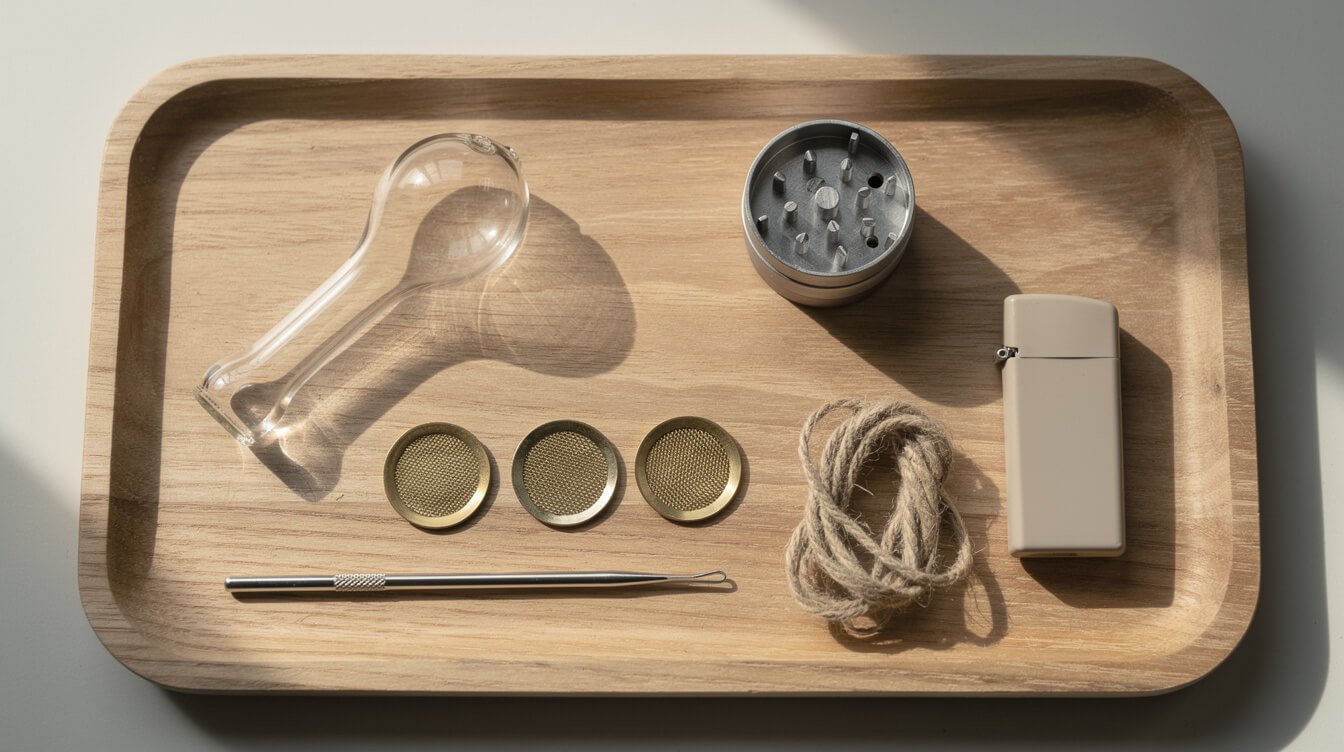
The essentials
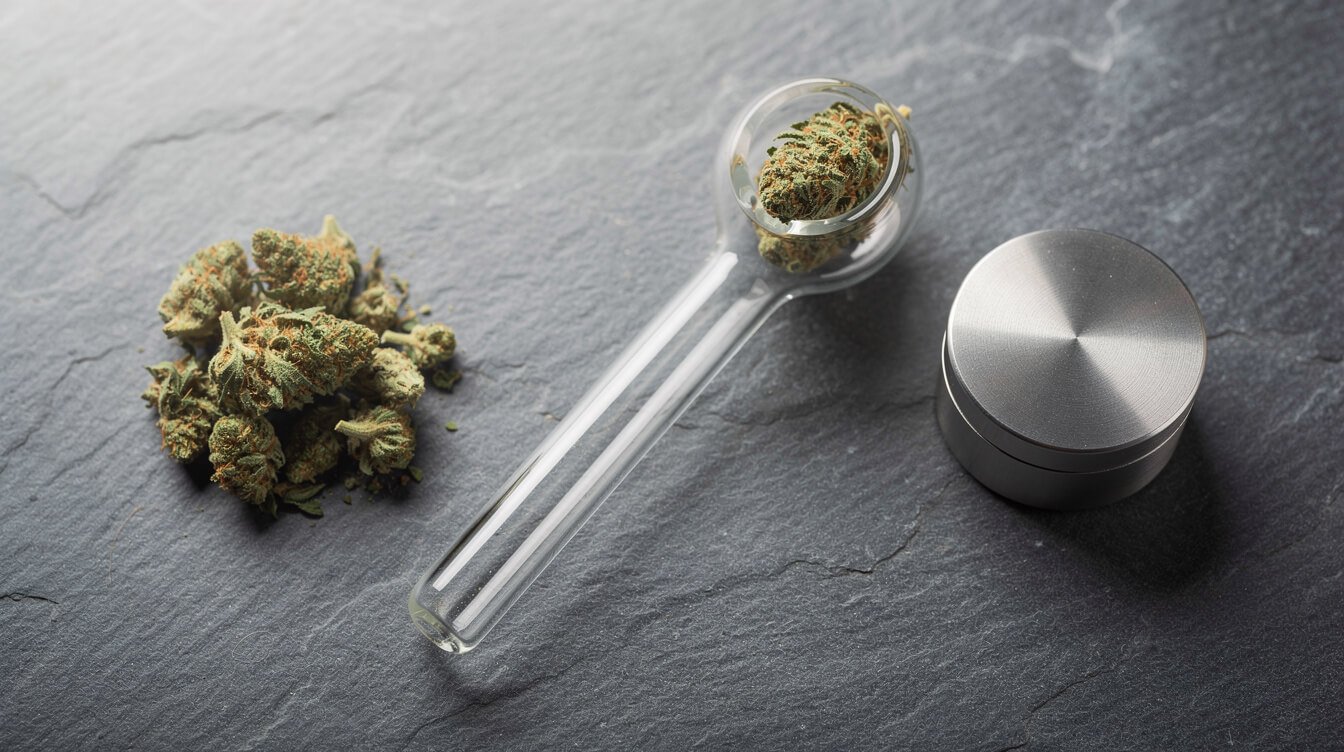
- A piece with a bowl. A glass spoon pipe is the classic starting point: small, cheap, and easy to clean. Bongs and bubblers pack the same way, with a couple of differences we’ll cover below.
- Flower. Dry enough to break cleanly. Spongy flower won’t grind or burn evenly, which is a storage problem (see humidity packs).
- Something to break it up. A grinder is the easiest way to get an even texture. Our guide to using a weed grinder covers technique, and it explains why you should grind right before you smoke, not days ahead.
- A flame. A plain lighter works. Hemp wick is the common alternative (more on that later).
Nice to have
- Screens. Small brass, stainless, or glass discs that sit in the bottom of the bowl and stop ash and fine bits from getting pulled into the pipe or your mouth. Brass and steel screens are cheap and replaceable. Glass “daisy” screens are reusable and easy to clean.
- A poker. A thin metal pick for clearing ash and unclogging the hole. A straightened paperclip does the job in a pinch.
- A tray and an ashtray. One to pack over so dropped flower doesn’t vanish into the couch, one to knock out ash and rest a hot bowl.
A note on bowl “sizes”
If you’ve shopped for bong bowls, you’ve seen 10 mm, 14 mm, and 18 mm. People sometimes read those as capacity. You’ll even see a bowl’s size listed as “14 ml” online. They aren’t capacity. Those numbers describe the joint, the ground-glass fitting where the bowl slides into the bong. The convention is borrowed from lab glassware, where a standard-taper joint is labeled by its outer diameter in millimeters. An 18 mm bowl fits an 18 mm joint. It may hold more or less flower than a 14 mm bowl depending on the cup. For capacity, look at the cup itself, or just weigh what fits.
How to pack a bowl, step by step
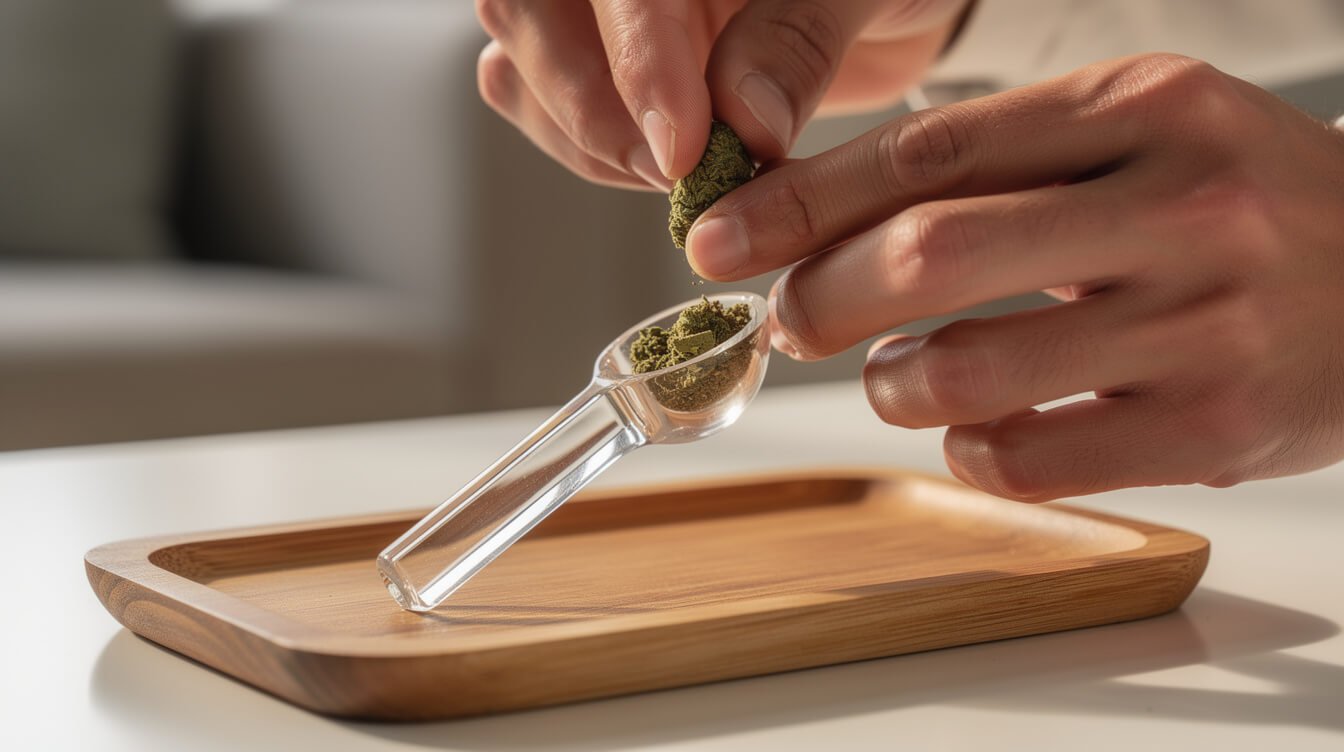
1. Start with a clean bowl
Knock out old ash and check that the bottom hole is clear. Hold the pipe up to a light and look through it, or run the poker through. A half-clogged hole is the number one cause of “I packed it right and it still won’t pull.” If the inside is caked with resin, give it a proper clean first. Our guide to cleaning a weed pipe walks through the iso-and-salt method without cracking the glass.
2. Pull the stems and seeds
Before you grind, pick out stems and any seeds. Stems don’t add anything but harshness and they tend to poke holes in an even pack. Seeds pop and crackle when heated and taste acrid.
3. Grind to a medium texture
For a pipe or bong, you want medium to slightly coarse: fluffy pieces roughly the size of a grain of rice or a bit bigger, with no big clumps and no dust. Powder packs into a near-solid mass and clogs. Big chunks burn on the outside and leave a raw core. If you don’t have a grinder, small scissors in a shot glass or careful pinching by hand both work. They take longer and come out less even, so pack a little looser to compensate.
4. Plug the hole
Take one pea-sized piece of flower, a bit denser than the rest, and set it over the hole at the bottom of the bowl. People call this a “nug plug.” It works like a coarse filter: it stops the finer material above it from getting sucked through on the first pull. You’ll sometimes hear this called “putting a calyx in.” Botanically, the dense little knobs on a bud are mostly bracts (we explain the difference in what a weed plant looks like), but the idea’s the same: something chunky at the bottleneck. A screen does the same job and does it more reliably.
5. Fill loosely to the rim
Drop pinches of ground flower on top of the plug until the bowl is full to about level with the rim. Don’t press as you go. Solo? Fill it partway (see the dose section). A half-full bowl packs and burns the same way.
6. Tamp once, lightly
Press the top down gently with a fingertip, the flat end of a lighter, or a tamper. One light press. You’re settling the material so it doesn’t spill when you tilt the pipe, not compacting it. If it sinks a lot, top it up and press again, gently.
7. Do the dry-pull test
This is the step almost nobody does and everyone should. Cover the carb if your piece has one, put your mouth on the mouthpiece, and inhale without lighting. Steady airflow with a little resistance means you’re good. If it’s hard to pull, loosen the top with your poker or dump it and repack. If air rushes through with no resistance and you hear the flower rattle, it’s too loose or the plug moved.
8. Optional: top it with kief
Some people “crown” a bowl with a pinch of kief from their grinder’s bottom chamber. It adds flavor and potency, but treat it as a stronger addition, not a garnish. Kief is concentrated trichomes, so a small sprinkle goes a long way. It also burns fast and can melt into a sticky layer that seals the top, so keep it thin and keep it on top, not mixed through.
Why bowls clog, pull through, or won’t stay lit (and the layering debate, settled)
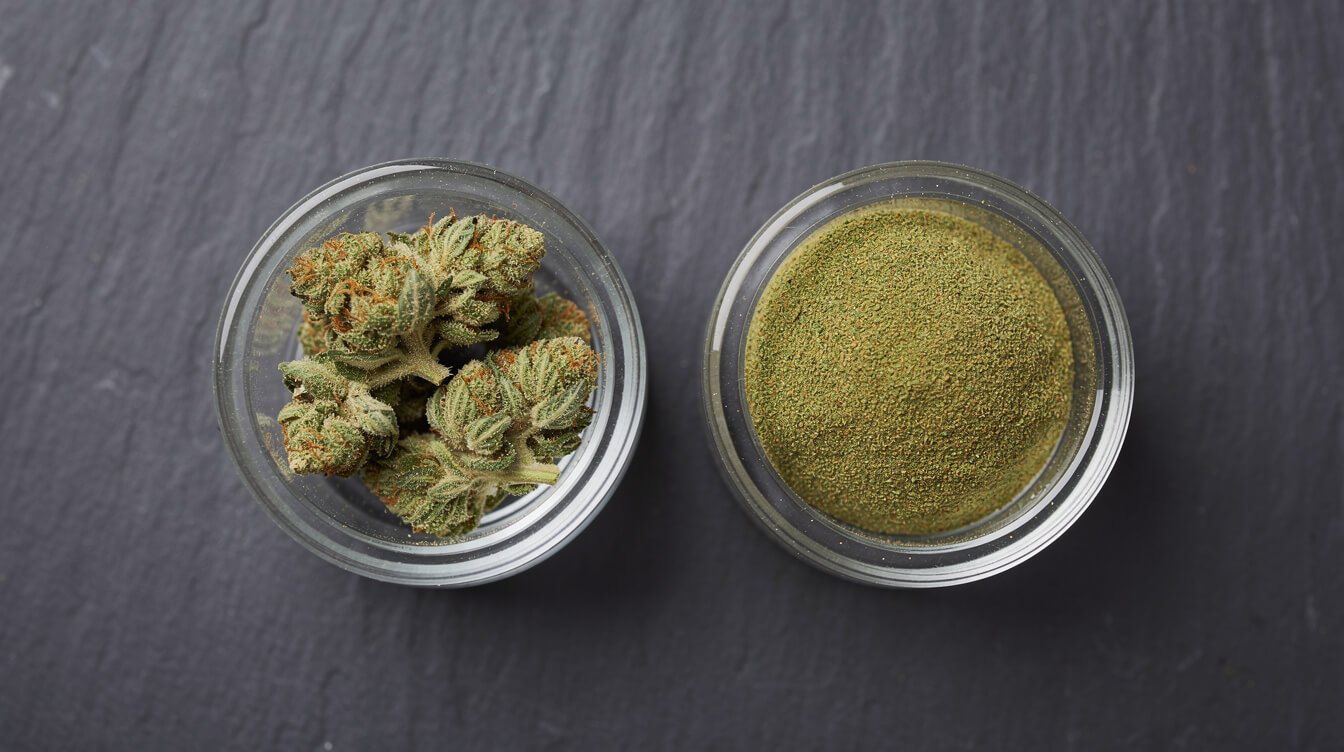
If you read a few guides on how to pack a bowl, you’ll notice they contradict each other. One says pack it loose at the bottom and denser on top. Another says big pieces at the bottom, loose in the middle, dense on top. A third says either break it by hand and pack it tight, or grind it fine and press lightly. None of them explains why. The why is simple physics, and once you see it, the contradiction mostly goes away.
Your bowl is a packed bed, and packed beds follow rules
Air moving through ground flower behaves like any fluid moving through a pile of particles, the same physics engineers use for coffee pucks and sand filters. The classic description, the Kozeny–Carman equation, says two things matter most:
- Particle size. Resistance to flow scales roughly with one over the particle size squared. Halve the particle size and, at the same packing, it takes about four times the effort to pull air through. That’s why powder clogs and fluffy medium grind doesn’t.
- How tightly it’s packed. Squeezing out the empty space between particles raises resistance steeply, much faster than in a straight line. A little extra pressing makes a big difference.
That’s the real reason “fine grind, light touch” and “coarse grind, firmer pack” both work. They land in the same place: moderate total resistance. And it’s why “fine grind, firm pack” is the one combination that reliably fails.
So where does layering come in?
The narrowest point in the whole system is the hole at the bottom of the bowl. Fine particles that collect there block flow way out of proportion to their amount, and they’re also what gets pulled into your mouth. So a coarse layer at the bottom (the nug plug or a screen) does real work. Everything else in the layering advice is fine-tuning. A slightly denser top layer can help the burning top hold its glow between pulls. That’s a reasonable practitioner tip, but nobody has tested it in a lab, so don’t stress over it. Get the bottom right, keep the middle loose, and the top will take care of itself.
Quick troubleshooting
- Hard to pull, even unlit: packed too tight or ground too fine. Loosen the top with a poker, or dump and repack looser.
- Bits in your mouth: no plug, or ground too fine. Add a screen or a bigger bottom piece.
- Won’t stay lit: often too loose (the burning material has nothing next to it to catch), or the flower is too moist. Pack a touch firmer, or check your storage.
GanjaTech, weekly
Cannabis, explained. In your inbox.
One email a week: the clearest explainers, honest gear picks, and what the science actually says. 21+ only. No spam, unsubscribe anytime.
Pipe vs bong vs bubbler: what changes when you pack
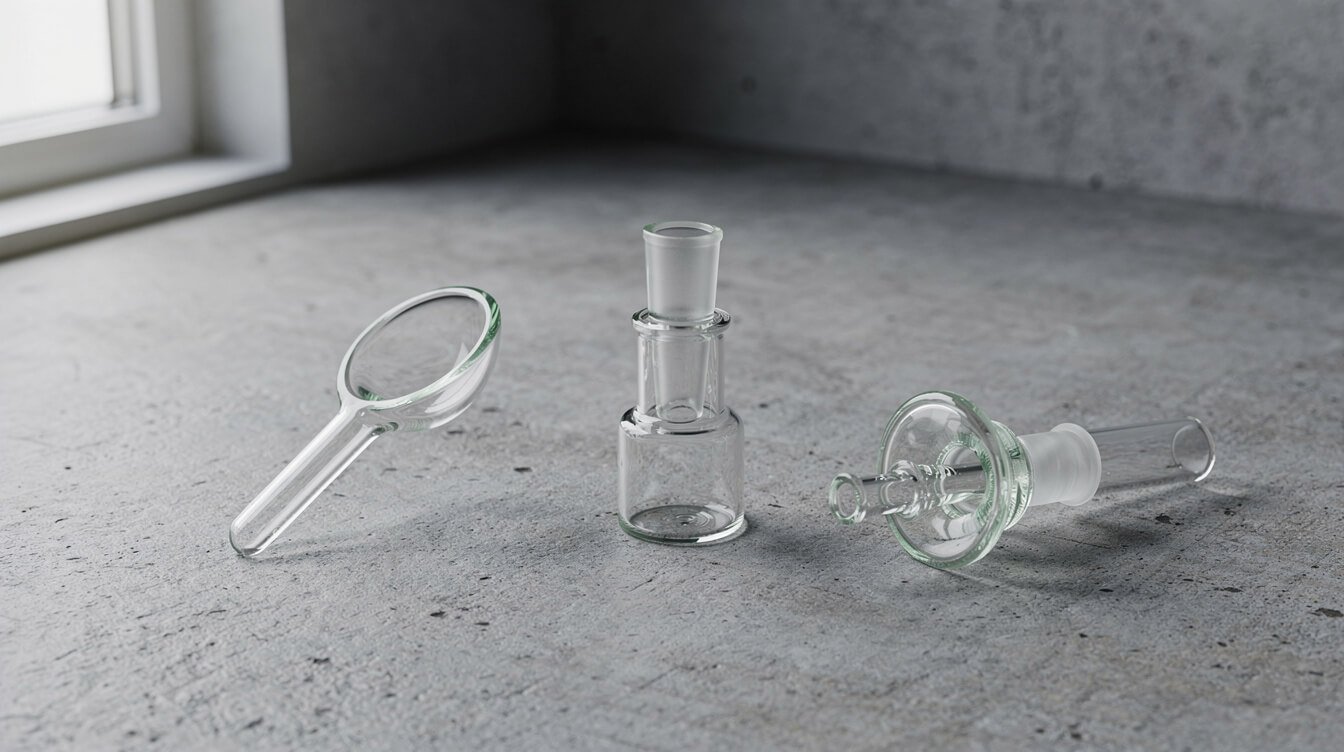
The packing barely changes from piece to piece. What changes is how you control airflow while you smoke.
Hand pipes (spoons, sherlocks, chillums)
Most hand pipes have a carb, a small hole on the side of the bowl area. Cover it with a finger while you light and pull, and smoke builds up in the pipe. Uncover it to clear the pipe in one breath. If your pipe has no carb (a chillum, for example), the flow is constant and you just pull and stop.
How to pack a bowl in a bong
Bong bowls are usually removable. They’re a separate glass piece that slides into the downstem through that 10, 14, or 18 mm joint. Pack it out of the bong, over your tray, so you aren’t dropping flower down the stem. The same rules apply: plug, loose fill, light tap. A screen matters more here, because anything pulled through ends up in the water and the downstem, which clogs faster.
On many bongs, you “clear” by pulling the bowl out of its joint (the slide) instead of using a carb. Some bowls are “snappers,” small one-hit bowls meant to be cleared all at once. Those are the ones to be most careful with, because a big snapper hit delivers a lot of smoke at once. If you’re new, treat a full snapper as more than one dose.
Bubblers
Bubblers are a hybrid: a hand pipe with a small water chamber. The bowl is usually fixed, so pack it like a pipe, plug and all. Don’t overfill the water, or it splashes up into the bowl and soaks your pack. Our bubbler explainer covers fill levels and what the water does (and doesn’t do).
One-hitters
A one-hitter is a tiny tube meant for exactly what it sounds like. You don’t “pack a bowl” so much as tamp a pinch into the tip. It’s the easiest way to keep portions small, which brings us to the part of this guide that matters most.
How much weed to pack in a bowl (the dose math nobody does)
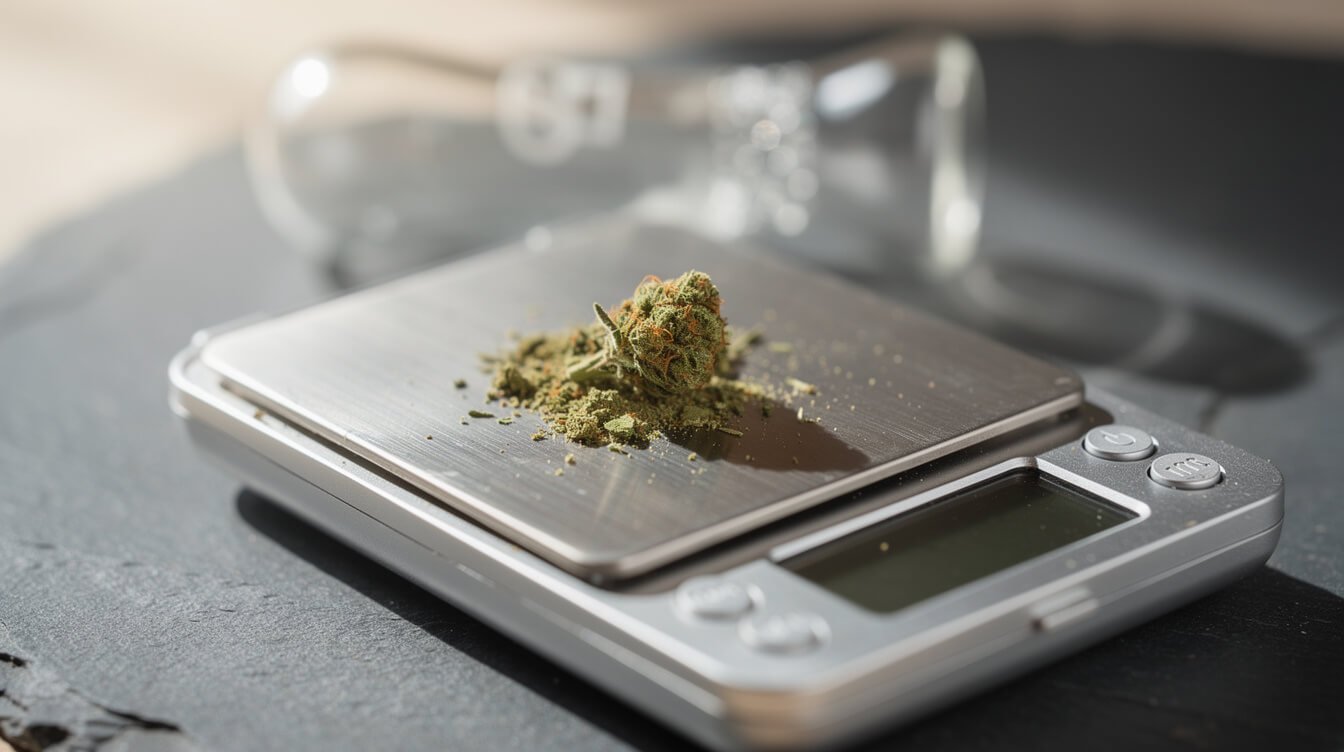
Most guides on how to pack a bowl say it holds “less than a gram” and stop there. The useful question is how much THC is sitting in there, compared with a dose researchers have actually studied.
What a lab-measured dose looks like
The best reference here is a 2018 Johns Hopkins crossover trial in adults who didn’t use cannabis often. Participants smoked their dose from a small handheld pipe, the same kind of bowl this guide is about. The highest dose was 25 mg of THC, which the researchers note was just 0.19 g of 13.4% THC flower. That 25 mg bowl produced strong effects, more side effects, and pronounced impairment of cognitive and psychomotor performance, with some effects lasting up to about six hours. Even the 10 mg dose (less than a tenth of a gram of that flower) produced clearly noticeable effects and modest cognitive impairment.
The authors also point out that 0.19 g of 13.4% flower is substantially smaller, and lower in THC, than what’s typically in a dispensary preroll.
Now look at a “normal” bowl
A typical personal pipe bowl, filled fluffy to the rim, is often somewhere around 0.1 to 0.3 g. Run the same math with today’s common flower:
- 0.1 g of 20% flower contains about 20 mg of THC (counting its THCA, which converts when burned).
- 0.25 g of 20% flower contains about 50 mg, roughly double the strongest dose in that study.
You won’t absorb all of it. A lot is lost to sidestream smoke and combustion, and a classic review of THC pharmacokinetics reports smoked bioavailability anywhere from 2% to 56%, depending largely on how the person smokes. That huge range is the point. How deep you inhale, how long you hold it, and how fast you burn through the bowl swing the dose more than the label does.
How to use that
- New or out of practice? Pack a pinch, about a third of a small pipe bowl or a one-hitter’s worth. Take one hit. Wait 10 to 15 minutes before deciding on another. In the Hopkins study, blood THC peaked within 30 minutes of smoking, so give it time to land.
- Regular smoker? You know your tolerance, but if your bowls keep getting bigger to feel the same, that’s the signal for a tolerance break, not a bigger bowl.
- Sharing? A bigger “party bowl” is fine, because the dose gets split. Just remember it’s split unevenly. The first hits off a fresh bowl are the strongest.
- Overdid it? It’s unpleasant but it passes. Our guide to greening out covers what helps. And for how long it lasts, see how long a weed high lasts.
And the line that never changes: don’t drive after smoking. The Hopkins participants showed impairment for hours, long after they’d have said they felt fine.
Lighting, cornering, and sharing a bowl
Light the edge, not the whole thing
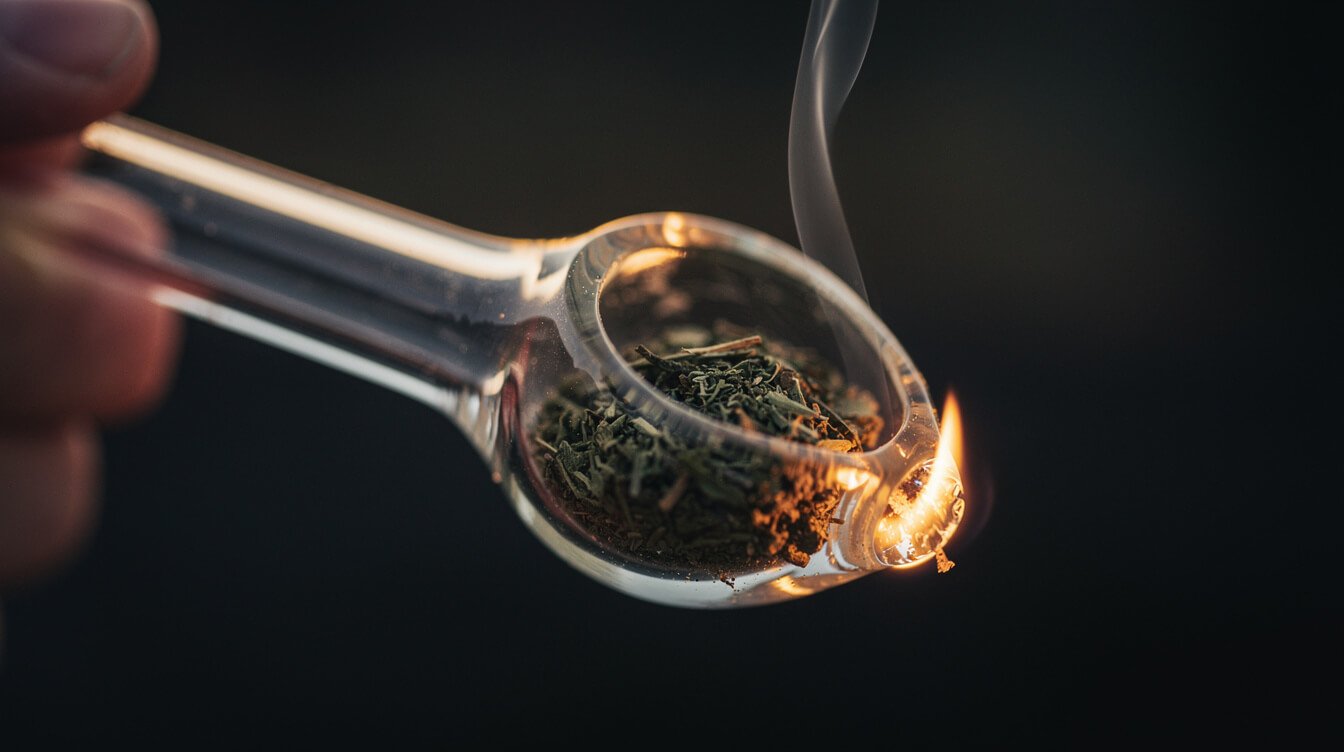
Hold the flame just above one edge of the bowl and start inhaling slowly. Your pull draws the flame down into the flower. Once it catches, take the flame away. You don’t need to hold fire on it the whole time. Lighting just one section like this is called cornering, and it’s the single biggest upgrade to how a bowl tastes.
Here’s why it matters. The aromatic terpenes in cannabis boil at temperatures far below a flame. Per PubChem, myrcene boils around 167 °C (332 °F), limonene around 176 °C, and linalool around 198 °C. A lighter flame is hundreds of degrees hotter than any of those. Torch the whole surface and you’re cooking off aroma across the entire bowl on hit one. Corner it, and the untouched “greens” keep their flavor for the next hit. If you want to know what those compounds actually are, our terpene guide breaks them down.
Lighter vs hemp wick
Plenty of people swear a butane lighter adds a taste and prefer hemp wick, which is hemp twine usually coated in beeswax. Light the wick, then use the wick’s small flame on the bowl. Whether it changes what you inhale in any meaningful way hasn’t been well studied, as far as we can find, so treat it as a flavor preference, not a health upgrade. The practical win is real, though: a wick flame is small and easy to aim, which makes cornering easier.
Cherried bowls and putting it out
If the bowl is still glowing after your hit, it’s “cherried.” Pass it promptly and say so, so the next person doesn’t relight it and torch the greens. To put a bowl out, cap it with the flat bottom of a lighter or a tamper, or let it burn out in an ashtray. Never leave a lit bowl unattended, and never pocket a pipe that’s still warm.
Sharing: etiquette and the hygiene part
The etiquette is mostly about fairness. Whoever brought the flower usually gets first hit, everyone corners so the next person gets greens, and nobody walks off with the lighter.
The part nobody mentions is that sharing a mouthpiece means sharing saliva, and sometimes more. Public health investigators have traced real outbreaks this way. In a 2003 Australian tuberculosis cluster, 64% of contacts who’d shared a water pipe with a case had a significant tuberculin skin test reaction, a marker of TB infection. The authors are careful, though: the association was suggestive but statistically uncertain, and close household contact was the bigger risk. A CDC-led investigation of a 2004 Seattle outbreak linked 11 adult cases and found that “hotboxing,” smoking in a closed car and rebreathing the smoke, fueled transmission. TB is rare, but the lesson applies to every cold and flu season. Skip the circle when you’re sick, consider bringing your own piece or a silicone mouthpiece tip, and wipe mouthpieces between people with an alcohol wipe.
Frequently asked questions
How do you pack a bowl for the first time?
Keep it small. Grind a pinch to a medium texture, set a small piece over the hole, fill the bowl about a third of the way loosely, tap once, and do a dry pull. Light one edge, take one modest hit, and wait 10 to 15 minutes before deciding on more.
Should you pack a bowl tight or loose?
Loose, with one light tap. Tightness and grind size work together. Fine grind needs a lighter touch, coarser grind can take a firmer press. The dry-pull test tells you whether you got it right: steady airflow with a little resistance.
How to pack a bowl without a grinder
Break the flower apart with your fingers into small, even pieces, or snip it with small scissors in a shot glass. Hand-broken pieces come out less even, so use a slightly bigger plug at the bottom and pack a touch looser.
Why does my bowl keep clogging?
Usually one of three things: the grind is too fine, it’s packed too tight, or resin is narrowing the hole. Clear the hole with a poker, repack looser with a coarser grind, and clean the piece if it’s been a while. A screen helps a lot.
How much weed goes in a bowl?
Most pipe bowls hold somewhere around 0.1 to 0.5 g when full. But a full bowl isn’t the point. For reference, a Johns Hopkins study found 0.19 g of 13.4% flower was enough to produce pronounced impairment in occasional users. Start with a fraction of a bowl.
Is it legal to own a pipe or bong?
It depends where you are. Many places regulate pipes, bongs, and grinders under paraphernalia laws, and those rules differ even between places where cannabis itself is legal. Check your local laws rather than assuming.
Final thoughts
Now you know how to pack a bowl the way it actually works: a medium grind, a plug at the bottleneck, a loose fill, one light tap, and a dry pull before the flame. The physics explains the folklore. Fine grind plus a tight pack is the one combination that fails, and everything else is preference.
The bigger lesson is in the dose math. A bowl doesn’t have to be full to be a good bowl, and a fraction of one is a real dose for a lot of people. Pack small, light one corner, wait before the next hit, and keep the piece clean. If you’re rolling instead of packing tonight, our guide to rolling a joint picks up from the same grind. Respect the plant, know your local laws, and enjoy it like an adult.
Before you go
Get the next explainer first
We publish a new one every day. The best of the week, plus what's new in the shop, lands in one short email.