What Is a One Hitter? The Bat, the Dugout, and How to Use Them Right
A one hitter is a small, straight pipe built to hold a single hit’s worth of flower. It’s usually a slim tube about the length of a cigarette, and it often lives in a dugout, a little two-chamber box with the pipe on one side and ground flower on the other. That’s the short answer to what is a one hitter. The longer one is more interesting: the dugout came out of a 1978 patent filed by an Illinois inventor, the whole kit borrows its vocabulary from baseball, and “small” doesn’t automatically mean “mild” or “harmless.”
This guide covers how a one hitter works, how it differs from a chillum and a regular pipe, where the dugout came from (with the patent record, not the folklore), how to use one, what a single hit actually adds up to, and how to keep it clean. Adults 21+ only, and the usual reminder applies: cannabis laws, and the rules on pipes themselves, vary by state and country.
What is a one hitter? The short answer
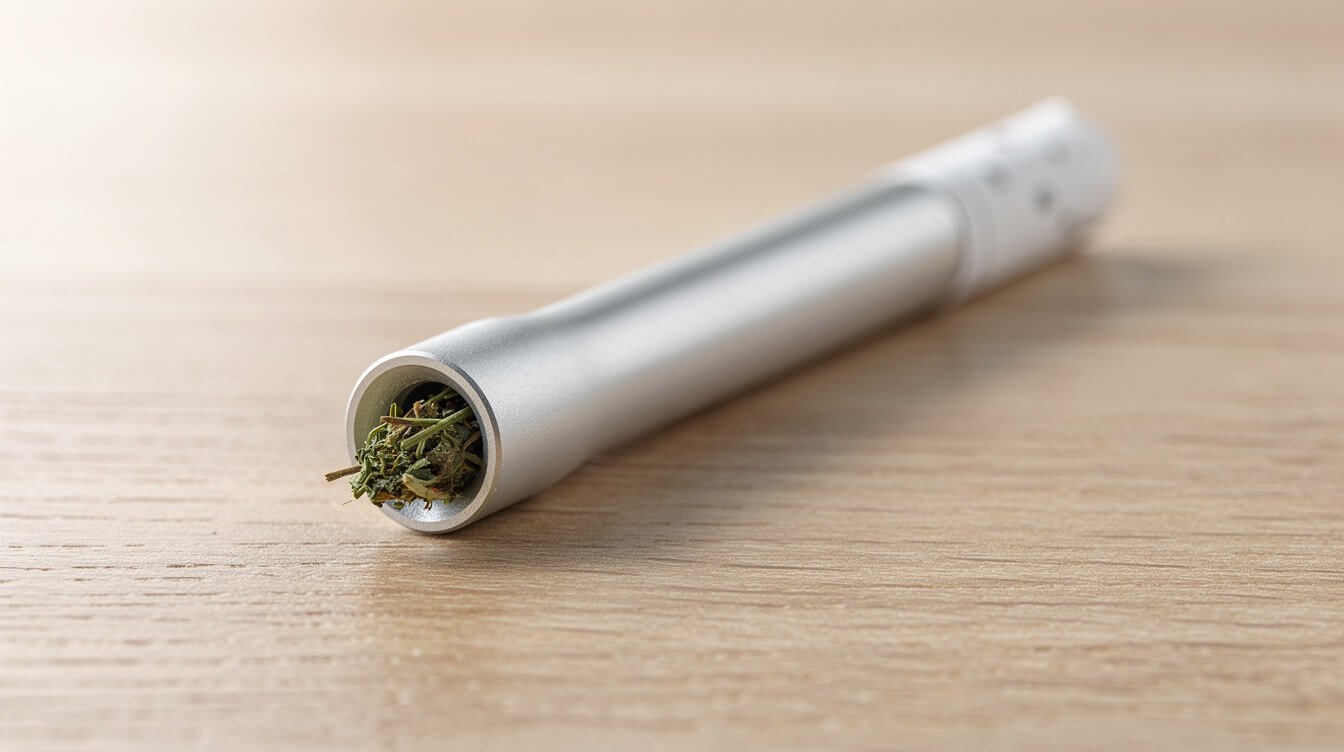
So, what is a one hitter, exactly? It’s a dry pipe (no water) with a tiny bowl at one end and a mouthpiece at the other, connected by a straight channel. Most are 2.5 to 4 inches long and about as thick as a pencil or a cigarette. You press the bowl end into ground flower, light it, take one pull, and you’re done. Wiktionary’s slang entry puts it plainly: “a cannabis pipe for a single inhalation.”
A few things set it apart from the pipes you’ve probably seen:
- No carb. A spoon pipe has a small side hole you cover and uncover to control airflow. A one hitter doesn’t. Air goes in the bowl end and out the mouth end, so you just pull and stop.
- A tiny bowl. The bowl is often just the open end of the tube, or a shallow cup a few millimeters across. It holds a pinch, not a pack.
- A short path. The smoke travels a few inches, not through a long stem or a water chamber. That matters for heat, which we’ll get to.
People also call it a bat, a taster, or a cigarette bat when it’s painted white and tan to look like a cigarette. Same object, different nicknames.
Why do people like them? Mostly for control. One small hit is easier to pace than a packed bowl or a joint that keeps burning between puffs. A one hitter goes out on its own after a hit or two, so nothing smolders in an ashtray. It’s also simple: no water to change, no glass to shatter in a bag, and almost nothing to break. The flip side is that it’s a combustion device like any other pipe. Small hits are still smoke, and we’ll be straight about what that means further down.
One hitter vs chillum vs pipe vs bat: sorting out the names
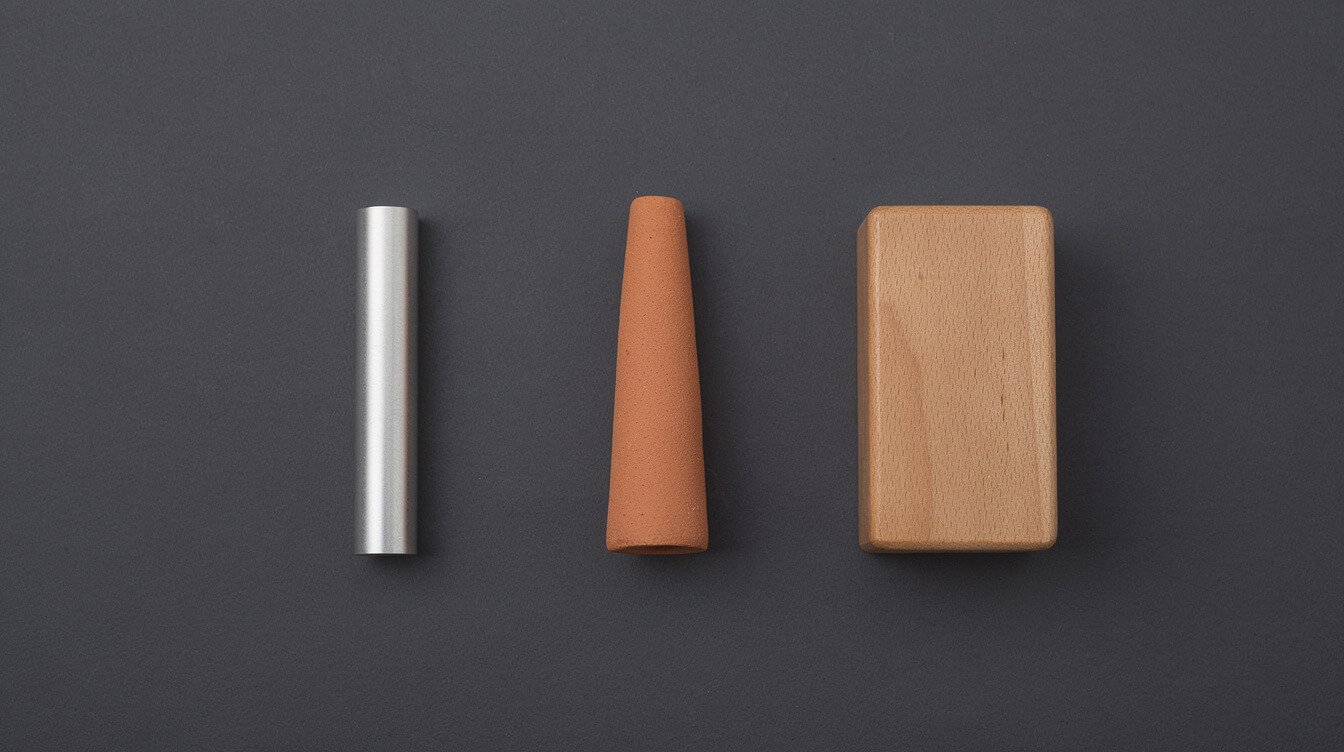
Part of answering what is a one hitter is sorting out what it isn’t. The names overlap, and that’s where most confusion starts.
Chillum
A chillum is a straight, cone-shaped pipe, open at both ends, with no carb. It has a long history in South Asia, where it’s traditionally clay and held in a particular hand grip. Technically, a one hitter is a very small chillum: same straight geometry, same end-to-end channel. The difference is mostly size and use. Chillums can be big enough for a full bowl and are often passed around a circle. A one hitter is scaled down to one hit and one person.
Hand pipe (spoon, sherlock, and friends)
A spoon pipe has a wider bowl, a carb, and a curved or straight body. You can pack it for several hits and clear it with the carb. If that’s your setup, our guide on how to pack a bowl covers the airflow side. A one hitter skips all of that: no carb, no layering, one pinch.
Bubbler and bong
These add water. The smoke bubbles through a chamber before it reaches you, which cools it a bit. (What water filters and doesn’t filter is a longer story, and our bubbler explainer covers it.) A one hitter is the opposite end of the spectrum: dry, tiny, and direct.
Bat and dugout
“Bat” is just another name for the one hitter itself. The dugout is the case it lives in. And here’s the fun part: the entire kit speaks baseball. In baseball, a one-hitter is a game where one team gets only a single hit. The bat lives in the dugout. The pipe holds one hit. Whether that wordplay was planned or grew up around the product, it stuck. (For more of where cannabis words come from, see our weed slang guide.)
One honest note: shops use these words loosely. You’ll see a straight glass chillum sold as a “one hitter” and a metal bat sold as a “chillum.” If it’s straight, small, carb-free, and meant for one hit, call it whichever you like.
What is a dugout? The box, the bat, and the 1978 patent
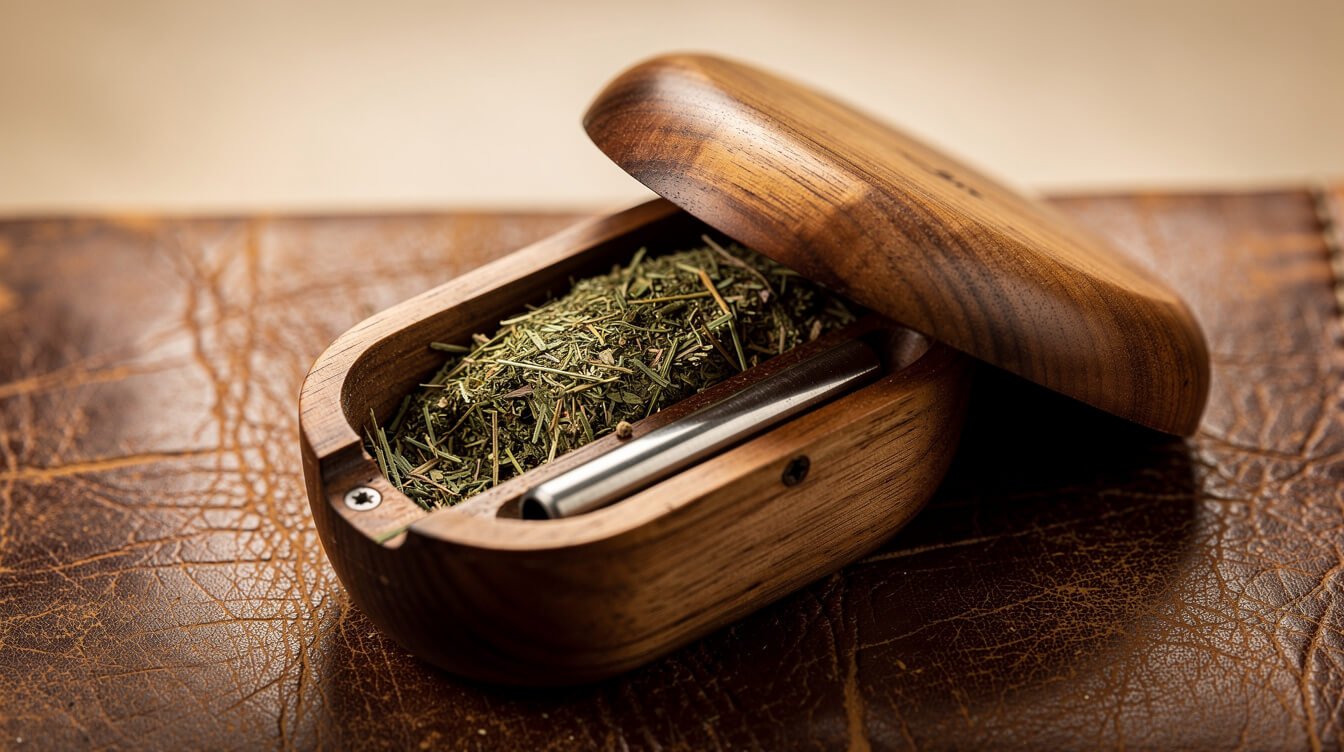
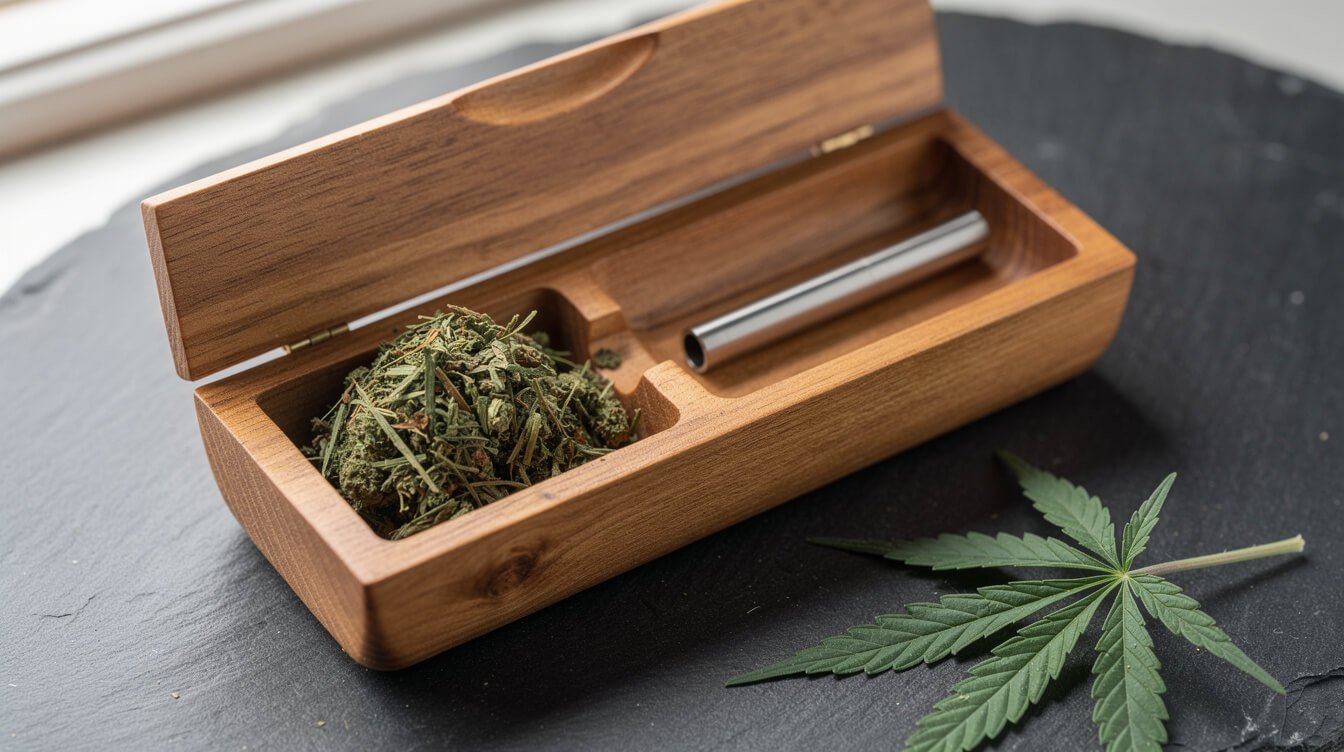
Any answer to what is a one hitter eventually runs into the box it lives in. A dugout is a small box, usually wood, with two compartments. The narrow one holds the one hitter. The wider one holds a little ground flower. A lid slides or swivels across the top. Many dugouts have a spring under the pipe slot, so the bat pops up when you open it. To load, you push the bowl end of the bat down into the flower side, twist, and lift. That’s the whole design, and it’s been nearly unchanged for almost 50 years.
Where the dugout actually came from
Plenty of sites say the dugout dates to “the 1970s.” The patent record is more specific. On August 21, 1978, an inventor named Floyd Crow filed a U.S. patent application for what he called a “smoking system.” It was granted on July 29, 1980, as U.S. Patent 4,214,658, filed on behalf of a company called Simple Pleasures, Inc.
Read the patent and you’ll recognize every piece of a modern dugout:
- “a rectangular-shaped receptacle” with two cavities, one for the pipe and one for “loose smoking material”
- a sliding cover that keeps both from spilling
- “a resilient element… such as a spring or spongy material” that pushes the pipe up when the cover opens
- a pipe bowl that’s “pressed into” the smoking material to fill it
Two details make the document worth reading. First, Crow’s stated problem wasn’t secrecy. He wanted a kit that wasn’t “cumbersome,” that let you load the pipe “in a dark or dimly lit room,” and that didn’t make you flip the box over and spill everything to get the pipe out. Second, the patent never mentions cannabis, and it never uses the word “dugout.” The only smoking material it names is tobacco. That’s the standard legal framing for smoking accessories, then and now.
Some sources say “patented in 1978,” which mixes up the filing date with the grant. Others say Crow sold it under the brand name Dugout, and the name then went generic, the way “Kleenex” did. That’s a good story, and it’s repeated by people who sell dugouts, but we couldn’t find a trademark record to confirm it. So treat the brand-name part as lore and the 1978 filing as fact.
The design kept evolving after that. Swivel lids on a single pivot screw became the classic look, and in 2007 Christopher Hatton filed a patent for a container with a magnetic closure and a built-in poker tool (U.S. Patent 7,717,259). Today you’ll find dugouts in hardwood, aluminum, acrylic, and silicone, but the two-chamber layout is still Crow’s.
How to use a one hitter and a dugout, step by step
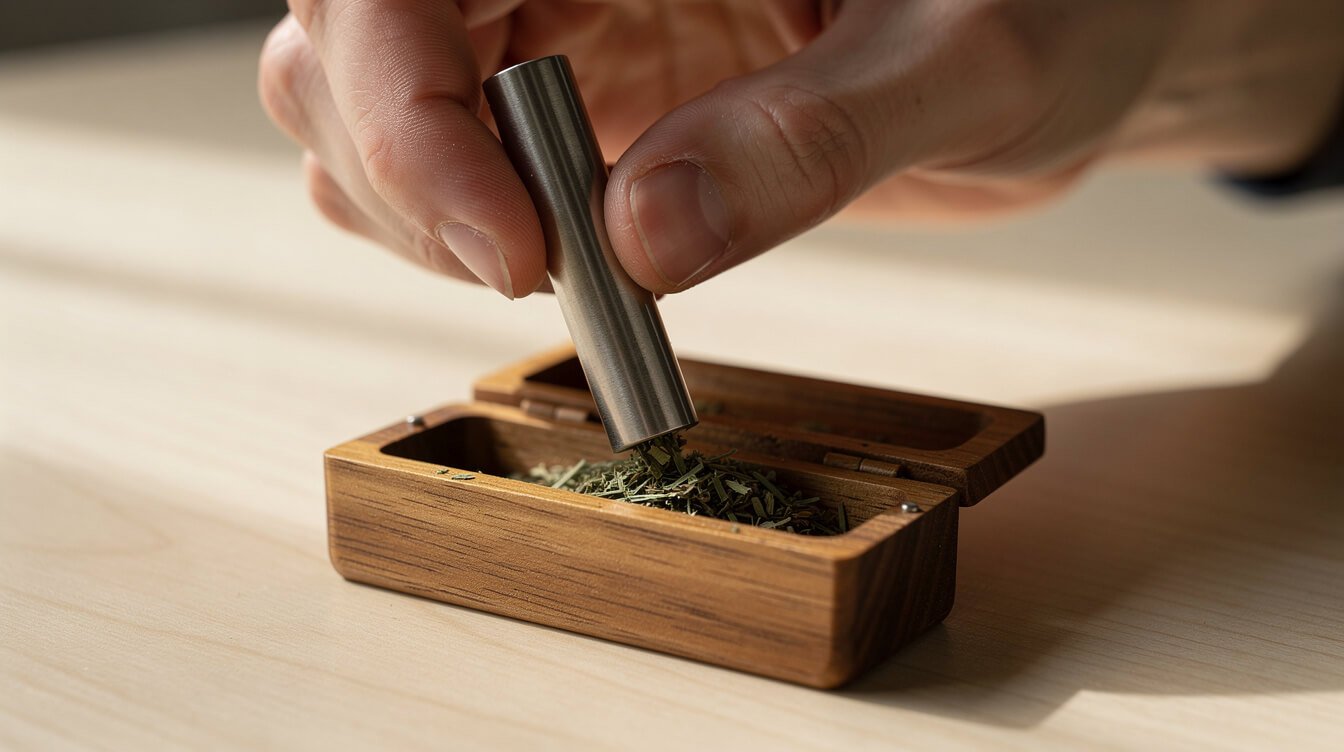
Using a one hitter takes about ten seconds once you’ve done it twice. Here’s the routine.
- Grind fine. This matters more for a one hitter than for any other piece. The bowl is tiny, so chunks won’t pack and won’t burn evenly. Aim for a fine, fluffy grind. Our grinder how-to covers getting there without turning your flower to dust.
- Fill the dugout. Put a modest amount of ground flower in the wide chamber and close the lid. Don’t stuff it. Loose flower loads more easily than a compressed brick.
- Load the bat. Open the pipe side and pull out the one hitter. Swing the lid to the flower side. Push the bowl end straight down into the flower, give it a small twist, and lift. Do it once or twice until the tip is filled. Tap off anything hanging loose on the outside.
- Check the pack. Breathe in gently through the mouth end without lighting it. You should feel easy airflow. If it’s tight, you’ve over-packed. Knock a bit out.
- Light briefly. Hold the flame just above the bowl end, not jammed into it, and pull slowly. You only need a second or two of flame. The bowl is so small that it catches almost immediately.
- Take one easy pull, then stop. Pull the flame away as soon as you taste smoke. A gentle, slow draw is smoother than a hard one.
- Clear the ash. Most dugouts have a metal plate or edge built in for this, or you can tap the bat on an ashtray. Some people push the ash out from the mouth end with a poker, but don’t blow through the pipe toward anyone.
Common mistakes
- Holding the flame too long. A metal bat heats up fast, and the next hit tastes harsh. Short flame, short pull.
- Packing it like a bowl. Over-packing a one hitter just blocks the airflow. One pinch, loose.
- Loading from a chunky stash. If the flower in your dugout isn’t ground, the bat won’t fill. Grind first, always.
- Chain-loading. The whole point is pacing. Reload right away, five times in a row, and you’ve just smoked a bowl in slow motion. More on that next.
GanjaTech, weekly
Cannabis, explained. In your inbox.
One email a week: the clearest explainers, honest gear picks, and what the science actually says. 21+ only. No spam, unsubscribe anytime.
How much is in a one hitter hit? The dose math
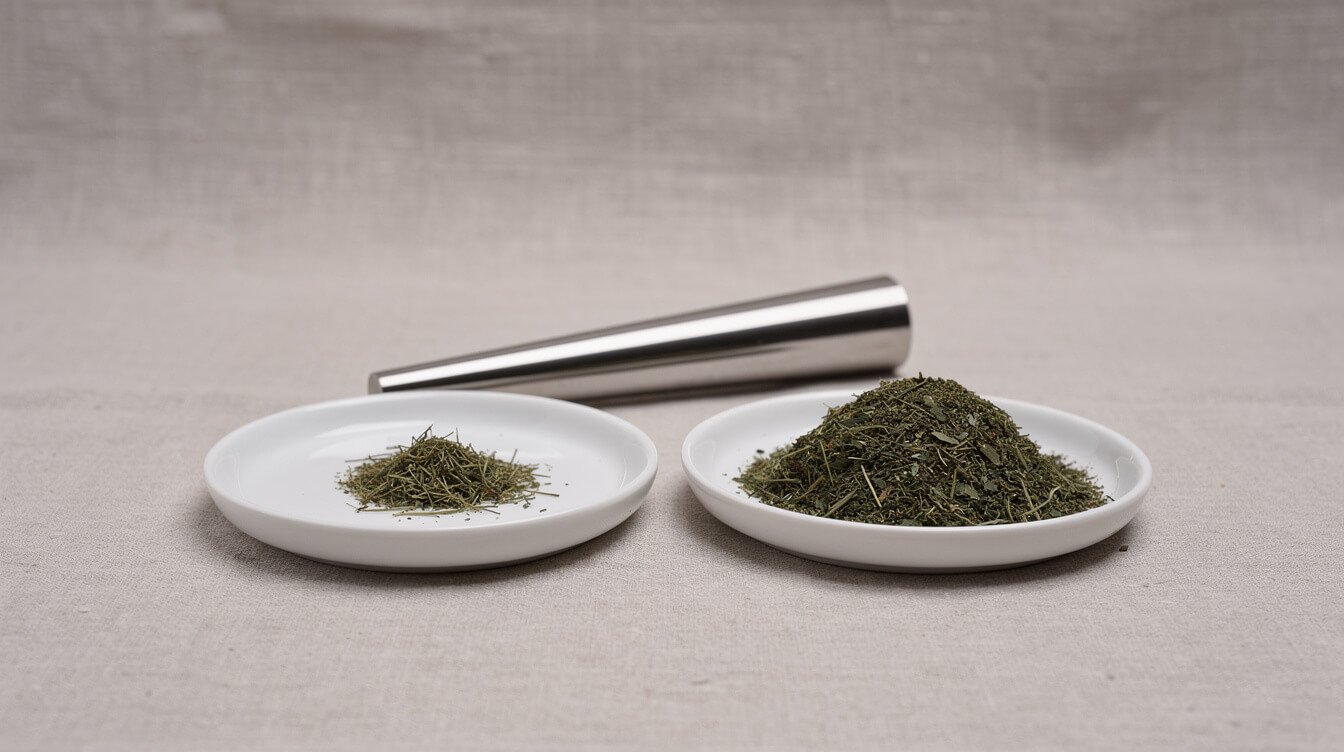
No study we could find has measured how much a typical one hitter holds. Bowl sizes vary a lot from maker to maker. But we do have a useful anchor. In a Johns Hopkins crossover trial, researchers weighed out flower to deliver exact THC doses, and participants smoked it from a small handheld pipe. The highest dose, 25 mg of THC, was 0.19 g of 13.4% THC flower. That’s a modest amount, smaller and weaker than what’s in a typical dispensary pre-roll, and it still produced strong effects, substantial impairment, and more frequent adverse effects in people who rarely use cannabis.
Do the math on the lower dose, and it’s even more striking. That trial’s 10 mg dose works out to about 0.075 g of the same flower. That’s a pinch. It still produced effects participants could clearly feel, plus modest cognitive impairment. And that was mid-teens flower. A lot of today’s flower tests well above that, so the same pinch can carry more THC.
So a one hitter hit isn’t a homeopathic dose. It’s a small, real one. That’s why it’s good for pacing, and why it sneaks up on you if you keep reloading.
The pull matters as much as the pinch
The piece doesn’t decide your dose alone. How you inhale does too. In a controlled study from the 1990s, researchers varied how big each puff was while keeping everything else the same. Bigger puff volumes raised blood THC, carbon monoxide, and how high people felt. Holding the smoke in longer raised blood THC a bit but didn’t make people feel any higher. In other words: a deep, hard pull off a one hitter delivers more than a gentle one, and holding your breath mostly just keeps smoke in your lungs longer.
How to use that
If you’re new or coming back after a tolerance break, take one gentle hit and wait 10 to 15 minutes before deciding on a second. Smoked cannabis hits fast, but it doesn’t peak instantly, and our guide to how long a weed high lasts walks through the timeline. If you overdo it anyway, here’s what actually helps with greening out. And because even one hit is a real dose: don’t drive after using, full stop.
Materials, heat, and the “hot hit” problem
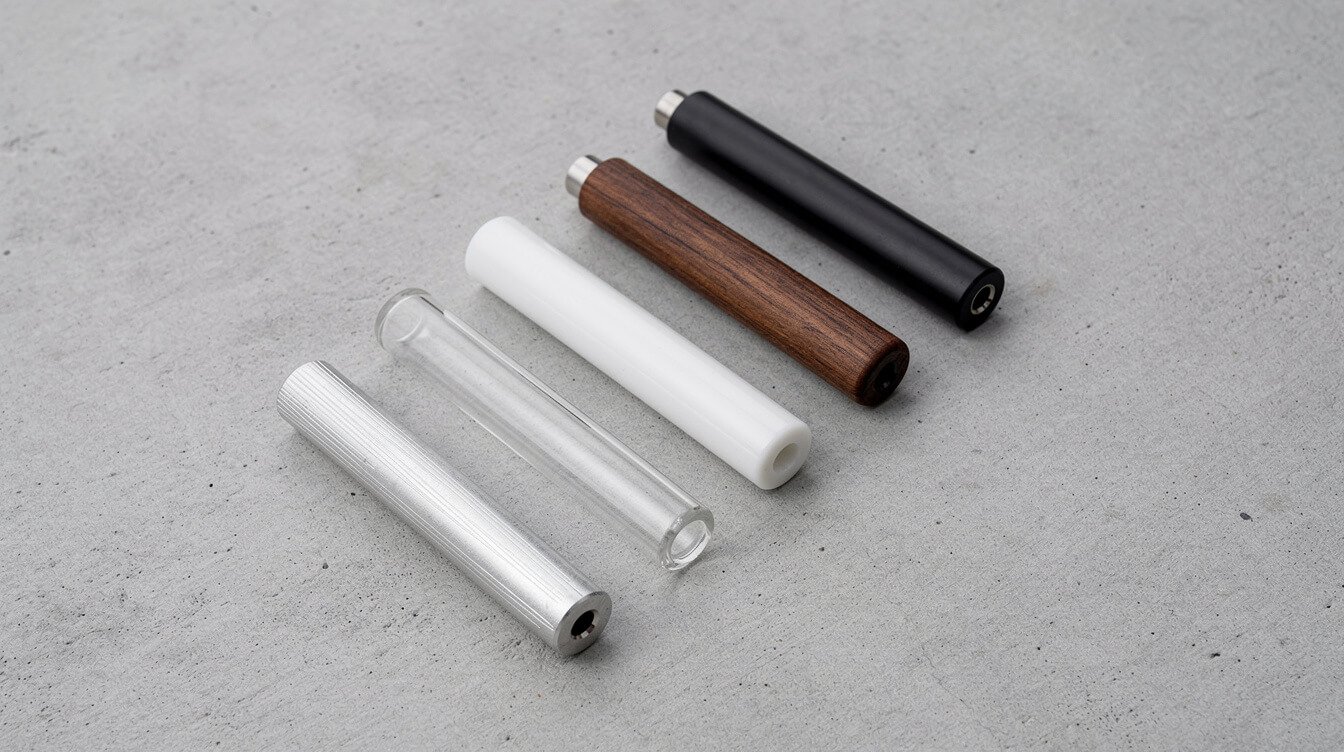
One hitters come in a handful of materials. Each one handles heat differently, and heat is the main thing you notice with a pipe this short.
Metal (aluminum, brass, steel)
This is the classic dugout bat. It’s nearly indestructible, cheap, and easy to clean. The downside is that metal conducts heat. Keep the flame on it for more than a couple of seconds, and the tip gets hot enough to sting your fingers or lips. Many metal bats unscrew into two pieces for cleaning, and some have a “grinder tip,” little teeth on the bowl end for breaking up flower as you load.
Glass
Glass bats usually taste the cleanest, and you can see when they need cleaning. They also break when you drop them, and thin glass can crack from quick heat changes. Borosilicate glass handles heat better than ordinary glass.
Ceramic
Ceramic stays cooler to the touch than metal and tastes neutral. The classic cigarette-style bat is often ceramic or painted metal. Ceramic chips if dropped on a hard floor.
Wood
Wooden bats look great, but wood can char at the bowl end. Most good ones have a metal or glass insert where the flower burns. Don’t soak wood in alcohol to clean it.
The “hot hit” and the coating question
A one hitter’s smoke only travels a few inches before it hits your mouth. There’s no stem, no chamber, and no water to take the edge off, so hits can feel hotter and harsher than from a longer pipe. The fixes are simple: short flame, slow pull, and a few seconds between hits so the tip can cool.
You’ll see some sites warn that metal one hitters “release harmful fumes.” We looked and couldn’t find a study that measured emissions from one hitters specifically, so we won’t put a scary number on it. What’s sensible: don’t hold a torch flame on a bat, and if the paint or coating near the bowl end starts to blister, flake, or smell, retire that bat. Don’t improvise bowls from soda cans, foil, or plastic. Those materials weren’t made to be heated next to your face.
Small hits are still smoke
This is the part no headshop page says out loud. Combustion is combustion, whatever the size of the pipe. When Health Canada scientists machine-smoked cannabis and tobacco cigarettes side by side, the cannabis smoke had ammonia up to 20 times higher than the tobacco smoke, plus 3 to 5 times more hydrogen cyanide, nitrogen oxides, and some aromatic amines. And the National Academies’ 2017 review found “substantial evidence” linking long-term cannabis smoking to worse respiratory symptoms and more frequent chronic bronchitis episodes.
A one hitter can mean less smoke per session if it replaces bigger sessions. If it becomes 15 one hitter hits a day, it doesn’t. If your lungs are the concern, talk to a doctor. The device itself isn’t a health strategy.
Cleaning a one hitter and keeping a dugout fresh
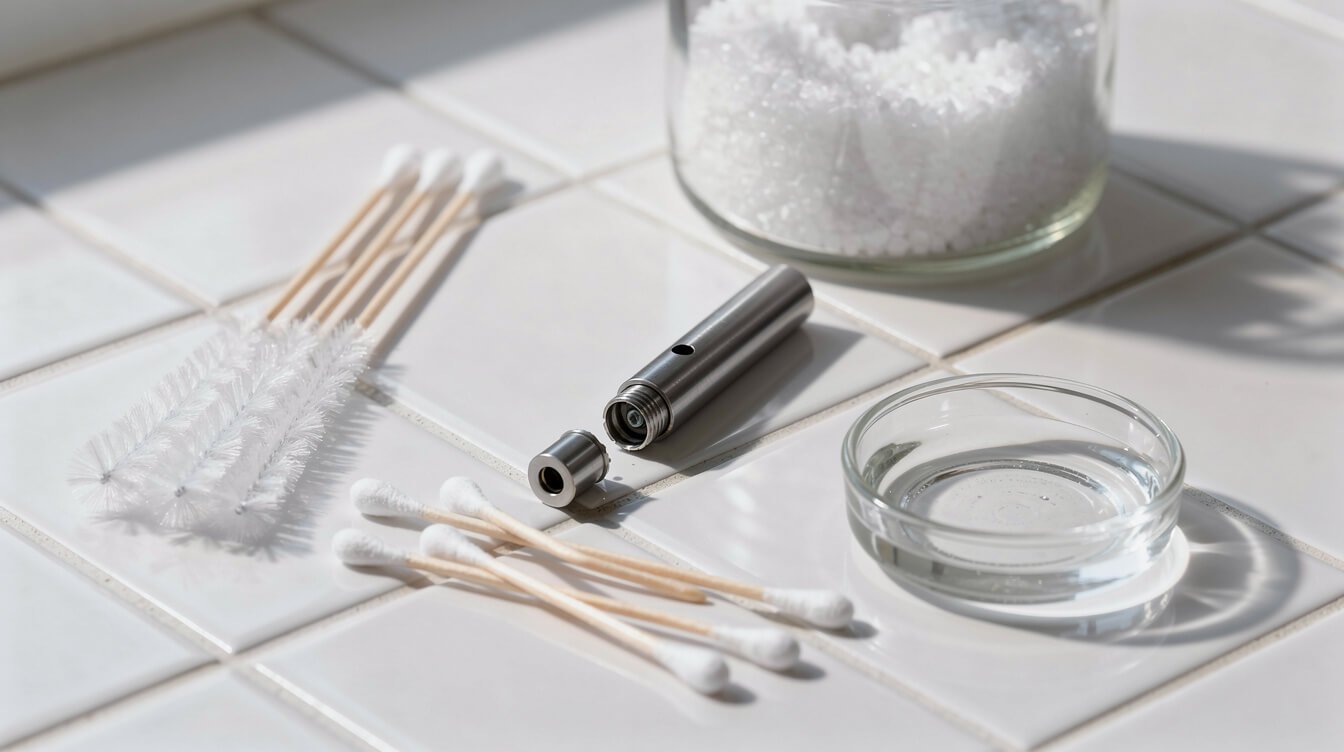
Because the channel is so narrow, a one hitter clogs faster than most pipes. Resin builds up at the bowl end, airflow tightens, and hits start tasting like an old ashtray. A quick clean every week or two (or whenever it starts pulling hard) keeps it working.
Cleaning the bat
- Clear the channel. Push a pipe cleaner or poker through from the mouth end to knock out loose ash and resin.
- Soak metal, glass, or ceramic. Drop the pipe (unscrewed, if it comes apart) into a small cup or zip bag of isopropyl alcohol for 20 to 30 minutes. A pinch of coarse salt helps scrub when you shake it.
- Scrub and rinse. Run a pipe cleaner through again, then rinse well with warm water until there’s no alcohol smell left.
- Dry it completely before using it again. Alcohol is flammable, and you don’t want any of it near a lighter.
Wooden bats are the exception. Skip the soak and clean the metal insert, if there is one, on its own. Wipe the wood with a barely damp cloth. For the full material-by-material method (including what cracks glass and what ruins silicone), see our guide on how to clean a weed pipe.
Cleaning the dugout
- Empty it regularly. Old flower dries out, gets dusty, and absorbs smells. Keep only a small amount in there and swap it often.
- Wood: brush out the chambers with a dry toothbrush or a cotton swab. Avoid soaking. If the pipe slot gets resiny, a swab barely dampened with alcohol on the metal sleeve only, not the wood, does the job.
- Acrylic: skip the alcohol entirely. Alcohol can craze acrylic (fine cracks that turn it cloudy), the same issue we flagged in our grinder-cleaning guide. Use warm water and a mild soap.
- Aluminum and silicone: warm, soapy water is fine. Dry fully before refilling.
Flower left in a dugout for weeks also loses aroma, so smaller, fresher fills taste better. If smell at home is your bigger issue, our guide to getting rid of weed smell covers what actually lingers.
One hitter FAQ

So, what is a one hitter, in one sentence?
A one hitter is a small, straight, carb-free pipe that holds about one hit of ground flower, often carried in a two-chamber box called a dugout.
What is a dugout used for?
A dugout stores a one hitter and a small amount of ground flower together, and lets you load the pipe by pressing it into the flower chamber. It’s a kit, not a pipe.
Is a one hitter the same as a chillum?
Close cousins. Both are straight pipes with no carb and an end-to-end channel. A chillum is usually bigger, cone-shaped, and often shared. A one hitter is scaled down to one hit for one person.
Why is it called a bat?
Baseball. The bat lives in the dugout, and a “one-hitter” is a baseball term for a game with a single hit. The cannabis kit borrowed the whole set.
Is a one hitter healthier than a joint or a bong?
It’s still smoke. A one hitter can mean less total smoke if you take fewer hits, but it doesn’t filter or cool anything, and combustion produces the same kinds of irritants either way. For health decisions, talk to a doctor.
Are one hitters legal?
It depends where you are. Federal law’s drug-paraphernalia definition, 21 U.S.C. § 863, explicitly lists “metal, wooden, acrylic, glass, stone, plastic, or ceramic pipes” and “chillums,” and it includes an exemption for people authorized by local, state, or federal law. States have their own rules on cannabis and on pipes, and they don’t all match. Check the laws where you live, and remember that public-consumption and driving laws apply no matter how small the pipe is.
How long does a one hitter hit last?
The same as any smoked hit. Effects show up within minutes and usually taper over a few hours, depending on the dose, the flower, and your tolerance. Our breakdown of how long a high lasts has the details.
Should you share a one hitter?
It’s built for one person, and the mouthpiece is right where the bowl is, so sharing means sharing germs. If a group wants to pass something, it’s more sanitary for everyone to use their own.
Final thoughts: what is a one hitter really for?
Strip away the slang, and the answer to what is a one hitter is refreshingly simple: it’s a tiny, straight pipe that makes one small hit easy and makes the next hit a deliberate choice. The dugout around it is an Illinois patent from 1978 that’s barely changed since, a tidy kit that keeps the pipe and a pinch of flower together and lets you load in seconds.
Its real strength is pacing. One gentle hit, a pause, and a check-in with how you feel is a good way to use cannabis, especially if you’re new or easing back in. Its limits are just as real. It’s still combustion, and the hits can run hot. A pinch of modern flower is a genuine dose, and a dozen pinches add up to a bowl.
Grind fine, keep the flame short, pull gently, clean it often, and keep it to yourself. Know your local laws, never drive after using, and treat even the smallest pipe with a little respect. That’s a one hitter, explained.
Before you go
Get the next explainer first
We publish a new one every day. The best of the week, plus what's new in the shop, lands in one short email.