Best Soil for Weed: What the Research Says (and Which Bags to Skip)
Here’s the honest answer on the best soil for weed: for most home growers, it isn’t really soil at all. It’s a light, peat- or coir-based potting mix with plenty of perlite, only a modest dose of fertilizer, and room to drain. That beats “super soil” for a first grow, beats garden dirt every time, and beats any bag that promises to hold extra water for you. The brand on the bag matters a lot less than three things: how much air the mix holds after you water it, how much fertilizer is already in it, and which pH range it’s built for.
The nuance most guides skip is that the research on cannabis growing media is thin, and the little that exists points somewhere you might not expect. Below is what the studies and the university extension publications actually say, how the five common options compare, how to read a bag before you buy it, and the drainage and seedling mistakes that cause more trouble than the soil itself. Quick note before we start: home-grow laws vary a lot by state and country, so check yours first. Our indoor first-grow walkthrough starts with exactly that.
Best soil for weed: the short answer
If you want one recommendation and nothing else, here it is:
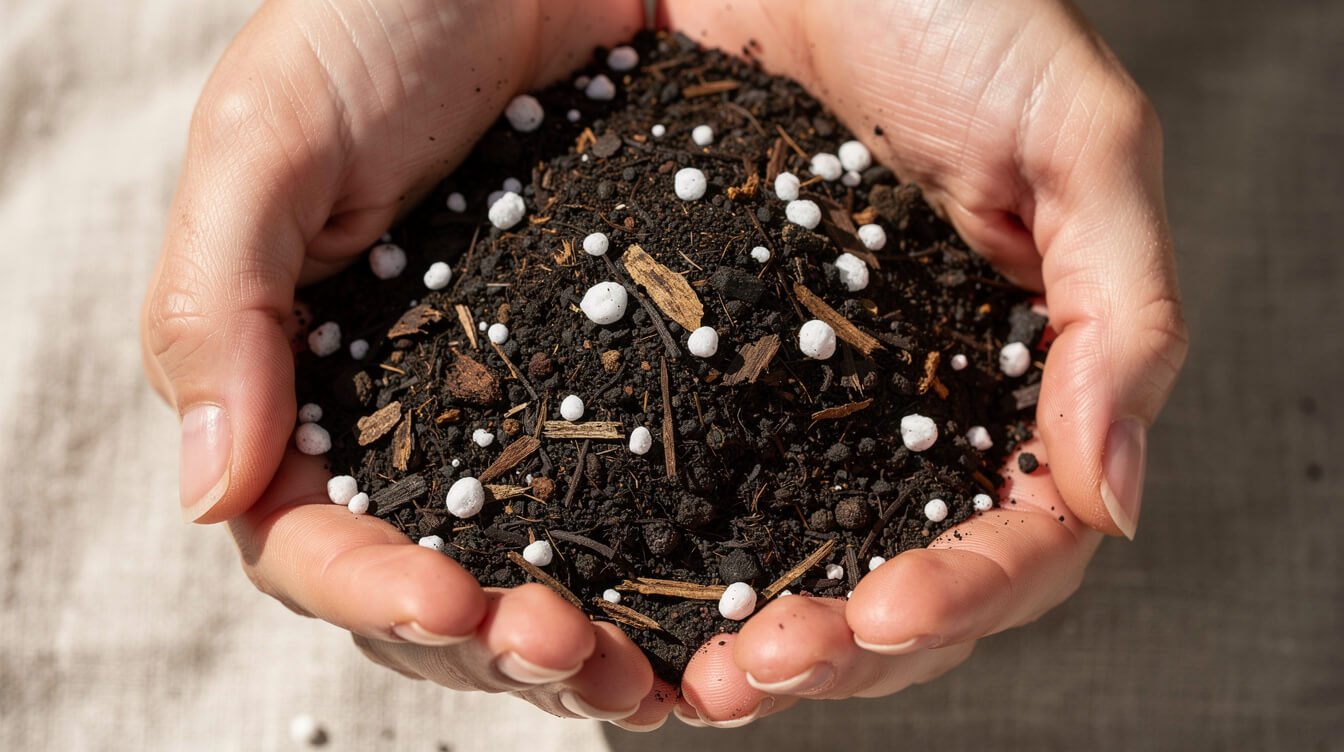
- Base: a bagged potting mix built on sphagnum peat or coconut coir. Not topsoil, not garden soil, and not “garden soil for in-ground use”.
- Air: visible perlite (the white bits). Many growers cut a bagged mix with roughly a quarter to a third extra perlite to make it airier.
- Food: a light starter charge of fertilizer, or a richer mix used only after the seedling stage. Feed later, once the plant is actually using the pot.
- Skip: moisture-control formulas and mixes with slow-release pellets that feed for months on their own schedule.
Why that combination? Cannabis roots need oxygen as much as they need water. A mix that stays soggy suffocates roots, invites fungus gnats and root rot, and makes it hard to tell overwatering from underfeeding. In the one controlled study that compared wetter and drier mixes through flowering, the drier mix grew more and stronger flower (more on that below). So when you’re choosing the best soil for weed, lean airy. You can always water more often, but you can’t easily add air back into a waterlogged pot.
Everything else, like living soil, super soil, and coco, is a legitimate choice with real tradeoffs. Those tradeoffs mostly come down to how much control you want and how much work you’re willing to do, and none of them is a secret to bigger yields.
Most “potting soil” isn’t soil (and why that changes your pH target)
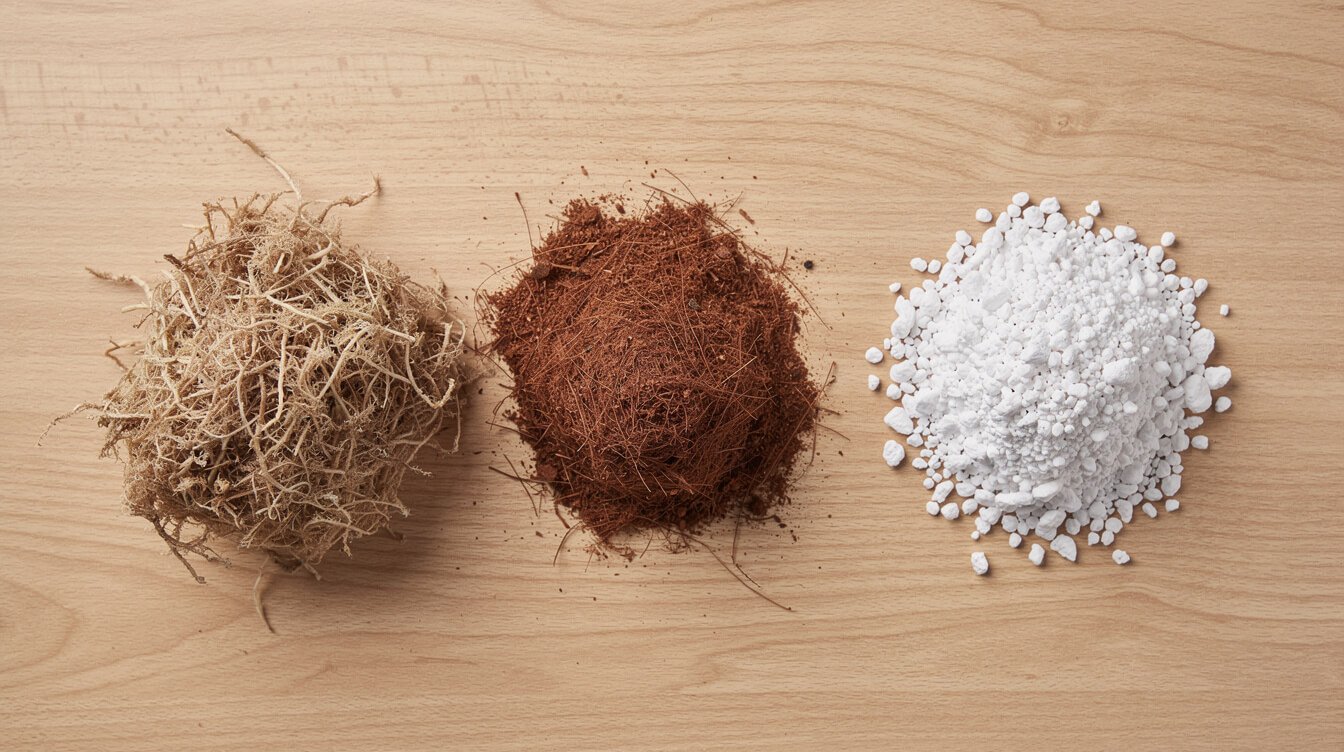
This is the single most useful idea in the whole topic, and it settles an argument you’ll find all over page one of Google. As Oklahoma State University’s extension horticulturist put it, “potting soil isn’t soil in the traditional sense.” Most bags are a blend of peat moss or coir, perlite or vermiculite, composted bark or forest products, and some fertilizer and lime. There’s little or no mineral soil (sand, silt, and clay) in them at all.
That matters because mineral soil and soilless mixes have different ideal pH ranges, and the competing articles you’ve read are quietly talking about different things:
- Mineral soil (garden beds, loam, topsoil): Clemson Extension notes that most vegetables and herbs thrive at pH 6.0 to 7.0, the familiar garden-soil target.
- Peat-based soilless mixes: Clemson recommends pH 5.3 to 6.5, and Purdue’s container-substrate guide puts most greenhouse crops at 5.4 to 6.6.
So when one guide says “keep your soil at 6.0 to 7.0” and another says “5.5 to 6.0”, they aren’t necessarily contradicting each other. One is describing dirt, and the other is describing a soilless mix. For a bagged potting mix, the middle of the overlap, roughly 6.0 to 6.5, is a safe target. A true mineral soil outdoors can sit a little higher. Coco, as you’ll see, behaves like a soilless mix and wants the lower range.
A few more ingredient facts from Clemson and Purdue that explain how bags behave in real life:
- Peat is hydrophobic when bone dry. Let a peat mix dry out completely and water runs down the sides of the pot instead of soaking in. If a pot suddenly “drains instantly”, that’s usually why. Water slowly in two passes.
- Coir runs a higher pH than peat and needs less lime. According to Purdue, coir also needs more calcium, sulfur, copper, and iron, and less potassium. Coir can also tie up some soluble nitrogen.
- Perlite is close to neutral (Purdue lists pH 6.5 to 7.5) and holds very little nutrient. It’s there for air, not food.
- Organic mixes break down. As microbes decompose the organic matter, particles get finer and the mix holds less air. That’s one reason a two-year-old bag or a reused pot can drain worse than it did new.
What the research actually shows about cannabis growing media
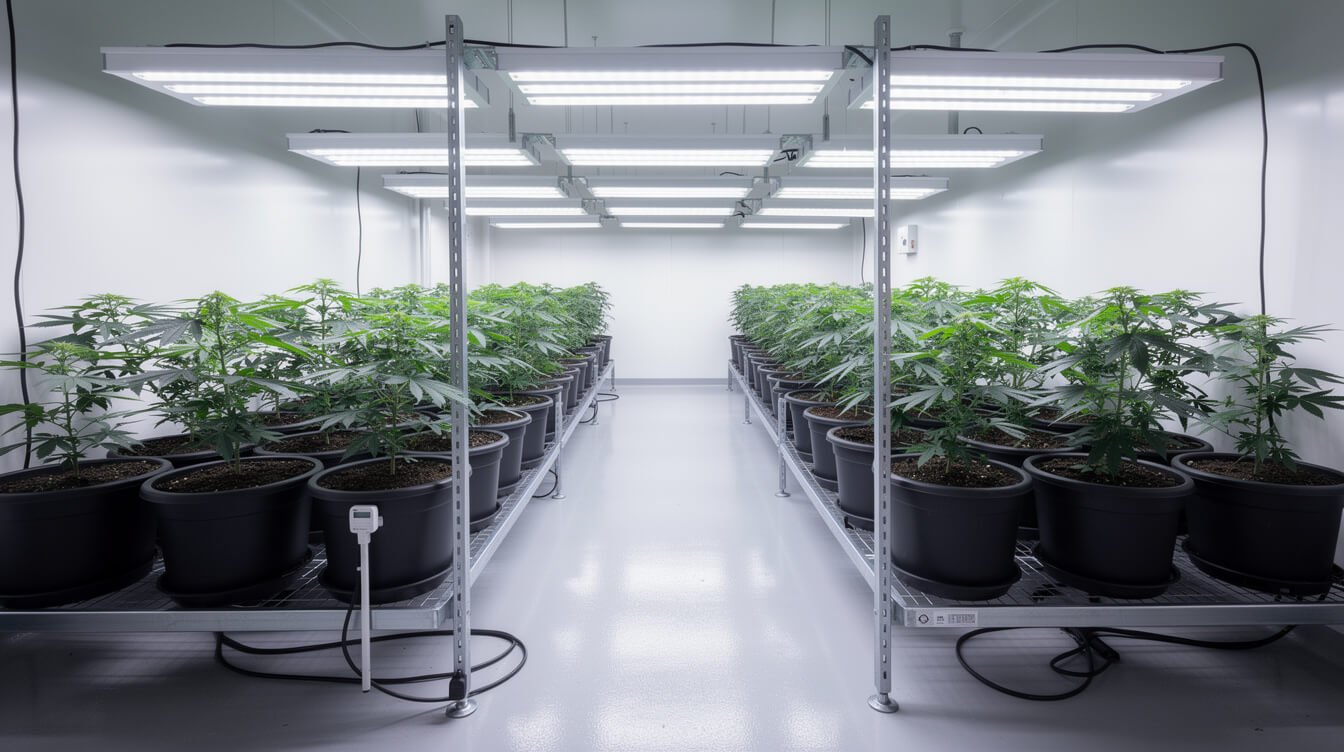
Here’s the part competitors don’t tell you: there isn’t much research. When University of Guelph researchers began testing organic growing media for cannabis in 2017, their paper noted there were essentially no experimental data on cannabis growing substrates, only industry word of mouth. Things have improved since, but the claim on a bag or blog that soil X “maximizes yield” is usually marketing. Here’s what has actually been measured.
Drier mixes did better in flower
Caplan, Dixon, and Zheng (Guelph) grew one cultivar through flowering in two coir-based organic mixes that differed mainly in how much water they hold after draining. In their 2017 HortScience paper, the drier mix produced 11% more dried flower, 20% higher THC concentration, and 57% more THC per plant than the wetter one. In their companion vegetative-stage trial, the two mixes performed the same. A conference paper from the same group reported an even bigger flowering gap (29%) in its trial.
Caveats are real: it’s one cultivar, a growth chamber, commercial coir blends, and a lab watering routine (water to about 20% runoff whenever the mix dropped to roughly 30% moisture). But it’s the best direct evidence we have, and it agrees with basic root physiology. Airier is better, especially once the plant is big and drinking hard.
More fertilizer in the root zone didn’t mean more weed
Utah State’s crop physiology lab has tested this twice. Raising phosphorus threefold didn’t change yield or cannabinoids, and it increased the phosphorus washing out of the pots twelvefold. A 2025 follow-up found that even a sixfold range of phosphorus, and doubling overall nutrient strength, didn’t improve yield or quality. Those were hydroponic flowering trials, not soil, but they puncture the idea that a “hotter”, richer mix is automatically a better one. Past “enough,” extra nutrients mostly end up in your runoff.
Organic nutrients have to be unlocked first
A 2023 University of Hohenheim trial compared organic and mineral fertilizers on indoor cannabis. The plants took up nutrients less efficiently from the organic fertilizer, and the authors pointed to the timing of when organic nutrients become available. That’s the core living-soil tradeoff in one line: organic nitrogen has to be broken down by microbes before roots can use it, so it’s gentler and slower, but also harder to steer. The same paper notes that indoor cannabis is usually grown in peat or coir mixes and rarely in living soil.
Soil changes the chemistry, but not in a predictable “better” direction
A 2025 Penn State study grew two hemp cultivars in two differently managed fields. Soil management changed cannabinoid levels a lot, but in opposite directions for the two cultivars. A 2014 study found that soil type is the main driver of the microbial community around cannabis roots (Winston et al.). So soil clearly matters. Nobody has shown that one soil reliably makes “better” weed across genetics, and that’s worth remembering the next time a product promises terpene gains.
The five options, compared honestly
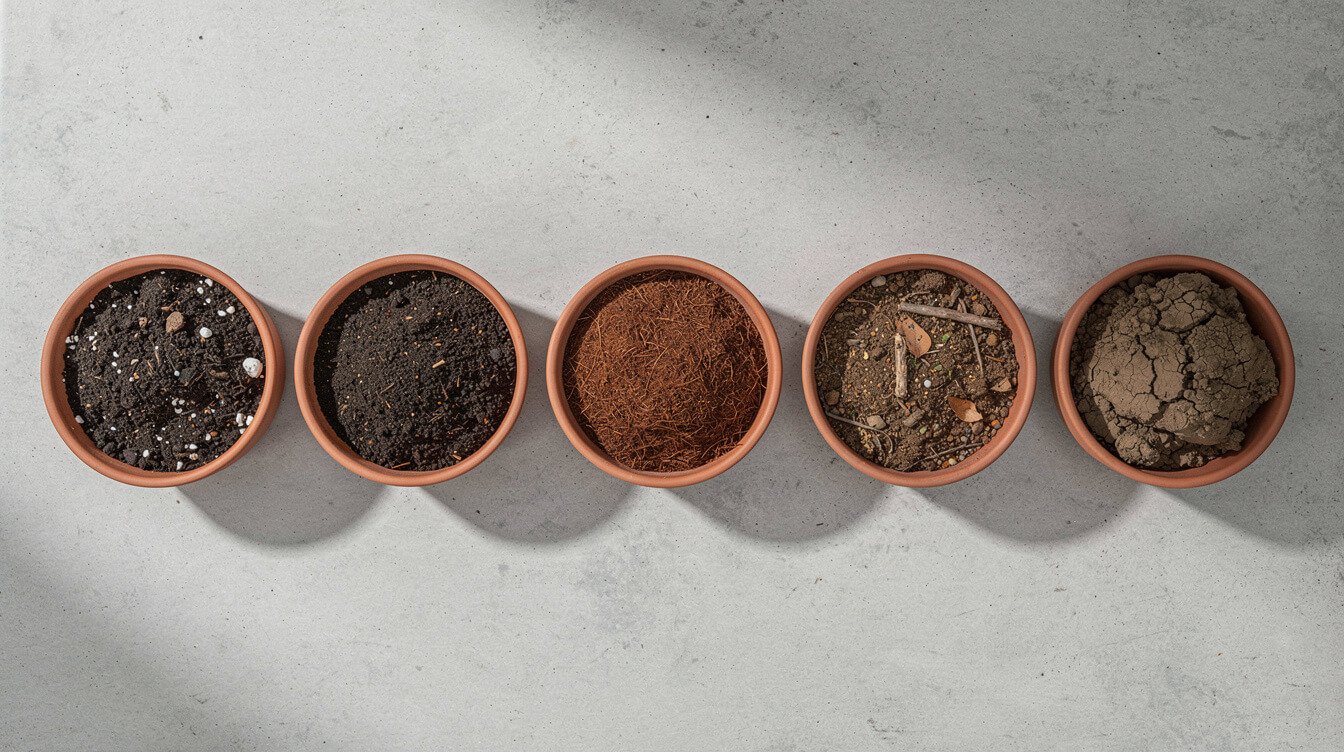
Here’s how the common choices stack up for an adult growing a plant or two at home. “Best” depends on how you like to grow, so each option gets a “who it’s for” line.
1. Light peat or coir potting mix (best for most first grows)
A lightly fertilized, peat- or coir-based mix with perlite, sometimes sold with a “seedling” or “light” description. FoxFarm’s Happy Frog is a well-known example; its label lists earthworm castings, bat guano, aged forest products, and added soil microbes. Mixes like this feed a seedling gently for the first few weeks, after which you add nutrients as the plant grows.
Who it’s for: first-timers and anyone who wants to learn what the plant is telling them. It’s the most forgiving of the five options, and it’s easy to fix when something goes wrong.
2. Richer, pre-fed potting soil (good, but not for seedlings)
These are heavier-amended bags. FoxFarm’s Ocean Forest is the famous one: the label lists aged forest products, sphagnum peat, sandy loam, earthworm castings, bat guano, fish emulsion, and crab meal. Growers widely report that mixes like this are too strong for tiny seedlings and work better after the first transplant. If your seedling’s leaf tips burn in week one, the bag may have done it. Our nutrient burn guide shows how to tell.
Who it’s for: growers who transplant from a small, light-mix starter pot into a bigger final pot and want less bottle-feeding early in veg.
3. Coco coir (fast and controllable, but it’s basically hydro)
Coco is shredded coconut husk, usually blended with perlite. It holds water and air well, but it carries almost no usable nutrition, so you feed it like a hydroponic system: often, with a complete nutrient that includes calcium and magnesium. Most commercial coir is washed to strip out its natural potassium and sodium, and some is pre-buffered with calcium, and Purdue notes coir mixes need more calcium and less potassium than peat. Keep it in the soilless pH range. One more caution comes from plant pathologists. A Simon Fraser University survey of cannabis diseases flagged unpasteurized coco fiber as a potential source of mold contamination, so buy horticultural-grade coir from a garden supplier, not raw fiber.
Who it’s for: growers who want speed and precise control and don’t mind mixing nutrients at every watering. It’s less forgiving if you forget to feed.
4. Living soil and “super soil” (low-input, slower to steer)
Living soil is a compost-rich, biologically active mix that you mostly just water, often with mulch and cover crops on top. Super soil is a related idea: a heavily amended base (guano, bone meal, blood meal, and similar), with the plant started in a lighter layer on top so young roots don’t hit the rich layer right away. The appeal is real. There are fewer bottles, less measuring, and a forgiving buffer once the biology is going. The evidence for “better weed” isn’t there, though. Organic nutrients release slowly (the Hohenheim result above). Outdoors, biostimulants like manure tea and humic acid helped mainly when plants were stressed in a two-year outdoor trial. And these mixes need big containers and time to “cook” before planting.
Who it’s for: patient growers with space for large pots or beds who like the garden side of growing. It’s a weak fit for a tiny tent and a first grow.
5. Garden soil or topsoil in a pot (skip it)
Dirt dug from the yard, or bagged topsoil, compacts in containers, drains poorly, and can carry weed seeds, pests, and pathogens. It’s fine in the ground outdoors where it belongs, ideally after a soil test, but it’s the wrong choice for a pot. If you’ve been wondering whether the cheap bag labeled “garden soil” works indoors, it usually doesn’t.
GanjaTech, weekly
Cannabis, explained. In your inbox.
One email a week: the clearest explainers, honest gear picks, and what the science actually says. 21+ only. No spam, unsubscribe anytime.
How to read a bag before you buy it
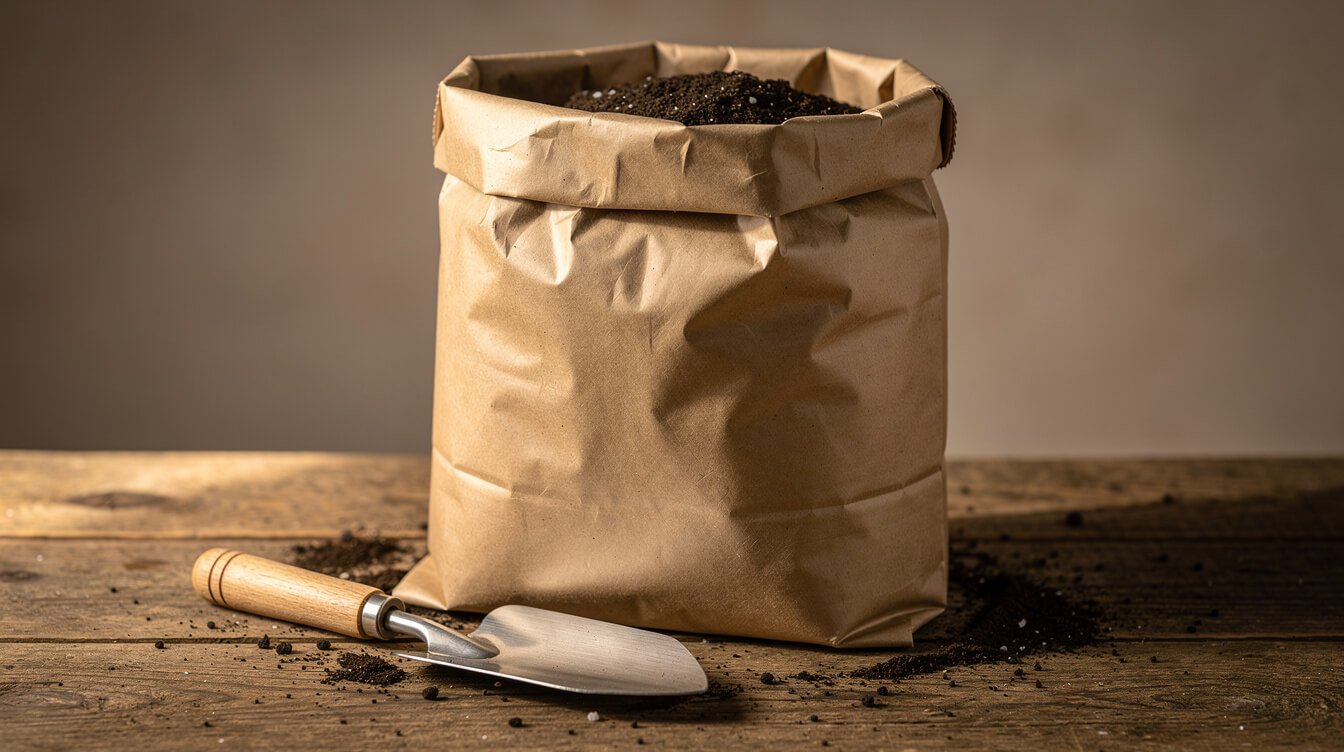
You don’t need a specific brand to get the best soil for weed. You need to read the bag. Here’s what to look for, in order.
The base ingredient
The first ingredient should be sphagnum peat, coir, composted bark, or aged forest products. If it says “topsoil,” “garden soil,” or “for in-ground use,” put it back.
The air
Can you see perlite or pumice? Squeeze a handful of the moist mix. It should crumble apart, not hold together like a mud ball. If it feels heavy and fine, plan to add extra perlite.
The fertilizer charge
Look at the guaranteed analysis (the three N-P-K numbers) and the ingredient list. Low numbers plus castings and compost means a gentle start. Guano, fish, blood meal, and crab meal near the top means a hot mix. Neither is wrong, but they suit different stages.
Red flags for cannabis
- “Moisture control.” These mixes are built to hold more water. Miracle-Gro’s Moisture Control, for example, advertises absorbing 33% more water than basic potting soil. That’s useful for a patio planter that bakes in the sun and the opposite of what the drier-mix data favor.
- Long-acting fertilizer pellets. A mix that “feeds for up to 6 months” keeps releasing nitrogen whenever it likes, including late in flower when you’d rather taper off. You can’t turn it down.
- A sour or ammonia smell, or a soggy bag. That can point to incompletely composted organic matter. UC’s integrated pest management program notes that fungus gnats breed in exactly that.
Drainage, pot size, and the gravel myth
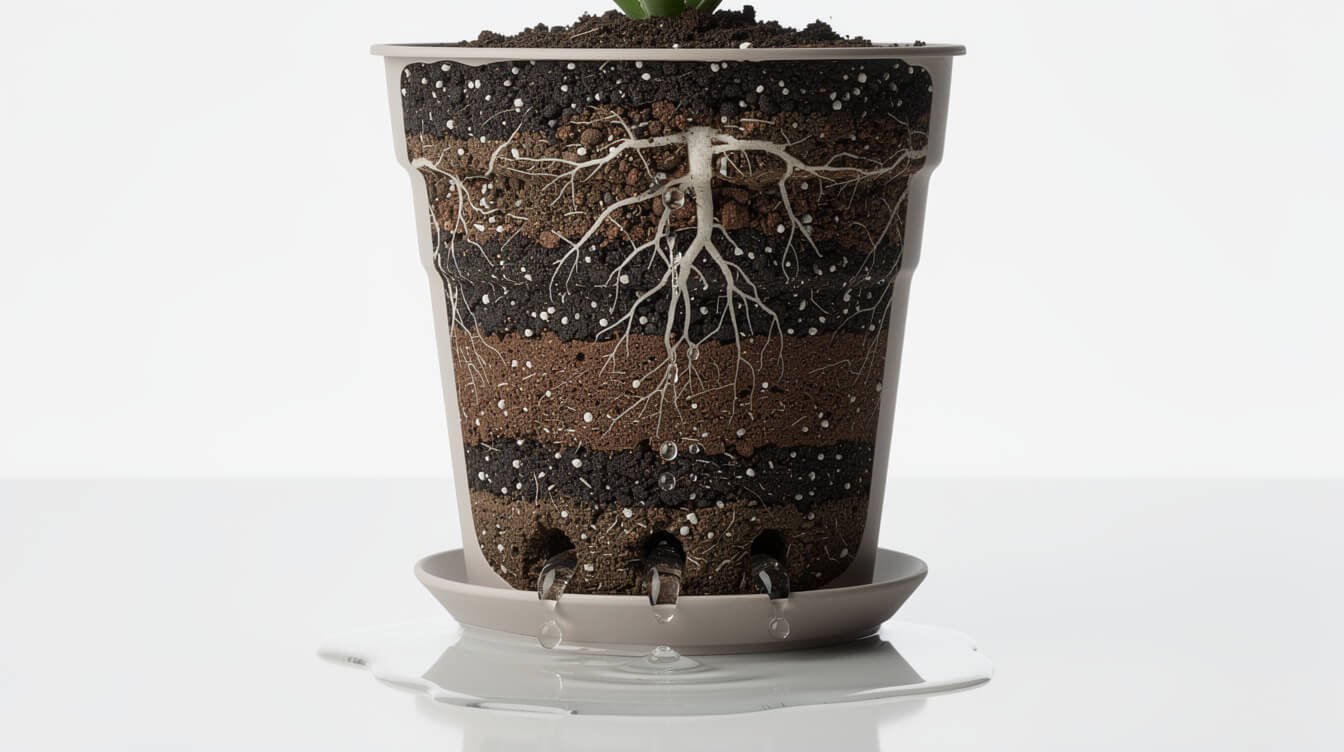
Even the best soil for weed fails in the wrong pot. Container physics matters as much as the bag.
Taller pots drain better
After you water, a saturated zone sits at the bottom of every container. Purdue’s guide explains the consequence: the taller the container, the more it drains, and the more air the mix holds. A short, wide pot with the same mix stays wetter. This is why fabric pots and taller nursery pots are popular. They make the same mix behave airier. Always use containers with real drainage holes, and never let a pot sit in its runoff saucer for long.
The gravel layer debate
You’ve probably read that a layer of gravel at the bottom “raises the perched water table” and makes drainage worse. A 2025 study in PLOS ONE tested that directly and mostly found the opposite: in peat-type, loamless mixes, drainage layers reduced water retention and almost never increased it, and a 60 mm layer of coarse sand worked best. It’s one study, and it hasn’t settled the argument. Either way, the practical answer hasn’t changed much. An airy mix in a reasonably tall pot with good holes does more than any layer you add at the bottom.
How big a pot?
For one indoor photoperiod plant, many home growers land in the 3 to 5 gallon range for the final pot. Smaller pots dry out fast and can stunt big plants; giant pots of wet mix stay soggy for days around a small root ball. Autoflowers are often planted straight into their final pot (commonly 2 to 3 gallons), because their short life leaves little time to recover from transplanting. Our ruderalis and autoflower explainer covers why. For reference, the Guelph flowering trials used 6-liter pots (about 1.6 gallons), but that was a controlled chamber with a tight watering routine.
Seedlings, “hot” soil, and when to start feeding
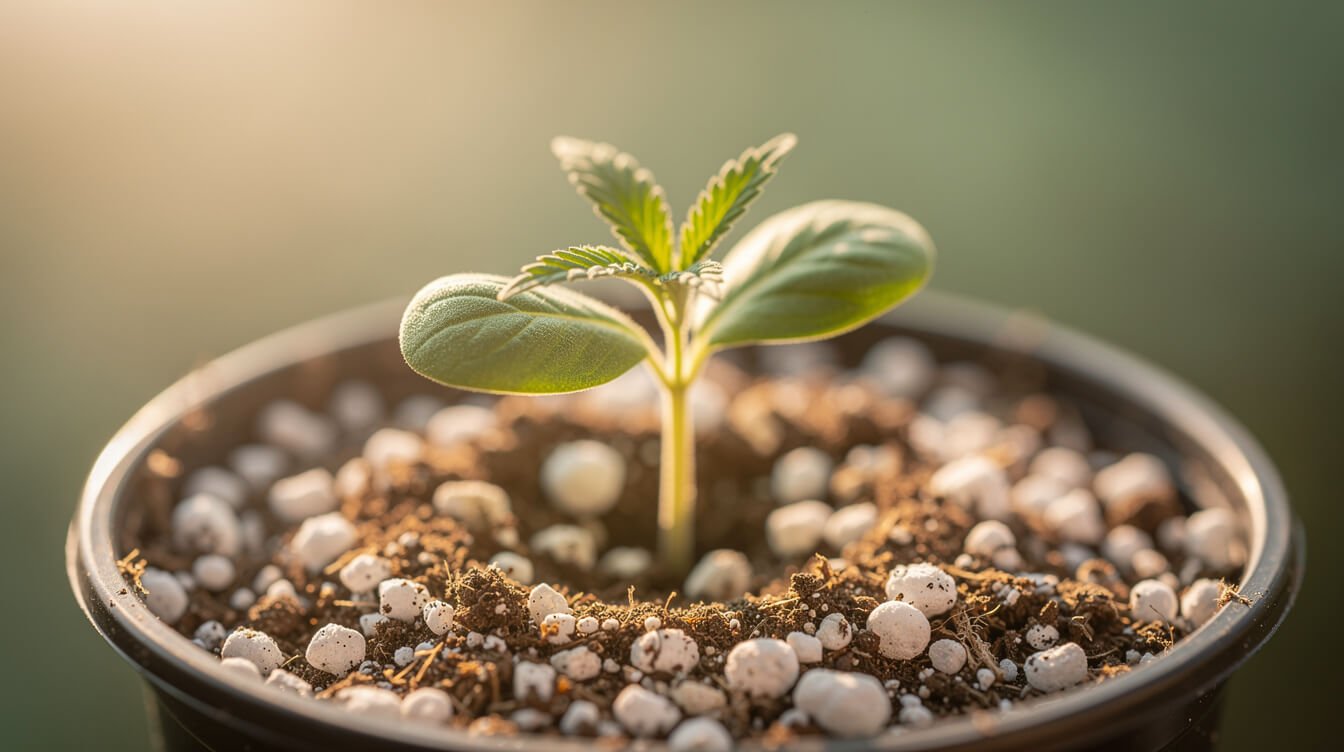
Most soil-related disasters happen in the first three weeks, and they’re rarely about the brand.
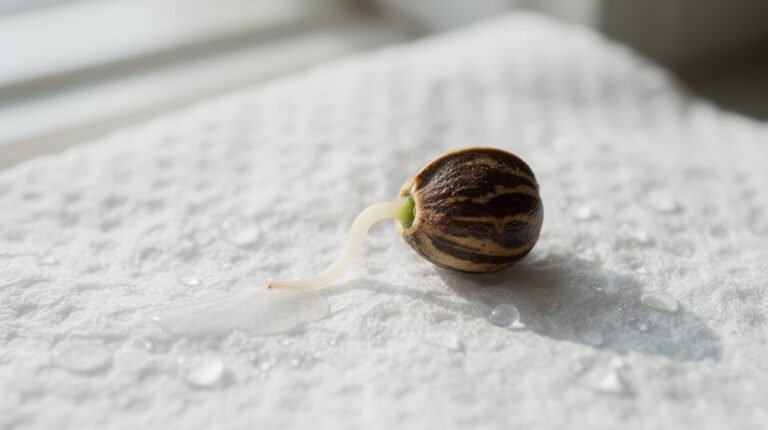
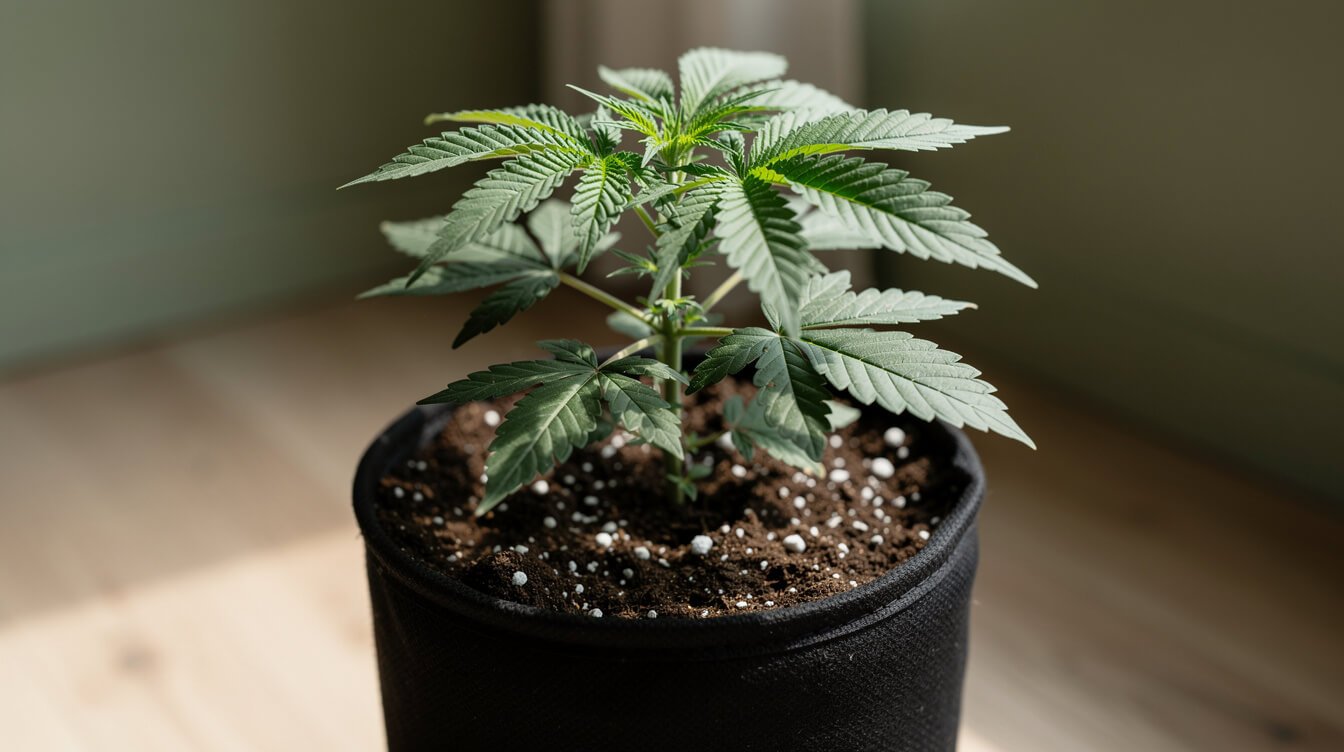
- Start light. A seedling has a tiny root system and needs almost nothing from the mix. Start it in a light mix, or in a small pot of seed-starting mix, and move up once roots fill it. Our germination guide covers planting the taproot without damage.
- Don’t drown it. A small plant in a big pot of wet mix is the classic first-grow mistake. Water a small circle around the stem, let the top inch dry, and widen the circle as roots spread. The UC IPM program’s fungus gnat advice is the same: let the surface dry between waterings.
- Feed when the plant asks. In a light mix, the bagged fertilizer typically runs low a few weeks in, and pale lower leaves are often the first sign. In a pre-fed hot mix, you may not need to add anything until well into veg. Our growth stages guide explains what each stage needs.
- Check pH where it matters. In peat mixes and especially coco, check the pH of your water or feed. Aim for the soilless range. Living soil growers usually rely on the mix’s buffering instead.
One reassurance from the Utah State work: established flowering plants tolerated surprisingly high nutrient levels without visible damage. That doesn’t make hot soil safe for seedlings, which is where growers most often report burn, but it does mean you don’t need to panic over every brown leaf tip in week six.
Best soil for weed: frequently asked questions
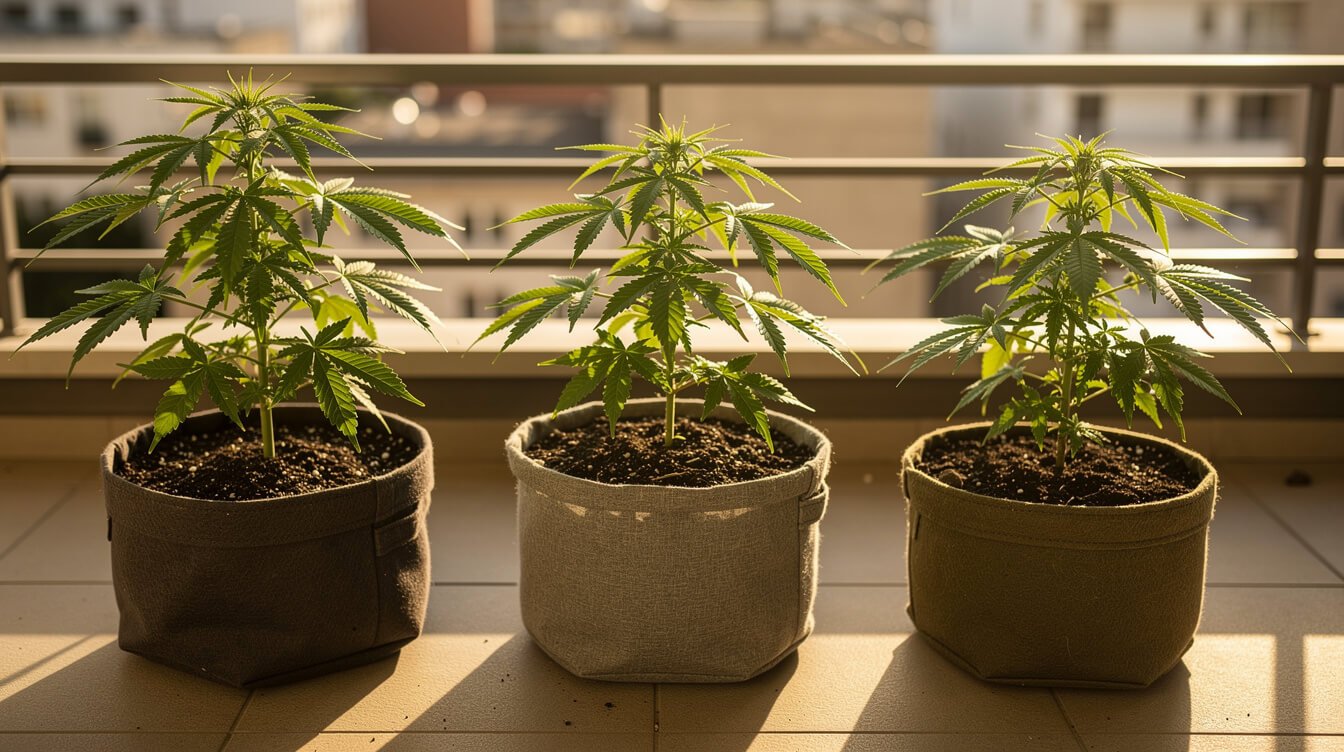
What’s the best soil for weed in pots?
A peat- or coir-based potting mix with plenty of perlite, used in a container with good drainage holes. If you’re unsure, start with a light, lightly fertilized mix and add nutrients as the plant grows. That combination is the most forgiving setup for a first grow.
Is regular Miracle-Gro OK for weed?
It can grow a plant, but it’s not ideal. Many Miracle-Gro mixes come pre-loaded with plant food that keeps feeding for months on its own schedule, and the Moisture Control line is designed to hold extra water, which works against an airy root zone. If it’s what you have, cut it with extra perlite, water carefully, and expect to feed less early on.
Is coco better than soil?
It’s not better, just different. Coco offers faster growth and tighter control if you feed it properly and often, while a good potting mix is more forgiving if you miss a feeding. For a first grow, most people do better with a potting mix.
What’s the best soil for weed seedlings and autoflowers?
A light, airy mix with a mild starter charge. Seedlings need little food, and autoflowers grow fast with little time to recover from transplant shock or nutrient burn, so a gentle mix in the final pot is a safe default.
Can I reuse my soil?
Often, yes, if the last plant was healthy. Oklahoma State’s advice is to skip reuse if you had diseases or pests, because pathogens persist in the mix. Otherwise, refresh old mix with new mix, compost, and perlite, since old organic mix holds less air and fewer nutrients. Living soil beds are designed to be reused and amended between runs.
Do I need to pH my water in soil?
In a quality potting mix, the lime and organic matter buffer pH, so many soil growers only check when problems show up. In coco, pH matters every time you water. If you have very hard or alkaline tap water, checking runoff now and then is worth it whatever you grow in.
Final thoughts
The best soil for weed is the one that keeps roots breathing and lets you control the feeding: a light, peat- or coir-based mix with plenty of perlite, in a pot that drains. The research is still young, but the best controlled data favor airier mixes, extra fertilizer hasn’t added yield in the trials that tested it, and organic and living-soil systems trade speed and control for a lower-input routine. None of these is a cheat code for bigger buds. A good grow comes from steady light, careful watering, and watching the plant, and that’s true whether your bag cost $12 or $40.
If you’re putting a full setup together, pair this with our one-plant LED guide and the indoor grow walkthrough. Once the plant is in its final pot, low-stress training is the cheapest yield upgrade there is. Keep it legal where you live, keep it adult, and enjoy the slow part. It’s half the fun.
Before you go
Get the next explainer first
We publish a new one every day. The best of the week, plus what's new in the shop, lands in one short email.