Reggie Weed: What It Means, How to Spot Low-Grade Flower, and Which Flaws Actually Matter
Reggie weed is slang for regular, lower-grade cannabis flower: the loose, dull, seedy, stemmy stuff that sits at the bottom of the quality ladder, below mids and way below the frosty “loud” that gets photographed. The word is a clipping of “regular.” That’s the short answer. The longer one is more useful, because almost every page that explains reggie weed is written by someone selling you something better, so they lump every flaw into one bucket called “bad.” Some of those flaws are cosmetic. A few actually mean don’t smoke it. This guide separates them.
Here’s what you’ll get: where the word came from, what reggie looks, smells, and smokes like, the flaws that are only ugly versus the ones that are a safety problem, why nobody (including the label) can eyeball THC, how good flower ends up as regs, and the case for reggie, because “mid” isn’t always the insult people think it is. Everything here is for adults 21+, and cannabis laws vary by state and country, so know yours.
Reggie weed: the short answer
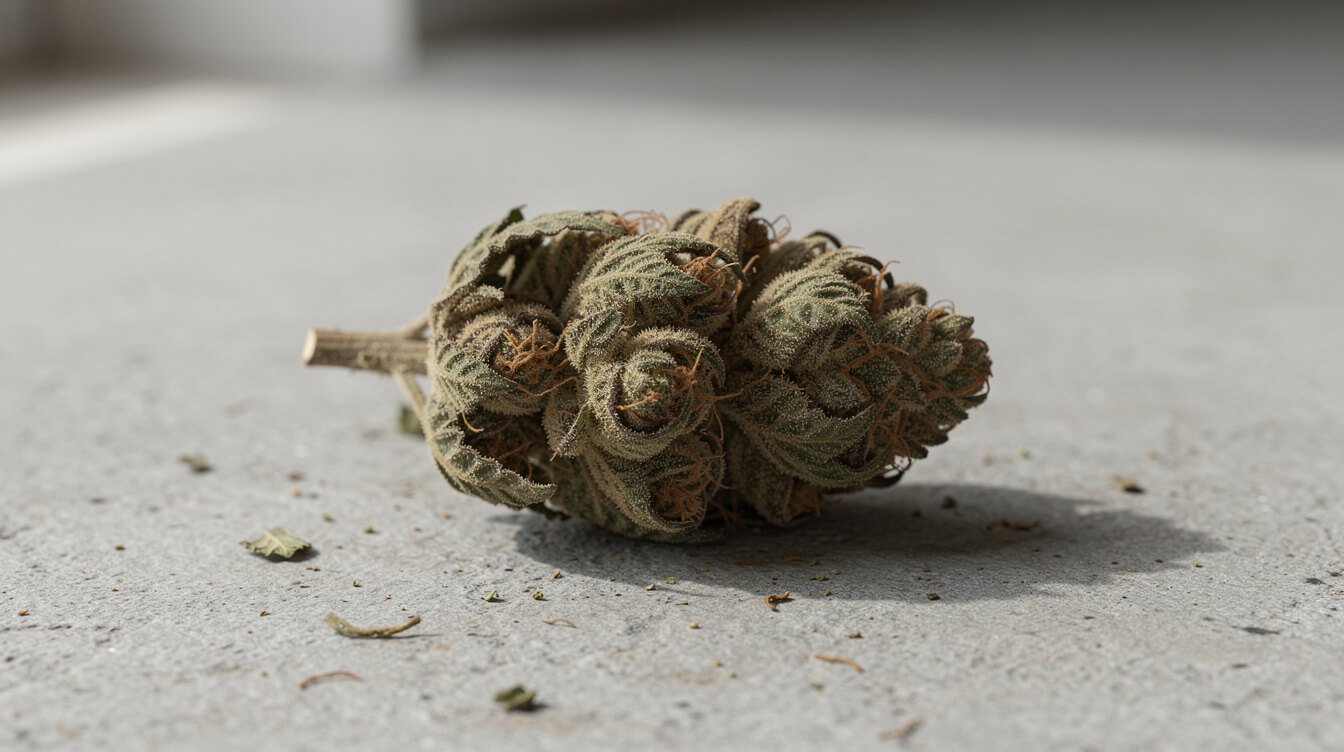
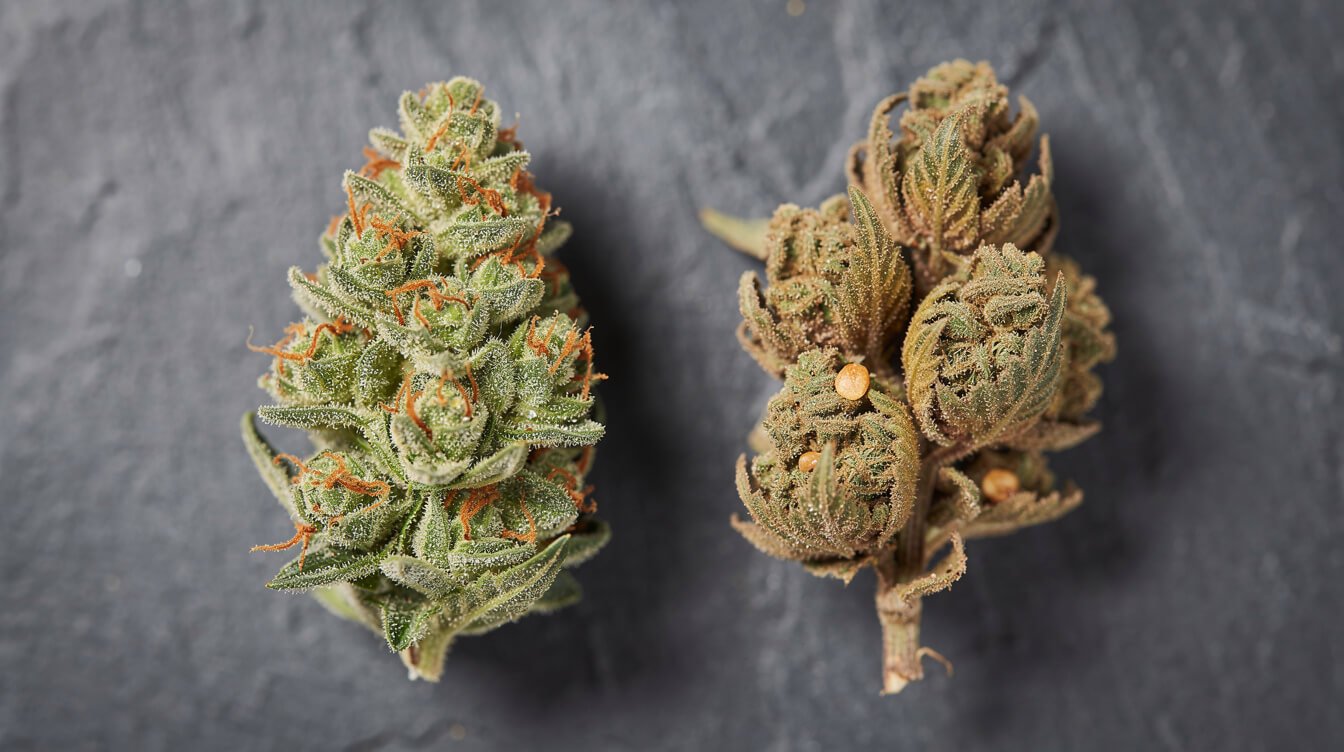
Reggie weed means ordinary, low-grade flower. If you’re picturing a bud that is brownish or dull olive green, airy rather than dense, light on the sparkly trichome frost, and dotted with seeds and stems, you’re picturing reggie. It usually smells faint or like dry hay instead of loud and terpy, and it tends to burn harsh.
Three things worth knowing up front:
- Reggie is a quality grade, not a strain. You’ll see strain pages using “Reggie” as a name, but in everyday speech the word describes how flower was grown, handled, and stored, not its genetics.
- Reggie still contains THC. Less, usually, and less predictably. It can absolutely get you high, and it can absolutely impair your driving (more on that below).
- Ugly isn’t the same as unsafe. Seeds, stems, and a brown color are cosmetic. Mold, mildew, and a musty or ammonia smell are not. That distinction is the most useful thing on this page.
You’ll also hear “regs,” “reggy,” “brick,” “schwag,” and “dirt weed” for roughly the same tier. We cover the wider vocabulary in our weed slang guide. This post is about the flower itself.
Where “reggie” comes from: regular, -ie, rap, and the quality ladder
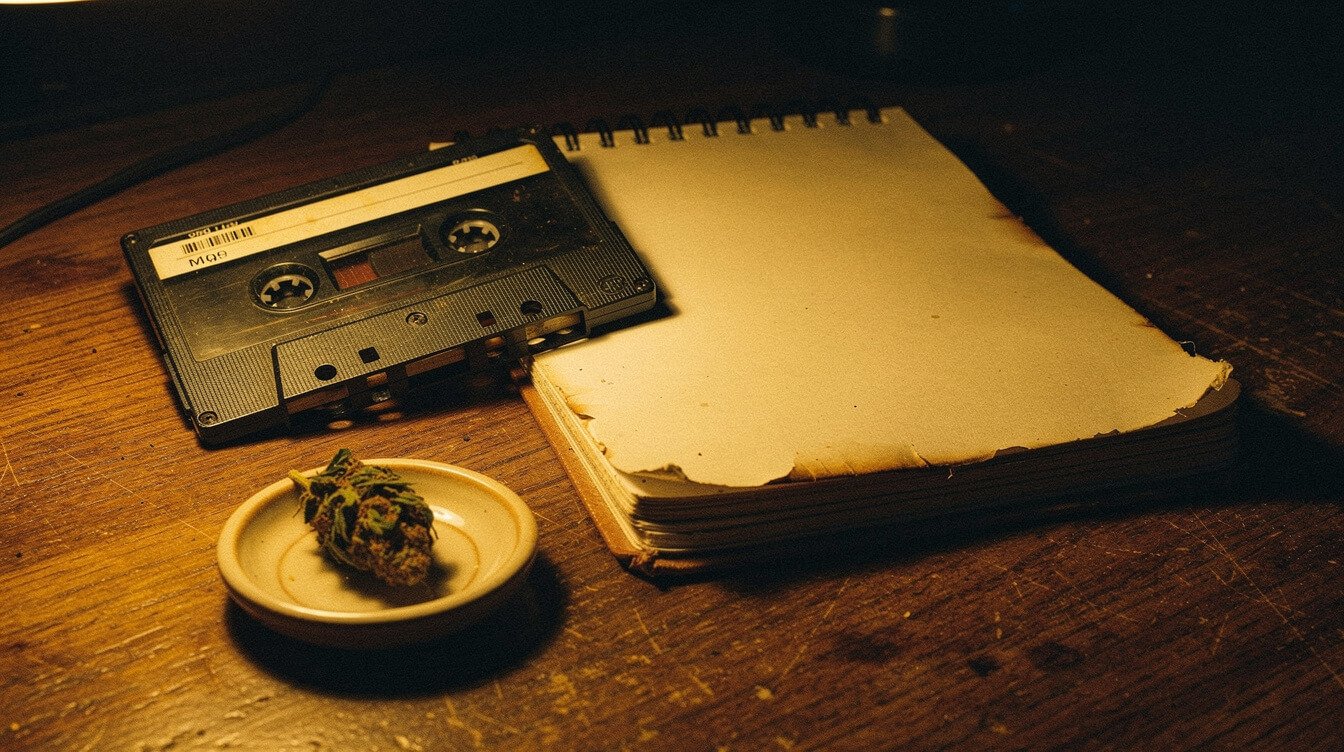
The etymology is refreshingly boring. Wiktionary parses “reggie” as a clipping of regular plus the diminutive -ie suffix (the same move that turns “barbecue” into “barbie”), with “reggy” as an alternate spelling. It defines the word as “regular marijuana, as opposed to good-quality marijuana” and lists dank, gas, and loud as antonyms.
The citation it uses is Chief Keef’s 2012 track “I Don’t Like,” where smoking reggie is on the list of things he doesn’t like. Treat that as evidence of how the word went mainstream, not as its birth certificate. Slang like this circulates in speech for years before anyone writes it down, and nobody has a documented first use. Anyone who gives you a precise origin date is guessing.
The quality ladder, roughly
People rank flower on an informal ladder. The rungs blur and change by region, but the shape is consistent:
- Reggie / regs / schwag / brick: the bottom. Seedy, stemmy, dull, weak or unpredictable.
- Mids: the middle. Fine, unremarkable, gets the job done. (“Mid” has since escaped into general slang as “mediocre.”)
- Loud / gas / dank / fire / top shelf: the top. Pungent, frosty, well-cured.
- Zaza: the newest hype word for exotic top-shelf, with a twist, since the same name is also on a gas-station product that isn’t cannabis at all. We untangle that in our zaza meaning explainer.
Notice what the ladder is built on: smell, look, and feel. None of the rungs come with a lab number attached, and that turns out to matter a lot.
What reggie weed looks like, smells like, and feels like
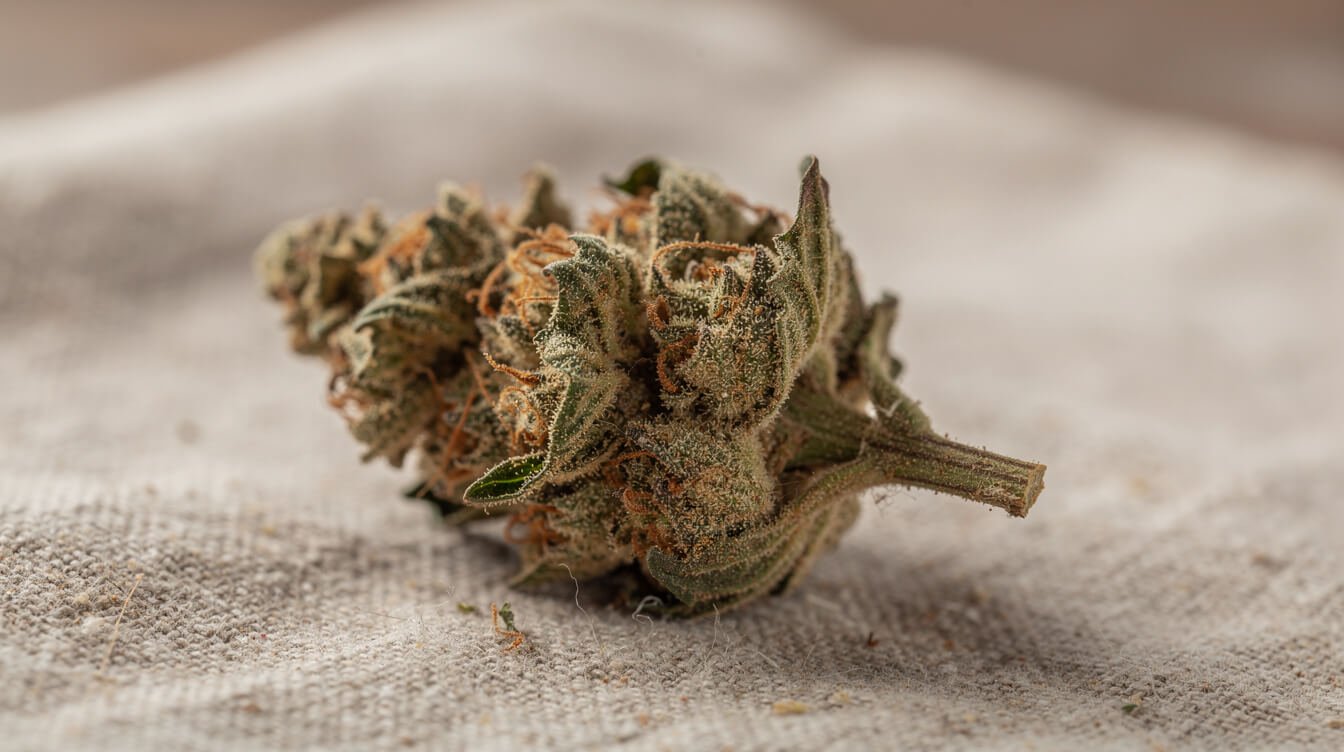
Reggie announces itself to most of your senses. Here’s the checklist people actually use, with an honest note on what each cue does and doesn’t tell you.
Look
- Color: dull olive, khaki, or brown instead of a lively green. Brown often means old flower, rough drying, or a plant harvested past its best. Purple or orange is just pigment and pistils, not a sign of anything bad.
- Structure: loose, airy, or flattened. Compressed “brick” flower is pressed into a dense, flat slab and has to be broken apart by hand, and it’s usually full of stems and seeds.
- Frost: few visible trichomes, the tiny resin glands that hold most of the cannabinoids and terpenes. A matte bud has either less resin or resin that got knocked off in handling.
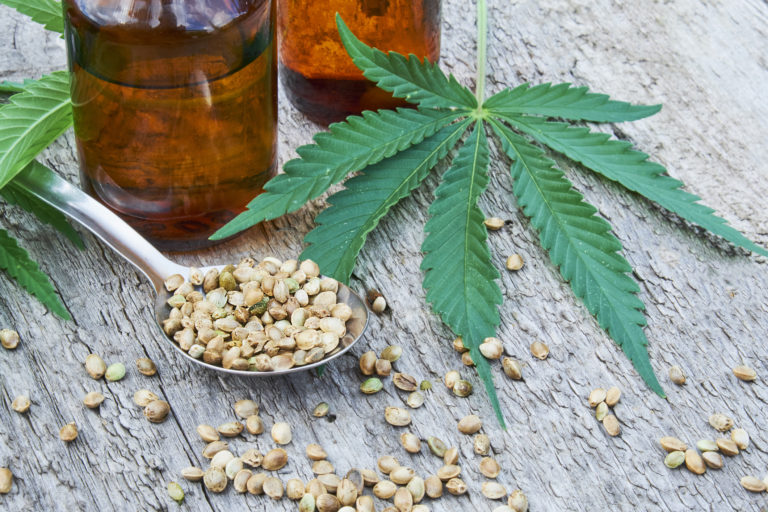
- Seeds and stems: visible seeds (round, hard, often brown-striped) and thick stems that add weight but no high.
Smell
Good flower is loud. You open the jar and the room knows. Reggie weed tends to smell faint, flat, or like hay or cut grass. That flat smell usually means the volatile terpenes have evaporated or were never well developed, or that the flower was dried too fast and never cured. A faint smell on its own is a quality cue. A musty, damp-basement, or ammonia smell is a different thing entirely, and it belongs in the safety section below.
Feel and burn
Over-dry reggie crumbles to dust between your fingers, and stems snap instead of bending. It tends to burn fast and harsh, and the smoke can taste like burnt leaves. Seeds can pop and crackle when they catch, which is unpleasant but not dangerous in itself. Grind reggie weed and you’ll get a fair amount of shake and stem fragments to pick out.
One fair warning: every one of these cues is a judgment call. A bud can look rough and smoke fine, and a pretty bud can be disappointing. Which brings us to the flaws that actually matter.
Cosmetic flaws vs safety flaws: the only signs that mean don’t smoke it
This is the part most reggie weed articles skip, because they’re busy telling you all low-grade flower is garbage. It isn’t all the same. Sort what you see into two piles.
Cosmetic flaws: ugly, weaker, not dangerous on their own
- Seeds and stems
- Loose, airy, or compressed buds
- Dull, khaki, or brownish color from age or rough handling
- Faint or hay-like smell
- Over-dry, crumbly texture and a harsh, fast burn
These make for a worse experience: weaker, less flavorful, harsher. They don’t, by themselves, make flower unsafe.
Safety flaws: the must-toss signals
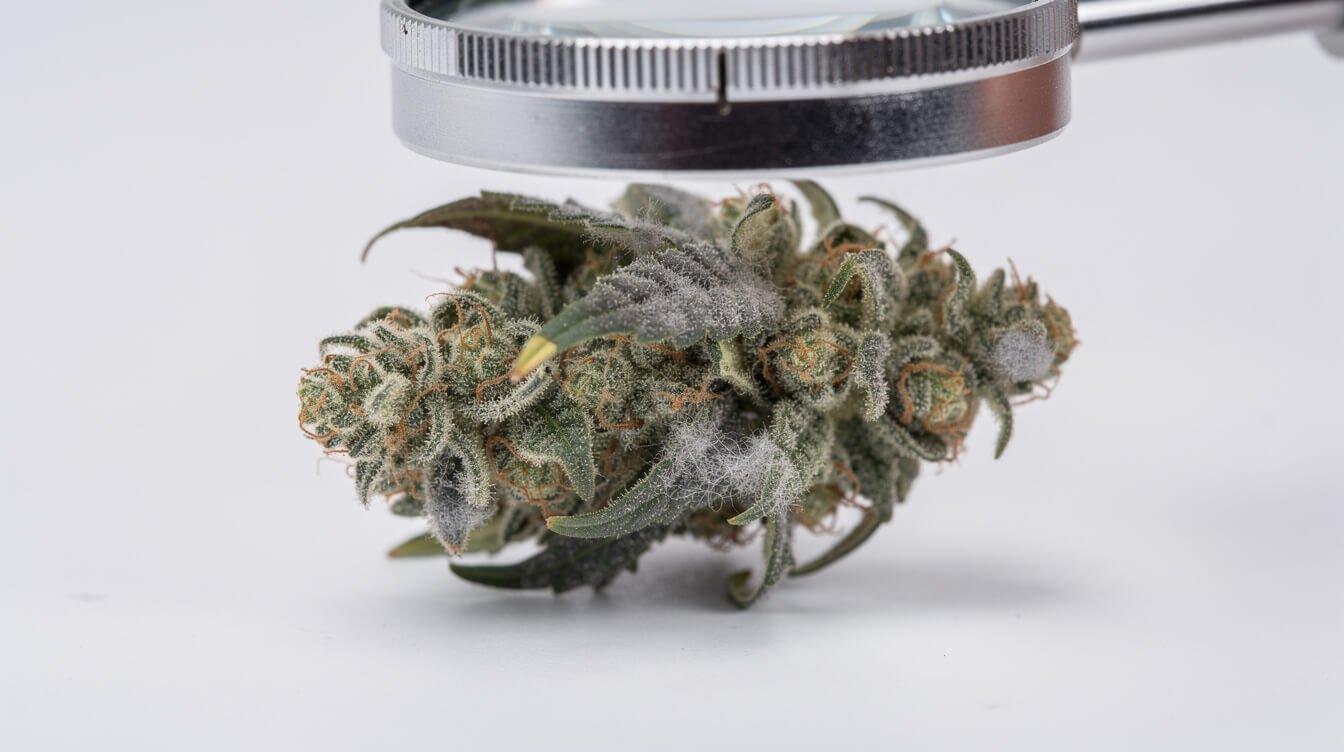
- Fuzzy or webby growth, gray, white, or blue-green, that sits on top of the bud rather than glittering like trichomes. Powdery mildew looks like a dusting of flour that wipes or smears.
- Brown or gray mush inside a dense bud when you break it open. That’s the classic bud-rot pattern.
- A musty, mildewy, sour, or ammonia smell, or a damp feel to flower that should be dry.
- Anything that looks added: unusual glitter or grit, a chemical or perfume smell, residue that doesn’t belong. That’s a different problem from mold, and our guide on how to tell if weed is laced covers what labs have actually found.
Why take mold seriously? Fungi are a documented contaminant of cannabis flower. A 2023 review in Frontiers in Microbiology lists over 100 fungal species in the cannabis mycobiome, including some that produce mycotoxins. Back in 1983, researchers isolated Aspergillus from street cannabis and even recovered Aspergillus fumigatus spores from the smoke. If you’re unsure whether you’re looking at frost or fuzz, our side-by-side guide to what moldy weed looks like walks through the magnifier test. When in doubt, throw it out. If you have a weakened immune system or lung condition, that rule goes double, and that’s a conversation for your doctor.
The flaws you can’t see at all
Here’s the uncomfortable part: the most common contaminants are invisible. In a 2026 Canadian study in the Journal of Cannabis Research, analysts compared 50 legal products with 50 illegal samples seized by law enforcement. 94% of the seized samples contained pesticide residues, averaging 3.4 compounds each, and 73% exceeded yeast and mold limits. Legal products weren’t perfect either: 20% exceeded the European Pharmacopoeia microbial limits used in the study, and 48% missed their labeled THC by more than 20%. No amount of squinting at a bud tells you any of that. Testing does, which is why many places where cannabis is legal require it. Rules differ by jurisdiction.
GanjaTech, weekly
Cannabis, explained. In your inbox.
One email a week: the clearest explainers, honest gear picks, and what the science actually says. 21+ only. No spam, unsubscribe anytime.
Why you can’t eyeball THC (and why the label isn’t gospel either)
You’ll read that reggie weed is “usually under 7% THC” or some similar number. We couldn’t find a source for any figure like that, and it would be hard to produce one, because “reggie” is a description, not a tested category. What we can say with evidence is narrower and more useful.
Trichomes are a cue, not a number
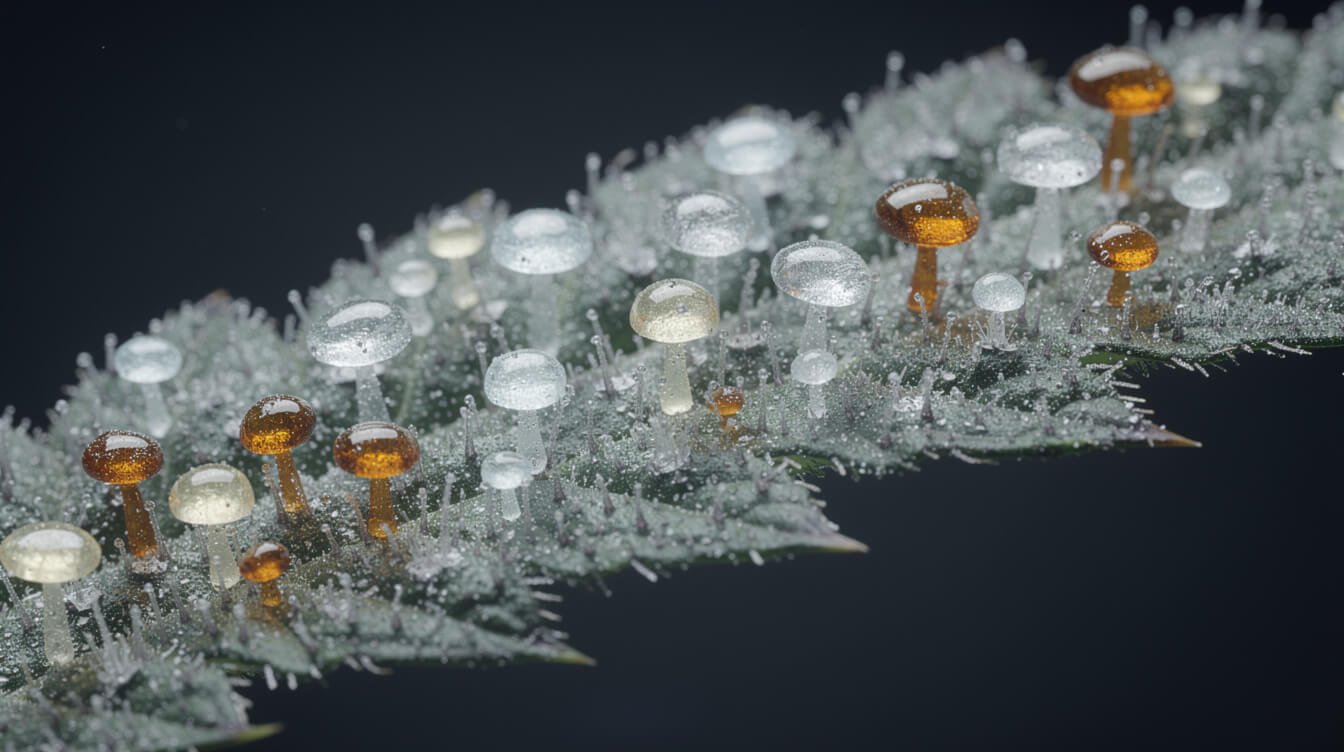
Frost is the closest thing to a visual potency hint, because the trichome heads are where THC is made and stored. But how frosty a bud looks depends on genetics, harvest timing, and how roughly it was trimmed and bagged, and you can’t count micrograms by eye. Our guide to what trichomes are and how to read them explains why clear, cloudy, and amber heads mean different things at harvest. That’s useful for growers, not a THC meter for a bag of flower.
Smell doesn’t map to strength either
It’s tempting to treat “loud” as “strong.” Aroma research says it’s more complicated. A 2025 Oregon State study in PLoS One built a 25-term sensory lexicon and ran 91 samples past a sensory panel. High-THC samples were more often described as skunky, musty, and animalic, but terpene profiles alone poorly predicted sensory character, and the authors explicitly argue for quality measures “beyond potency.” So a loud nose is a decent sign of freshness and care. It’s not a THC reading.
Even the label misses
If eyes and noses can’t measure THC, surely the lab sticker can? Only roughly. A 2025 study in Scientific Reports bought 277 products from 52 Colorado dispensaries and retested them. Only 56.7% of flower products landed within ±15% of their labeled THC, and observed THC ran lower than labeled. Concentrates were far more accurate. We’ve written about this inflation problem before, including why “50% THC” moon rocks are a math problem.
The honest takeaway: “this is reggie” is a fair read on care, freshness, and likely strength. It is not a measurement. Neither, entirely, is a label.
Why weed ends up reggie: seeds, early harvest, bad dry and cure, and age
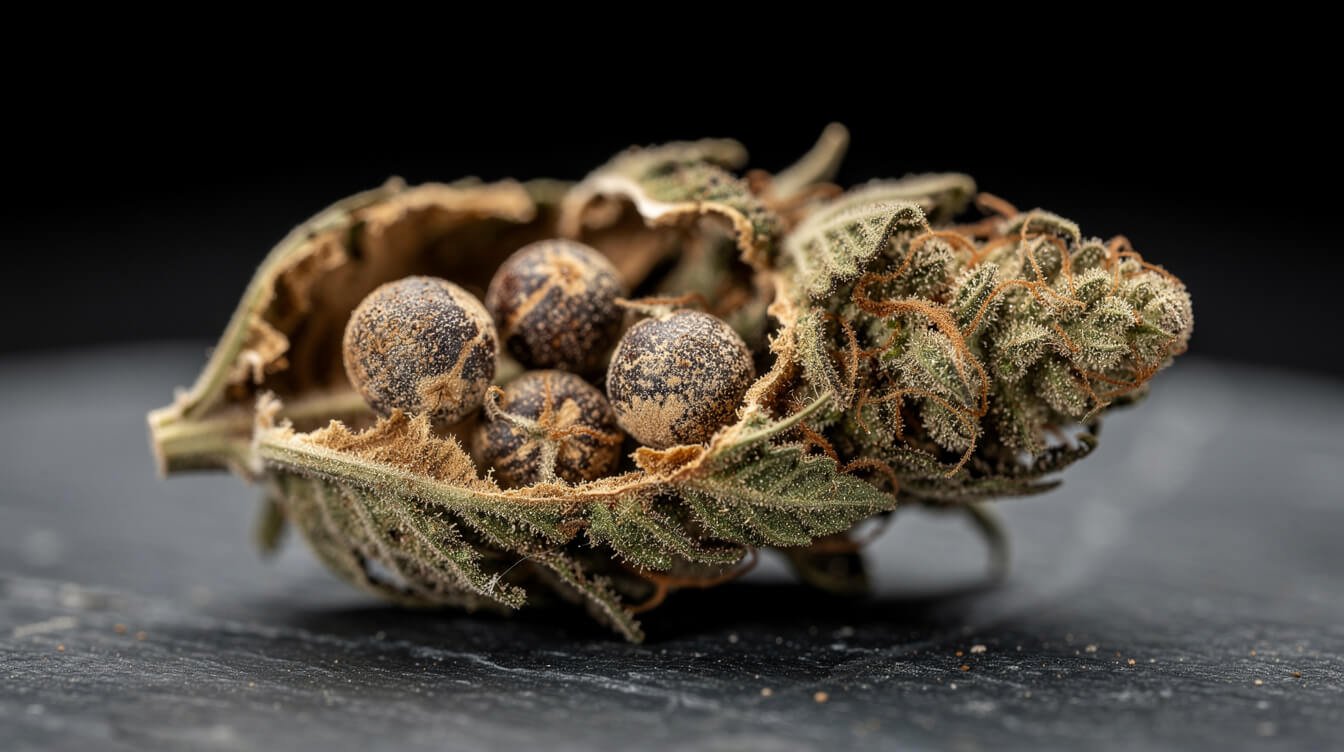
Reggie weed isn’t a mystery. It’s usually one or more of four things going wrong, and every one of them happens to home growers, too.
1. Seeds mean pollination, not hunger
One widely read article claims reggie is seedy because the plants were “undernourished.” That skips the actual biology. A cannabis flower only makes a seed if it gets pollinated. Seedless flower (sinsemilla, literally “without seed”) comes from female plants kept away from pollen. Pollen arrives one of two ways: from a male plant nearby, or from a female that turns hermaphrodite and grows pollen sacs of her own. Growers widely blame stress, like light leaks, heat, or rough handling, for that second route, though the exact mechanism is still poorly understood. A 2020 study in Frontiers in Plant Science found that the anthers on hermaphroditic flowers form much like a male plant’s and lead to unwanted seeds, which is why commercial growers destroy males and watch for herms. So poor care can lead to seeds, but through stress and pollination, not by starving the plant. Our guide to male vs female cannabis plants shows how to tell them apart.
Seeds hurt potency, not just looks. A 2021 study that deliberately pollinated THC-rich and CBD-rich plants found fertilization substantially decreased the concentration of nearly all phytocannabinoids. The plant puts its energy into seeds instead of resin.
2. Harvested at the wrong time
Pulled too early, flower is airy and underdeveloped. Left too long, it can go flat and heavy. Either way you lose the peak. That’s what trichome-watching at harvest is for.
3. Dried too fast, never cured
A rushed dry locks in chlorophyll (that hay or grass smell) and drives off terpenes, and skipping the cure means it never mellows. Our guide on how to cure cannabis the right way covers what a slow dry and jar cure actually change.
4. Age, light, and air
Time turns even great flower toward reggie. The University of Mississippi tracked stored cannabis at room temperature and found THC fell by about 16.6% after one year and 41.4% after four, with much of it converting to the less intoxicating CBN. An earlier study found light was the single biggest factor in cannabinoid loss, that air oxidation mattered too, and that damaging the resin glands sped things up. Old, crushed, sun-exposed flower is reggie by the slow road. Our post on whether weed goes bad covers storage in detail.
The case for reggie: culture, mellow highs, and why “mid” isn’t always an insult
For all the mockery, reggie weed has fans. Cannabis forums are full of affectionate, half-nostalgic threads about it (“All Hail Reggie” is a real thread title), usually from people who remember when it was the only thing around, or who like a lighter, more predictable high than modern top-shelf delivers. That’s culture worth taking seriously.
There’s some science behind “milder isn’t automatically worse,” too. In a 2020 University of Colorado study in JAMA Psychiatry, regular flower users were randomly assigned to 16% or 24% THC flower and used it the way they normally would. Researchers found no within-form association between THC potency and blood THC levels, which suggests people self-titrate: they use less of stronger flower and more of weaker flower to land in a similar place. That’s suggestive, not settled. Other research finds stronger products still tend to produce stronger highs despite titration. But it does mean a weaker bud isn’t automatically a wasted one.
Two honest caveats. First, titrating up on weaker flower means inhaling more smoke to get there, and smoke is smoke regardless of grade. Second, weaker doesn’t mean safe to drive. In a 2026 randomized trial in Scientific Reports, adults who regularly used cannabis smoked placebo, low (6.25%), medium (12.5%), or high (22%) THC cannabis before a driving simulator. Lane weaving increased at every THC level, including the lowest, and reaction time worsened at the medium and high levels. Reggie or loud, don’t drive.
Reggie weed FAQ
Does reggie weed get you high?
Yes, usually. Reggie weed contains THC, just typically less and less predictably than well-grown, fresh flower. The high is often described as lighter and shorter. Because strength is unpredictable, start with less than you think you need and wait before having more.
Is reggie weed bad for you?
Low grade isn’t the same as unsafe. Seeds, stems, and a brown, dry look make flower weaker and harsher, not dangerous. Mold, mildew, a musty or ammonia smell, or signs of added substances are different. Toss that flower. And because pesticides and microbes are invisible, untested flower carries risks you can’t see. This is general information, not medical advice. Talk to a doctor about your own health.
What’s the difference between reggie and mids?
Mids sit one rung up: decent, unremarkable flower without the obvious seeds, stems, and staleness of reggie, but without top-shelf frost and aroma either. The line between them is fuzzy and regional. One person’s mids is another’s regs.
Can you make edibles with reggie weed?
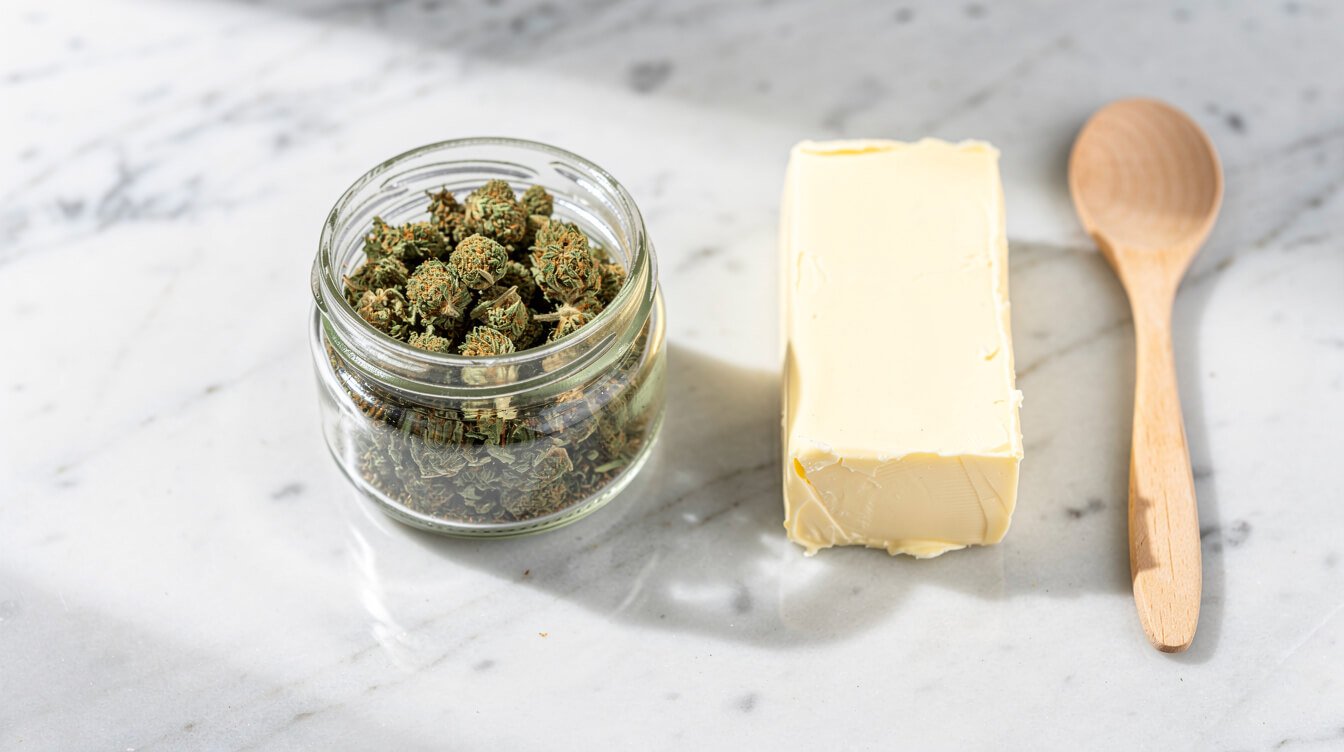
You can. Infusion doesn’t care about looks, and a lot of people use lower-grade flower and trim for cooking. The catch is dosing. Unknown potency means unknown strength per serving, so make a test batch and start low. Our guide to making cannabutter with shake covers the math for weaker material, and the weed butter hub covers the full process. Pick out seeds and thick stems first, and never cook with anything that shows mold.
Is “Reggie” a strain?
Some strain databases and menus use the name, but in everyday slang reggie describes quality, not genetics. Any strain can end up as reggie if it’s seeded, rushed, or stored badly.
Final thoughts
Reggie weed is regular, low-grade flower: seedy, stemmy, dull, faint-smelling, and usually weaker. The word is just “regular” with an -ie on the end, popularized in rap and stuck at the bottom of the quality ladder. But the useful skill isn’t spotting reggie. It’s sorting what you see. Seeds, stems, and a brown, dry look are cosmetic. Fuzz, mush, and musty or ammonia smells are the must-toss signals. And neither your eyes, your nose, nor always the label can tell you the THC number.
Respect it either way. Start low, never drive on it, keep it away from anyone under 21, and know the laws where you live, because they vary a lot.
Before you go
Get the next explainer first
We publish a new one every day. The best of the week, plus what's new in the shop, lands in one short email.