Contact High: Is It Real? What the Hotbox Studies Actually Measured
Can you get a contact high from someone else’s weed smoke? Yes, but only under conditions most people never meet. In controlled studies, non-smokers felt a mild, mostly sleepy buzz after an hour sealed in a small, unventilated room with heavy smokers going through grams of strong flower. Add ordinary ventilation and the effect basically vanished. Most of the “contact high” people describe at parties is the other kind: the social one, where a stoned room changes your mood without much THC reaching your blood.
Here’s the honest version, with the numbers most pages leave out: what the hotbox studies actually did, how much THC the bystanders really absorbed, why an air vent matters more than anything else, and the responsible part about kids, pets, and cars. This is adult education (21+). We’re not handing out a recipe for getting high off the room.
Contact high: the short answer
A pharmacological contact high, meaning a bystander actually absorbs enough THC from secondhand smoke to feel it, is real. But it takes a lot. In the most-cited experiment, a Johns Hopkins team put six non-smokers in a 10 × 13 ft chamber with a 7-ft ceiling, about the size of a small bedroom, with the door sealed. Six regular smokers sat beside them and smoked high-potency (11.3% THC) flower freely for an hour. Together they burned 14.4 grams, and the room got so smoky it was hard to see the far wall (Herrmann et al., 2015).
Under those conditions the non-smokers reported a mild-to-moderate drug effect, felt more tired and less alert, had a slightly faster heart rate, and made more mistakes on a speed-and-accuracy task. Their effects faded within about 90 minutes. When the same chamber ran ventilation at a normal household rate, the non-smokers reported no drug effects and showed no impairment.
So the short answer has three parts:
- Possible: yes, in a small, sealed, very smoky space over a sustained period.
- Strong: no. Even in the worst case, the bystanders’ estimated THC dose was a fraction of what the smokers got.
- Common: not in the literal sense. Walking past a joint at a concert or sitting across an airy living room won’t do it. What people usually call a contact high in those settings is the social, mood-borrowing kind, which we’ll get to next.
If you came here worried you got high by accident, the setting that produces a real contact high is hard to stumble into: closed door, lots of smoke, a long time. If you came hoping to get one on purpose, the studies say it’s an inefficient and unpredictable way to take THC, and the haze carries the same smoke chemistry as any other burned plant.
Two meanings of “contact high”: the chemistry and the vibe
Part of the confusion is that the phrase gets used for two different things.
Meaning one: THC from the air
This is the version researchers test. Sidestream smoke (from the lit end) and exhaled smoke both carry THC, so a bystander breathing a dense enough cloud for long enough absorbs some. The 1986 paper that started the research literally had “contact highs” in its title (Cone & Johnson, 1986). It’s a dose question. How much smoke, how small the room, how long, and how fast the air turns over.
Meaning two: borrowing the room’s mood
The older slang sense is social. Wiktionary defines a contact high as “a feeling of elation obtained via the drug-induced behaviour of another person,” and its example citation is a pop song, the Beach Boys’ 1988 “Kokomo,” with its “tropical contact high.” In that sense nobody claims THC jumped across the room. People laugh, the music sounds better, everyone slows down, and you slow down with them.
Both are real experiences. They just have different causes, and the difference matters. The chemical kind can show up in a blood test, impair a task, and in rare extreme cases trip a urine screen. The social kind can’t. One useful detail from the Hopkins study: in the ventilated session, the non-smokers sat for an hour beside smokers who were just as high as in the unventilated session, and they reported no drug effect. The authors used that to argue the unventilated results weren’t just “social contagion.” Being around high people, by itself, didn’t register on their scales.
That doesn’t make the vibe imaginary. It means the vibe and the drug are separate things, and you can feel the first without the second.
What the hotbox studies actually measured
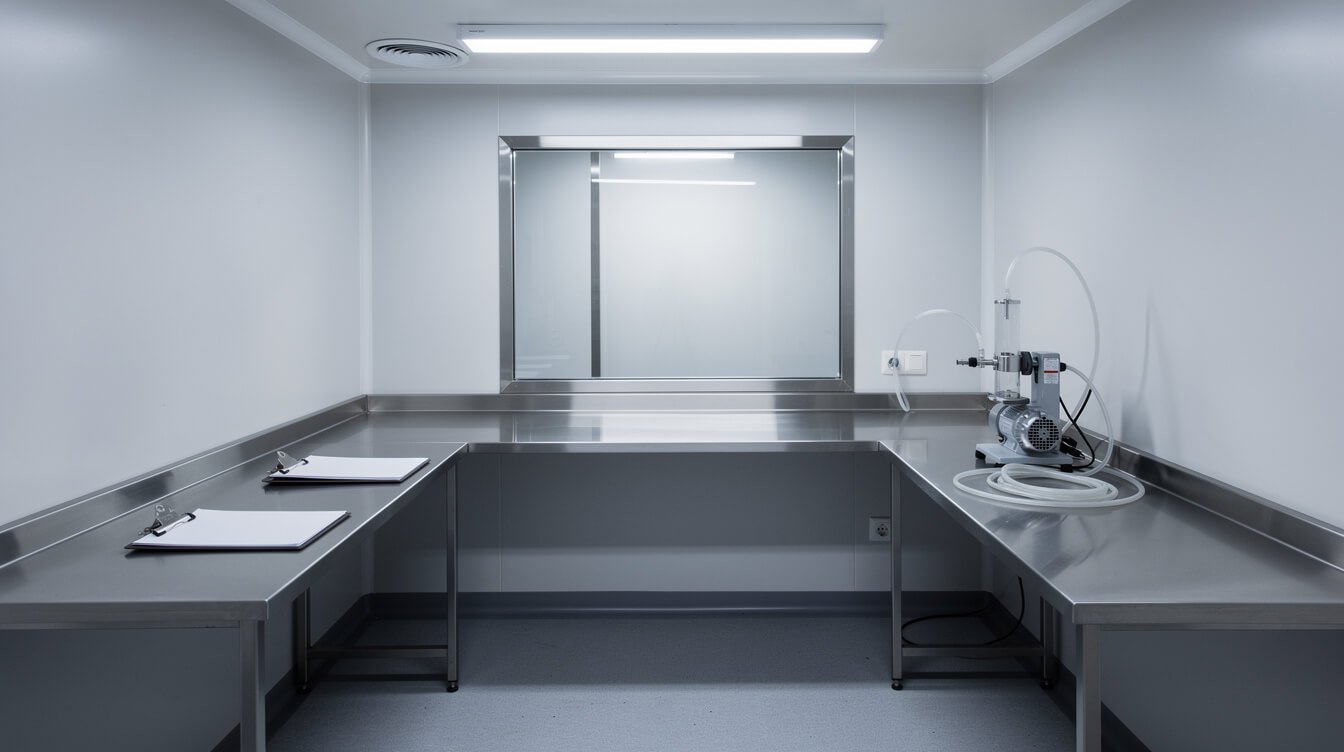
Most articles say “a Johns Hopkins study found you can get a contact high” and stop there. The details are the useful part, so here they are.
1986: the original contact high experiment
Edward Cone and Rolley Johnson exposed five healthy men to sidestream smoke from either 4 or 16 low-potency cannabis cigarettes (2.8% THC) in a small, enclosed room, one hour a day for six days, with placebo sessions before and after. At the 16-cigarette level, the men’s subjective effects were similar to actively smoking one 2.8% joint. The 4-cigarette condition produced weaker effects. Physiological measures showed no clear trend. Average plasma THC ran 2.4 to 7.4 ng/mL, with one individual peak of 18.8 (Cone & Johnson, 1986).
That’s the honest dose anchor: sixteen joints’ worth of smoke, in a closed room, for an hour, felt like one mild joint.
2010: three hours in a real coffee shop
A forensic research team sent eight volunteers into a busy coffee shop in Maastricht for three hours. Every volunteer absorbed some THC, but the amounts were small. THC appeared in blood only in trace amounts near the detection limit at 1.5 and 3.5 hours and was gone by the 6-hour sample. None of the urine samples crossed a 25 ng/mL immunoassay cutoff (Röhrich et al., 2010). That’s a real-world smoky room, and still not much of a high.
2015: the Johns Hopkins chamber series
The Hopkins team ran three sessions with six smokers and six non-smokers seated in alternating chairs. Session 1 used 5.3% THC flower with no ventilation. Session 2 used 11.3% flower with no ventilation. Session 3 used 11.3% flower with ventilation on. Three papers came out of it:
- Effects (Herrmann et al.): in the unventilated high-potency session, non-smokers rated “drug effect,” “pleasant drug effect,” “tired,” and “hungry” higher and “alert” and “vigorous” lower, all resolved within 1.5 hours. On the DSST, a timed symbol-matching task, they attempted more items but got a smaller share right, which is the classic speed-for-accuracy trade THC produces.
- Dose (Cone et al., Part III): comparing blood and oral-fluid curves, the team estimated the non-smokers’ THC dose at under 5% of the smokers’ in Sessions 1 and 3, and 6 to 18% in the worst one, Session 2. Non-smoker blood THC reached up to 5 ng/mL, and THC showed in their blood and oral fluid for up to 3 hours.
- Urine (Cone et al., Part I): no non-smoker screened positive at the 100 or 75 ng/mL cutoffs, one specimen was positive at 50, and several were positive at the stricter 20 ng/mL cutoff. The authors concluded positives “are likely to be rare, limited to the hours immediately post-exposure,” and occur only where the exposure is obvious.
Put together: a real contact high needs a small room, a lot of potent flower, no airflow, and time. Even then, the bystander gets a fraction of a dose. If you’re curious how drug tests and detection windows work more broadly, our guide to how long weed stays in your system covers that properly. This post sticks to the high.
Why ventilation changes everything
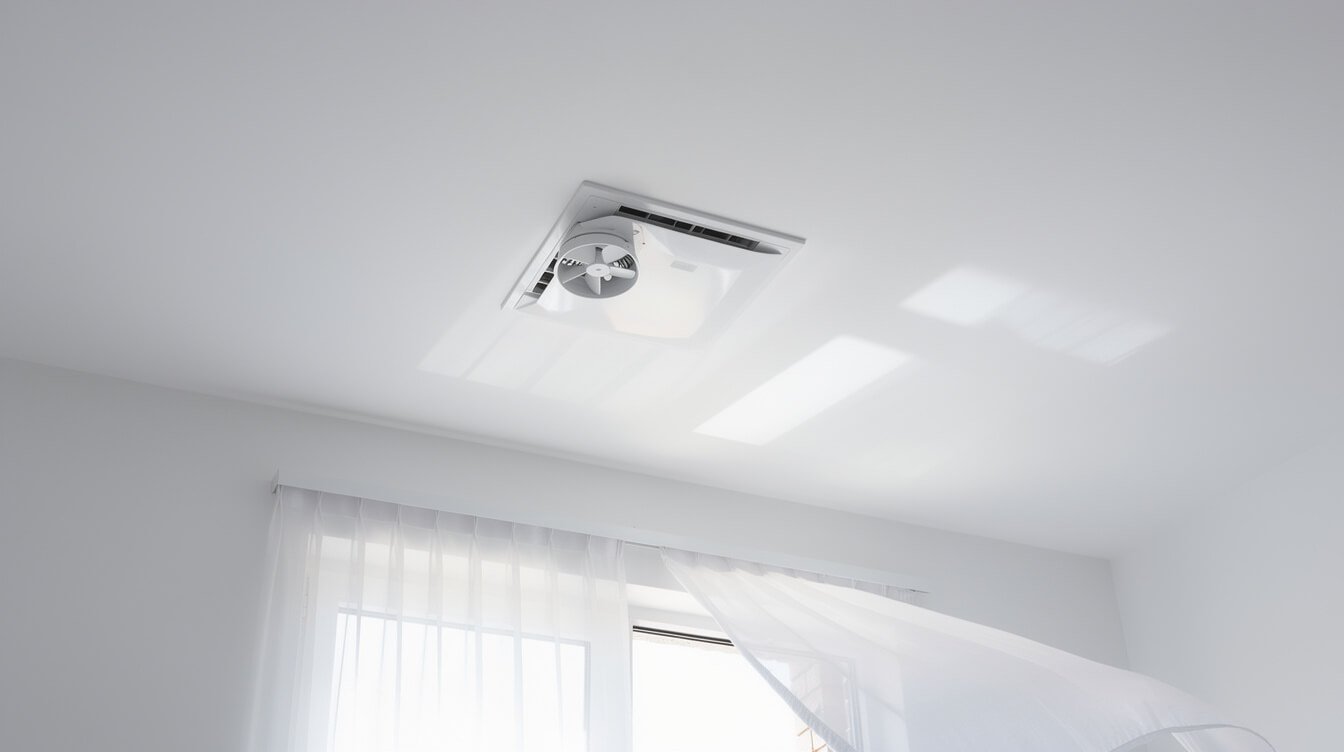
The single most useful finding in this whole body of research is how much one variable matters. In Session 3, the Hopkins chamber ran an exhaust fan calibrated to 11 air exchanges per hour, meaning the room’s full volume of air was replaced roughly every five and a half minutes. The authors describe that as consistent with residential ventilation standards for a room that size, approximating a standard home heating or air-conditioning system.
Same smokers. Same high-potency flower. Same hour. With the fan on:
- Non-smokers had no detectable THC in their blood beyond the first 30 minutes after the session.
- They reported no significant drug effects.
- They showed no performance impairment.
- No urine screen came back positive.
And the smokers actually went through more flower in that session, 16.5 grams versus 14.4 without the fan.
The only rating that moved was “hungry,” and the researchers dryly attributed that to lunch approaching rather than to cannabis. (If you want the actual science of the munchies, it’s here.)
Why the smokers barely noticed the difference
Ventilation changed almost nothing for the smokers themselves. Each smoked about 2.6 grams directly, so whatever extra THC they picked up from the room was too small to add to their effects. A contact high is a game of small numbers. The person holding the joint gets the dose, and the room gets the leftovers.
What that means for real rooms
Air turnover dilutes smoke fast, which is why an open window, a running bathroom fan, or a breezy porch changes the math so much. It’s the same physics behind getting smell out of a room. Particles and gases need somewhere to go, and our guide to getting rid of weed smell walks through what actually moves them. Outdoors, the dilution is far greater than any exhaust fan. None of these studies tested open air, but if 11 air changes an hour erased the effect in a small room full of smokers, a passing whiff on a sidewalk isn’t in the same universe.
GanjaTech, weekly
Cannabis, explained. In your inbox.
One email a week: the clearest explainers, honest gear picks, and what the science actually says. 21+ only. No spam, unsubscribe anytime.
What a real contact high feels like, and what suggestion can do
When the chemical kind of contact high does happen, the study participants described something mild and mostly sedative: a bit tired, less alert, a noticeable but light drug effect, slightly more appetite. The Hopkins authors pointed out that the smokers’ own effects were bigger and more mixed (relaxed but also more vigorous), while the bystanders mostly got the drowsy edge. Bystander effects in these studies topped out at “mild to moderate,” and in the 2015 chamber they faded within an hour and a half.
That lines up with what you’d expect from a small inhaled dose. Inhaled THC peaks fast and fades fast, and a fraction of a dose fades faster still. For the full timeline of a regular high, see how long a weed high lasts.
The power of expectation
Here’s the part that explains a lot of party stories. Expectation alone changes how intoxicated people feel. In a balanced-placebo experiment, regular cannabis users were told they were smoking either THC or no THC, and independently given either real cannabis or a placebo. Both the real drug and the belief that they’d had it independently raised subjective intoxication (Metrik et al., 2012). Belief moved the feeling. It didn’t move the pharmacology: the inhibition-task impairments tracked actual THC, not expectation.
Now picture a hazy room where everyone’s giggling. You expect to feel something, the setting is relaxed, and your mood follows the group’s. That can feel like a contact high. The Hopkins team flagged exactly this: they couldn’t rule out that the visible smokiness of the unventilated chamber made non-smokers expect effects. Expectation probably isn’t the whole story there, since blood THC rose and fell in step with the reported effects, but it’s part of why self-reports vary so much.
How to tell which kind you’ve got
If you were in a well-ventilated room or outdoors, briefly, and you feel giggly and loose, you’re almost certainly riding the social version. If you sat for an hour in a small sealed room thick with smoke and feel sleepy, a little foggy, and slower than usual, you may have absorbed some THC. In either case, the responsible move is the same: don’t drive, and let it pass. If anyone ever feels far more than “mildly off,” like a racing heart, panic, or vomiting, our guide on what greening out is and what helps covers what to do and when to get medical help.
Kids, pets, cars, and closed rooms: the responsible part
Most pages give this one throwaway line. It deserves more, because the people with the least say over the air in a room are the ones most exposed to it.
Kids
The CDC’s position is short and worth quoting accurately: secondhand cannabis smoke “contains many of the same toxic and cancer-causing chemicals found in tobacco smoke and some in higher amounts,” it contains THC, and THC “can be passed to infants and children through secondhand smoke.” The agency also says more research is needed on how that exposure affects children (CDC).
A 2025 study of 275 San Diego children, mean age about 3.6, living in homes with an adult tobacco smoker, found detectable cannabinoids in the urine of 27.3% of them. The odds of detection were about five times higher in homes that reported smoking cannabis indoors in the past week (Tripathi et al., 2025). Young kids spend most of their time at home, breathe faster for their size, and can’t open a window or leave. The simple rule: don’t smoke indoors, or in the car, around kids. Take it outside and away from doors and windows they’re near. Store everything, edibles especially, locked and out of reach.
Pets
Dogs and cats are small, they can’t leave a smoky room on their own, and they’re notorious for eating things they shouldn’t. What they can reach and eat (edibles, stash, leftover ends) is usually the bigger hazard. Smoke outside and away from them, and keep stash and edibles sealed up high. If a pet seems wobbly, dribbly, unusually sleepy, or off after possible exposure, call your vet or the Pet Poison Helpline at 855-764-7661 (a fee may apply). Be honest about what they might have gotten into. Vets need the facts, not a cover story.
Cars: just don’t
A car is the smallest, most sealed room most people ever sit in, which makes it the worst possible place for smoke. Hotboxing a car means the driver is breathing it too. Impaired driving is illegal in every US state, and a sleepy, slower-reacting driver is the exact effect the chamber studies measured. So keep it simple: no smoking in a car, parked or moving, with anyone who’s going to drive. Open-container and in-vehicle use rules also vary by place, so know yours. If the car already smells like a session, our car smell guide covers the cleanup.
Shared rooms and other adults
Respect people’s choices. A roommate, guest, or partner who doesn’t use cannabis, has a job that tests, is pregnant, or just doesn’t like smoke shouldn’t have to marinate in yours. Smoke outside or in a well-ventilated space and ask first. Laws on where you can smoke, including in rentals, apartments, and anywhere near minors, differ by state, city, and building, so check the rules where you live. Never assume it’s legal just because it’s legal somewhere.
Contact high FAQ
Is a contact high real?
Yes, in two senses. The chemical contact high is real but mild, and it requires a small, unventilated, very smoky space over a sustained period. The social contact high, picking up a group’s mood, is real as a feeling but involves little or no THC.
Can you get a contact high from weed outside?
Realistically, no. The studies were all indoors, and even an ordinary indoor ventilation rate (11 air changes an hour) erased measurable effects in a small room packed with smokers. Outdoor air dilutes smoke far faster than that.
Can you get a contact high from smelling weed?
No. The smell of cannabis comes mostly from terpenes and sulfur compounds, not THC, and raw flower holds its THC mostly as non-intoxicating THCA until it’s heated. Smelling a jar won’t get you high. Our skunk-smell explainer covers where the aroma actually comes from.
Can secondhand smoke make you fail a drug test?
In the extreme sealed-chamber conditions above, a small number of urine samples crossed common cutoffs, mostly in the hours right after exposure. Under ventilated or real-world coffee-shop conditions, none did in these studies. Testing rules, cutoffs, and consequences vary, so for how detection actually works, read our detection-window guide.
How long does a contact high last?
In the 2015 chamber study, non-smokers’ effects were gone within about 1.5 hours. In the 1986 study, effects were strongest in the first hour and resolved within about three. A small inhaled dose fades faster than a full one.
Is a contact high dangerous?
The high itself is mild in the studies. The real concerns are breathing smoke, which carries many of the same toxic chemicals as tobacco smoke, and driving or doing anything risky while even slightly impaired. For anything health-specific, especially pregnancy, kids, or a medical condition, talk to a doctor.
Final thoughts
A contact high isn’t a myth, but it’s much smaller than its reputation. The literal version, enough THC drifting across a room to feel it, has been measured: a closed small room, grams of potent flower, an hour, and the bystanders got a sleepy fraction of a dose that faded within about 90 minutes. Turn on the ventilation and it disappears. The version most people mean, the warm, giggly lift of being around friends who are high, is real as a feeling and mostly mood and expectation.
So the practical takeaways are short. If you don’t want any THC, stay out of small sealed smoky rooms, and you’ll be fine nearly everywhere else. If you do consume, do it in fresh air, away from kids, pets, and anyone who didn’t sign up for it. Never smoke in a car with a driver. Laws on where you can consume vary, so know yours. Great plant. Give it, and the people around it, a little room to breathe.
Before you go
Get the next explainer first
We publish a new one every day. The best of the week, plus what's new in the shop, lands in one short email.