What Is a Bubbler? The Pipe-Meets-Bong Piece, Explained (Plus What the Water Really Does)
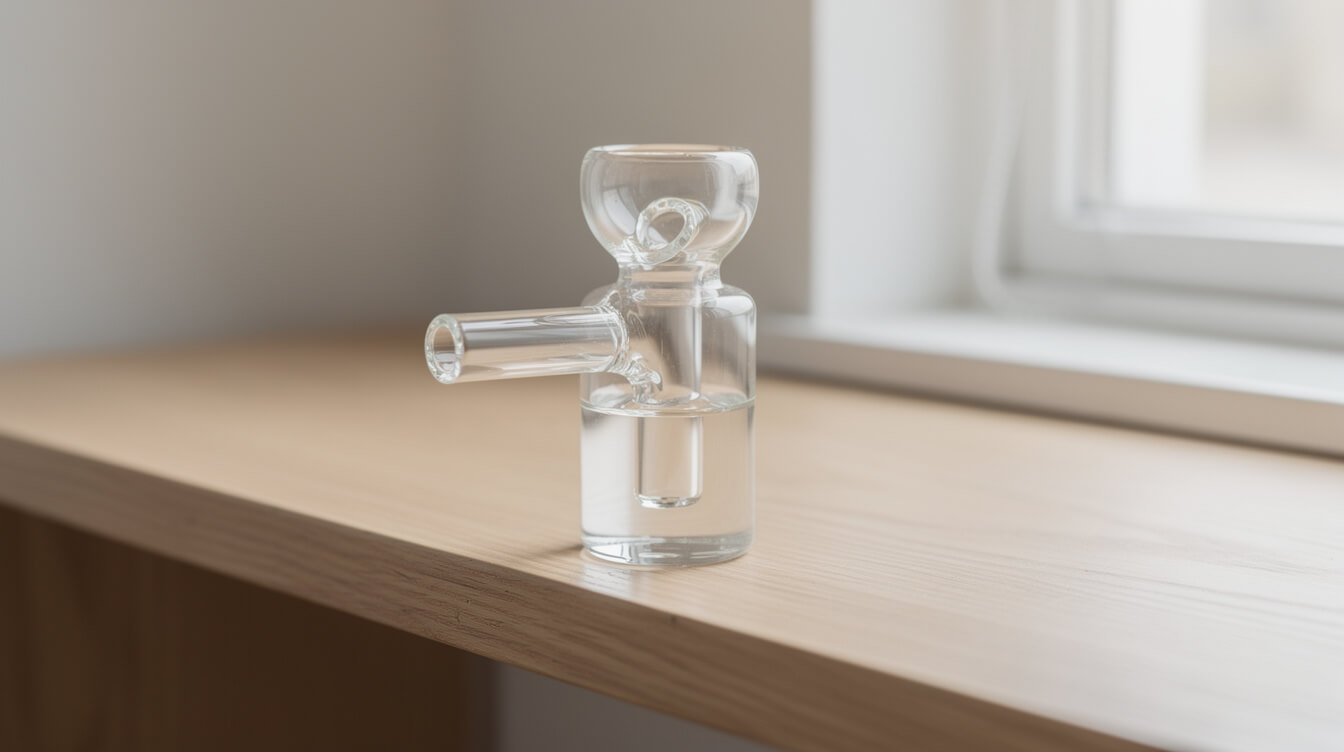
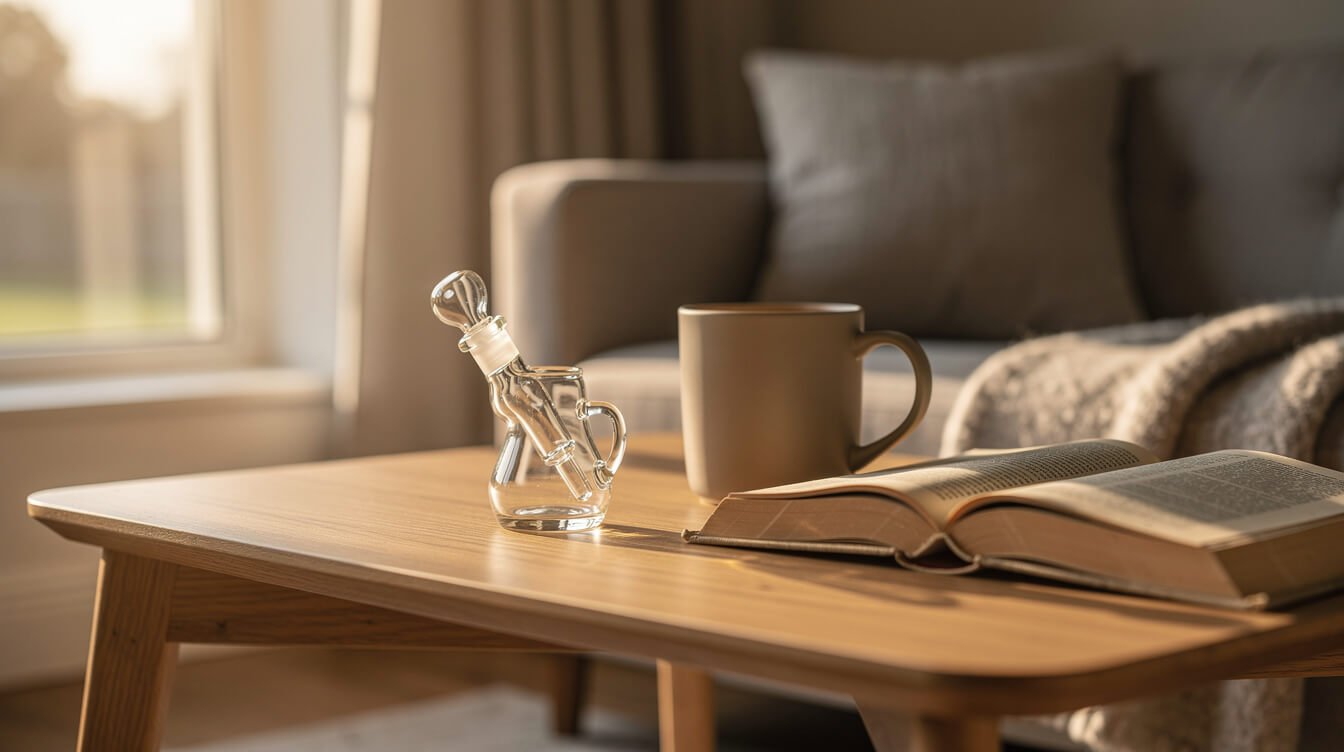
What is a bubbler? In cannabis terms, it’s a small handheld water pipe: a hand pipe with a built-in water chamber, so smoke bubbles through a little water before it reaches you. Think of it as the middle ground between a dry glass pipe and a full-size bong. It’s pocket-to-palm sized, usually one solid piece of glass, and it gives a cooler, smoother hit than a dry pipe without the setup of a bong.
Quick note before we go further: if you grew up in Wisconsin, parts of New England, or much of Australia, a “bubbler” is also what you drink from at school. Same word, different appliance. This guide is about the glass one.
Here’s what we’ll cover: how a bubbler works, part by part; how it compares to a bong, a pipe, and a one-hitter; the main types; and the honest answer on what the water actually does. Every brand page skips that last one, and it’s the part most people get wrong. Then the practical stuff: how to use a bubbler without a mouthful of bong water, and how to keep one from turning funky. Adults 21+ only, and paraphernalia rules vary by state and country, so know yours.
What is a bubbler, exactly?
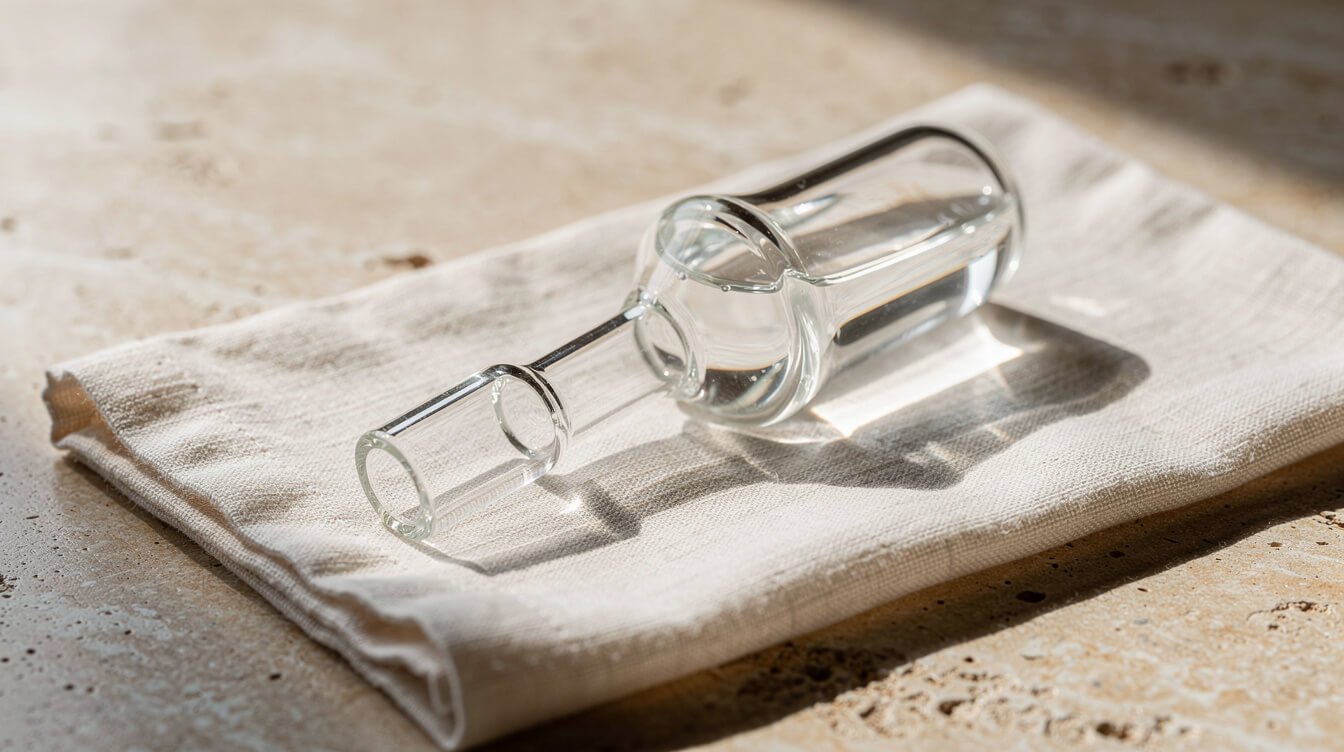
The short answer: a bubbler is a handheld pipe with a small water chamber built into it. You pack the bowl, cover the carb, light, and draw. Smoke travels down a short internal stem, comes out under the water, bubbles up, and fills the chamber before you inhale it. That bubbling is where the name comes from, and it’s also why the hit feels cooler and gentler than a dry pipe.
Three things set a bubbler apart from the pieces on either side of it:
- It has water. That’s the difference from a spoon pipe, a chillum, or a one-hitter, which are all “dry” pieces.
- It’s small. Most bubblers fit in one hand and hold a few tablespoons of water. A bong is a tabletop object; a bubbler is something you can actually hold the whole time.
- It’s usually one piece. On most bubblers the bowl, stem, and chamber are fused together. A bong typically has a removable bowl and downstem. That one detail drives almost everything about how you clean a bubbler later.
So if someone asks you “what is a bubbler?” and you have five seconds, say “a mini bong you hold like a pipe.” It’s not a perfect definition, but it’s the one that lands.
Most bubblers are borosilicate glass, the same heat-tolerant glass used in lab beakers. You’ll also see silicone bubblers, which bounce instead of shatter but hold onto smells more, and the odd ceramic or metal-and-glass hybrid. Glass is the default because it’s inert, easy to see through (you can watch the water get dirty, which is useful information), and tastes like nothing.
One thing a bubbler is not: a dab rig. Rigs are water pipes too, but they’re built for concentrates and a hot banger instead of a bowl of flower. If that’s the direction you’re curious about, our explainer on what dabbing actually is covers the gear and the trade-offs.
How a bubbler works: bowl, chamber, carb, mouthpiece
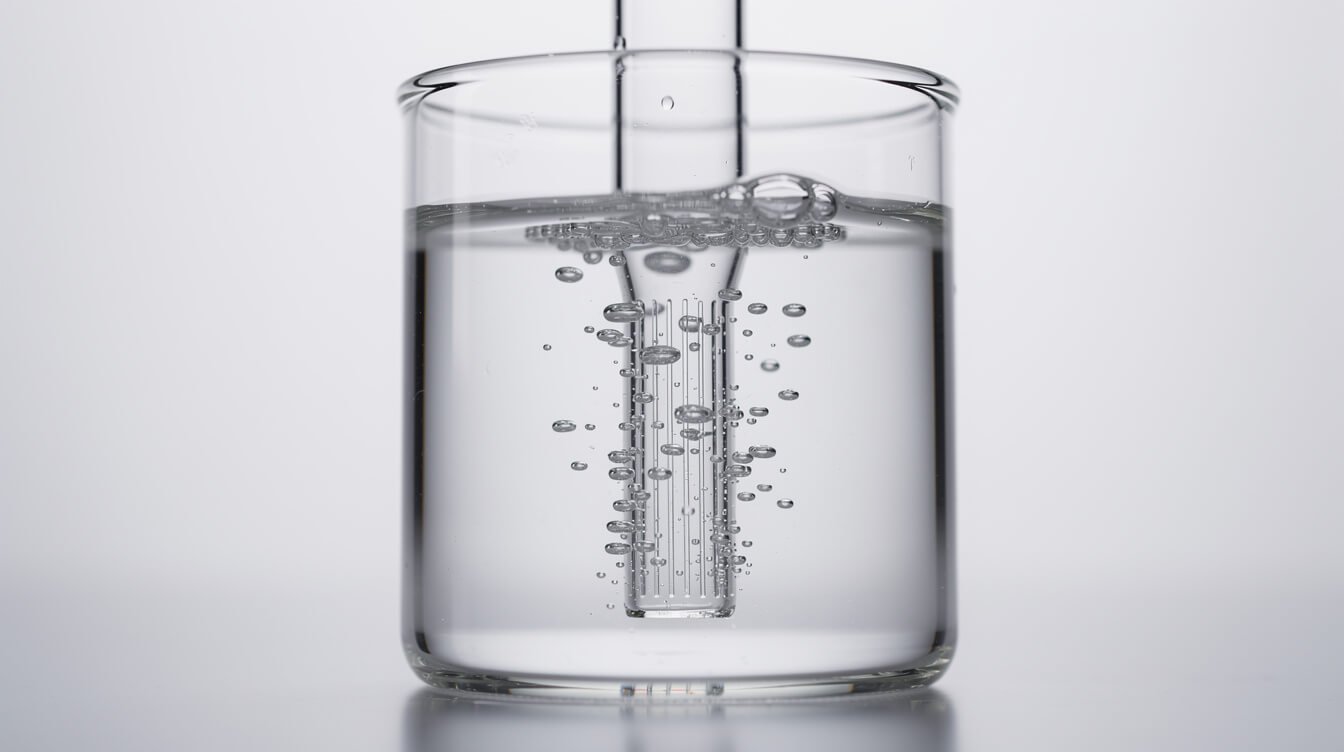
Every bubbler, from a $20 gas-station hammer to a hand-blown art piece, has the same five parts. Once you know them, the answer to “what is a bubbler” gets very concrete, and using one stops being mysterious.
The bowl
The bowl is where your ground flower goes. On most bubblers it’s a small dish fused onto the top of the piece, with a hole at the bottom leading into the stem. Bubbler bowls are generally smaller than bong bowls, which is a feature, not a flaw. A good, even grind makes a real difference here, so a decent grinder is worth having (our grinder guide covers what actually matters).
The stem (or downstem)
Inside the piece, a short glass tube runs from the bottom of the bowl down into the water. Its end usually has a slit or a few small holes so the smoke breaks into smaller bubbles. Smaller bubbles mean more contact with water, which means more cooling.
The water chamber
This is the little reservoir that makes it a bubbler. Smoke exits the stem under water, rises as bubbles, and collects in the air space above the waterline. The chamber is small, so it fills and clears fast.
The carb
The carb is a small hole, usually on the side of the bowl or the body. While you’re lighting and drawing, you keep a finger over it, so all the suction pulls through the bowl. When the chamber is full, you lift your finger. Fresh air rushes in through the carb and pushes the smoke in the chamber up to you in one clean pull. If you’ve used a glass spoon pipe, you already know the carb. It works exactly the same here.
The mouthpiece
The mouthpiece is the opening you draw from. Its angle and height matter more than you’d think. A mouthpiece that sits well above the waterline, or comes off at an angle, keeps water from splashing up toward your lips.
Put it together and one hit goes like this: finger on carb, flame to bowl, slow draw (you’ll hear the bubbling), chamber fills, finger off carb, clear. That’s the whole machine. No moving parts, no electronics, nothing to assemble.
Bubbler vs bong vs pipe (and where one-hitters fit)
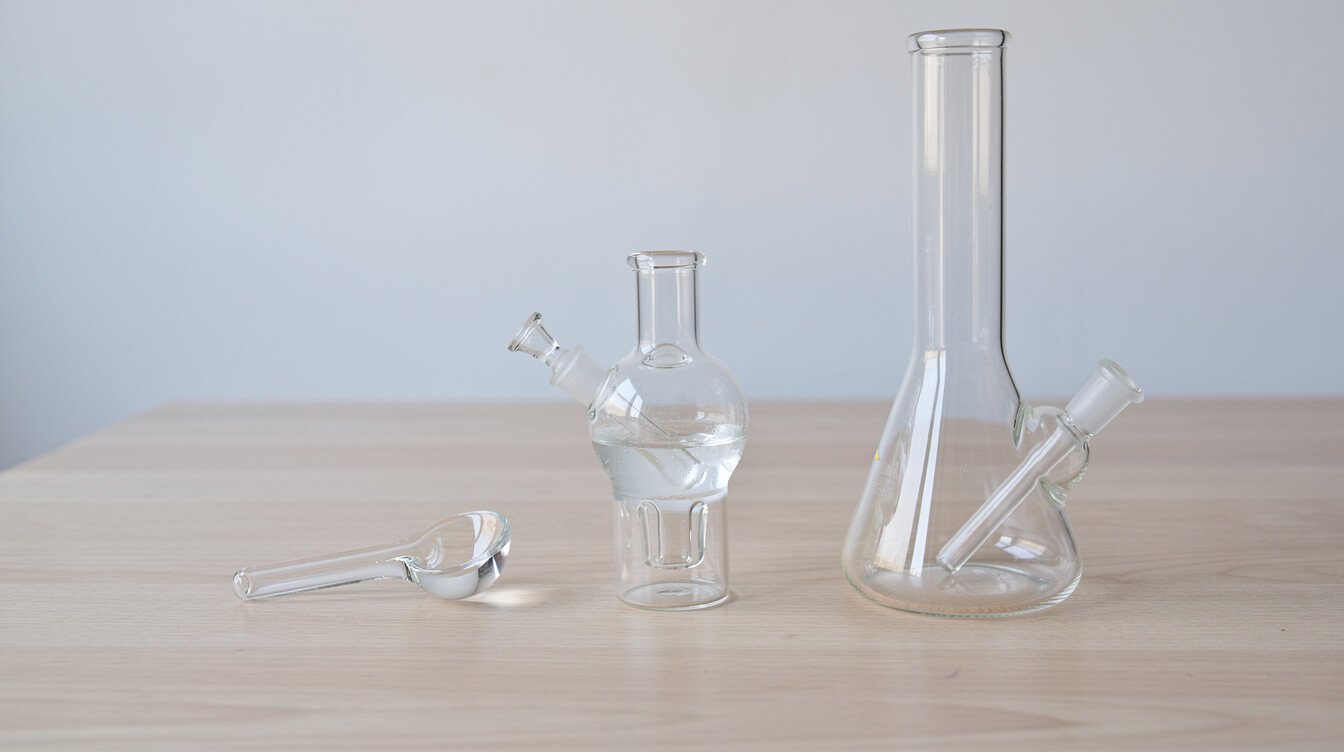
Most of the confusion around bubblers comes from people using “pipe,” “bubbler,” and “bong” interchangeably. They overlap, but they’re not the same object, and the differences matter when you’re picking what fits how you smoke. Here’s the straight comparison:
| Dry hand pipe | Bubbler | Bong | One-hitter / chillum | |
|---|---|---|---|---|
| Water? | No | Yes, a small chamber | Yes, a large chamber | No |
| Size | Palm-sized | Tabletop | Pocket, very slim | |
| Removable bowl? | No (one piece) | Usually no | Usually yes | No |
| Hit character | Hottest, harshest | Cooler, smoother | Coolest, biggest | Small and hot |
| Setup | None | Add a little water | Fill, assemble, maybe ice | None |
| Cleaning | Easy | Fiddlier (nothing comes apart) | Easier per part, more parts | Easy |
| Spill risk | None | Some | Real | None |
The honest summary: a bubbler trades a little convenience for a gentler hit. Compared with a dry pipe, you get cooler smoke and less throat bite, at the cost of carrying water around and cleaning more often. Compared with a bong, you lose some volume and cooling but gain something you can hold in one hand and put away in a drawer.
A one-hitter (a slim tube that holds one small hit) and a chillum (a straight, open-ended pipe with no carb) are both dry, minimal pieces. They’re great for a single small dose, and neither has water.
If you mostly smoke rolled, a bubbler is a different experience again. A joint or blunt burns continuously whether you’re drawing or not, while a bowl only burns when you pull. If you want to stay on paper, our guides on rolling a joint and blunts vs spliffs vs joints have you covered.
Types of bubblers: hammer, sherlock, sidecar, and more
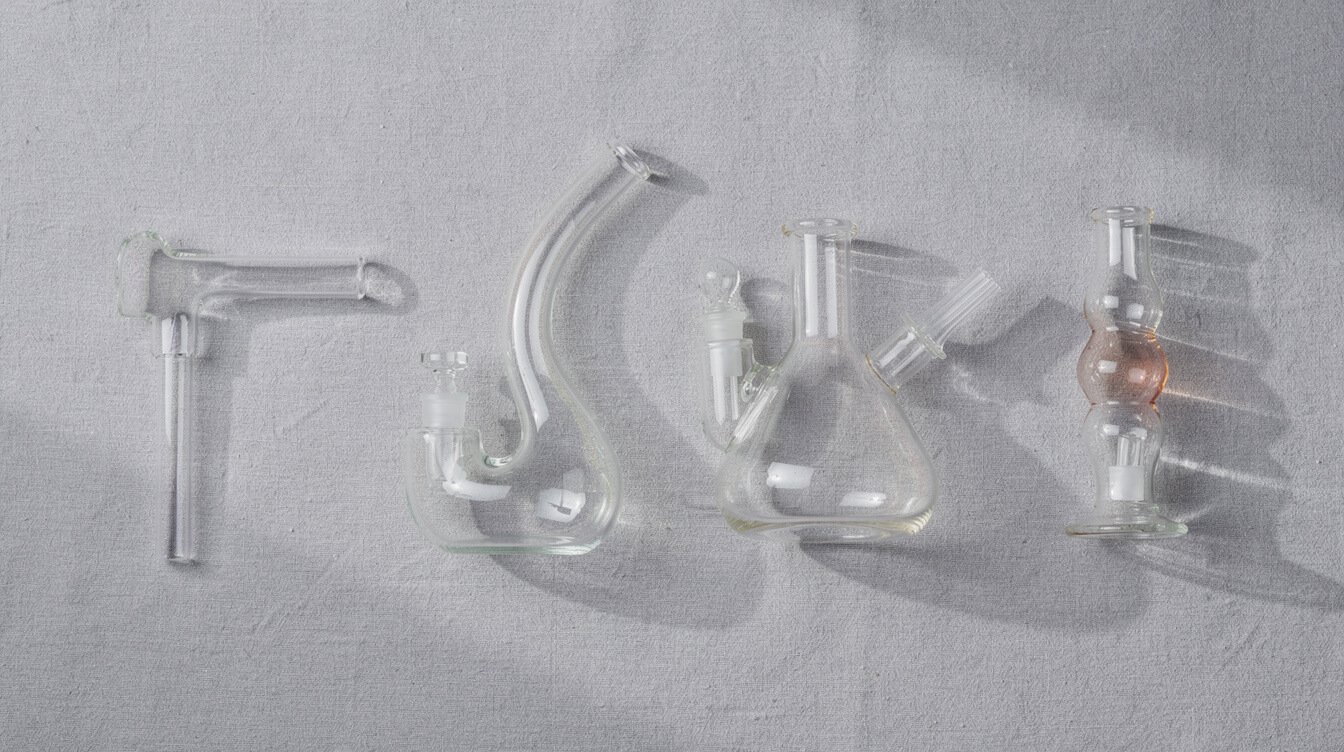
Glassblowers have had decades to play with the basic layout, so bubblers come in a few recognizable shapes. The function is the same across all of them. The differences are mostly about how the piece sits, how it handles splashback, and how much diffusion you get.
Hammer bubbler
The most common style. A horizontal chamber with the bowl on top and the mouthpiece angled off one end, and from the side it looks a lot like a judge’s gavel. Hammers usually have a flat bottom, so they stand up on their own, which is the single most practical feature a bubbler can have.
Sherlock bubbler
Named for the curved “Sherlock Holmes” pipe shape: a long neck that swoops down below the bowl and back up. Elegant and classic, but many sherlocks don’t stand on their own, so you’ll need a spot to rest it on its side, ideally after the water’s out.
Sidecar bubbler
Here the mouthpiece comes off the side of the chamber in a separate neck instead of straight from the top. The extra distance and angle make it harder for water to reach your mouth. If splashback is your main complaint about bubblers, look at sidecars.
Double, ratchet, and percolator bubblers
These add a second water stage or a percolator, which is a fitting that splits the smoke into many smaller bubbles. That gives more cooling in a still-compact piece. The trade-offs: a harder pull, more glass to clean, and a higher chance of something breaking.
Inline and recycler-style bubblers
Some bubblers route the smoke through a horizontal inline diffuser, or loop water around in a recycler design. They look impressive and pull smooth, but they’re usually bigger and more fragile, and they drift toward mini-bong territory.
Silicone bubblers
Silicone bubblers are flexible and nearly unbreakable, usually with a small glass bowl insert. They’re great for clumsy hands and travel, but silicone holds onto flavor and odor more than glass does, and they tend to look a bit like toys.
For a first bubbler, a simple hammer is hard to beat: it stands up, it’s easy to fill, and it doesn’t have hidden chambers where gunk collects. Fancier isn’t automatically better. It’s mostly just harder to clean.
GanjaTech, weekly
Cannabis, explained. In your inbox.
One email a week: the clearest explainers, honest gear picks, and what the science actually says. 21+ only. No spam, unsubscribe anytime.
What the water really does (and doesn’t)
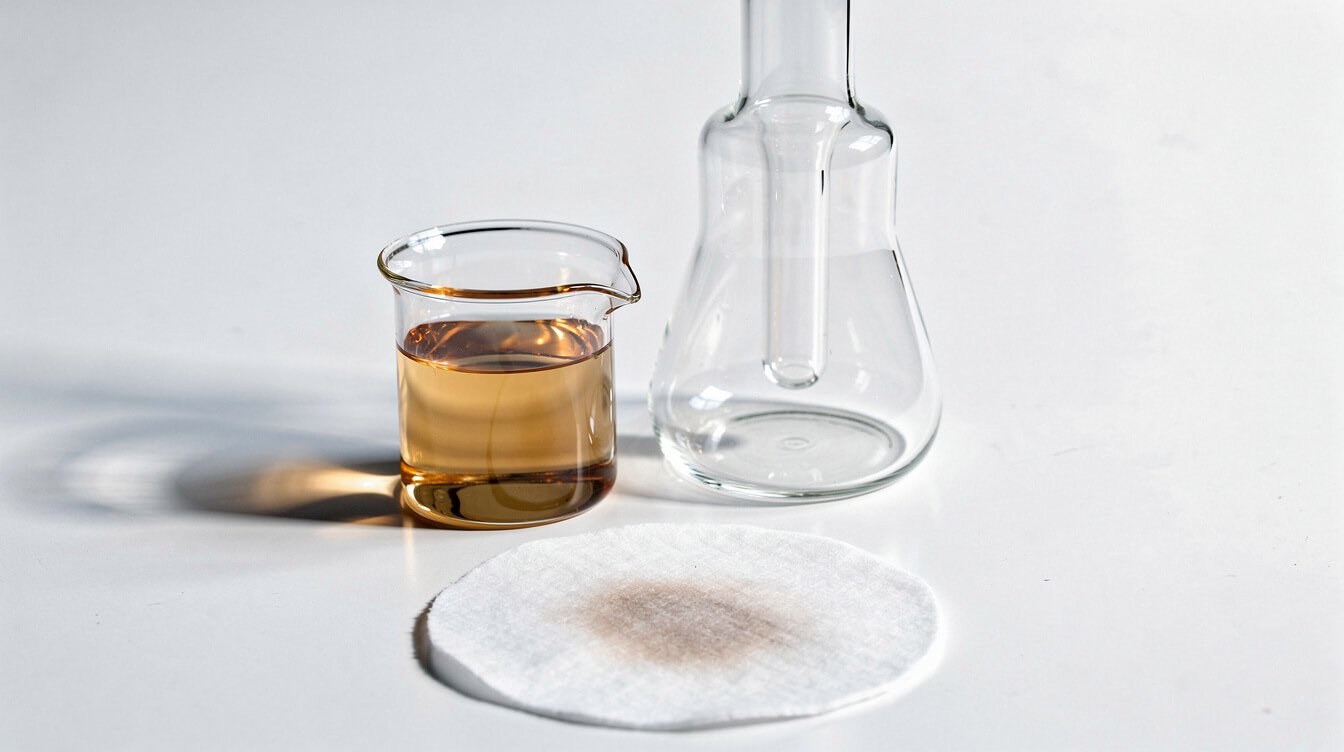
This is the section most bubbler pages get wrong. Ask a glass shop what is a bubbler good for, and the usual pitch goes something like “water filters the smoke, so it’s healthier than a dry pipe.” It sounds reasonable. The one direct lab test of this idea that we know of found something less comfortable.
What water definitely does
Water cools smoke, and it catches ash and larger particles. Cooler smoke feels less harsh, and less ash means fewer “I just inhaled a crumb” moments. That’s real, and it’s why a bubbler hit feels smoother than the same bowl from a dry pipe. Nobody disputes that part.
What the research found about “filtering”
In the 1990s, MAPS and California NORML commissioned a lab study, written up by Dale Gieringer, that ran cannabis smoke from seven devices through a smoking machine: an unfiltered joint, a joint with a cigarette filter, three different water pipes, and two early vaporizers. The researchers didn’t just measure tar. They measured the ratio of cannabinoids to tar, because that’s what matters in practice: if a device strips out THC along with the tar, people simply smoke more to get where they’re going.
The result: every water pipe did worse than the plain joint on that ratio. The best water pipe in the test, a standard bong, produced about 30% more tar per unit of cannabinoids than the unfiltered joint. A motorized water pipe that churned the smoke through the water did worst of all. The researchers’ explanation was that water appears to pull out THC more readily than it pulls out tar, so you may end up inhaling more smoke for the same effect.
The caveats (because this matters too)
- It’s one small lab study on a smoking machine, published as a newsletter report rather than a peer-reviewed clinical trial. It wasn’t built to settle the question for good.
- It used low-potency government research cannabis (about 2.3% THC), far weaker than most of today’s flower.
- It measured solid particulates only, not the gas phase of the smoke. The authors were explicit that water might still remove some harmful gases, so they didn’t conclude water pipes are worse overall. They just showed that “water cleans the smoke” isn’t the slam dunk it’s marketed as.
- None of the devices tested was a modern glass bubbler specifically.
The honest takeaway
Smoother is not the same as safer. A bubbler makes smoke more comfortable to inhale. Whether it makes smoking any less harmful is an open question, and the one direct test of tar delivery didn’t support the idea. Smoke is smoke. We’re not making a health claim in either direction, and if lung health is a real concern for you, that’s a conversation for your doctor, not a glass shop’s product page.
What you can control: take smaller hits, don’t hold smoke in longer than a normal breath, and pay attention to how much you’re smoking rather than how smooth it feels.
How to use a bubbler without a mouthful of bong water
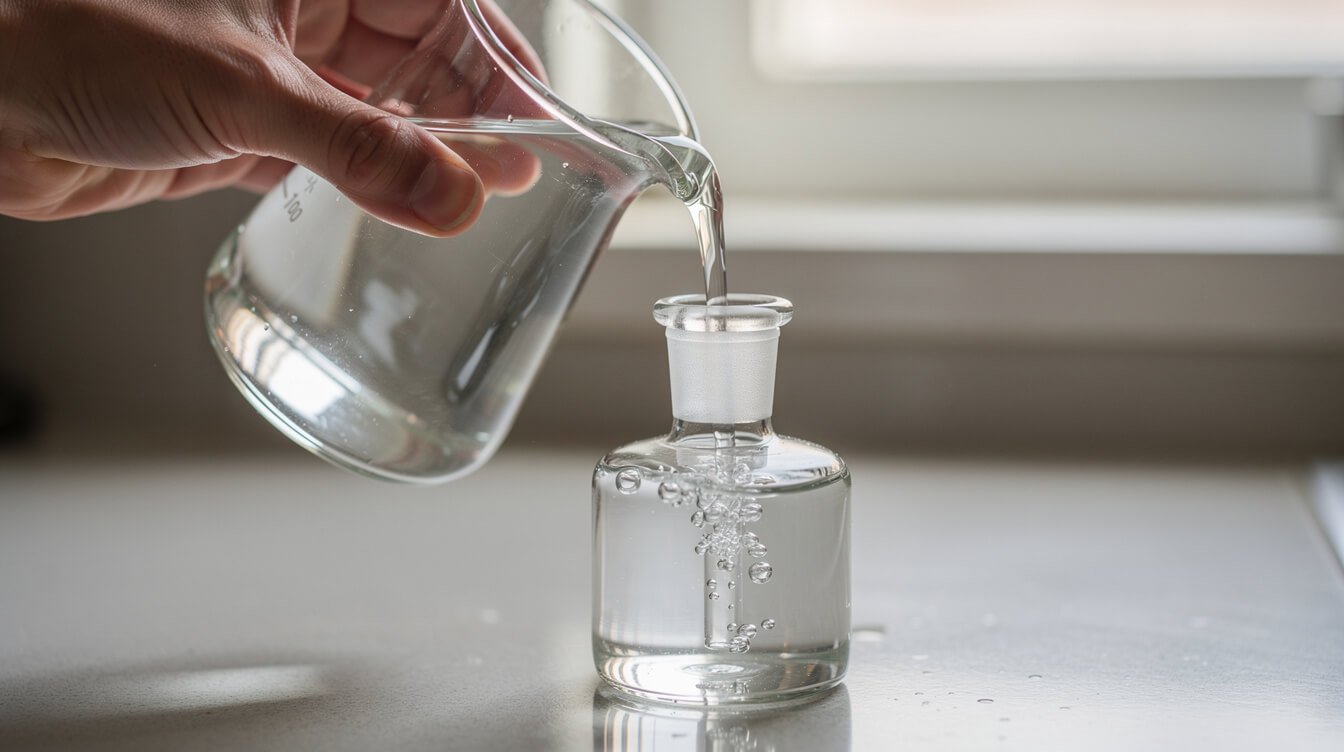
If you’re asking what is a bubbler because one just landed in your hands, good news: using it is simple. Most bad first experiences come down to two things: too much water and pulling too hard. Here’s the clean way to do it.
1. Fill it, lightly
Pour cool or room-temperature water in through the mouthpiece. You want the water just covering the bottom of the stem or its slits, often only a centimeter or two. More water doesn’t mean more filtration. It mostly means a harder pull and a better chance of getting splashed. Skip hot water: it heats the smoke you’re trying to cool, and big temperature swings are hard on glass.
2. Do a dry test pull
Before you pack anything, cover the carb and draw gently. You should hear an easy bubbling and feel no water getting anywhere near your lips. If the pull is heavy or water climbs toward the mouthpiece, pour some out. If you hear no bubbling, add a splash. Ten seconds of testing saves you the classic first-timer moment.
3. Grind and pack loosely
Fill the bowl with evenly ground flower. Pack it firmly enough that it won’t get sucked through, but loosely enough that air flows. Bubbler bowls are small, and that’s a good thing: start with a little.
4. Light, draw, clear
Cover the carb. Hold the flame just above the edge of the bowl (corner it if you’re sharing, so the next person gets green too) and draw slowly and steadily. Watch the chamber fill. When you’ve got what you want, take the flame away, release the carb, and inhale to clear the chamber. Don’t let smoke sit in the chamber for a long time before clearing it, because it goes stale and harsh.
5. Mistakes worth avoiding
- Yanking hard on the draw. This is how water ends up in your mouth. A bubbler rewards patience.
- Tilting it toward you. Keep it level, or tipped slightly away. Gravity is not on your side here.
- Setting it down unstable. Sherlocks especially will tip and dump water onto whatever’s below.
- Reusing yesterday’s water. More on this below. Just don’t.
- Taking big rips because it feels smooth. Smooth makes it easy to take in more than you meant to. Start low, go slow, and never drive after.
Keeping a bubbler clean (it matters more than with a pipe)
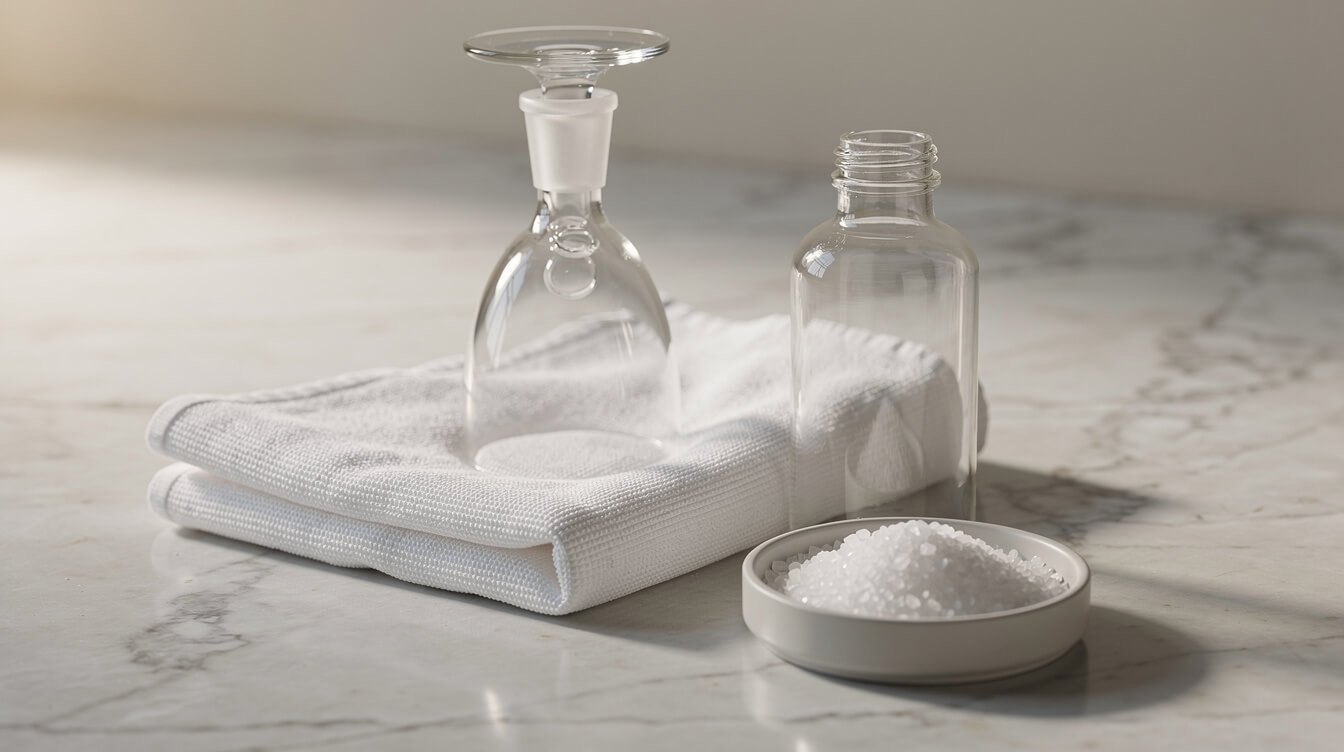
Here’s the catch with that one-piece design: you can’t take a bubbler apart. Ash, resin, and old water all live in the same sealed glass, so it gets dirty faster than a dry pipe and is a bit fiddlier to clean than a bong with a removable stem.
Change the water every session
This is the single habit that matters most. Bubbler water picks up ash and resin every time you use it. Left standing, it turns cloudy, develops a smell that’s hard to describe and harder to forget, and makes every later hit taste like the last three. Dump it, rinse with warm (not hot) water, and refill fresh next time. Stale water can also grow a slimy film over time, which is a good reason not to let it sit for days.
Deep clean on a schedule
When the glass starts looking amber or the pull gets harder, it’s time for a real clean. The short version: isopropyl alcohol plus coarse salt, plug the openings, shake gently, rinse, and let it dry completely before you light it again (alcohol is flammable). The full method, including why it works, how to handle stubborn resin in tight spots, and what not to do to glass, lives in our guide on how to clean a weed pipe without cracking it. It applies straight to bubblers.
A clean bubbler tastes like your flower. A neglected one tastes like a bus-station ashtray. The effort difference is a few minutes a week.
Bubbler FAQ
What is a bubbler used for?
In cannabis, a bubbler is used for smoking ground flower through a small amount of water, so you get a cooler, smoother hit than a dry pipe in a piece small enough to hold in one hand. A few bubblers have a joint that takes a nail or banger for concentrates, but most are built for flower. Outside cannabis, “bubbler” can also mean a drinking fountain, an aquarium air pump, or a garden irrigation head, which is why a plain search for the word turns up so many fish tanks.
What’s the difference between a bong and a bubbler?
Size and parts. A bong is a larger tabletop water pipe, usually with a removable bowl and downstem, and it holds more water and makes bigger hits. A bubbler is handheld and usually one fused piece, so it’s more portable and quicker to set up, but trickier to clean. Both use water the same way.
Are bubblers better than pipes?
Smoother, yes. “Better” depends on what you’re after. A bubbler cools the smoke and catches ash, so it’s easier on the throat. But the one lab study that measured tar per unit of cannabinoids found water pipes delivered more tar than an unfiltered joint for the same cannabinoid dose, because water strips out THC too. So a bubbler is more comfortable, but it isn’t shown to be healthier. If portability and zero setup matter most, a dry pipe wins.
Why do people in Wisconsin call a water fountain a bubbler?
It’s a regional word for a drinking fountain in Wisconsin, parts of New England around Boston and Rhode Island, and much of Australia. The exact origin is genuinely debated. Local histories usually point toward early-1900s fountain makers, but no one has pinned it down cleanly. Either way, same word, entirely different object.
Is a bubbler the same as a water pipe?
A bubbler is one kind of water pipe. “Water pipe” is the umbrella term for anything that passes smoke through water: bongs, bubblers, dab rigs, and hookahs all count. A bubbler is the small, handheld, usually one-piece member of the family.
Is a bubbler legal?
It depends where you are. Paraphernalia laws vary by state and country, and they don’t always line up with cannabis laws. Check your local rules, and keep it 21+.
Final thoughts: what is a bubbler, really?
So, what is a bubbler, stripped of the shop copy? It’s a hand pipe that learned a trick from the bong: a little water, a cooler and gentler hit, in a piece you can hold in one hand. It’s a great middle-ground piece, as long as you keep the water low, pull slow, change the water every time, and clean it before it turns into a science project.
And now you know the part most pages leave out. Water makes smoke smoother, but smoother isn’t proven safer. The one real test found water pipes can actually deliver more tar for the same high. Enjoy the comfort and skip the health halo. Keep it adult, keep it legal where you are, and enjoy responsibly.
Before you go
Get the next explainer first
We publish a new one every day. The best of the week, plus what's new in the shop, lands in one short email.