What Is Dabbing Weed? What a Dab Actually Is — and Whether You Need One
What is dabbing weed? It’s vaporizing a small amount of cannabis concentrate on a very hot surface and inhaling the vapor in one breath. The concentrate is the “dab.” The hot surface is a quartz, titanium, or ceramic “nail,” usually attached to a small water pipe called a rig. That’s the whole definition, and most sites stop there and go straight to a shopping list.
We’re going to do it the other way around. The single most useful thing to know about dabbing isn’t the gear. It’s that one dab is a much bigger hit of THC than anything you’d get from a joint or a bowl, and that the temperature you take it at changes what you’re actually inhaling. This guide covers both, plus tolerance, the gear in plain terms, and an honest section on who should skip it. It’s written for adults 21 and over, and laws on concentrates vary a lot by place, so know yours.
What is dabbing weed? The short answer
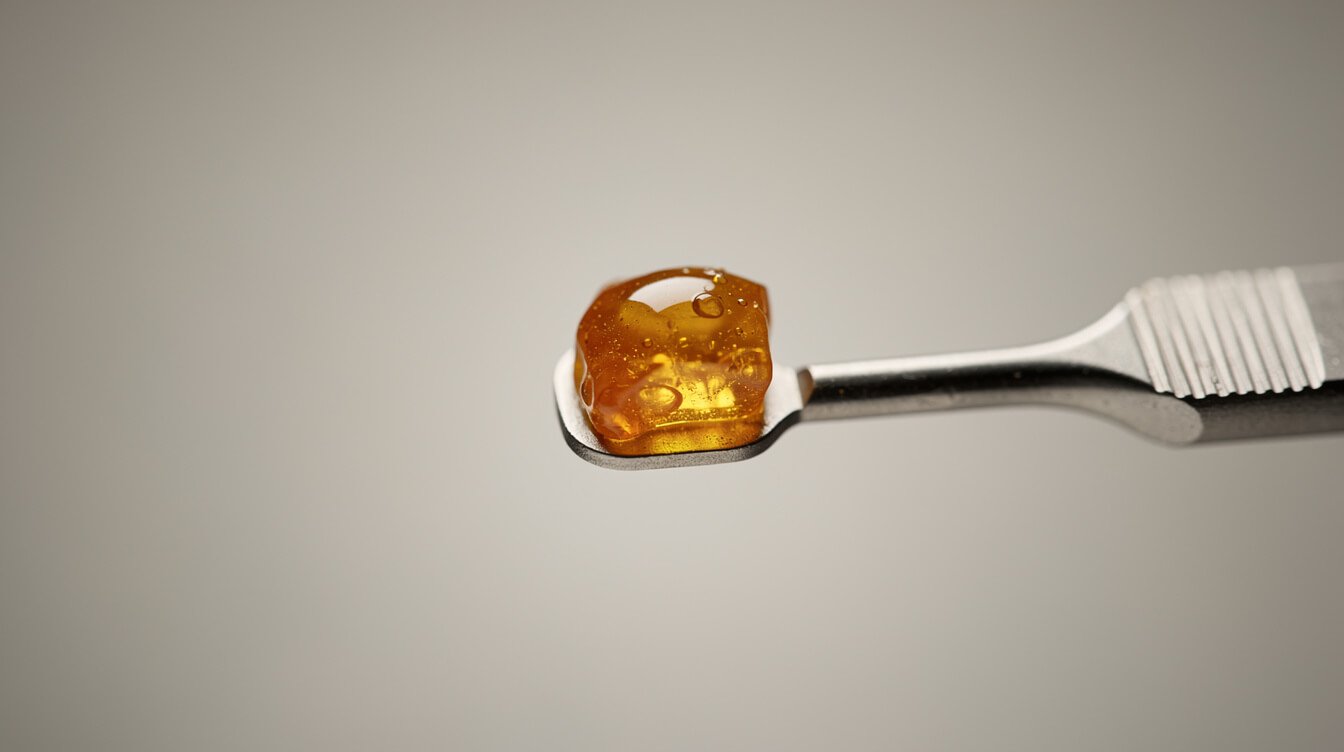
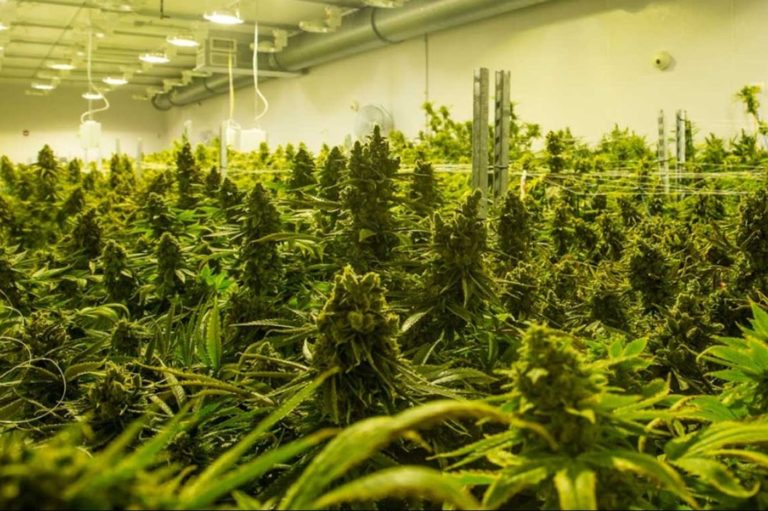
Dabbing is one way of consuming cannabis concentrates — products made by separating the resin (the cannabinoids and terpenes) from the plant material. Flower is mostly plant. A concentrate is mostly the stuff the plant makes in its trichomes, with the leaf and stem left behind.
Because a concentrate is sticky, waxy, or glassy rather than leafy, you can’t roll it or pack it like flower. Instead, you touch a small amount to a surface hot enough to vaporize it on contact, and you inhale the vapor through water. That moment of contact — the dab hitting the nail — is where the name comes from.
What actually goes on the nail
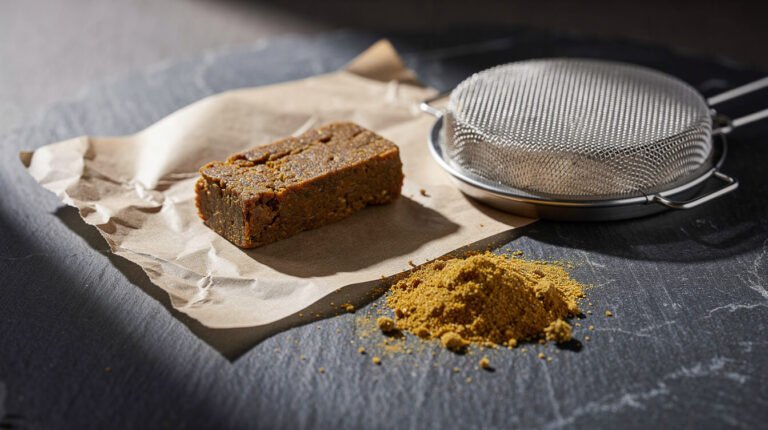
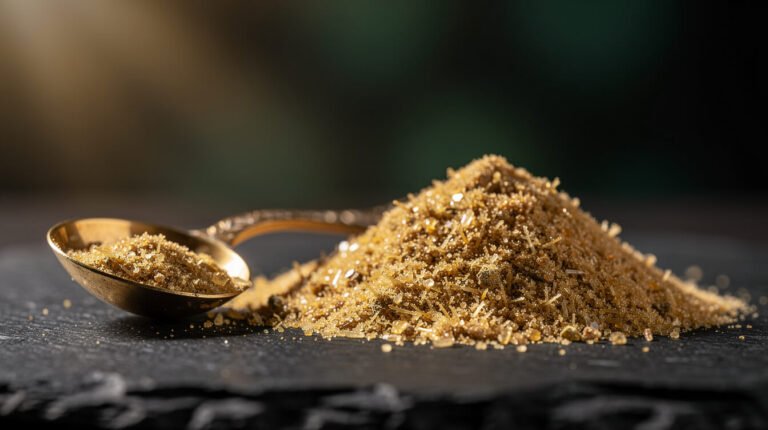
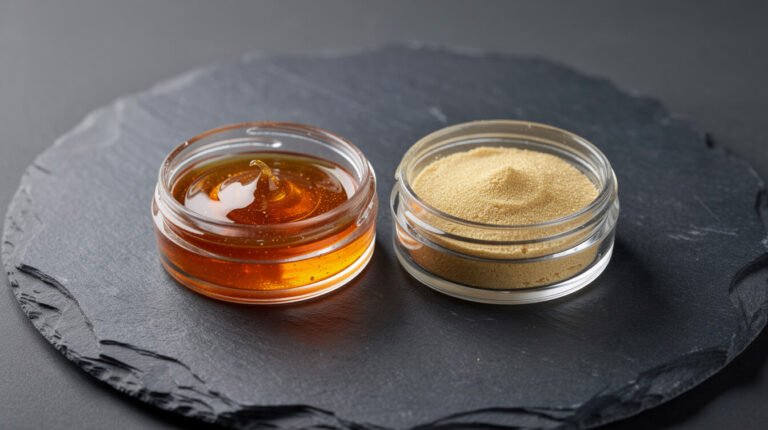
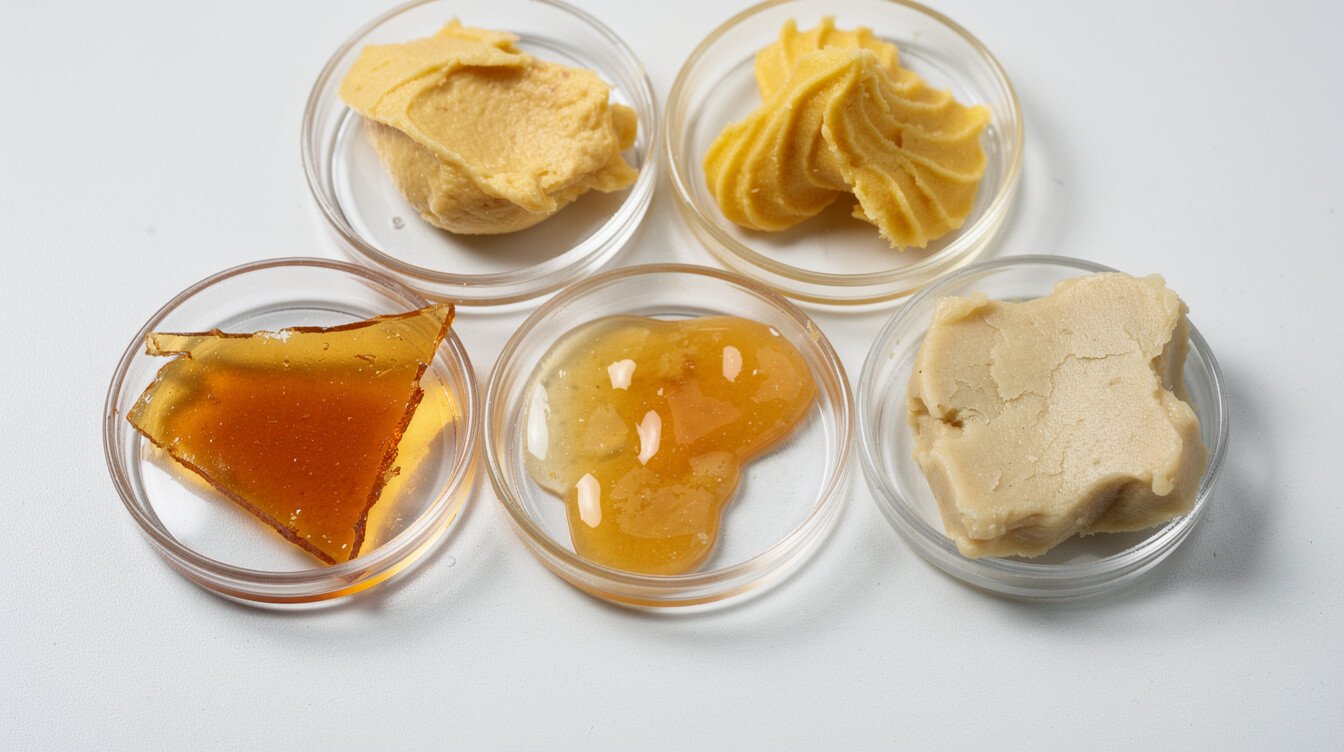
“Dabs” is an umbrella term for a whole family of concentrates, and the names mostly describe texture: shatter (glassy), wax and budder (soft and creamy), crumble (dry and crumbly), sauce (runny with crystals), and diamonds (crystalline THCA). Some are made with solvents like butane or propane, and some are solventless, made with ice water, heat, and pressure. If you want the deeper version of that split, we’ve covered what live resin actually is, what rosin is, and how live resin and rosin compare.
The texture matters less than people think. What matters for the person holding the dab tool is the number on the label, and that number is the reason this whole guide exists.
Is dabbing the same as vaping?
Close cousins, not twins. Both heat cannabis without setting it on fire, which is why dabbing gets marketed as a cleaner way to consume. The difference is control. A vape pen or a desktop vaporizer heats to a set temperature. A torch-heated nail heats to whatever you happened to get it to, and that number can be very high. Anyone asking what is dabbing weed should hear that part early, because “it’s just vapor” is only as true as the temperature you dab at. We’ll get to the numbers.
Why a dab is a much bigger single hit than a bowl
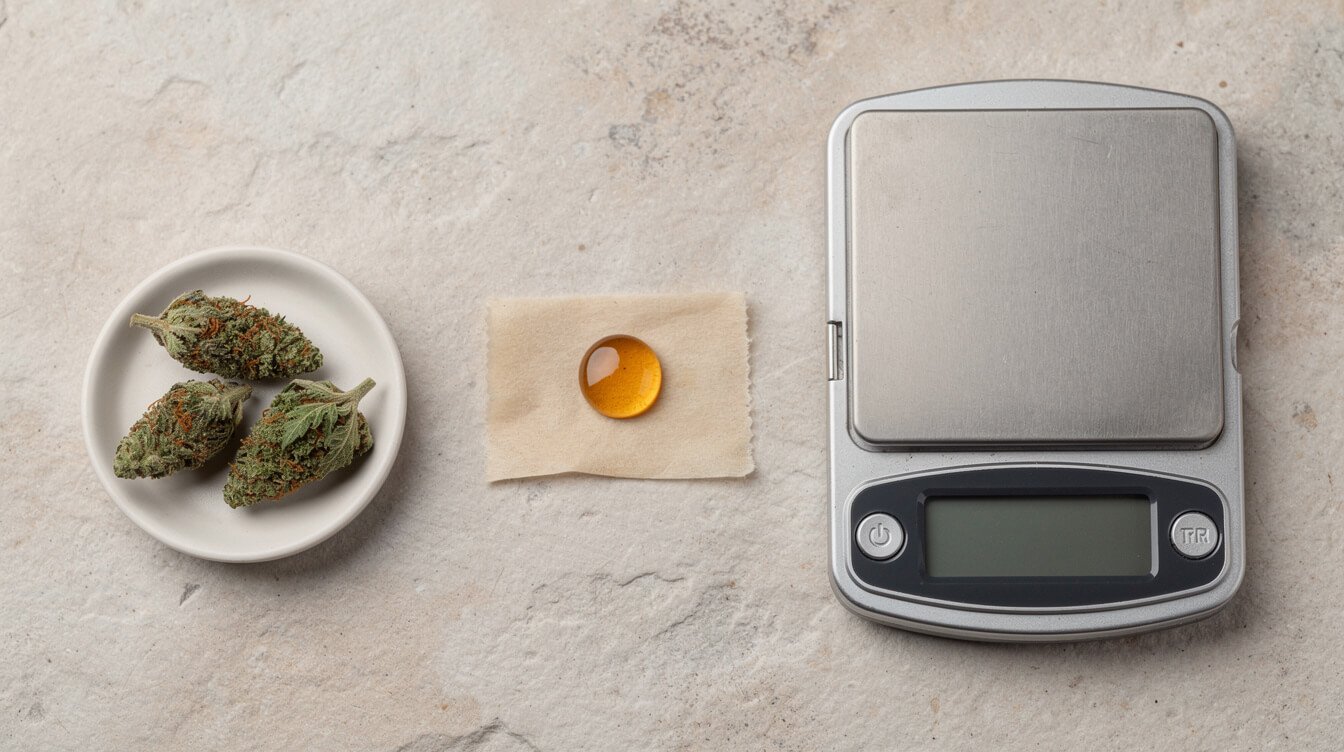
Here’s the fact that matters most. Cannabis flower in today’s legal markets commonly tests somewhere in the teens to mid-20s for THC. Concentrates are a different scale entirely. A 2021 review in the journal Nursing, published open-access through the NIH, put the average THC content of solvent-based concentrates at 54% to 69%, with some above 80%. A separate lab study described butane extracts at 50% to 90%.
So gram for gram, a concentrate carries roughly three to four times the THC of good flower. That alone isn’t the problem — nobody dabs a gram. The problem is how the dose arrives.
The arithmetic, with the assumptions shown
Let’s do the comparison honestly, with round numbers you can check:
| What you’re taking | Typical amount | Assumed THC | THC in it | How it’s taken |
|---|---|---|---|---|
| A small bowl of flower | 0.1–0.15 g | 20% | 20–30 mg | Several hits, minutes apart |
| An “average” dab | about 40 mg | 60–80% | 24–32 mg | One breath |
| A small first-timer dab | about 10 mg | 70% | about 7 mg | One breath |
The 40 mg figure is the average dab size a 2017 lab study used to model real-world dabbing. Nobody weighs a dab at home, so treat every row as an estimate, not a measurement. Neither method delivers every milligram, either — some is lost to the water, the air, and the residue left behind.
Even with all those caveats, the shape of the answer doesn’t change. An average dab can put about as much THC on the nail as a whole small bowl, and you take it in one breath instead of spread over several. With a bowl, you get feedback between hits. You can stop after two. With a dab, the decision is made before you inhale.
That’s the “dose step” — the jump from flower to concentrates — and it’s the single most useful thing anyone asking what is dabbing weed can know. It’s why first dabs have a reputation for being overwhelming, and it’s why the NIH-hosted review flags concentrates for a higher risk of anxiety, paranoia, and dependence than ordinary flower. A bigger number on the label is not a feature. It’s a reason to take less.
Why the strain name won’t save you
People sometimes reach for “it’s an indica” or “it’s a mellow strain” as a safety net. At concentrate potency, it isn’t one. The THC dose is doing most of the work, and labels like indica and sativa predict less than the marketing suggests — we explain why in what’s actually stronger, sativa or indica. For how THC and CBD differ in what they do, see our side-by-side CBD vs THC breakdown.
What the gear actually is: rig, nail, torch, and e-rig
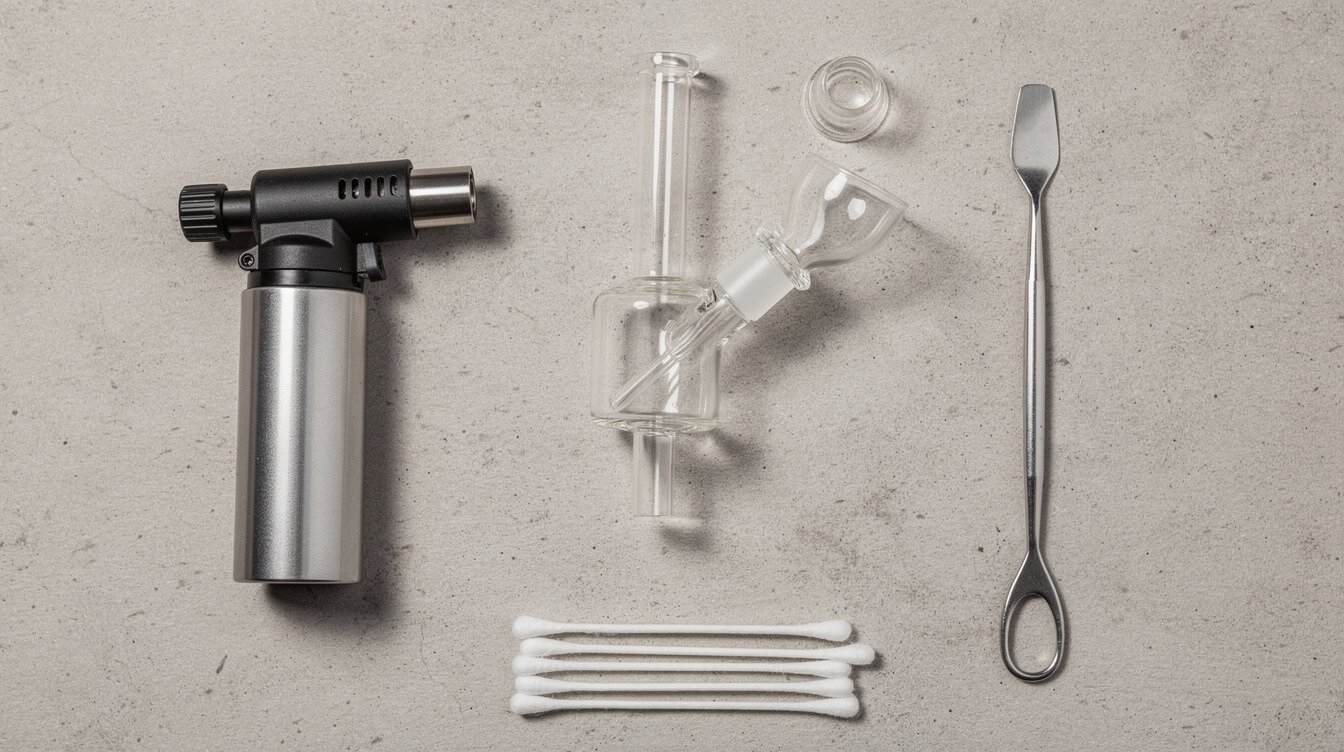
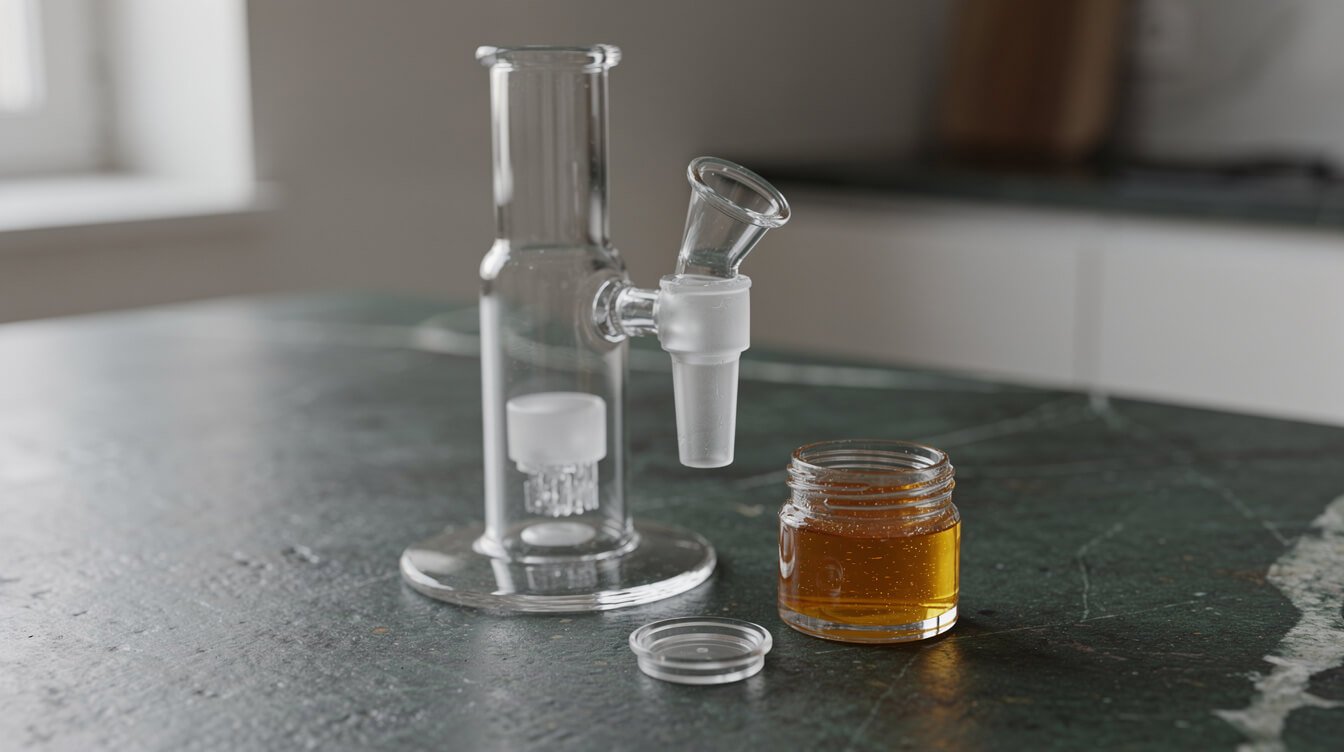
Dabbing gear looks more complicated than it is. Here’s every piece, in plain terms:
- Rig. A small water pipe built for concentrates. It’s smaller than a typical bong so the vapor doesn’t sit in a big chamber and go stale.
- Nail or banger. The surface the dab touches. A “banger” is a bucket-shaped quartz nail, which is the most common style now. Titanium and ceramic nails exist too. They hold heat differently, which matters for the next section.
- Carb cap. A small cap that sits over the banger while you inhale. It traps heat and lowers the pressure inside the banger, which lets the concentrate vaporize at a lower temperature. That’s a genuinely useful piece of physics, not just a gadget.
- Dab tool. A small metal or glass pick for moving a sticky concentrate from container to banger.
- Torch. Traditionally a butane kitchen torch, the kind used for crème brûlée, to heat the banger.
- Cleaning supplies. Cotton swabs and isopropyl alcohol, because residue builds up fast and burns on the next dab.
The e-rig alternative
An e-rig (or an e-nail added to a regular rig) replaces the torch with an electric heating element and lets you pick a temperature. There are also smaller concentrate vaporizers and dab pens that work on the same principle. The honest trade-off: they cost more up front, but they remove the two biggest problems with the traditional setup — an open flame and no idea how hot the surface is. If temperature control matters to you, and after the next section it probably will, this is the piece of gear that actually delivers it.
A word on the torch
A kitchen torch is a real flame and a hot surface, and a heated banger stays hot enough to burn skin long after it stops glowing. Keep it general and keep it obvious: use it on a stable surface, away from anything flammable, don’t leave a heated banger where someone can grab it, and don’t do any of this impaired past the point of handling a flame safely.
One firmer line. Don’t make butane concentrates at home. Butane gas collects in enclosed spaces and ignites from a spark, and home extraction has caused explosions, serious burns, and deaths. It’s also illegal in many places, including states where cannabis itself is legal. Licensed labs use closed-loop equipment for a reason.
Temperature is a safety variable, not just a flavor setting
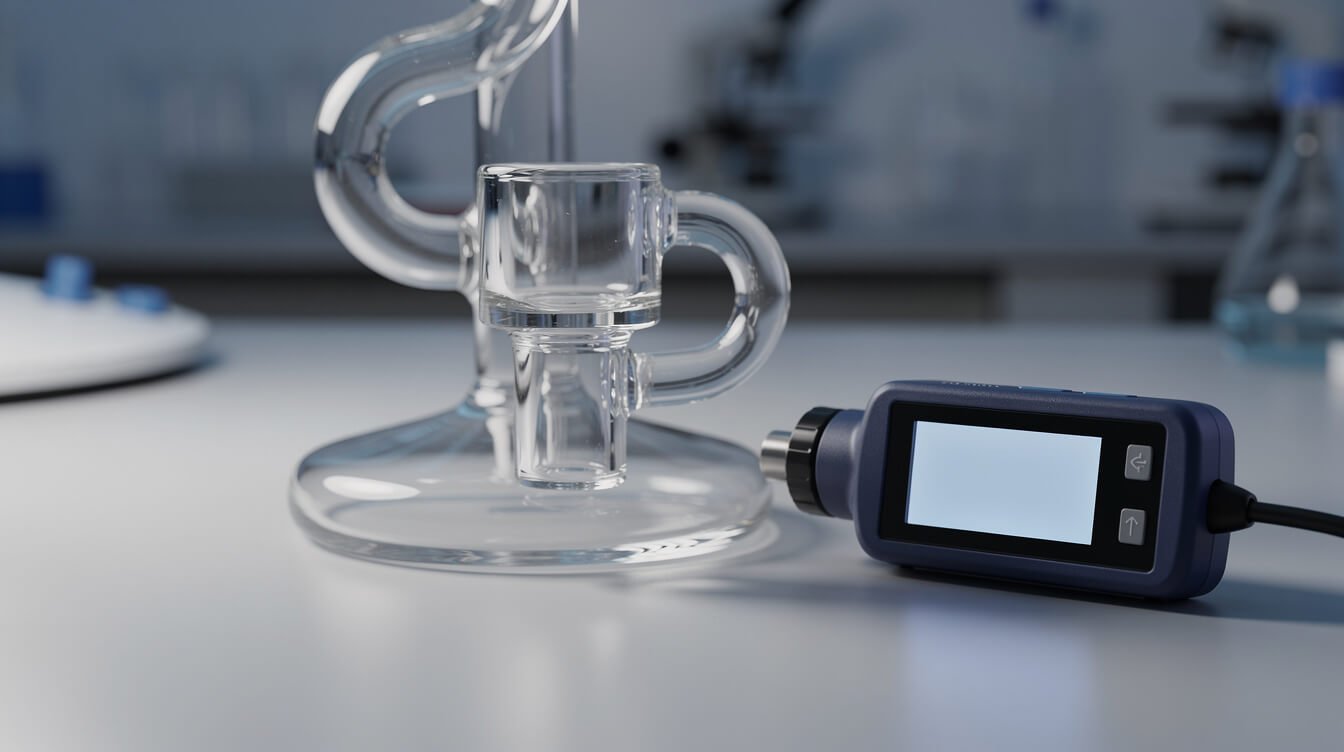
Most guides that answer what is dabbing weed talk about temperature like it’s a taste preference: go low for flavor, go high for big clouds. That framing undersells it. Temperature also changes what you inhale, and there’s actual lab data on it.
What the study found
In 2017, researchers at Portland State University published a study in ACS Omega titled “Toxicant Formation in Dabbing: The Terpene Story.” They simulated dabbing on a ceramic nail attached to a water pipe, measured nail temperature with a thermal camera, and analyzed what came out the other end. Here’s what they found:
- At the lowest range tested (around 612°F / 322°C), methacrolein — a strong respiratory irritant related to acrolein — was not detected.
- From around 757°F (403°C) upward, methacrolein showed up, and the amount rose with the temperature.
- At the hottest range (roughly 930–1,020°F / 500–550°C), they also detected benzene, a well-documented toxicant, at levels far above what’s found in ordinary outdoor air.
The same paper noted that e-nail users online cite a preferred temperature around 710°F, but report ranges up to about 900°F. Torch users, the authors pointed out, usually have no temperature control at all.
The caveats, stated plainly
This was one lab, and it heated pure terpenes (myrcene, limonene, linalool, and a commercial terpene blend), not whole concentrate. So it doesn’t tell you exactly what’s in the vapor of any specific dab. What it does show is the direction: terpenes — the same aroma compounds we cover in our list of terpenes and effects — break down into nastier compounds as the surface gets hotter. “It’s vapor, not smoke” is a claim about the temperature, not about dabbing in general.
It’s the same principle we explain for edibles in our decarb temperature and time guide: heat is what makes cannabis work, and too much heat is what ruins it. Dabbing just runs that trade-off much hotter and much faster.
What that means in practice
- Lower is the responsible default. If a dab tastes harsh or burnt, that’s not just a flavor problem. It’s a sign the surface is too hot.
- A glowing nail is far too hot. If a banger is visibly glowing, it’s well past every temperature in the study. Torch users typically heat the banger and then let it cool before dabbing — exactly why the result is guesswork.
- Measured heat beats guessed heat. An e-rig, or an infrared thermometer if you use a torch, turns a guess into a number.
- Use the carb cap. Lowering the pressure lets the concentrate vaporize at a lower temperature, which is the whole point.
- Keep it clean. Old residue on the banger gets re-heated with every dab. Swab it while it’s warm, not hot.
GanjaTech, weekly
Cannabis, explained. In your inbox.
One email a week: the clearest explainers, honest gear picks, and what the science actually says. 21+ only. No spam, unsubscribe anytime.
Tolerance: the part nobody mentions
Most dabbing content is written by people who already dab. It skips tolerance, because tolerance is the unglamorous part. Here it is anyway.
Tolerance is your body getting used to THC. With regular use, the brain reduces how responsive its cannabinoid receptors are, so the same amount does less. That’s normal, and it happens with flower too. What changes with concentrates is the speed. When every session delivers a large dose, tolerance builds faster, and “the same dab” quietly stops being enough.
The ratchet
That’s the trap worth naming. Someone switches from flower to dabs, and flower stops doing much for them. Then a small dab stops doing much. The daily amount creeps up without anyone deciding it should. The NIH-hosted review notes that higher-concentration cannabis is associated with a higher risk of dependence. Heavy, frequent use is also when stopping comes with real withdrawal — irritability and poor sleep are the most commonly reported. None of that is a scare story. It’s simply what happens when the dose per session gets this large, and it’s worth seeing coming.
Tolerance breaks, factually
The good news: tolerance is reversible. Imaging research on regular users suggests the receptors start recovering within a couple of days of stopping and return close to normal over roughly four weeks. That’s the reasoning behind the “T-break” — a deliberate pause to reset. A few days helps. A few weeks helps more.
Frequency also matters for testing. If drug testing is part of your life, concentrates don’t change the basic rules much — what drives the detection window is how often you use and how much. Our detection-window guide covers that straight.
And one honest note. If cutting back turns out to be harder than you expected, that’s worth a conversation with a doctor. Plenty of people have that conversation. It’s an ordinary thing to bring up.
Start low and go slow, applied to concentrates
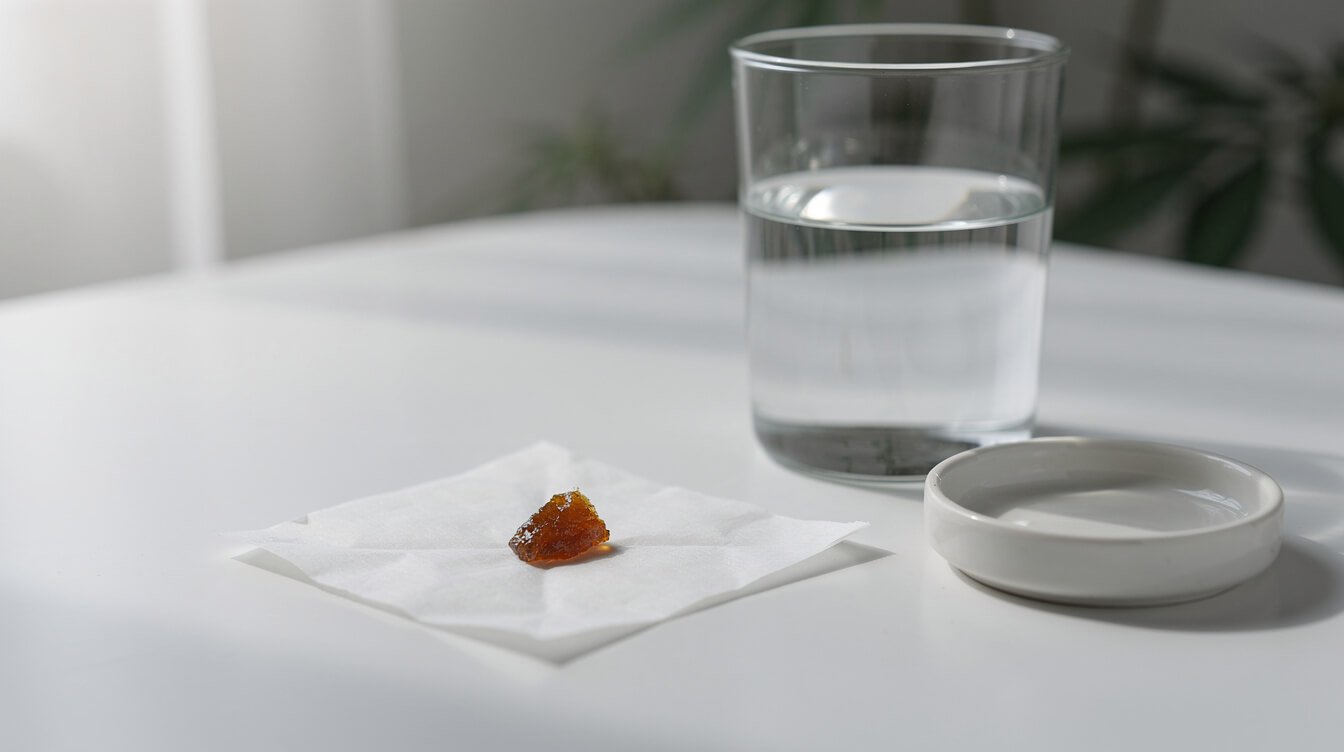
“Start low, go slow” is the standard advice for edibles, and it applies to concentrates with even more force. Inhaled THC hits within minutes, so you’d think you’d get fast feedback. You do — but the dose has already been taken in one breath, so the feedback arrives too late to change that hit. Here’s what the advice looks like when you actually apply it:
- Go smaller than “rice-sized.” The common rule of thumb is a rice-grain-sized dab. For a first time, or after a long break, aim for a fraction of that. You can always take a second one. You can’t take back the first.
- Check the label. Where it’s legal, regulated products list THC percentage. A 90% product and a 60% product are not the same dab.
- Dab low. Lower temperatures are gentler on the throat and, per the study above, produce fewer degradation products. Harsh is a signal, not a rite of passage.
- Wait before the next one. Give it at least 15 minutes. Inhaled effects usually build over the first few minutes and peak within about half an hour.
- Sit down, somewhere you’re comfortable. Big inhaled doses can bring on dizziness or a racing heart. Being seated, with water nearby, makes that a minor event instead of a fall.
- Don’t stack. No mixing with alcohol, and no adding an edible on top. Each one makes the other harder to read.
- Don’t drive. Not after a dab, not “after it wears off a bit.” Plan the evening so you don’t have to.
If a dab does turn out too strong, the usual advice holds: sit or lie down somewhere calm, drink some water, remember that it passes, and get medical help if anything feels genuinely wrong. Too-strong THC is unpleasant, and riding it out is usually the whole fix — but “usually” isn’t a promise, so don’t hesitate to call for help.
Who should skip dabbing entirely
No storefront has a reason to write this section. We do. If you landed here typing what is dabbing weed into a search bar because you’re curious, that’s completely fine — curiosity is why this site exists. But plenty of people genuinely don’t need to dab, and some shouldn’t. Skip it if any of these sound like you:
- You’re under 21. This isn’t for you, full stop.
- You’re new to cannabis or have a low tolerance. Get to know flower first. Dabbing is a high-dose method, and there’s no reason to start at the deep end.
- You’ve had a bad reaction before. If you’ve ever had a panic-level high, a much larger dose in one breath is the opposite of what you want.
- You have a personal or family history of mental health conditions, or you’re pregnant or breastfeeding. Talk to a doctor before using any cannabis, and especially high-potency concentrates.
- You’re trying to cut back. Concentrates are the faster road to a higher tolerance. That’s the wrong direction.
- Your setup doesn’t suit an open flame. Shared housing, a lease that bans it, kids or pets around, a cramped space. A torch and a hot banger need a sensible setting.
- Flower already does what you want. This is the most common case, and the most underrated. If a joint or a bowl gets you where you want to be, dabbing adds cost, gear, and dose without adding anything you were missing.
The legal side
Concentrates often sit in a different legal category than flower. Many places set separate, much smaller possession limits for concentrates, some allow flower but restrict or ban concentrates, and cannabis remains illegal under US federal law regardless of state rules. Laws vary a lot by state and country and change over time, so check the rules where you actually are. Don’t assume that because flower is legal there, dabs are too.
What is dabbing weed? Quick answers to common questions
So what is dabbing weed, in one sentence?
It’s inhaling the vapor from a small amount of cannabis concentrate placed on a very hot surface, usually a quartz banger on a small water pipe.
Why is it called dabbing?
Because you “dab” a small amount of concentrate onto the hot surface with a tool. The concentrate itself got nicknamed a dab, and the name stuck to the whole method.
Is a dab stronger than smoking a joint?
Per hit, yes, by a wide margin. Concentrates commonly test at 50–90% THC, compared with flower in the teens to mid-20s. One average dab can carry roughly as much THC as a whole small bowl, taken in a single breath.
What temperature should you dab at?
Lower than most people do. In the 2017 lab study, the lowest range tested (around 612°F) produced no detectable methacrolein from terpenes, while hotter ranges did, and benzene appeared only at the very highest. A glowing nail is far too hot. Measured heat, from an e-rig or a thermometer, beats guessing.
Is dabbing better for your lungs than smoking?
It isn’t safe to assume so. Dabbing avoids burning plant material, but at high temperatures it produces its own degradation products, and studies of concentrates have also found residual solvents and pesticides in some products. “It’s just vapor” depends heavily on the temperature and on what’s in the concentrate.
How long does a dab take to kick in?
Usually within a few minutes, building to a peak within about half an hour. That’s why waiting at least 15 minutes before a second dab is the standard advice.
Do dabs raise your tolerance faster?
Yes. Larger doses per session build tolerance faster than flower does. Tolerance is reversible, and a break of a few weeks lets most of it reset.
Do you need a torch to dab?
No. E-rigs, e-nails, and concentrate vaporizers heat electrically and let you set a temperature. They cost more up front, but they remove the open flame and the guesswork.
The short version
So, what is dabbing weed once you strip the culture and the gear talk off it? It’s vaporizing a concentrate on a hot surface. Simple to describe, and easy to underestimate.
The three things worth remembering: a dab is a much bigger single hit than flower, so take far less than you think you need. Temperature changes what you inhale, so dab low and measure the heat if you can. Tolerance builds faster at this dose, so notice it early and take breaks. And if flower already does what you want, it’s completely reasonable to decide dabbing isn’t for you. If you’d like to understand the concentrates themselves, start with live resin vs rosin.
This one’s for adults 21 and over, and laws on concentrates vary more than laws on flower, so know the rules where you are. Great plant — respect the dose, mind the heat, and enjoy responsibly.
Before you go
Get the next explainer first
We publish a new one every day. The best of the week, plus what's new in the shop, lands in one short email.