What Is CBG in Weed? The ‘Mother Cannabinoid’ Explained Without the Hype
If you’ve seen “CBG” on a label lately and wondered whether it’s the new CBD, the next big high, or just marketing, here’s the straight version. What is CBG in weed? CBG (cannabigerol) is a minor cannabinoid. Its acid form, CBGA, is the raw material the plant uses to build THC and CBD. Finished flower usually has very little CBG left. It doesn’t get you high, and the human research on it fits in a thimble: two small controlled trials of its acute effects, which don’t fully agree.
That’s the short answer. The rest of this guide covers the part most sites skip. “Mother cannabinoid” really describes CBGA, not the CBG in your tincture. CBG-heavy plants exist because of one broken gene, not because someone harvested early. And the “benefits” lists you’ve seen rest mostly on cell and animal studies. We’ll also cover how CBG compares with CBD and THC, and how to read a CBG label so a THC-combo product doesn’t surprise you.
This guide is for adults 21+. It’s education, not medical advice, and cannabis laws vary by state and country. Federal hemp rules are also changing in 2026, so check the current rules where you live.
What is CBG in weed? The short answer
CBG is short for cannabigerol, one of the 100-plus cannabinoids the cannabis plant makes. It was first isolated in 1964, and for decades almost nobody paid attention to it because it doesn’t produce a high. Interest only took off once hemp-derived products went mainstream and sellers started looking for “the next CBD.”
Here’s the quick picture:
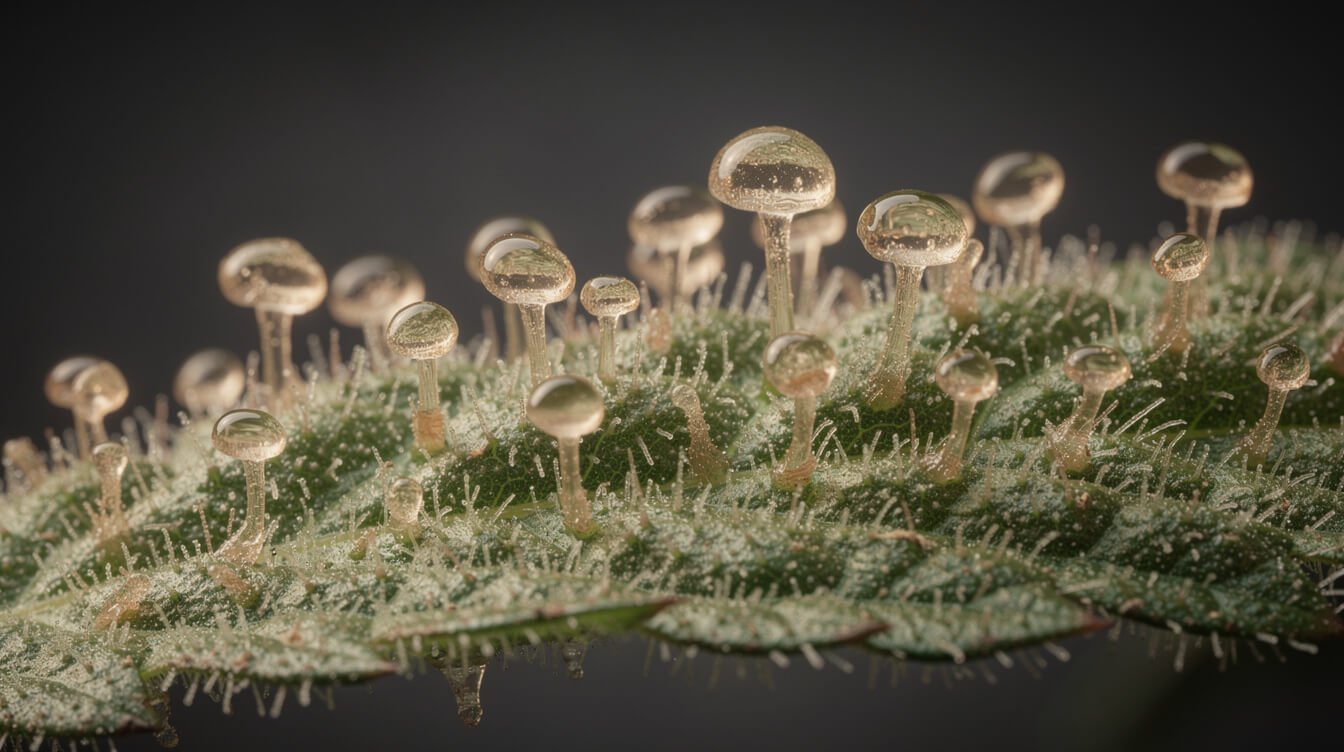
- It starts as CBGA. In the trichomes, the plant makes cannabigerolic acid (CBGA). Enzymes then turn most of it into THCA, CBDA, or CBCA.
- Heat turns CBGA into CBG. This works the same way THCA turns into THC: decarboxylation drops a carbon dioxide group.
- There’s usually not much left. In typical THC-dominant or CBD-dominant flower, most CBGA has already been converted by harvest, so CBG is a minor player.
- It isn’t intoxicating. Both controlled human trials found no high, and we’ll get to the details below.
- Health claims run far ahead of the evidence. Most of the “benefits” you’ll read about come from petri dishes and rodents.
So when people ask what CBG in weed is, the honest answer is a precursor-family cannabinoid that’s interesting chemistry, barely studied in people, and often oversold.
CBGA vs CBG: what “mother cannabinoid” actually means
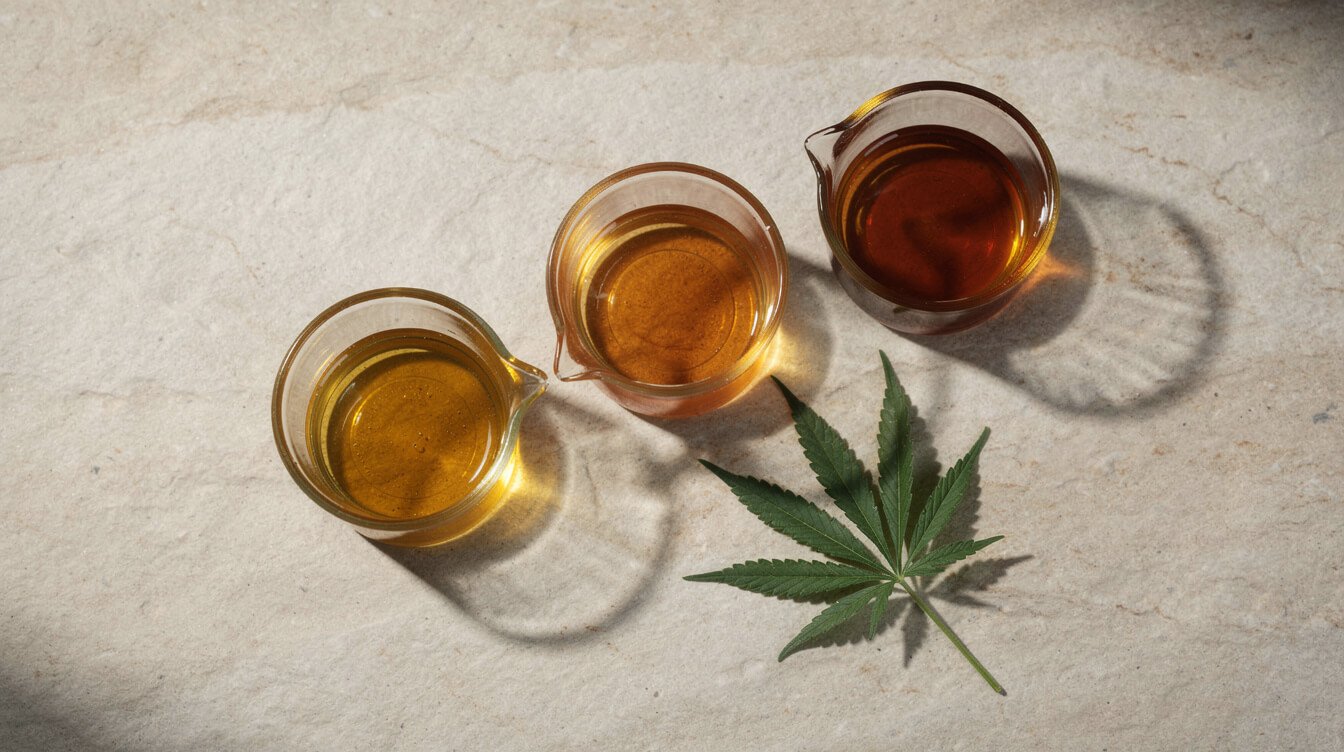
You’ve probably seen CBG called the “mother of all cannabinoids.” It’s a catchy line, but it blurs two different molecules, and the difference matters if you’re trying to understand what’s in a jar or a bottle.
The plant builds from CBGA, not CBG
Inside the resin glands, the plant joins two building blocks into CBGA. That acid is the branching point. Specific enzymes, called synthases, each grab CBGA and fold it into a different shape:
- THCA synthase turns CBGA into THCA, the precursor of THC.
- CBDA synthase turns CBGA into CBDA, the precursor of CBD.
- CBCA synthase turns CBGA into CBCA, the precursor of CBC.
Japanese researchers Futoshi Taura, Satoshi Morimoto, and Yukihiro Shoyama worked out much of this. In 1996 they purified CBDA synthase and showed that it makes CBDA predominantly from cannabigerolic acid (Taura et al., 1996). In 2007 they cloned it and described it as “the chemotype-determining enzyme” in fiber-type cannabis, structurally very similar to THCA synthase (Taura et al., 2007).
So where does CBG come in?
CBG is what you get when CBGA that was never converted gets heated or aged. It’s the leftover, decarboxylated form, not the mother. Researchers who study it are careful here. The 2024 CBG trial we’ll cover below says plainly that it’s the acidic form, CBGA, that’s “often referred to as ‘the mother of all cannabinoids'” (Cuttler et al., 2024).
One myth this clears up
Because of the “mother” branding, some people assume CBG turns into THC or CBD in your body. It doesn’t. The conversion happens through plant enzymes, in the plant. WebMD’s cannabigerol monograph puts it simply: the human body does not turn cannabigerol into other cannabinoids, and once it’s out of the plant it stays CBG (WebMD). A CBG gummy is not a slow-release THC gummy.
Why most weed has so little CBG, and how CBG-heavy plants happen
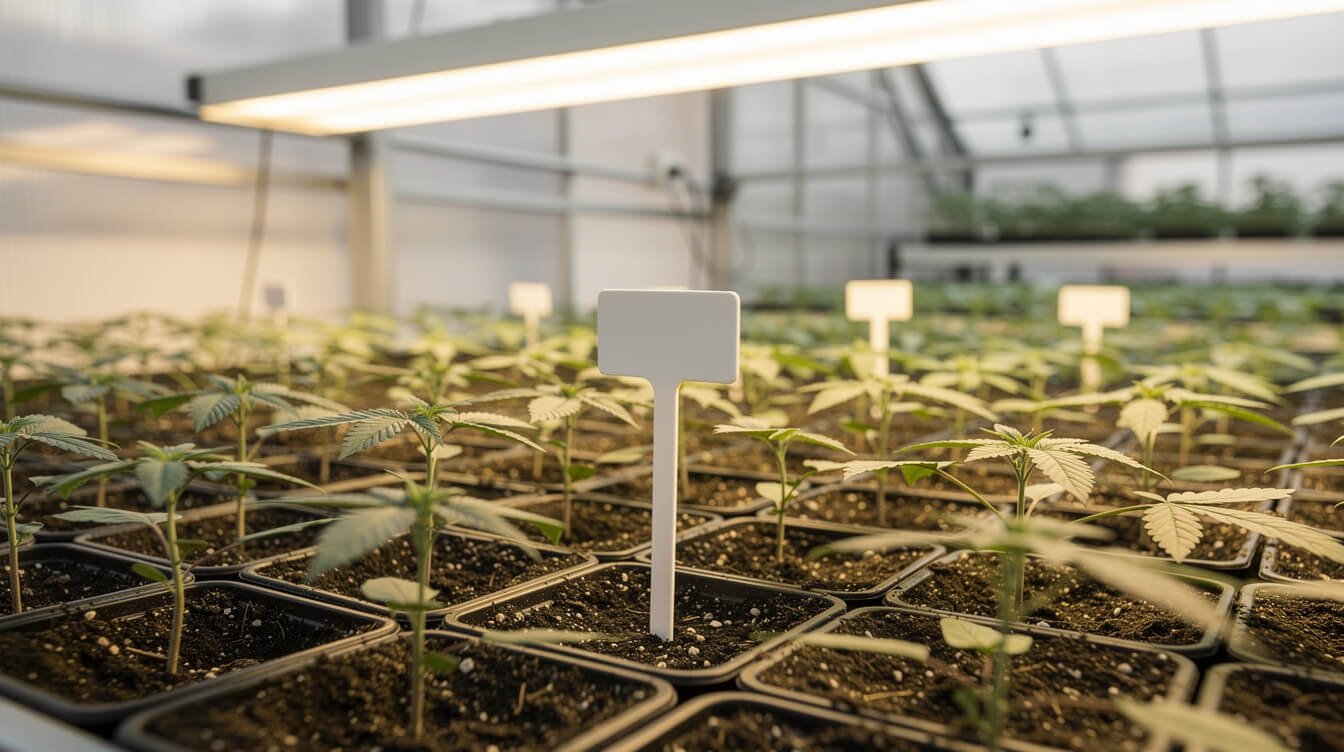
If CBGA is the starting material for everything, why is there so little CBG in the finished bud? The answer is efficiency. A healthy THCA-dominant plant has working THCA synthase that keeps converting CBGA as fast as the plant makes it. By harvest, most of the CBGA has become THCA (or CBDA in hemp-type plants), and only a small amount is left over.
The broken-gene explanation
Most articles say high-CBG plants come from “selective breeding” and stop there. The more interesting part is what breeders selected. In 2021, Oregon researchers crossed a CBGA-dominant cultivar with a THCA-dominant plant and, separately, with a CBDA-dominant plant. They genotyped and chemotyped the offspring (Garfinkel, Otten & Crawford, 2021). Their conclusion was that CBGA dominance is inherited as a single recessive gene, probably a non-working version of the THCA synthase gene. A single DNA-letter change (a SNP) appears to leave the enzyme unable to turn CBGA into THCA, so CBGA piles up instead.
The numbers are easy to follow. In their second cross, plants with two working copies of THCA synthase averaged about 4.5 parts THCA for every 1 part CBGA. Plants with two copies of the broken version flipped that to about 0.1, which means roughly ten times more CBGA than THCA. Plants with one copy of each landed in between but stayed THCA-dominant, which is what “recessive” means in practice. You need two broken copies to get a CBG plant.
The researchers also note that this confirms the recessive inheritance first reported by plant breeders de Meijer and Hammond in 2005. The trait has been understood for about twenty years. It just hasn’t made it into the dispensary blog posts.
What about “harvest early for CBG”?
You’ll read that growers harvest early to catch CBG before it converts. We couldn’t find a published study showing that’s how CBG-rich flower is produced. The documented route is genetics: plants that can’t finish the conversion, no matter when you cut them. If you grow, that’s also why a CBG cultivar behaves predictably. Its chemistry is locked in by the gene, the same way autoflowering is locked in by the ruderalis genes.
Does CBG get you high?

No, at least not at the doses anyone has tested in people. This is one of the few CBG questions with real human data behind it.
What the trials measured
In the 2024 Washington State trial, 34 adults aged 21 to 60 took 20 mg of hemp-derived CBG or a placebo tincture. On a 0 to 10 scale, overall intoxication ratings averaged less than 1 in both conditions. A phone-based impairment test (the DRUID app) showed no impairment (Cuttler et al., 2024). Every participant was already a cannabis user, so these were people who know what a high feels like.
In the 2026 Johns Hopkins dose-ranging study, 12 healthy adults took 0, 25, 50, 100, and 200 mg of CBG isolate. The authors reported that subjective effects were “minimal” and that the cannabinoid yielded “few pharmacodynamic or psychoactive effects,” even at 200 mg (Wolinsky et al., 2026).
“Psychoactive” vs “intoxicating”
Some sellers say CBG is “psychoactive but not intoxicating,” and others call it “non-psychoactive.” The difference is mostly about definitions. “Psychoactive” technically means anything that acts on the brain, and coffee qualifies. “Intoxicating” means a high that impairs you. By that standard, CBG looks non-intoxicating. The Hopkins data even recorded small mood-rating shifts at some doses, so “does nothing to the brain” would overstate it too.
The catch: CBG products that do get you high
Plenty of CBG products in legal dispensaries are paired with THC, such as 1:1 CBG:THC gummies, drinks, and vapes. Those absolutely get you high, and the THC is the reason. You’ll sometimes see claims that CBG “balances” or “softens” THC’s high. We haven’t found a controlled human study showing that, so dose a combo product by its THC number. If you’re new to edibles, our edible timeline guide covers why waiting matters. If you overdo it, here’s what actually helps when you green out. And with any THC-containing product: don’t drive.
GanjaTech, weekly
Cannabis, explained. In your inbox.
One email a week: the clearest explainers, honest gear picks, and what the science actually says. 21+ only. No spam, unsubscribe anytime.
What the human research actually shows

Search “what is CBG in weed good for” or “CBG benefits” and you’ll get long lists covering inflammation, pain, appetite, skin, eyes, brain protection, and more. Look at the citations and nearly all of it is lab or animal work. The big 2024 review that Google’s AI Overview leans on is mostly about molecular mechanisms and “therapeutic potential” (Li et al., 2024), and potential is the key word. Here’s the honest state of the human evidence.
Trial 1: Cuttler et al., 2024 (Washington State)
This was the first published placebo-controlled human trial of CBG. The authors themselves noted there were “no published clinical trials” before it. The design was a double-blind crossover: 34 adults, 20 mg hemp CBG or placebo, one week apart, run over Zoom. Participants rated anxiety, stress, and mood, did a standard social-stress task, took a verbal memory test, and used an impairment app.
- Reported: compared with placebo, lower overall anxiety ratings, lower stress ratings at the first check-in, and better verbal-memory scores. The memory result surprised the authors themselves.
- Not found: any high or impairment.
- Read with: it was small, measured a single dose in a single session, and was done at home over video rather than in a lab. All participants were cannabis users. The study was funded by CReDO Science, a company the paper says is “working with CBG,” and one co-author is affiliated with it. The authors state the funder had no role in the analyses.
Trial 2: Wolinsky et al., 2026 (Johns Hopkins)
This was a single-ascending-dose lab study: 12 healthy adults, placebo plus 25, 50, 100, and 200 mg of CBG isolate in MCT oil, with blood draws and testing for eight hours after each dose.
- Reported: no drug-related adverse events, and “no robust pharmacodynamic effects.” There were a few scattered shifts: people rated themselves less “Jittery” and “Active” at 50 mg, less “Calm” at 100 mg, and hungrier at 200 mg. Liver function tests stayed within normal limits after the two highest doses.
- Read with: only 12 people, acute dosing only, and the authors say chronic-dosing studies are needed. One co-author lists an affiliation with Charlotte’s Web, a hemp-products company.
Why the two don’t line up
One trial reported less anxiety at 20 mg. The other found no robust effects from 25 to 200 mg, and even a drop in feeling calm at 100 mg. The designs differ (a stress test at home versus a dose ladder in a lab), so they don’t necessarily contradict each other. But they don’t add up to “CBG reduces anxiety,” either. Two small, short studies are a starting point. Neither is a treatment claim, and we’re not making one here.
One practical finding: food changes how much you absorb
A 2024 UMass Amherst pilot gave adults 25 mg of oral CBG with a high-fat or low-fat meal. The high-fat condition produced significantly higher peak blood levels and total exposure, and the authors concluded that dietary fat mattered more than the “emulsified” delivery technology being tested (Story et al., 2024). The same CBG product can hit differently on an empty stomach than after dinner, which is the same pattern you see with oral THC tinctures.
If you’re thinking about CBG for a health reason, or you take any prescription medication, talk to your doctor or pharmacist first. Cannabinoids are processed by the liver, and there’s very little CBG-specific interaction data.
CBG vs CBD vs THC
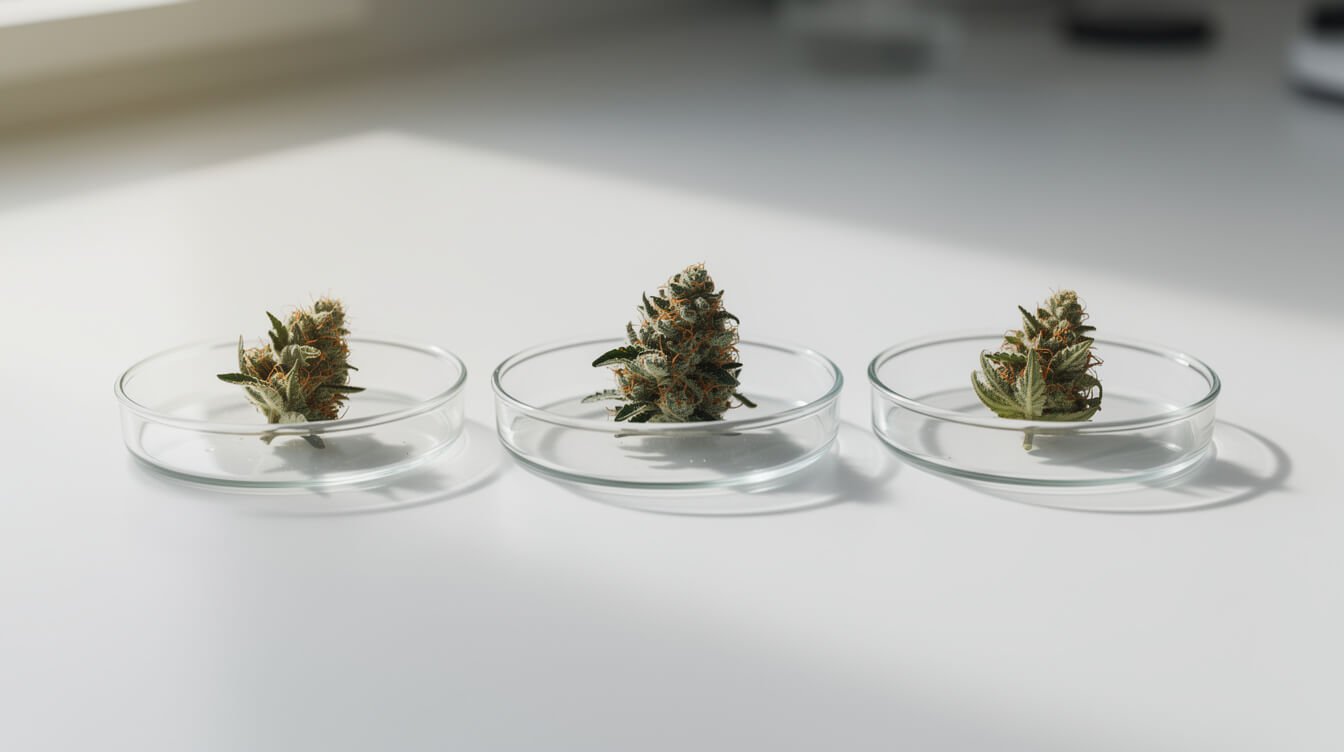
CBG gets marketed as “the new CBD,” but the three cannabinoids sit in very different places, both in the plant and in the research record. Here’s the side-by-side:
| CBG | CBD | THC | |
|---|---|---|---|
| Gets you high? | No (no high found in 2 small trials) | No | Yes |
| Acid form in the plant | CBGA (the shared precursor) | CBDA (made from CBGA) | THCA (made from CBGA) |
| Typical role in flower | Minor, unless the plant carries the broken-synthase gene | Dominant in hemp-type and CBD cultivars | Dominant in most dispensary flower |
| Controlled human research | Two small acute-effects trials plus a food-effect pilot | Extensive, including an FDA-approved prescription drug | Decades of studies |
| Main uncertainty | Almost everything beyond single doses | Product quality and labeling | Dose, tolerance, and impairment |
The takeaway: CBG and CBD share the “no high” column, but CBD has a far deeper research record. For the full CBD-vs-THC picture, see our CBD vs THC effects breakdown. If you’re comparing gummies specifically, CBD vs THC gummies walks through what changes on the label.
One more piece of context. The “entourage effect,” the idea that cannabinoids and terpenes shape each other’s effects, gets used a lot in CBG marketing. It’s an interesting hypothesis with limited human proof. Our terpenes reference covers how strong (and weak) that evidence is. Similarly, labels like indica and hybrid tell you less about a product than its actual lab-measured cannabinoid numbers.
Reading a CBG label: mg per serving, lab reports, and THC combos
Knowing the answer to “what is CBG in weed” gets you halfway. The label tells you what’s actually in the product, and because CBG is so lightly studied, it’s also where you can protect yourself. Here’s what to check, in order.
1. Is there THC in it?
This matters most. A “CBG product” might be CBG alone, CBG plus CBD, or CBG plus THC. If THC is in it, treat it as a THC product. Dose by the THC milligrams, wait before taking more (edibles can take up to two hours to kick in), and don’t drive. Also know that some CBG products may contain THC even when you don’t expect it. WebMD’s monograph warns that cannabigerol products can be contaminated with THC, which can cause a positive drug test (WebMD). If you’re drug-tested for work, that’s a real risk.
2. Milligrams per serving, not per package
Look for mg of each cannabinoid per serving (per gummy, per dropper, per puff). A big number on the front of the box is usually the whole package. For reference, the human trials used 20 mg (Cuttler) and 25 to 200 mg (Wolinsky) of CBG per dose. That’s for context, not a dosing recommendation, since nobody has established a CBG dose for any purpose.
3. A certificate of analysis (COA)
A COA is a third-party lab report. A useful one lists the batch number (matching your package), the cannabinoid amounts (including THC), and screens for contaminants like pesticides, heavy metals, and residual solvents. No COA, a COA for a different batch, or a COA from the brand’s own lab are all reasons to walk away.
4. Isolate, broad-spectrum, or full-spectrum?
- Isolate: just CBG. The Hopkins trial used this.
- Broad-spectrum: other cannabinoids and terpenes, with THC supposedly removed. Check the COA to confirm.
- Full-spectrum: includes whatever THC the source plant had.
5. Take it with food? Know that it changes things
Per the Story 2024 pilot, a fatty meal raised CBG blood levels. That’s not a hack. It just means taking the same product with and without food can give different results.
And if you take medications, are pregnant or breastfeeding, or have a liver condition, check with a doctor or pharmacist before adding any cannabinoid. Keep any edible-style product, CBG or otherwise, locked away from kids and pets.
FAQ: what is CBG in weed, and other common questions
What is CBG in weed, compared with CBD?
Both are non-intoxicating cannabinoids, but they sit at different points on the plant’s assembly line. CBG’s acid form (CBGA) is the precursor, and CBD’s acid form (CBDA) is one of the things the plant makes from it. CBD is usually abundant in hemp-type plants. CBG is usually scarce unless the plant carries the broken-synthase trait. CBD has far more human research behind it.
Does CBG make you sleepy?
There’s no good evidence either way. The Hopkins dose study’s abstract doesn’t list sleepiness among its findings. In a 2021 online survey of 127 adults (21+) who used CBG-predominant cannabis, 15% listed sleepiness among their side effects, along with dry mouth (16.5%) and increased appetite (11.8%) (Russo et al., 2022). Self-selected survey data can’t tell you what caused what. Also, many of those products contained other cannabinoids.
Is CBG stronger than CBD?
“Stronger” doesn’t really apply. They’re different molecules that act on different targets, and neither gets you high. What’s true is that CBG is less proven: CBD has an FDA-approved prescription form and a large research base, while CBG has a handful of small human studies. Different, not stronger.
Is CBG in weed the same as CBG in hemp products?
Chemically, cannabigerol is cannabigerol whether it came from a THC-type or hemp-type plant. What differs is everything around it: how much THC comes along for the ride, how it’s extracted, and how it’s regulated. Laws vary by state and country, and federal hemp rules are changing in 2026, so check the current rules where you live before you buy anything.
Can you smoke CBG flower?
CBG-dominant flower exists, bred from plants with the broken-THCA-synthase trait, and heating it converts CBGA to CBG like any other flower. But both controlled trials used oral doses, so there’s essentially no human data on smoked or vaped CBG. Smoke of any kind is also hard on your lungs.
Final thoughts
So, what is CBG in weed? It’s the decarboxylated cousin of CBGA, the molecule the plant uses as raw material for THC and CBD. It shows up in small amounts in most flower, and in large amounts only in plants carrying a broken THCA-synthase gene. It doesn’t get you high. And despite the benefits lists, its human research record is two small acute trials (one encouraging, one mostly flat) plus a food-effect pilot.
That’s not a reason to dismiss it. It’s a reason to treat CBG as what it is: an interesting, early-stage cannabinoid, not a proven remedy. If you try a CBG product, read the label for THC, check the lab report, and talk to your doctor if you have a health question or take medication.
Curious about the rest of the plant’s chemistry? Start with whether weed is a stimulant or a depressant, or the newest research on why weed makes you hungry. Great plant. Respect it, know your laws, and enjoy it responsibly.
Before you go
Get the next explainer first
We publish a new one every day. The best of the week, plus what's new in the shop, lands in one short email.