Weed Slang Explained: What the Words Mean and Where They Actually Came From
Weed slang is huge, constantly changing, and mostly made up of a few dozen words that do almost all the work. Weed, pot, grass, herb, Mary Jane, reefer, and ganja name the plant. Chronic, dank, loud, gas, fire, and za mean the good stuff. Mids, reggie, and schwag mean the opposite. Most of the rest describes how you consume it or how it feels. Here is what each word actually means, where it came from when the history is known, and where it honestly isn’t. A lot of origins get repeated with confidence that nobody has earned.
This is a culture guide for adults (21+), not a phrasebook for buying anything. Laws on cannabis vary a lot by state and country, so knowing the words doesn’t tell you what’s legal where you live.
Weed slang: the short answer
If you only learn ten words, learn these. They cover most of the weed slang you’ll hear in a dispensary line, a group chat, or a song.
- Weed: the default word for cannabis in American English today. It edged out “pot” over the last few decades.
- Pot: the older default. It still dominates newspaper headlines because it’s short.
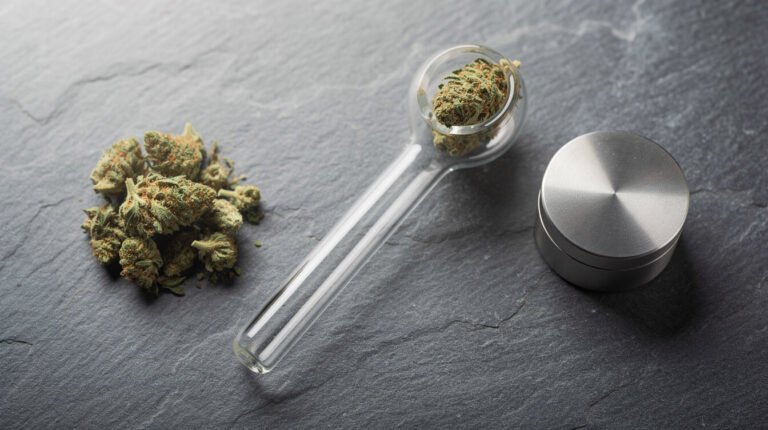
- Bud / flower: the dried, trimmed flowers of the plant, which is the part people smoke or vape.
- Joint: cannabis rolled in a paper. A blunt is rolled in a cigar or cigarillo wrap.
- Dank: high quality. It originally meant damp, then “sticky and resinous,” then “strong.”
- Loud: high quality, with a smell strong enough to announce itself.
- Za / zaza: “exotic,” top-shelf flower, from a clipped pronunciation of “exotic.”
- Mids: middle-grade. Not bad, not special.
- High / baked / stoned: the effect, from mild to heavy.
- 420: cannabis culture in general, and April 20 as its unofficial holiday.
Everything else in this guide is a variation, a regional cousin, or a period piece. The interesting part is where these words came from, because the history of weed slang is really a history of who was smoking, who was writing it down, and who was trying not to get caught.
A quick note on sources: for origins, this guide leans on dictionary etymologies (the Wiktionary cannabis slang appendix and the OED citations it summarizes), a 2019 WBEZ/NPR piece that interviewed a linguist and a historian, and a 2014 Slate column by language writer Ben Yagoda. When they say “origin unknown,” so do we.
Names for the plant itself: weed, pot, grass, reefer, and the rest
The plant has more nicknames than almost anything else people consume. The big ones have surprisingly well-documented (and surprisingly uncertain) histories.
Weed
“Weed” in the cannabis sense is older than most people assume. Slate’s Yagoda, working from the Oxford English Dictionary, notes that the journal American Speech listed it “Among the New Words” in 1929, defined as a marijuana cigarette. By 1932 the Chicago Defender was writing about “the humble ‘reefer,’ ‘the weed.'” The modern mass-noun use, “weed” for the drug in general, shows up in Raymond Chandler’s 1949 novel The Little Sister: “a suitcase full of weed.”
Where it came from is less settled. English had been using “weed” for tobacco since the 1600s, so a smokable “weed” wasn’t a stretch. University of Cincinnati historian Isaac Campos told WBEZ the word may also be a shortening of “locoweed,” a plant that was sometimes used interchangeably with marijuana in late-19th-century Mexico. Linguist Jason Riggle pointed to a 1913 California bill that called the drug “locoweed.” Both routes are plausible, and neither is proven.
What’s well documented is the word’s rise. Google’s book data shows “smoking weed” climbing in the early 2000s while “smoking pot” and “smoking marijuana” declined. Yagoda’s read was generational: a new crowd wanted distance from their parents’ “pot.”
Pot
The most-repeated origin story says “pot” is short for the Mexican Spanish potiguaya or potaguaya (cannabis leaves), or for potación de guaya, a “drink of grief” of wine or brandy steeped with marijuana. Wiktionary labels this “possibly.” Riggle, asked directly by WBEZ, was blunter: “Basically the answer is we have no idea, so I want to call pot a mystery.” Yagoda dates it to the 1930s and notes it apparently started in African American slang. It took off culturally in the 1960s, and it remains the word headline writers love.
Grass, herb, and bud
“Grass” is the hippie-era favorite, a plain-English metaphor (it’s green, it grows) that peaked with the 1960s and 70s counterculture. “Herb” is the same idea with a gentler, more botanical feel. It has deep roots in Rastafarian usage and today reads as respectful. “Bud” and “flower” are the most literal terms on the list, since the smokable part of the plant is its flower cluster. Dispensaries prefer “flower” because it sounds like a product category, not a nickname.
Reefer
“Reefer” dates to the 1920s, and its origin is genuinely uncertain. One theory traces it to the Mexican Spanish grifa (cannabis), with grifo meaning someone who smokes it. Another points to a rolled cigarette resembling a reefed (rolled-up) sail. Either way, the word was everywhere by the early 1930s. Cab Calloway recorded “Have You Ever Met That Funny Reefer Man” in 1932, and the 1936 scare film Reefer Madness later turned it into shorthand for drug panic.
Mary Jane and marijuana
“Mary Jane” is a calque, a word-for-word translation, of the Spanish María Juana. The connection runs both ways. The word “marijuana” itself comes from Mexican Spanish marihuana or mariguana, and its spelling was nudged by a folk etymology linking it to the name María Juana. Wiktionary records its first English attestation in 1874. Campos told WBEZ the word was used in Mexico back to the 1840s and spread in U.S. newspapers from the 1890s, often in crime stories.
You’ve probably heard that “marijuana” was pushed in the U.S. to stoke anti-Mexican sentiment, which is why some people avoid it. Campos pushes back: he argues the word spread because of real Mexican cultural influence, and that dropping it erases that influence. It’s a live debate, and both views come from serious people. The public, for what it’s worth, doesn’t seem to care. A 2019 survey experiment by Mikos and Kam in PLoS One found “no evidence” that people judge “marijuana” and “cannabis” differently on legalization support, harm, or stereotypes of users.
Ganja
“Ganja” isn’t new slang from the 1990s, though some slang lists claim it is. It’s borrowed from Hindi gānjā, ultimately from Sanskrit, and it was in English by about 1800. It reached Jamaica in the 1850s and 1860s, imported for indentured workers brought over from India, and that’s why the word is now so closely tied to Jamaican culture. Fittingly, our look at where weed grows naturally traces the plant itself back to Asia too.
The jazz-age weed slang that refuses to die

The 1920s and 30s jazz scene was the first big American subculture to smoke cannabis openly enough to need its own vocabulary, and some of that weed slang is still around a century later.
Muggles
Long before Harry Potter used it for non-wizards, “muggles” meant marijuana. The OED, as summarized by Wiktionary, says the origin is unknown and that it first came into use in New Orleans in the mid-1920s, which is exactly where and when jazz was taking shape. Louis Armstrong recorded an instrumental called “Muggles” in Chicago on December 7, 1928. Nobody on that record had to explain the title to the band.
Viper and mezz
In 1930s Harlem, a “viper” was someone who smoked marijuana. Stuff Smith and his Onyx Club Boys recorded “If You’re a Viper” in 1936, and it became one of the best-known cannabis songs of the era. The clarinetist Mezz Mezzrow was so tied to the drug in the jazz world that “mezz” itself became slang for marijuana, and that word shows up in the same song.
Tea
“Tea” is the most dated term on this list. Dictionaries label it “dated,” and the quotations they collect cluster in the 1940s. You’ll still see it in jazz histories and old novels, and occasionally as a deliberate throwback. (Actual cannabis tea is a different subject. Our cannabis tea guide explains why plain water barely extracts anything.)
Why did this vocabulary stick? Partly because the records survived. A word preserved in a 1928 Armstrong side or a 1936 Smith song gets rediscovered by every generation that digs through old jazz. “Reefer” and “muggles” outlived the clubs that coined them.
Quality words: chronic, dank, loud, gas, and za

A big share of modern weed slang exists to answer one question: is it any good? Most of these words describe what people notice first, which is how the flower smells and looks.
Chronic
“Chronic” means high-quality cannabis. Its popularity is easy to date: Dr. Dre’s 1992 album The Chronic. Riggle told WBEZ it’s hard to find the word used this way in print much before 1992, so it’s unclear whether the album borrowed an existing street term or launched it. Either way, the album is why the whole country knows it.
Dank
“Dank” has the best word history of the group. In older English it meant damp or moist, as in a dank cellar. Applied to cannabis, it came to mean moist and sticky (resinous flower feels tacky), and by extension potent. Internet culture then bent it again into “dank memes,” which Wiktionary notes descends from the drug sense.
Loud, gas, and fire
“Loud” means premium cannabis, and dictionaries tie it to smell: flower with a strong, pungent aroma is “loud” because you notice it before you see it. “Gas” also means high-quality, and it’s usually explained by the fuel-like, diesel-sharp aroma of many modern cultivars. “Fire” is general slang for “excellent,” applied to cannabis like anything else. All three are really aroma words, which fits the science. Aroma is a reasonable signal of how a flower was grown and cured, and the strongest “skunky” notes come from sulfur compounds, as we explain in why weed smells like skunk. Smell is not a potency test, though. Our zaza explainer covers how label numbers and aroma claims often don’t line up.
Za, zaza, and exotics
“Za” and “zaza” are clipped pronunciations of “exotic,” and they mean top-tier, often rare-looking or unusual-tasting flower. They spread through hip-hop in the late 2010s and early 2020s. One important warning comes with this one: “ZaZa” is also the brand name on gas-station tianeptine products, which are not cannabis at all. Our full zaza meaning guide covers both.
Skunk and kush
“Skunk” is short for “skunkweed,” meaning highly aromatic cannabis, and Skunk is also the name of a famous family of hybrid cultivars. “Kush” comes from the Hindu Kush mountains of Afghanistan and Pakistan, where the landrace plants behind many kush cultivars originated. Today it’s used loosely for many indica-leaning strains.
Mids, reggie, and schwag
At the other end of the scale: “mids” is short for middle-grade, “reggie” is short for regular (as opposed to good), and “schwag” means low-grade. Schwag’s origin is unknown. Wiktionary suggests a possible link to “shag” (shredded tobacco) and dates the cannabis sense to the 1980s. These weed slang terms are mostly relics of the pre-legal era, when quality was a gamble. In regulated markets with lab-tested labels, people tend to argue about percentages and terpenes instead.
GanjaTech, weekly
Cannabis, explained. In your inbox.
One email a week: the clearest explainers, honest gear picks, and what the science actually says. 21+ only. No spam, unsubscribe anytime.
Weed slang for how you consume it

This is the most practical corner of weed slang. These are names for formats and gear, and most have a clear meaning even when the origin is fuzzy. We’ve written full guides to most of them, so here’s the one-line version with links.
- Joint: cannabis rolled in thin paper, usually without tobacco. The word in this sense is a 20th-century American slang usage, and its exact path is unclear.
- Blunt: cannabis rolled in a cigar or cigarillo wrap, named after Phillies Blunt cigars. Because the wrap is tobacco leaf, a blunt delivers nicotine. See blunt vs spliff vs joint.
- Spliff: in North America, a joint mixed with tobacco. In the UK and much of the Commonwealth, it can mean any joint. The word comes from Jamaican English, possibly a blend of “split” and “whiff,” according to the Dictionary of Caribbean English Usage.
- Doobie: a joint. It’s a 1970s-flavored word that still turns up as a cozy throwback.
- Bowl: the cup of a pipe, and by extension one load of it. Our guide to packing a bowl explains why the grind matters more than people think.
- Bong: a water pipe. The word is borrowed from the Thai baung, a bamboo pipe, and its first known English use is around 1971.
- Dab: a small dose of cannabis concentrate, vaporized on a hot surface. See what dabbing actually is.
- Kief: the loose, powdery trichome heads that collect in a grinder’s bottom chamber. See what is kief.
- Hash: pressed or separated trichome resin, one of the oldest cannabis products there is. See how hash is made.
- Moon rocks: buds coated in oil and rolled in kief, with very high advertised potency. See what moon rocks are.
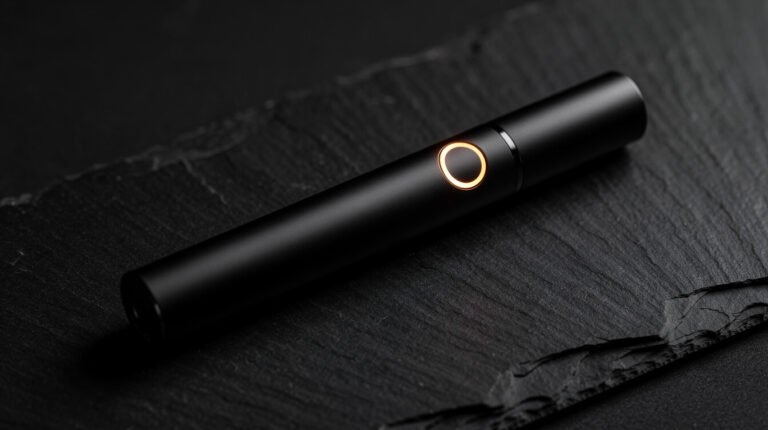
- Cart and penjamin: a vape cartridge, and a jokey name for a vape pen (a play on “Benjamin”). See penjamin meaning.
- Edible: any cannabis food or drink. Edibles kick in slowly and last much longer than smoking, so “start low, go slow” is the one piece of slang everyone should know.
A surprising amount of this vocabulary arrived through trade and travel. “Bong” came from Thailand, “spliff” from Jamaica, and “hash” through Arabic, and the people who brought the gear back brought the word with it.
Words for the experience: high, baked, blinker, and greening out

The last big category describes what happens after. These words are useful because some of them carry real safety information.
- High: the general word for feeling cannabis’s effects. It used to mean drunk, and dictionaries note it shifted toward cannabis and other drugs from the mid-20th century. For timing, see how long a weed high lasts.
- Stoned / baked / faded: progressively heavier versions of high. “Stoner” means a habitual user.
- Couch-lock: a heavy, sedated, don’t-want-to-move feeling. People often blame “indica,” but dose matters more than the label.
- Munchies: the post-cannabis appetite surge. It has a real mechanism, explained in why weed makes you hungry.
- Blinker: holding a vape’s draw button until the battery light blinks, which means one very long pull. See what a blinker is.
- Greening out: having too much and feeling sick, dizzy, anxious, or faint. It’s common with edibles and strong concentrates. See what greening out is and what actually helps.
- Crossfaded: under the influence of cannabis and alcohol together, which hits harder than either alone. See weed and alcohol.
- T break: a tolerance break, meaning time off to let your tolerance reset. See how long a t break actually takes.
- Sesh: a session, meaning a stretch of consuming, usually with other people.
The responsible footnote: every word in this section describes impairment to some degree. Being high, baked, or crossfaded means you don’t drive, full stop. And if a friend is greening out, the right response is calm reassurance, water, a safe place to sit or lie down, and real medical help if symptoms are severe or don’t improve.
Why cannabis has so many names
The U.S. Drug Enforcement Administration once compiled a list of nearly 300 slang terms for marijuana, and that’s nowhere near every term in use. Few things people consume have this many names. Four forces explain most of it.
1. Prohibition made code words useful
When something is illegal, people talk about it sideways. A word the authorities don’t know yet is practical cover, and once it becomes common knowledge, it gets replaced. That churn alone generates a constant stream of new weed slang. It’s also why so many terms (“tea,” “herb,” “grass,” “trees,” “jazz cabbage”) are ordinary words for plants or drinks given a second meaning.
2. Music spread the words
Jazz gave us “muggles,” “viper,” and “reefer.” Reggae carried “ganja” and “herb” worldwide. Hip-hop gave the country “chronic,” “blunt,” “loud,” and “za.” A song can take a word from one neighborhood to everywhere in a single summer, which is how a lot of the slang in this guide went national.
3. Language drifts by region
The same thing has different names in different places. “Spliff” means one thing in Toronto and another in London. Latin American Spanish uses mota, and Jamaica says “ganja.” Local slang crosses borders, gets reinterpreted, and comes back with a new meaning.
4. Every generation wants its own words
Riggle’s line to WBEZ is the most honest explanation of weed slang anyone has offered: “Whatever the slang was when you were in your late teens, early twenties, that’s likely going to be the slang you use for the rest of your life.” That’s why “pot” sounds like your parents, “weed” sounds like the 2000s, and “za” sounds like right now. Legal markets add a fifth force, marketing. The industry’s shift to “cannabis” and “flower” is partly a bid to sound like a regulated product rather than a street drug, though the Mikos and Kam survey suggests the public doesn’t hear much difference.
Weed slang FAQ
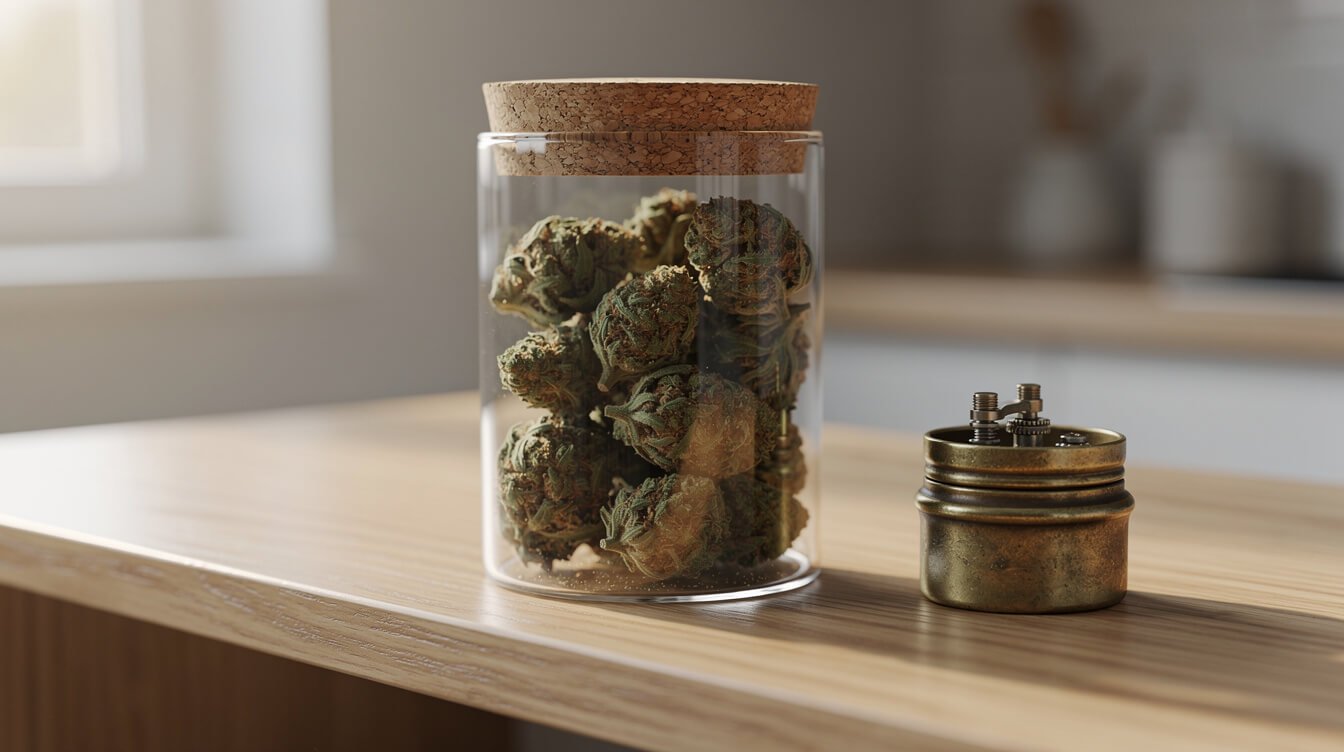
What does “loud” mean in weed slang?
“Loud” means high-quality cannabis, named for a smell so strong it’s like the flower is announcing itself. It’s close in meaning to “dank,” “gas,” and “fire.” Strong aroma usually reflects good growing and curing, but it doesn’t measure THC.
What does “mota” mean?
“Mota” is Latin American Spanish slang for marijuana. Its everyday meaning in Spanish is a speck or tiny particle, and dictionaries call the slang sense’s origin uncertain. You’ll hear it in the U.S. too, especially in the Southwest and in bilingual communities.
What is “za”?
“Za” (or “zaza”) is a clipped pronunciation of “exotic,” and it means premium, unusual, top-shelf flower. Don’t confuse it with gas-station products branded “ZaZa,” which contain tianeptine, not cannabis.
What is another word for weed?
The most common alternatives are cannabis, marijuana, pot, grass, herb, bud, flower, and Mary Jane. For formal writing, “cannabis” is the safest choice. As quoted by WBEZ in 2019, the AP Stylebook prefers “marijuana” on first reference in U.S. news, accepts “pot” and “cannabis,” and limits weed slang like “weed,” “reefer,” “ganja,” and “420” to casual contexts and quotes.
Where does “420” come from?
The best-documented origin is a group of San Rafael, California, high school students in 1971 who called themselves the Waldos and met at 4:20 p.m. to look for an abandoned cannabis crop. “4:20” became their code word, and it spread through the Grateful Dead scene. High Times first mentioned the 4/20 holiday in May 1991, and the popular “police code” origin story is a myth.
What’s the newest weed slang?
Recent coinages include “za,” “penjamin,” “jazz cabbage” (a playful one whose dictionary citations start around 2020), and “trees,” which came into use in the 21st century. Slang moves fast, and by the time a word shows up on a list like this one, the people who coined it have often moved on.
Is “stoner” an insult?
It depends on who’s saying it. Many people use it about themselves with affection, and many cannabis consumers find it reductive. “Cannabis consumer” is the neutral choice if you’re unsure.
Final thoughts
Weed slang looks like a random pile of words, but it has a clear history. Mexican Spanish gave English “marijuana” and probably “reefer” and “pot.” Hindi gave it “ganja,” and Thai gave it “bong.” The jazz clubs of New Orleans, Chicago, and Harlem coined a vocabulary that Louis Armstrong and Stuff Smith put on record. Then hip-hop, the internet, and legal dispensaries each added their own layer.
The honest part is how much is still unknown. Nobody can prove where “pot” came from, “reefer” has two competing stories, and “muggles” is officially “origin unknown.” Any slang list that dates every word with confidence is guessing.
Whatever weed slang you use, the basics don’t change. Know your local laws, keep it adult, start low with anything new, and never drive high. If you want to go deeper on any term, the guides linked above are where to start.
Before you go
Get the next explainer first
We publish a new one every day. The best of the week, plus what's new in the shop, lands in one short email.