How to Make Hash: Dry Sift, Ice Water, and Pressing, Explained Straight
Here’s the straight answer on how to make hash: you separate the resin heads (trichomes) from dried cannabis, using either fine screens or ice water, and then press what you collected into a cohesive lump with gentle warmth and pressure. That’s the whole idea, and people have been doing it for centuries with nothing fancier than a sieve and their hands. No solvents, no chemistry set.
The nuance most guides skip is that hash quality is almost entirely a sorting problem. Your goal is to keep resin heads and lose everything else: leaf dust, trichome stalks, and plant hair. Get that right and the pressing part is easy. Get it wrong and you get what one grower on a forum described perfectly: a hash ball that “falls apart very easily” and won’t bubble. Below are the two home methods worth doing (dry sift and ice water), how to press, what yield to honestly expect, how to store it, and the legal line you need to know before you start. Adults 21+ only, and only with cannabis you legally have.
How to make hash: the short answer, and what hash actually is
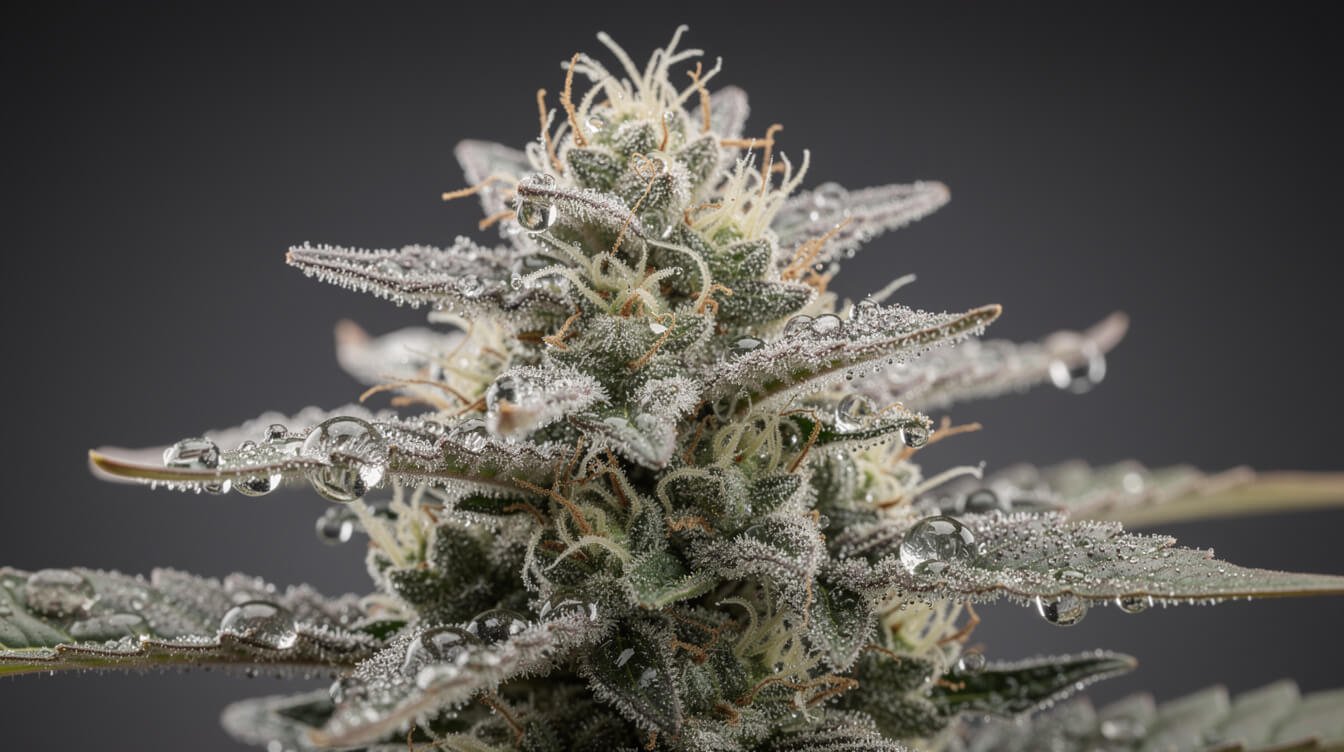
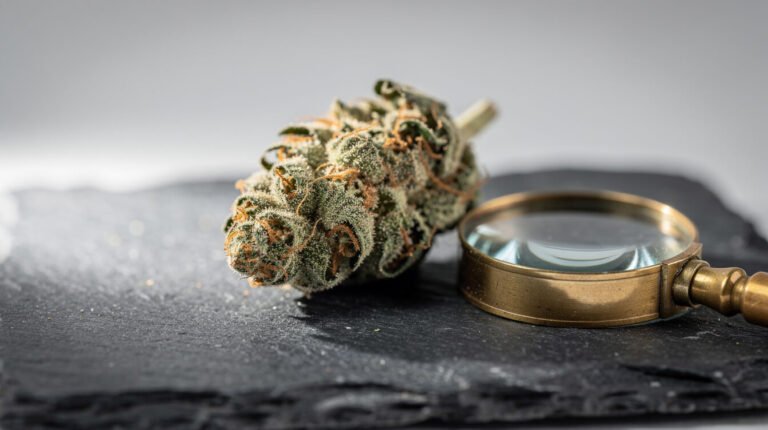
Hash, short for hashish, is concentrated trichome resin. If you’ve read our guide to trichomes, you already know the main characters. These are the tiny mushroom-shaped glands on cannabis flowers, and the bulbous head at the top is where the plant makes and stores most of its cannabinoids and terpenes. Everything else on the flower is, for hash purposes, contamination.
So every hash method comes down to the same three moves:
- Knock the heads loose. Cold makes resin brittle, so heads snap off cleanly instead of smearing. That’s why both main methods use a freezer, ice, or both.
- Sort by size. Mesh screens let particles of a certain size through and hold back larger ones. Resin heads fall in a fairly narrow size band, and that’s what makes screening work at all.
- Press it together. Warmth softens the resin and pressure fuses the loose powder into a solid. Too little heat and it crumbles. Too much and you’ve drifted into making rosin, which is a different product.
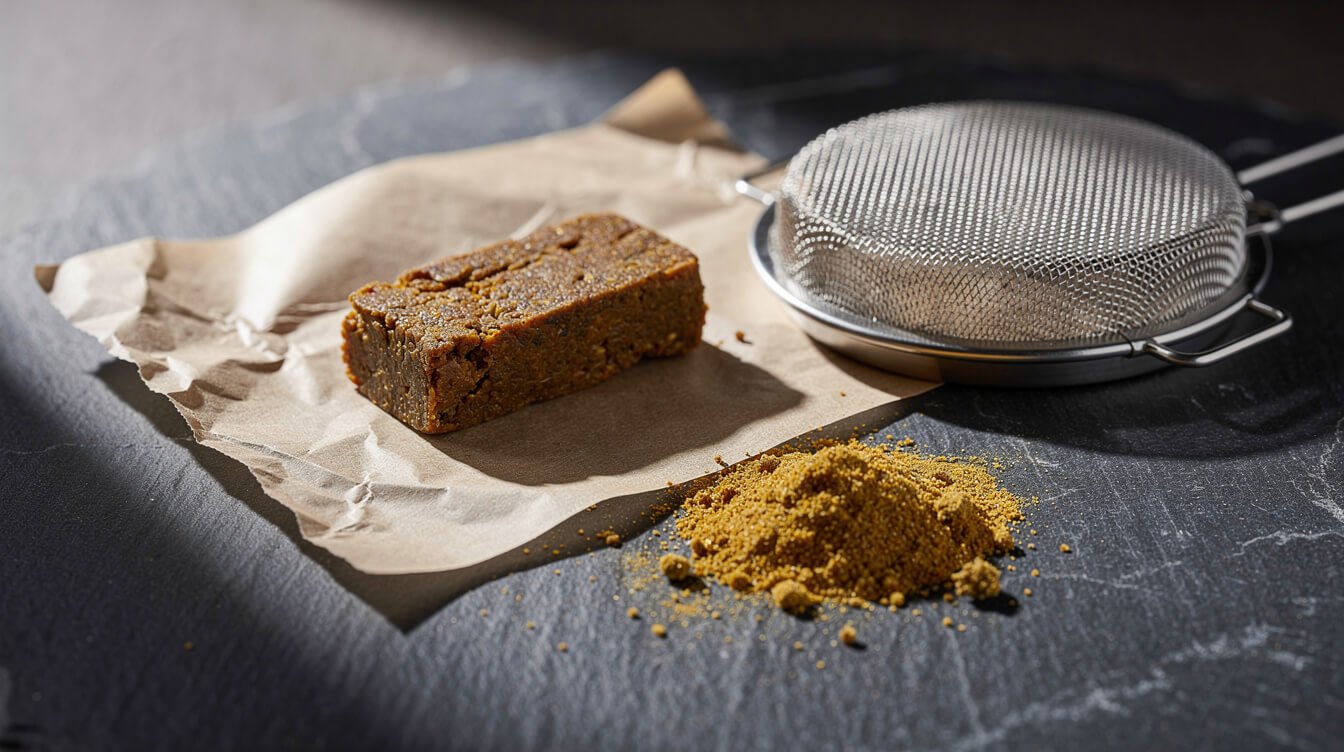
The loose powder you collect after step two is kief, also called dry sift. Hash is what kief becomes once it’s pressed, or once ice-water resin is dried and worked. Retailers often use the words loosely. In practice the difference is form and purity. Kief is loose and usually carries more plant matter. Good hash is cohesive, and at the top end it’s nearly pure resin heads.
Solventless only, and why that matters
Every method in this guide is solventless. It uses cold, water, mesh, and pressure, never butane, propane, or other volatile chemicals. That’s not just a style preference. Solvent extraction at home is genuinely dangerous (butane vapor in an enclosed space can explode), and in many places it’s specifically illegal even where cannabis itself is legal. We cover that line in the next section. If you want to understand solvent-made products like live resin, our live resin explainer covers how licensed labs make them. Don’t try it at home.
Before you start: is making hash at home legal where you are?
Before you learn how to make hash, check that you’re allowed to. Laws vary by state and country, and the rules for making a concentrate are often different from the rules for possessing flower. Cannabis is also still illegal under US federal law. Never assume it’s legal where you live.
The clearest US example of how this works is California. Adults 21+ there may possess, grow, and “process” a small amount of cannabis for personal use. But the state’s Health and Safety Code (§11362.3(a)(6)) separately says that permission does not let anyone “manufacture concentrated cannabis using a volatile solvent” without a license. So in California, sifting or ice-water washing your own legally grown plants sits on one side of the line, and making butane hash oil in your garage sits firmly on the other. Many legal states draw a similar solvent line, and some restrict home concentrate-making more tightly than that. Read your own state’s statute, not a forum summary.
Three more things that apply almost everywhere legalization exists:
- Concentrate possession limits are usually lower than flower limits. California allows 28.5 grams of flower but only 8 grams of concentrated cannabis. Hash counts as a concentrate, so turning a big pile of trim into hash can turn a legal amount into an over-limit one.
- Making it for yourself is not the same as making it to share or sell. Selling, or giving away in ways that look like a sale, generally requires a license.
- Home growing rules come first. If you can’t legally grow or possess the starting material, you can’t legally make hash from it.
If anything about your local rules is unclear, stop and check with an official state source. This guide is education, not legal advice.
Why the micron number matters more than any technique
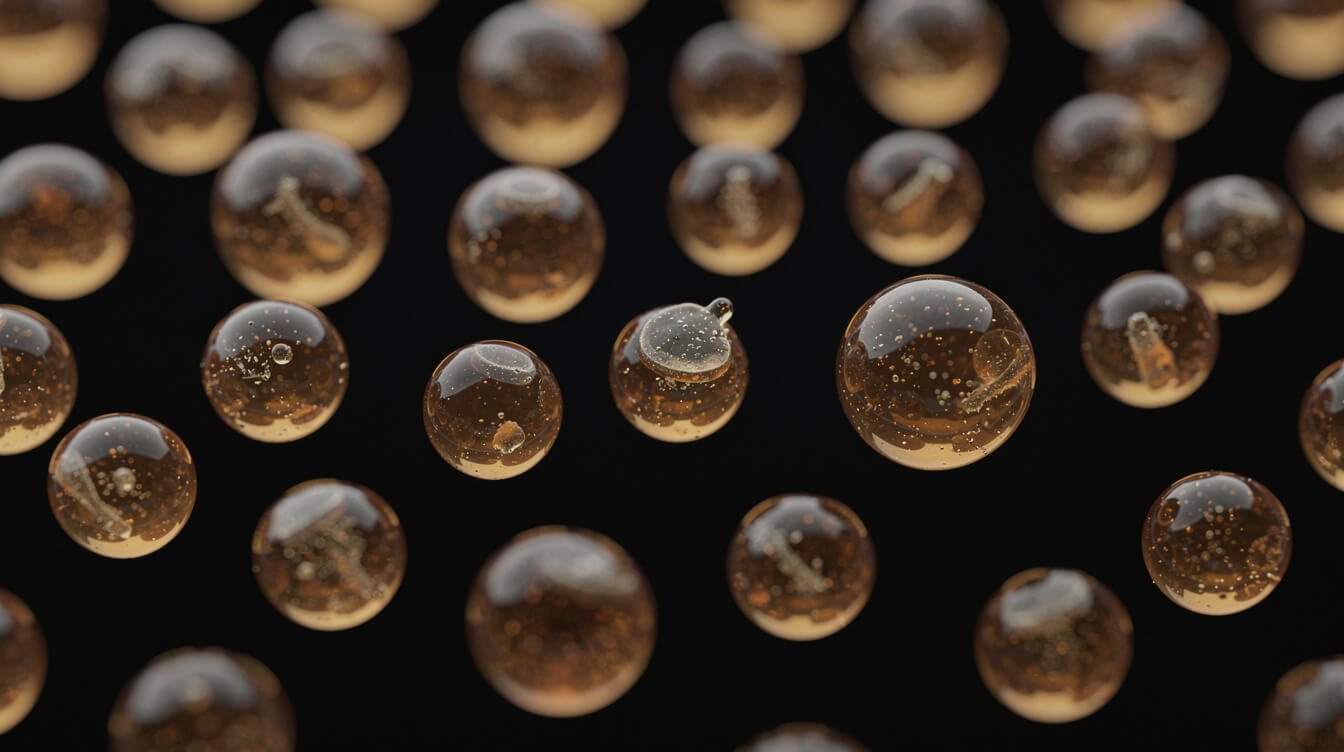
Every hash screen and every ice-water bag is labeled in microns (µm), thousandths of a millimeter. Most guides list the numbers without explaining them. The explanation is simple, and it’s the most useful thing in this article.
A 2023 microscopy study in the Journal of Cannabis Research (Punja et al.) measured the glandular heads of stalked-capitate trichomes, the big resin-producing type, at 40 to 110 µm in diameter. That’s your target. Anything much bigger than about 120 µm is mostly plant matter, clumps, and bits of stalk. Anything much smaller than about 40 µm is mostly fine leaf dust, broken heads, and immature glands. The screens sold for hash-making cluster around this band for exactly that reason.
Here’s how the common screen and bag sizes line up with the resin heads:
| Mesh size | What mostly collects there | Quality |
|---|---|---|
| 160–220 µm | Large heads plus plenty of plant fragments and stalks | Lower; good for cooking |
| 120 µm | The largest mature heads, some contamination | Good |
| 73–90 µm | The core band of mature resin heads | Usually the cleanest |
| 45 µm | Small and immature heads, fine debris | Mixed |
| 25 µm | Very fine dust and broken material | Lowest; often discarded |
Treat those as typical patterns, not laws. Heads vary by cultivar and maturity, and the same study found big differences between genotypes and over the flowering period. The principle holds, though: finer screen, cleaner result, smaller pile.
The yield-versus-purity trade-off is real
A 2025 paper on trichome separation (MacGowan and Martynenko) put the core dilemma plainly. High purity needs a cold, dry environment and short processing time, and under those conditions yield is low. Push harder for yield and purity drops. The same paper notes that ordinary sifted kief contains trichomes plus pistils, trichome stalks, pollen, dirt, and fine plant particles. That’s the honest picture of a home sift. That forum grower’s crumbly ball was almost certainly this: sift that held too much plant matter to fuse into a solid.
This is why gentle handling beats aggressive handling every time. Every extra minute of shaking adds weight to your pile, and most of that extra weight is the stuff you didn’t want.
Method 1: how to make hash from dry sift
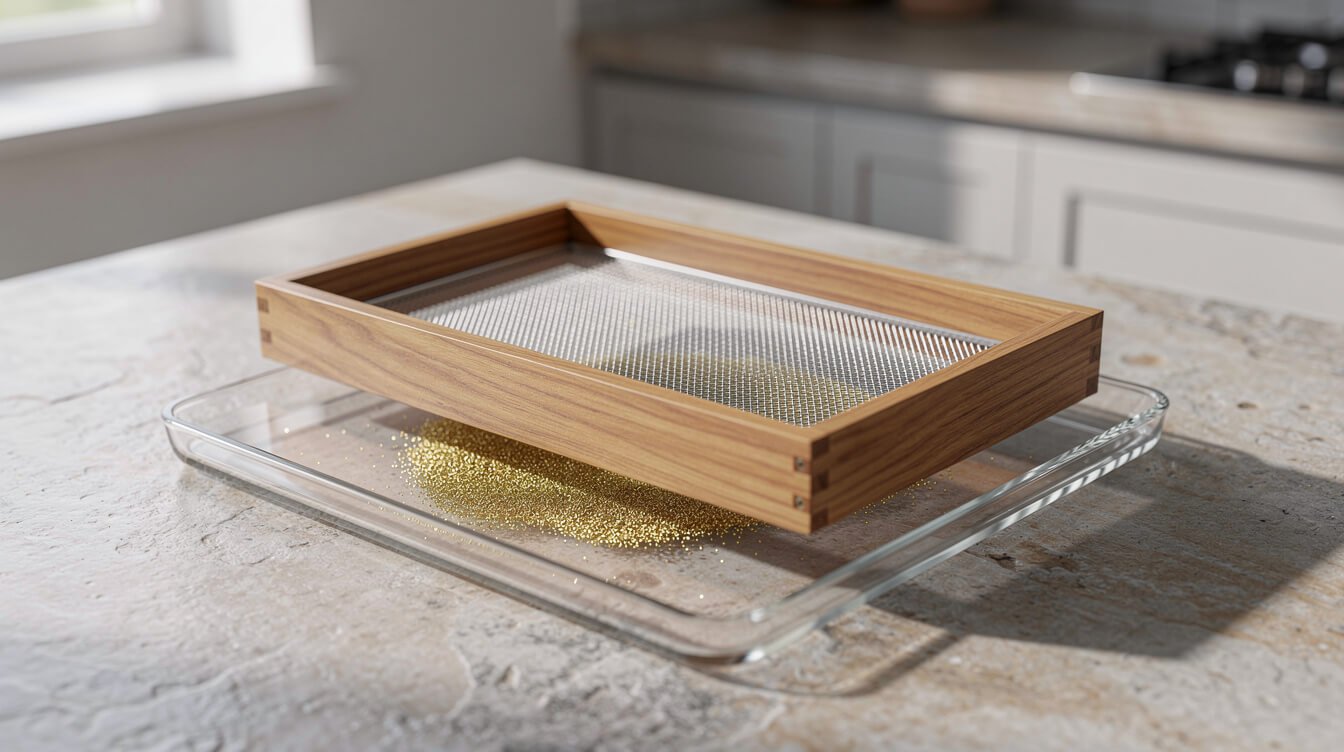
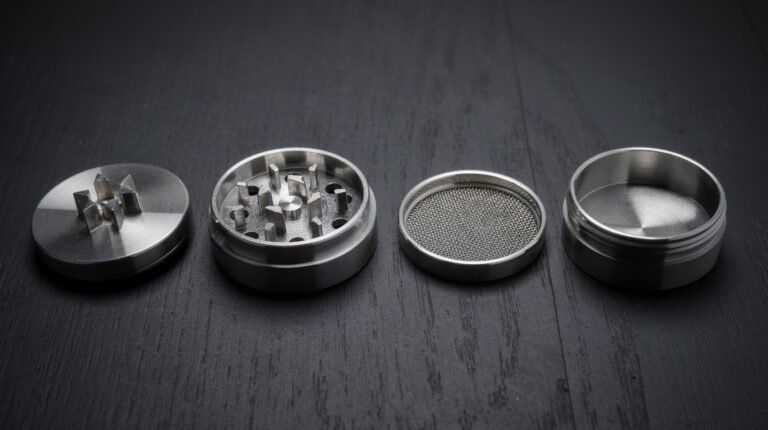
Dry sifting is the oldest method and the easiest to start with. It’s how most of the world’s traditional hash has been made, by rubbing dried plants over fine mesh, as the Hash Marihuana & Hemp Museum describes in its collection notes. If you already have a three-chamber grinder, you’ve done a crude version of this without trying. Our grinder guide explains that kief catcher.
What you need
- Dried, cured trim, sugar leaf, or small buds. Well-dried material sifts far better than damp material. See our drying guide if you’re harvesting your own.
- A sift box or a stack of framed screens. A 120–150 µm screen is the usual all-rounder, and a finer 73–90 µm screen helps if you want to clean the sift further.
- A smooth collection surface (glass or a mirror), a plastic card for scraping, and parchment paper.
- Freezer space.
The steps
- Freeze the material. Put it in a sealed bag in the freezer for a few hours or overnight. Cold resin heads snap off their stalks cleanly. Warm resin smears and sticks plant matter to it.
- Work in a cool, dry room. Humidity makes everything clump. Low humidity and a cool room are the conditions the research above associates with purity.
- Sift gently and briefly. Spread a thin layer of material on the screen and tap or shake lightly for short bursts, 30 to 60 seconds at a time. Collect what falls through.
- Collect in passes, and keep the first pass separate. The first minute brings down the ripest, loosest heads. Later passes pull in more leaf. Keep each pass in its own pile so you can see the color shift from golden-tan to greenish.
- Refine if you want. Run your best pile through a finer screen, or tap it gently across a clean screen, to drop out more fine dust.
Color is your quick read. Pale golden or tan sift is mostly resin heads. Green sift is mostly plant matter. Green means you’ve shaken too long or too hard.
A note on dry ice
Some people shake frozen material with dry ice in a mesh bag over a bucket, because the extreme cold makes heads very brittle and the yield comes fast. If you try it, respect it. Dry ice is about −109°F (−78.5°C) and burns skin on contact, so wear insulated gloves. It also turns straight into carbon dioxide gas, which can build up to dangerous levels in a closed room or car. Only use it in a well-ventilated space, never seal it in an airtight container, and keep it away from kids and pets.
Dry sift is the right first method for most people. When you want cleaner hash, step up to ice water.
GanjaTech, weekly
Cannabis, explained. In your inbox.
One email a week: the clearest explainers, honest gear picks, and what the science actually says. 21+ only. No spam, unsubscribe anytime.
Method 2: how to make hash with ice water (bubble hash)
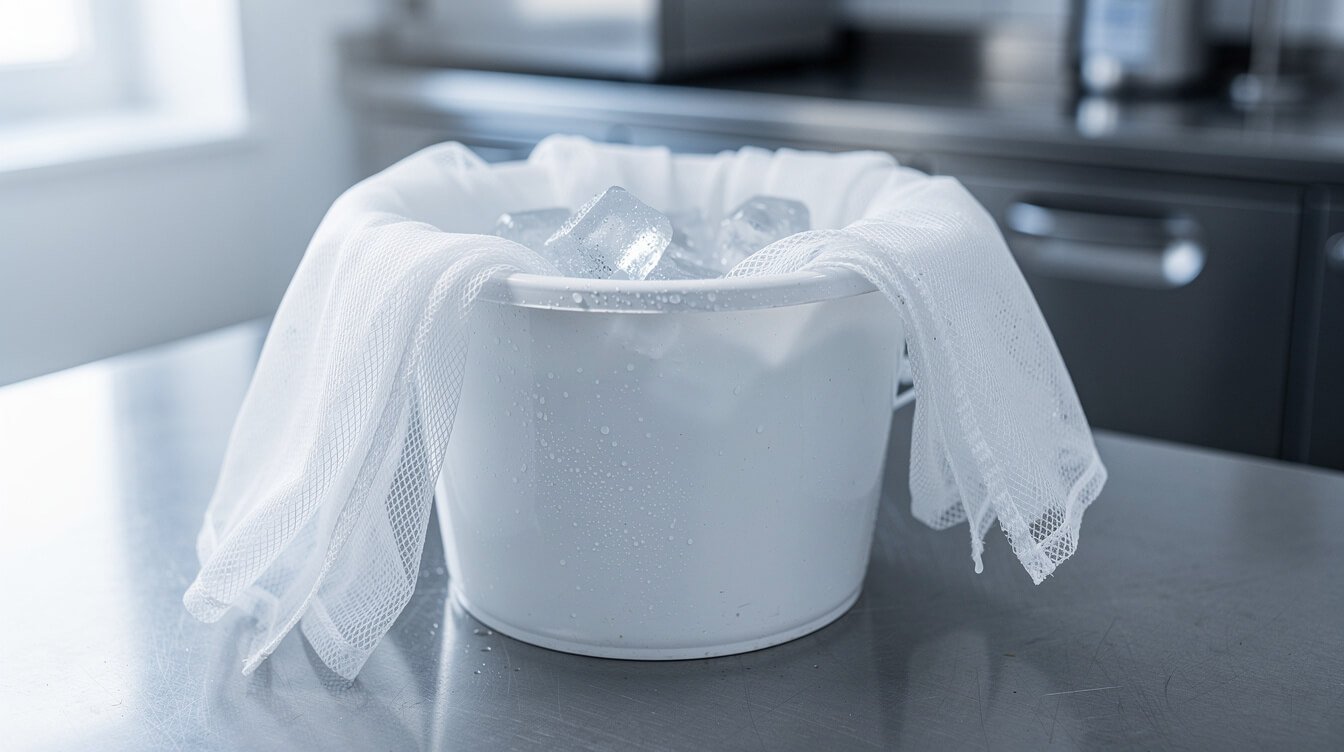
Ice water hash, usually called bubble hash after the mesh “bubble bags” used to filter it, works on the same principle with a different medium. Ice water keeps the resin brittle while you stir, and the water carries the heads through a stack of mesh bags, each finer than the last. It’s messier and slower, but it usually produces cleaner hash than dry sifting.
What you need
- A set of filter bags. Home kits commonly run from about 220 µm down to 25 µm, often in four to eight sizes.
- Two clean 5-gallon buckets, lots of ice, cold water, and a long plastic or wooden spoon.
- Frozen starting material: trim, sugar leaf, or small buds.
- A fine spoon, a few sheets of parchment or a fine drying screen, and a cool, dry place to dry the hash (or a freeze dryer).
The steps
- Stack the bags in the empty bucket, finest at the bottom and coarsest (the work bag) on top.
- Wash. In the other bucket, layer the frozen material with ice and cold water. Stir gently but steadily for about 10 to 15 minutes. You’re knocking heads off, not shredding leaves.
- Let it settle, then pour. Give it a few minutes so the heads sink, then pour the water through the bag stack.
- Pull the bags one at a time. Lift each bag out and let the water drain. The resin collects as a wet paste on the mesh. Scrape each grade separately with a spoon. The 73–120 µm bags usually hold the best material.
- Repeat. Most people run the same material two or three times. Each run yields less and pulls in more plant matter, so keep the runs separate.
- Dry it thoroughly. This is the step that decides whether your hash is good or ruined.
Drying is where bubble hash goes wrong
Wet hash is a mold risk. Poorly dried hash can harbor mold and bacteria, especially in humid conditions, and that’s the most important safety point for the ice-water method. Break the wet paste into small crumbs (a fine sieve or a spoon works), spread it thin on parchment or a drying screen, and dry it somewhere cool, dark, and low-humidity with gentle air movement. Never use heat to speed it up. That melts the heads and drives off terpenes. Depending on your room, expect it to take several days. It’s dry when the crumbs no longer clump and break apart cleanly.
Freeze dryers are the professional shortcut, because they remove water by sublimation at low temperature. A 2021 review of cannabis processing (Lazarjani et al.) notes that freeze-drying is generally considered to preserve volatile compounds better than conventional drying. Air-drying in a cool, dry room works fine at home. It’s just slower.
Never press or store hash that isn’t fully dry. Pressing traps moisture inside, which is how good wash turns into a moldy puck in a jar.
How to press kief or bubble hash into hash
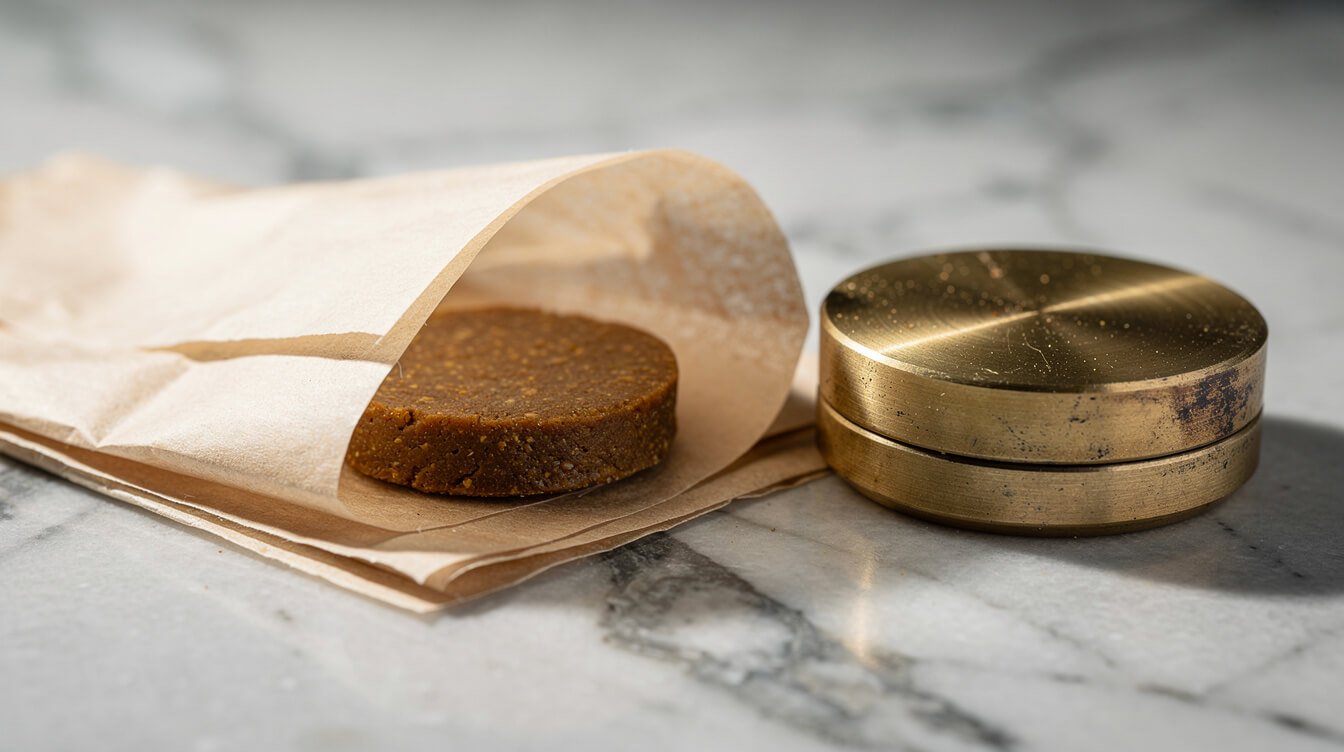
Pressing is the last step, and the one people overthink. You only need enough warmth to soften the resin and enough pressure to fuse it. The goal is a solid that holds together, not oil pouring out of it.
Three home pressing methods, gentlest first
- Hand pressing. Take a small amount of good, clean sift and roll and press it between your palms or fingers. Body heat is often enough for high-quality resin to come together into a small ball. If it won’t cohere at all, that tells you something about your sift (see below).
- Parchment and a warm bottle. Fold the sift into a parchment packet, flatten it, and roll a bottle filled with hot (not boiling) tap water over it, pressing firmly. Flip, refold, and repeat for a few minutes. This is the modern version of the traditional practice of gently warming resin before compressing it.
- A pollen press. A small hand-cranked press (cylinder and screw) compresses sift into a tight coin with no heat at all. Some people warm the press briefly. A coin has less exposed surface area than loose powder, which also helps it keep.
When pressing fails
If your hash keeps crumbling, the fix is almost never more heat. It’s cleaner input. Plant matter doesn’t melt or fuse, so sift with lots of green in it will always resist pressing. Go back to shorter sift passes, a finer screen, or ice water. That forum thread is the classic case: crumbly 120-µm trim sift, and the advice that came back was to try ice water.
And if you push the heat too far, the resin starts to liquefy and separate from the plant material. That’s the start of rosin, a separate concentrate made with deliberate heat and pressure. Our rosin explainer and our breakdown of live resin vs rosin cover it if you’re curious where the line is.
The “bubble test” is not a purity test
You’ll see people judge hash by whether it bubbles when a flame touches it. Bubbling just means there’s resin oil in there, which almost any hash has. It doesn’t mean the hash is pure. Plant matter can sit alongside oil that bubbles happily. The better informal test is the melt. Very clean resin softens and melts with little char or residue, and the cleanest ice-water hash (“full melt”) melts almost completely. Even that is a quality signal, not lab-grade proof.
Yield, potency, and storage: honest expectations
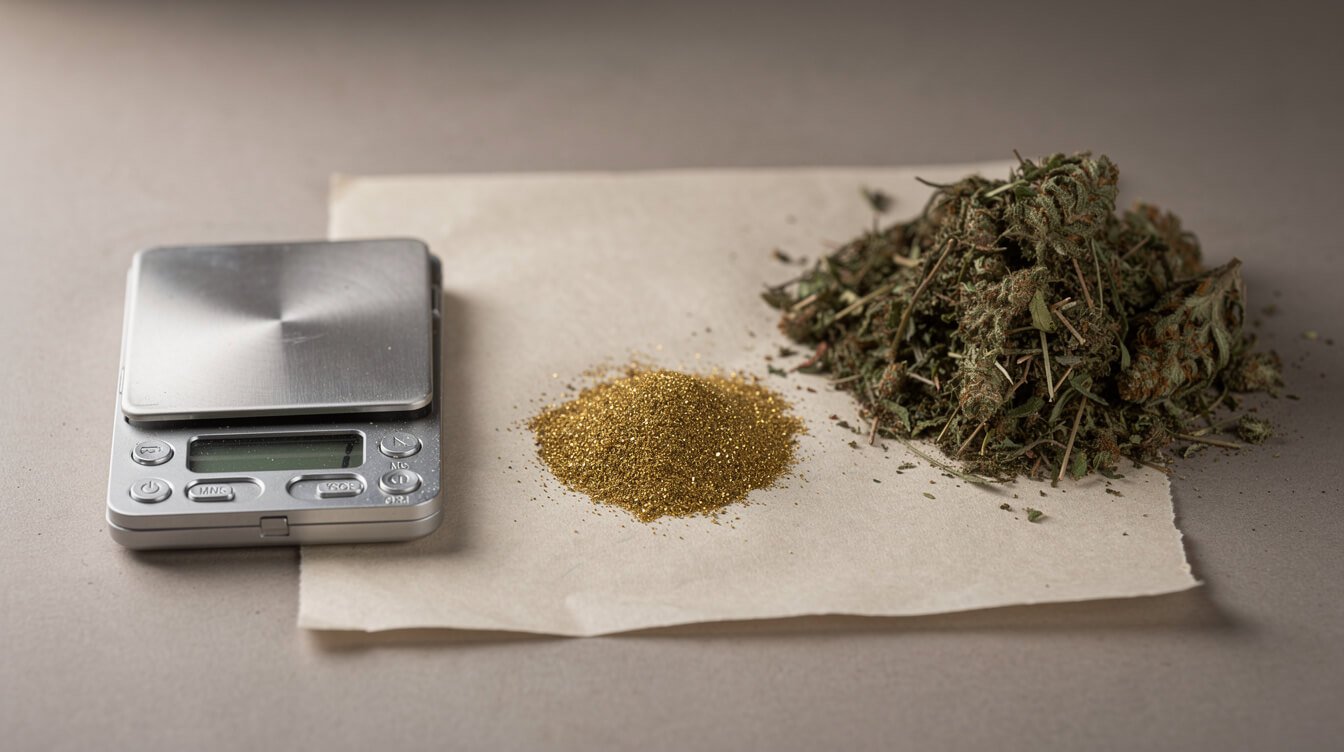
Every guide that asks how to make hash eventually hits the disappointing math, so here it is straight. Hash yields are small, and they depend more on your starting material than on your technique.
What yield to expect
Resin-heavy, well-trimmed buds give the most. Leafy trim gives less, and big fan leaves give almost nothing worth having. Clean sift from trim typically comes in at single-digit percentages of the starting weight, and the very cleanest grade is only a fraction of that. Here’s a labeled illustration, not a promise:
| Starting material | Assumed clean-sift yield | From 100 g you’d get |
|---|---|---|
| Leafy trim | ~3% | ~3 g |
| Sugar leaf and small buds | ~6% | ~6 g |
| Frosty small buds | ~10% | ~10 g |
Those percentages are assumptions to show the scale. Your numbers will move with cultivar, maturity, freshness, and how much purity you’re willing to give up. If you’re converting grams for possession limits, our grams-in-an-ounce guide covers the arithmetic.
Potency: a much bigger dose than flower
The 2021 processing review gives dry-sieved kief roughly 35–50% THC, with water extraction landing in about the same range depending on the starting material. That’s around double typical flower, and it changes how you should use it. A pinch of hash on top of a bowl is a meaningfully larger dose than the same bowl without it. Start with a very small amount, wait, and don’t drive or operate anything. If you’re new to concentrates, read our dabbing explainer, which walks through the dose step from flower to concentrate.
Homemade hash also has no lab label, so you’re dosing blind. Treat every new batch as stronger than you expect.
How to store hash
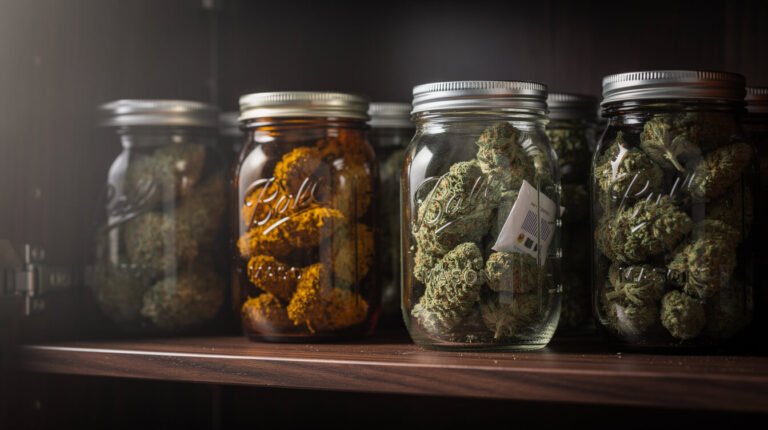
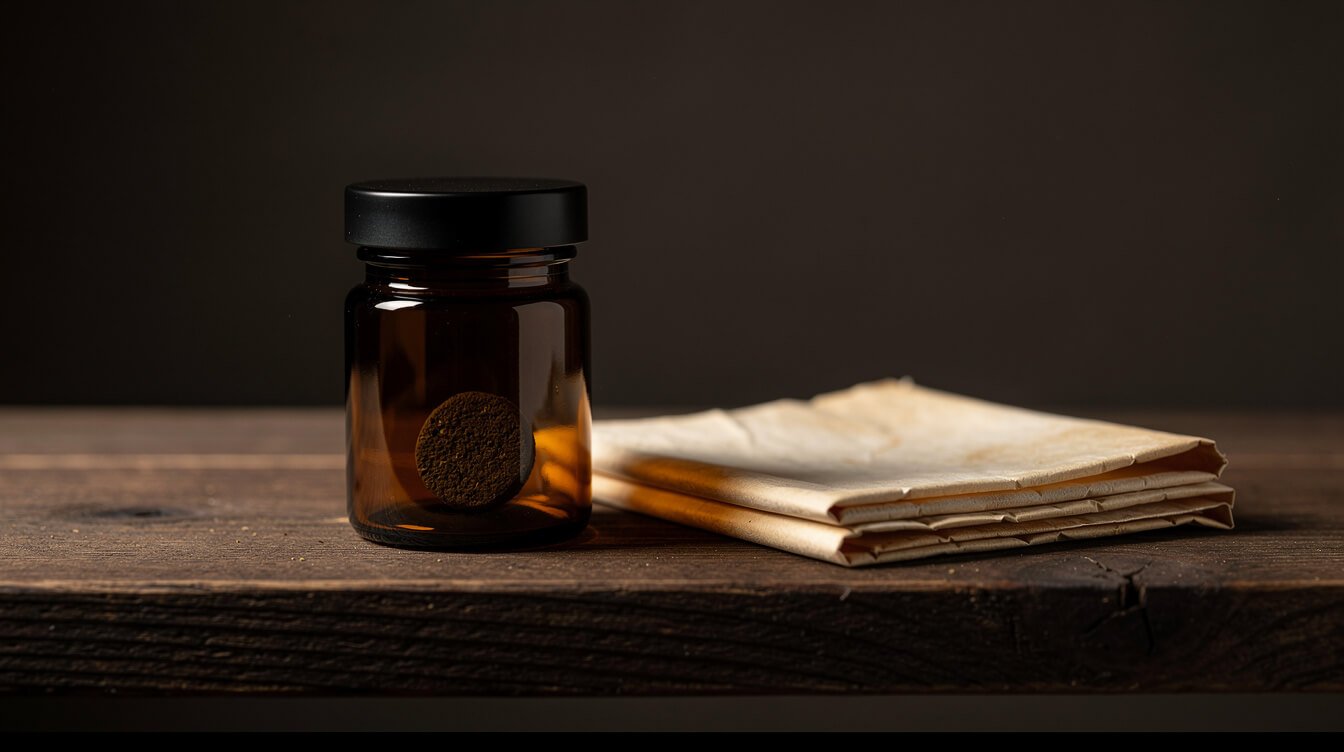
Store it airtight, dark, and cool. A four-year storage study on hashish slabs (Lindholst, 2010, summarized in the processing review) found that light speeds THC degradation and that darkness raised its half-life by about 40%. At −20°C in the dark, all measured cannabinoids stayed unchanged for the full study. For hash you’ll use within a few months, a small airtight glass jar in a cool, dark cupboard is fine. For long storage, freeze it, and let the jar come to room temperature before you open it so condensation doesn’t form on the hash. Our guide to how cannabis degrades explains why heat, light, and air are the enemies.
How to make hash: frequently asked questions
How to make hash from kief you already have?
If you’ve been collecting kief in your grinder, you’re halfway there. Put it in a parchment packet and press it with a warm bottle, or use a pollen press. Grinder kief tends to carry a lot of plant dust, so if it won’t hold together, tap it across a fine screen first to clean it. Our kief explainer covers what’s actually in that grinder chamber.
How to make hash from trim, and is it worth it?
Trim is the classic starting material, because it’s otherwise wasted. Sugar leaf (the small resin-dusted leaves you cut off during trimming) is worth sifting. Big fan leaves mostly aren’t. Expect modest yields, and expect trim hash to be less clean than bud hash.
Can you make hash without any special equipment?
Sort of. You can rub frozen trim over a fine kitchen mesh strainer and collect what falls through, then press it by hand. The result will be lower quality, because kitchen strainers aren’t graded to the micron sizes that matter. A basic sift screen is cheap and makes a real difference.
What about charas, the hand-rubbed kind?
Charas is made by rubbing the flowers of living plants between your palms and rolling off the resin that builds up. It only applies if you legally grow your own and the plant is still alive. It’s slow, yields little, and carries a lot of plant material. It’s a great tradition, not an efficient home method.
Do I need to decarb hash before cooking with it?
Yes, if it’s going into food. Like flower, hash is mostly THCA, which isn’t intoxicating until heat converts it. Smoking or vaping does that instantly. For edibles, decarb it first. Our decarb temperature and time guide covers it, and the same principles as making cannabutter apply. Hash edibles are strong, so dose very small and wait at least two hours before taking more.
How long does homemade hash keep?
Fully dried and stored airtight in a cool, dark place, it keeps for months with slow, gradual change. Frozen, the storage data above suggests cannabinoids hold steady for years. The real risk is moisture, which is why drying matters so much.
The bottom line on making hash
So, how to make hash in one breath: freeze good material, separate the resin heads gently with screens or ice water, dry it completely, and press it with only as much warmth as it needs. The micron numbers matter because resin heads are roughly 40 to 110 µm across, and the whole craft is keeping those while losing everything else. Clean input presses easily. Dirty input crumbles no matter what you do.
Keep it solventless, keep it small, and keep it legal. Check your local law on both home processing and concentrate possession limits, which are usually lower than flower limits, and never assume it’s allowed where you live. Respect the potency, start with a tiny amount, and never drive after using it. Done patiently, it’s one of the oldest and most satisfying ways to use a harvest.
Before you go
Get the next explainer first
We publish a new one every day. The best of the week, plus what's new in the shop, lands in one short email.