How to Make Cannabis Tea That Actually Works (and Why Plain Water Barely Pulls Any THC)
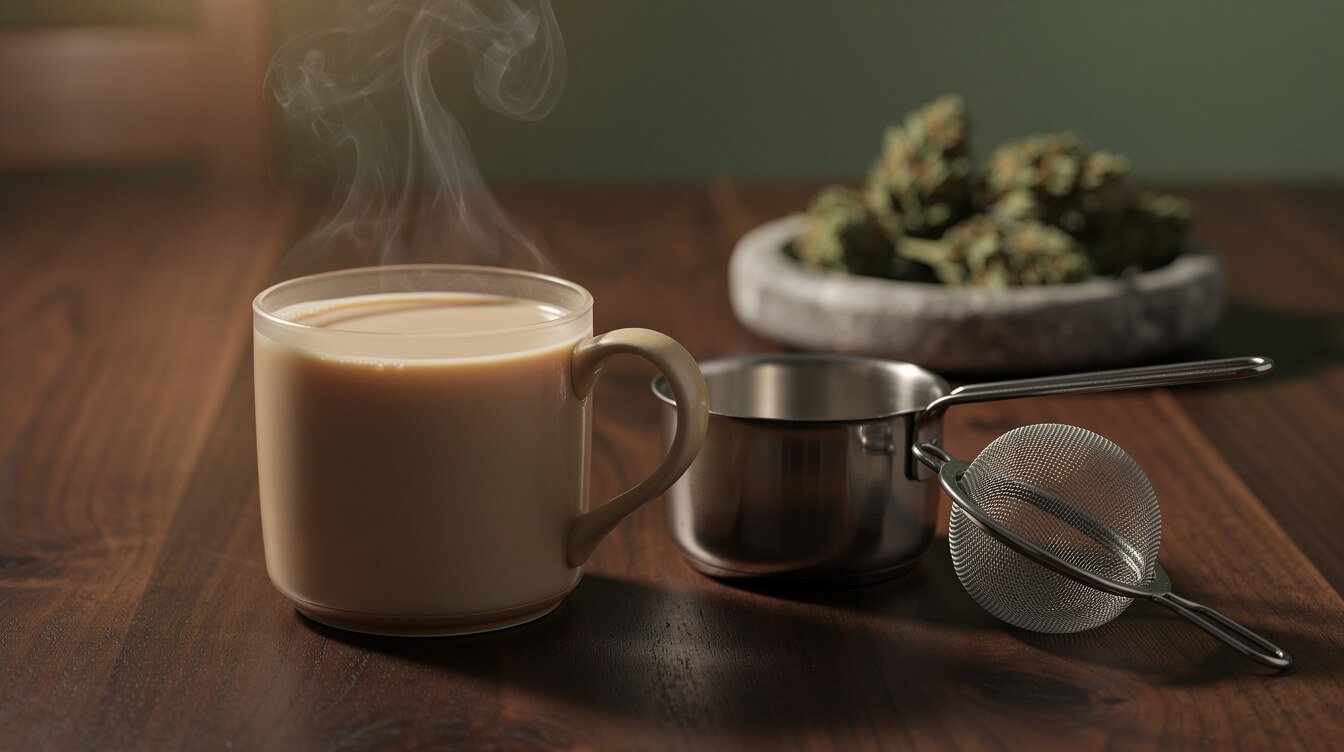
Here’s how to make cannabis tea that actually does something: decarb your flower first, simmer it in something with fat (whole milk, cream, or water with butter or coconut oil) for 10 to 15 minutes, strain it, and drink a small cup slowly. Skip the fat and you’re mostly making grassy water. One lab measured how much THC a plain-water brew pulls out of the flower, and it was between 0.4 and 1.9 percent.
That number explains most of the “my weed tea didn’t work” stories online. The fix is simple, but the same fix that makes tea work can also make one mug far stronger than people expect. So this guide covers both sides: the method, the chemistry behind it, the dose math per mug that most recipes skip, and the timing rules that keep a cozy evening from turning into a long one.
The usual GanjaTech ground rules apply. This is for adults 21+, cannabis laws vary a lot by state and country, and nothing here is medical advice.
How to make cannabis tea that actually works: the short answer
If you just want the method, here it is. The rest of the post explains why each step matters.
- Decarb the flower. Raw cannabis is mostly THCA, the acid form, which doesn’t produce the usual high. Heat converts it to THC. Our default is 240°F (115°C) for about 40 minutes in the oven. The decarb temperature and time guide covers the trade-offs.
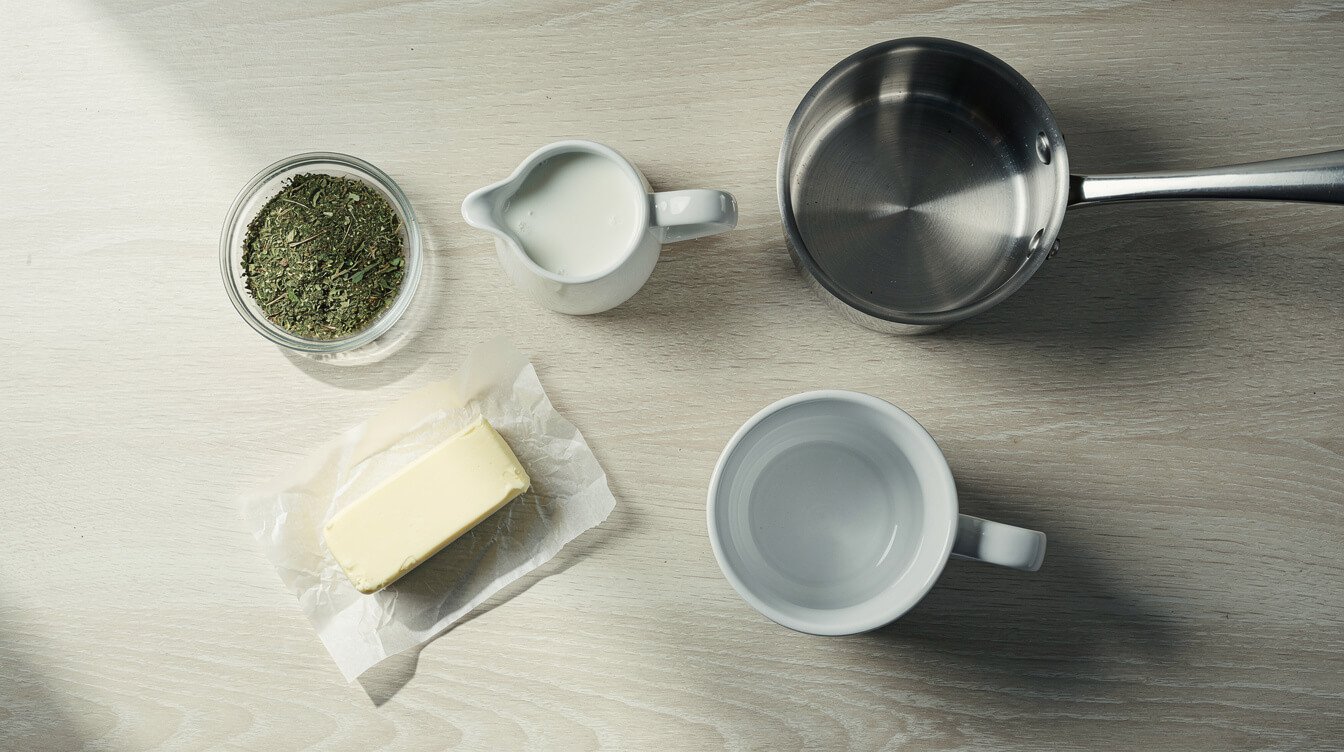
- Add fat. THC barely dissolves in water. It dissolves readily in fat. Whole milk, cream, oat milk with some fat in it, or water with a spoonful of butter or coconut oil all work.
- Simmer 10 to 15 minutes. Keep it at a gentle simmer, stirring often.
- Strain, then flavor. Pour it through a fine strainer or cheesecloth, and add a tea bag, honey, or spices if you like.
- Dose low and wait. Cannabis tea is an edible. Start with a small cup, then wait at least two hours before even thinking about more.
That’s the whole thing. The details below are where tea goes right or wrong, starting with the step most recipes treat as optional.
Why plain-water weed tea is so weak
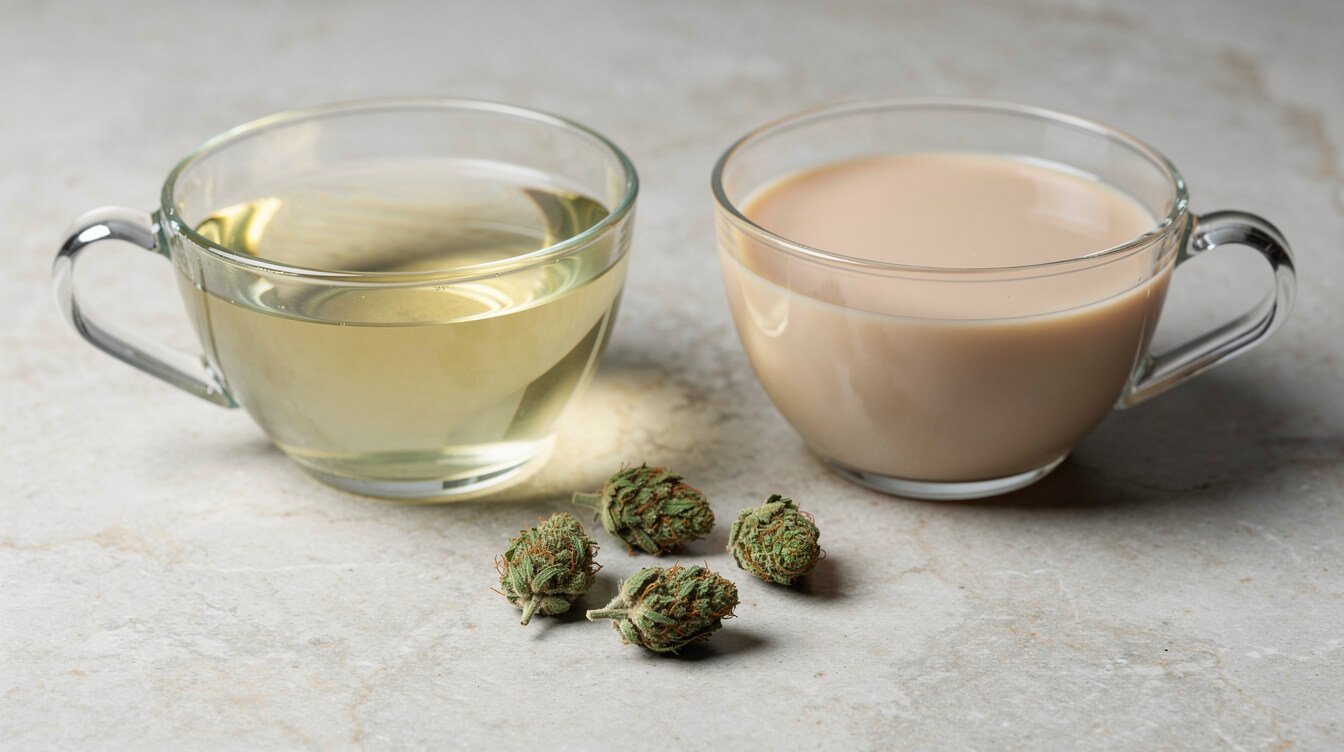
THC is an oily molecule. PubChem lists its water solubility at about 2.8 milligrams per liter, which is next to nothing. You can steep flower in hot water all afternoon and most of the THC will stay in the plant material you throw away.
For years that was a chemistry-class inference. Now it’s been measured. In a 2024 study in the Journal of Agricultural and Food Chemistry, Maly and colleagues brewed tea from three different cannabis varieties the way people actually do it: 1 gram of flower in a tea bag, 250 mL of boiling water, boiled for 10 minutes. Then they measured 42 cannabinoids in the cup (Maly et al., 2024).
- Water only: just 0.4 to 1.9 percent of the flower’s delta-9 THC made it into the tea.
- With cream: when they added 20 grams of 10%-fat cream during steeping, THC transfer jumped to 53 to 64 percent.
Here’s what that looked like for their high-THC flower. A plain-water cup from 1 gram held about 0.13 mg of THC. The same gram brewed with a small splash of cream held about 18.3 mg, roughly 145 times more. That flower hadn’t been decarbed, so most of its potential was still sitting there as THCA. The cream cup also carried about 69 mg of THCA, and THCA turns into THC when it’s heated properly.
Put those together and you get the most useful thing to know about cannabis tea. Fat is the on switch, and decarbing decides how much is behind it. Decarbed flower plus fat can put tens of milligrams of THC in a single mug from a gram or less. That’s why “1 gram per mug,” a ratio you’ll see on several recipe pages, can be a very big dose.
One honest caveat
The Maly team points out that an earlier hemp-tea study (Bijelić and colleagues, 2023) found the opposite: adding a smaller amount of cream lowered cannabinoid transfer. Maly’s group used about 1.6 times more fat, following the amount tea sellers recommend. So the science isn’t settled on the exact amount. The practical lesson still holds, though. Don’t be stingy with the fat, and don’t assume two different recipes will give you the same strength.
The 2007 study that first looked at this systematically, from Arno Hazekamp’s group, reached the same broad conclusion: THC’s low solubility in water limits how potent plain tea can get (Hazekamp et al., 2007).
Step by step: how to make cannabis tea at home
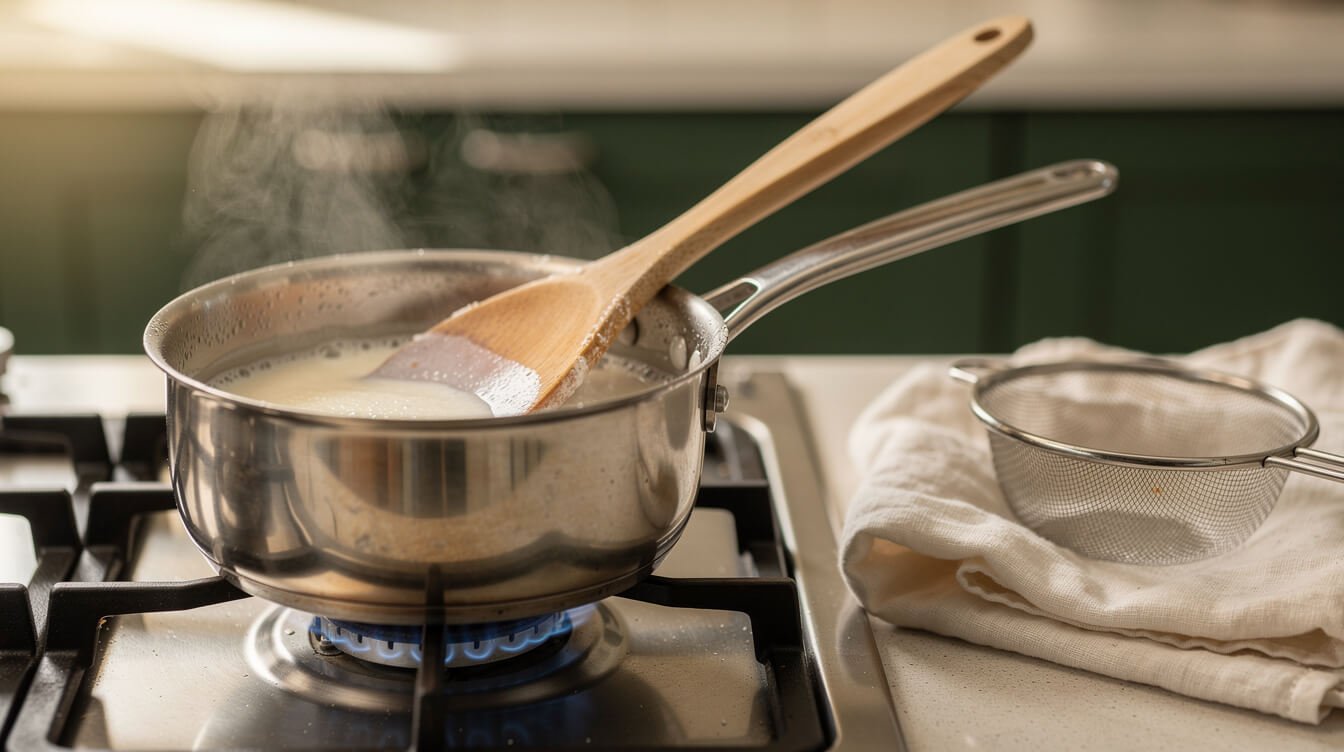
This recipe makes two mugs and is built to be gentle. You can scale it up once you know how your batch hits.
What you need
- 0.1 gram of decarbed cannabis flower, ground medium-coarse. That’s a small pinch, so you’ll want a scale that reads to 0.01 g. Section four shows how to adjust this amount for your flower’s potency.
- 1 cup (240 mL) whole milk or a fatty plant milk, plus 1 cup water. Or use 2 cups water with 1 tablespoon of butter or coconut oil.
- A tea bag or loose tea for flavor. Chai, black tea, rooibos, and mint all cover the grassy note well.
- Honey, sugar, cinnamon, or vanilla, to taste.
- A small saucepan, a fine mesh strainer or cheesecloth, and a spoon.
The method
- Decarb first. If you haven’t already, decarb your flower at 240°F (115°C) for about 40 minutes, spread thin on parchment. Let it cool. Many people decarb a few grams at once and store it in a sealed jar for later batches.
- Warm the fat and liquid. Add the milk and water (or the water and butter) to the pan over medium-low heat.
- Add the flower and simmer for 10 to 15 minutes. Keep it at a gentle simmer, with small bubbles at the edges, and stir every minute or two. Milk can scorch on the bottom and foam over the top if you walk away.
- Add the tea for the last 3 to 5 minutes. Drop the tea bag in near the end so it doesn’t go bitter.
- Strain well. Pour through a fine strainer or a double layer of cheesecloth, and press the solids gently to get the fat out. Discard the plant material.
- Stir before you pour. If you used butter or oil in water, the fat (and the THC with it) floats to the top. Give it a good stir right before pouring each mug, or one cup can end up much stronger than the other. Milk keeps the fat spread out better, which is one reason it’s the easier choice.
- Sweeten, label, and sip slowly. Drink one mug at most to start. If you’re new, drink half of one.
Boil or simmer? The disagreement, settled
Recipes disagree here. Some say “never boil, high heat destroys cannabinoids.” Others boil for 10 to 15 minutes. The research favors the boilers. In an Italian National Institute of Health study, 15 minutes of boiling was enough to reach the highest cannabinoid concentrations in tea (Pacifici et al., 2017), and the Maly team boiled for 10 minutes on purpose to maximize extraction. Water tops out at 212°F (100°C), well below the temperatures where THC breaks down quickly.
So boiling won’t ruin your THC. It will ruin your milk. A gentle simmer gets the same extraction without scorched dairy or a pot boiling over onto the stove, so simmer for practical reasons, not chemical ones.
How strong is your cup? Dose math per mug
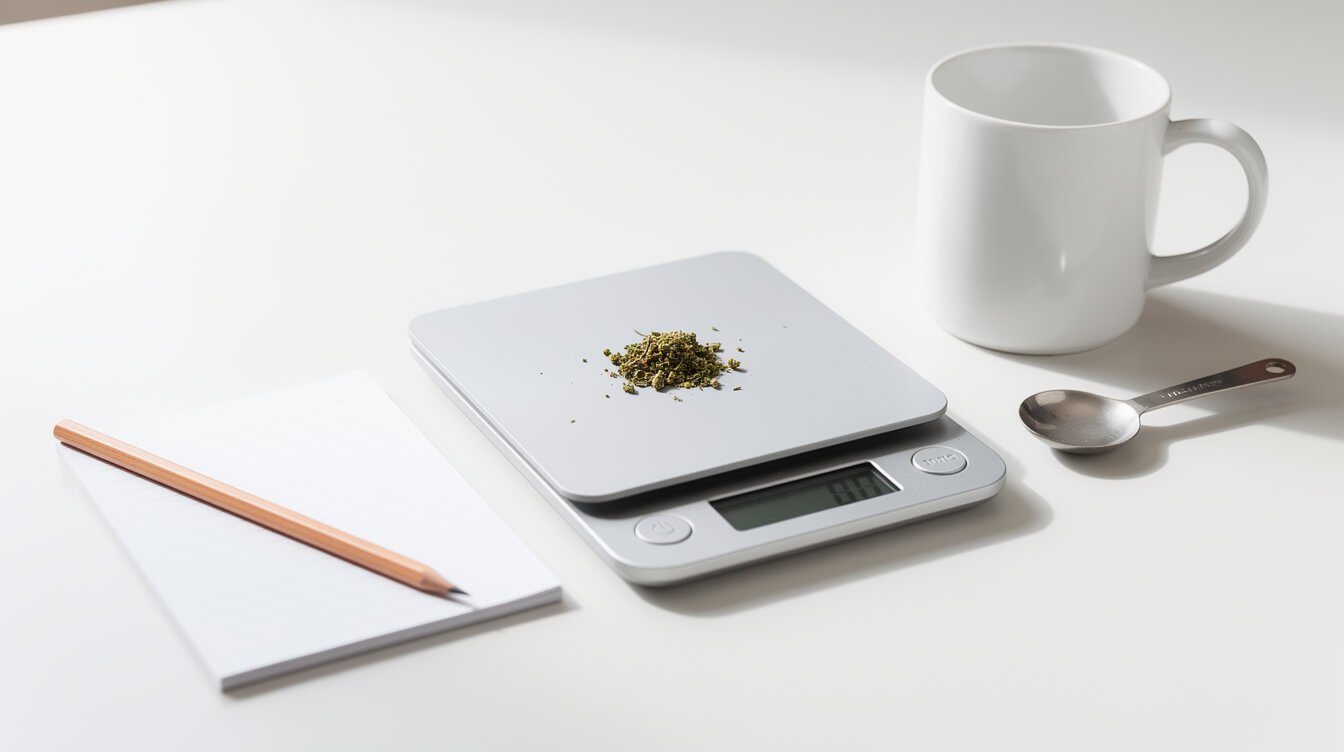
Knowing how to make cannabis tea is the easy half. Knowing how strong it is matters more. Most tea recipes stop at “use a gram” and never say what that gram puts in your mug. Here’s the same ceiling math we use in our how to make edibles guide:
Grams of flower × 1,000 × THC fraction = the maximum mg of THC in the batch. Divide by the number of mugs to get the maximum per mug.
If your flower’s label lists Total THC, use that number as-is. It already accounts for the THCA that converts when you decarb. If you only know the THC percentage on the label, the edibles guide explains the conversion.
| Flower in the pot | 15% Total THC | 20% Total THC | 25% Total THC |
|---|---|---|---|
| 0.1 g | 15 mg | 20 mg | 25 mg |
| 0.25 g | 37.5 mg | 50 mg | 62.5 mg |
| 0.5 g | 75 mg | 100 mg | 125 mg |
| 1 g | 150 mg | 200 mg | 250 mg |
Maximum mg of THC per batch. Divide by the number of mugs you pour.
These are ceilings, not predictions. No home decarb is perfect, and some THC stays behind in the strained flower, the pan, and the strainer. With fat in the pot, the Maly lab got a little over half the THC into the cup. That’s a reasonable real-world benchmark, but it was one lab’s setup, not a promise for your kitchen. A cautious way to think about it: assume your mug could be close to the ceiling, and dose as if it is.
What that means in practice
- The recipe above (0.1 g at 20%, split into two mugs) tops out at about 10 mg per mug. Half a mug is a reasonable first try for someone new.
- “1 gram per mug” of 20% flower is a ceiling of 200 mg in one drink. Even at half that, it’s far past what a new user should take in one sitting.
- Starting points: 2.5 to 5 mg is a common first dose for people new to edibles. In the Johns Hopkins oral-THC trials, 10 mg was clearly noticeable for infrequent users, and 25 mg produced marked impairment (Schlienz et al., 2020).
Tiny amounts of flower are hard to weigh, and that’s the honest weakness of tea as a format. If precise dosing matters to you, the shortcut methods in the next section are easier to control.
GanjaTech, weekly
Cannabis, explained. In your inbox.
One email a week: the clearest explainers, honest gear picks, and what the science actually says. 21+ only. No spam, unsubscribe anytime.
Shortcut cannabis tea: canna oil, cannabutter, or tincture
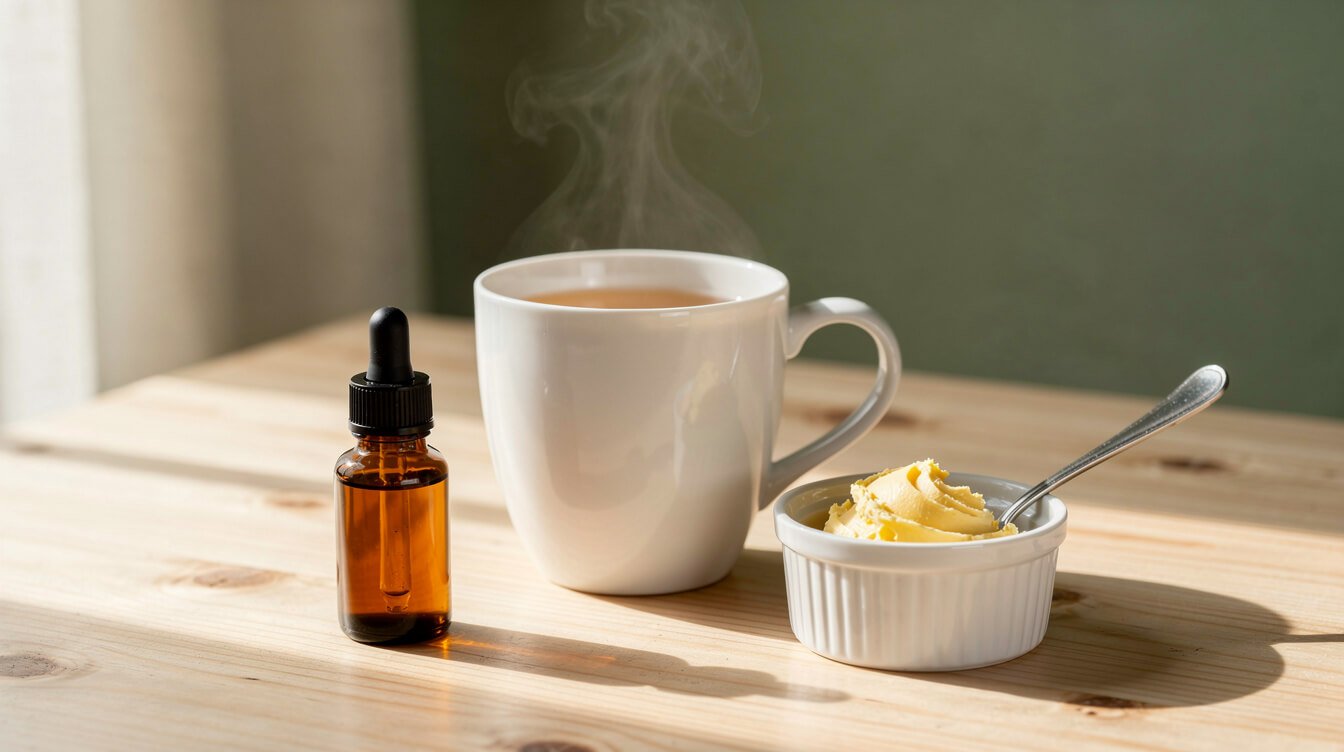
The easiest way to learn how to make cannabis tea with a predictable dose is to skip the flower simmer entirely. If you already have an infusion made, just make your tea and stir it in.
- Cannabutter: melt a measured amount into hot tea, or better, into the milk you add to it. Our cannabutter guide covers making a batch.
- Canna oil: coconut oil blends into chai and other milky teas more smoothly than olive oil. See how to make canna oil for the batch method and the per-teaspoon math.
- Tincture: a few drops of an alcohol tincture mix into hot tea easily. The alcohol volume is small at that dose. Our cannabis tincture guide explains how to estimate mg per mL.
The big advantage is dosing. If you know your oil works out to roughly 29 mg per teaspoon at its ceiling (the example batch in our canna oil guide), you can measure a quarter teaspoon instead of trying to weigh 0.04 grams of flower. Batch-made infusions also give you the same strength mug after mug, which a fresh simmer of flower can’t promise.
One tip: fat floats on hot tea just as it does in the pan. A splash of milk helps hold it in the drink, and a quick stir before each sip keeps the last mouthful from being the strongest one.
Stem tea and raw-leaf tea: what you actually get
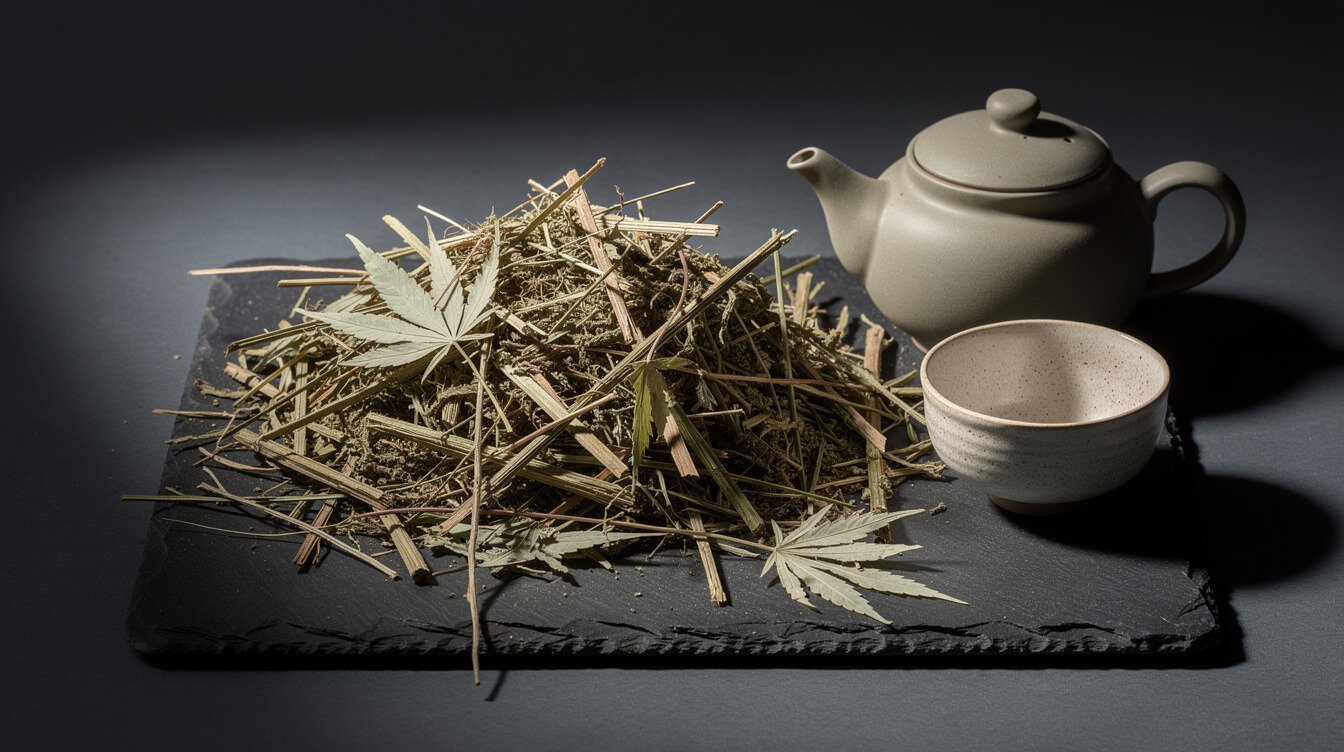
Stem tea is the classic use-what-you-have recipe, and growers love it because nothing goes to waste. Just be realistic about it. Stems carry very few trichomes, the tiny resin glands where most cannabinoids are made, so a cup of stem tea is closer to a mild herbal drink than a real edible. If you decarb the stems and simmer them in milk, you’ll pull out what little is there, but potency is unpredictable and usually low.
Fan leaves are similar. They have more resin than stems but far less than the buds. Trimmed sugar leaves sit somewhere in between, and our trimming guide explains which leaves are worth saving.
Raw, un-decarbed material is a different case. When you steep raw flower or leaf without decarbing it first, what ends up in the cup is mostly the acid forms like THCA. In the Maly study’s plain-water tea, the cup from their high-THC flower held roughly 27 times more THCA than THC. THCA doesn’t produce the THC high unless it’s heated enough to convert, so a raw-leaf tea usually feels mild or like nothing at all. People drink it for the ritual and the earthy taste, and that’s a fine reason. Just know it’s a different drink from decarbed flower in milk, and don’t read promises about it on wellness sites as established fact.
A quick note on hemp tea: low-THC hemp isn’t automatically zero-THC once you brew it with fat. With cream, Maly’s two hemp varieties put roughly 0.35 to 1.2 mg of THC-type compounds into a cup. That’s small, but if you need to avoid THC entirely, it isn’t nothing.
Timing, storage, and why to drink it fresh
Cannabis tea is an edible in a mug. You swallow it, and the THC goes through your gut and liver before it reaches your brain. That route is slow. In controlled trials of oral THC, effects took 30 to 60 minutes to show up, peaked around 1.5 to 3 hours, and lasted about 6 to 8 hours. Our edibles timeline guide breaks that down hour by hour.
Tea makes that timeline easy to forget. It’s warm and familiar and goes down fast, so a second mug feels harmless. Don’t pour one until at least two hours have passed, and three is better. If you overdo it, our guide to greening out covers what’s happening and how to ride it out.
A few non-negotiables
- Don’t drive, and plan for the full 6 to 8 hours, not just the first two.
- Don’t spike it with alcohol. Combining the two makes impairment stronger and longer, as covered in our weed and alcohol explainer.
- Label it. An infused mug or pitcher looks exactly like regular tea or chai. Write “THC” and the date on anything you store.
- Keep it away from kids and pets. If someone takes it by accident, call Poison Control at 1-800-222-1222. For pets, call your vet or the ASPCA Animal Poison Control Center at (888) 426-4435.
Why fresh beats batched
Brewed cannabis tea doesn’t keep its strength well. In the Pacifici study, THC in tea dropped to half or less of its starting level within three days at room temperature, and refrigeration didn’t do much better (Pacifici et al., 2017). Cannabis oil made in the same study stayed far more stable.
That gives you two reasons to make tea fresh. The potency drifts, so a jar that hit one way on Monday may hit differently on Wednesday. A milk-based drink is also perishable, so it follows the same fridge rules as any dairy. If you want something to keep on hand, make an oil, butter, or tincture and stir it into fresh tea as needed.
Frequently asked questions

Do you need to decarb weed to make tea?
Yes, if you want the THC effect. Boiling water tops out at 212°F, and the boiled teas in the Maly study still carried mostly THCA, the unconverted acid. An oven decarb first (the Pacifici team used 145°C for 30 minutes for their oil and got complete conversion) is what reliably turns the acid into THC. Skip it and your tea will be much milder than the same flower in a decarbed recipe.
Can you just boil weed in water to make tea?
You can, but you’ll get very little THC. Water-only tea pulled just 0.4 to 1.9 percent of the flower’s THC in lab testing. That’s why every working recipe for how to make cannabis tea includes fat, whether that’s milk, cream, butter, or oil.
How much weed do I put in tea?
Less than most recipes say. Use the dose table above. For 20% flower, 0.1 g split between two mugs tops out at about 10 mg per mug. For a first try, half of one of those mugs is plenty.
How long does cannabis tea take to kick in?
Usually 30 to 60 minutes, sometimes up to two hours on a full stomach, with the peak around 1.5 to 3 hours. Feeling nothing at the 45-minute mark is normal. It’s not a sign to drink more.
Can I put weed in a regular tea bag?
You can steep ground, decarbed flower in an empty fillable tea bag, but steeping in water alone will still pull out very little THC. Simmer the flower in milk or with butter for 10 to 15 minutes instead, and add a store-bought tea bag only at the end for flavor.
Does cannabis tea taste like weed?
A bit grassy and earthy, yes. Strong flavors cover it best: chai spices, ginger, mint, cinnamon, honey, or a black tea brewed strong. Straining well helps too, since loose plant bits are the main source of bitterness.
Final thoughts
If you remember one thing about how to make cannabis tea, make it this: water carries flavor, but fat carries THC. Decarb first, simmer in milk or with butter for 10 to 15 minutes, strain well, stir before you pour, and treat every mug like the edible it is. Use the ceiling math so you know what’s in the cup, start small, and give it two to three hours before deciding it didn’t work.
Done that way, cannabis tea is one of the calmest ways to enjoy the plant. It’s warm, slow, and easy to share with the friends you trust at the end of a long day. Respect the dose, know your local laws, and enjoy it responsibly.
Before you go
Get the next explainer first
We publish a new one every day. The best of the week, plus what's new in the shop, lands in one short email.