How to Use a Weed Grinder: The Step-by-Step, Plus Why You Should Grind Right Before You Smoke
Here’s how to use a weed grinder: break the bud into a few pieces, set them around the outer ring of teeth (not the center), close the lid, and twist back and forth 5 to 10 times until the resistance drops. Then open it up, tap the ground flower into the chamber below, and pour or scoop it out. That’s the whole job, and it takes about thirty seconds.
The nuance most guides skip is when you grind. Grinding breaks open the trichomes, the tiny resin glands that hold the cannabinoids and terpenes, and lab work going back to the 1970s shows that broken glands lose their contents to air faster than intact ones. So below you’ll get the step-by-step, how fine to go for joints, bowls, vapes, and edibles, what the storage research says about grinding ahead, how to get the most out of a kief chamber, and what to do when you don’t have a grinder at all.
How to use a weed grinder: the quick answer
If you just need the steps for a standard three- or four-piece grinder, here they are:
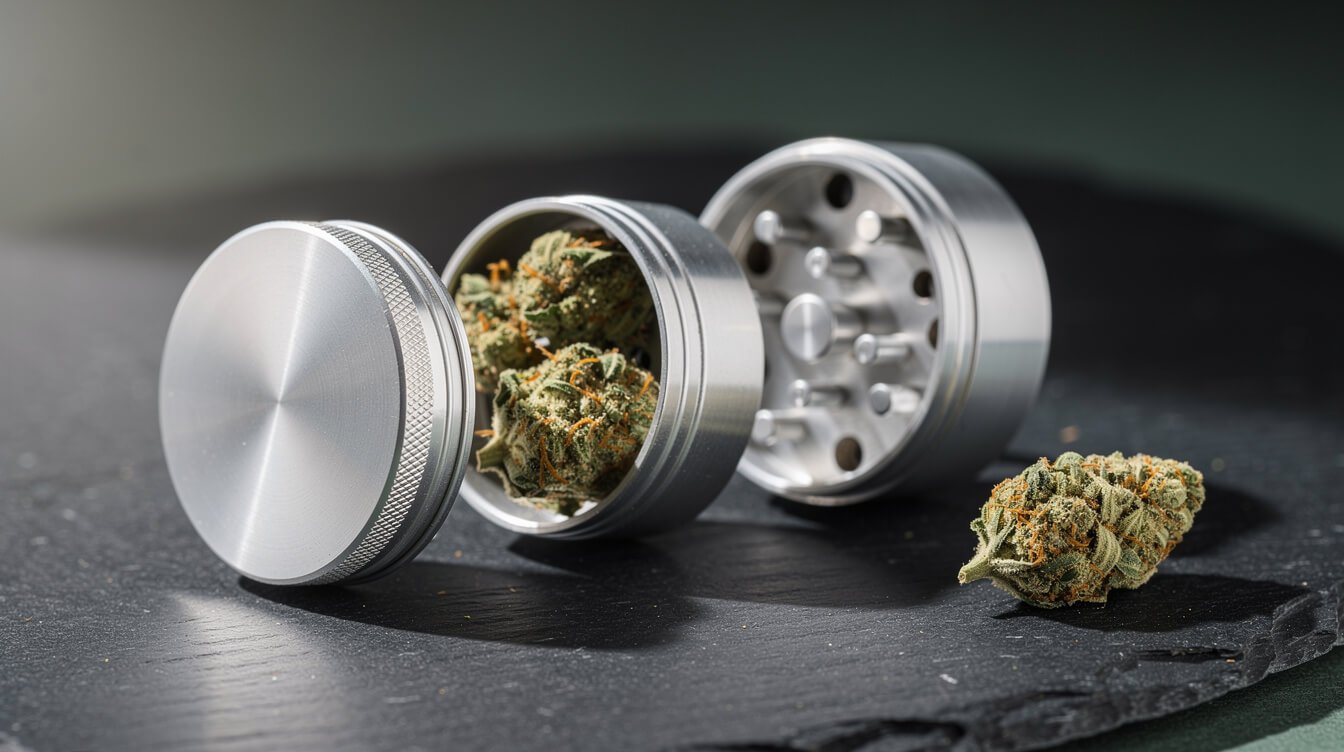
- Break it up a little. Pull the bud into two to four pieces about the size of a pea or small grape. Pick out any thick stems.
- Load the outer ring. Set the pieces between the teeth around the edge of the bottom grinding plate. Leave the center (where the magnet or pivot sits) empty.
- Close and twist. Put the lid on and twist back and forth, 5 to 10 times. The first few turns feel stiff. When it spins freely, you’re done.
- Tap it down. Hold the grinder upright and tap it on your palm or the table a couple of times so loose pieces fall through the holes.
- Collect. Unscrew the middle chamber and pour or scoop out the ground flower. Leave the bottom chamber alone; that’s where kief collects.
The rest of this guide covers how to use a weed grinder well: the “why” behind each step, plus the adjustments that separate a fluffy, even grind from a gummed-up mess.
One note before the details: cannabis laws, and in some places paraphernalia laws, vary a lot by state and country. This guide is for adults 21+ where cannabis is legal. Nothing here assumes it’s legal where you live.
The parts of a grinder, and what each chamber is for
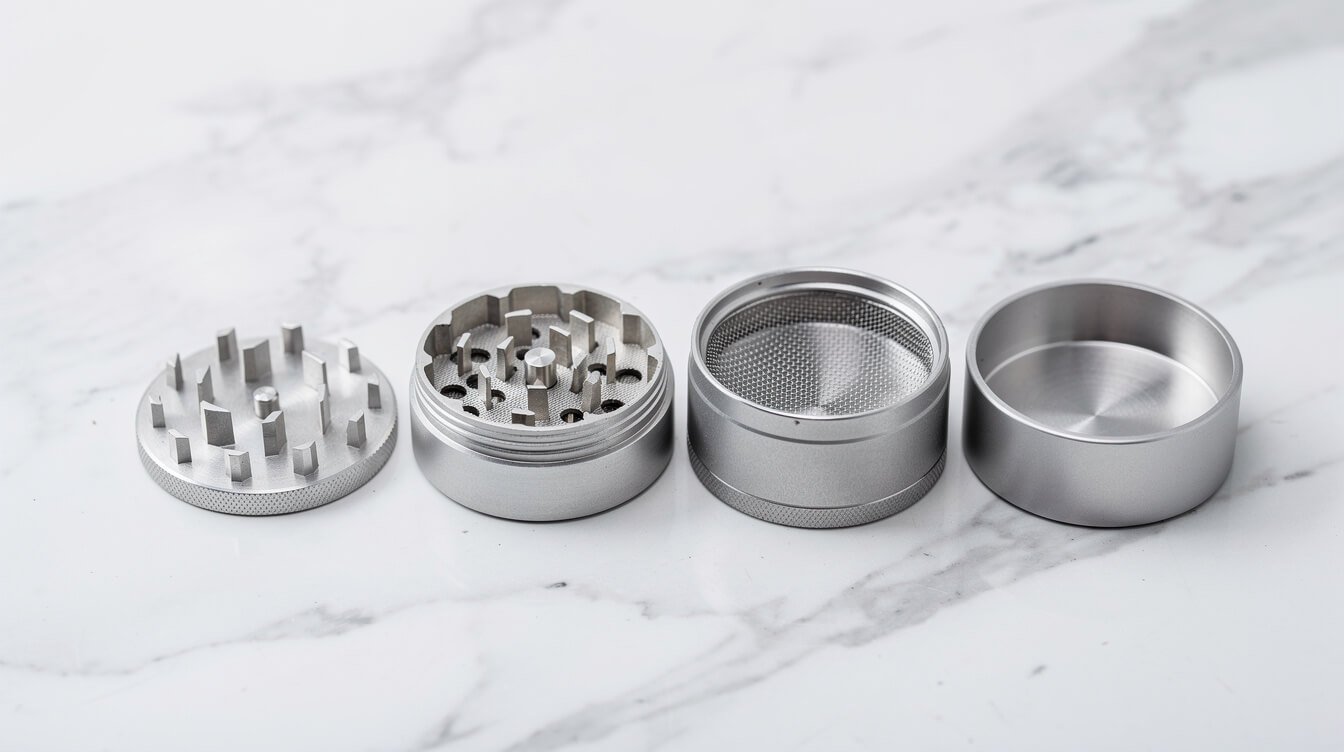
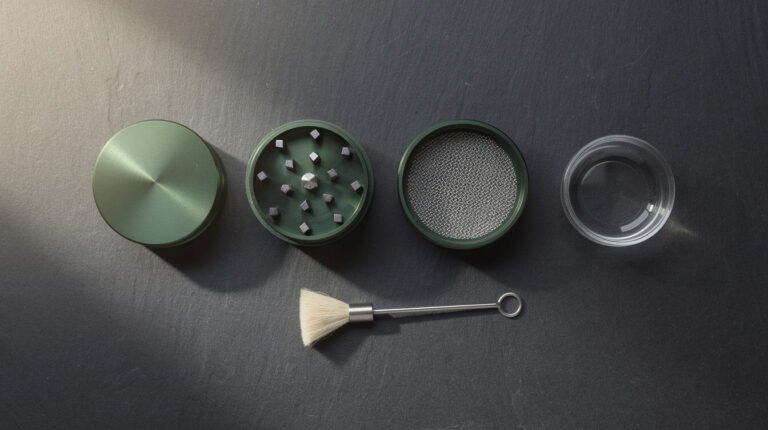
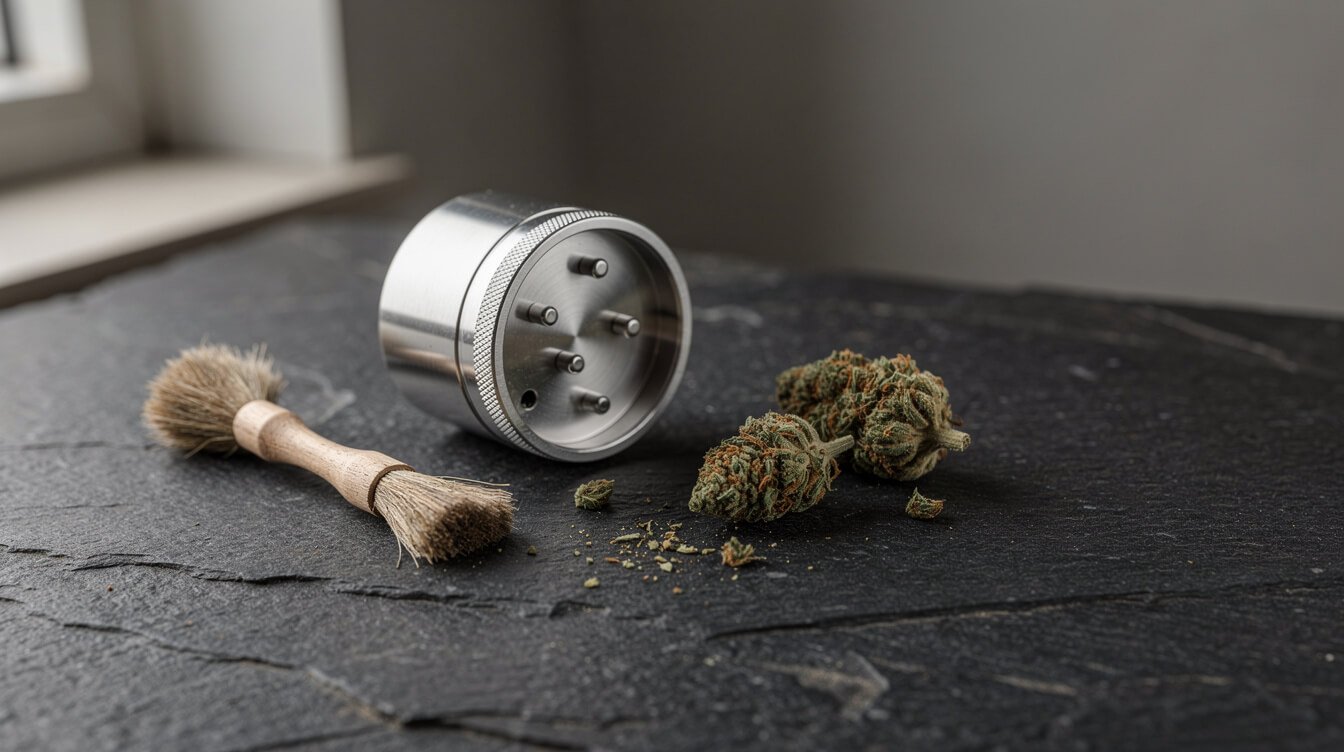
Knowing the layout makes every step obvious. A typical metal grinder is a stack of screw-together sections:
- The lid. Has a ring of teeth on its underside and usually a small magnet that keeps it seated.
- The grinding chamber. The section the lid sits on. Its floor also has teeth, interlocking with the lid’s, plus a ring of holes. You load flower here, and once it’s small enough it falls through the holes.
- The collection chamber. Where the ground flower lands. On a four-piece grinder, its floor is a fine mesh screen.
- The kief catcher. The bottom section, under the screen. Loose trichomes that sift through the mesh collect here as kief.
That’s a four-piece. A three-piece drops the screen and kief catcher, so the ground flower lands in a solid-bottomed chamber. A two-piece is just a lid and a toothed base: everything stays in the teeth, and you scrape it out. We covered the trade-offs of each in our guide to picking the best weed grinder. The short version: more pieces add convenience and kief collection, not better flower.
Teeth matter more than piece count. Most metal grinders have sharp diamond-shaped teeth that slice, while cheap acrylic ones tend to tear and mash, which is why a $10 plastic grinder leaves chunks and powder in the same load. If you’re weighing an upgrade, here’s when stainless steel is actually worth it.
How to use a weed grinder, step by step
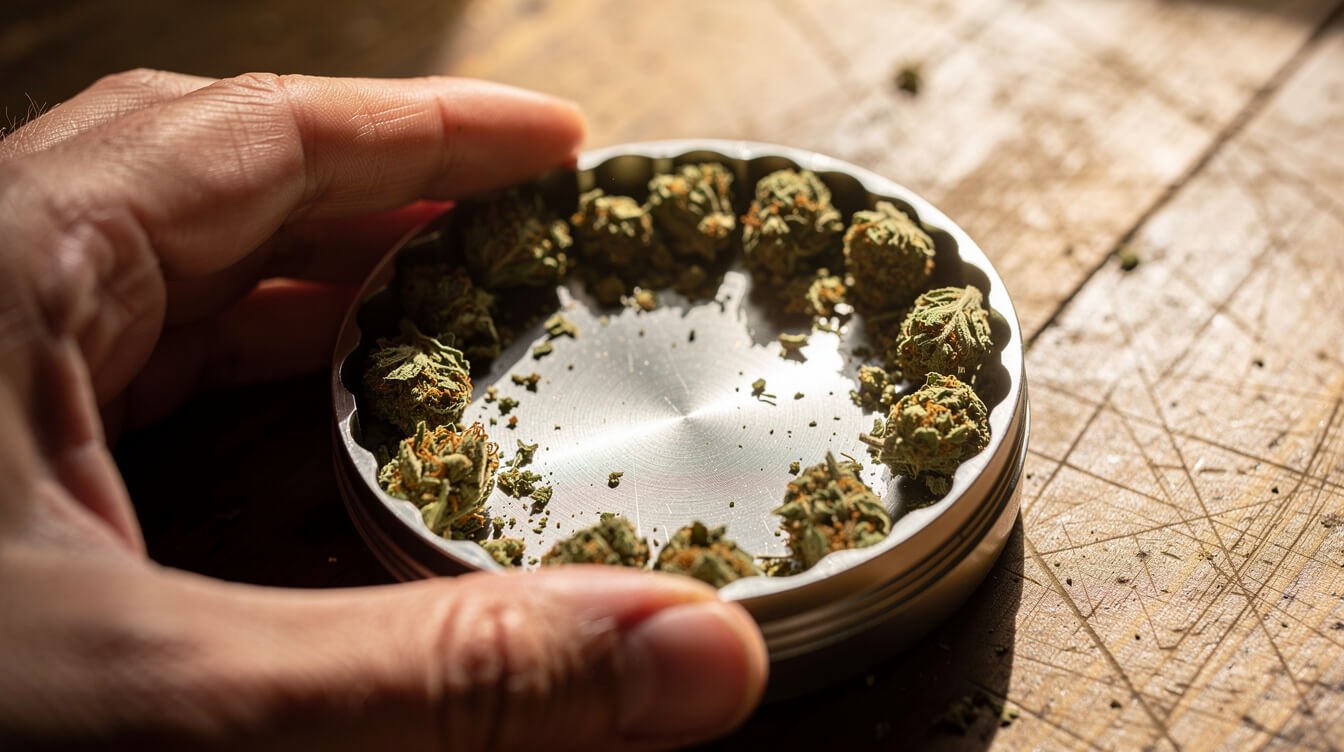
Here’s the long version of how to use a grinder, with the small details that make the grind come out even.
1. Start with dry-enough flower
Properly cured flower grinds cleanly. Flower that’s too moist clumps, sticks to the teeth, and smears resin into the threads. Flower that’s bone-dry turns to dust and burns hot. If your weed feels spongy or squishy, the grinder isn’t the problem; the cure is (our guide to curing buds in jars properly covers the target range). If it crumbles at a touch, a humidity pack in the jar can help.
2. Break it into a few pieces and pull the stems
Don’t drop a whole nug in. A big bud rides on top of the teeth and spins with the lid instead of getting cut. Pull it apart by hand or snip it with small scissors, and pick out thick stems. Stems jam the teeth and can bend a mesh screen over time.
3. Load around the edge, not the middle
This is the single biggest technique fix. The teeth near the outer ring travel farther with each twist than the ones near the center, so that’s where the cutting happens. The middle usually holds a magnet or pivot post and does very little. Set your pieces in a ring between the outer teeth.
Also, don’t overfill. A loaded grinder should have some open space between pieces. Pack it full and the lid won’t seat, the teeth can’t move, and you end up forcing it. Two smaller loads beat one jammed load every time.
4. Twist back and forth until it gives
Put the lid on, hold the body in one hand, and twist the lid with the other. Back-and-forth motions work better than spinning in one direction, because the reversal keeps pieces from riding around on top of the teeth. Most loads take 5 to 10 twists; the resistance drops when the pieces have fallen through. Still grinding hard after a dozen turns? You overloaded it, or the flower is too sticky.
5. Tap, then open
Before you unscrew anything, tap the upright grinder firmly against your palm a few times to knock loose pieces through the holes. Then twist off the lid. If a few bits are still stuck in the teeth, nudge them through with a fingertip or the little scraper many grinders include.
6. Collect the ground flower
Unscrew the collection chamber and pour the ground flower onto a rolling tray or clean paper. A card-shaped scraper sweeps the corners. Close the grinder back up so the kief catcher stays sealed.
When the grinder fights you
- The lid won’t turn: you overfilled it. Open it, remove half, and try again.
- It turns but nothing falls through: the pieces are too big or the flower is too moist. Break them smaller.
- It squeaks or grinds metal-on-metal: resin on the threads or teeth. Time for a clean. Our guide to cleaning a grinder walks through it without wrecking the magnet or finish.
- The chambers are stuck shut: warm the grinder in your hands for a minute so the resin softens, then twist. Don’t reach for pliers, which dent the threads and make the problem permanent.
Electric grinders follow the same rules (small pieces, no stems, don’t overfill, pulse). If you’re deciding whether you need one, here’s who actually benefits from an electric grinder.
How fine to grind for joints, bowls, vapes, and edibles
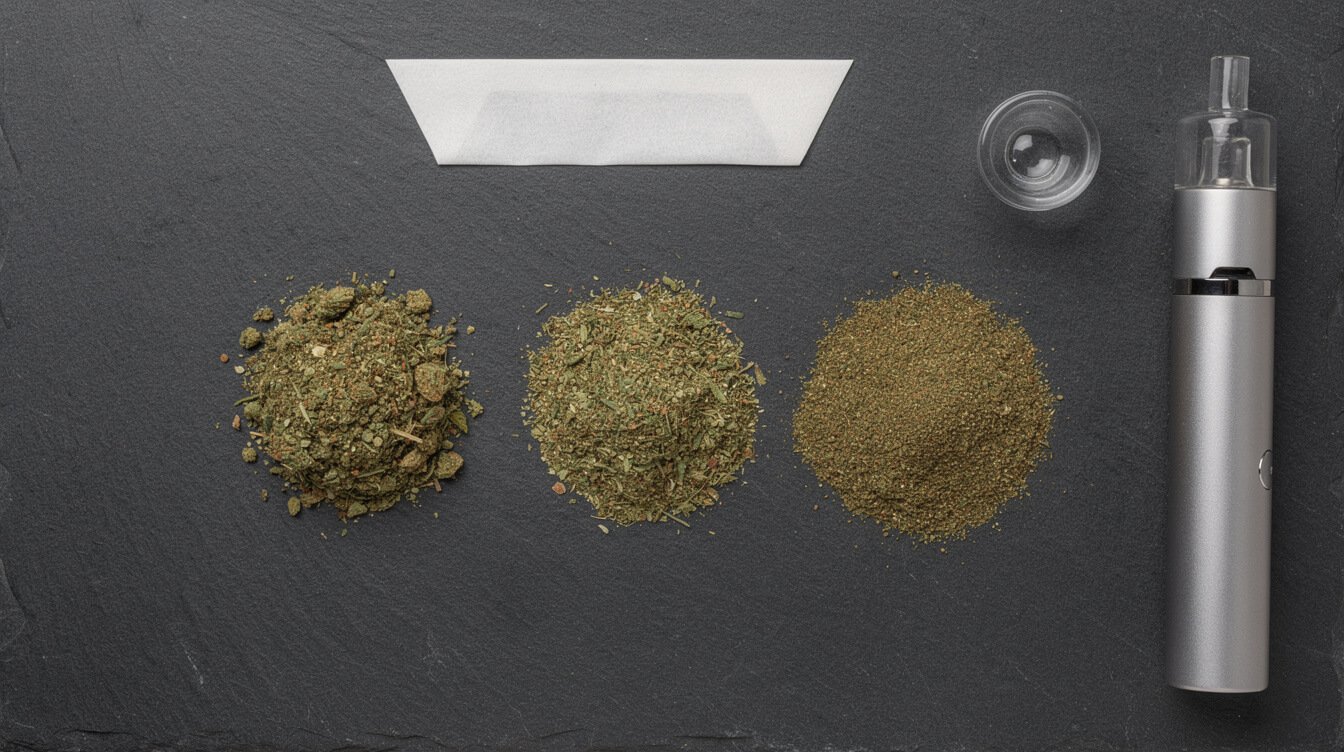
“Grind it fine” is common advice, and it’s only right half the time. The right grind depends on what you’re doing with it. More twists (or grinding upside down, so material stays in the teeth longer) gets you finer. Fewer twists gets you coarser.
Joints, blunts, and spliffs: medium, even, and fluffy
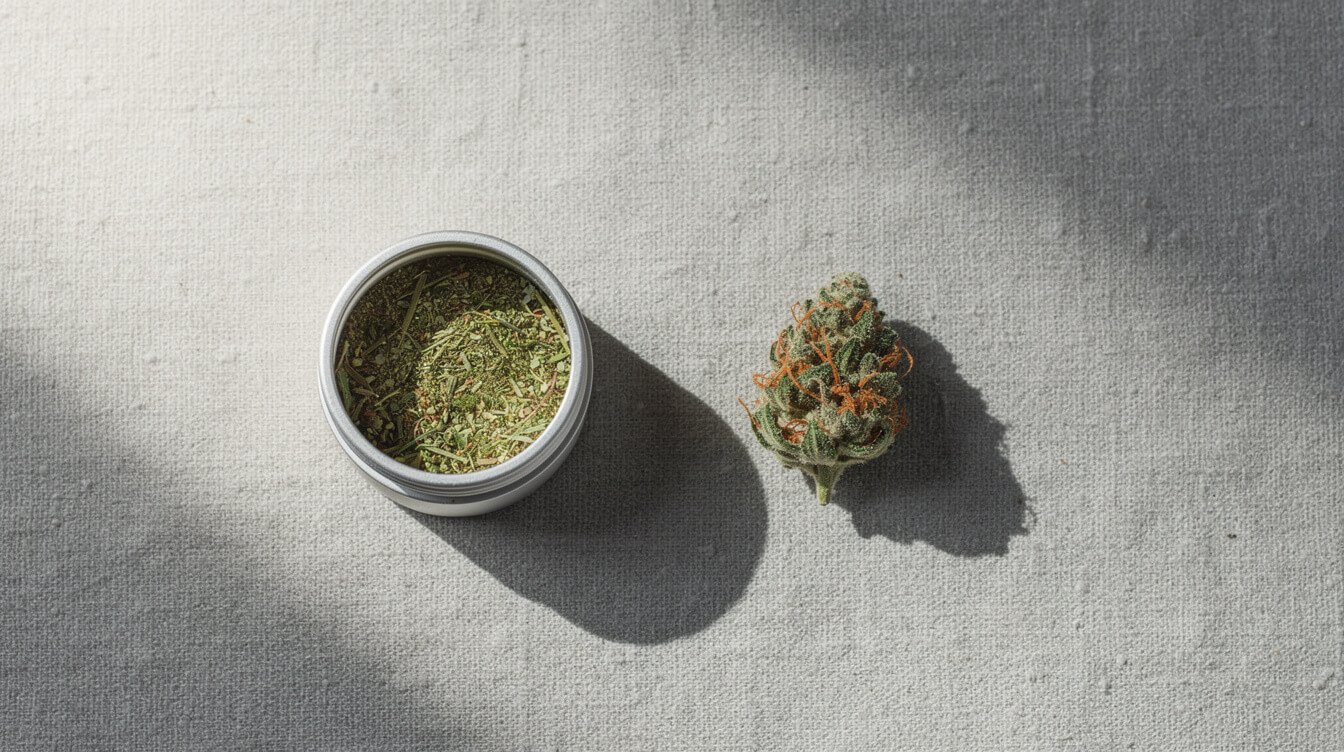
For rolling, you want a consistent medium grind, about the texture of loose-leaf tea. Too coarse leaves air pockets that cause canoeing (one side burning faster). Too fine packs tight and draws hard. Consistency matters more than size. If you’re rolling, our step-by-step guides to rolling a joint without a filter and rolling a blunt pick up right where your grinder leaves off.
Pipes and bongs: medium to coarse
A bowl wants a slightly coarser grind than a joint. Powder-fine flower gets pulled through the screen or the bowl’s hole, burns too fast, and can end up in your mouth. A medium-coarse grind lets air move through the bowl evenly, so it lights cleanly and burns at a steady pace. Coarse flower also leaves less fine ash and tar in the glass, which you’ll appreciate when it’s time for cleaning your pipe.
Dry herb vaporizers: medium to fine, but not powder
Vaporizers heat flower instead of burning it, so surface area matters most here. A medium-fine, even grind exposes more material to heat. Most conduction vapes (where the flower touches a heated chamber wall) do best on the finer side. Convection vapes (which push hot air through the flower) prefer medium, because too-fine material packs tight and blocks airflow. In both cases, stop short of dust, which clogs screens and can get pulled into the mouthpiece.
Edibles and infusions: coarse
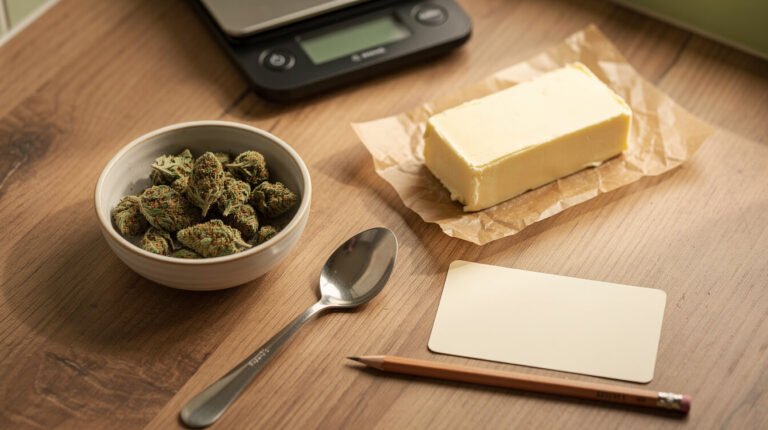
For cannabutter or oil, go coarse, or just break the flower up by hand. Powder makes straining harder, because fine particles slip through cheesecloth and leave a gritty, grassy result. A 2026 review in the Journal of Cannabis Research notes that excessive grinding can pull undesirable compounds like chlorophyll and waxes into extracts. That’s why a coarse grind tastes cleaner. Remember that the flower still needs to be decarboxylated before it does anything in an edible. Our guides to decarb temperature and time, making edibles, and making canna oil cover the rest, including the dose math.
GanjaTech, weekly
Cannabis, explained. In your inbox.
One email a week: the clearest explainers, honest gear picks, and what the science actually says. 21+ only. No spam, unsubscribe anytime.
Grind right before you use it: what the storage research shows
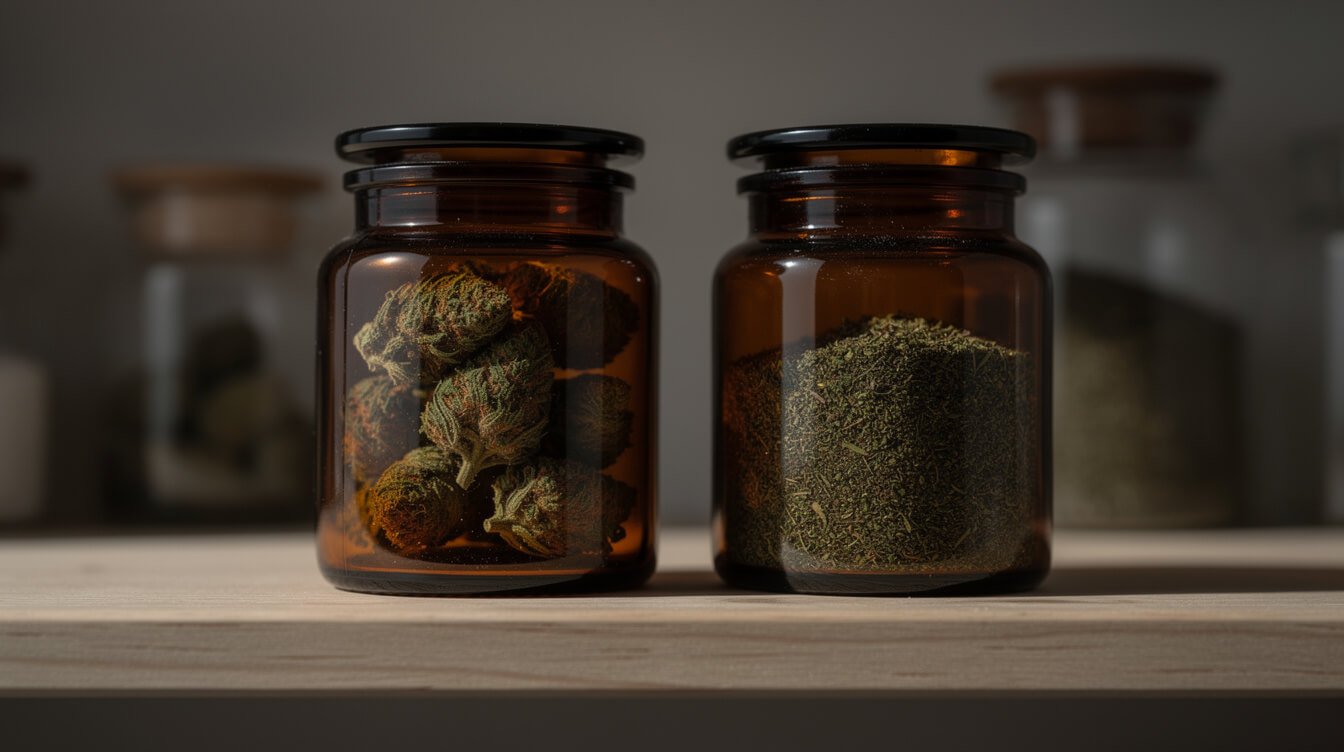
None of the top grinder guides we read cite any research, and this is the part where it actually matters. Plenty of people grind a week’s worth at once to save time. The science says that costs you flavor and some potency. Here’s what it shows.
Trichomes are sealed containers, and grinding opens them
The cannabinoids and terpenes in cannabis are made and stored inside the heads of glandular trichomes, the frosty crystals on the outside of the bud (the same stuff that becomes kief). In 1976, a team led by J.W. Fairbairn stored herbal cannabis, resin, and pure cannabinoid solutions under different conditions for up to two years. Their findings, published in the Journal of Pharmacy and Pharmacology, were that light was the biggest single cause of cannabinoid loss and air oxidation caused significant losses too. They also found that the oxidation losses could be reduced by taking care not to damage the glands, which they described as “well filled, well closed containers.”
That’s exactly what a grinder does: it breaks those containers open. Intact glands protect their contents. Broken ones expose them to oxygen.
A year-long study put whole and ground flower side by side
The most direct test we found is a 2020 study by Milay and colleagues, published in Frontiers in Plant Science. The researchers stored a THC-rich chemovar and a CBD-rich chemovar as either whole flower or ground flower, in the dark, at four temperatures (25°C, 4°C, −30°C, and −80°C), and measured them over a year. For the ground samples, they used an electric coffee grinder (ten 2-second pulses) and sieved the result through a 1 mm screen. That’s a fairly fine grind, but in the same range as a vape grind.
What they found:
- Terpenes dropped fast under every condition, and grinding made it worse. After four months, every ground sample had lower terpenoid concentrations than the matching whole sample (terpenes were profiled in the CBD-rich chemovar). The authors listed grinding, along with storage colder than −20°C, as the least favorable conditions for terpenes.
- Ground flower built up more CBN. CBN is the compound THC breaks down into when it oxidizes. The ground samples showed more of it over time, which the authors suggest is likely due to the larger surface area exposed to air.
- The potency difference was a trend, not a proven gap. After a year, most cannabinoids were lower in the ground samples than in the whole ones, but that difference wasn’t statistically significant. Temperature mattered more: at room temperature (25°C), THCA fell by roughly a third over the year in both whole and ground flower.
Their bottom line was that whole flower, not ground, was the best way to store it.
Why terpenes go first
Terpenes, the aromatic compounds behind each strain’s smell and flavor (here’s our list of the common ones), are small and volatile, especially the monoterpenes like myrcene and pinene. Grinding gives them an easy way out. A 2020 hemp study in Molecules found that ground material released its monoterpenes much faster than unground material during steam distillation. The monoterpene share of the oil roughly doubled, to 85%, in the first 10 minutes. That was a distillation experiment, not a storage one, but it shows the same mechanism: once the plant structure is broken, the lightest aromatics leave first.
What this means in practice
- Grind what you’re about to use. A few hours ahead won’t matter much. Days to weeks is where losses show up, mostly in aroma and flavor.
- If you do grind ahead, store it like flower. Use an airtight glass jar, keep it dark and cool, and fill the jar so there’s little air in it. Don’t keep ground flower in the grinder’s collection chamber for days. Grinders aren’t airtight.
- Don’t store flower in the freezer to “preserve” it. In the Milay study, −30°C and −80°C were among the worst conditions for terpenes. For more on what actually degrades over time, see does weed go bad.
Getting the most out of the kief chamber
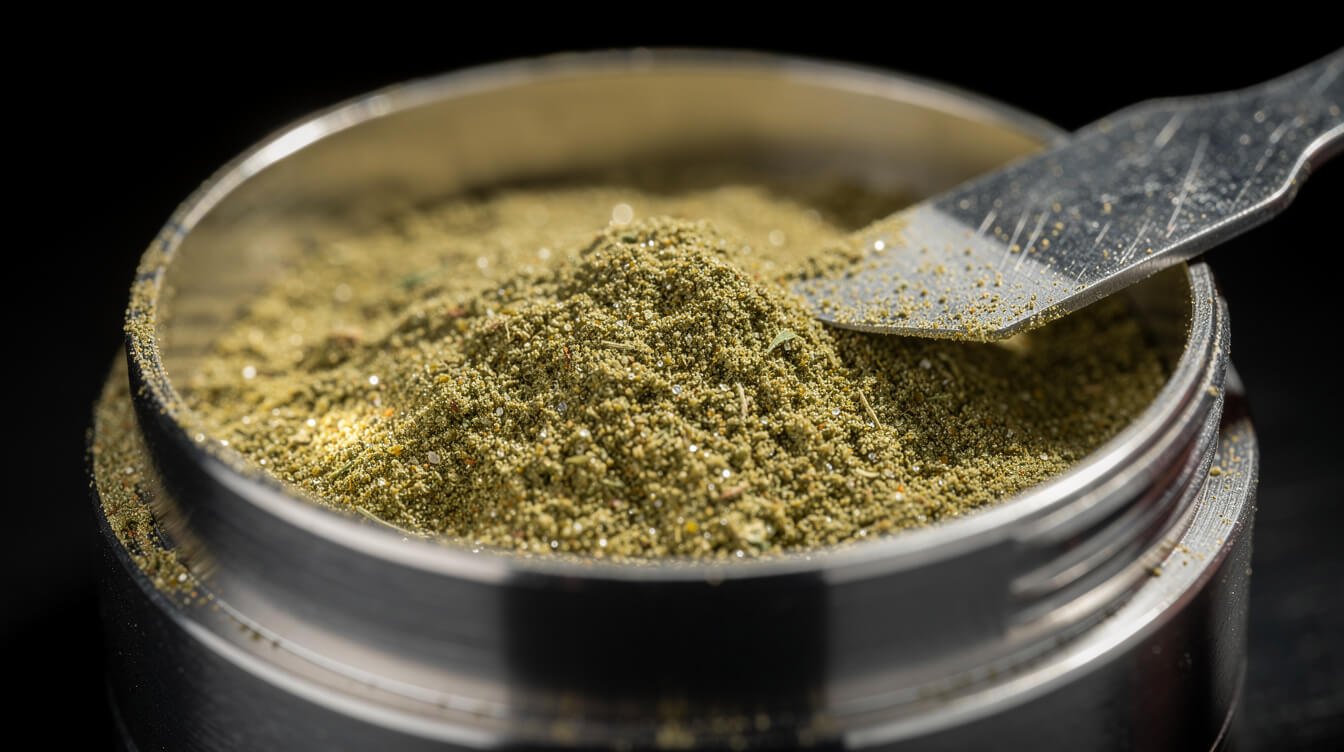
Part of knowing how to use a weed grinder is knowing what’s under the screen. On a four-piece, the bottom chamber slowly fills with a fine, sandy, pale-green-to-gold powder. That’s kief: trichome heads that broke off during grinding and sifted through the screen. It’s not “pollen,” though plenty of people (and product listings) call it that. Pollen comes from male plants and has nothing to do with it. We get into the details in what is kief.
Collecting it
Let it build up over a few weeks, then unscrew the bottom chamber and use the scraper to push the kief into a pile and lift it out. Don’t scrape the screen itself: mesh tears easily, and a torn screen lets plant matter into the kief chamber.
The coin trick
A common trick is to drop a coin into the collection chamber (above the screen), close the grinder, and shake it for 20 to 30 seconds. The coin bounces around on the screen and knocks more trichomes through. It works. Just wash the coin first, since coins pass through a lot of hands, and take it out before you grind again.
The cold trick, and the condensation problem nobody mentions
Trichome heads get brittle when they’re cold. That’s the principle behind dry sift and ice water hash, which we cover in how to make hash. Some people put their grinder in the freezer for 15 to 20 minutes, then shake or grind, and more kief falls through the screen.
The catch is moisture. When a cold metal grinder comes into a warm room, water condenses on it, inside and out. Close it back up damp with plant matter inside, and you’re creating good conditions for mold. If you try the freezer trick, collect what you want, then open the grinder and let every piece come fully to room temperature and dry before you reassemble it. If you ever see fuzzy growth or smell mustiness in a grinder, toss what’s inside. Here’s how to tell mold from trichomes.
Treat kief as stronger than flower
Kief is concentrated trichomes, so it’s more potent than the flower it came from. A pinch on top of a bowl or rolled into a joint goes a long way, especially if you’re newer or your tolerance is low. Start with a small amount and see how it feels before adding more. If you’re saving it for edibles, it still needs to be decarbed, and the dose math changes because it’s stronger per gram.
How to grind weed without a grinder
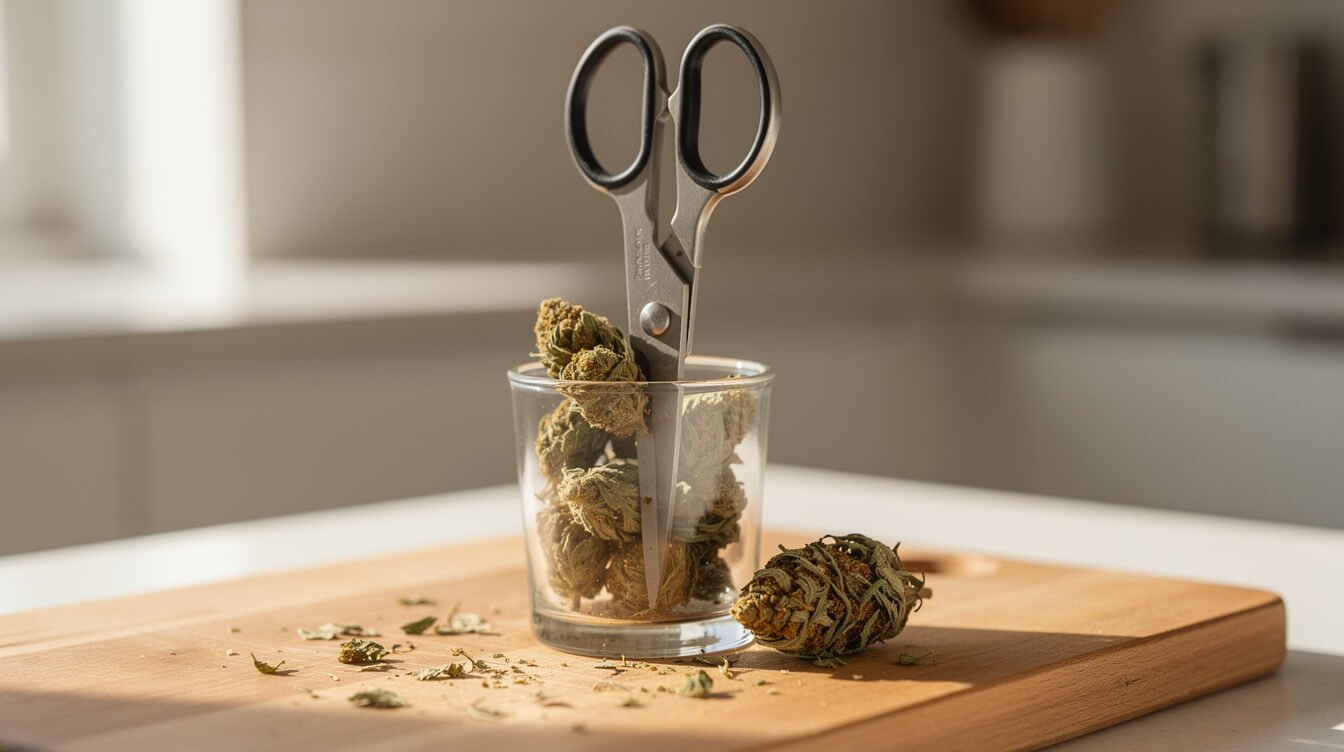
No grinder handy? Here’s how to grind weed with what’s already in your kitchen. None of these match a sharp grinder, but they all work.
Scissors and a shot glass (best option)
Put a bud in a short, sturdy glass and snip at it with small scissors, rotating the glass as you go. In a minute or two you’ll have a reasonably even medium grind. This is the cleanest no-grinder method and the easiest to control. Wipe the scissors afterward, because resin builds up on the blades fast.
By hand
Pull the bud apart with your fingers, breaking it into smaller and smaller pieces. It works fine for a bowl or a rough joint, but it’s slow, uneven, and leaves trichomes on your fingertips instead of in the flower. Hand-breaking is also the natural approach for edibles, where coarse is what you want anyway.
A coffee or spice grinder
A blade-type coffee or spice grinder works if you pulse it in very short bursts, a second or two at a time. Run it continuously and you’ll get dust, which is too fine for nearly everything except some vapes. (The Milay study above used exactly this, with ten 2-second pulses.) Use a dedicated one, or clean it thoroughly after: cannabis resin and coffee residue both carry over in flavor.
Whatever you do, skip anything that crushes instead of cuts, like a rolling pin. Crushing mashes resin into a clump and damages trichomes without giving you an even grind.
If you end up doing this more than once, a basic metal grinder is one of the cheapest upgrades in cannabis. It saves time and gives you a better, more even grind.
How to use a weed grinder: frequently asked questions
How do you use a weed grinder for the first time?
Give a new grinder a quick wipe or rinse first (new metal grinders can carry a little machining residue or dust) and let it dry fully. Then follow the basic steps: break a bud into a few pieces, load them around the outer ring of teeth, close the lid, twist 5 to 10 times, tap, and collect from the middle chamber.
How many times should you twist a grinder?
Usually 5 to 10 back-and-forth twists. The better signal is feel: when the lid spins freely, the flower has dropped through. More twists give a finer grind, fewer give a coarser one.
Should you grind weed before rolling a joint?
Yes. A consistent medium grind is what makes a joint roll evenly, pack properly, and burn without canoeing. Unground chunks leave air pockets and hot spots.
Is ground weed less potent?
Not right away. Over time, ground flower loses terpenes faster and oxidizes more than whole flower does. In a year-long study, the cannabinoid gap was a non-significant trend, but the terpene losses were clear. Grind as you go.
Why put a dime in your grinder?
A clean coin in the collection chamber, shaken for 20 to 30 seconds, knocks more kief through the screen into the bottom chamber. Wash the coin first, and remove it before your next grind.
How do you get weed out of a grinder?
Tap the closed grinder a few times first, then unscrew the collection chamber and pour it out. Use the included scraper (or a clean card) to sweep the corners. For bits stuck in the teeth, nudge them through the holes before you open the lower chambers.
Does a grinder make weed stronger?
No. A good grind helps flower burn or vaporize more evenly, so you get more consistent hits, but it adds no potency. Kief is a separate, stronger product; the flower itself stays the same.
Is it legal to own a weed grinder?
It depends on where you are. Grinders are sold openly as herb and spice tools in many places, but paraphernalia laws vary by state and country. Check your local laws rather than assuming.
Final thoughts
Learning how to use a weed grinder well comes down to a few habits: small pieces, load the edge, don’t overfill, twist until it gives, and match the grind to how you’re using it. Medium and fluffy for joints, a touch coarser for bowls, medium-fine for vapes, and coarse for edibles.
The part that’ll actually change how your weed tastes is timing. Trichomes are tiny sealed containers, and grinding opens them. The research is clear that ground flower loses terpenes faster and oxidizes more than whole buds. So grind what you’re about to use, keep the rest whole in a dark, airtight jar, and let the kief build up on its own.
And keep the grinder clean, because a sticky one grinds worse and jams more. Great plant. Respect it, know your local laws, and enjoy responsibly.
Before you go
Get the next explainer first
We publish a new one every day. The best of the week, plus what's new in the shop, lands in one short email.