How Long Does It Take to Grow Weed? The Honest Timeline
How long does it take to grow weed? Three to five months, seed to a jar that is actually worth opening. Autoflowering plants can finish the whole trip in ten to fourteen weeks. Photoperiod plants usually want four to six months. The enormous range you see quoted online is real, and it exists for a reason nobody says out loud: roughly half of that timeline is your decision, not the plant’s.
Most guides on this question stop at harvest day, which is the same as saying a loaf of bread is done when you put it in the oven. Below is the honest version: every stage with real numbers, which weeks you can compress, which ones you genuinely cannot, and the delays that quietly add a month to a first grow. One note before we start — home growing is legal in some places, capped at a certain plant count in others, and a crime in plenty more. Check your own state and local law before a seed ever gets wet.
How long does it take to grow weed? The short answer
Here is the timeline in one table. These are realistic indoor ranges, not best-case marketing numbers.
| Stage | Autoflower | Photoperiod |
|---|---|---|
| Germination | 1–7 days | 1–7 days |
| Seedling | 2–3 weeks | 2–3 weeks |
| Vegetative | Not your call (~3–4 weeks, built in) | 3–10+ weeks (your call) |
| Flowering | 6–9 weeks | 8–12 weeks |
| Drying | 7–14 days | 7–14 days |
| Curing | 2–4 weeks minimum | 2–4 weeks minimum |
| Seed to good jar | ~10–14 weeks | ~16–26 weeks |
Three numbers worth memorizing. Twelve weeks is a genuinely fast autoflower run that still got a real cure. Four to five months is a normal photoperiod cycle for someone growing one or two plants at home. Six months happens when you veg a plant large, run a long-flowering cultivar, and cure properly — and it is not a mistake, it is usually the best weed of the three.
If you have been reading around and getting different numbers from every source, that is not because anyone is wrong. It is because they are measuring different things. Seed-bank timelines usually quote flowering time only, because flowering time is the number printed on a seed pack. Grow-equipment sites tend to quote seed to harvest, which conveniently ends before the least glamorous month. And almost none of them count the weeks you spend buying and setting up gear. Once you line the definitions up, the estimates agree closely — the disagreement is about where the clock starts and stops.
What is not on that table: shopping and setup. Deciding on a tent, waiting on a light to arrive, getting genetics through whatever legal channel exists where you live, mixing soil — that is one to three weeks of calendar time before day one. Nobody counts it, and then everybody is surprised. If you are starting from nothing, add two weeks to whatever number you land on.
The grow timeline, stage by stage
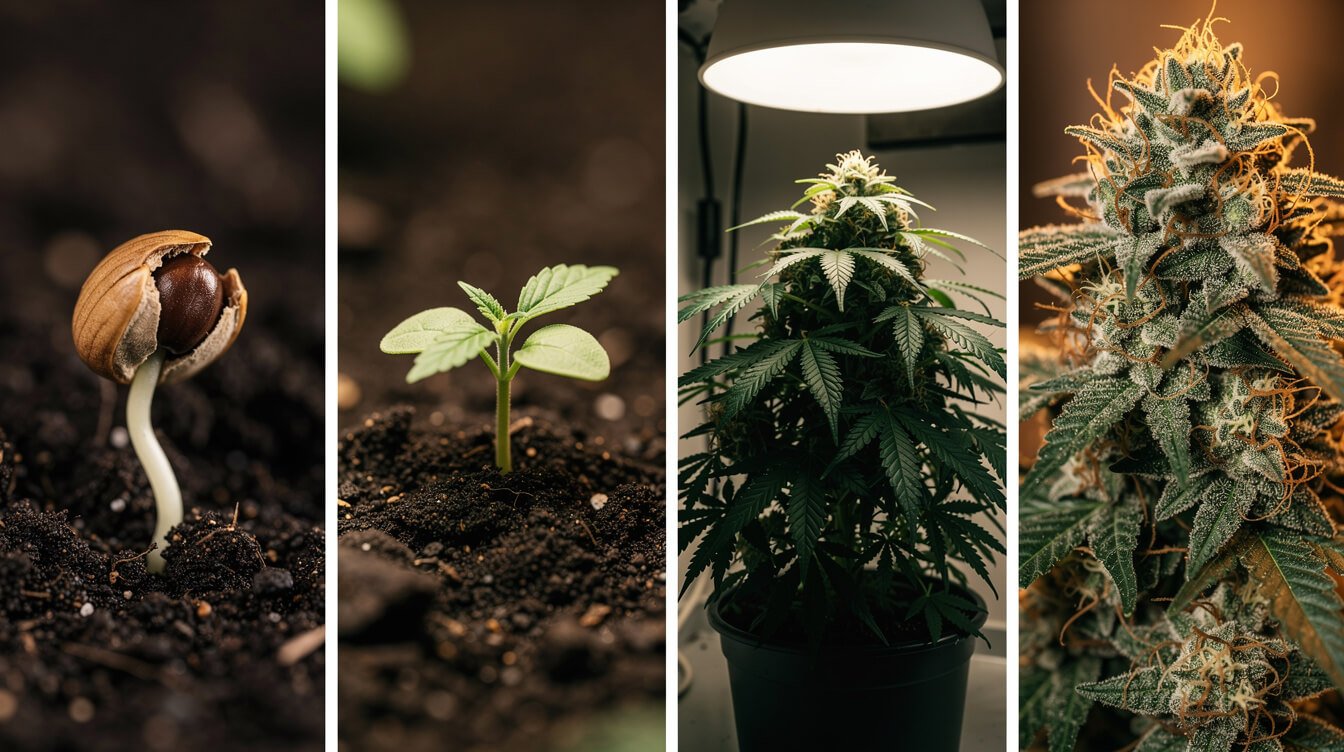
Cannabis has four growing stages, and each one runs on a completely different clock. Understanding which clock you are looking at is the whole trick to predicting your own harvest date.
Germination: 1 to 7 days
A seed cracks and pushes out a white taproot. Fresh, healthy seeds usually do this in two to four days. Older seeds can take a full week, and after about seven days a seed that has not popped is probably a dud — replace it rather than waiting. Our step-by-step guide to germinating cannabis seeds covers the methods that fail least often, which matters more here than speed.
Starting from a cutting instead? A rooted clone skips this stage and most of the next one. Cloning a cannabis plant takes seven to fourteen days to root, but the clone arrives already several weeks old in plant terms, which is why clone-based grows often finish three to four weeks sooner than seed-based ones.
Seedling: 2 to 3 weeks
The plant builds its first real serrated leaves and, more importantly, a root system. Above the soil almost nothing exciting happens, which is exactly why beginners overwater and overfeed at this stage and cost themselves a week. A seedling wants light, warmth, and to be left alone.
No cultivar can flower meaningfully before roughly three to four weeks from germination, autoflower or not. That floor is biology, and it is the reason no honest answer to this question starts with a number under ten weeks.
Vegetative: 3 to 10+ weeks
Now it grows stems and leaves fast, and this is the elastic part of the timeline. A photoperiod plant stays in veg as long as you keep giving it long days — most indoor growers run 18 hours of light — and it will keep getting bigger until you decide otherwise. Four to eight weeks is the normal window. Flip earlier and you harvest sooner with less bud; flip later and you wait longer for more.
Autoflowers take this decision away from you. They start flowering on their own internal clock at about three to four weeks old regardless of your light schedule. That is the trade: speed in exchange for control.
One planning note that saves first-timers from a real disaster — plants roughly double in height after you flip to flowering. End veg before the plant reaches half your usable height, or it grows into the light. If you are working out setup and light coverage, start with our honest first-grow walkthrough and the sizing logic in picking an LED grow light for one plant.
Flowering: 6 to 12 weeks
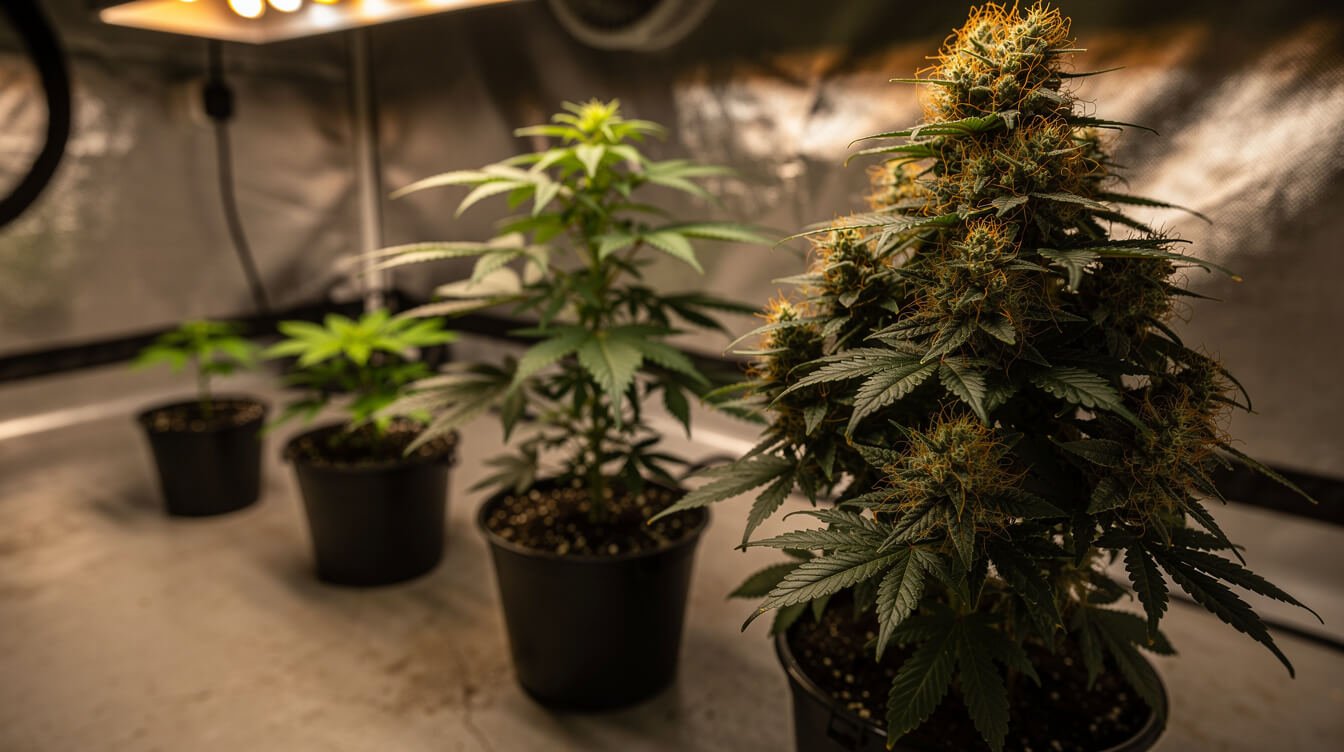
Buds form, stretch, fatten, and ripen. For photoperiod plants you trigger this by switching to 12 hours of light and 12 hours of genuinely uninterrupted dark; the plant takes one to three weeks to visibly respond. Eight to ten weeks of flowering is the average, with fast cultivars finishing around seven and long-flowering ones running past twelve.
This stage is the one you cannot negotiate with. Flowering length is written into the genetics, which is why it belongs on your calendar before you buy a seed, not after. If you are growing photoperiod plants from seed, this is also when you find out what you have — telling male from female plants and pulling the males early protects everything else in the tent.
Harvest day itself is not a date, it is a condition. Pistils darkening is a hint; reading the trichomes is the actual answer. Pulling a week early is the single most common way growers shave time off a grow and quality off the result.
The part of the timeline you control, and the part you don’t
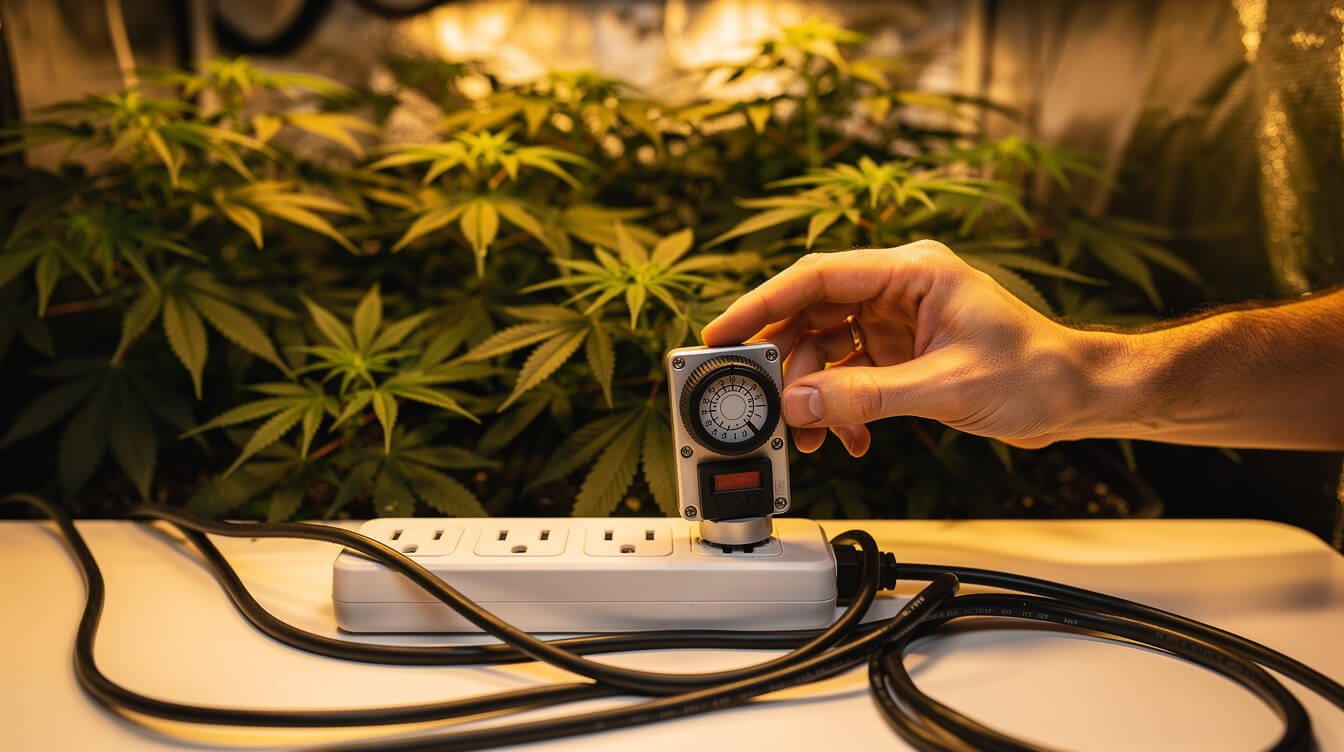
This is the frame that makes the whole question click, and almost nobody explains it. Your grow timeline has four blocks, and they have very different amounts of give.
- Setup time — fully yours. One to three weeks, or zero if your gear is already sitting there. Entirely a function of how organized you are.
- Vegetative time — fully yours, on photoperiods. The genuine dial. Anywhere from three weeks to several months, and the main reason two growers running the identical cultivar finish a month apart.
- Flowering time — the plant’s, not yours. Set by genetics. You can slightly worsen it with bad conditions; you cannot shorten it. Pick your cultivar with this in mind.
- Drying and curing time — chemistry’s, not yours. Roughly three to six weeks, and the least compressible block on the list. Physics does not care about your calendar.
So when someone asks how to grow weed faster, there are really only three honest levers: buy a short-flowering or autoflowering cultivar, veg for less time, or start from a clone instead of a seed. Everything else marketed as a speed trick is either a yield tax or a quality tax dressed up as time savings.
A worked example makes the spread concrete. Two growers start the same photoperiod cultivar on the same Monday. Grower A vegs four weeks, flowers nine, dries ten days, and cures three weeks: about eighteen weeks, and a modest harvest off a compact plant. Grower B vegs eight weeks in a bigger pot, flowers the same nine, dries the same ten days, and cures eight weeks because they have patience: about twenty-six weeks, and substantially more and better bud. Identical genetics, identical gear, two months apart. Neither one did anything wrong. They answered the veg-and-cure question differently, and that is most of what this timeline really is.
Want to bias your first run toward finishing on schedule? Vigorous, forgiving genetics do more for your timeline than any piece of equipment. That is most of the point of choosing beginner-friendly strains to grow indoors — plants that recover fast from your inevitable mistakes lose you days instead of weeks.
Drying and curing: the weeks most grow timelines skip
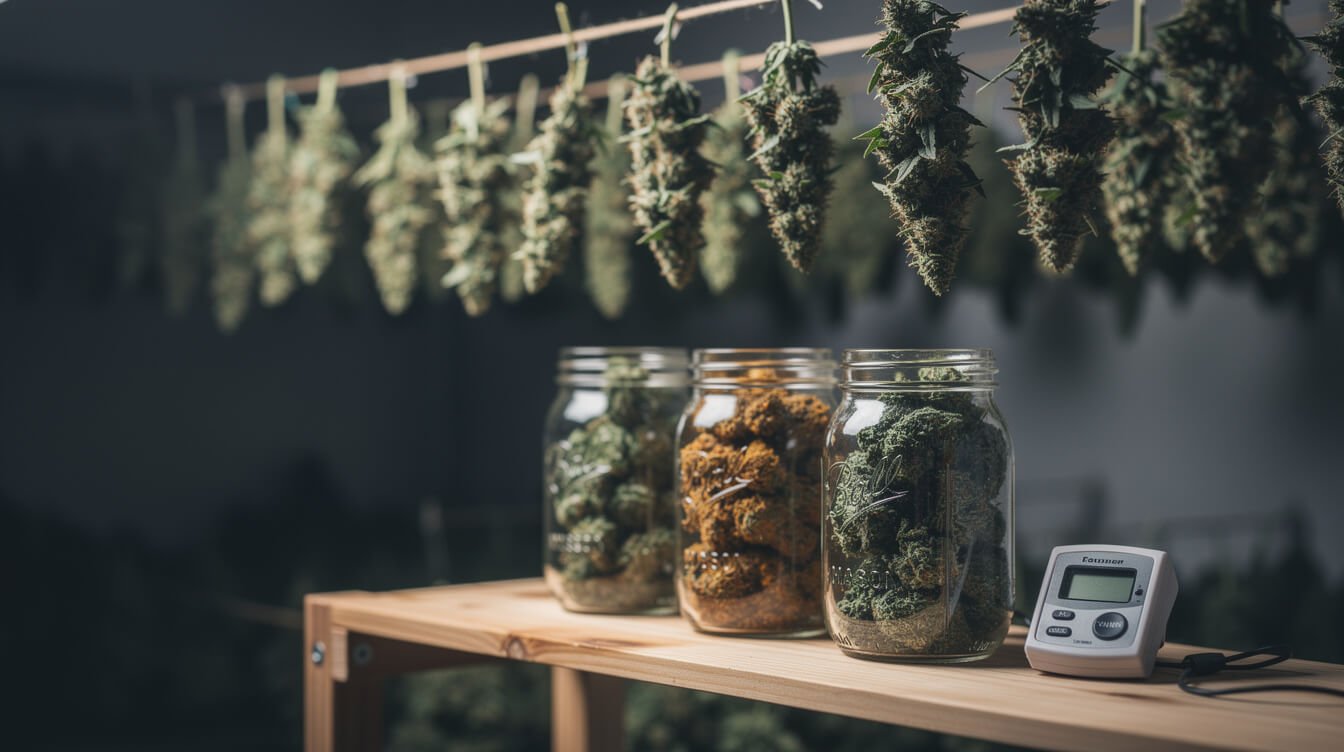
Here is where most timelines on this topic quietly lie to you. They count to harvest day and stop. Harvest day is not the finish line — it is the start of the last three to six weeks, and those weeks do more for the final result than anything you did in week four of veg.
Drying takes seven to fourteen days. Slow and cool is the whole game: somewhere around 60°F and 60% relative humidity, in the dark, with gentle air movement that is not pointed at the buds. A rushed three-day dry in a warm room gives you harsh smoke that tastes like cut grass, and no amount of curing afterward fully fixes it.
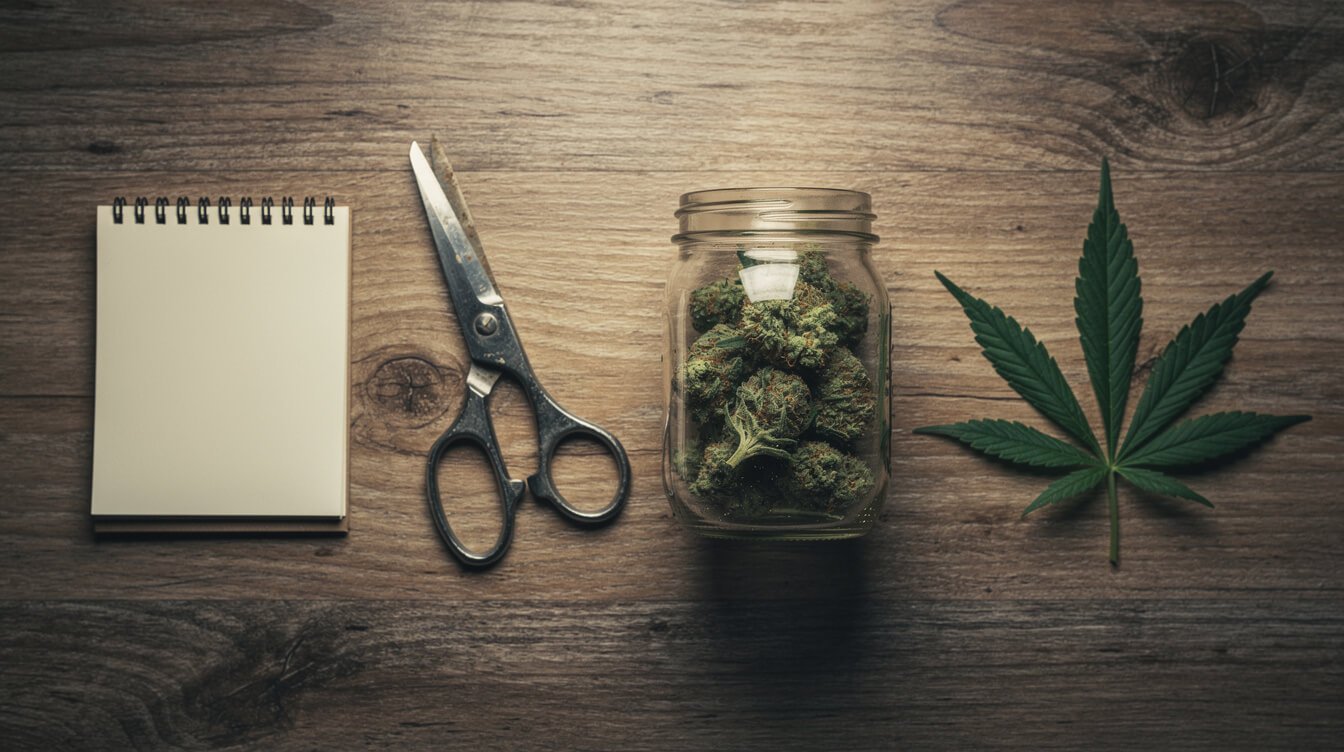
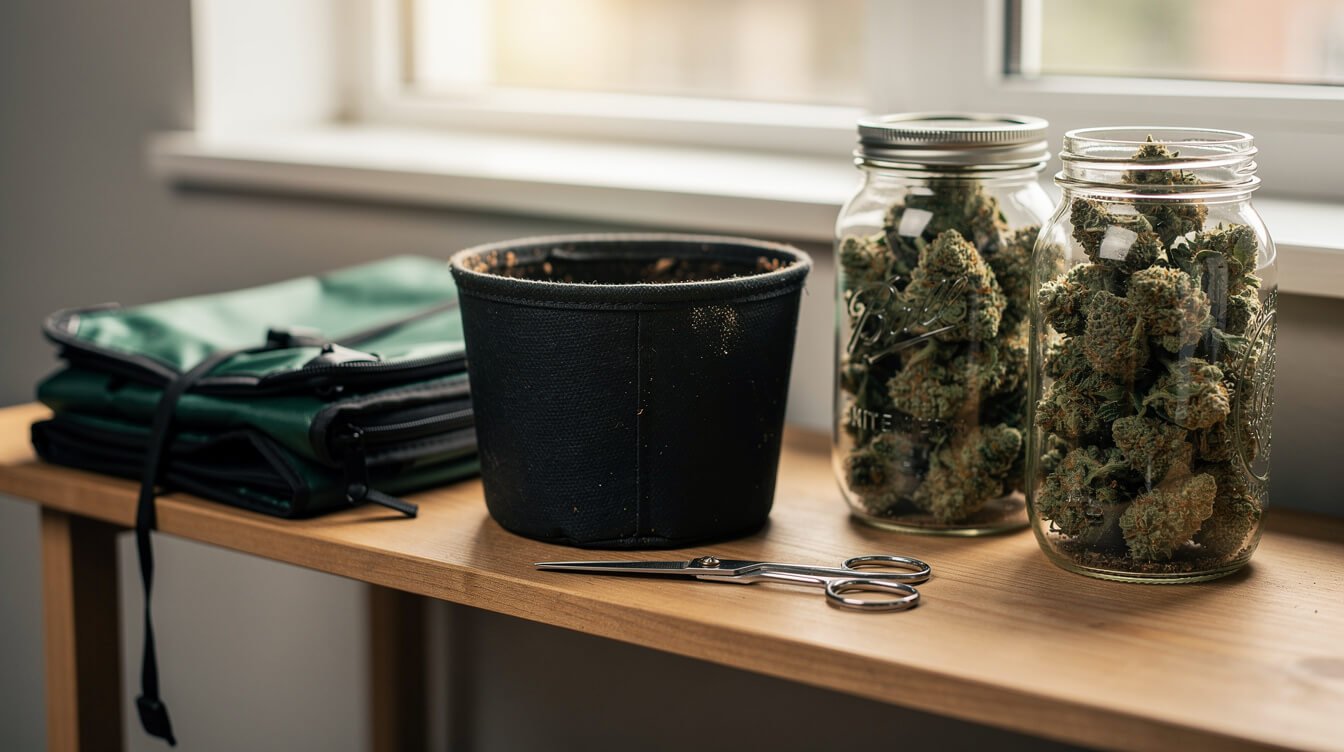
Curing takes two to four weeks at an absolute minimum, and most growers agree it keeps improving for two to three months. Buds go into sealed glass jars at roughly 62% humidity and you burp the jars — open them briefly — daily at first, then weekly. What is happening in there is real chemistry: residual chlorophyll and sugars break down, harshness drops, and the terpenes that carry smell and flavor finally come forward.
This is the stage where patience pays the most obvious dividend, and where impatience is most visible in the result. We wrote both the full guide to curing cannabis properly and a no-equipment troubleshooting walkthrough for jar curing, because this is where good grows get thrown away.
Can you smoke it at day three of drying? Yes. Will it be the weed you spent four months growing? Not remotely. Budget the cure into your answer, or your honest timeline is off by a month.
GanjaTech, weekly
Cannabis, explained. In your inbox.
One email a week: the clearest explainers, honest gear picks, and what the science actually says. 21+ only. No spam, unsubscribe anytime.
Autoflower vs photoperiod, indoors vs outdoors
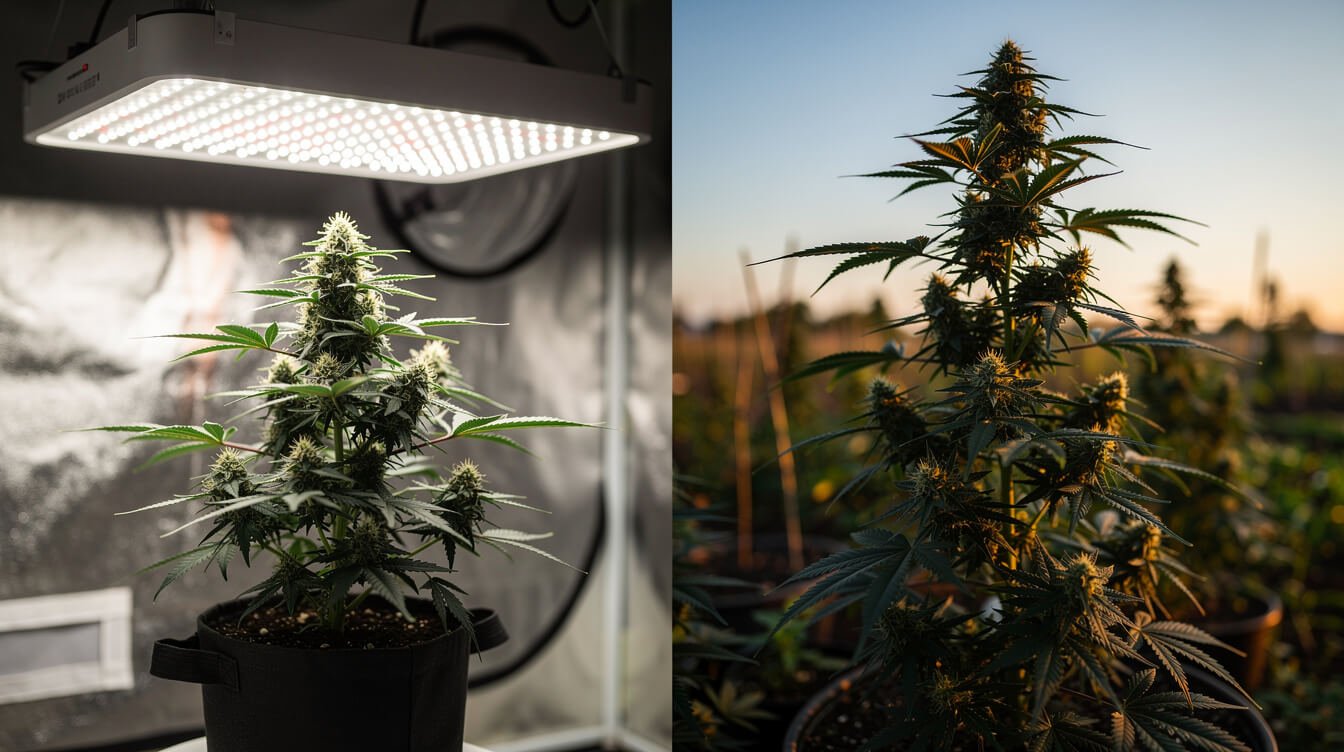
Two choices set your timeline before you do anything else, and both involve a genuine trade rather than a free win.
Autoflower: faster, smaller, less forgiving
Autoflowering plants flower on age instead of light schedule, which compresses the whole cycle to roughly ten to fourteen weeks seed to jar. The trade-offs are real. They stay smaller and yield less per plant, and because they will not wait for you, a setback in week three is permanent — there is no extending veg to let a struggling plant recover. Autos reward preparation; photoperiods forgive improvisation.
Photoperiod: slower, bigger, fixable
Photoperiod plants run four to six months but hand you the veg dial. That flexibility is worth a lot on a first grow: if a plant gets stressed or you underestimated your space, you simply veg another two weeks and sort it out before flipping. Bigger plants, bigger harvests, more room for error, more calendar.
Outdoors: the sun sets the schedule
Outdoor growing is not slower stage by stage, but it is locked to the season. In most of the northern hemisphere you plant out in late spring, the plants veg through long summer days, flowering starts naturally as nights lengthen in late summer, and harvest lands somewhere between late September and early November. Veg often stretches to twelve weeks and flowering to twelve or more, so the plant-to-harvest span runs five to seven months — and you get exactly one attempt per year. Indoors you control the seasons, which means three or four cycles a year if you want them.
Outdoors also means your plants are visible, which loops back to the legal question. Plant-count limits, outdoor-cultivation bans, and screening requirements vary enormously by state and even by city. Know your local rules before anything goes in the ground.
What makes a grow take longer than planned
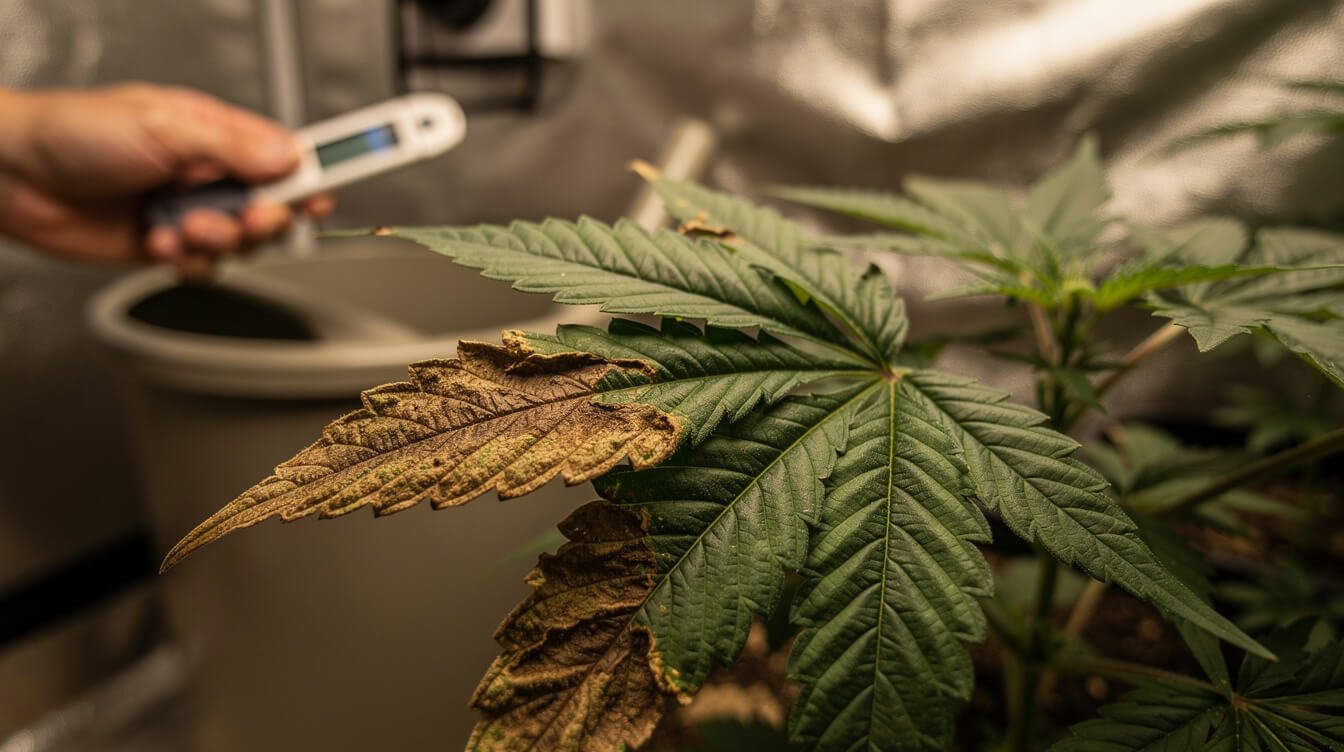
Almost every first grow runs two to four weeks past its estimate, and the reasons are boringly consistent. None of these are disasters. They are time taxes, and knowing them in advance is how you avoid most of them.
- Dud or slow seeds — up to 1 week. Germinate one or two more than you need and you never lose time to this.
- Transplant shock — 3 to 7 days. Moving a plant to a bigger pot stalls it briefly. Transplant early, while it is small, and keep the root ball intact.
- Overfeeding — 1 to 2 weeks. The most common self-inflicted delay in home growing. Burned tips mean a plant spending its energy recovering instead of growing. Fixing nutrient burn is straightforward, but the lost week is gone.
- Underpowered or badly placed light — weeks, invisibly. A plant under weak light does not die, it just stretches and takes longer to do everything, and the buds come out airy at the end. Nothing about the timeline reveals this until harvest weight disappoints. Our guide to actually picking an LED grow light covers coverage and distance, which matter more than wattage claims.
- Light leaks during flowering — 1 to 3 weeks. Photoperiod plants need genuinely dark nights. Persistent light during the dark period can confuse a flowering plant back toward vegetative growth, which is a real and frustrating delay. Tape the seams, kill the standby LEDs.
- Heat, cold, or swinging humidity — a week here and there. Plants outside their comfortable range slow down. Stable beats optimal.
- Rushing the cure — no time saved, quality lost. The one item on this list that is not a delay at all. It is just a worse outcome you chose.
Notice what is missing from that list: catastrophes. Pests, mold, and disease can certainly cost you a grow, but they rarely cost you a couple of weeks — they either get handled quickly or they end the run. The stuff that actually pushes harvest day back is small, cumulative, and mostly about doing too much. Overwatering, overfeeding, moving plants around, tinkering with light height. A first grow that gets left alone finishes closer to schedule than one that gets managed enthusiastically.
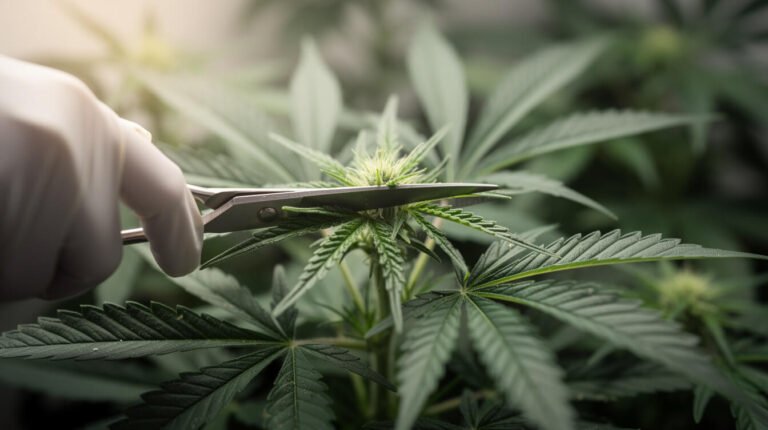
The practical fix for all of it: build your estimate with a buffer. If the math says fifteen weeks, tell yourself eighteen. You will be right more often, and you will stop reaching for the scissors early.
How long does it take to grow weed? Common questions
What is the absolute fastest a grow can finish?
Around eight weeks seed to harvest with a very fast autoflower, plus two to three weeks to dry and cure — call it ten to eleven weeks to something genuinely enjoyable. Anything faster than that involves skipping the cure, which is not faster so much as unfinished.
How long from clone to harvest?
Roughly two and a half to four months. A clone needs one to two weeks to root, then a few weeks of veg, then its normal flowering stretch. You save the germination and seedling time — usually three to four weeks against the same cultivar from seed.
Does a bigger light make it grow faster?
Not faster, but better. Adequate light does not shorten the stages; it makes each week count more, which is why the same fourteen-week grow can produce very different weight. Beyond what your canopy can use, more light is just more heat and more power draw.
How long does the flowering stage take?
Six to twelve weeks, set by genetics, averaging eight to ten. Check the cultivar’s stated flowering time before you commit — it is the single biggest factor in your finish date and the one you cannot change later.
Can I harvest some of the plant early and leave the rest?
You can, and on plants with uneven ripening it is a reasonable move — take the top colas when their trichomes are ready and give the lower, shadier buds another week or two. It does not shorten the grow, but it does improve the average.
How many harvests can I get in a year?
Indoors: three to four photoperiod cycles, or four to five with autoflowers, assuming you run back to back. Outdoors in most climates: one. That single difference is the main practical argument for growing indoors.
Can I shorten the grow by putting a seedling straight into flowering?
You can, and some growers working in very small spaces do exactly that. Understand what you are buying: a plant given a 12/12 schedule almost immediately will still take three to four weeks before it can flower at all, then run its normal flowering stretch, so you save a few weeks at most — and you end up with a very small plant and a yield that may not justify the months of electricity. Four extra weeks of veg is usually the better deal.
Does the drying and curing time change with how much I grew?
Barely. Drying and curing are governed by moisture leaving plant material, not by volume, so one plant and six plants take about the same three to six weeks. What does change is your workload on harvest day — trimming a large harvest can take a full day or two, which is worth knowing before you plan it for a weeknight.
So what is the honest bottom line?
Plan on four months and you will rarely be disappointed. Autoflowers can do it in under three if you prepare properly, and a well-vegged photoperiod plant with a long cure will happily take six and reward you for it. The stages you can rush are the ones that cost you quality, and the stages that matter most — flowering and curing — are exactly the ones that will not be rushed. No rush. Grow it right, know your local laws, and enjoy it responsibly as an adult.
Before you go
Get the next explainer first
We publish a new one every day. The best of the week, plus what's new in the shop, lands in one short email.