How to Make Canna Oil (Coconut or Olive): The Time, Temp, and Storage Rules the Data Supports
Here’s the honest answer to how to make canna oil: decarb your flower, warm it gently in a cooking oil for about two hours, strain it, and then store it like the perishable kitchen ingredient it is. That’s the whole process. The details are where most recipes fall apart. Page one of Google gives you infusion times from one hour to eighteen, storage advice that ranges from “two to three months on the counter” to “up to three years,” and not a single source for any of it.
We went to the people who actually measure this: pharmacy labs in Italy, where pharmacists have compounded cannabis olive oil for patients for years and tested thousands of batches, plus a university food-safety extension that publishes rules for herb-infused oils. This guide gives you the recipe, the time and temperature that data supports, the dose math, and the storage rule nobody on page one mentions. It’s written for adults 21+ in places where home cannabis cooking is legal. Laws vary by state and country, so check yours first.
How to make canna oil: the short answer
If you just want the recipe, here it is. Everything after this section is the why, and the parts that keep the batch safe and predictable.
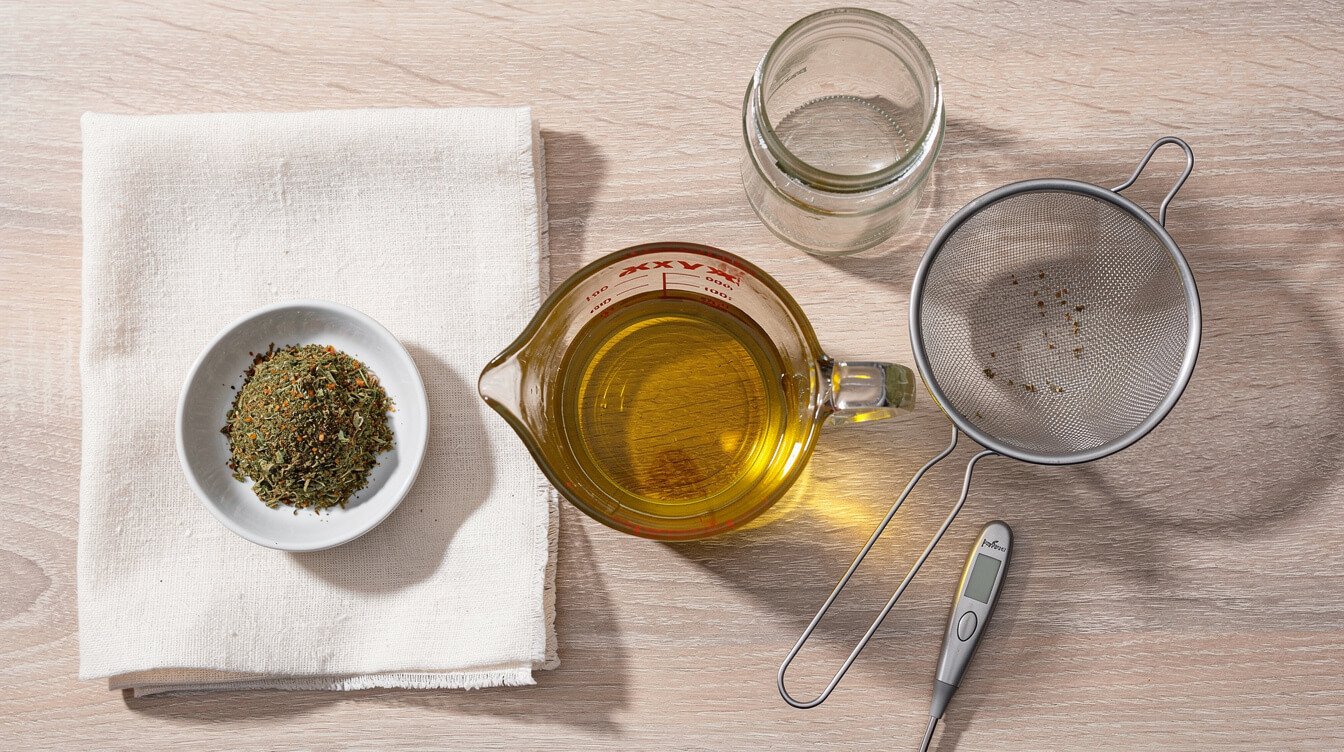
What you need
- 7 grams (a quarter ounce) of cannabis flower, or less if you want a milder oil. Shake and trim work too, just weaker.
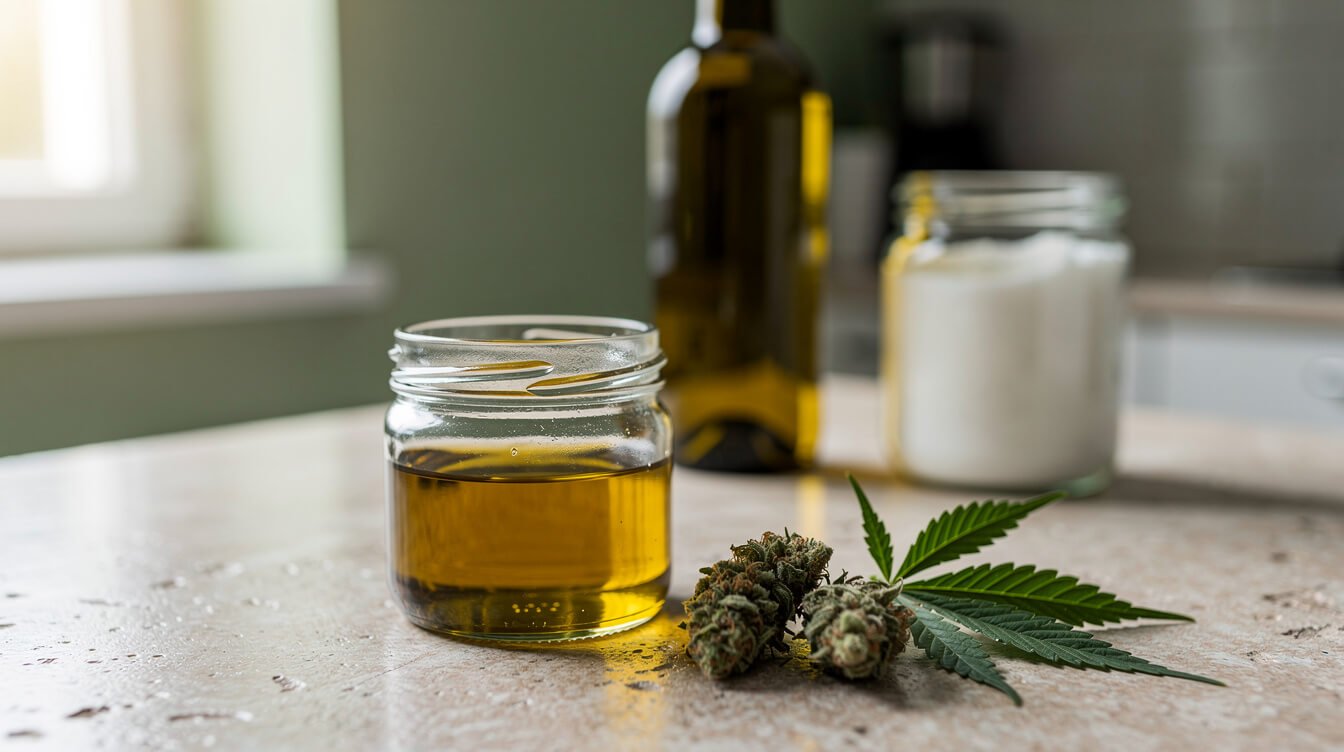
- 1 cup (240 ml) of cooking oil: coconut, olive, or MCT. The next section helps you pick.
- A baking sheet and parchment, for the decarb.
- A double boiler, or a mason jar set in a pot or slow cooker of water.
- A kitchen thermometer. It’s cheap, and it’s the single best tool here.
- Cheesecloth or a fine nylon bag, a mesh strainer, and clean glass jars.
The method
- Decarb. Break the flower into small pieces, spread it on parchment, and bake at 240°F for about 40 minutes.
- Combine. Put the decarbed flower and the oil in the top of a double boiler, or in a jar sitting in a water bath.
- Infuse low and slow. Hold the oil between roughly 160°F and 200°F for about 2 hours, stirring now and then. Never let it smoke or bubble hard.
- Strain. Pour it through cheesecloth into a clean glass jar.
- Do the math and label it. Work out the maximum mg of THC per teaspoon (section six), and write it on the jar with the date.
- Refrigerate or freeze. Plan to use the fridge portion within a few days, and freeze the rest in measured portions (section seven explains why).
That’s a complete, working recipe. Now for the choices and numbers that decide whether your oil comes out tasty, consistent, and safe.
Coconut, olive, or MCT? Pick the oil for the food, not the hype
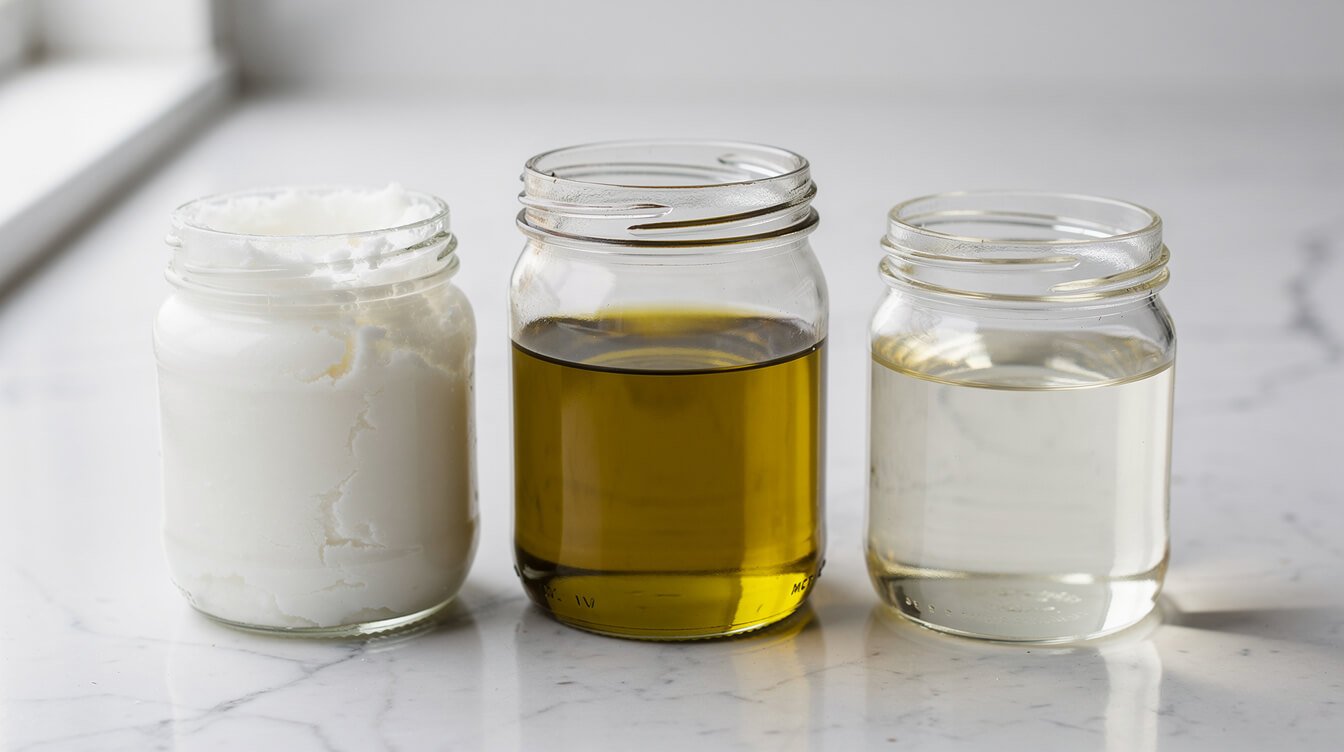
Google’s AI answer for this search says coconut and MCT oil “absorb THC most efficiently.” You’ll see the same line on plenty of recipe blogs. We couldn’t find a study that supports it for home cooking, and there’s a simple reason it probably doesn’t matter: at kitchen ratios, you’re nowhere near the limit of what any of these oils can hold.
Here’s the math. Seven grams of 20% flower contains at most 1,400 mg of THC. A cup of oil weighs a bit over 200 grams, so even a perfect extraction puts you around 0.6–0.7% THC by weight. In a 2022 study of Italian pharmacy cannabis oils, the preparations tested out between about 0.3% and 1.5% total THC by weight (Morano et al., 2022), and pharmacies use olive oil and MCT oil as their standard bases. THC is extremely fat-soluble. Any of these fats will take up what your flower has to give, so pick the oil for the food you’re making.
- Coconut oil is very high in saturated fat and solid at cool room temperature, which makes it the easy swap for butter in baking. Refined coconut oil tastes neutral, and unrefined tastes like coconut. It’s also the easiest oil to separate from water, because it sets hard in the fridge.
- Olive oil is the savory pick: salad dressings, a drizzle over pasta, dipping bread. Extra-virgin has the best flavor and the lowest tolerance for high heat, so treat it as a finishing oil. It goes cloudy and thick in the fridge, which is normal and clears at room temperature.
- MCT oil is a refined coconut-derived oil that stays liquid even when cold and tastes like nothing. That makes it handy for measuring by the teaspoon and stirring into foods, and it’s why tincture-style products often use it. (If you want a true alcohol tincture instead, see our guide on how to make cannabis tincture.) “Absorbs better” isn’t a reason to choose it. “Liquid and flavorless” is.
One real thing about fat and absorption: eating THC with fat matters. In a 2016 rat study, giving THC together with dietary lipids raised blood exposure about 2.5-fold compared with a lipid-free formula (Zgair et al., 2016). That’s an argument for fat in general, which every canna oil already is. It doesn’t rank one oil above another. It’s also a reminder that an oil-rich dish can land harder than you’d expect, so dose by the math, not by feel.
Decarb first, or the oil won’t do much
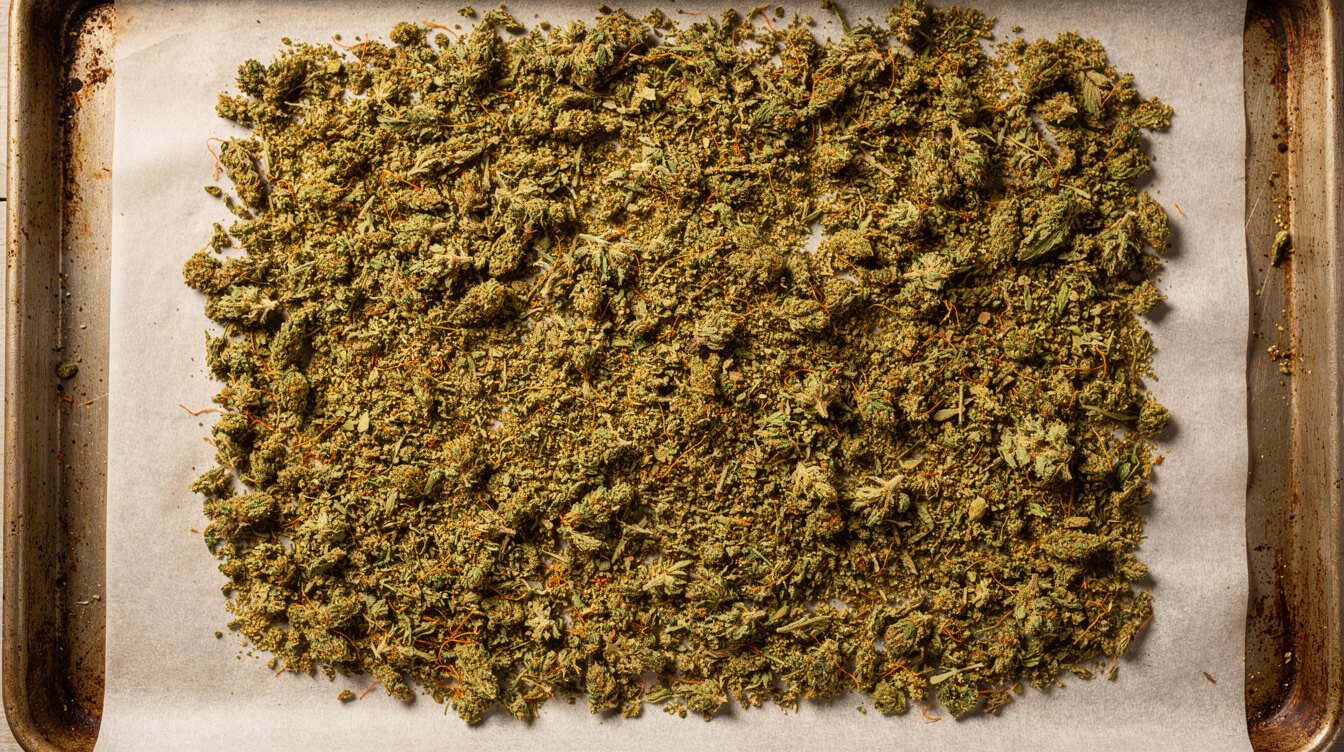
Raw cannabis is mostly THCA, which isn’t intoxicating. Heat turns it into THC. That step is called decarboxylation, and it happens before the oil goes in. We’ve covered it in depth in our decarb temperature and time guide, so here’s the short version: 240°F for about 40 minutes, until the flower is light golden-brown and dry.
Some recipes say you can skip the decarb and just infuse longer. The pharmacy data says that’s a bad bet. A 2020 analysis of 8,201 Italian pharmacy cannabis oils compared the four standard compounding methods. The two methods that skip a separate decarb and heat the flower directly in oil (98°C/208°F for 1 hour, and 110°C/230°F for 2 hours) left a large share of the cannabinoids in their acid forms, and the ratio varied widely from batch to batch. The methods that decarbed first came out almost fully converted (Dei Cas et al., 2020). A home stovetop at 180°F is cooler than either of those no-decarb methods, so “it’ll convert in the oil” is even less likely in your kitchen.
For what it’s worth, the pharmacy decarb settings sit right where ours do. The most-used method decarbs at 115°C, which is 239°F, for 40 minutes. Another lab method used 145°C (293°F) for 30 minutes, which is hotter and shorter and costs more terpenes. Our decarb guide walks through that trade-off.
The infusion: how long and how hot, according to the lab data
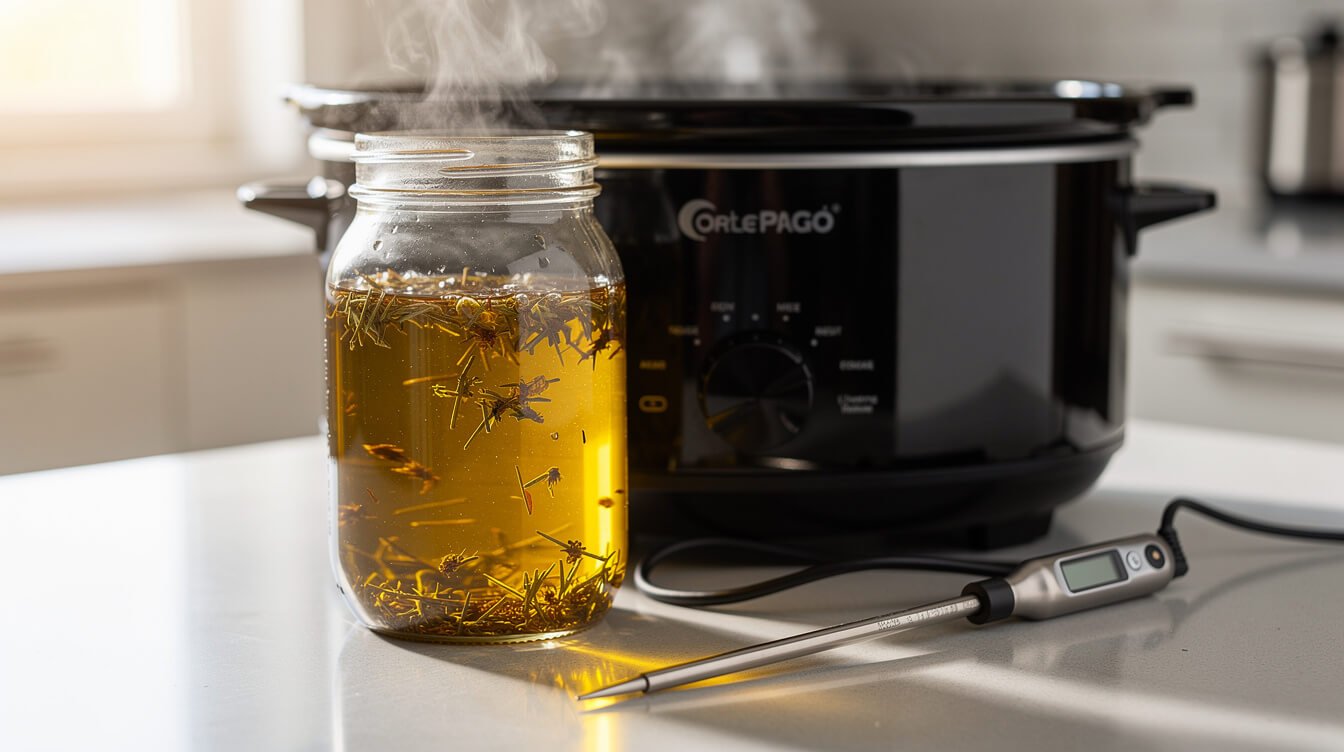
This is the step where the internet disagrees most. Here’s what the top-ranking pages told us to do with the same cup of oil:
- 1 to 3 hours at 130–150°F
- 2 to 3 hours at 160–200°F on the stove, or 6–8 hours in a slow cooker
- 4 hours in a 185°F water bath
- 4 hours if decarbed, 8 if not
- 4 to 6 hours, though one author says 12 worked fine
- 18 hours “for a full extraction”
None of them cite anything. So here’s what the measured data shows.
What pharmacy labs actually do
Italian pharmacists make cannabis olive oil to standardized protocols, and researchers have tested thousands of those batches. The most common method in the 8,201-oil analysis (used for 28.8% of samples) decarbs first, then extracts the flower in oil heated in a boiling water bath (100°C, 212°F) for just 40 minutes. The two no-decarb methods heat the flower in oil for 1 to 2 hours, and the fourth uses 30 minutes of ultrasound (Dei Cas et al., 2020). Across 4,774 tested oils, those methods captured roughly 58–86% of the flower’s THC, depending on the method and the cannabis variety.
So professionals working at a hotter temperature than most home cooks get most of the available THC out in 40 minutes to 2 hours. There’s no published evidence that 8, 12, or 18 hours pulls meaningfully more THC into the oil. A long soak mostly pulls more chlorophyll and plant flavor.
Our recommendation
Because a home infusion usually runs cooler than a 212°F lab water bath, give it a bit longer: about 2 hours with the oil between 160°F and 200°F. That’s the middle of the evidence, and it matches how our cannabutter method works. Going to 3 or 4 hours won’t hurt anything except the flavor. Going much past that isn’t buying you potency anyone has measured.
The water bath is your safety net
The easiest way to keep the temperature honest is to never put the oil over direct heat. Use a double boiler, or set a lidded mason jar in a pot or slow cooker of hot water. Water can’t get hotter than 212°F at sea level, so the oil can’t scorch. Clip a thermometer in the water and keep it steaming but not at a rolling boil. Coconut and olive oil can reach their smoke points over a direct burner, and smoking oil means you’ve damaged both the oil and the cannabinoids.
GanjaTech, weekly
Cannabis, explained. In your inbox.
One email a week: the clearest explainers, honest gear picks, and what the science actually says. 21+ only. No spam, unsubscribe anytime.
Straining, squeezing, and the water method
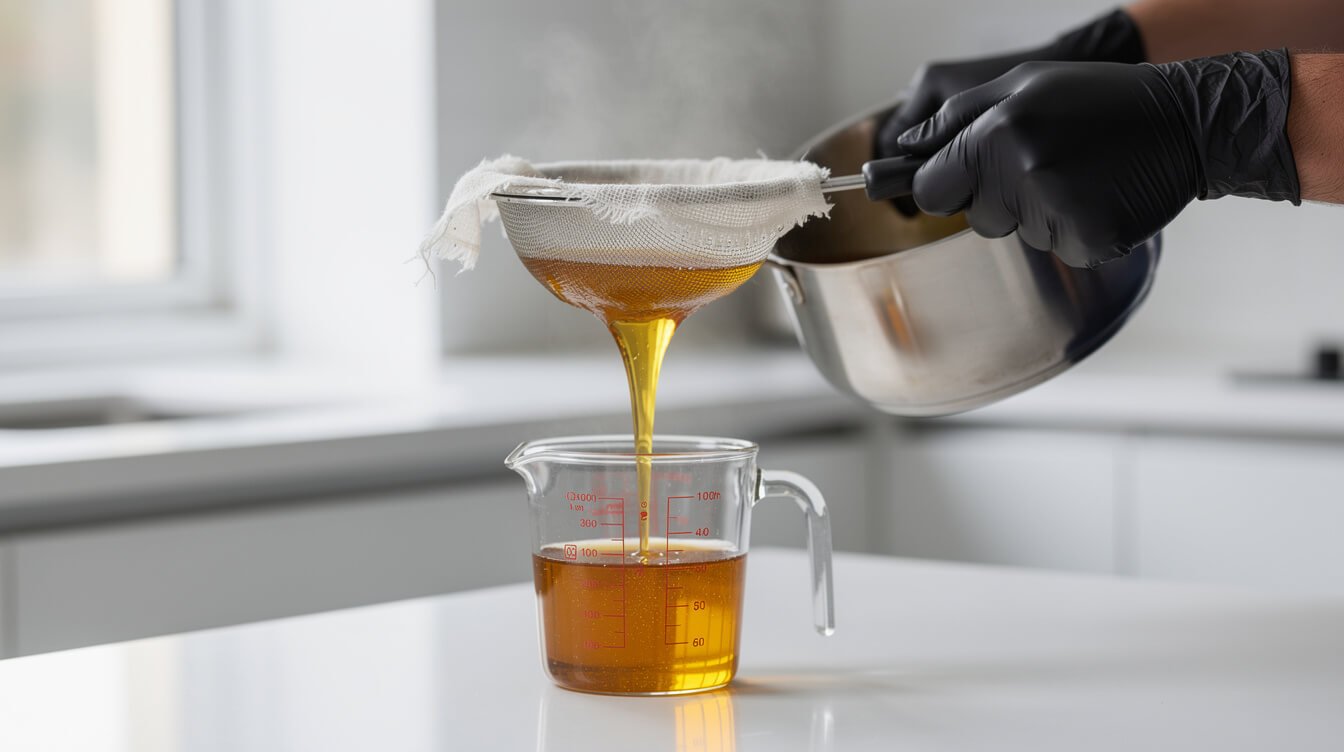
Once the time is up, let the oil cool until it’s comfortable to handle, then pour it through a fine strainer lined with two layers of cheesecloth, or through a nylon nut-milk bag, into a clean glass container.
To squeeze or not to squeeze
The plant material holds onto a surprising amount of oil, so you’ll get back noticeably less than you put in. Squeezing the cloth gets more of it back. The usual objection is that squeezing pushes more chlorophyll and fine plant particles through, making the oil greener and more bitter. That’s a flavor trade-off, not a safety one. Our take: press gently with the back of a spoon for a cleaner oil, or wring it out if you care more about volume than taste. Either way, measure how much oil you actually got back. You’ll need that number for the dose math.
The water method (and why it changes the storage rules)
Some recipes add a cup of water to the pot to stop the oil from scorching. Then you chill it so the fat separates from the water. It works, and some people find it mellows the grassy flavor. But it creates a problem: any water left in your oil gives microbes something to work with. If you use it:
- It’s easiest with coconut oil, which sets into a solid disk you can lift off the water. Pat the underside dry.
- Avoid it with olive or MCT oil, which don’t fully solidify in the fridge, so you can’t reliably separate every drop of water.
- Honestly, the jar-in-a-water-bath method already prevents scorching without putting water in the oil. For most people that’s the better choice.
How strong is your canna oil? One worked example
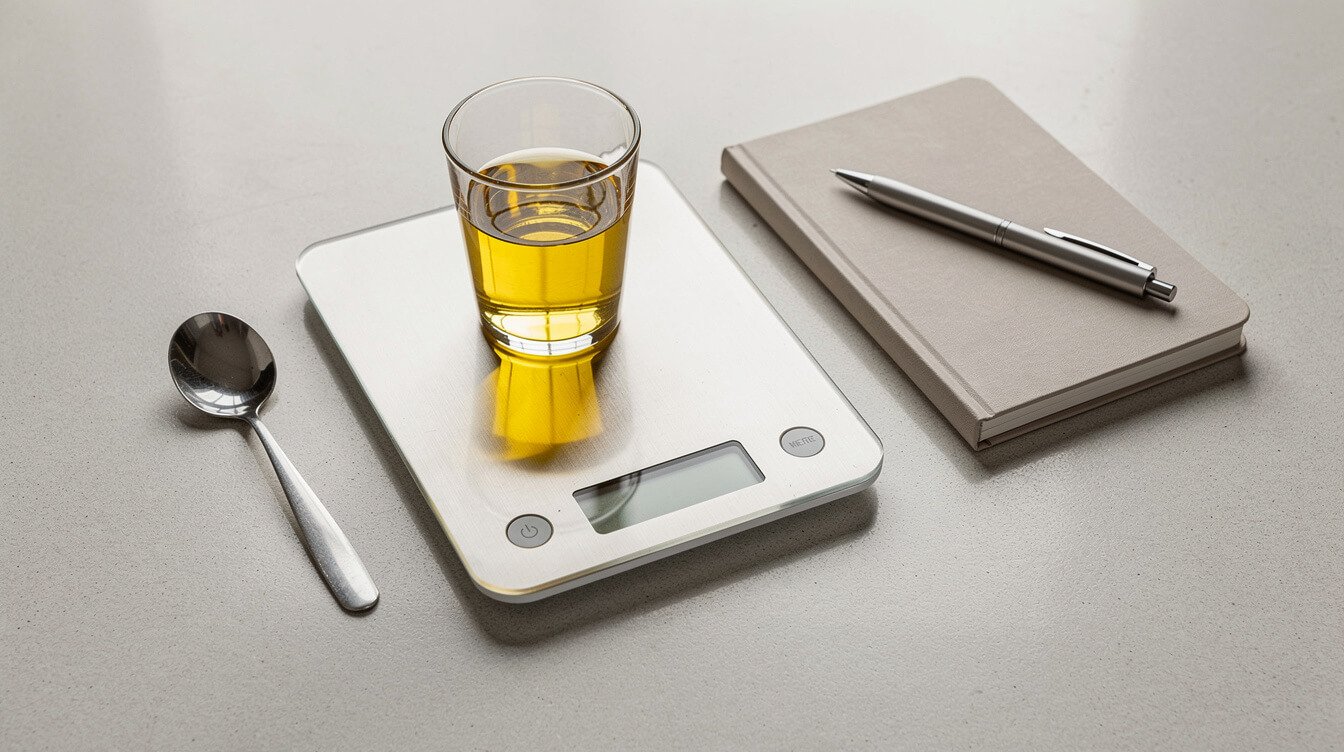
We wrote the full dose math, including which label number to use (Total THC vs THCA), in step three of our guide to making edibles. Here’s that math applied to this recipe:
- Flower: 7 g at 20% Total THC = 7 × 1,000 × 0.20 = 1,400 mg THC maximum.
- Oil: 1 cup = 48 teaspoons (16 tablespoons).
- Ceiling: 1,400 ÷ 48 ≈ 29 mg per teaspoon, or about 88 mg per tablespoon.
Two notes on that number. First, it’s a ceiling. The pharmacy oils above captured roughly 58–86% of the available THC, and a home batch carries more unknowns than a pharmacy one. Your real number is probably lower, and you can’t measure it at home. Second, losing oil in the strainer doesn’t really change the strength per teaspoon. The oil stuck in the plant carries away its share of THC along with it, so the oil you keep is roughly the same concentration. You just have less of it.
Now put 29 mg in context. In the Johns Hopkins oral-THC studies, a 10 mg brownie produced clear effects in infrequent users, and 25 mg produced pronounced effects with real impairment (we break those studies down in our weed brownies guide). One teaspoon of this oil is already above that higher line. A quarter teaspoon is about 7 mg at the ceiling, which is a sensible test dose for most adults. If that’s fiddly to measure, use less flower or cut the canna oil with plain oil.
Run your test like this: eat one measured small serving on an evening with nothing planned, and wait. In the Hopkins studies, effects showed up 30–60 minutes after eating and peaked around 1.5–3 hours. Our edibles timeline guide lays out the full curve. Don’t take more for at least 3 hours, don’t drive, and don’t mix in alcohol. If someone takes too much, our greening out guide covers what helps and when to get help.
Storage: how long canna oil keeps, and the food-safety rule recipes skip
This is the part we most want you to read, because it’s where the popular advice on how to make canna oil is weakest.
Potency holds up fine for a couple of weeks
The longest home-relevant potency data we found is short. Italy’s National Institute of Health made cannabis oil from decarbed flower and found that 80–85% of the starting cannabinoids were still there after 14 days, at both room temperature and fridge temperature. The worst case, THC in oil made from flower that hadn’t been pre-heated, fell to 72% (Pacifici et al., 2017). Oil held its cannabinoids far better than cannabis tea did. So potency isn’t the reason to keep a batch short. Food safety is.
Why “two to three months in the pantry” is the wrong advice
Canna oil is an herb-infused oil, and food-safety scientists treat those carefully. Oil seals plant material away from oxygen, and that low-oxygen, low-acid environment is where Clostridium botulinum can grow and make toxin. University of Georgia Extension’s guide to infused oils, which the National Center for Home Food Preservation points to, is blunt about it. Oil infused with non-acidified dried or fresh herbs must be kept in the refrigerator and discarded 4 days after it’s made, or frozen. It also notes that using dried herbs “still does not ensure” safety, because even small pockets of moisture can be enough (UGA Extension, Circular 1334).
Nobody has tested canna oil specifically, and well-dried, well-strained flower is probably on the lower-risk end. But “probably” is doing a lot of work there, and the consequences of botulism are severe. We’d rather give you the conservative rule from people who study this than a reassuring number nobody tested.
What we’d do
- Make small batches. Half a cup is plenty for most households.
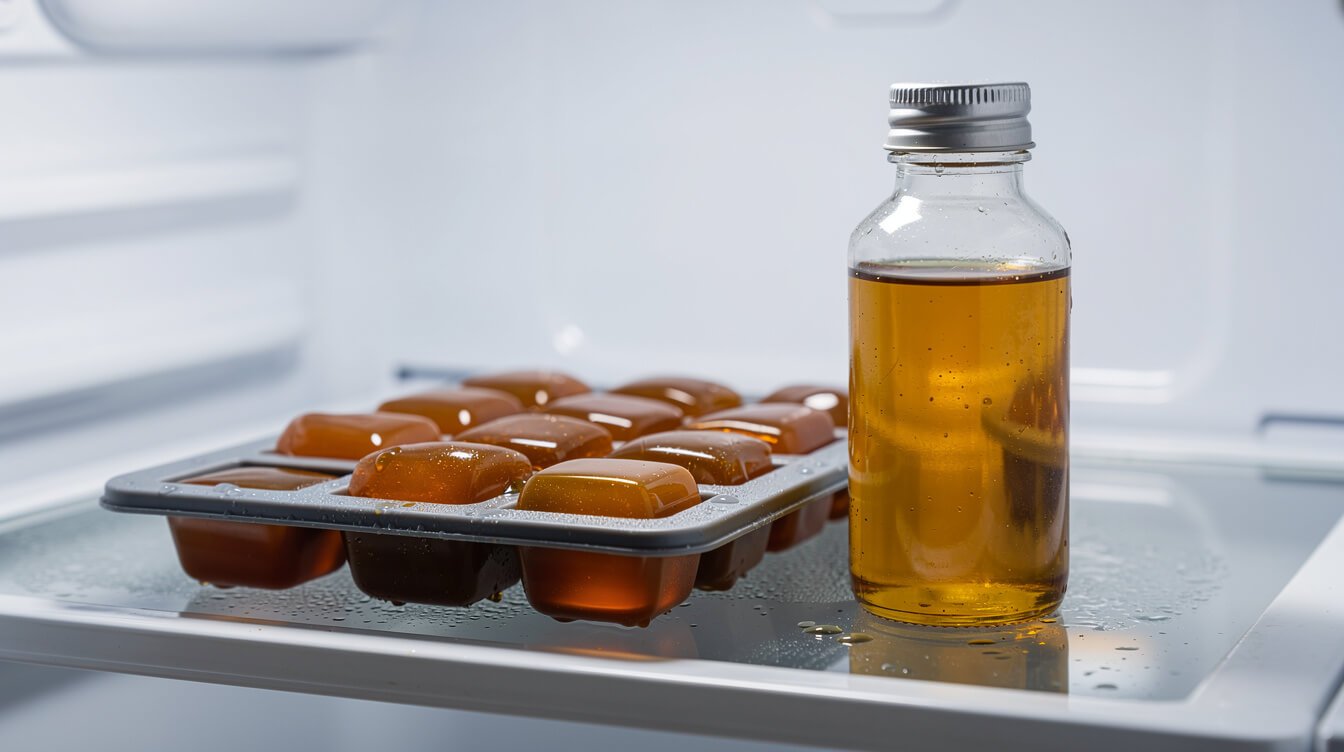
- Refrigerate what you’ll use in the next few days, in a clean, sealed glass jar.
- Freeze the rest in measured portions. A silicone ice-cube tray filled a tablespoon per cube means every cube has a known ceiling dose. Coconut oil freezes hard. Olive oil freezes to a soft solid, which is fine.
- Keep it dark. Oils oxidize and turn rancid faster in light and heat. Our guide to whether weed goes bad covers why light is the worst offender for cannabinoids too.
- Toss anything off. Throw out any oil that smells rancid, is fizzy, or has visible growth.
Label it and lock it away
Infused oil looks exactly like regular cooking oil. That’s the single biggest household risk with this recipe. Label every jar and every freezer bag clearly: “CANNABIS,” the date, and the mg ceiling per teaspoon. Store it somewhere kids, guests, and pets won’t reach, ideally locked. If a child eats some, call Poison Control at 1-800-222-1222, or 911 if they’re very drowsy, hard to wake, or having trouble breathing. Dogs are especially sensitive to THC. The Pet Poison Helpline is 855-764-7661.
How to make canna oil work in the kitchen
Making the oil is half the job. Using it well is the other half, and the main rule is simple: heat is fine, but direct high heat isn’t.
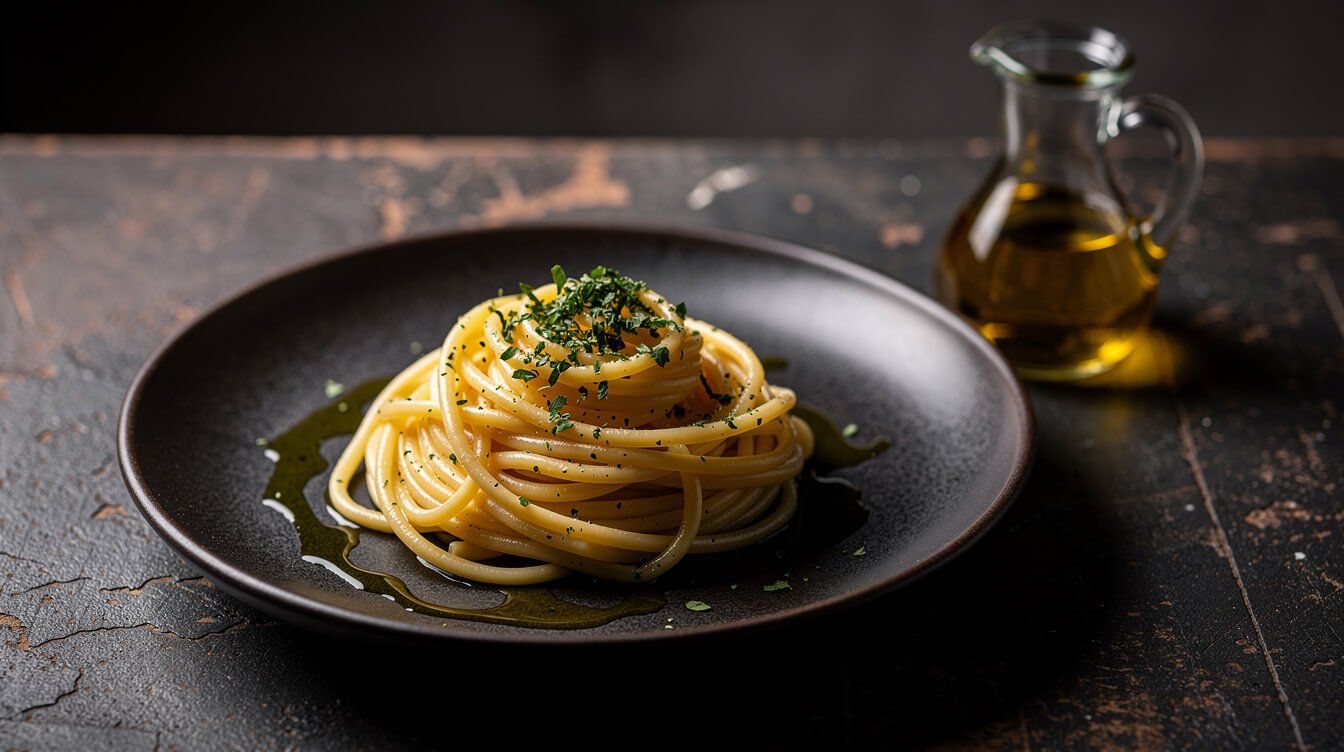
- Finish with it. Infused olive oil shines drizzled over pasta, soup, roasted vegetables, or toast after cooking. No heat means no loss and no smoke.
- Bake with it. Swap infused coconut oil for some of the fat in brownies, cookies, or bars. The oven air may be 350°F, but the inside of a moist bake stays near the boiling point of water. Our brownies guide explains why baking doesn’t “burn off” the THC.
- Dressings and dips. Whisk it into a vinaigrette or pesto, then shake or stir before every serving so the dose stays even.
- Skip frying and searing. Hot pans push oil past its smoke point, waste the infusion, and fill the kitchen with smoke.
Whatever you make, the dose rule from edibles carries over: mix the infused oil thoroughly with any plain fat in the recipe, portion by weight, and write the per-serving number down while you still know it. A plate of pasta shared four ways is only four even doses if you measured it that way.
How to make canna oil: FAQ
Can you make canna oil with olive oil?
Yes. Olive oil is one of the standard bases pharmacies use. It’s best for savory food and finishing, not frying. Expect it to go cloudy in the fridge, which is normal.
How much weed do you need to make canna oil?
There’s no single right amount. It depends on how strong you want the oil. Seven grams in a cup gives about a 29 mg-per-teaspoon ceiling at 20% THC, which is strong. Two or three grams in a cup gives a much more forgiving oil, around 8–12 mg per teaspoon at the ceiling. Do the math before you commit (section six).
How to make canna oil without it tasting like grass?
Use well-cured flower, don’t infuse much past 2–3 hours, strain through two layers of cheesecloth without hard squeezing, and choose a dish with strong flavors (chocolate, garlic, chili). Refined coconut oil or MCT oil adds no flavor of its own, so the cannabis taste is all that’s left. Olive oil helps mask it.
Does lecithin make canna oil stronger?
There’s no good evidence that it does. Lecithin is an emulsifier. It helps oil blend into water-based recipes like gummies and can help with texture. Claims that it boosts potency or absorption in people aren’t backed by human studies we could find. It’s optional, and leaving it out won’t hurt the oil.
Can I make canna oil from shake or trim?
Yes, but it’s weaker, and you’ll need more plant material for the same strength, which also means more grassy flavor. Our cannabutter-with-shake guide covers estimating potency from a mystery bag.
Why is my canna oil weak?
The usual causes, in order: the decarb was skipped or too short, the starting material was weaker than you thought, there was too much oil for the amount of flower, or the oil overheated. Infusing for 12 hours instead of 2 usually isn’t the fix.
How long does canna oil last?
Potency holds well for at least two weeks. For food safety, follow the infused-oil rule: refrigerate it and use it within about 4 days, or freeze it in labeled portions. Discard anything that smells or looks off.
Final thoughts
How to make canna oil really comes down to three numbers: 240°F for 40 minutes to decarb, about 2 hours at 160–200°F to infuse, and 4 days in the fridge before anything you haven’t frozen goes in the trash. The first two come from labs that test thousands of oils. The third comes from food-safety scientists who’d rather you be bored than sick.
Everything else is preference: coconut for baking, olive for finishing, MCT for measuring, squeezed or not. Do the dose math, test a small serving, wait three hours, and label every jar. If you’re ready to go further, our how to make edibles guide turns this oil into a full batch with even doses.
Great plant, good kitchen project. Respect it, know your local laws, and keep it away from anyone who didn’t ask for it.
Before you go
Get the next explainer first
We publish a new one every day. The best of the week, plus what's new in the shop, lands in one short email.