Does Weed Kill Brain Cells? What the Research on Adults Actually Shows
Does weed kill brain cells? For adults, the honest answer is: there’s no good evidence that it does, at least not in the way the old warning meant. No study of living adult humans has shown cannabis wiping out neurons. What the research does show is more interesting and more useful. THC clearly changes how brain cells work while you’re high and for a while afterward. Heavy, long-term use is linked to small but real differences in memory and brain scans. And a lot of the scary numbers floating around are either about teenagers or mis-cited.
This guide is for adults (21+) who want the study-by-study version: where the “kills brain cells” idea came from, what THC actually does at the receptor, what adult brain scans show, why many deficits fade after about three days off, and what the IQ numbers really say. Then the stuff you can act on. Reported findings only, no medical claims. If you’re worried about your own memory or focus, that’s a conversation for a doctor.
Does weed kill brain cells? The short answer
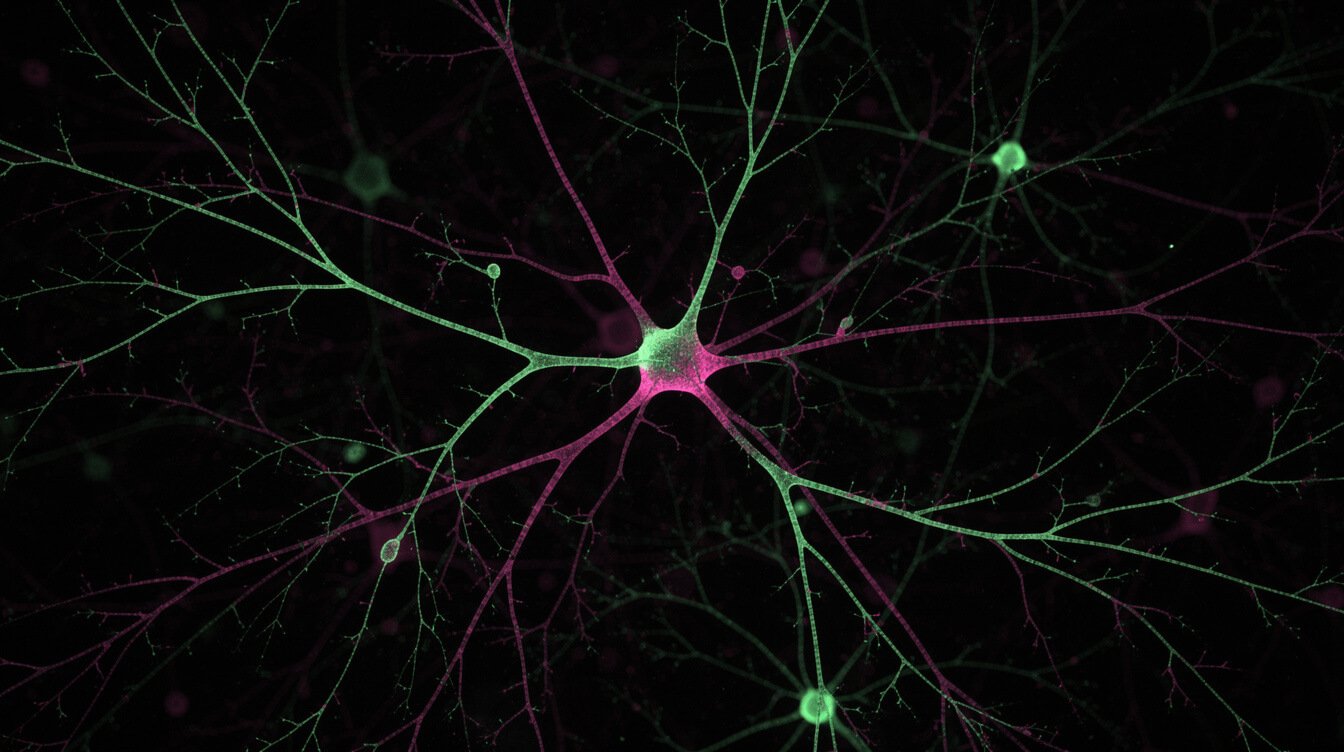
Here’s the whole picture in four lines, and the rest of the post backs each one up:
- Killing cells: In a dish, yes. A 1998 study found THC killed cultured rat hippocampal neurons. In living adult humans, there’s no direct evidence of cannabis-driven neuron death.
- Changing how cells work: Yes, clearly. THC acts on CB1 receptors that tune how neurons talk to each other. That’s the high, and it’s also the short-term memory fog.
- Long-term differences: Heavy, years-long use is associated with small differences in memory, IQ change, and brain structure. Whether cannabis causes them is still argued over, and the best causal test so far came up empty.
- Recovery: In adult studies, many deficits shrink or disappear after days to weeks of abstinence.
So “does weed kill brain cells” is mostly the wrong question. The better one is “does heavy use change how my brain works, and does that stick?” The answer there is “somewhat, for some people, and it depends a lot on how much, how often, and when you started.”
Why the dish result doesn’t settle it
The cell-death study is real, so let’s not wave it away. Chan and colleagues (1998) treated cultured rat hippocampal neurons with THC. Half died within 3 hours at 10 µM, or within 6 days at 1 µM. The authors argued the lower doses were comparable to human plasma levels after a joint.
But a dish isn’t a brain. Neurons in culture have no blood-brain barrier, no circulation to clear the drug, and none of the brain’s support cells. In blood, THC is 95–99% bound to plasma proteins, so comparing a dish concentration to a blood level is rough at best. That’s why researchers moved on to living animals, and why the human studies below matter more.
Where the “weed kills brain cells” idea came from

Most of the myth traces back to one primate study from 1980. Psychiatrist Robert Heath and colleagues exposed 21 rhesus monkeys to marijuana smoke or intravenous THC for months. Some of the monkeys had electrodes implanted in their brains. The team reported abnormal deep-brain recordings and changes under the electron microscope (at synapses and inside cells), and concluded THC “can produce permanent alterations in brain function and structure.”
Notice what that abstract does not say: it doesn’t report a count of dead neurons. It reports structural changes. That nuance got lost fast, and “permanent alterations” became “kills brain cells” in public messaging through the 1980s.
What happened when the government re-ran it
The US National Center for Toxicological Research (NCTR) ran a bigger, longer follow-up. Rhesus monkeys inhaled smoke from one 2.6% THC joint a day, 2 or 7 days a week, for a full year. About seven months after the last exposure, the researchers examined their brains:
- Ali et al. (1991) found no changes in neurotransmitter concentrations in the monkeys’ caudate, frontal cortex, hypothalamus, or brain stem.
- Westlake et al. (1991) found chronic exposure “fails to irreversibly alter” the brain’s cannabinoid receptors, in both rats and monkeys.
Rats are another story. In a 1987 NCTR rat study, animals given 10–60 mg/kg of THC by mouth every day for 90 days showed shrunken CA3 hippocampal neurons and 44% fewer synapses at the highest doses. That’s a huge dose for a small animal, and the finding was about smaller cells and fewer connections, not a pile of dead ones.
The suffocation story you’ll see repeated
A lot of pro-cannabis pages say Heath’s monkeys were “suffocated” in gas masks, and that oxygen starvation, not THC, did the damage. Maybe. We couldn’t find a primary source for it, so we’re not repeating it as fact. The cleaner rebuttal is the one above: the follow-up studies with better methods didn’t reproduce lasting damage.
Killing cells vs. changing how they work: what THC actually does
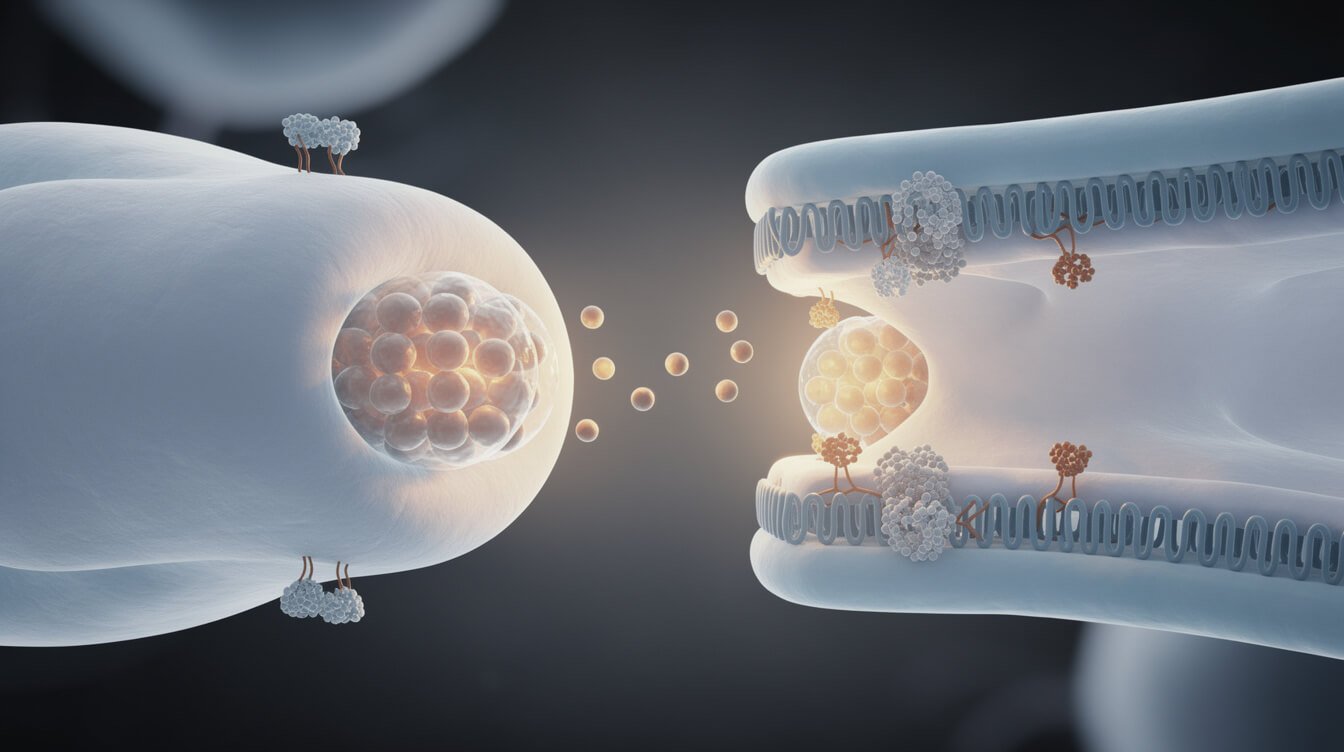
THC works by fitting into the CB1 receptor, part of the body’s endocannabinoid system. CB1 receptors are packed into the hippocampus (memory), prefrontal cortex (planning and focus), basal ganglia and cerebellum (movement and timing), and reward circuits. Their normal job is a brake pedal. Your own endocannabinoids fire backward across the synapse and tell the sending neuron to ease off on releasing its signal.
THC presses that brake harder, longer, and everywhere at once. That’s the high, and it explains the classic side effects: time stretches, short-term memory slips, and coordination dulls. (The same receptor system drives the munchies, and it’s why weed doesn’t fit neatly into stimulant or depressant.)
The CDC’s brain-health page frames the short-term window as “recent cannabis use (defined as within 24 hours),” with effects on thinking, attention, memory, coordination, movement, and time perception. That impairment is real, and it’s the one with the most immediate consequences, which is why the driving clock matters more than any brain-scan headline.
Downregulation: the “change” that does reverse
With daily use, the brain turns down its CB1 receptors to compensate. That’s tolerance. It’s a change in how cells work, not cells dying, and brain-imaging work shows receptor availability starts recovering within days of stopping. Our t break guide walks through the receptor timeline in detail.
What brain scans of adults actually show
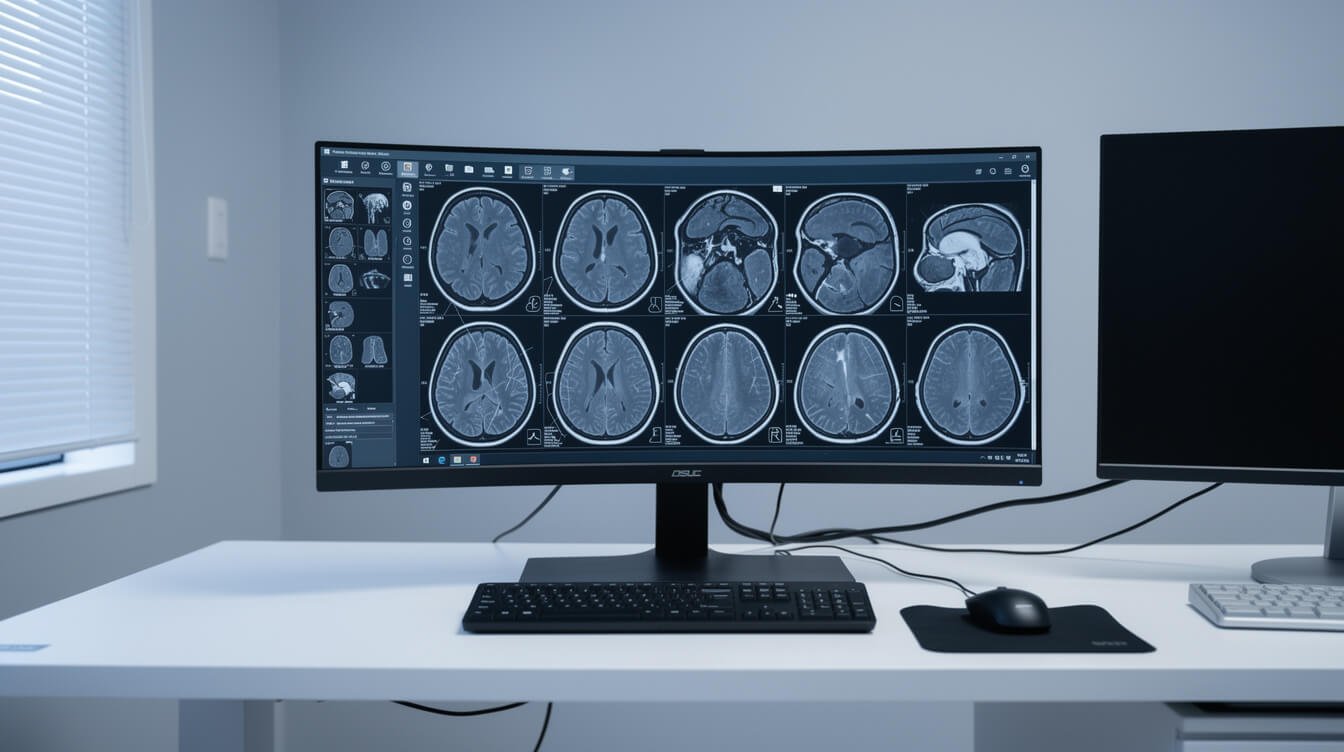
Here’s where most pages on this topic go wrong: they answer an adult question with teenage or prenatal data. So here are the adult studies, one at a time.
Gowin et al. 2025: the big working-memory study
Researchers at CU Anschutz used the Human Connectome Project to scan 1,003 adults aged 22 to 36 (mean 28.7) across seven brain tasks. Heavy lifetime users, meaning more than 1,000 uses (88 people), showed lower brain activation during a working-memory task (Cohen’s d = −0.28, a small effect). The other six tasks (reward, emotion, language, motor, relational reasoning, theory of mind) showed no link with heavy lifetime use. Recent use, checked by same-day urine tests, was tied to poorer working-memory and motor results, but those brain-activation links didn’t survive statistical correction.
Read straight: one small, specific signal in the heaviest users, and nothing on most tasks. It’s a cross-sectional snapshot, so it can’t prove cannabis caused the difference.
Ishrat et al. 2024: the genetics test
This is the study behind the Oxford headline “Brain changes seen in lifetime cannabis users but may not be the cause.” Using UK Biobank scans, it compared 3,641 lifetime users (mean age 61) with 12,255 non-users. Users showed weaker white-matter integrity (in the corpus callosum) and weaker connectivity in some resting-state networks.
Then the team ran a Mendelian randomization analysis, which uses genetic variants as a stand-in for cannabis use to test for cause and effect. It found no support for causal relationships. The authors concluded the associations “are probably not causal in nature and might represent residual confounding.” Their caveat is fair: few people in the sample were heavy or dependent users, and the genetic method has less power to spot small effects.
Meier et al. 2022: the hippocampus finding
The Dunedin study followed 1,037 New Zealanders from birth to age 45. Long-term cannabis users had smaller hippocampal volume. But the smaller volume did not statistically explain their cognitive deficits. A difference showed up on the scan, and it wasn’t the thing driving the test scores.
And one study that points the other way
A 2026 UK Biobank analysis by Guha et al. looked at adults aged 40–69. It found lifetime use associated with larger volume in CB1-rich regions and better scores on some learning and speed tests. Treat that as conflicting observational data, not good news. It’s the same kind of correlational design as the studies above, and it can’t tell you cannabis does anything good for a brain. What it does show is how unsettled the adult imaging picture still is.
GanjaTech, weekly
Cannabis, explained. In your inbox.
One email a week: the clearest explainers, honest gear picks, and what the science actually says. 21+ only. No spam, unsubscribe anytime.
The 72-hour finding: why many deficits fade

If you only remember one study from this post, make it this one. In 2018, a University of Pennsylvania team pooled 69 studies of 2,152 frequent cannabis users and 6,575 comparison participants. They found a small overall cognitive gap (d = −0.25). Then they split the studies by how long participants had abstained before testing:
- Studies requiring more than 72 hours of abstinence (15 studies, 928 people): d = −0.08, not statistically different from zero.
- Studies with shorter or no abstinence requirement (54 studies): d = −0.30.
The authors’ read: reported deficits “may reflect residual effects from acute use or withdrawal,” and earlier research “may have overstated the magnitude and persistence” of the deficits. One honest caveat: the cannabis users in that meta-analysis averaged 20.6 years old, so it’s young-adult data, not a 35-year-old’s.
The adult version: Pope 2001
For older adults, the best match is a Harvard McLean study of people aged 30 to 55. It compared 63 current heavy users (5,000+ lifetime uses, smoking daily), 45 former heavy users, and 72 controls, with urine-monitored abstinence for 28 days. At days 0, 1, and 7, current users scored lower on word-list recall. By day 28, there were “virtually no significant differences among the groups on any of the test results,” and no link between lifetime use and scores. The authors’ conclusion: deficits looked “reversible and related to recent cannabis exposure rather than irreversible and related to cumulative lifetime use.”
An earlier 2003 meta-analysis of adult studies by Grant and colleagues landed nearby. It found no effect in six of eight cognitive domains, with small decrements in learning and forgetting new information among chronic users.
So the pattern across adult studies: the fog is real while you’re using, and much of it lifts with time off. That’s also the practical case for a tolerance break if your memory feels dull.
The IQ numbers, checked

You’ll see “cannabis drops IQ by 8 to 10 points” all over search results for this question. We checked where that number comes from.
The 8-point figure is real, and it’s narrower than it sounds
It comes from the Dunedin cohort’s 2012 PNAS paper by Meier and colleagues. The 8 points applied to a specific subgroup: 23 people who started using in adolescence and kept using persistently up to age 38. The most persistent users overall (41 people) lost an average of 5–6 points. And the line that matters most for adults: “adult-onset cannabis users did not appear to experience IQ decline as a function of persistent cannabis use.”
One major health system’s article attributes an “8 to 10-point decline” to a link that goes to a 2014 review whose abstract contains no such number. We’d skip the “10.”
The age-45 update: −5.5 points
When the same cohort reached 45, Meier 2022 found long-term users averaged a 5.5-point IQ decline from childhood, plus poorer learning and processing speed. Those deficits weren’t present, or were smaller, among midlife recreational users and among people who quit. They also couldn’t be explained by tobacco, alcohol, or other drug use, childhood socioeconomic status, or family history.
The confounding debate
The Dunedin findings have critics. Economist Ole Rogeberg’s 2013 PNAS reanalysis showed that socioeconomic factors could reproduce the 2012 pattern, and argued “the true effect could be zero.” He also wrote it would be “too strong to say that the results have been discredited.” Twin studies add another wrinkle. In Jackson 2016 (a teen sample, so context only), cannabis-using twins didn’t lose more IQ than their non-using siblings, which points to family factors.
The fair summary: heavy, long-term, early-starting use is consistently linked to a few IQ points’ difference. Whether cannabis causes it is genuinely contested. For people who start as adults and use moderately, the evidence of IQ loss is thin.
What actually moves the risk for adults
Across these studies, a few factors keep showing up as what separates “small, fading differences” from “persistent problems.” None of this is medical advice, just what the research keeps pointing at.
Frequency beats lifetime totals
Daily, years-long use is where the adult signals live: Gowin’s 1,000+ use group, and Meier’s long-term users rather than its midlife recreational ones. Occasional use barely registers in these datasets.
Dependence matters
In Dunedin, risk tracked repeated diagnoses of cannabis dependence, not just having tried it. If you’re using more than you mean to, or feel off without it, that’s worth taking seriously. A t break is a good self-check, and our t break guide covers what to expect.
Potency is the open question
Most of these studies measured use in an era of much weaker flower. Ishrat’s team specifically flagged potency as something future research needs to cover. Nobody has good long-term brain data on daily dab use yet. If you’re dabbing or vaping concentrates every day, you’re past what the data can speak to.
Co-use with alcohol and tobacco
A 2021 review of alcohol and cannabis co-use found most studies linked co-use to worse cognitive and brain outcomes, though some found no difference and methods vary widely. Heavy drinking has its own well-documented brain associations (more below). If you mix weed and alcohol or roll with tobacco (blunts and spliffs), the brain question isn’t only about weed.
Timing: when you started
The biggest signals in the IQ data came from people who started in their teens. The brain keeps developing into the mid-20s, which is one more reason this site is 21+.
The practical harm-reduction list
- Don’t drive high. Acute impairment is the best-proven brain effect of all.
- Keep daily use in check if memory or focus matter for your work or school. Take regular breaks.
- Start low with high-potency products, and wait before redosing, especially with edibles.
- Don’t stack it with heavy drinking.
- Notice changes. If memory, mood, or motivation shift, talk to a doctor.
- Know your laws. Cannabis rules vary by state and country, so don’t assume it’s legal where you are.
Does weed kill brain cells? FAQ

Does weed kill brain cells permanently?
There’s no evidence it kills brain cells permanently in adult humans. Cell death has been shown in cultured rat neurons, and high-dose rat studies found shrunken neurons and fewer synapses. But the year-long NCTR monkey study found no lasting neurochemical or receptor changes, and adult human studies show mostly small differences that often fade with abstinence.
Can your brain recover after you quit weed?
For many adults, the research says largely yes. In Pope 2001, adults aged 30–55 with 5,000+ lifetime uses scored about the same as controls after 28 days off. In the Scott 2018 meta-analysis, the gap was essentially gone in studies requiring 72+ hours of abstinence. CB1 receptors also start recovering within days. The exception is people who started heavy use as teenagers: in Dunedin, quitting didn’t fully restore their scores.
Does weed kill brain cells if you only smoke occasionally?
Occasional adult use doesn’t show up as a meaningful signal in the major studies. The findings concentrate in heavy, long-term, often dependent use. You’ll still be impaired while high, so plan around that.
Does weed make you dumber?
While you’re high, yes, in the short-term memory and attention sense. That’s the CB1 brake at work. Long-term, the adult-onset data shows little IQ change. The few-point drops cluster in people who started early and used heavily for decades, and even those numbers are debated.
Is weed worse than alcohol for your brain?
Direct comparisons are rare, so be wary of anyone who answers this confidently. Two data points: in the Dunedin age-45 study, IQ deficits were specific to long-term cannabis users and absent or smaller in long-term alcohol users. On the other side, a UK Biobank study of 36,678 adults found alcohol intake linked to lower brain volume at as little as one to two daily units, getting stronger with more drinking. Different substances, different measures. Neither one gets a pass, and mixing them is its own issue.
Does CBD do the same thing?
CBD doesn’t activate CB1 the way THC does, so it doesn’t produce the high or the acute memory slip. Most of the research above is about THC-containing cannabis. Here’s the CBD vs THC breakdown.
Final thoughts
Does weed kill brain cells? Not in the way the 1980s warning claimed. That idea grew out of a small monkey study that later, better studies didn’t back up. The real picture for adults is less dramatic and more useful. THC clearly changes how your brain works while you’re high and for days afterward. Heavy, daily, years-long use is linked to small differences that may or may not be caused by cannabis. And a lot of the fog lifts with time off.
Use like an adult who knows that. Don’t drive high, keep daily use honest, take breaks, and pay attention if your memory or motivation changes. Laws vary, so know yours. Great plant. Respect it.
Before you go
Get the next explainer first
We publish a new one every day. The best of the week, plus what's new in the shop, lands in one short email.