How to Make Edibles: The 5-Step Guide That Does the Dose Math Honestly
Here’s the honest answer on how to make edibles: decarb your flower, infuse it into a fat, do the dose math, cook it evenly, and test one serving before you trust the batch. That’s it — five steps. Everything else is recipe choice. The steps aren’t where homemade edibles go wrong, though. They go wrong at step three, because most guides multiply the wrong number. Then they skip step five completely, and that’s how a “light” batch of cookies turns somebody’s evening into a long one.
This guide walks through all five steps, and it goes deepest on the parts other guides skip: which THC percentage you should actually be multiplying, why your answer is a ceiling rather than a dose, and why one cookie from a batch can hit noticeably harder than the one next to it. It’s for adults 21+ only, and only where home cannabis is legal for you. Laws vary a lot by state and country, so check yours before you start.
How to make edibles in 5 steps: the short answer
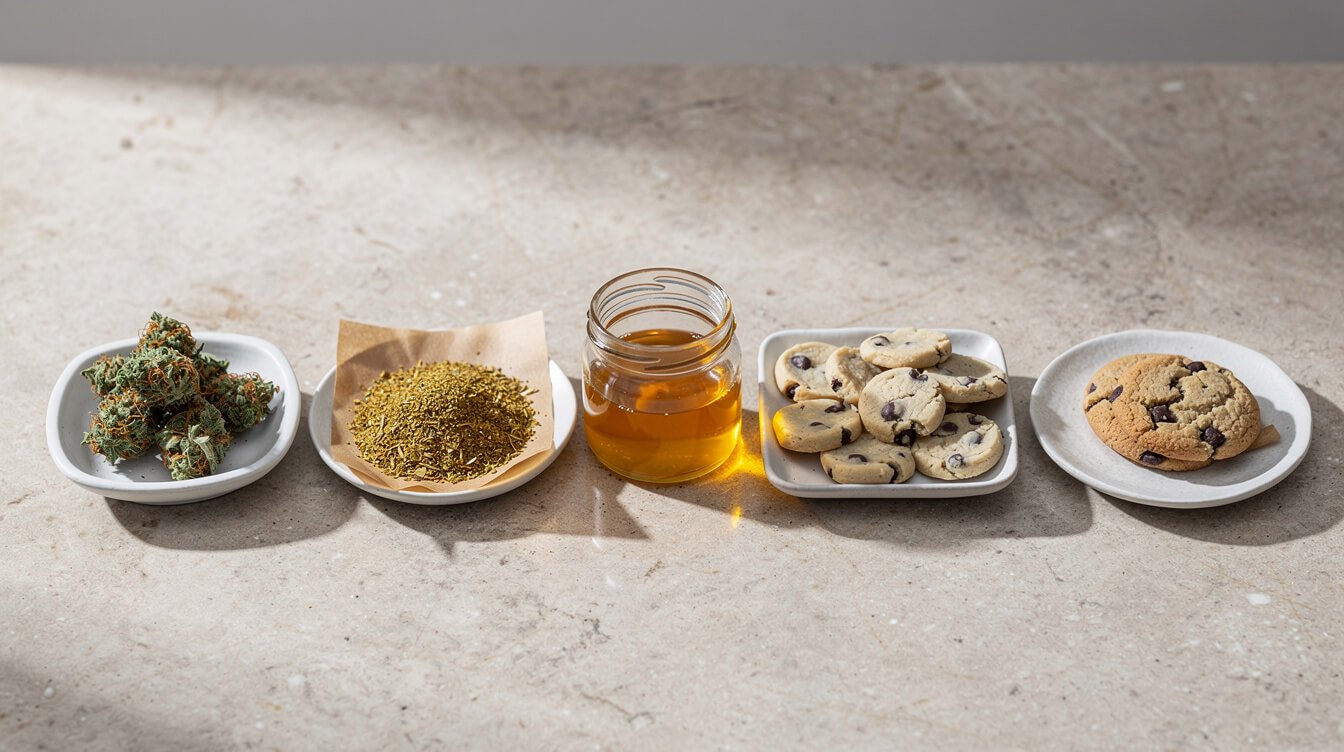
If you only read one section, read this one. Every homemade edible, from a brownie to a salad dressing, comes out of the same five steps:
- Decarb. Gently heat ground flower so the THCA in it turns into THC. Raw flower barely does anything when you eat it.
- Infuse. Steep the decarbed flower in a fat — usually butter, coconut oil, or olive oil — because THC dissolves in fat, not water.
- Calculate. Work out the most THC that could possibly be in the batch, then divide it by the number of servings. That’s your per-piece ceiling.
- Cook evenly. Mix the infused fat in thoroughly and portion by weight so every piece carries the same share.
- Test. Eat one serving and wait out the peak, which runs 1.5 to 3 hours after eating, before you decide what a “dose” of this batch actually is.
Steps one and two have their own deep-dive guides on this site, so this page covers them briefly and links out. Steps three through five are where most of the useful stuff lives, and they’re also where other guides tend to wave their hands.
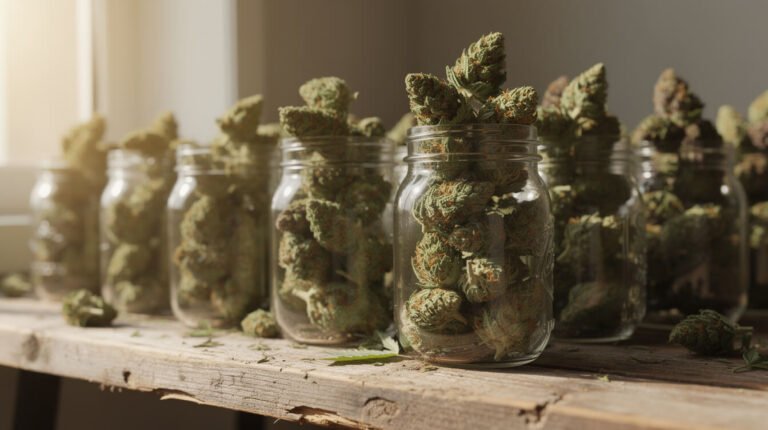
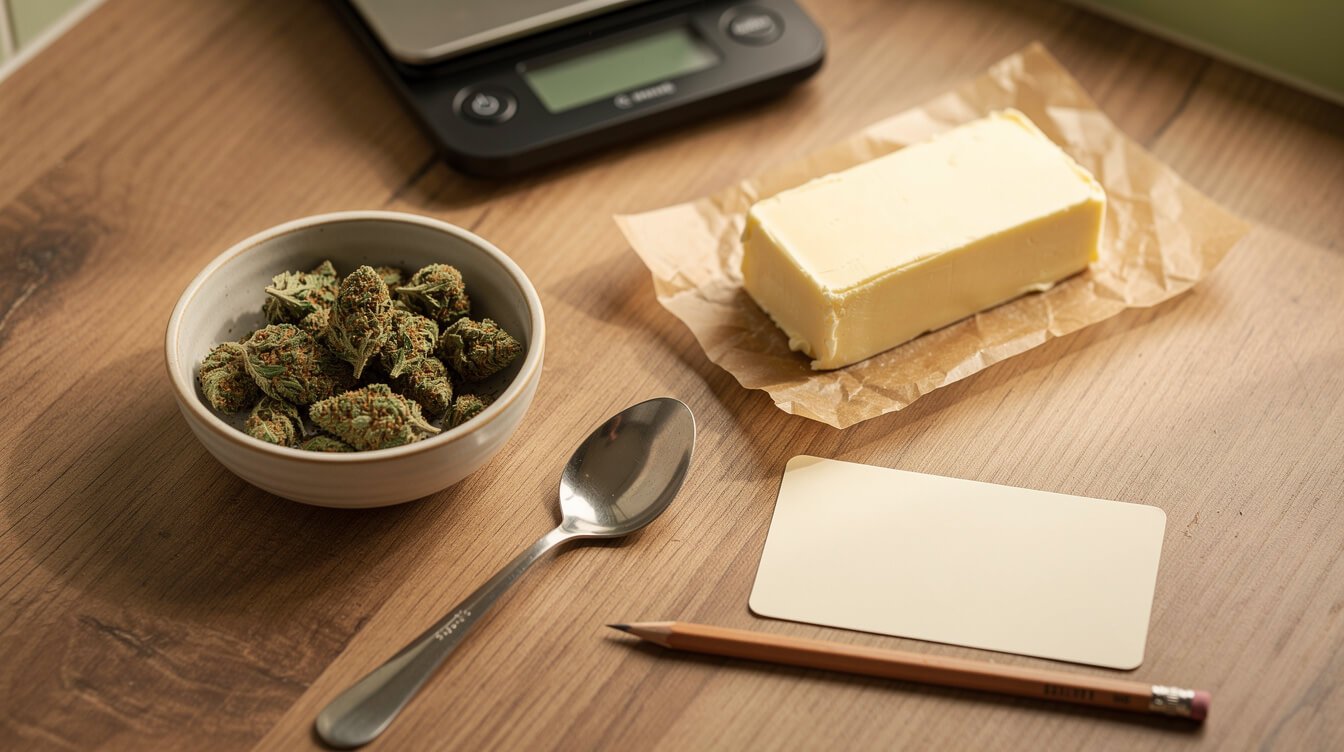
A note on what you need: a baking sheet and parchment, a pot or slow cooker, a fine strainer or cheesecloth, and — this one isn’t optional — a digital kitchen scale. You can’t do the math without weights. If your flower is still in buds, a grinder helps (our grinder guide covers which kinds are worth it). Aim for a medium grind. Powder makes the butter grassy and harder to strain.
Step 1: Decarb first, or nothing happens
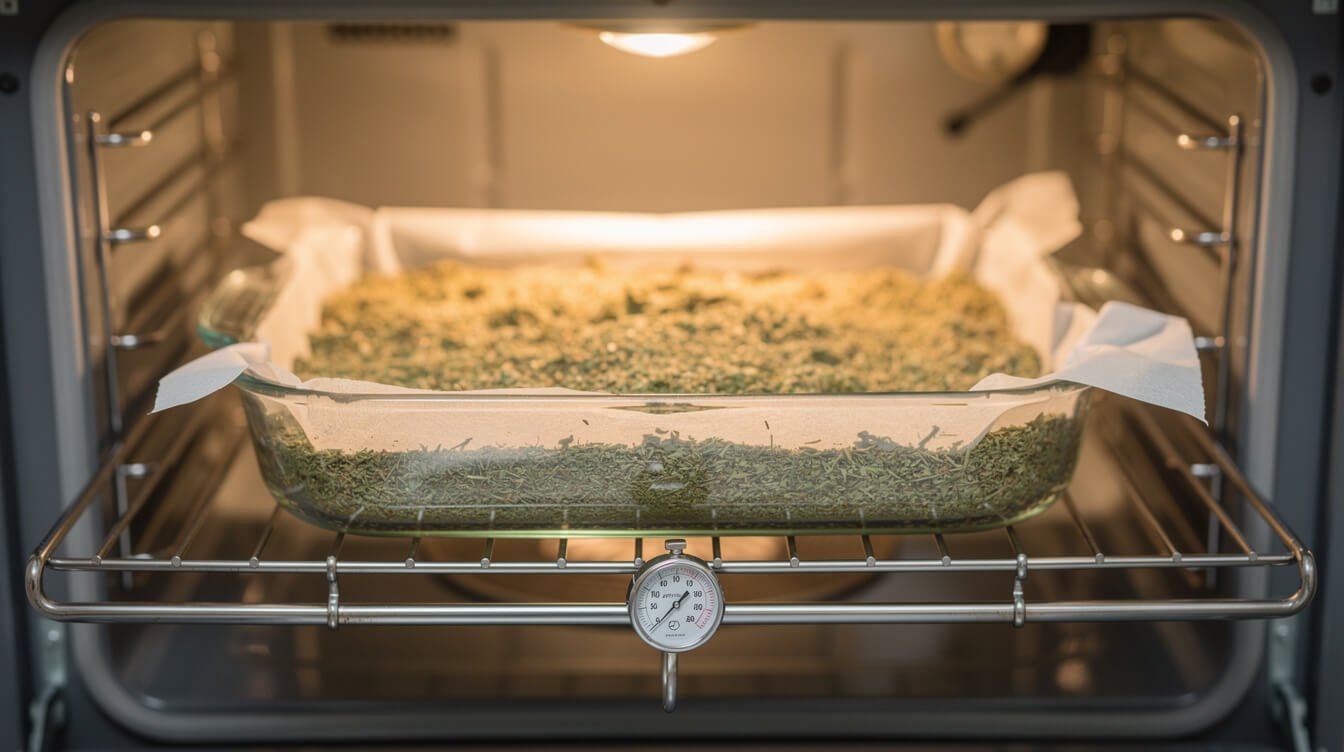
Every honest answer to how to make edibles starts here. Cannabis flower contains very little THC as it grows. What it mostly has is THCA, the acid form, which doesn’t produce the familiar high. Smoking or vaping converts THCA to THC on the spot, because the heat strips off a piece of the molecule called a carboxyl group, which leaves as CO₂. That’s “decarboxylation,” or decarb. When you eat cannabis, there’s no flame to do that job for you, so you have to do it in the oven first.
The chemistry here is cleaner than most kitchen projects. A University of Mississippi study of cannabis extracts found that THCA decarboxylation behaves as a simple first-order reaction — it goes “forthright with no side reactions or by-products” in the researchers’ words. Its speed depends on temperature and time. That’s good news. It means decarb is predictable, and the real choices are about trade-offs (hotter is faster but rougher on terpenes), not secret technique.
We’re deliberately not putting a temperature-and-time table here, because we already wrote a whole guide on exactly that: decarb temperature and time for edibles, including why the “right” answer depends on whether you care more about potency or flavor. Read that, pick your settings, and come back.
Two practical points before you move on:
- Decarb is never 100%. Home ovens drift, and some THCA always survives. Keep that in mind, because it matters for step three.
- Terpenes are fragile. Many of the aromatic compounds in cannabis evaporate well below decarb temperatures, so edibles rarely taste or feel exactly like the strain smelled. Our terpene reference explains what you’re losing and why.
If you’re working with kief instead of flower, the process is the same: decarb, then infuse. Kief is much stronger by weight, though, so your math changes. What kief actually is covers why.
Step 2: Infuse a fat (butter, coconut oil, or olive oil)
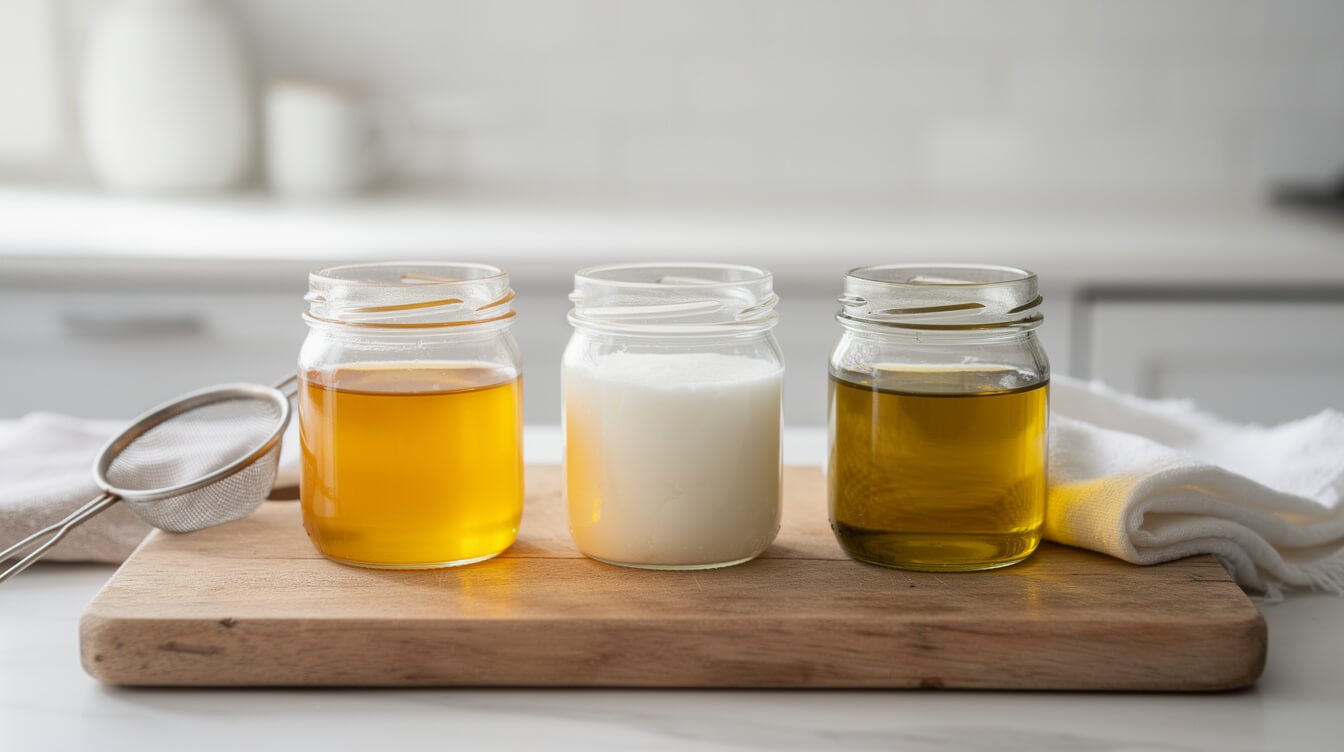
THC is fat-soluble and close to insoluble in water. PubChem lists its water solubility at a few milligrams per liter. That’s why every method for how to make edibles starts with a fat. You gently heat decarbed flower in the fat for a few hours, strain out the plant material, and the THC stays behind in the butter or oil.
Which fat you pick mostly comes down to what you want to cook:
- Butter is the classic, and it’s the right call for baking: cookies, brownies, and anything where butter is already in the recipe. Our cannabutter guide has the full method, including how to use cheaper shake and trim. One quirk: butter is roughly 80% fat and the rest is mostly water, so many people simmer it with a little extra water to keep it from scorching, then chill it and lift the fat off.
- Coconut oil is very high in saturated fat, solid at room temperature, and neutral if you buy the refined kind. It’s a good swap for butter in most baking. It’s also what most people reach for when they make gummies, but that’s a topic for its own guide.
- Olive oil is the savory option: dressings, drizzles, pasta finished at the table. It has a lower smoke point than you’d want for frying infused oil (more on heat in step four), so treat it as a finishing oil.
Infused oil is its own project, with its own straining and storage quirks, and we’ll give it a dedicated guide. For now, the method is the same shape as cannabutter: low heat, a few hours, strain well.
One honest note on the “how much flower per cup” question. You’ll see recipes that tell you to use a 1:1 ratio — a cup of flower to a cup of butter, or “a gram per stick.” Those ratios tell you nothing about strength. Two grams of 12% shake and two grams of 25% top-shelf flower give you very different butters. That’s why the next step exists.
Step 3: The dose math, and which number you’re multiplying
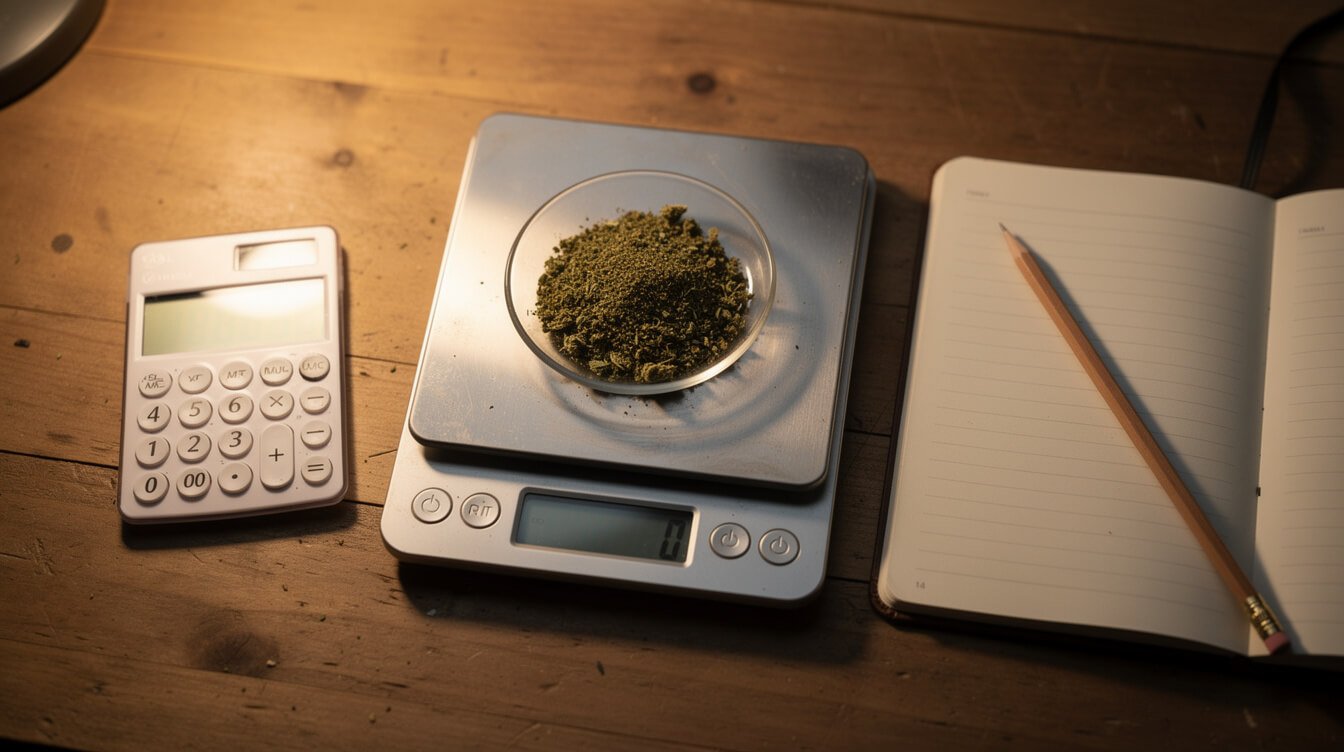
If you came here searching for an “edible dosage calculator,” this section is it — just done by hand, so you understand what the number means. The basic formula really is simple:
Grams of flower × 1,000 × THC fraction = maximum mg of THC in the batch.
Divide by the number of servings to get the maximum mg per serving.
So 3.5 grams (an eighth — see our weights guide if you’re converting) of flower at 20% THC works out to 3.5 × 1,000 × 0.20 = 700 mg of THC at the most. Bake that into 24 cookies and each one has a ceiling of about 29 mg.
Pause on that number, because it’s a lot. In the Johns Hopkins oral-THC trials, infrequent users who ate a brownie with 10 mg of THC felt clear effects without measurable impairment on the tests, while 25 mg and 50 mg produced “pronounced” effects and markedly impaired performance. A casual eighth in a standard cookie recipe lands each cookie above that higher line.
Which percentage are you actually multiplying?
This is the part of how to make edibles that almost every guide skips. Look at a regulated flower label or lab result and you’ll often see more than one number: THCA, THC (sometimes “Δ9-THC”), and Total THC. They aren’t interchangeable, and picking the wrong one throws your math off by double digits.
- THCA % is the acid form. When it decarbs, it loses that CO₂ group, and the molecule gets lighter. THC weighs 314.5 g/mol and THCA weighs 358.5 g/mol (PubChem), so even a perfect decarb leaves you only 0.877 grams of THC for every gram of THCA.
- THC % on a flower label is usually small, often under 1%. It’s only the part that’s already converted.
- Total THC is the number labs and regulated labels commonly calculate as THC + (0.877 × THCA). In other words, the 0.877 is already built in.
So the rule is:
- If your label lists Total THC, use it as-is. Don’t multiply by 0.877 again. Doing that makes your batch look weaker than it is, and “weaker than I thought” is the direction that gets people in trouble.
- If your label lists only THCA % (plus a small THC %), multiply the THCA by 0.877 and add the THC.
Here’s that worked through. Say a label reads THCA 22% and THC 0.5%. Total THC = 0.5 + (0.877 × 22) = 19.8%. If you’d added 22 + 0.5 and used 22.5%, your math would be about 14% too high. That’s an error in the cautious direction, but it’s still wrong. And if the label already says “Total THC 19.8%” and you multiply that by 0.877 again, you get 17.4%, which understates the batch.
Scaling a batch down to something sane
You have two easy levers:
- Use less flower. One gram at 20% Total THC is a 200 mg ceiling. Spread that over 24 cookies and you get about 8 mg each.
- Cut infused fat with plain fat. This is the more flexible option. Say your 700 mg batch went into one cup of butter (16 tablespoons). That’s about 44 mg per tablespoon at the ceiling. If you want 24 cookies at a 5 mg ceiling, you need 120 mg total, which is roughly 2¾ tablespoons of cannabutter, with the rest of the recipe’s butter plain. The cannabutter you don’t use keeps for the next batch.
Why the answer is a ceiling, not a dose
Every number above is a maximum. Real batches come in lower, by an amount you can’t measure at home:
- Decarb doesn’t convert all of the THCA (step one).
- Infusion leaves some THC behind in the plant material you strain out and in the cheesecloth.
- Some of the fat stays on the pot, the spoon, and the measuring cup.
- The label itself describes a tested sample, not necessarily every bud in your jar.
Some guides apply a flat “extraction efficiency” percentage to fix this. We won’t, because we haven’t seen a primary source that supports any single figure for home kitchens, and a made-up precise number is worse than an honest unknown. Treat the math as an upper bound that keeps you out of the 29-mg-cookie trap. Then let step five tell you what the batch really is.
GanjaTech, weekly
Cannabis, explained. In your inbox.
One email a week: the clearest explainers, honest gear picks, and what the science actually says. 21+ only. No spam, unsubscribe anytime.
Step 4: Cook it so every piece gets the same dose
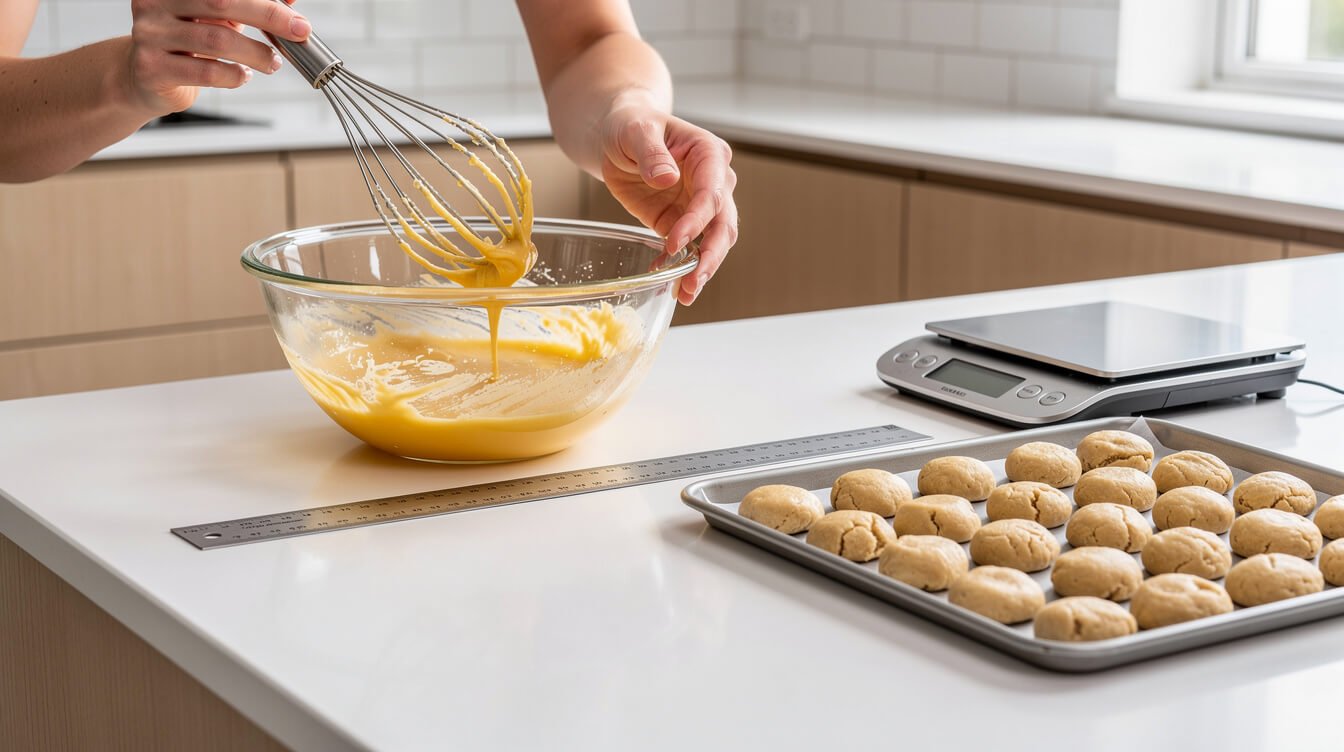
The question nobody seems to answer: why does one cookie from a batch barely register while the next one flattens you? Usually the cause isn’t mysterious “hot spots” in the flower. It’s that the infused fat wasn’t evenly spread through the food, or the pieces weren’t the same size. The per-serving math from step three only holds if both of those are true.
How to make edibles that dose evenly:
- Fully melt and stir the infused fat before you measure it. A solid block of cannabutter that cooled unevenly, or had water trapped in it, isn’t guaranteed to be uniform from top to bottom.
- Combine it with the other fats first. If the recipe calls for 8 tablespoons of butter and you’re using 3 infused, melt or cream all 8 together until they’re one consistent fat before any flour goes in.
- Mix a little longer than feels necessary. Streaks of butter in a dough are streaks of THC. With cookies, scrape the bowl down twice.
- Portion by weight, not by eye. Weigh the whole dough, divide by the number of cookies, and weigh each ball. For bars and brownies, bake in a pan with known dimensions and cut with a ruler.
- Write the number down while you still know it: total mg ceiling ÷ pieces = mg per piece.
Three easy starting formats
Baked goods. Cookies, brownies, and bars are the easiest place to start, because the recipe already uses a measured amount of fat and a fixed number of portions. A normal oven temperature is fine. The inside of a moist cookie or brownie stays far cooler than the oven air while it bakes. Brownies are popular enough to get their own walkthrough: our weed brownie recipe with a mg-per-square dose table.
Savory food. Infused olive oil in a vinaigrette, drizzled over finished pasta, or stirred into hummus works well. The rule is to finish with it rather than cook with it. Frying or sautéing in infused oil at high heat wastes THC and tastes scorched. Savory dishes are also harder to portion evenly, so measure the infused oil per plate rather than per pot.
Drinks. This is the tricky one. Since THC lives in fat and fat floats on water, infused butter or oil in a water-based drink separates, and the last sip can carry most of the dose. Use a fat-containing base like milk, cream, or hot chocolate, and shake or blend it well. Gummies are a whole technique of their own, and we’ll leave them for their own guide rather than rush them here.
Step 5: Test one serving before you trust the batch
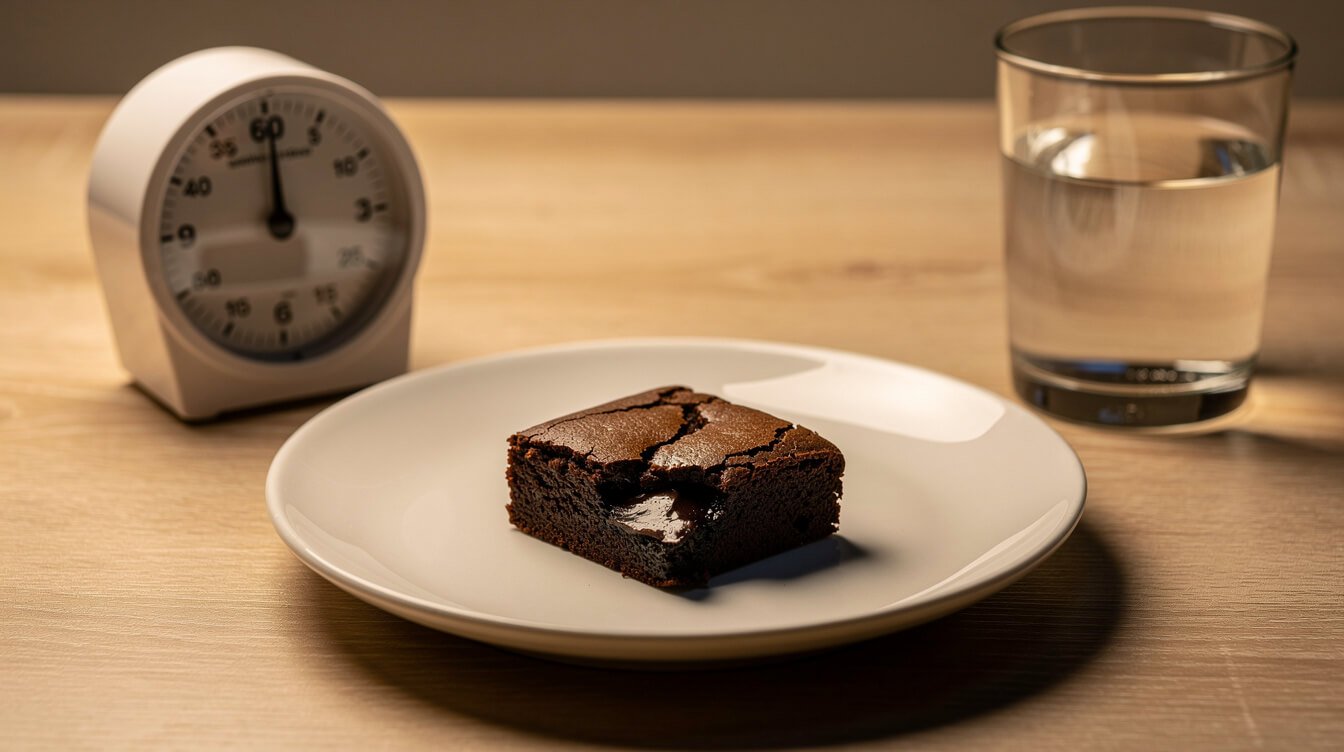
This is the step that separates a good batch from a bad night, and it’s also the step that guides on how to make edibles most often reduce to “start low and go slow.” That’s correct, but it isn’t a plan. Here’s the plan:
- Pick a quiet evening at home with nothing to do, nowhere to drive, and no plans to mix in alcohol or other substances.
- Eat one serving, or half of one if your ceiling is above about 10 mg or you’re new to edibles.
- Wait at least three hours before you eat more. In the Hopkins trials, oral effects didn’t show up until 30 to 60 minutes after eating, and they peaked at 1.5 to 3 hours. “I don’t feel anything after an hour” is normal, and it’s exactly when people take a second piece and then get both at once.
- Note what you felt at the peak, and whether it was too much, too little, or right. Write it on the label.
- Decide this batch’s dose from that, not from the math. If one piece was too much, the dose is half a piece, whatever the ceiling said.
Two things change how an edible lands. First, food. In a 2016 study in rats, giving THC with dietary fat raised blood exposure about 2.5-fold compared with a fat-free formulation. Human data on everyday meals is thinner. But the practical lesson holds: the same cookie can hit differently on an empty stomach than after a big dinner. Test under the conditions you’ll actually use it in, and keep them consistent.
Second, other things in your system. In a 2023 Johns Hopkins trial, a brownie with 20 mg of THC plus 640 mg of CBD produced higher blood THC levels and stronger effects than the same THC without CBD. That’s the opposite of the “CBD mellows it out” assumption. (Participants were also taking a cocktail of probe drugs, so read that as “interactions are real,” not as a precise multiplier.) If you take prescription medications, ask a pharmacist or doctor before using edibles. Drug interactions are their department.
For the full timeline — onset, peak, and how long the tail lasts — see how long edibles last. And if a test goes too far, what greening out is, and what actually helps is worth reading before you need it. The short version: stay put, hydrate, sit or lie down, and call 911 for chest pain, fainting, or trouble breathing.
Label it, store it, and lock it away from kids and pets
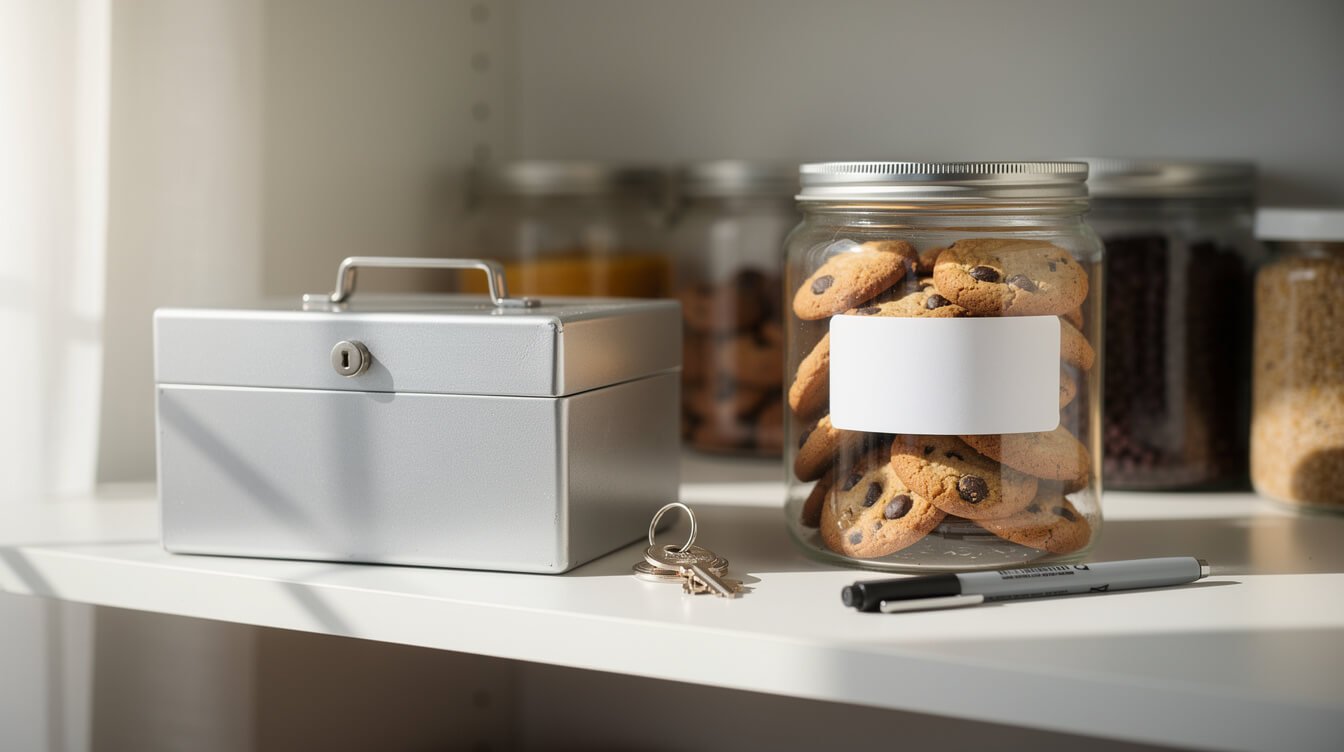
A homemade cookie looks exactly like a regular cookie. That’s the whole problem, and it’s why this section isn’t optional.
The numbers are sobering. An analysis of U.S. National Poison Data System records found that reported edible-cannabis exposures in children under six rose from 207 in 2017 to 3,054 in 2021, an increase of 1,375%. 97.7% happened at home, and 22.7% of the children were admitted to the hospital. Pets get into edibles too, and chocolate-based ones carry a second hazard for dogs.
What to do:
- Label everything. Put “Contains THC,” the mg-per-piece ceiling, your tested dose, and the date on the container — not just on a note somewhere.
- Use a locked box, not a high shelf. Kids climb. A small lockbox or a locking bag costs less than the flower in the batch.
- Don’t store edibles next to look-alike treats. Keep them apart from the regular cookie jar and out of the shared fridge shelf.
- Know the numbers. If a child or pet might have eaten some, call Poison Control at 1-800-222-1222 (US) or your vet right away. Don’t wait for symptoms. Call 911 for trouble breathing, seizures, or unresponsiveness.
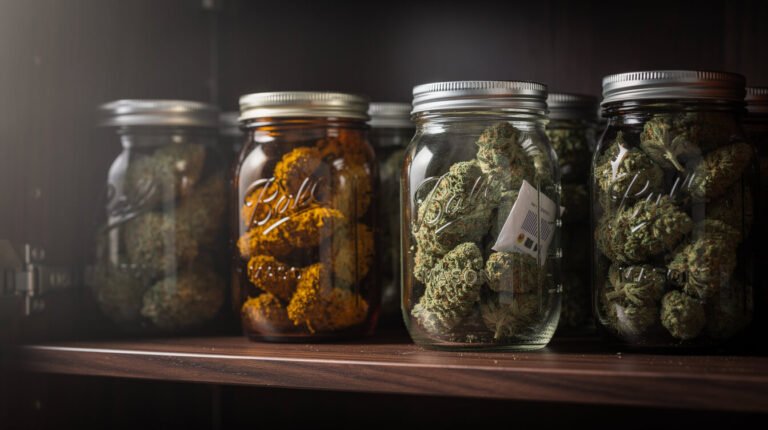
On storage itself, keep it simple: treat edibles like the food they are. Baked goods go in an airtight container. Anything with dairy or fresh ingredients goes in the fridge and follows normal food-safety timelines. Infused butter and oil keep best cold and dark.
And a line we’ll say plainly: homemade edibles are for your own adult use. Selling them, or handing them out at a party, is a different legal category almost everywhere, typically requiring a license where it’s allowed at all. Unlabeled edibles are also exactly how people get dosed by surprise. Laws vary by state and country, so know yours.
How to make edibles: FAQ
How to make edibles with weed you already have?
Weigh it, find its Total THC (or THCA %) if you can, then follow the five steps: decarb, infuse into butter or oil, do the math, cook evenly, test one serving. If you don’t know the potency, assume a high-ish number like 20–25% for modern flower and test extra cautiously. An unknown potency is exactly why step five exists.
Can you make edibles out of buds without decarbing?
You can, but they’ll be much weaker. Raw flower is mostly THCA, which doesn’t produce the usual high, and the gentle heat of an infusion converts only part of it. Decarb first. It’s the cheapest potency you’ll ever get.
How strong are homemade edibles?
As strong as your math, minus losses you can’t measure. A typical recipe using an eighth of 20% flower gives cookies with a ceiling near 29 mg each, which is well above the 10 mg that produced clear effects in clinical trials with infrequent users. That’s why we suggest scaling down and testing.
What’s the strongest way to make edibles?
Honest reframe: stronger isn’t the goal. Predictable is. The real levers are the amount of THC you put in and how evenly you mix it, and maybe what you’ve eaten. Lecithin is often sold as a potency booster. It’s an emulsifier that helps texture, and we haven’t found primary evidence that it makes edibles stronger in people, so treat that claim as unproven. Don’t attempt solvent extraction (butane, alcohol reduction over a flame) at home — that’s a fire risk, not a cooking technique.
How do I calculate edible dosage?
Grams of flower × 1,000 × Total THC fraction = max mg in the batch. Divide by servings for max mg per serving. If your label only shows THCA, multiply it by 0.877 first. If it shows Total THC, don’t. Then test one serving and let that, not the math, set the dose.
Final thoughts
If you remember one thing about how to make edibles, make it this: the recipe is the easy part. Decarb and infusion are just low heat and patience. The real skill is knowing what number you’re working with, knowing that it’s a ceiling, mixing so every piece carries the same share, and then letting one patient test serving tell you the truth about the batch.
Do it that way and homemade edibles become one of the most controllable ways to consume, because you set the dose, not a factory. Skip the math and the test, and they’re one of the easiest ways to have a much longer night than you planned.
Start low, wait the full three hours, label everything, and lock it up. Great plant — respect it, know your laws, and enjoy it responsibly.
Before you go
Get the next explainer first
We publish a new one every day. The best of the week, plus what's new in the shop, lands in one short email.