Cannabis Humidity Packs: How to Pick One (and When to Skip It)
Cannabis humidity packs are small two-way sachets that hold the air inside a sealed container at a fixed relative humidity, usually 58% or 62%, so your flower stops giving up its own moisture. That is the whole job. They are cheap, they work, and they are also the most over-prescribed item in the storage aisle.
Here is the part most guides skip. A pack does not add freshness, it holds a line. If your flower was dried and cured well and lives in a sealed glass jar in a dark cupboard, a pack buys you very little. If your flower is in a dispensary exit bag on a sunny windowsill, a pack cannot save it either, because the bag leaks and the light is doing the real damage. The band where two dollars of salt solution genuinely earns its place is narrower than the packaging suggests, and it is worth knowing before you buy a box of twelve.
So this is a buying guide that spends as much time on when to skip the purchase as on which one to get: what the packs do, including one piece of arithmetic nobody on page one runs, where 58 and 62 came from, how to size a pack, how the two brands differ, and whether they really hurt terpenes. Cannabis laws differ by state and by country, so check your own. Written for adults 21 and over.
What cannabis humidity packs actually do
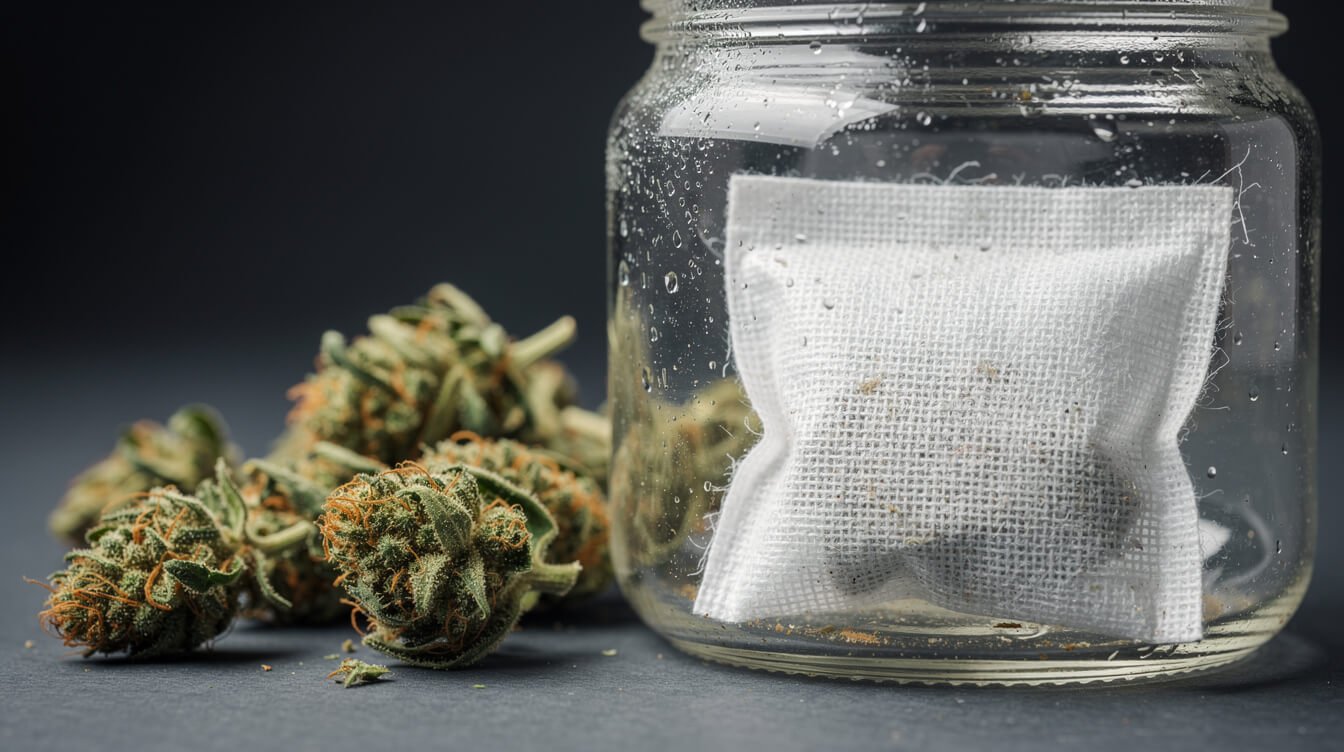
Inside the pouch is a saturated salt solution, or in some brands a salt-free gel, behind a semipermeable membrane. Saturated salt solutions have a useful property: as long as both solid salt and liquid are present, the air above settles at a fixed relative humidity set by the salt species, not by how much solution is left. That is why a pack has a set point at all, and why it holds that point until nearly spent instead of drifting down.
Two-way means exactly that
The membrane passes water vapor both ways. When the jar is drier than the set point, vapor leaves the pack; when it is wetter, vapor goes in. The system settles at equilibrium and holds there through lid openings, temperature swings, and the slow leak of an imperfect gasket.
That is what separates a humidity pack from the silica gel packet in a shoebox. Silica gel is a desiccant: it only pulls moisture out, has no target, and will dry an ounce of flower into dust. Ignore any advice to toss a loose silica packet in your stash.
The arithmetic nobody runs
Here is where the marketing and the physics part ways. A pack regulates air, so how much water is in that air?
A quart mason jar holding an ounce of flower has roughly 400 mL of headspace. At 68°F, saturated air holds about 17.3 g of water per cubic meter, so air at 62% relative humidity carries about 10.7 mg per liter. Multiply it out: the entire air volume in your jar holds about four milligrams of water. Four. That is a rounding error.
Now the other side. Properly cured flower runs 10% to 12% moisture content, so an ounce holds roughly three grams of water — about 700 times more than the air around it.
The pack is not humidifying your weed. It is holding the air at a set point so your weed does not have to donate its own water to fill the gap.
Why that changes the advice you have read
Three practical consequences fall out of those two numbers.
- Opening the jar costs almost nothing. Breaking the seal dumps roughly 4 mg of conditioned air and lets in room air at maybe 40%, a deficit of about 1.5 mg. Spending as much pack capacity as raising an ounce of flower one percentage point of moisture would take something like 180 openings. The common warning that peeking kills your pack has the magnitude badly wrong.
- Rehydrating is what drains a pack. Moving an ounce from 10% to 11% moisture takes 280 mg of water. That is where a pack’s grams of reserve go, not into the headspace. Babysitting correct flower lasts a long time; dragging dried-out flower back to spec burns a pack through.
- A pack cannot beat a leak. A tired gasket, or a plastic bag, is a continuous drain. The pack services it until it is spent, then quietly stops. Fix the container first.
If this is new, understand what actually degrades in stored flower before spending money to control one variable out of four.
Where 58% and 62% came from, and which one to pick
Every guide repeats the numbers. Almost none says where they come from, which makes them feel more arbitrary than they are.
The number that is actually a standard
ASTM International publishes a specification, D8197, for holding dry cannabis flower at a water activity of 0.55 to 0.65. Water activity is what food scientists use for exactly this problem, and in a sealed container at equilibrium it is just relative humidity divided by 100. So the 55% to 65% band is a written standard rather than folklore, and 58% and 62% both sit inside it.
The number that is a hand-me-down
Why 62% specifically, rather than 60% or 61%? Partly history. Two-way packs were developed for cigars in the late 1990s, where the traditional target runs around 65% to 70%, and that catalog of set points existed long before anyone printed a cannabis label. 62% was already a stocked product. It lands near the middle of the cannabis band, so it stuck, and it is a good default. It just was not derived for this plant.
Mold is not waiting at 66%
Worth being precise rather than scary. Most molds, including the Aspergillus species that matter here, need water activity well above 0.65, generally north of 0.70. The 0.65 ceiling is a safety margin, not a cliff edge — but the margin exists for a good reason. A jar reads one average number, while the inside of a dense bud can be considerably wetter than the air around it. That gradient is why flower sealed before it finished drying can develop a problem while the hygrometer still looks fine. If you find mold, do not smoke it and do not try to grind or bake it out; combustion does not reliably destroy spores. If you have inhaled any and feel unwell, that is a question for a doctor rather than a blog.
The actual decision
- 62% for flower you will finish within a couple of months. Best aroma and texture, and the pliable snap you want when a bud breaks apart.
- 58% for longer storage, a humid climate, or peace of mind. You trade a little springiness for a wider margin.
- Not both in one jar. Two set points in one sealed space means the packs fight each other and both wear out faster.
- Ignore 49% and 55%. Those set points exist for instruments and tobacco. Growers are consistent that 55% leaves smokable flower brittle, so in an assorted multipack the low ones are not a bonus.
Sizing: match the pack to the flower, not the jar
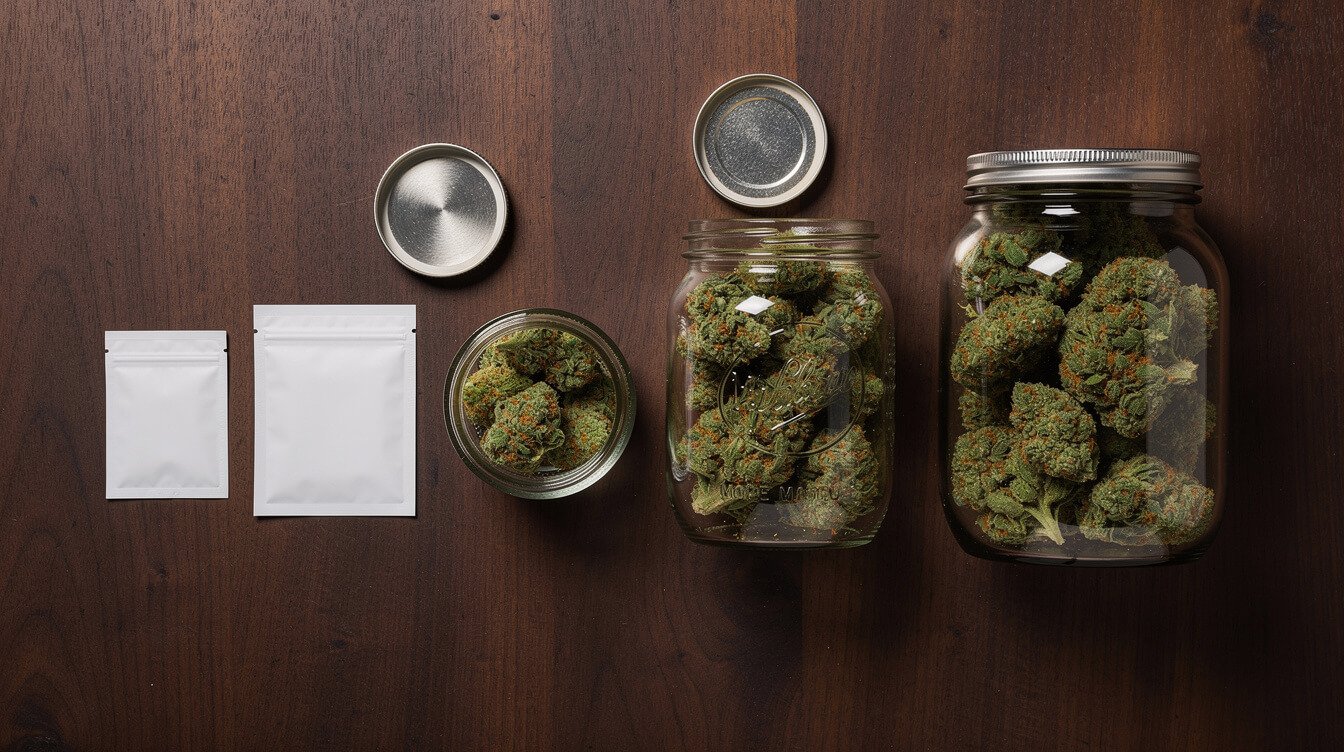
Nearly every guide online translates pack sizing into jar volume: an 8 gram pack for a quart jar, a 67 gram pack for a half gallon. Reasonable shortcut, but it is a translation of the manufacturers’ real rating, and something gets lost on the way.
The ratings are written in flower weight
The brands rate packs by how much flower they hold at spec, not by container volume:
- 1 gram — a few grams of flower, or a single pre-roll tube
- 4 gram — up to about a quarter ounce
- 8 gram — up to about an ounce, the common home-stash size
- 67 gram — up to about a pound, or several quart jars inside one sealed tote
- 320 gram — bulk, a commercial problem rather than a personal one
That distinction matters because weight and jar size do not always track together, and the arithmetic above says which one the pack is really servicing. The reservoir it must hold at equilibrium is the water in the buds, measured in grams; the headspace is measured in milligrams. Size to the weight.
The half-empty jar is the harder job
Here is the upshot, and it reverses what the volume rule implies. A quart jar respectfully full of flower is easier to hold than the same jar with a quarter ounce rattling around: the second has more air to condition, more interior surface for vapor to cross, and a worse ratio of pack to empty space. As you work through a jar the job gets harder, not easier, so decant into a smaller jar as the stash shrinks.
Aim for about three-quarters full, and do not cram. Crushing buds to save space shears off the trichomes that carry potency and aroma, which defeats the point.
Signs you undersized
An undersized pack does not fail loudly. It goes rigid in weeks rather than months while the jar still reads below the set point. If you are replacing packs much faster than the quoted lifespan, it is usually one of three things: the pack is too small, the container leaks, or the flower went in too dry and the pack has been working uphill since day one.
Boveda versus Integra Boost: what actually differs
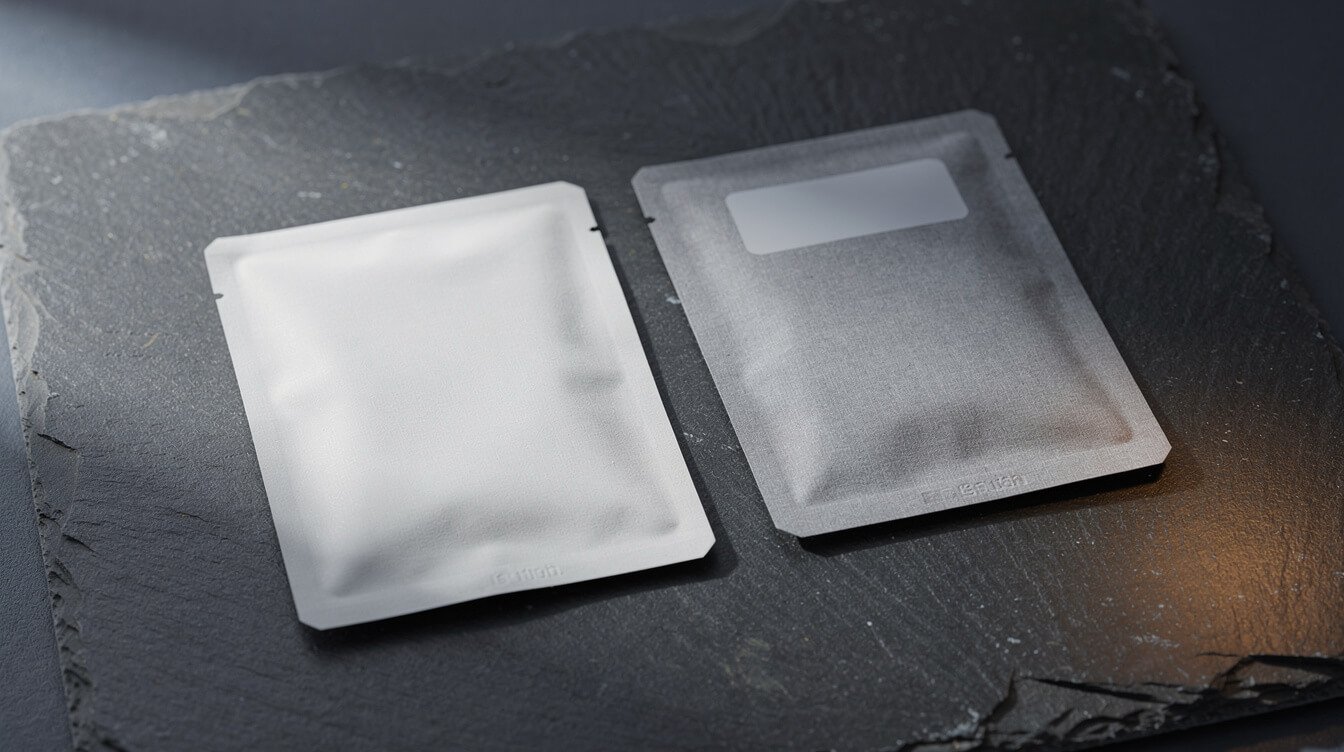
Two brands own most of the cannabis humidity packs on the shelf. Same principle, and in a jar you will not taste a difference. The differences are materials and small conveniences.
| Boveda | Integra Boost | |
|---|---|---|
| Medium | Saturated salt solution and purified water in a permeable packet | Salt-free plant-based gel |
| Set points for flower | 58%, 62% | 55%, 58%, 62% |
| Spent indicator | None on the pack itself; judge by feel | Color-changing card included with many packs |
| Typical lifespan | Around 2 to 4 months | Often 4 to 6 months |
| Regenerable | Not designed for it | Some larger SKUs only, per the package |
| Track record | Longest, originally a cigar product | Newer, widely used by commercial operators on cost |
Which one to buy
For a home stash either is fine, and anyone claiming a dramatic quality gap is selling one. Two tiebreakers worth something:
- Integra if you are new to this. The indicator card removes the genuinely annoying part of using packs, which is guessing whether the thing still works. Beginners leave spent packs in jars for months, and a color card solves that for free.
- Boveda if you want the safest bet on availability. Stocked nearly everywhere in every size, which matters once you settle on a size.
One real material difference: Boveda contains a salt solution, so a rupture — rare, but it happens if you catch one with a jar lid or a sharp stem — puts brine on your flower, and that flower is finished. Integra’s gel is salt-free, which makes a rupture cheaper. Either way, keep the pack off the buds: against the lid, or in its sleeve.
GanjaTech, weekly
Cannabis, explained. In your inbox.
One email a week: the clearest explainers, honest gear picks, and what the science actually says. 21+ only. No spam, unsubscribe anytime.
Do cannabis humidity packs ruin terpenes?
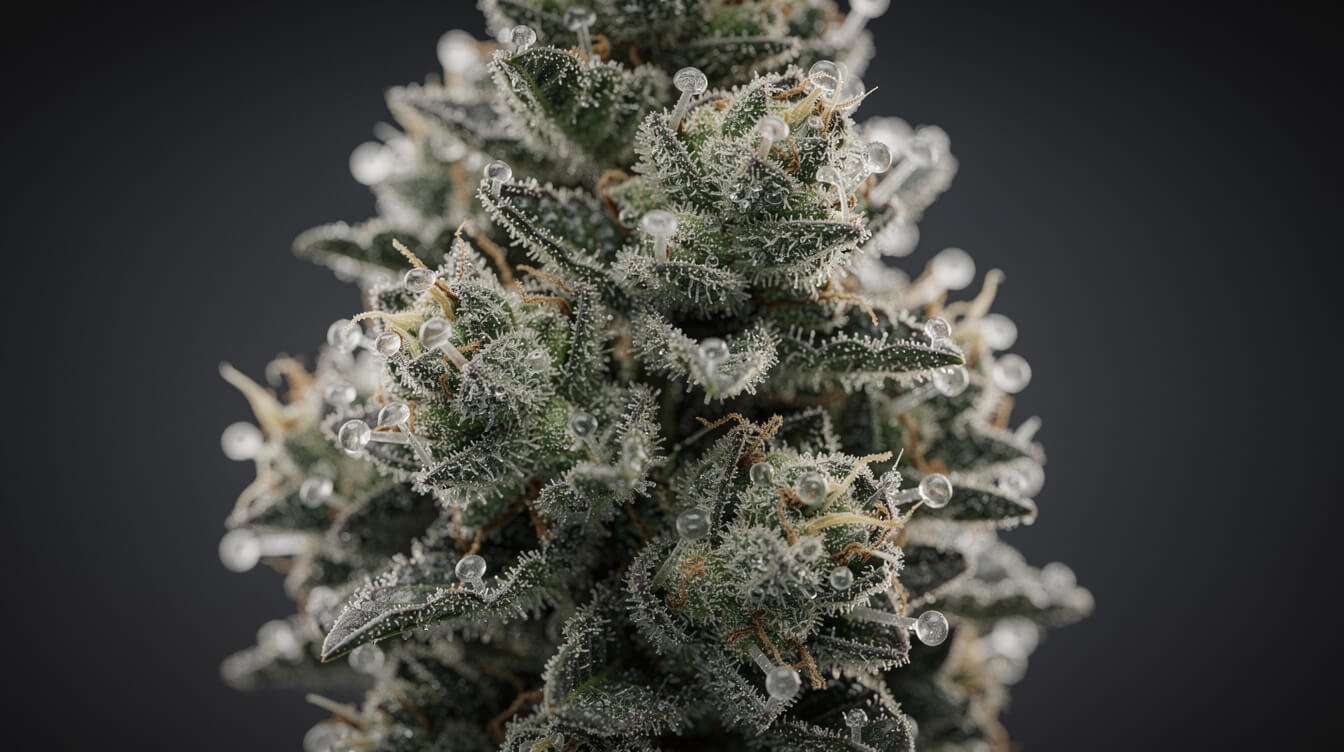
This is the one real controversy here, and the search results handle it badly. One camp calls packs terpene shields that prevent evaporation. Another says experienced growers can taste the difference and it is not an improvement. Most of the big guides skip the argument entirely.
The disagreement survives because three separate claims are argued as one. Split them and each has a clear answer.
Claim one: a pack at equilibrium accelerates terpene loss
No good evidence, and no obvious mechanism. Terpene loss is driven by temperature, oxygen, light, and air exchange. Volatile monoterpenes like limonene and pinene leave first; heavier sesquiterpenes like caryophyllene persist. Water activity is not on that list, so a sealed jar held at 62% is no more hostile to a terpene profile than the same jar at 50%. If anything the drier jar is worse, because brittle flower sheds trichome heads at the slightest handling.
Claim two: using a pack to dry out wet flower hurts quality
True, and almost certainly the source of the bad anecdotes. Seal flower that is still too wet and expect a pack to pull it down to spec, and you have asked a device with milligrams of throughput to move grams of water. It cannot do that quickly. Meanwhile the flower sits above the safe band for days, which is exactly what produces the hay or ammonia smell people then blame on the pack. The pack is a witness, not the culprit. Finish drying properly, then cure, and only then reach for a pack.
Claim three: a pack brought my dry flower back and it still tasted flat
Also true, and completely expected. Water and terpenes are separate inventories. Rehydrating over-dried flower restores moisture, texture, and burn, and does precisely nothing for aromatic compounds that evaporated last month. So you get a bud that feels right and smells thin, and the obvious suspect is the thing you just added. What happened is that the pack fixed the texture and revealed a loss the crumbliness had been masking.
The verdict: packs do not hurt terpenes. Using a pack as a shortcut for a bad dry does, and using one as a time machine never works.
Buy the hygrometer first
This is the most useful thing in this guide, and the advice the ranking articles bury. Buy the hygrometer first, the pack second. Cannabis humidity packs are cheap, but a pack with no gauge is an assumption, while a gauge with no pack is still information.
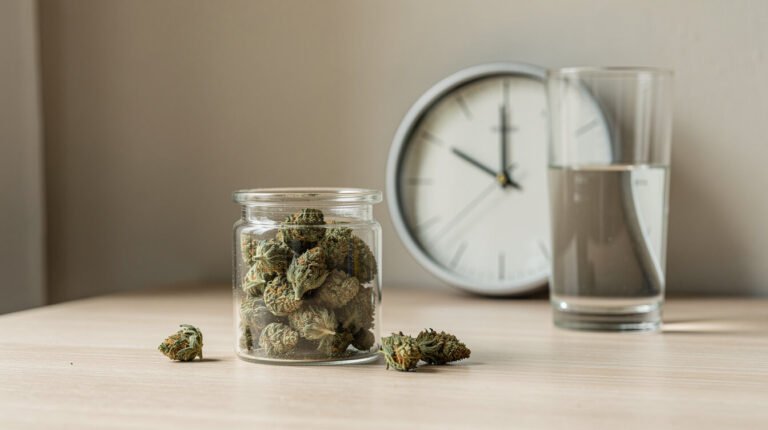
A small digital hygrometer that sits in the jar or screws into the lid costs very little. Seal it in with your flower, wait a full 24 hours for the headspace and buds to equilibrate, then read it. Anything sooner is a transient, not the truth.
Reading the jar
| Reading after 24 hours | What it means | What to do |
|---|---|---|
| Above 65% | Too wet. Not an emergency yet, but it is the only reading with a safety dimension | Open the jar for a few hours, inspect and smell the buds closely, and find out why |
| 58% to 62% | Correct | Nothing. A pack here is cheap insurance, not a fix |
| 55% to 58% | A touch dry, and drifting | Add a 62% pack sized to the flower weight. This is the band where packs earn their keep |
| Below 55% | Dry. Texture and burn are already affected | Add a 62% pack, reseal, recheck in 48 hours, and accept that lost aroma is not coming back |
Calibrate it, because cheap gauges lie
Cheap hygrometers are routinely off by 5% to 10%, enough to make every decision above wrong. There is a classic test, and it is satisfying because it runs on the same physics as the pack in your jar.
- Put a tablespoon of table salt in a bottle cap and add a few drops of water — a slushy paste with undissolved salt still visible. Not a solution; you need a saturated slurry.
- Seal the cap and the hygrometer together in a zip bag or small airtight container, not touching.
- Leave it at stable room temperature for 8 to 12 hours.
- Read it. Saturated sodium chloride holds the air above it at 75% relative humidity. The difference from 75 is your error.
Some gauges let you recalibrate; for the rest, write the offset on tape and stick it to the jar. A gauge reading 70% in the salt test is 5% low, so your 55% jar is really at 60% and you did not need a pack at all.
What a cannabis humidity pack cannot fix
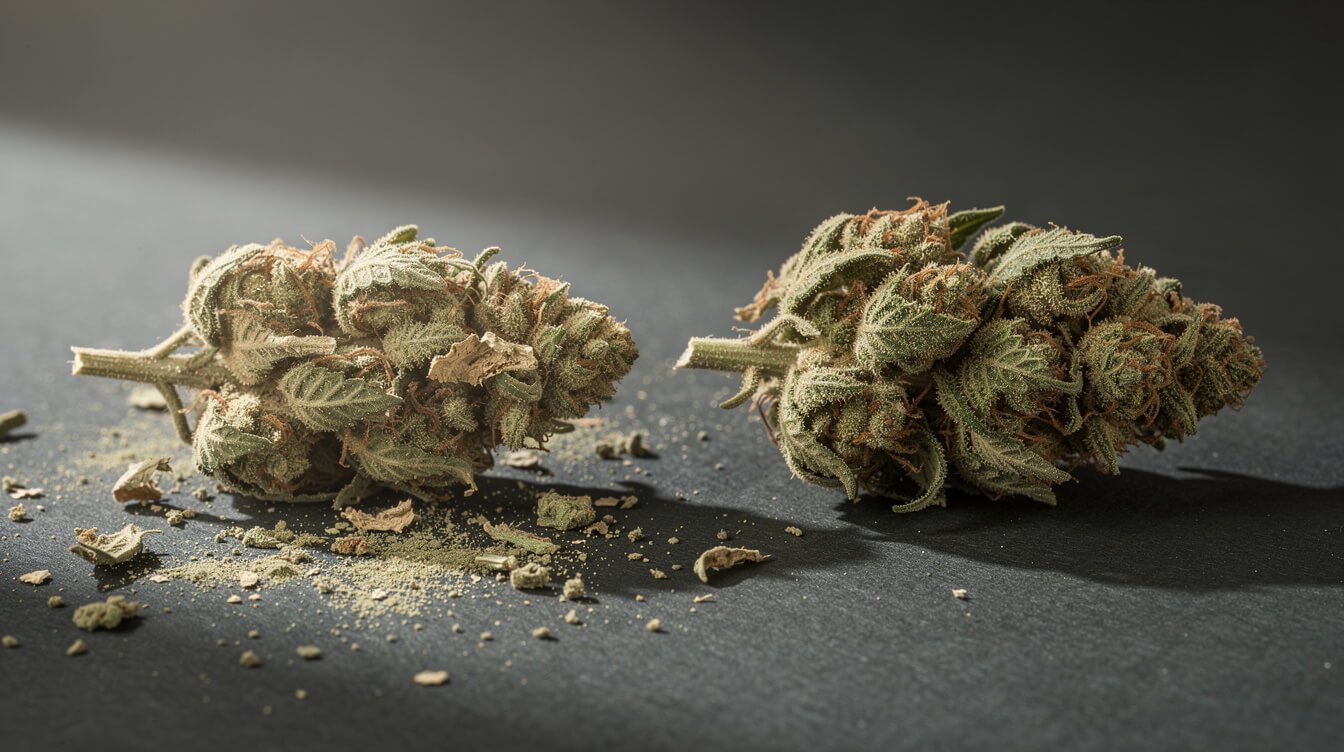
Cannabis humidity packs are good at one narrow job. Here is the honest list of things they get sold for and do not do.
They are not a substitute for a cure
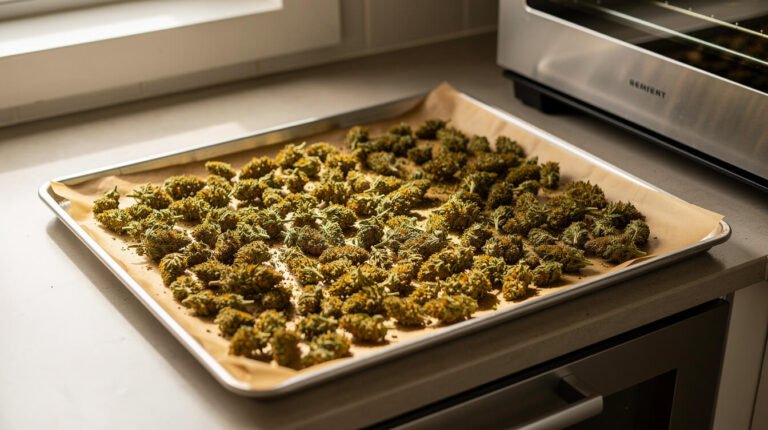
Curing runs over weeks as chlorophyll and residual sugars break down, and it needs moisture plus time plus gas exchange. A pack supplies one third of that. Growers who cure in jars properly often use one as a stabilizer, which is reasonable, but it is a tool inside the process, not a replacement. Heading into a first indoor grow? Read how curing works and how long it takes.
They do not beat the other three variables
Light, heat, and oxygen do more damage than dryness, and a pack addresses none of them. A clear jar with a perfect 62% pack on a bright shelf is worse off than a bare jar in a cool dark cupboard. Move the jar before you buy the pack — it costs nothing and fixes the bigger problem.
They do not help in a grinder, a baggie, or a pocket
Flower really dies in the places nobody treats as storage: the grinder chamber holding last week’s ground bud, the exit bag that never got decanted, the pocket. Ground flower has vastly more surface area and goes stale in days. No pack reaches any of it. The fix is behavioral: grind what you are about to use, and keep the rest in glass.
Can you recharge a spent pack?
Grower forums carry a well-known home method: stand the hardened pack in a sealed jar next to a shot glass of water, not touching, for a few days. The physics supports it, because a saturated salt solution’s set point is a property of the salt, so re-adding water to a crystallized pack does restore its target.
Manufacturers still say do not, and the reason is not purely commercial. You cannot see how much water went in, so you can end up with an over-wet pack sweating free liquid onto your flower — a mold risk, not a storage strategy. The membrane degrades too. On a two-dollar consumable the margin is thin. Integra’s larger regenerable SKUs are the supported version of the same idea, and small disposable packs from any brand should never see an oven.
Skip the kitchen hacks entirely
Citrus peel, lettuce, bread, and a damp paper towel all introduce uncontrolled free water, and the organic ones add something for microbes to eat. A terracotta humidifying stone is defensible for rehydration, since it releases vapor without a food source, but it has no set point and will sail past where you wanted it to stop. For maintenance, a calibrated pack is the better instrument.
Cannabis humidity packs: common questions
Do I actually need one?
If you finish an eighth in a week or two and keep it in sealed glass out of the light, no. Packs start paying off past the one-month mark, in dry climates, and on quantities large enough that the bottom of the jar is a month older than the top.
How long do they last?
Two to four months for Boveda, four to six for Integra Boost, assuming a decent seal and correctly sized flower. One rehydrating dry flower can be finished in weeks.
How do I know when it is spent?
Squeeze it. A working pack is pliable. A spent one has gone rigid and lumpy as the solution crystallizes. If yours came with an indicator card, the card beats your thumb.
Can a pack rescue flower that dried out?
Partly. It restores moisture, texture, and a cleaner burn within a day or two. It does not restore aroma that already evaporated, and it does not raise potency.
Can a pack save moldy flower?
No, and nothing else can. Mold means that flower is done. Do not dry it out, grind it, or bake it. If you have inhaled some and feel unwell, see a doctor.
Does freezing change the answer?
Yes, unhelpfully. Cold makes trichomes brittle enough to snap off during handling, and a jar cycled between freezer and room temperature condenses water inside, which no pack can manage. Cool, dark, and stable beats cold.
Do they work for edibles or concentrates?
No. They are calibrated to dry flower. Concentrates want cold and dark; edibles are a food-storage question governed by whatever is in them.
The short version
Cannabis humidity packs are a good two dollars, spent on the wrong problem by most people who buy them. They hold the air in a sealed container at a known set point so your flower stops donating its own water to the headspace. Genuinely useful, and the whole of what they do.
Get a hygrometer first and calibrate it with the salt test. Read the jar after 24 hours. At 58% to 62% you are already winning, and a pack is insurance rather than a repair. Below 55%, buy one sized to flower weight rather than jar volume, take 62% for the near term or 58% for the long haul, keep it off the buds, and replace it when it goes rigid. Then fix what a pack cannot touch: light, heat, and a week of ground flower left in a grinder.
And if you dried and trimmed carefully, cured patiently, and store in dark glass, you may never need one. That is not a disappointing conclusion — it means the hard part already went right. Know your local laws, keep it away from anyone under 21, and enjoy it slowly.
Before you go
Get the next explainer first
We publish a new one every day. The best of the week, plus what's new in the shop, lands in one short email.