How to Get Rid of Weed Smell at Home: What’s Actually Clinging, and What Really Removes It
Here’s the honest answer on how to get rid of weed smell: air out the room, take away whatever’s still making the smell, wash the fabrics, wipe the hard surfaces, and if you want the air itself cleaned, use an activated carbon filter rather than more fragrance. That’s the whole job. The reason most guides make it sound harder is that they treat “weed smell” as one thing. It’s really two, and they don’t leave the same way.
One part is gas: aroma molecules floating around the room. The other is particles: tiny droplets from smoke that settle onto your couch, your curtains, your hoodie, and the walls, and keep giving off odor long after the air has cleared. Fresh air handles the first one. Soap handles the second. Candles handle neither.
Below: what’s physically in the room, how the source (smoke, a jar of flower, a vape) changes the fix, a room-by-room plan, clothes and hair, the HEPA-vs-carbon question nobody explains, why ozone machines are a bad idea, and an honest answer to “how long does it last?” Quick framing: this is for adults 21+ dealing with their own space, guests coming over, a move-out, or a smell a previous owner left behind. Cannabis laws vary by state and country, and so do lease terms and building rules on smoking indoors, so check yours.
How to get rid of weed smell: the short answer
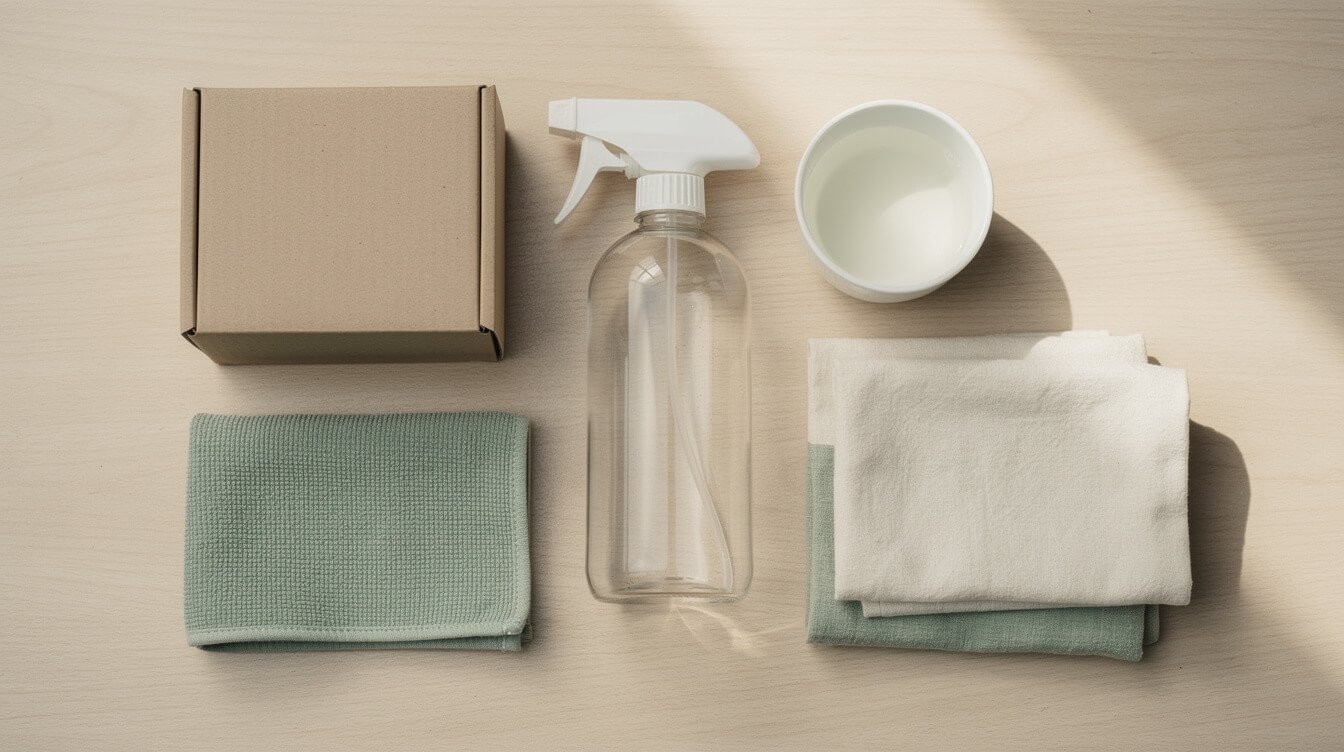
If you only read one section, make it this one. In order:
- Stop adding to it. Close the jar, rinse or cap the pipe, empty the bubbler water, and take the ashtray outside. Air you clean while the source is still sitting there just fills back up.
- Move the air out. Open windows on two sides of the space if you can, and put a box fan in one of them facing out. Pushing air out pulls fresh air in behind it. A fan pointed into the room mostly stirs the smell around.
- Wash the soft stuff. Throw blankets, pillowcases, the hoodie you were wearing, and any washable cushion covers go in the laundry. Fabric is where smoke residue lives.
- Wipe the hard stuff. Tables, counters, nightstands, window sills, and anything with a film you can feel. Warm water and a little dish soap does more than any spray.
- Clean the air you can’t open up. For a room without good ventilation, a portable air cleaner with a real activated carbon filter (not just a HEPA) is the tool. More on why below.
- Skip the cover-up. Incense, candles, and plug-ins add their own smell on top. The room ends up smelling like weed and vanilla.
That covers a single evening. If a space smells like smoke weeks later, or you moved into a place where someone smoked indoors for years, it’s a deeper job: the residue has gotten into paint, carpet, and maybe the HVAC. We’ll get to that in the room-by-room section.
What you’re actually smelling: gases vs smoke particles
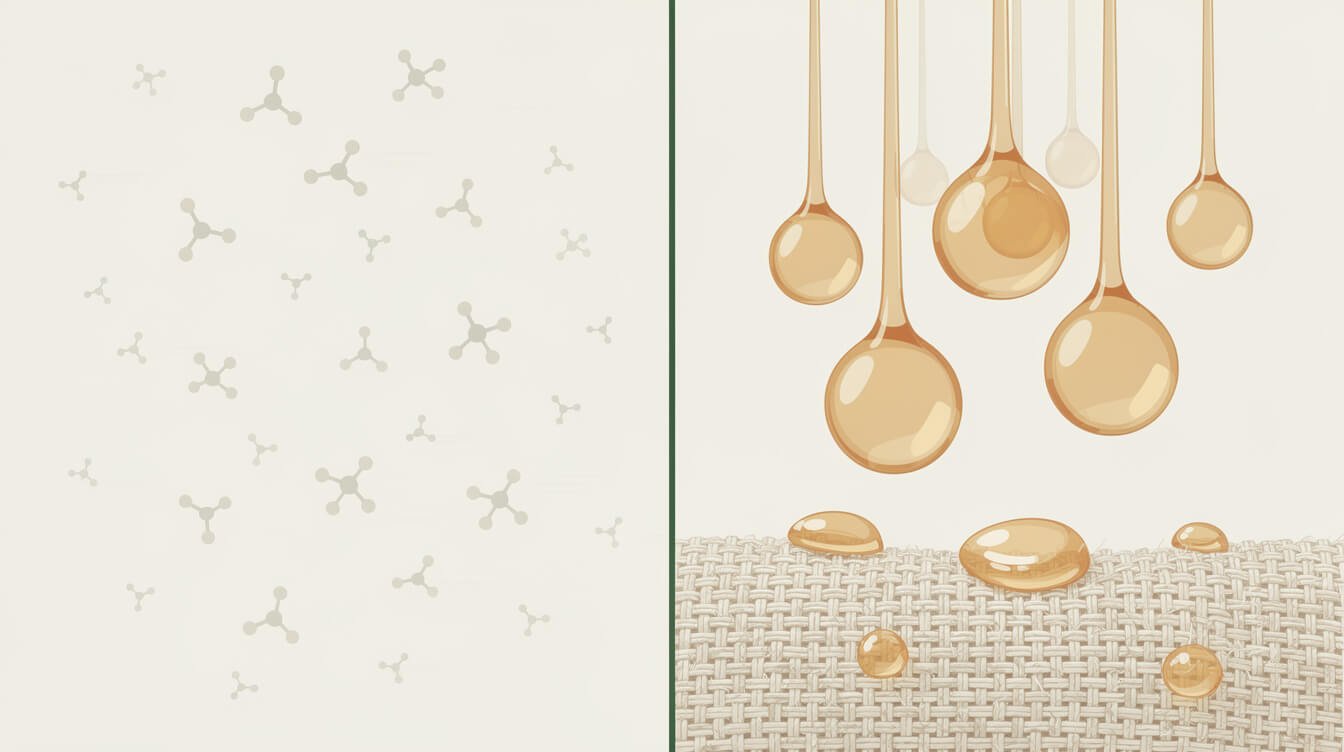
This is the part nobody on page one of Google explains, and it decides which fixes work.
The gas part: aroma molecules
Unburned cannabis smells the way it does because of volatile compounds: terpenes (the piney, citrusy, earthy notes) and a small family of sulfur compounds that carry the skunky punch. We covered that chemistry in depth in why weed smells like skunk. The short version: the main skunk molecule, 3-methyl-2-butene-1-thiol, is one brewing researchers can taste in beer at a few parts per trillion. Your nose is absurdly good at catching it, which is why a tiny amount carries across a whole apartment.
Gases are the easy half. They mix into the air and leave with the air. Ventilation, time, and an activated carbon filter all work on them.
The particle part: smoke that lands
Burning flower adds a second, bigger problem: smoke is a cloud of tiny droplets and solid bits, mostly in the PM2.5 size range (fine particles under 2.5 micrometers). Those particles drift, then settle onto whatever’s around, especially fabric, and they carry odor compounds with them.
The amount is larger than most people assume. In a 2022 study in Science of the Total Environment, researchers had a joint fully smoked by machine in the living room of a detached two-story house and measured fine particles in all nine rooms for five hours. The five-hour averages across the house ran from about 39 to 81 μg/m³. A Marlboro smoked the same way gave about 15. On average, the joint put 4.4 times as much fine particulate into the home as the cigarette (Ott et al., 2022). Note what that means for smell, too: the smoke didn’t stay in the living room. It spread through all nine rooms the researchers monitored.
Why the split matters
Air that smells like weed is a gas problem, and it fixes itself fast once you ventilate. A couch that still smells like weed tomorrow is a particle problem, and no amount of open windows will fix it, because the source is now in the fabric, slowly giving off odor. That’s why the sequence in the short answer goes air, then fabrics, then surfaces. You’re dealing with both halves.
Smoke vs flower vs vape: why the source changes the fix
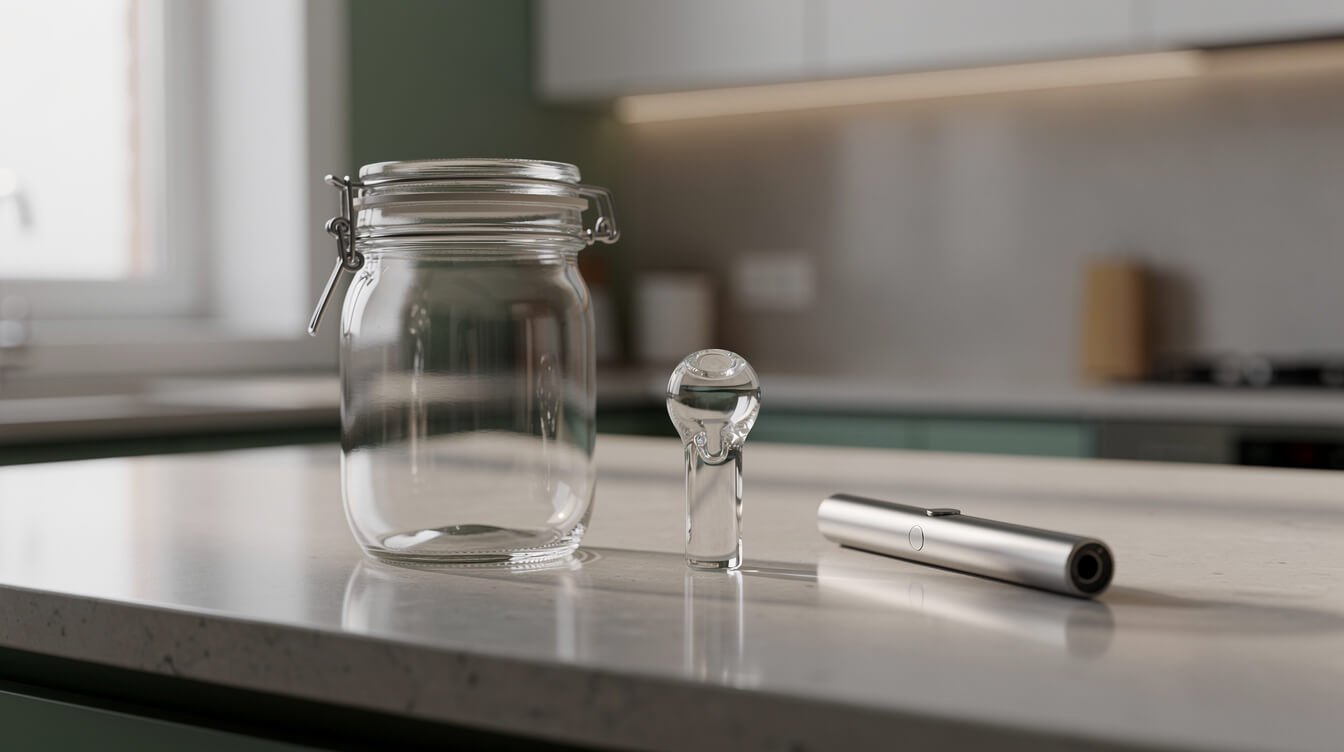
“Weed smell” in a home usually comes from one of four places, and each one needs a slightly different fix.
Smoke (joints, bowls, bongs, blunts)
The heaviest case, because it’s gas plus a lot of particles. Bongs and bubblers aren’t gentler on the room, either. A 2022 UC Berkeley study measured eight social bong-smoking sessions in a 20 m² living room. During the sessions, fine particles averaged around 1,300 μg/m³, more than 100 times background in most sessions. Ninety minutes after smoking stopped, the peak level had only fallen by half (Nguyen & Hammond, 2022). Water doesn’t scrub out the stuff that lands on your furniture.
Smoke also leaves stale sources behind: the ash, the roach, the resin inside the piece, and the bong water. Old bong water is one of the worst offenders in a room, so change it after every session. If your pipe is caked, cleaning the pipe takes a surprising amount of background stink out of a room. Same for a bubbler, which holds both water and resin.
Flower in storage
No smoke, but a jar left open on a shelf is a steady source of gas. Fresh, well-cured flower is the loudest. The fix is storage, not cleaning: an airtight glass jar with a good seal, kept closed, holds the smell in and also keeps the flower in better shape. Our guide on whether weed goes bad covers the storage side. Plastic baggies aren’t airtight, so they let a lot of aroma through.
Your grinder counts as flower storage, too. The kief chamber and teeth hold ground plant matter, which gives off more aroma than whole buds. Cleaning the grinder now and then, and grinding right before you use it instead of storing it pre-ground, both cut the background smell.
Vapes
Vaporizing heats flower or oil without burning it, so there’s no ash, no tar, and much less of the burnt smell. Vapor generally smells lighter and fades faster, a common experience you’ll see reported over and over. It isn’t odorless, though. A dry-herb vape still releases terpenes and leaves a toasted-plant smell, and a cart still puts aerosol into the air. A cracked window and a few minutes usually handle it. Fabrics take on much less.
Edibles and cooking
Eating an edible leaves basically no smell in the room. Making them is a different story. Decarbing flower in the oven and steeping it in butter or oil can make a kitchen and the hallway beyond it smell strongly for hours. Run the range hood, open a window, and keep the lid on the pot when you’re making weed butter. Once the cooking stops, the smell clears like any other cooking smell.
Room by room: air, fabrics, and hard surfaces
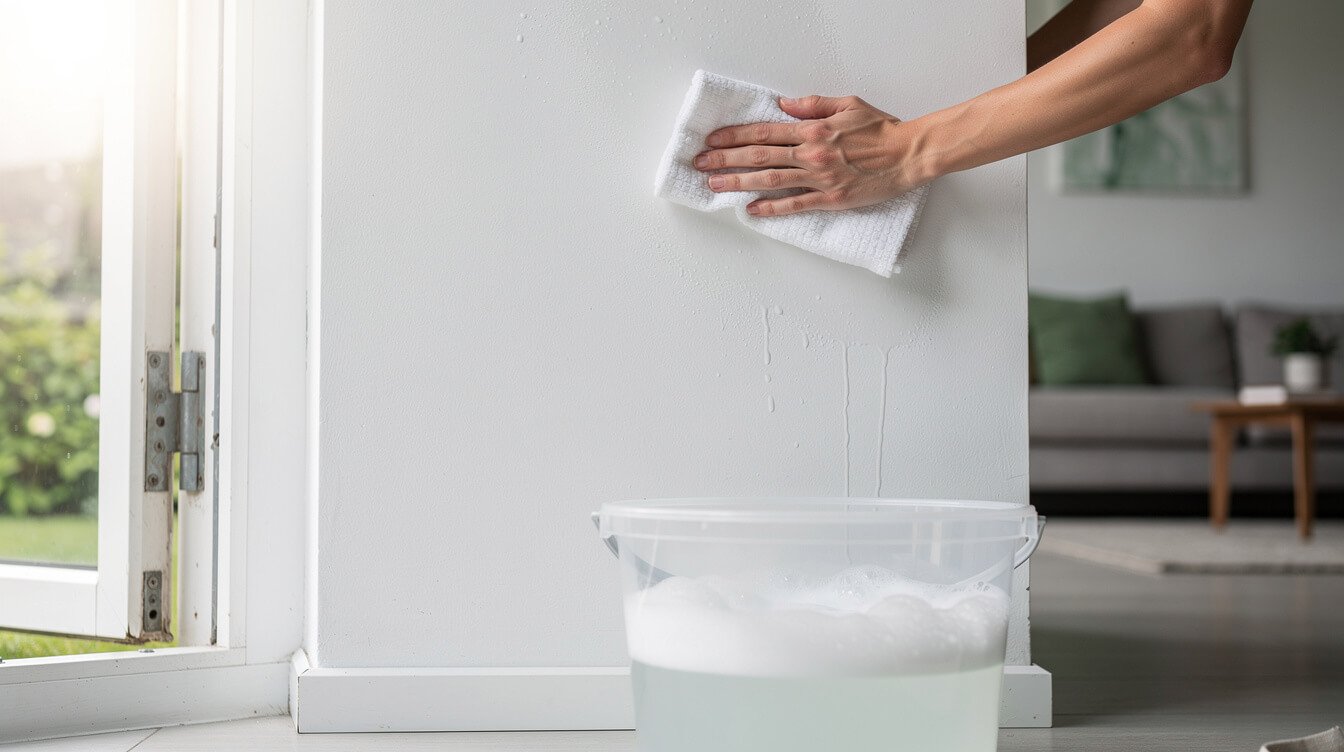
Here’s how to get rid of weed smell in each part of a home, from a single evening up to a place that’s been smoked in for years.
The air
Cross-ventilation beats everything else for speed. In the Ott study, opening three windows just 12.7 cm (5 inches) cut the joint’s fine-particle levels by 67%. Even then, levels stayed above what the closed-window cigarette produced, which tells you a crack in the window helps a lot but isn’t the whole fix.
- Fans in windows facing out work better than fans pointed into the room.
- Run bathroom and kitchen exhaust fans. They’re built to pull air out of the house.
- If you have central air, run the system fan and check the filter. A filter rated MERV 13 or higher catches more of the fine particles, according to the EPA’s air cleaner guide, if your system can handle it.
Soft furniture and fabrics
- Washables: curtains, throws, pillowcases, and cushion covers go in the laundry (see the clothes section for the method).
- Couches and mattresses: sprinkle baking soda, leave it for a few hours or overnight, then vacuum it up well. It helps with light odor. For heavier smell, a fabric-safe upholstery cleaner or a rented extractor actually lifts residue out.
- Carpet and rugs: vacuum first, then shampoo or steam-clean if the smell has built up over weeks.
Hard surfaces and walls
After a single session, a wipe-down of tables, counters, and sills with warm soapy water is enough. After months or years of indoor smoking, there’s a visible or tacky film on walls and ceilings, and that’s where the stubborn smell lives.
- Wash walls and ceilings top to bottom with a degreasing cleaner, rinse, and let them dry fully.
- If the smell is still there, it’s in the paint itself. The standard fix from painters who deal with smoke damage is a stain-blocking, odor-sealing primer before repainting. Paint alone over smoke residue tends to let the smell come back through.
- Don’t forget the spots people miss: light fixtures, ceiling fan blades, blinds, the inside of closet doors, and air vent covers.
A smell you inherited
If you moved into a place that smells like old smoke, the order above still applies. Start with the HVAC filter and a duct inspection, then wash walls and ceilings, then deal with carpet. Carpet and pads that have absorbed years of smoke sometimes just need replacing. That’s a conversation with your landlord or seller, not a weekend project.
GanjaTech, weekly
Cannabis, explained. In your inbox.
One email a week: the clearest explainers, honest gear picks, and what the science actually says. 21+ only. No spam, unsubscribe anytime.
How to get weed smell out of clothes and hair
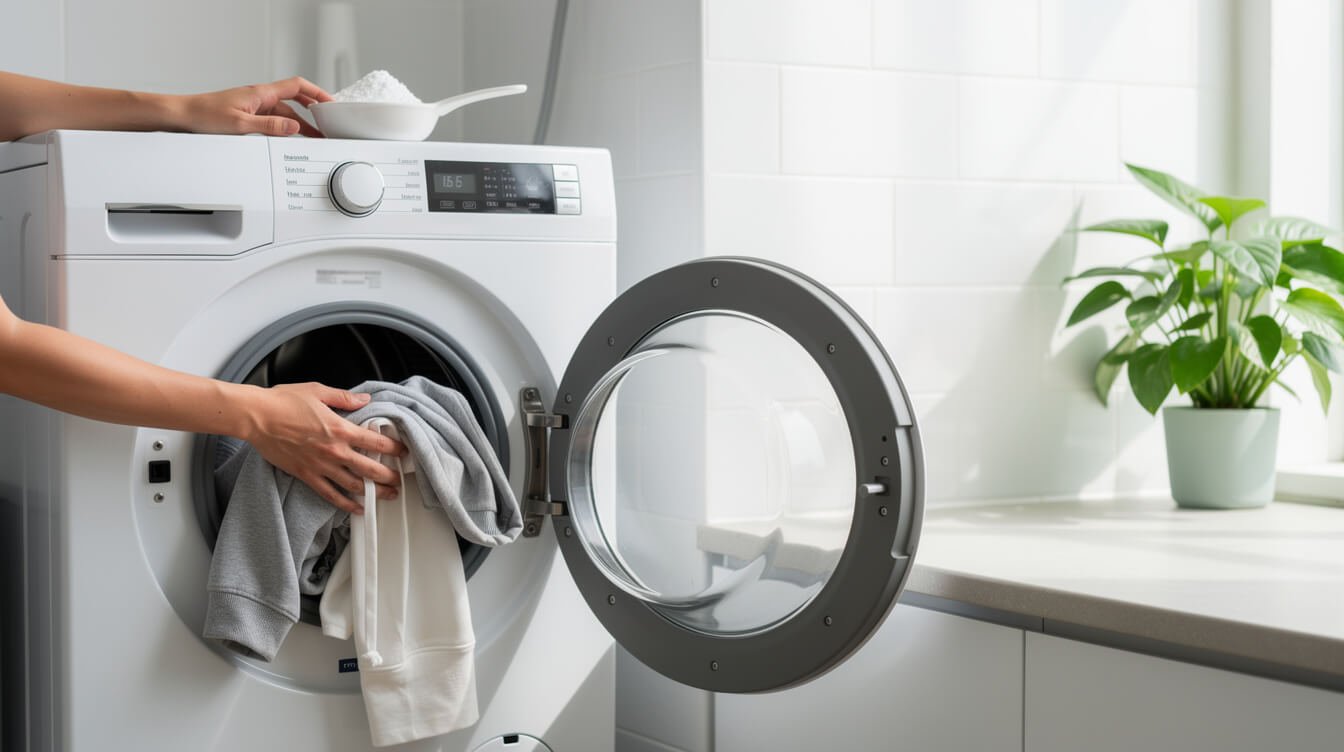
Clothes are pure particle territory. The smoke lands in the fibers, which is why a hoodie still smells the next morning even when the room doesn’t.
Clothes
- Air them out first if they’re only lightly smoky. Hanging a jacket outside or near an open window for a few hours handles a surprising amount.
- Wash normally with your regular detergent at the warmest temperature the care label allows. Warm water does a better job on oily residue.
- Add half a cup of baking soda to the wash for heavier smell. Some people swap in a cup of white vinegar in the rinse cycle instead. Don’t add both in the same cycle, because they neutralize each other.
- Smell before you dry. Tumble-drying is a lot of heat on something that might still be holding odor. If it still smells, wash again or air-dry.
- Coats and dry-clean-only items can be aired outside, steamed, or taken to a cleaner. Tell them it’s smoke odor.
Hair and skin
Hair holds smoke odor well, and longer hair holds more. Shampoo is the only real fix. Dry shampoo and perfume just add a second smell on top. Hand soap and water handle the smell on your fingers better than hand sanitizer, which mostly smells like alcohol for a minute.
The upstream fix
The smell on clothes mostly comes down to how much smoke you stand in and for how long. Smoking outside where that’s allowed, switching to a vape, or keeping a dedicated outer layer for sessions all cut it way down.
Air purifiers explained: HEPA vs activated carbon (and why ozone machines are a bad idea)
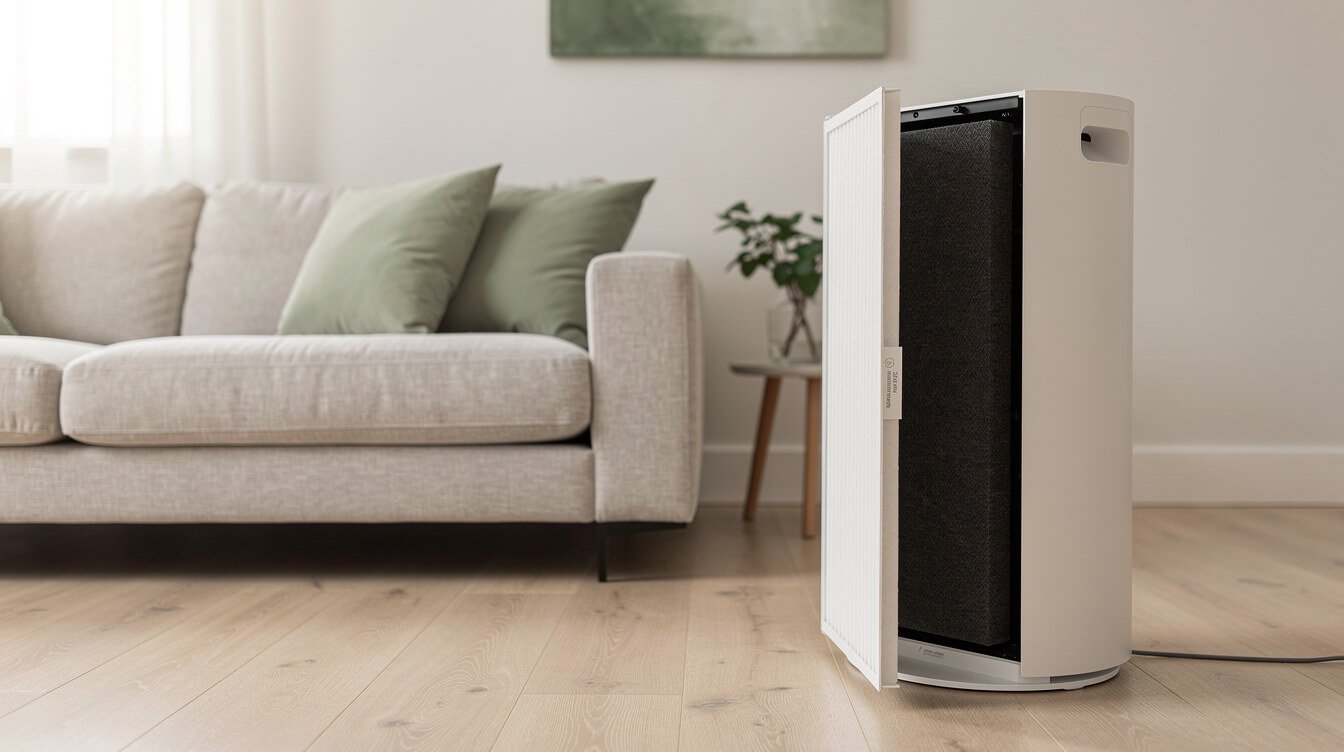
“Get an air purifier” is the most common tip online and the least explained. Here’s what each part of a purifier actually does, straight from the EPA’s guide to air cleaners in the home.
HEPA catches particles, not smell gases
A HEPA or other pleated particle filter is great at catching smoke particles, which matters both for the residue that ends up on your stuff and for the air you breathe. But EPA is clear that most filters are built to catch either particles or gases, not both. A HEPA-only unit can make a room’s air look and feel cleaner and still leave the smell behind.
When you compare models, look at the CADR (clean air delivery rate) for tobacco smoke, which EPA notes stands in for the smallest particles. The CADR should fit the size of the room. CADR is a particle rating only.
Activated carbon is what removes the smell
Activated carbon is charcoal treated to be extremely porous. Gas molecules stick to its huge internal surface area. EPA’s advice for gases is a purifier with an activated carbon filter, and it adds that carbon “can be effective, provided that there is a large amount of material used in the filter,” the thicker the better. That’s the catch: plenty of purifiers advertise “carbon” while using a thin, carbon-dusted sheet. If you can feel the weight of the filter, or you can see actual granules, it’s probably real. There’s no standard performance rating for gas filters, so filter weight and thickness are your best clue.
Carbon also fills up. A saturated carbon filter stops grabbing odor, so replace it on the maker’s schedule, sooner if you smoke indoors often.
EPA also notes that research hasn’t shown other technologies (plasma, photocatalytic oxidation, UV light) to remove gases well in home units. Don’t pay extra for those claims.
Ozone generators: skip them
You’ll see “ozone” machines sold for smoke smell. Here’s what EPA says about ozone generators sold as air cleaners:
- No federal agency has approved them for use in occupied spaces. Ozone damages the lungs, and even low amounts can cause chest pain, coughing, shortness of breath, and throat irritation.
- At levels that don’t exceed public health standards, ozone is “not effective at removing many odor-causing chemicals.”
- Where ozone does react with indoor chemicals, it can produce byproducts that are themselves irritating.
- Ozone doesn’t remove particles at all, and it can damage rubber, fabrics, and dyes.
The byproduct point applies to cannabis, too. Lab work on THC films on glass and cotton found that ozone breaks THC down fairly quickly, producing a set of oxidized products in the process (Wylie & Abbatt, 2020). That’s chemistry, not cleaning. Professional fire-restoration crews sometimes use high-level ozone in empty buildings with nobody (people or pets) inside. That’s a controlled job, not a gadget for your bedroom.
The cheap stuff: bowls of baking soda, charcoal bags, coffee grounds
These are passive. They only touch the air that drifts past them, and the amounts are tiny compared to a purifier pushing room air through a thick carbon bed. They’re fine for a closet or a car, and they won’t hurt anything. They won’t clear a smoky room on their own. (A car has its own playbook, from the headliner to the cabin filter, in our guide to getting weed smell out of a car.)
How long does weed smell last? An honest range by surface
Nobody can give you a single number, because “the smell” lasts different amounts of time in different places. Here’s what the measurements support, and where we’re estimating.
In the air: hours, faster with ventilation
In the Berkeley bong study, fine particles were still at half their peak 90 minutes after smoking stopped. In one session they kept monitoring for 12 hours, and particle levels were still about 50 μg/m³, more than 10 times background (Nguyen & Hammond, 2022). So the measured answer is that a heavily smoked room takes many hours to clear on its own. With good cross-ventilation after a light session, a room often feels mostly clear within an hour or two. That’s a rough estimate, not a measurement, but it fits the Ott window result above. The aroma-gas part clears faster than the particle part.
In fabric: until it’s washed
Clothes, curtains, and couch cushions hold smoke odor for days, often longer, because the residue sits in the fibers. Airing helps a little. Washing is what ends it.
On walls, carpet, and ducts: much longer with long-term smoking
One session leaves a film that a wipe-down handles. Long-term indoor smoking builds up layers. Residue from tobacco smoke (“thirdhand smoke”) is well studied. One study found nicotine still on surfaces and in dust after smokers moved out, even after the homes had sat empty for two months and been cleaned (Matt et al., 2011). For cannabis, honestly, that research is thin. The authors of the THC-and-ozone lab study above expect cannabis residue to play a smaller role than nicotine does in tobacco residue. So we won’t borrow tobacco’s numbers for cannabis. What we can say: a home with years of indoor cannabis smoking can still smell like it after a quick clean, and it usually takes the full wall-and-carpet job to fix.
From flower: weeks, if it’s sealed up
An open jar keeps the room smelling for as long as it’s open. The skunky sulfur compounds in stored flower drop off within weeks, as we covered in the skunk smell explainer, but terpenes keep the bud aromatic for a lot longer. Seal it.
Apartments are their own case
Smoke moves between units in multifamily buildings. A 2026 study using air monitors in 138 public housing units found weekly-or-more cannabis use was associated with 56% higher average fine-particle levels in the unit (Wallace et al., 2026). If you share walls, neighbors notice. Many leases and buildings restrict smoking of any kind, and local rules differ, so check yours before you light up indoors. It’s also a reason to keep smoke away from kids and pets, who share the same air and the same couch.
How to get rid of weed smell: FAQ
What’s the fastest way to get rid of weed smell in a room?
Remove the source (seal the jar, take out the ash, dump the bong water), then cross-ventilate with a fan in a window blowing out. If you can’t open windows, run a purifier with a thick activated carbon filter on high. For a fast fix after a single session, that’s how to get rid of weed smell in an hour or two. Fabrics still need washing.
Do Febreze, candles, or incense work?
Candles and incense mask smell and add their own smoke. Fabric sprays can knock down odor on soft surfaces for a while, but they don’t remove the residue that’s causing it, so the smell comes back. They’re a finishing touch at best.
How long does the smell of weed last?
Hours in the air, until the wash in fabrics, and until a deep clean or a coat of sealing primer on walls and carpet after long-term indoor smoking.
Does vaping smell less than smoking?
Generally, yes. No combustion means no ash and much less of the burnt, clinging smell, and vapor tends to fade faster. It’s not odorless, especially with dry-herb vapes.
How do you get weed smell out of clothes?
Air them out, then wash warm with regular detergent plus half a cup of baking soda. Check the smell before you put them in the dryer, and wash again if needed.
Does a HEPA air purifier get rid of weed smell?
Partly. HEPA catches smoke particles, which reduces the residue that settles on your stuff. The smell itself is mostly gas, and that needs activated carbon. If the purifier has no real carbon stage, it’s not the right tool for odor.
Is it safe to use an ozone generator for weed smell?
Not in a room people or pets use. EPA says no federal agency has approved ozone generators for occupied spaces, and at safe levels ozone doesn’t remove many odor chemicals anyway. It can also create irritating byproducts.
Final thoughts
Weed smell isn’t mysterious. It’s gas and particles. Gases leave with the air, so ventilate and use activated carbon. Particles land and stay, so wash fabrics and wipe surfaces. Most of the sprays, candles, and gadgets sold for it work on neither, and ozone machines can make things worse.
So when you’re figuring out how to get rid of weed smell for good, start with the source. Seal the flower, clean the piece, change the water, and if you consume at home, think about where and how. Then air, wash, and wipe. It’s boring, it works, and it’s cheaper than another candle.
Great plant. Respect the people you share air with, know your local rules and your lease, and enjoy responsibly.
Before you go
Get the next explainer first
We publish a new one every day. The best of the week, plus what's new in the shop, lands in one short email.