How Long Do Edibles Last? The Edible Timeline, Measured (Kick-In, Peak, and Comedown)
How long do edibles last? In controlled trials, an edible’s effects took 30 to 60 minutes to show up, peaked around 1.5 to 3 hours after eating it, and lasted about 6 to 8 hours. In everyday life, a full stomach can push the kick-in out to 2 hours, and bigger doses can stretch the tail toward 12 hours, sometimes with a foggy next morning. That’s the whole answer. The rest of this guide covers why the timeline runs so long, why the most common mistake happens around the 90-minute mark, and how to plan an evening around it.
A quick note on scope. This is about how long the high lasts. If you meant how long edibles keep in the cupboard, that’s a different question. And if you meant drug-test windows, see our straight timeline on how long weed stays in your system. Everything here is for adults 21 and over, and cannabis laws vary by state and country, so know yours before anything else.
How long do edibles last? The short answer, measured
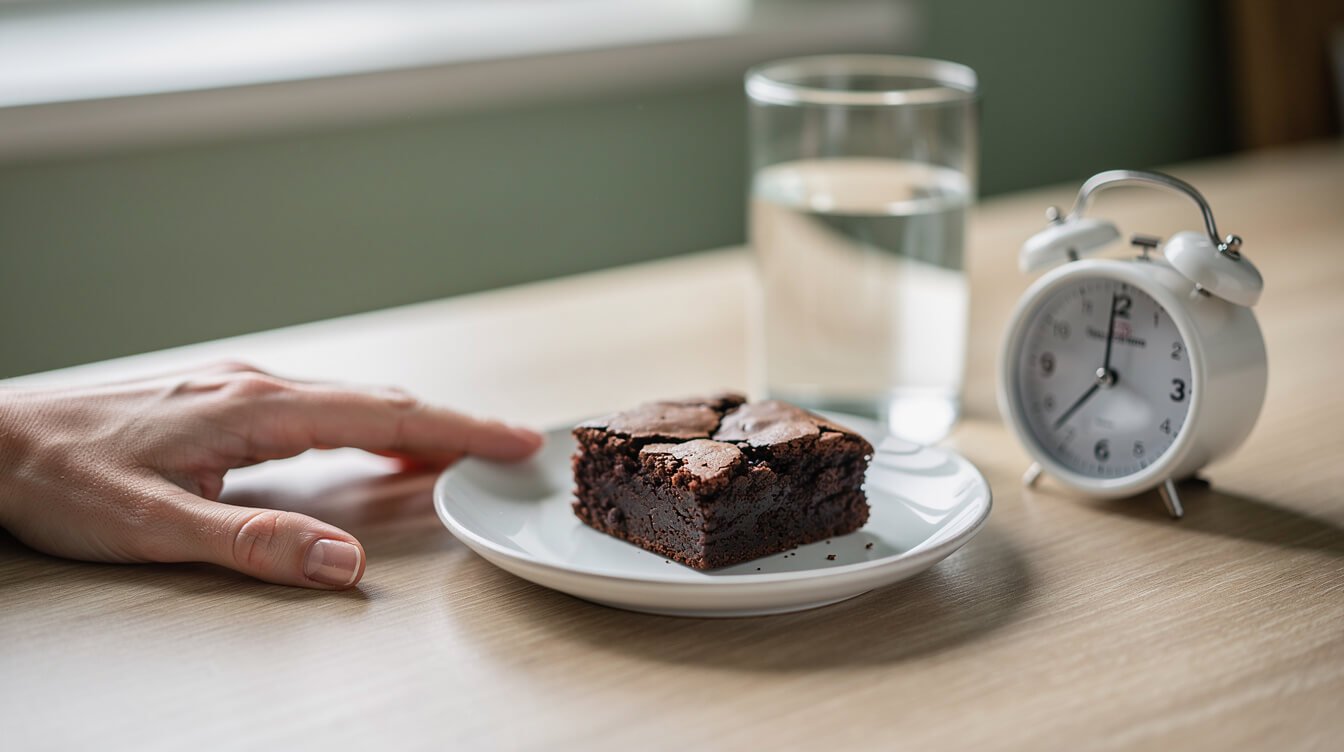
Most numbers you’ll see online are dose tiers somebody wrote down without a source: “5 mg lasts 4–6 hours, 100 mg lasts 8–12,” and so on. They aren’t necessarily wrong, but they aren’t measured either. The best measured data on edible timing comes from a series of controlled studies at Johns Hopkins, where healthy adults ate cannabis brownies with a known THC dose and researchers tracked them hour by hour.
Here’s what those studies found:
- Kick-in: effects didn’t appear until 30 to 60 minutes after eating, at every dose tested (10, 25, and 50 mg THC) (Schlienz et al., 2020).
- Peak: effects peaked 1.5 to 3 hours after eating, in both of the Hopkins studies.
- Duration: subjective and performance effects lasted 6 to 8 hours (Vandrey et al., 2017).
One detail matters a lot here. Those studies measured effects for 8 hours after dosing and then stopped. So “6 to 8 hours” is what showed up inside the measuring window, not a guarantee that everything is gone at hour eight. Public-health guidance runs longer at the edges. British Columbia’s government fact sheet on edibles says onset can take anywhere from 30 minutes to 2 hours, full effects can take up to 4 hours, intoxication can last up to 12 hours, and some residual effects can last up to 24 hours.
Put the two together and you get a planning rule that holds up: expect the first hour to feel like nothing, the middle of the afternoon or evening to be the main event, and the rest of the day to be spoken for. British Columbia’s guidance says it plainly: before trying an edible, make sure you have at least eight hours free and won’t need to drive.
Compare that with smoking or vaping, where effects arrive within minutes and mostly fade within a couple of hours. Same plant, very different clock. If you’re used to flower, an edible isn’t a stronger joint. It’s a different experience on a different schedule.
How long do edibles take to kick in (and why it’s so slow)

The short answer to the kick-in question is 30 to 90 minutes for most people, with 2 hours being entirely normal. The reason it’s slow is the route the THC has to take.
The long way through your body
When you inhale cannabis, THC crosses into your blood in the lungs and reaches your brain within minutes. When you eat it, THC has to get through your stomach, get absorbed in your small intestine, and then pass through your liver before it reaches general circulation. That trip through the liver is called first-pass metabolism, and it does two things:
- It slows everything down, which is where the 30-to-90-minute wait comes from.
- It converts some THC into 11-hydroxy-THC (11-OH-THC), a metabolite that is also psychoactive. In the Vandrey study, blood levels of 11-OH-THC after oral dosing rose and peaked on roughly the same schedule as THC itself.
You’ll see a lot of sites say 11-OH-THC is “several times more potent” than THC. That’s a common claim with thin primary sourcing for people eating real-world edibles, so we’re not going to put a multiplier on it. What the trials clearly show is the odd combination edibles produce: blood THC levels much lower than after smoking, alongside effects that are long, strong, and (at 25 mg and above in the Hopkins work) markedly impairing.
What speeds it up or slows it down
- What’s already in your stomach. A full stomach generally slows how fast the edible moves into the small intestine, where most absorption happens. THC is also fat-soluble, so a fatty meal can change how much gets absorbed. The net effect is less predictable, not necessarily weaker.
- The product format. Hard candies, lozenges, and some drinks are partly absorbed through the tissues of the mouth, and some products are marketed as “fast-acting.” Treat that as a label claim, not a promise. Wait the same way you would with a brownie.
- Your own body. Metabolism, liver enzymes, body size, and how often you use cannabis all shift the curve. Two people can eat the same gummy and hit their peak an hour apart.
The practical takeaway is simple: if you’ve had an edible and feel nothing at the 45-minute mark, that’s not information. It’s just the wait.
The edible timeline, hour by hour

The question of how long do edibles last is easier to answer as a timeline than as a single number. Here’s what a typical edible session looks like, built from the controlled-trial data and public-health guidance rather than dispensary marketing. Your own timeline will run earlier or later, but the shape is consistent.
| Time after eating | What’s usually happening | Where the number comes from |
|---|---|---|
| 0–30 min | Nothing. THC is still in your stomach and gut. | Hopkins trials: no effects before 30 min |
| 30–60 min (up to 2 h) | First effects for most people. Later on a full stomach. | Hopkins trials (30–60 min); BC fact sheet (up to 2 h) |
| 1.5–3 h | Peak. This is the strongest part of the curve. | Schlienz 2020 and Vandrey 2017: peak at 1.5–3 h |
| 3–6 h | A long plateau that slowly tapers. | Vandrey 2017: effects lasted 6–8 h |
| 6–8 h | Winding down. At higher doses, still clearly affected. | Vandrey 2017; measurement ended at 8 h |
| 8–12 h | Possible at higher doses or low tolerance. | BC fact sheet: up to 12 h |
| Next morning | Some people report grogginess or a “fog.” Anecdotal, but common enough that public-health guidance mentions residual effects up to 24 h. | BC fact sheet (residual up to 24 h); user reports |
Two things jump out from the table. First, the peak comes much later than people expect. If you eat an edible at 8 p.m., the strongest part of the experience is likely somewhere between 9:30 and 11 p.m., not 8:30. Second, the gap between “first effects” and “peak” is long: an hour or more where it’s getting stronger. That gap is where most bad nights start.
Why redosing at 60–90 minutes backfires
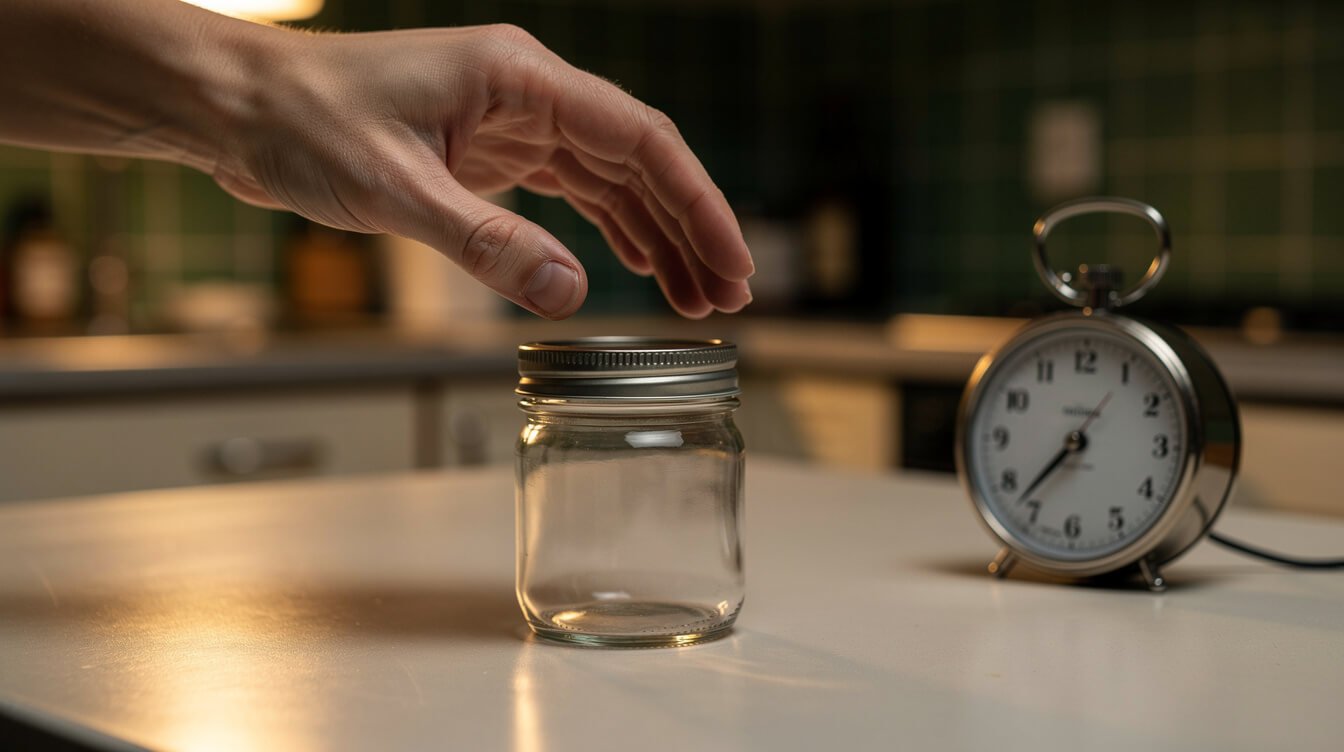
Here’s a confusing thing about the advice on page one of Google: the sources don’t agree on how long to wait before taking more. One major health site says to wait at least 24 hours. Several rehab and clinic pages say 2 to 3 hours. British Columbia’s public-health guidance says taking more within 4 hours can lead to taking too much. None of them explains where their number comes from.
The trial data explains it. Effects peak 1.5 to 3 hours after eating. So the classic mistake goes like this:
- You eat a gummy at 8:00.
- At 8:45 you feel nothing, so you decide it “didn’t work.”
- At 9:00 you eat another one.
- Around 9:30 the first gummy arrives, and it’s still climbing.
- Around 10:30 the first one is at its peak and the second one is climbing on top of it.
You didn’t take one dose and then another. You took two doses that peak at overlapping times. Northwell Health describes exactly this pattern: people assume the first gummy isn’t working, take another, and get overwhelmed when both hit together.
A rule that actually follows the data
- Don’t take more until you’re past the peak window: that’s roughly 3 hours, and longer if you ate a big meal. BC’s 4-hour line is a sensible margin.
- With a new product or a new batch, save “more” for another day. If 5 mg felt like too little, try 7.5 or 10 mg next time, not tonight. This is the practical logic behind the conservative 24-hour advice. It isn’t that a second dose at hour 5 is dangerous. It’s that you only learn what a dose does by letting it play out once.
- Start with the label serving, or less. British Columbia’s guidance suggests 2.5 mg of THC or less for people trying edibles. Many U.S. products are sold in 5 or 10 mg servings, and splitting one is a perfectly good move.
One more reason to keep the first dose small: the number on the label isn’t always the number in the product. In a 2015 JAMA study of 75 medical-market edibles, only 17% were accurately labeled for THC. 23% contained more THC than the label said, and 60% contained less. Testing rules have tightened in many places since then, but that’s still a reason to treat the label as a starting estimate, especially with homemade edibles, which have no testing at all. If you’re making your own, our guide on making cannabutter with shake and dosing it honestly walks through the math.
GanjaTech, weekly
Cannabis, explained. In your inbox.
One email a week: the clearest explainers, honest gear picks, and what the science actually says. 21+ only. No spam, unsubscribe anytime.
What changes how long edibles last
The 6-to-8-hour figure is a midpoint, not a promise. Ask five people how long do edibles last for them and you’ll get five answers, and most of the spread comes down to a handful of factors.
Dose
This one is clear in the trial data. In Schlienz’s study of people who rarely used cannabis, 10 mg of THC produced noticeable effects and a higher heart rate but didn’t measurably impair cognitive or psychomotor performance. At 25 and 50 mg, effects were pronounced and performance was markedly impaired. More THC doesn’t just mean stronger. In practice, people report that bigger doses also stretch the tail, which is why 100 mg experiences are the ones described as “all day.”
Tolerance
The Hopkins volunteers hadn’t used cannabis for months, so their timelines are what a low-tolerance person can expect. Regular users often report shorter, milder edible sessions at the same dose. The timing of the peak doesn’t change much, though. Tolerance turns down the volume, but the clock runs about the same.
Food and timing
As covered above, a full stomach usually means a slower start, and fat can change how much THC gets absorbed. The trap is the same as with redosing: a slow start makes people think the edible was weak.
CBD in the product (this one surprises people)
A lot of edibles advice says to choose CBD-heavy or “full-spectrum” products if you want a gentler ride. For edibles specifically, a 2023 Johns Hopkins trial points the other way. In Zamarripa et al. (JAMA Network Open, 2023), 18 adults ate brownies with the same 20 mg of THC, either alone or with 640 mg of CBD. With the CBD added, blood levels of THC and 11-OH-THC were higher, and people reported more anxiety, sedation, and memory difficulty, with more impairment on cognitive and psychomotor tests.
The likely reason is that CBD can slow the liver enzymes that break THC down. Two caveats are important. 640 mg of CBD is far more than the typical 1:1 gummy contains, and the trial also gave participants a cocktail of probe drugs to measure those enzymes. So this doesn’t prove that every CBD-containing edible hits harder. It does mean you shouldn’t assume CBD will make an edible milder or shorter. For more on how the two compounds differ, see our side-by-side breakdown of CBD vs THC effects and our explainer on CBD vs THC gummies.
Product type and how it was made
Gummies, chocolates, baked goods, drinks, and capsules all go through the same gut-and-liver route, but recipes vary in how evenly THC is spread through the product. With homemade edibles, uneven mixing is the main reason one brownie hits much harder than the one next to it. How the cannabis was heated matters too. Undercooked or unactivated material won’t deliver what you think, which our guide to decarb temperature and time explains. Strain labels like “indica” don’t reliably predict how an edible will feel either (here’s why).
Why edibles send more people to the ER than you’d expect

This section isn’t meant to scare anyone. It’s to show why the timing matters.
A study of a large urban hospital in Colorado looked at emergency department visits between 2012 and 2016 (Monte et al., Annals of Internal Medicine, 2019). From 2014 to 2016, edibles accounted for 10.7% of cannabis-attributable ER visits but only 0.32% of the THC sold in the state, measured by weight. Edible-related visits were also more likely to involve acute psychiatric symptoms like anxiety or panic (18.0% vs 10.9% for inhaled cannabis), intoxication (48% vs 28%), and cardiovascular symptoms (8.0% vs 3.1%).
Read that carefully. It doesn’t show that edibles are more toxic per milligram. The study can’t answer that, and the authors note its limitations (one hospital, self-reported exposure, limited dose data). What it fits with is everything above: a delayed effect that’s easy to overshoot, a long peak that’s hard to wait out, and a duration that’s longer than people plan for.
If it’s too much
Most uncomfortable edible experiences pass with time, a calm space, water, and someone you trust nearby. Our guide to what greening out is covers what helps, and the popular fixes that don’t. But some things deserve real medical attention: chest pain, trouble breathing, fainting, severe confusion, or a racing heart that doesn’t settle. If any of those happen, call 911 or your local emergency number. In the U.S., Poison Control is 1-800-222-1222, free and confidential, and it’s also the number to call if a child or pet eats an edible. Keep edibles locked up and clearly labeled, away from anything that looks like regular candy or snacks.
Planning around a long high: driving, sleep, and the next morning

The length of an edible is the reason to plan ahead, not just a fun fact. Here’s how to plan around it.
Driving: count the whole day out
In the Hopkins trials, 25 and 50 mg doses markedly impaired cognitive and psychomotor performance, and effects lasted 6 to 8 hours. Even when you feel “basically fine,” you may not be. The simple rule: if you’ve had an edible, you’re not driving for the rest of the day. Plan your ride before you eat it, not after. Impaired driving is illegal and dangerous, whatever the cannabis laws are where you live.
Alcohol and other substances
Don’t mix edibles with alcohol, sleep medications, or other sedatives. Combining them makes the experience harder to predict, and a long edible window means a long overlap. If you take any prescription medication, talk to a doctor or pharmacist before using edibles, since cannabinoids can interact with how some drugs are processed.
Sleep and the next morning
Because the peak arrives 1.5 to 3 hours after eating and the effects run long, timing matters. An edible taken late in the evening may still be going strong at bedtime. Some people report waking up groggy or slow the next morning, especially after higher doses. That’s anecdotal, but common enough to plan for. If you have something important early the next day, a smaller dose or an earlier start time is the move.
A simple pre-edible checklist
- At least 8 free hours, at home or somewhere safe, with nowhere to drive.
- The label serving or less, especially with a new product.
- Note the time you ate it, then don’t take more until you’re past the peak window.
- Water, food, and something low-key to do.
- Edibles stored away from kids, pets, and anyone who might mistake them for regular snacks.
How long do edibles last? Quick answers to common questions

How long do edibles last for a first-timer?
Plan for a full evening. Expect 30 minutes to 2 hours before you feel anything, the peak around 1.5 to 3 hours in, and effects lasting about 6 to 8 hours. Low tolerance can stretch that. Start with 2.5 to 5 mg of THC, and keep the rest of the day free.
How long does a 10 mg edible last?
In the Hopkins research, 10 mg of THC in a brownie produced noticeable effects in infrequent users, peaking at 1.5 to 3 hours, though it didn’t measurably impair test performance in that small study. That isn’t a green light to drive or work. Expect several hours of effects, shorter for regular users and longer for people with little tolerance.
Do more edibles last longer?
Generally, yes. Higher doses produce stronger effects, and people commonly report longer sessions at higher doses, with public-health guidance noting intoxication up to 12 hours. The bigger issue is that a second dose taken too early overlaps the first, which makes the peak much more intense.
Do edibles hit faster on an empty stomach?
Often, yes. A full stomach usually slows the start. But “faster” isn’t the same as “milder,” and a fatty meal can change how much THC is absorbed. Either way, wait out the peak before deciding the dose was too small.
How long do edibles last compared to smoking?
Much longer. Smoked or vaped cannabis usually takes effect within minutes and fades within a couple of hours. Edibles take 30 to 90 minutes to start and last 6 to 8 hours or more. For more about why one dose feels different from another, our reference on terpenes and reported effects is a good next read.
Will an edible show up on a drug test after the high is gone?
It can. How long THC stays detectable is a separate question from how long you feel it, and it depends on the test and how often you use. Our detection-window guide covers it.
Final thoughts
Edibles reward patience and punish impatience, and the clock explains why. Effects show up after 30 to 60 minutes (or up to 2 hours), peak around 1.5 to 3 hours, and last 6 to 8 hours or more. Nearly every bad edible story comes down to the same move: taking more before the first dose had peaked.
So the honest answer to “how long do edibles last” comes with a plan attached. Start with the label serving or less. Write down the time. Don’t take more until you’re past the peak. Keep the rest of the day free, and don’t drive. Know your local laws, keep edibles away from kids and pets, and leave anything health-related to a doctor. Do that, and the long, slow curve that catches people out becomes the thing you planned for.
Before you go
Get the next explainer first
We publish a new one every day. The best of the week, plus what's new in the shop, lands in one short email.