Does Weed Go Bad? The Honest Answer, and What Actually Degrades
Does weed go bad? Short answer: it doesn’t expire, but it does go bad — in two completely different ways that most articles blur together. It degrades slowly and predictably, losing potency, aroma, and flavor on a curve you can plan around. Separately, it can spoil, which is a moisture-and-mold problem and the only version of “gone bad” that has anything to do with your safety. One makes your stash boring. The other makes it something to throw away.
That distinction changes what you do next. If you found a jar from last spring, the useful question isn’t “does weed go bad” in the abstract — it’s “which kind of bad is this, and can I still use it?” Nearly every page ranking for this term answers the potency question, then lists scary-sounding warning signs without saying which category each one falls into.
So here’s the whole picture: how long cured flower stays good, where the famous degradation numbers come from and what they actually measured, what ruins it fastest (ranked, not a flat list of four), how to tell old from spoiled, how to store it properly, and four things page one keeps getting wrong. Everything here is general education for adults 21 and over, and cannabis laws — including how much you’re allowed to have on hand — vary by state and country, so check yours.
Does weed go bad? The short answer, and the distinction nobody draws
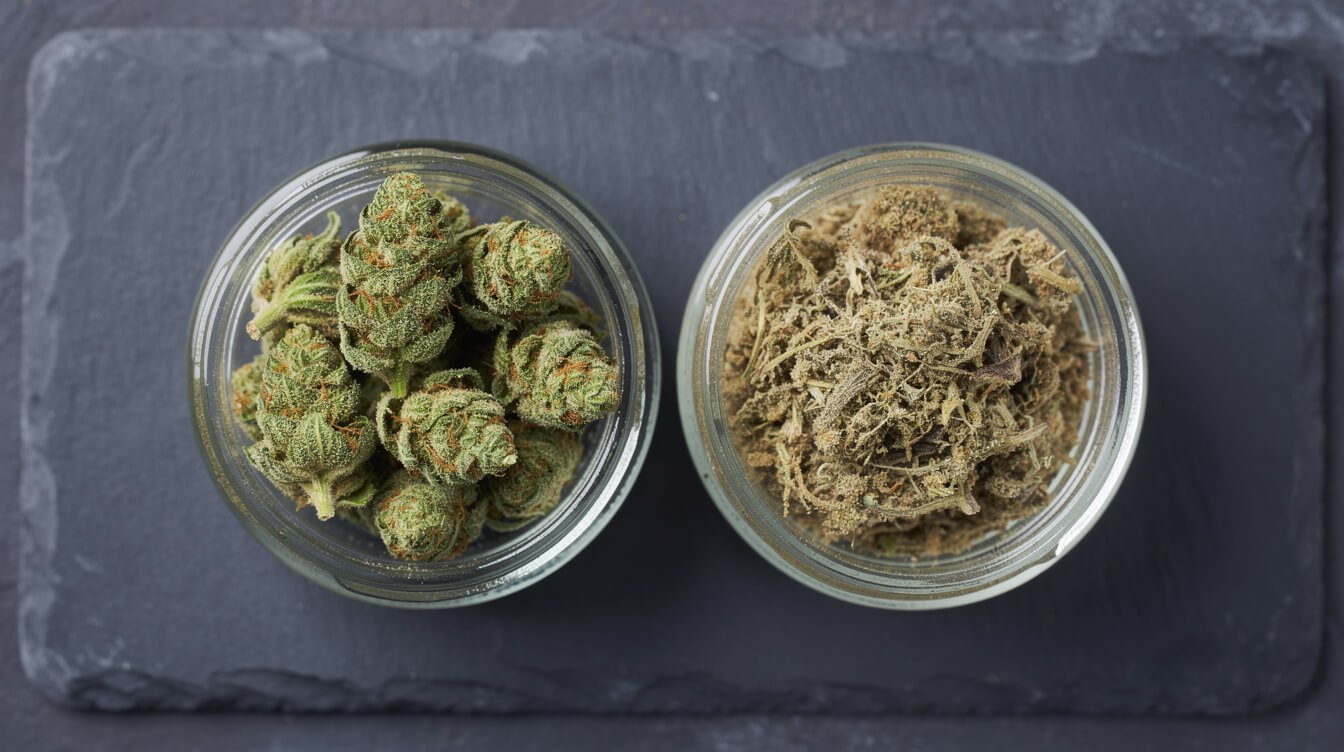
When people ask does weed go bad, they’re usually picturing milk. Cured cannabis is a dried plant product, so it behaves like one instead. It doesn’t hit a date and turn toxic. It oxidizes, dries out, and loses volatile compounds, gradually, from the moment it comes out of the jar it was cured in. That’s degrading. If moisture gets in and stays in, microbes get to work instead. That’s spoiling. They’re different processes with different causes, different timelines, and very different consequences.
Degrading: potency and flavor fade, and that’s it
Two things are leaving. THC oxidizes into cannabinol (CBN) and other breakdown products. Terpenes — the volatile aromatics that give each cultivar its smell and much of its character — go faster than cannabinoids, which is why old flower smells flat and generic before it feels noticeably weaker.
Degraded flower is still flower. It’s weaker and duller, and if it got bone-dry it smokes harsh, but age alone doesn’t make cannabis unsafe. Eighteen months in a jar creates no hazard. It just makes a worse version of what you had.
Spoiling: moisture, microbes, and the one you can’t ignore
Mold and bacteria need water. Keep flower at the right moisture level in a sealed container and there isn’t enough free water for anything to grow. Let it get damp — a bathroom cabinet, or buds sealed before they finished drying — and you can get visible growth in days, not months. Time isn’t the variable. Moisture is.
This asymmetry should drive every decision about an old stash: degradation is harmless, and spoilage is a reason to throw the whole jar out. So when you ask does weed go bad, the answer that matters is which kind — the cost of guessing wrong is wildly different in each direction. Treat ambiguity as spoilage and let it go.
How long weed stays good — and where the numbers actually come from
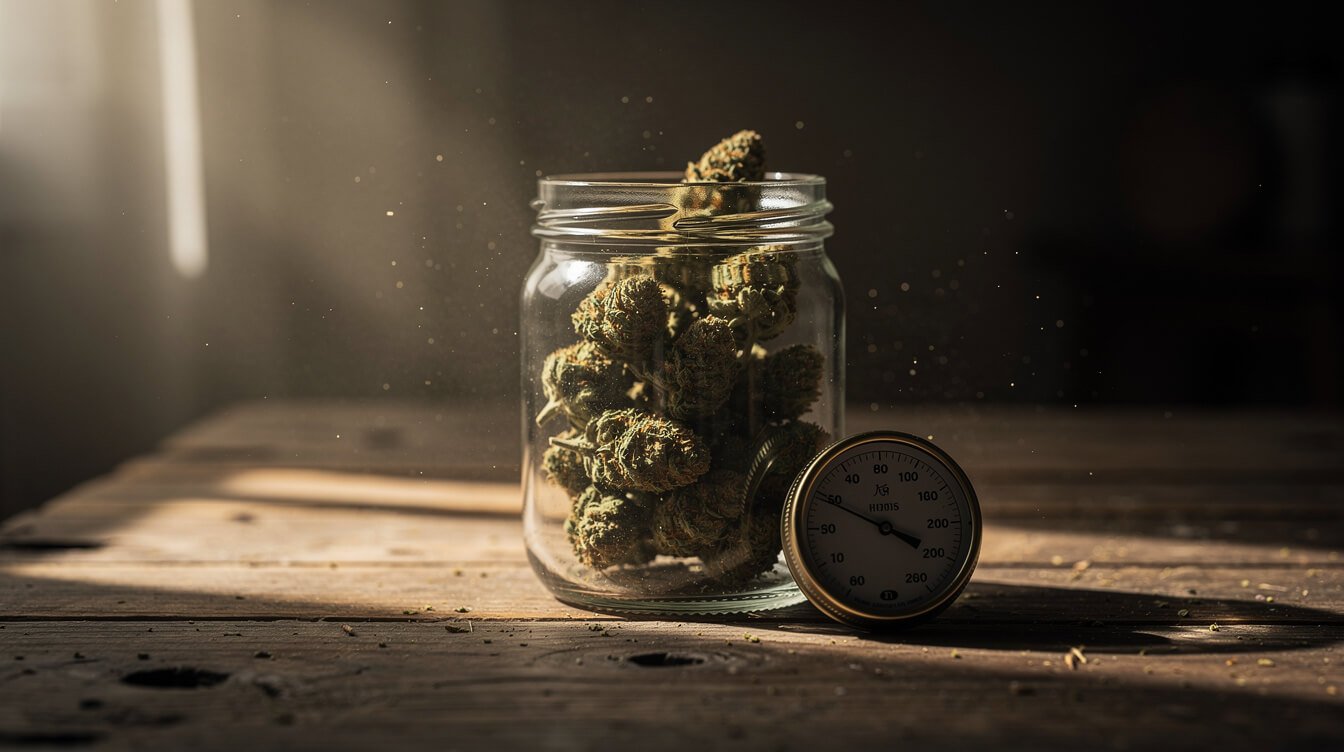
With a proper cure and decent storage, cured flower stays genuinely good for roughly six months to a year. It stays usable for a lot longer than that. Here’s the honest timeline:
| Age (stored well) | What you’ll notice | Still usable? |
|---|---|---|
| 0–6 months | Essentially what you started with. Aroma strongest in the first couple of months. | Yes — prime |
| 6–12 months | Terpenes noticeably quieter. Potency down slightly. Flavor flatter. | Yes |
| 1–2 years | Clearly weaker and duller. Drier texture, harsher smoke. | Yes, if no mold |
| 2–4 years | Substantially weaker. Aroma mostly gone or hay-like. | Yes, if no mold — better suited to edibles |
The four-year series everybody quotes
If you’ve read more than one article on this, you’ve seen the same figures: 16% of THC lost after one year, 26% after two, 34% after three, 41% after four. They appear on nearly every page ranking for this question, almost always with no source and no explanation.
They trace back to stability research published through the United Nations Office on Drugs and Crime’s Bulletin on Narcotics, which tracked stored cannabis over four years at room temperature, in the dark. Applied to 20% THC flower, that series lands at roughly 16.8% after one year, 14.8% after two, 13.2% after three, and 11.8% after four.
What that series actually shows, and what nobody points out
Look at the gaps between those numbers rather than the numbers themselves. Year one costs you 16 percentage points of your original THC. Year two costs 10 more. Year three, 8. Year four, 7. The curve is front-loaded: the first year costs you roughly as much potency as the next two years put together, and the losses keep shrinking after that.
That’s the practical takeaway buried in a statistic everyone copies and nobody reads. If your flower is fresh, storage discipline pays off immediately, because the steepest part of the decline is happening right now. If it’s already three years old, another six months barely moves the needle — it has given up most of what it was going to give up. No cliff is coming.
It also reframes what “old weed” means. Four-year-old flower that started at 20% is sitting around 12%, which is roughly what perfectly respectable dispensary flower tested at not very long ago. It isn’t inert. It’s just weaker than it was.
What that research does not tell you
Being straight about sources means being straight about their limits. That work used a small number of samples of the material available at the time, stored in the dark at room temperature — not modern high-potency cultivars, and not your closet. Treat the series as the shape of the curve, not a guarantee about your jar. The direction and the front-loading are solid; the exact percentages are not a promise.
It also leaves out the biggest variable: how well the flower was cured in the first place. Properly dried and cured buds start from a stable baseline. Flower rushed through drying arrives already compromised, and it ages faster than any storage habit can fix.
What makes weed go bad, ranked from worst to least
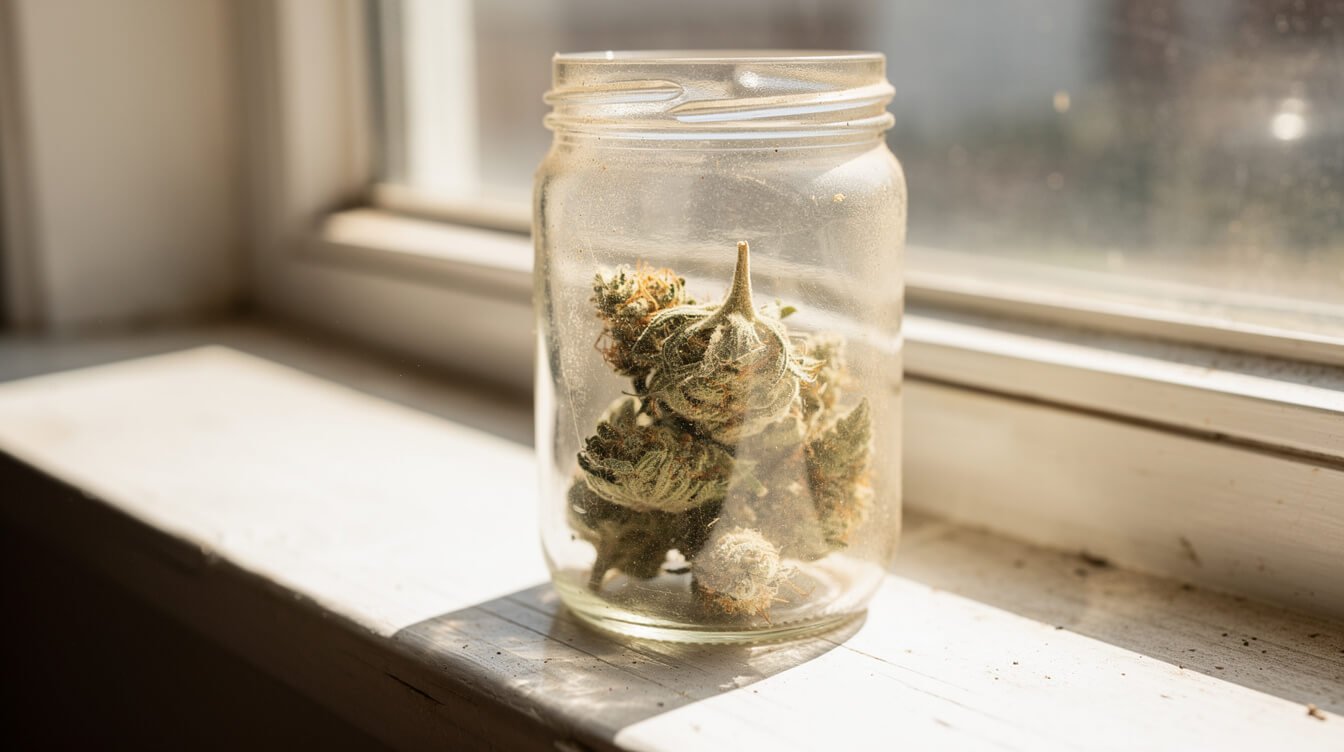
Every article asking does weed go bad lists the same four culprits — light, heat, air, humidity — as a flat list, as if they mattered equally. They don’t. Ranking them tells you where to spend your attention.
1. Light — by a wide margin
Stability work going back to Fairbairn and colleagues in the 1970s found light to be the single greatest factor in cannabinoid loss. Ultraviolet light drives the breakdown directly, and fast compared to everything else here. A jar in a sunny window can lose more in weeks than a jar in a dark cupboard loses in a year.
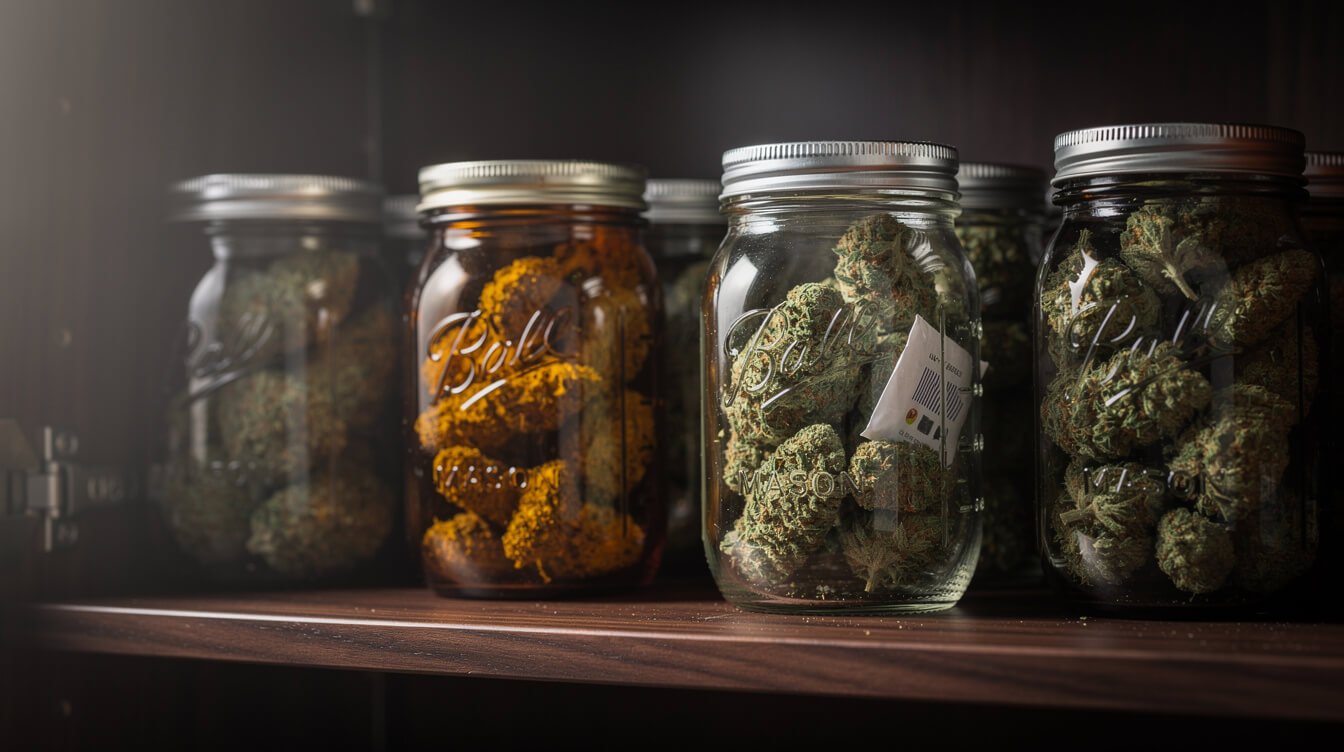
This is also where the most common storage mistake lives, and it’s a mistake because it looks right. A clear glass mason jar is genuinely excellent cannabis storage — airtight, non-reactive, no plastic flavor. Then people put it on an open shelf or a countertop, because it looks good there, and the glass that protects the flower from air does nothing at all about the light. The jar isn’t the problem. The location is. Same jar, inside a closed cupboard, and you’ve fixed the biggest factor for free.
2. Heat
Warmth accelerates every reaction in the jar, including the oxidation you’re trying to slow. It also drives off terpenes, which are volatile by definition — warm flower smells stronger now and weaker a month later. You want stable and cool, not cold. A closed cupboard on an interior wall beats a cabinet above the stove.
3. Air
Oxygen is the reactant in THC’s conversion to CBN, so less air means slower degradation. Two habits follow: use a container that genuinely seals, and one that roughly matches how much flower you have. A gram rattling around in a half-gallon jar is sitting in a lot of oxygen. Sizing down as you work through a stash is free.
4. Humidity — and it goes wrong in both directions
Humidity is last on potency but has the worst failure mode, because it can spoil flower rather than just weaken it. Too wet and you’re growing mold. Too dry and trichomes get brittle and shed, the flower turns to dust in your fingers, and the smoke gets scratchy. Unlike the other three, where less is simply better, humidity has a target band.
How to tell if your weed has gone bad
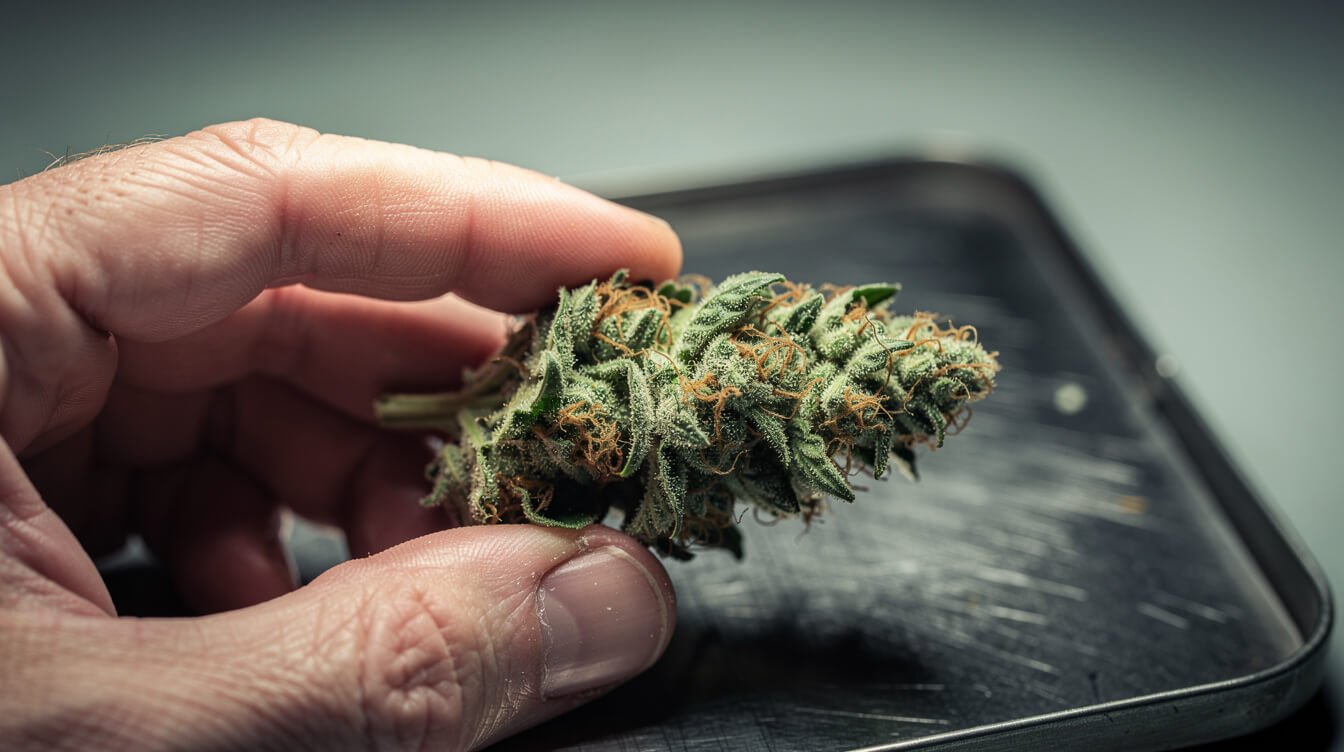
Here’s where most guides answering does weed go bad fail you. They give one undifferentiated list of warning signs, so you can’t tell whether what you’re seeing means “mediocre” or “do not smoke this.” Those belong in separate columns.
Signs it’s just old — weaker, not unsafe
- Faded color. Vibrant green gone pale, tan, or yellowish-brown.
- Little or no smell, or a flat, generic, hay-like smell. This is terpene loss and it’s the earliest sign of all.
- Dry, brittle texture. Buds crumble to powder rather than breaking apart with a little resistance.
- Trichomes look dark or collapsed instead of clear and frosty under a loupe — the same skill from our guide to reading trichomes at harvest, pointed at storage.
- Harsher, less flavorful smoke, and a duller, flatter effect.
All of that is a quality complaint. None of it is a safety issue.
Signs it’s actually spoiled — stop and discard
- Visible fuzz or webbing, usually grey, white, or bluish, often in the dense interior of a bud rather than on the surface. White mold on pale trichomes is easy to miss; a loupe and a bright light help.
- A musty, damp-basement, or ammonia-like smell.
- Buds that feel damp, spongy, or cold when the room isn’t.
- Dark spots or slime.
- A crackling, popping sound when it burns, which can mean trapped moisture.
The must-versus-mold problem
The hard call is a faint musty smell with nothing visible, because a long cure can produce a slightly funky “must” that is not mold. We’ve written a full walkthrough of telling must from mold during a jar cure, and the same test applies to stored flower: break a bud open and inspect the inside under bright light. Mold starts where moisture is trapped, not where you can see it. For the visual side (fuzz versus frost, the look-alikes, and the loupe check), see what moldy weed looks like up close.
If you break it open and still can’t tell, throw it out. The downside of discarding good flower is that you lost some flower. The downside of inhaling mold is a medical question, not a cannabis one, and it is not a coin flip worth taking.
GanjaTech, weekly
Cannabis, explained. In your inbox.
One email a week: the clearest explainers, honest gear picks, and what the science actually says. 21+ only. No spam, unsubscribe anytime.
How to store weed so it stays good
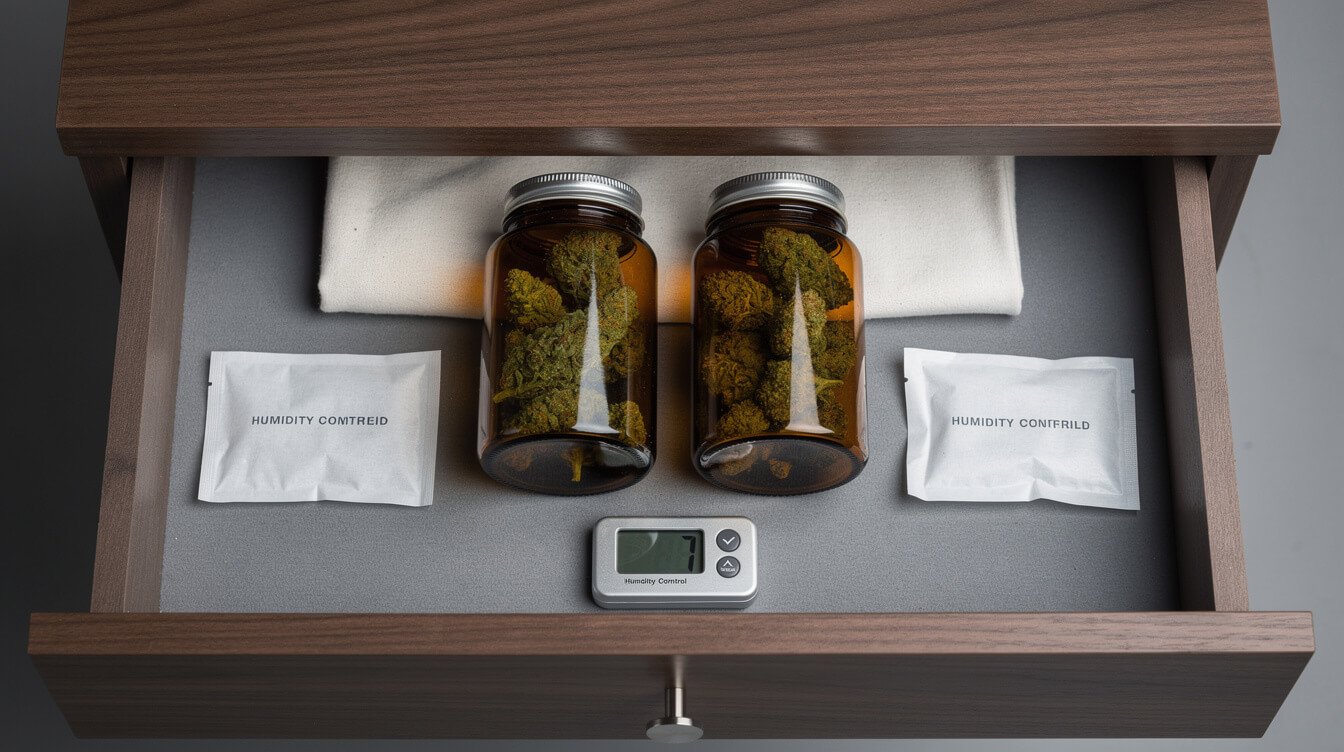
Storing cannabis well is four cheap decisions. If you’ve handled drying and curing yourself, it’s the same logic extended past where most grow guides stop.
The container: glass, sealed, roughly the right size
An airtight glass jar with a gasket or a solid screw lid is the answer, and a plain mason jar does it as well as anything expensive. Opaque or amber glass is a real upgrade, because it handles the light problem even when the storage spot is imperfect. Avoid plastic bags, which let air through, crush the flower, and build a static charge that strips trichomes onto the plastic; soft plastic tubs, which can impart a taste; and unlined metal tins.
The humidity target: 59–63% RH, and which pack to buy
The consensus band for stored flower is 59–63% relative humidity, and page one of this search actually disagrees about it — some sources widen the bottom end to 53%, which is drier than you want for anything you plan to keep. Under roughly 55% and the flower starts turning brittle and shedding trichomes. Over about 65% and mold risk climbs sharply.
Two-way humidity packs hold that band for you, and they’re sold in 62% and 58% versions, which nobody ever explains. The practical rule:
- 62% for most people, most of the time. It’s the top of the comfortable band, so flower stays supple, terpenes are better preserved, and it smokes well.
- 58% when you want more margin against mold — a humid climate, a jar you’re not going to check for months, or flower you’re not completely sure was dry when it went in.
A cheap hygrometer in the jar turns guesswork into a number you can read. And a humidity pack is not a rescue tool — putting one into damp flower adds a sealed, stable, humid environment to a mold problem that already exists.
The location: dark, cool, and boring
A closed cupboard or drawer on an interior wall, away from heat and out of the sun. That’s it. The unglamorous spot wins, and since light is the biggest factor, moving a jar off a windowsill and into a cupboard is the highest-value thing most people can do today.
The part nobody covers: your grinder and your daily carry
Every guide on this topic covers long-term jar storage, and almost none mention where cannabis actually degrades fastest in real life — the grinder chamber, a baggie in a jacket pocket, and the paper exit bag it came home in.
Ground cannabis has far more surface area exposed to air than whole buds, so it oxidizes and loses terpenes much quicker. So grind what you’re about to use, not what you might use later — also one of the arguments in our breakdown of what actually matters in a grinder, and the reason a chamber you can empty cleanly beats a motorized one that holds a reservoir. Flower in a pocket is getting body heat plus crushing; flower in a dispensary bag is getting air and light. Transfer it to glass the day you get it home, and keep a small working jar so the big one stays sealed.
Packaged dates, exit bags, and the legal side
Regulated cannabis usually carries a packaged-on or best-by date. That’s a retail and compliance marker, not a safety cliff. It’s a reasonable clock for freshness and a useless one for spoilage, which tracks moisture, not dates.
Stockpiling also matters legally, not just chemically. Possession limits, home storage rules, and what’s permitted at all differ enormously between states and countries, and they change. Nothing here should be read as a claim that any of it is legal where you live — check your own jurisdiction’s current rules before building up a supply.
Four things page one gets wrong about old weed
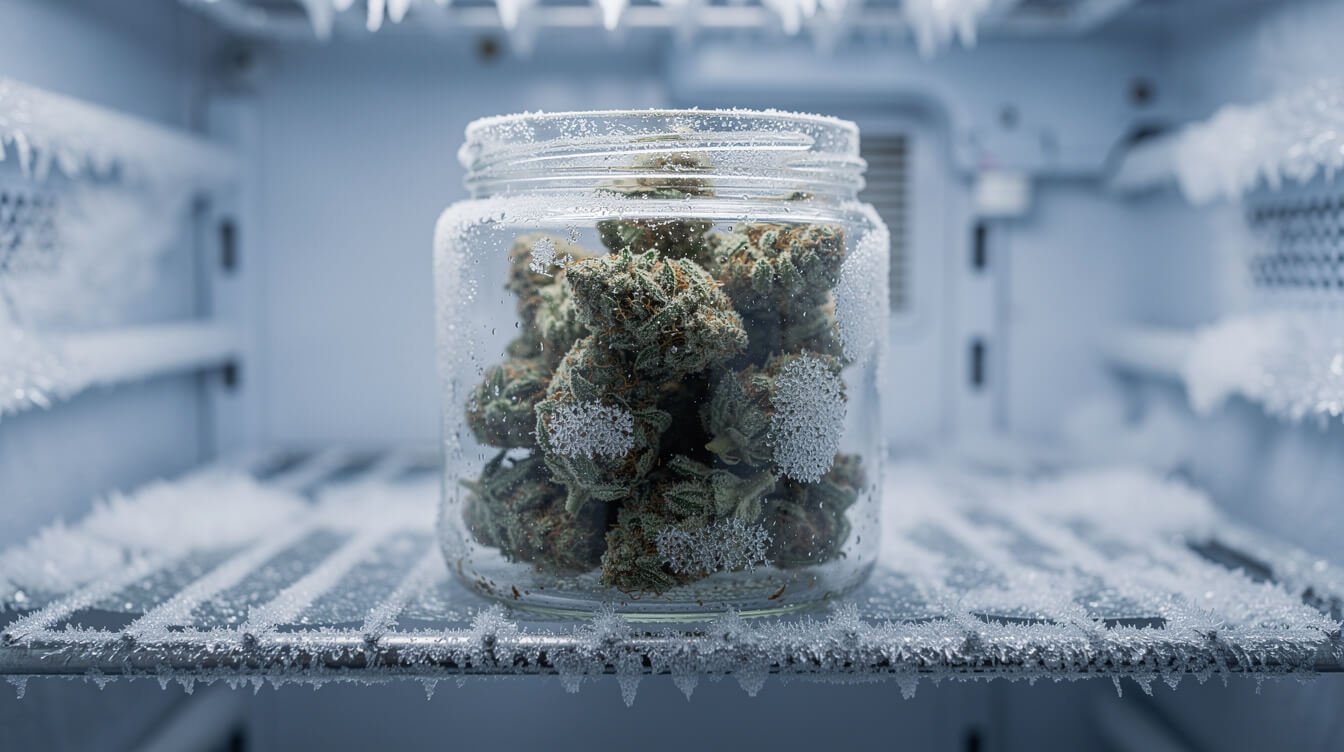
Searching does weed go bad turns up many repeated claims. Four are worth correcting, because all four lead to a worse outcome.
“Old weed is more sedative, because THC turns into CBN”
The most widely repeated claim on the subject, and the shakiest. Yes, THC oxidizes into CBN, and CBN has a reputation as the sleepy cannabinoid. Two things get skipped. First, the amount forming in aging flower is small — typically a fraction of a percent, far below anything you’d expect to feel. Its real use is as a clock, not a sedative: forensic chemists have used the CBN-to-THC ratio to estimate the age of stored samples. Second, reviews of the human evidence for CBN as a sleep aid have repeatedly called it thin, and we won’t make a health claim out of it.
So why does old weed genuinely feel heavier and flatter to people? Almost certainly terpene loss, not CBN gain. Terpenes evaporate at very different rates. The light monoterpenes — limonene, pinene, the bright citrus-and-pine notes people associate with a clear-headed effect — are the most volatile and leave first. Heavier sesquiterpenes like caryophyllene and humulene hang around much longer. What’s left after a year or two is a profile that lost its top notes and kept its base notes, on top of less THC. That’s a subtraction, not an addition. Our practical reference on terpenes and their reported effects goes deeper on why those compounds carry so much of the character.
“The freezer makes it last longer”
It doesn’t, and this one actively costs you. At freezer temperatures trichomes turn brittle and snap off the moment you handle the flower, so the resin you care about ends up on the bottom of the container. Ice crystals rupture plant cells, and every time the jar comes out, condensation forms on cold flower — which is how a freezer stash becomes a moisture problem. Cool, dark, and stable beats cold. Refrigerators are the same story, plus competing odors.
“Rehydrate dry flower with a citrus peel or a slice of bread”
You can rehydrate over-dried flower, but not like that. Adding food to a sealed jar adds an uncontrolled moisture source plus organic material for microbes to live on — close to a recipe for mold. Use a two-way humidity pack instead and give it several days to equilibrate slowly. Fast rehydration doesn’t restore terpenes that already left, and it does risk wetting the outside of a bud faster than the inside can catch up.
“The expiration date means it’s gone bad”
Worth repeating, because it causes needless waste: a package date is a freshness marker. Flower a few months past it, stored well, is fine. Flower inside the date that got damp is not. The date doesn’t know what happened to the jar.
Old weed FAQ: other products, safety, and what to do with it
Is it safe to smoke two-year-old weed?
If it was stored reasonably and shows no mold, age by itself isn’t the issue — expect weaker, drier, less flavorful. If there’s any sign of spoilage, no, regardless of age.
Can old weed make you sick?
Age can’t. Contamination can. A 2017 analysis of dispensary cannabis published in Clinical Microbiology and Infection detected potentially pathogenic bacteria and fungi, including Aspergillus species, on samples — and badly stored flower is a better home for that than fresh flower. The harm-reduction point that matters: burning it does not reliably solve the problem. Combustion doesn’t guarantee spores or their byproducts are neutralized, and grinding, vaping, or baking moldy flower doesn’t make it safe either. This matters most for anyone immunocompromised or with a lung condition. If you think you’ve inhaled mold and you feel unwell, that’s a conversation for a doctor, not an internet article.
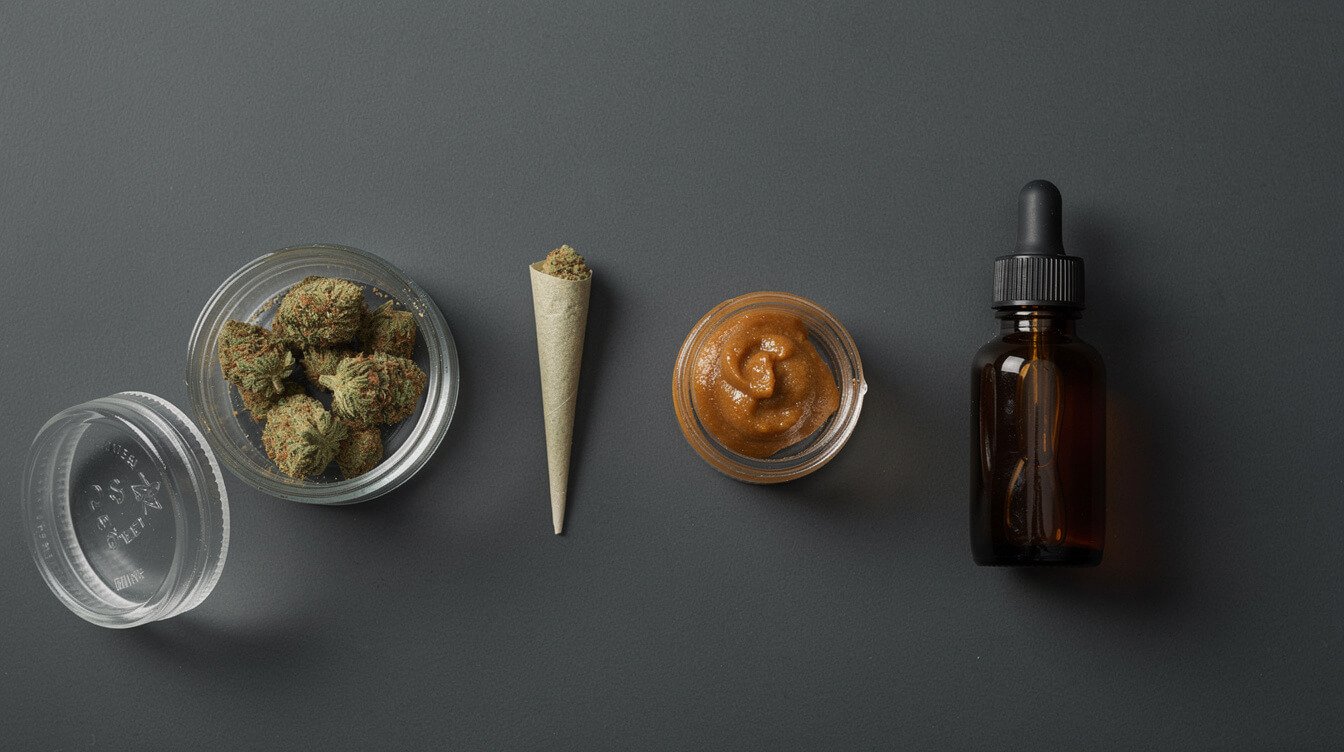
What about edibles, concentrates, pre-rolls, and tinctures?
- Concentrates and tinctures: longest-lived, often a year or two, because there’s less plant matter to break down. Keep them cold and dark; oils can go rancid.
- Pre-rolls: the shortest-lived form of flower. Thin paper, ground material, lots of surface area — weeks to a few months, not a year.
- Edibles: governed by the food they’re made of, not the cannabis. A baked good stales on a baked good’s schedule, and infused butters go rancid like any fat.
Can weed go bad in a sealed container?
Yes, in both ways. A sealed jar slows oxidation but doesn’t stop it, and if the flower went in damp, sealing makes mold more likely, not less. Sealed plus correct moisture is the combination that works.
Does this have anything to do with how long weed stays in your system?
No, and the two get confused constantly. Shelf life is about the flower in the jar. Detection windows are about your body metabolizing cannabinoids, covered separately in how long weed stays in your system.
What should I do with old flower that’s weak but clean?
Heat and fat don’t care how fresh it is, so old flower is a good candidate for edibles — lower potency, identical process. Start with our decarb temperature and time guide, then make cannabutter with it as you would with shake. Dose conservatively, because you genuinely don’t know the potency anymore. Start low, go slow — that matters more, not less, when strength is a question mark.
Final thoughts: so does weed go bad, or not?
Both, depending which question you’re asking. Does weed go bad in the sense of expiring and becoming dangerous? No — age alone doesn’t do that, and the four-year curve is gentler and more front-loaded than the internet implies. Does weed go bad in the sense of losing the things you actually paid for? Absolutely, and fastest in the first year, which is exactly when good storage is worth the most.
Four habits cover nearly all of it: glass, sealed, 59–63% humidity, somewhere dark and cool. Then stop thinking about dates and start reading the flower — smell it, look inside a bud, notice whether it’s supple or dusty. Old is a quality question and your call. Damp isn’t a judgment call, and a jar you’re unsure about isn’t worth the risk. Great plant, worth storing properly, worth respecting your own laws about.
Before you go
Get the next explainer first
We publish a new one every day. The best of the week, plus what's new in the shop, lands in one short email.