How to Clean a Grinder (Without Wrecking the Magnet, Screen, or Finish)
Here’s how to clean a grinder, short version: tap out and save the kief, take the grinder fully apart, freeze the pieces for 20–30 minutes so the resin turns brittle, brush off what you can, then soak the metal parts in 91% or stronger isopropyl alcohol for 20–30 minutes, scrub, rinse with warm water, and let every piece dry completely before you put it back together. Plastic, acrylic, and wood grinders skip the alcohol and get warm soapy water or a dry brush instead.
That covers most metal grinders in under an hour, most of it hands-off. The rest of this guide is the part other guides skip: why alcohol beats water on resin, why it can ruin an acrylic grinder, what boiling actually does to the magnet in your lid, and which “hacks” quietly make an edible you didn’t plan on. One note first: this is for adults 21+, and paraphernalia rules vary by state and country, so know yours.
How to clean a grinder: the fast answer
If you’ve got a standard aluminum or stainless grinder and just want it working again, this is how to clean a grinder the fast way. Budget five minutes of actual effort and 30–60 minutes of waiting.
- Save the kief. Unscrew the bottom chamber and scrape the kief out onto a sheet of paper with a card or the scraper that came with the grinder. Do this before anything gets wet.
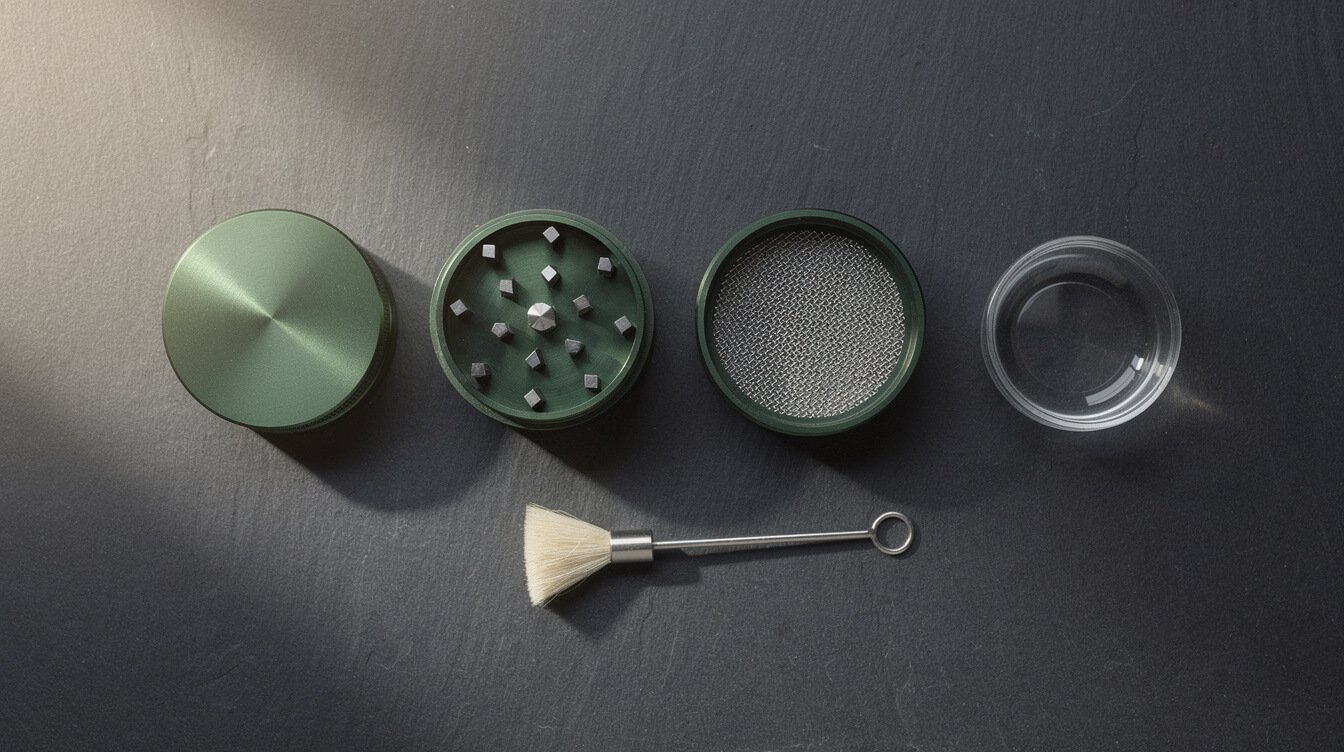
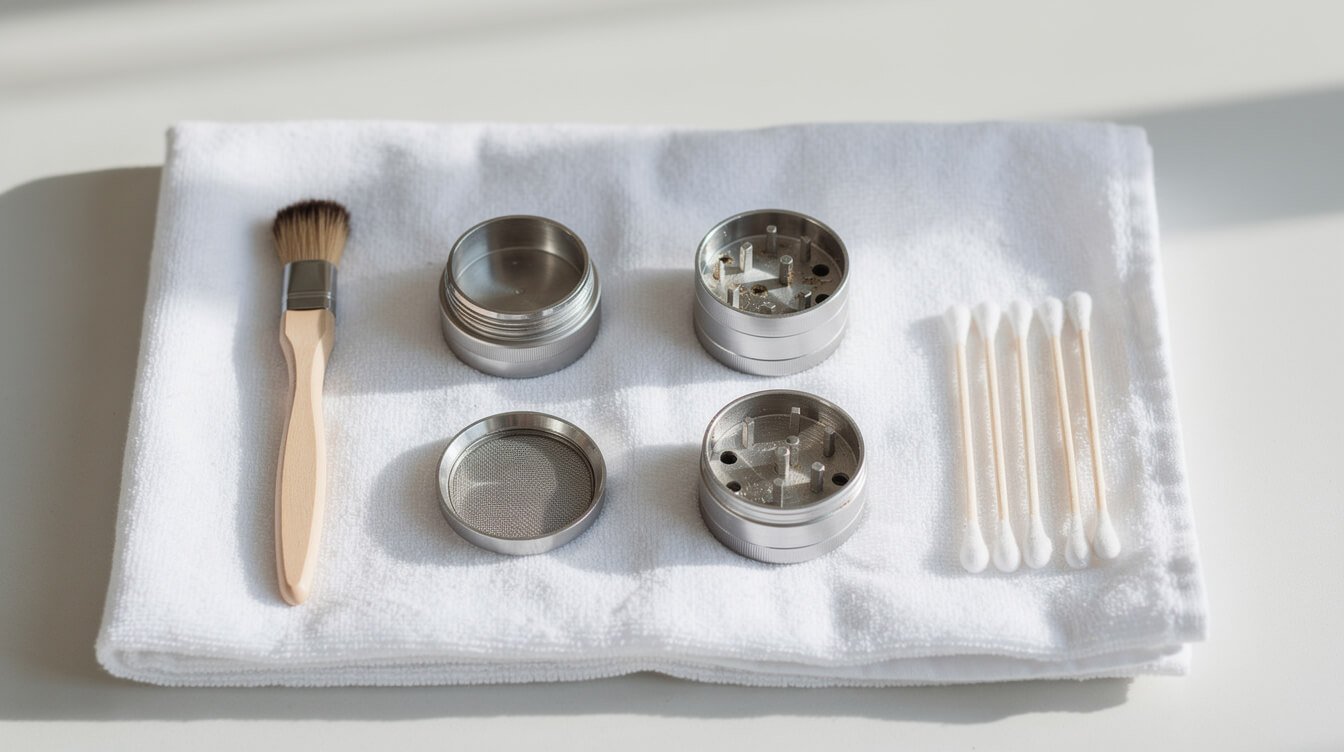
- Take it apart. Lid, grinding chamber, screen chamber, kief catcher. Every piece that separates should separate.
- Freeze it. Bag the pieces and put them in the freezer for 20–30 minutes. Cold resin is brittle, so a lot of it will knock loose with a firm tap over the paper.
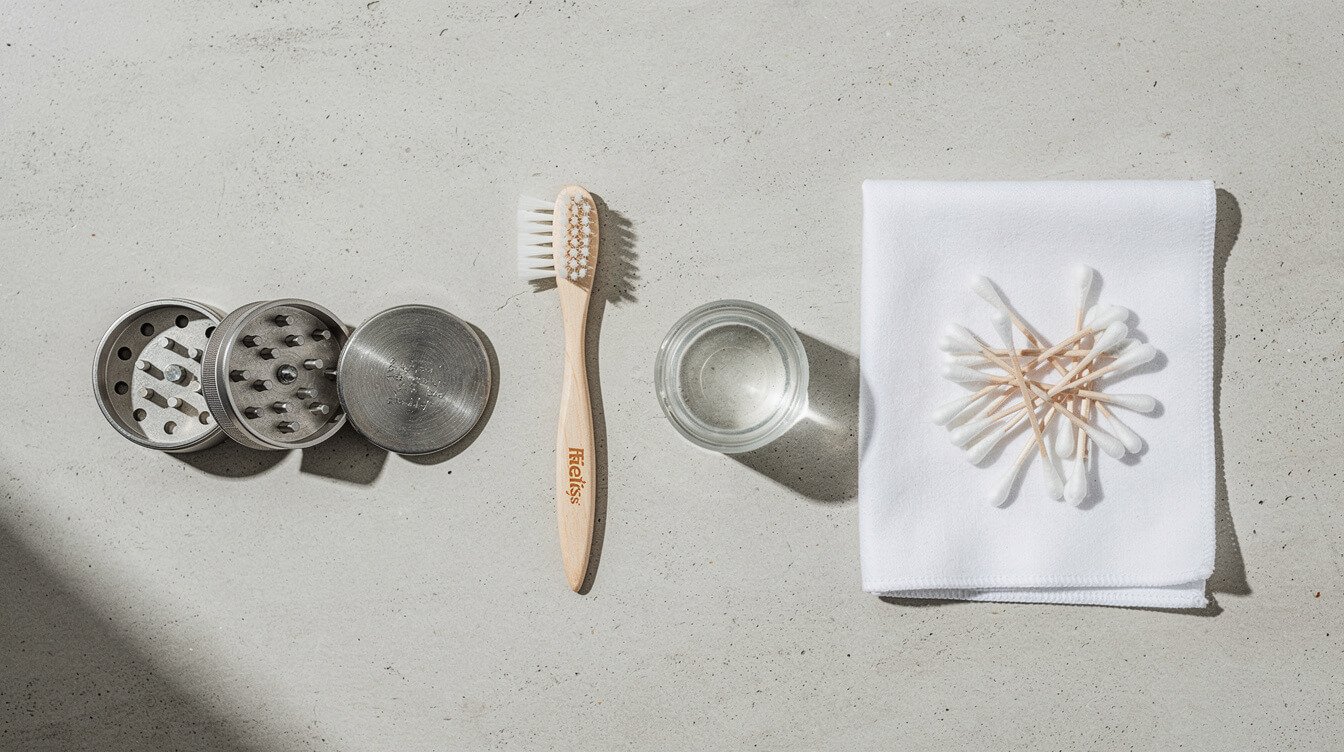
- Dry brush. Use a soft toothbrush or nylon brush on the teeth, threads, and the back of the screen. Collect anything golden and dry with the rest of the kief.
- Soak. Put the metal pieces in a glass or plastic container or a zip-top bag and cover them with 91–99% isopropyl alcohol. Wait 20–30 minutes, up to an hour for a grinder that’s been ignored since spring.
- Scrub. Brush the softened residue off the teeth and threads. A cotton swab or toothpick handles the corners. Brush the screen gently, from the underside.
- Rinse. Rinse every piece with warm water until it no longer smells like alcohol.
- Dry completely. Lay the pieces on a towel and leave them for a few hours, or overnight. Then reassemble.
Two steps carry more weight than they look. The first is step 1: everything stuck to the walls after the soak is gone for good, so collect the kief while it’s dry. The second is step 8, because isopropyl alcohol is flammable and trapped water is how a grinder ends up corroded or moldy. Both get their own sections below. If your grinder isn’t metal, skip ahead to the materials section before you pour anything.
Before you start: save the kief and know what your grinder is made of
The two decisions that matter happen before any cleaning starts. What do you keep, and what can this grinder survive?
Save the kief first
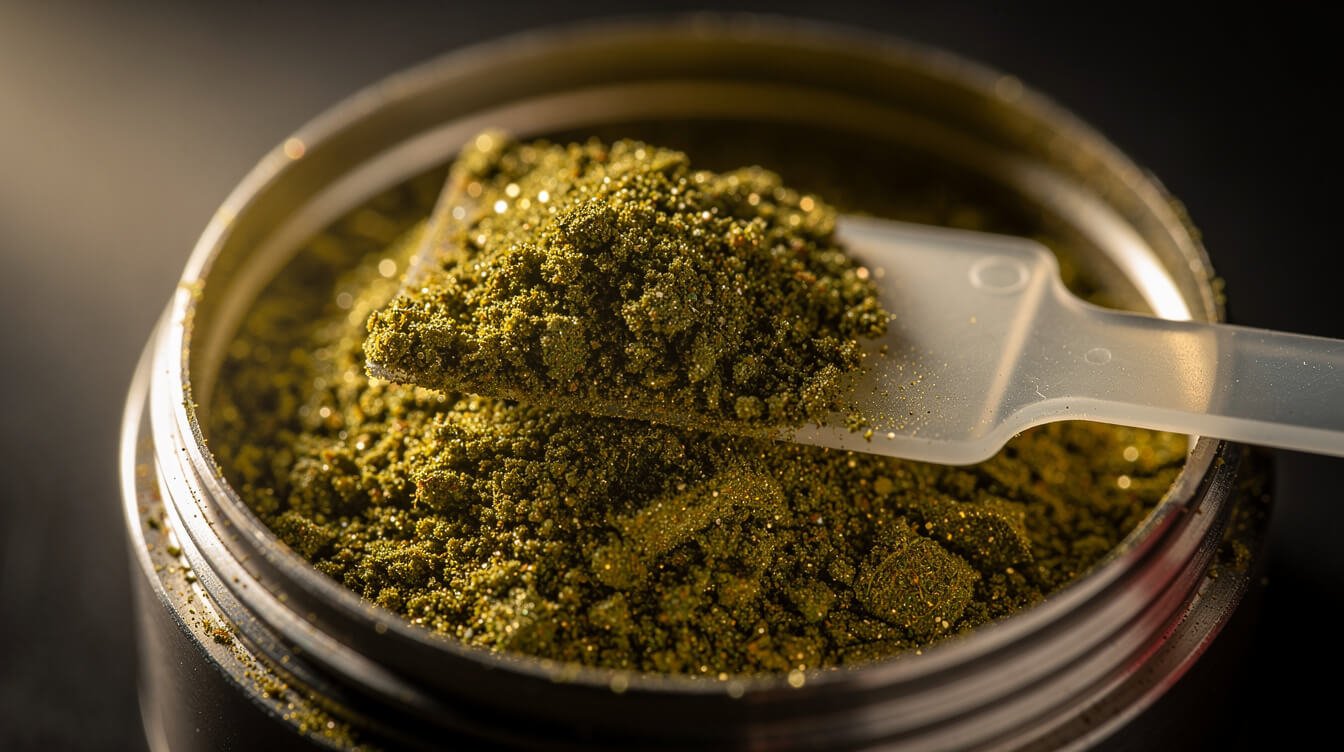
The dust in the bottom chamber of a three- or four-piece grinder is kief: trichome heads that broke off the flower and fell through the screen. If you’re fuzzy on what that dust is, our guide to what kief actually is covers it, and it’s the most concentrated material your grinder produces. Scrape it out with a card, tap the screen chamber over paper, and store it in a small airtight container away from light and heat.
The freeze step helps here too. Cold trichomes detach more easily, which is the same principle behind dry sift and ice-water hash. A good tap on a frozen screen chamber often drops a surprising amount.
Draw one line, though. The dry, loose kief you collect before cleaning is just kief. The sticky gunk scraped off the teeth is a mix of resin, plant dust, and whatever lint lives in your pocket. Anything that has sat in alcohol goes in the trash, too. Don’t try to evaporate the soak and reclaim the residue. That’s solvent work, the residue is mixed with grime, and it isn’t something to smoke.
Identify the material
Most grinders fall into one of five groups, and each one gets a different method:
- Anodized aluminum. The most common type. Light, often colored, with a matte or satin finish. It’s safe in isopropyl alcohol. It’s not safe in the dishwasher (explained below).
- Stainless steel. Heavier, usually silver, often brushed. It’s the most forgiving to clean. Our stainless steel grinder breakdown explains which grades resist corrosion best.
- Zinc alloy. Cheap, heavy, often painted or plated. It tolerates a short alcohol soak, but chipped coatings can flake, so retire it once the paint starts coming off.
- Plastic or acrylic. Clear or brightly colored, very light, and usually inexpensive. No alcohol.
- Wood. No soaking of any kind.
Electric grinders are their own category no matter what the chamber is made of, because there’s a motor and a charging port involved. Not sure about yours? Weight is the quickest tell: a grinder that feels like a toy is plastic, and one that feels like a paperweight is steel or zinc. Check the maker’s care instructions if you still have them. They beat any general guide, this one included.
How to clean a grinder with isopropyl alcohol, step by step
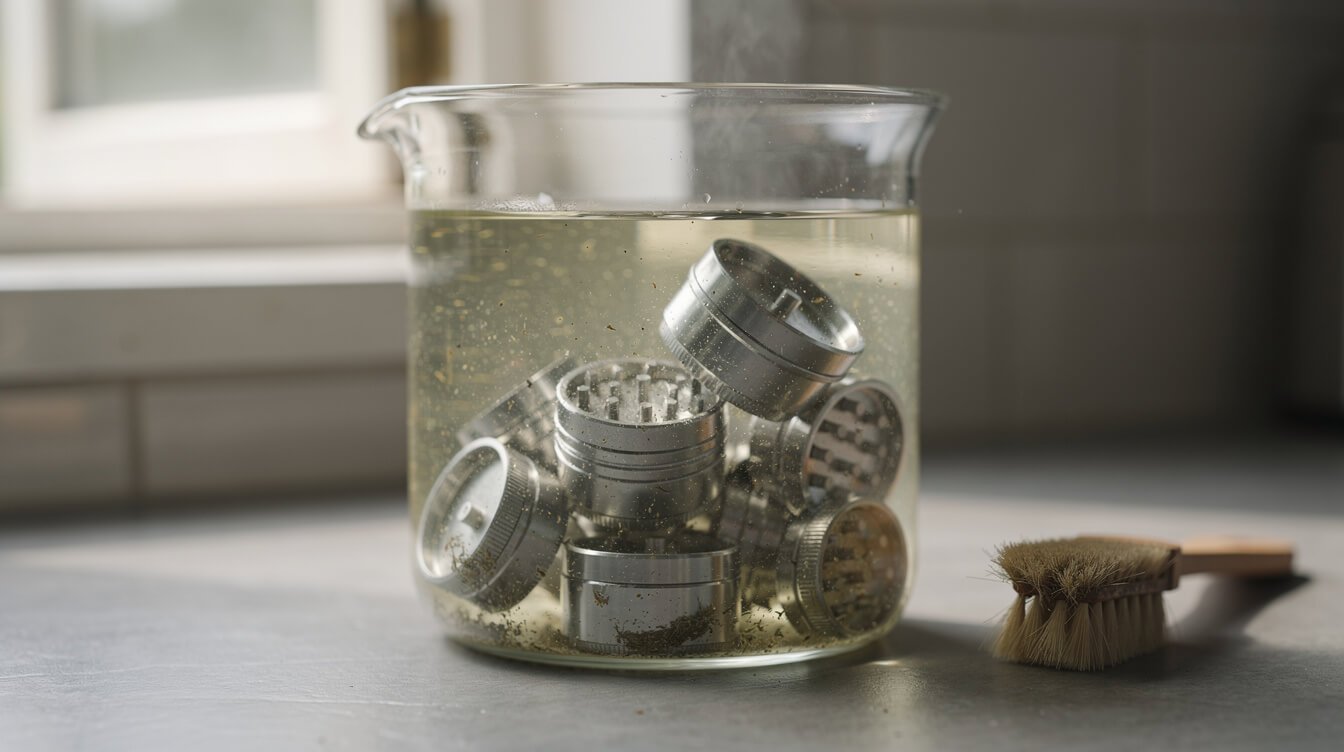
The alcohol soak is the standard deep clean for metal grinders, and it works for a simple chemical reason. Grinder residue is mostly plant resin, and the cannabinoids in it are oily compounds that barely dissolve in water. PubChem’s entry for THC lists its water solubility at about 2.8 milligrams per liter, which it describes as “essentially insoluble.” In alcohol, that same compound dissolves roughly one part in one part. Hot soapy water can loosen resin over time. Alcohol dissolves it.
Why 91% beats 70%
Drugstore 70% isopropyl is 30% water, and water is the part that doesn’t dissolve resin. It still works, just slower, and it may need a second soak. That’s why most guides, including ours on how to clean a weed pipe, call for 91–99% on anything heavily caked. If 70% is all you’ve got, use it. Expect to soak longer and scrub more.
The method, in detail
- Use a container that won’t react. Glass is ideal. A zip-top bag works and uses less alcohol. Leave the screen chamber in its housing unless the screen is designed to come out.
- Cover everything. Make sure the teeth and threads sit fully under the liquid. Swirl or shake gently every 10 minutes. You’ll see the alcohol turn amber as the resin dissolves.
- Scrub while it’s soft. Pull each piece out and brush it. A soft brush (nylon or brass) won’t scratch the finish. Metal picks and knives scratch it, and scratched metal gives resin more texture to grip next time.
- Do the threads. Run a swab around the threads of each section. Gummed threads are why grinders get hard to open.
- Rinse with warm water. This flushes the dissolved residue and the last of the alcohol off the surface. Warm, not boiling (the boiling section explains why).
- Dry like you mean it. Shake out the water, pat each piece with a lint-free cloth, and leave them apart on a towel until they’re dry inside the threads and under the screen. That’s a few hours for most grinders and overnight to be sure.
The flammability part nobody mentions
Isopropyl alcohol is a flammable liquid, and none of the top grinder guides we read mention it. PubChem lists pure isopropanol’s flash point at 53°F (12°C), and around 75°F for 91% in an open cup. In plain terms, a room-temperature bowl of the stuff gives off vapor that can ignite. Ironically, the hobby keeps lighters and torches within arm’s reach. So:
- Soak in a ventilated spot, away from stoves, candles, pilot lights, and anything with a flame.
- Keep lighters and torches in another room until the grinder is rinsed and dry.
- Don’t speed up drying with a hair dryer or heat gun, and never with an open flame.
- Let the used alcohol evaporate outdoors away from ignition sources, or follow your local household-chemical disposal rules. Small amounts are a household-waste question, not an emergency, but don’t pour a bowl of it near a lit burner.
None of this makes the method dangerous. It makes it a little like using nail polish remover: completely normal, as long as you don’t do it next to a candle.
Plastic, acrylic, wood, and electric grinders: what changes
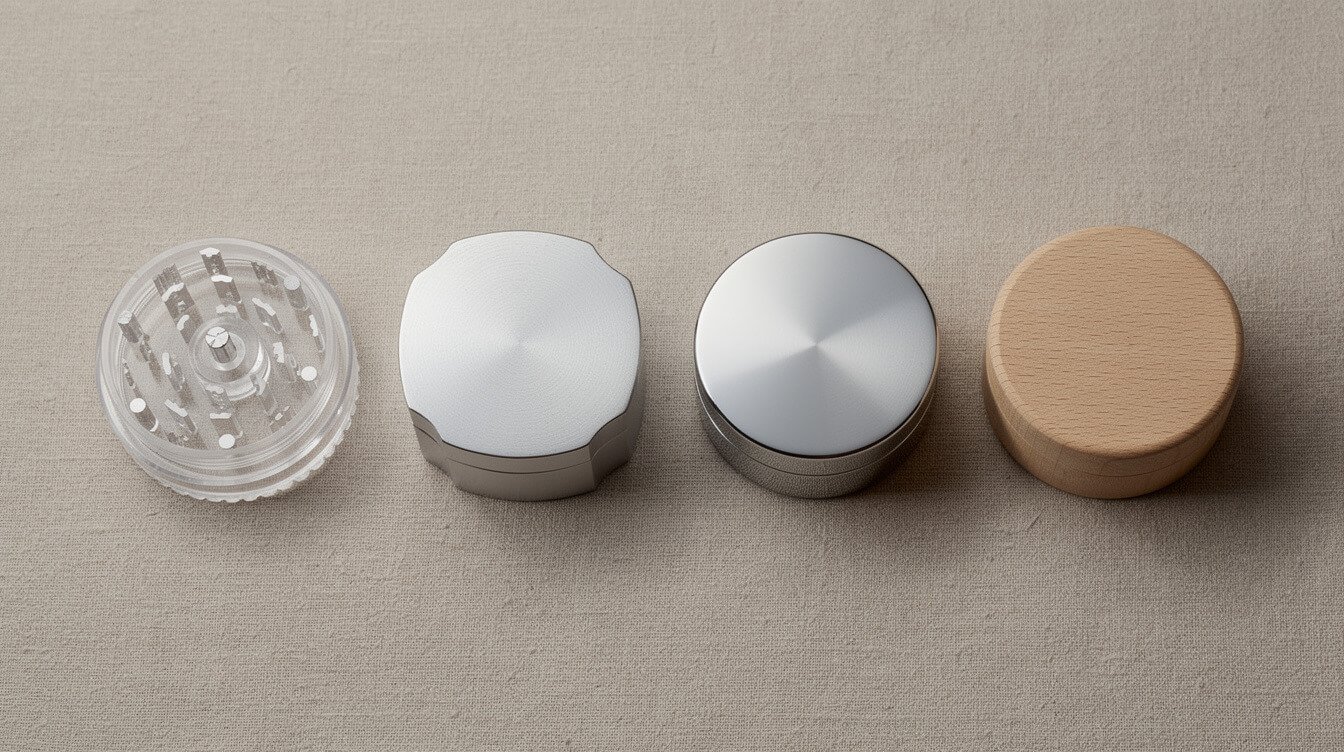
Learning how to clean a grinder made of plastic is mostly learning what not to pour on it. It’s also where competitor advice splits. Some guides give plastic grinders the same alcohol soak as metal, others say alcohol will “shatter” them instantly. The truth sits between those, and the plastic’s own manufacturers settle it.
Plastic and acrylic: warm soapy water, no alcohol
Acrylic (PMMA, sold as Plexiglas or ACRYLITE) is the clear, glassy plastic that many cheap grinders are molded from. Both of its big manufacturers say the same thing. Röhm, the company behind PLEXIGLAS, says cleaners should not contain ethanol, alcohol, or thinners because they damage the material. ACRYLITE lists alcohol among the solvents to avoid because it can weaken the sheet and cause small surface cracks called “crazing.”
Crazing is a web of fine cracks, and it shows up fastest where the plastic is already under stress: threads, snap fits, the spots where molded teeth meet the body. That’s exactly the geometry of a grinder. So it’s not instant destruction, but a soak can leave a clear grinder cloudy, cracked, and weaker, sometimes on the first try and sometimes after a few. Not worth it for a $10 tool.
The plastic method:
- Save the kief and take the grinder apart.
- Freeze it for 15–20 minutes at most. Very cold, brittle plastic can crack if you knock it hard, so tap gently.
- Soak the pieces in warm (not hot) water with a few drops of dish soap for 20–30 minutes.
- Scrub with a soft brush, rinse, and dry fully.
Soap works slower than alcohol because it lifts resin instead of dissolving it, so a badly gunked plastic grinder may need two rounds. When it still won’t come clean, that’s usually the signal to replace it rather than escalate the chemistry.
Wood: dry brush and a light wipe, never a soak
Wood absorbs water and swells, and an uneven swell is enough to stop a lid from threading. Soaking also sets up the damp interior that mold likes. Stick to freezing, dry brushing, and a cloth that’s barely damp, then let it air out. If the maker says the finish tolerates it, a cotton swab with a little alcohol can spot-clean the teeth. Some wooden grinders have metal teeth set into a wood body, which helps, but the body still can’t go in liquid.
Electric grinders: never submerge the motor
If your electric grinder’s chamber comes out, clean that part like any other piece of the same material. The base, motor housing, and charging port never touch liquid. Wipe the chamber walls with a dry brush after every few uses and with an alcohol-dampened cloth every couple of weeks, then let it dry before closing it up. Our electric grinder guide covers why buildup is the main reason these stall, and why a sealed chamber you can’t open is worth avoiding.
GanjaTech, weekly
Cannabis, explained. In your inbox.
One email a week: the clearest explainers, honest gear picks, and what the science actually says. 21+ only. No spam, unsubscribe anytime.
Boiling, dishwashers, vinegar, and milk: what actually happens
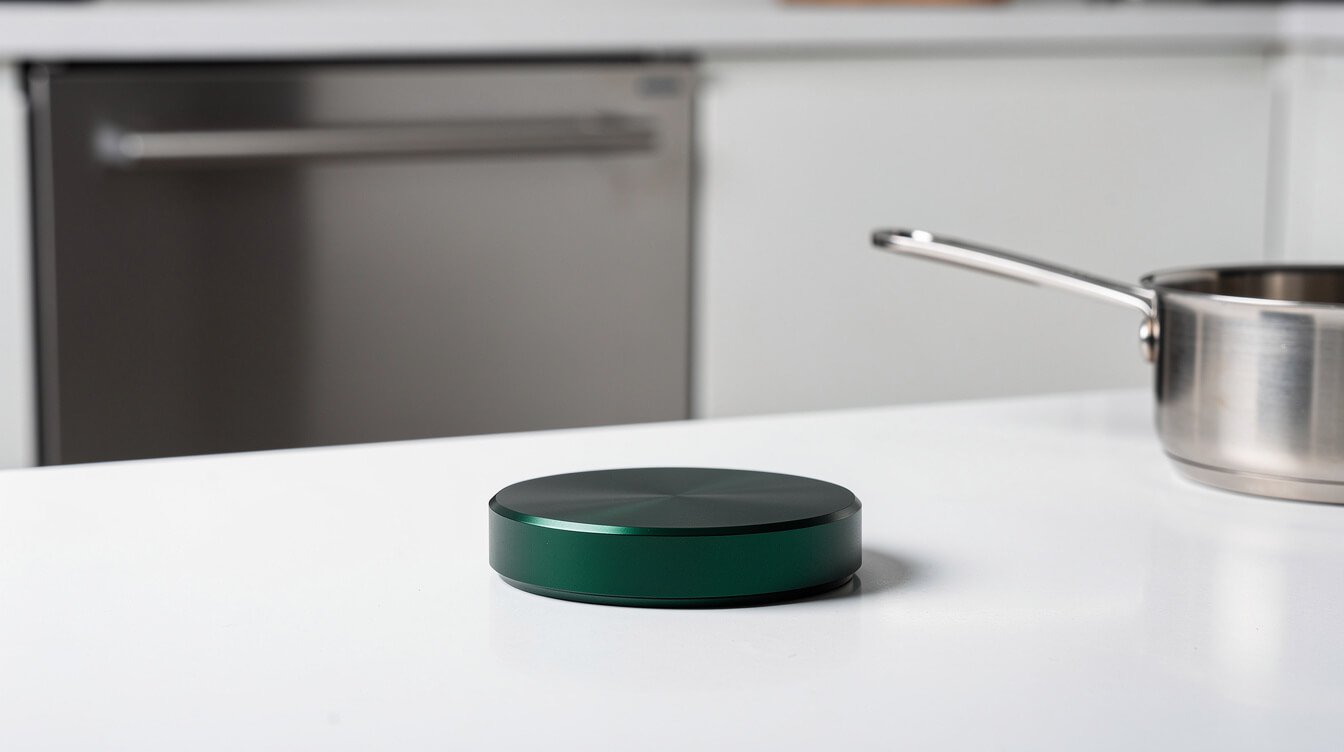
Every cleaning guide has a “no alcohol? try this” section. Some of these work, and some quietly damage the grinder. One of them turns a cleaning job into an edible of unknown strength.
Boiling: hard on the magnet, worse for plastic
Guides disagree here. Some say boiling is fine, some say it warps aluminum. Aluminum melts at around 1,220°F, so a pot of 212°F water won’t warp a grinder body. The real casualty is the part nobody thinks about: the magnet in the lid. Most grinder lids hold a small neodymium magnet, and standard grades are typically rated for about 80°C (176°F) before they start losing strength permanently. Boiling water is 100°C. Many of these magnets are also glued in, and hot water doesn’t do adhesives any favors.
So boiling can leave you with a lid that no longer snaps shut or a magnet that pops out. It’s an outright no for acrylic and plastic, which soften well before metal cares, and for wood. A stainless grinder with no magnet will survive it, but alcohol still does the job better at room temperature.
Dishwashers: hard on anodized aluminum
Machine dishwasher detergents are strongly alkaline, and alkali attacks the aluminum oxide layer that anodizing creates. That’s why anodized cookware usually says hand-wash only. A dishwasher run can leave an aluminum grinder chalky, faded, or blotchy. Water also won’t dissolve resin, so you lose the finish and still don’t get a clean grinder. Skip it for every material.
Vinegar and salt: it works, slowly
White vinegar is mostly water with a little acetic acid, so it softens residue without dissolving resin the way alcohol does. Paired with coarse salt and some shaking, it can clean a lightly used metal grinder. It’s slower, the smell lingers, and you’ll want a thorough rinse and full dry afterward, since acidic residue sitting on metal is no favor. It’s a reasonable backup. It isn’t a better method.
The milk trick: you’re making an edible
Some guides suggest simmering a grinder in milk and then drinking the milk. That works on the residue because cannabinoids dissolve in fat. The catch: the milk now holds an unknown amount of THC, plus whatever grime came off the grinder. There’s no way to estimate its strength at home, and like any edible it can take 30 minutes to 2 hours to kick in.
If you go that route, treat it like the edible it is. Start with a small sip, wait at least two hours before having more, don’t drive, and label it and keep it far away from kids and pets. Or skip it: alcohol cleans better, and you won’t wonder why your Tuesday got so long. Our guide to dosing homemade cannabutter explains why “start low” matters so much with homemade infusions.
Stuck lids, clogged screens, and squeaks: fixing the common problems
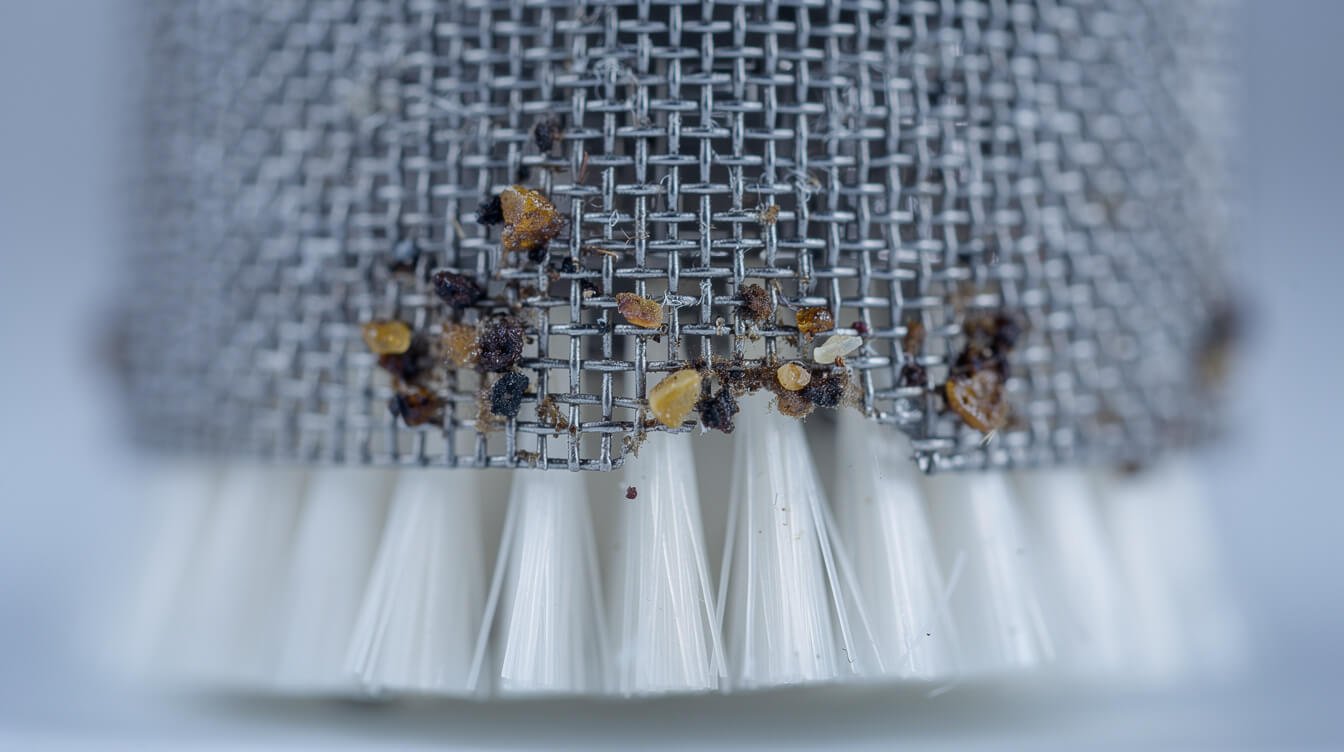
Most grinder problems are residue problems, and most of them have a gentle fix.
A grinder that won’t open
Resin in the threads acts like glue. Freeze the whole grinder for 30 minutes, then twist firmly with a rubber jar grip or a dish glove. If that fails, soak the closed grinder (metal only) in isopropyl for 20 minutes and try again. Skip pliers and wrenches: they dent aluminum threads, and a dented thread never seals right again.
A clogged screen
The screen is the most delicate part of the grinder, and it’s what separates the kief. Soak it with the rest of the metal parts, then brush it from the underside, the side that faces the kief catcher, so you push debris back out the way it came in. Never poke the holes with a pin or needle. One stretched hole lets plant matter into your kief from then on. A screen that’s torn or warped is usually replaceable on better grinders. On cheap ones, it’s the end of the road.
Teeth that tear instead of cut
Resin buildup on the teeth makes a grinder crush and tear instead of shearing cleanly. Our guide to picking the best weed grinder covers why that consistency matters. A clean almost always fixes it. If the teeth are still dull or chipped after a full soak, the grinder is worn, not dirty.
The post-clean squeak
A freshly cleaned grinder often squeaks or feels gritty to turn, because the thin film of resin that was acting as lubricant is gone. Usually it eases after a few uses. If it bugs you, a single drop of food-grade oil worked into the threads only, wiped back until the surface barely looks wet, takes care of it. Keep oil off the teeth and screen, where it collects plant dust and makes the next clean worse.
How often to clean a grinder, and how to keep it cleaner longer
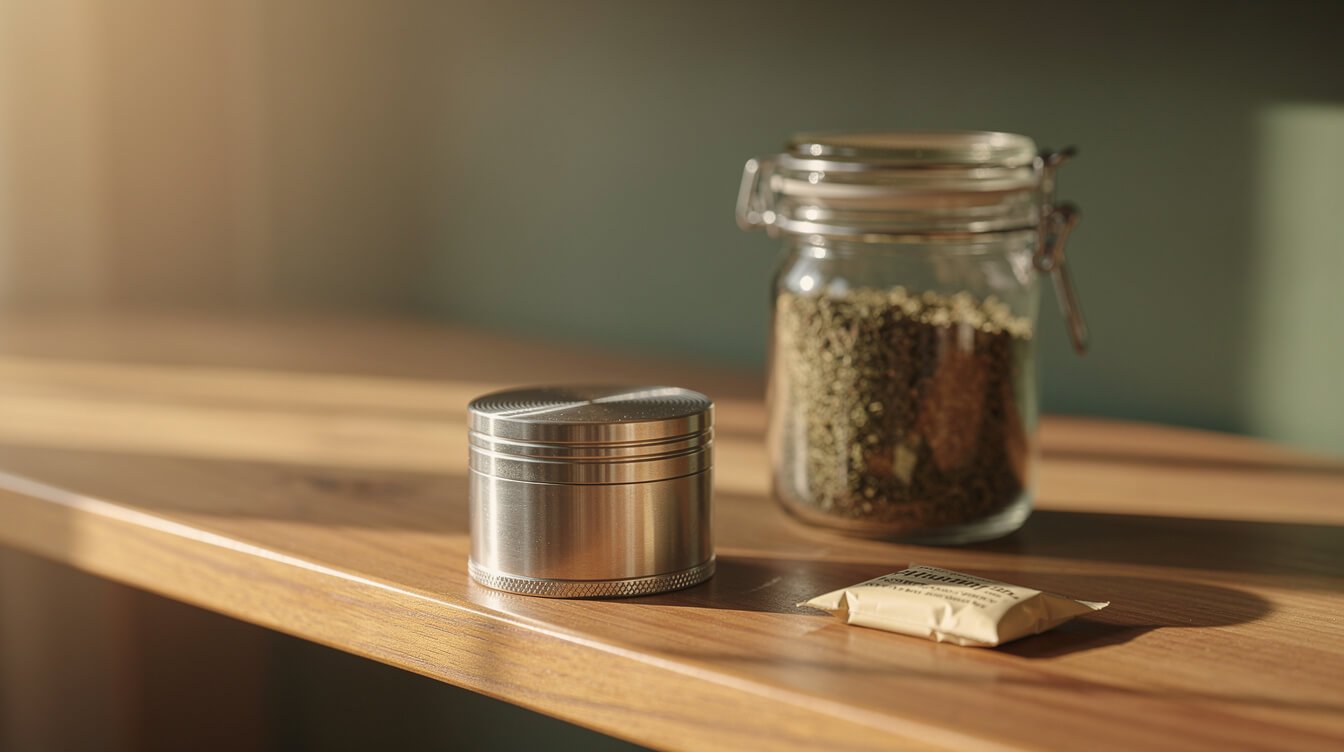
Knowing how to clean a grinder matters less than actually doing it on a rhythm. There’s no exact schedule. It depends on how often you grind and how sticky your flower is. A practical rhythm for regular use:
- Every few uses: tap out the screen chamber and give the teeth a 30-second dry brush.
- Every 2–4 weeks: a full clean, with the freeze, the soak (metal) or soapy wash (plastic), and a complete dry.
- Whenever it tells you: harder to turn, uneven grind, lid that won’t seat, or a stale smell when you open it.
Habits that slow the buildup
- Grind dry flower. Flower that’s still too wet from a rushed dry gums up a grinder fast. Properly dried and cured flower grinds cleaner and smokes better.
- Don’t overpack. A stuffed chamber mashes flower into the teeth. Grind smaller loads.
- Store it somewhere dry. A humid bathroom cabinet turns residue gummy. Store your grinder the way you’d store flower: cool, dark, and dry. If you use humidity packs for your jars, keep them in the jar, not the grinder.
- Empty the kief catcher regularly. Packed kief clogs the screen from below.
Watch for mold in the kief chamber
A grinder put back together damp, or one that grinds damp flower and then sits closed in a warm drawer, can grow mold in the bottom chamber. Fuzzy white or gray growth, a musty smell, or kief that looks webbed are the signs. Our guide on what moldy weed looks like shows how to tell mold from trichomes. If you find it, toss the kief and anything else in the chamber, deep clean the metal parts in alcohol, and dry them thoroughly. Then take a hard look at the flower you’ve been grinding. Plastic and wood grinders with mold are usually cheaper and safer to replace than to rescue.
How to clean a grinder: frequently asked questions
What’s the best thing to clean a grinder with?
For metal grinders, 91–99% isopropyl alcohol plus a soft brush. It dissolves resin instead of just loosening it. For plastic or acrylic, warm water and a few drops of dish soap, since alcohol can craze acrylic. For wood, a dry brush and a barely damp cloth.
How do you clean a grinder without alcohol?
Freeze the pieces for 20–30 minutes, tap and brush out the brittle residue, then soak them in warm soapy water and scrub. For metal, a white-vinegar-and-coarse-salt shake also works on light buildup. Expect more scrubbing than with alcohol, and dry everything fully afterward.
Can you clean a grinder with 70% isopropyl alcohol?
Yes, just more slowly. The 30% water in it doesn’t dissolve resin, so give it a longer soak or a second round. 91% or higher is faster on heavy buildup.
How do I get all the resin out of a grinder?
Freeze first, brush off what knocks loose, then soak in strong isopropyl and scrub the teeth and threads with a soft brush and cotton swabs. For a grinder caked after months of neglect, do a second fresh soak. Old resin that’s darkened and hardened can take two rounds.
How do you clean the mesh screen in a grinder?
Soak it with the metal parts, then brush gently from the underside to push debris back out. Don’t poke the holes with pins or needles. Stretching even one lets plant matter into your kief from then on.
Is the gunk inside a grinder safe to smoke?
The dry, loose kief you collect before cleaning is just kief. The sticky buildup on the teeth is resin mixed with plant dust and lint, so it’s harsh and grimy. Anything that has soaked in alcohol, or any chamber showing mold, goes in the trash. When in doubt, throw it out.
Is it safe to use a grinder right after cleaning it with alcohol?
Only once it’s rinsed and completely dry. Leftover alcohol is flammable and tastes awful, and trapped water can corrode metal or grow mold. If it still smells like alcohol, it isn’t ready.
Can you put a grinder in the dishwasher?
We wouldn’t. Dishwasher detergent is strongly alkaline and can strip the anodized finish off aluminum, the heat can warp plastic, and water won’t dissolve resin anyway. Hand-clean it instead.
Final thoughts
That’s how to clean a grinder without guesswork. Save the kief while it’s dry. Freeze the resin so it turns brittle. Dissolve the rest with strong isopropyl if the grinder is metal, or wash it with warm soapy water if it’s plastic. Then dry everything before it goes back together. The method is simple. Most of the mistakes come from treating every grinder like it’s made of the same thing.
The less obvious lessons are about what not to do. Alcohol crazes acrylic. Boiling can weaken the magnet in your lid. Dishwasher detergent strips anodizing. The milk trick is an edible with no label. And the alcohol itself is flammable, so the lighter stays in another room until everything is dry.
A clean grinder cuts instead of crushes, opens without a fight, and lets the flower taste like itself. Treat the gear well, know your local laws, and enjoy responsibly.
Before you go
Get the next explainer first
We publish a new one every day. The best of the week, plus what's new in the shop, lands in one short email.