How to Germinate Cannabis Seeds: The Honest Step-by-Step Guide
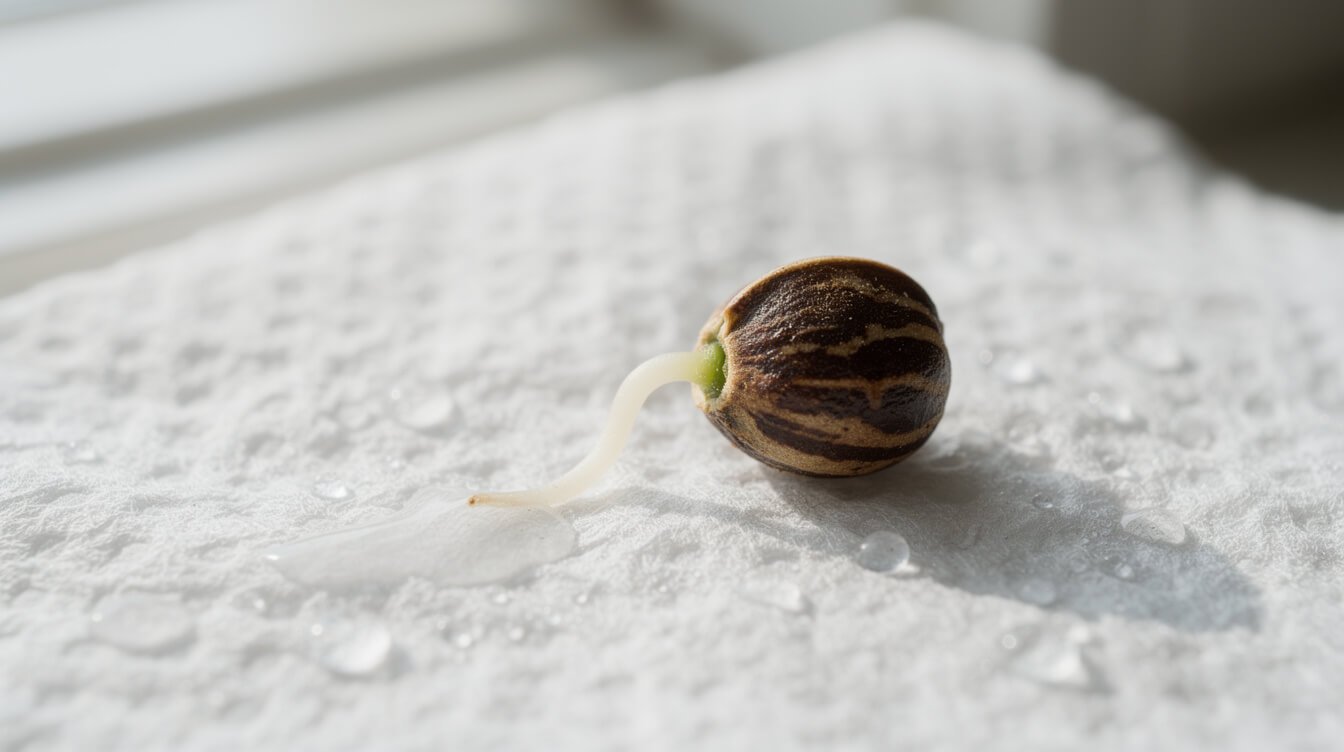
Here’s how to germinate cannabis seeds, the honest short version: get them warm, dark, and consistently moist until a little white root — the taproot — cracks the shell open. That’s the whole job. Everything else in this guide is optimization, troubleshooting, and the handful of mistakes that actually sink people.
Most guides make this sound more delicate than it is. Seeds have been sprouting in dirt without human help for a very long time. What actually trips people up isn’t the germination step itself — it’s the week after, when a fragile new taproot gets handled roughly, dried out, or drowned. This guide walks through what’s actually happening inside the seed, the method most growers default to, three legitimate alternatives and which one actually fits your situation, a realistic timeline instead of an optimistic one, and — more usefully than most competitors bother with — the specific mistakes that kill seedlings before they ever get a chance to grow.
How to germinate cannabis seeds: what’s actually happening
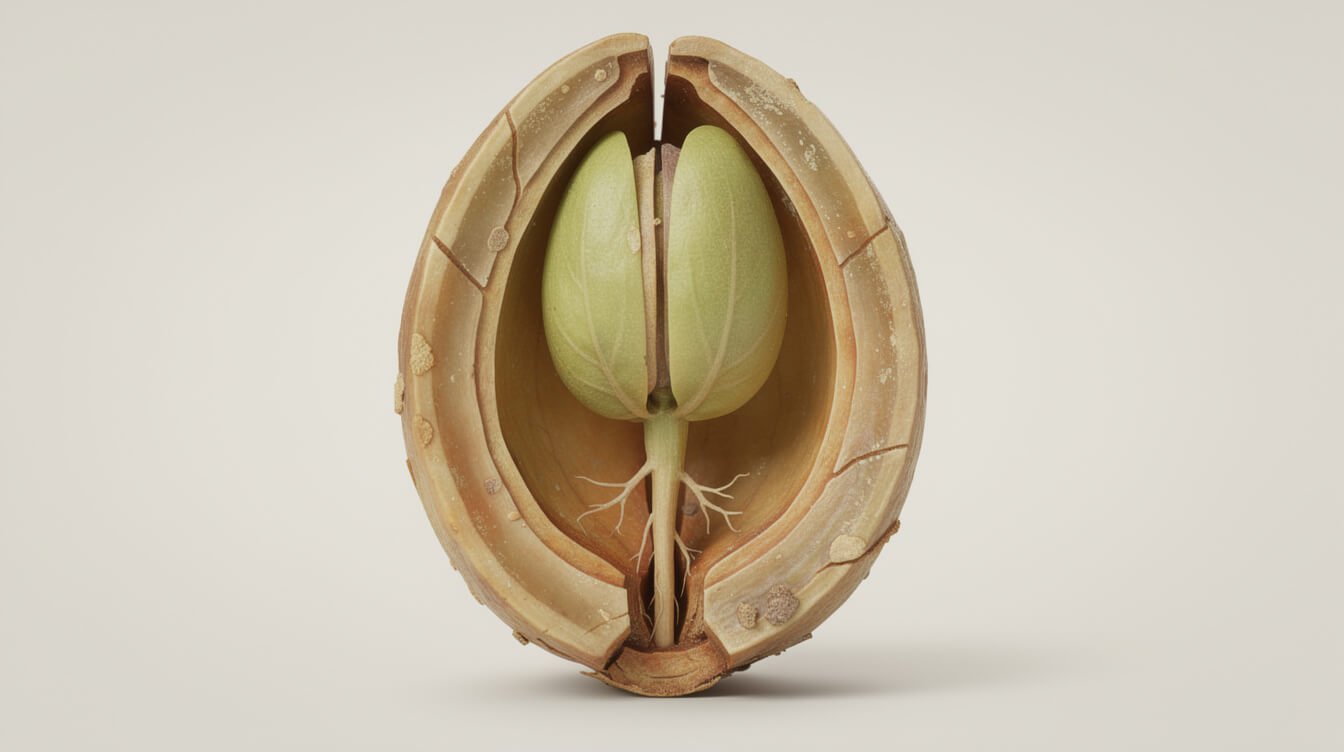
A cannabis seed is dormant tissue wrapped in a hard shell. Heat and moisture are what break that dormancy. Once conditions are right, the seed absorbs water, swells, and the shell splits open just enough for a thin white tendril to emerge — the taproot. That taproot is the plant’s very first root and, eventually, its main stem. Every other root the plant ever grows will branch off it.
As the taproot pushes downward, the opposite end of the seed gets pushed upward through the growing medium. The shell cracks the rest of the way open, and the first set of round leaves — called cotyledons — unfold. Those aren’t the plant’s “real” leaves; they’re energy-storage leaves built into the seed itself, there to power the seedling until its first true, serrated leaves show up and photosynthesis takes over.
Two things matter more than anything else during this process: the seed needs to stay warm (roughly 70–80°F) and it needs to stay consistently moist — not soaked, not dry, the whole way through. Let either one lapse for too long and germination stalls or the fragile taproot dies before it ever reaches soil.
A quick note on what to expect visually: a healthy, viable seed is typically dark brown with faint tiger-stripe mottling and a slightly waxy sheen. Pale green or nearly white seeds are usually immature and rarely sprout — that’s the one visual cue actually worth trusting, more than any soak-and-see float test.
What you need before you start
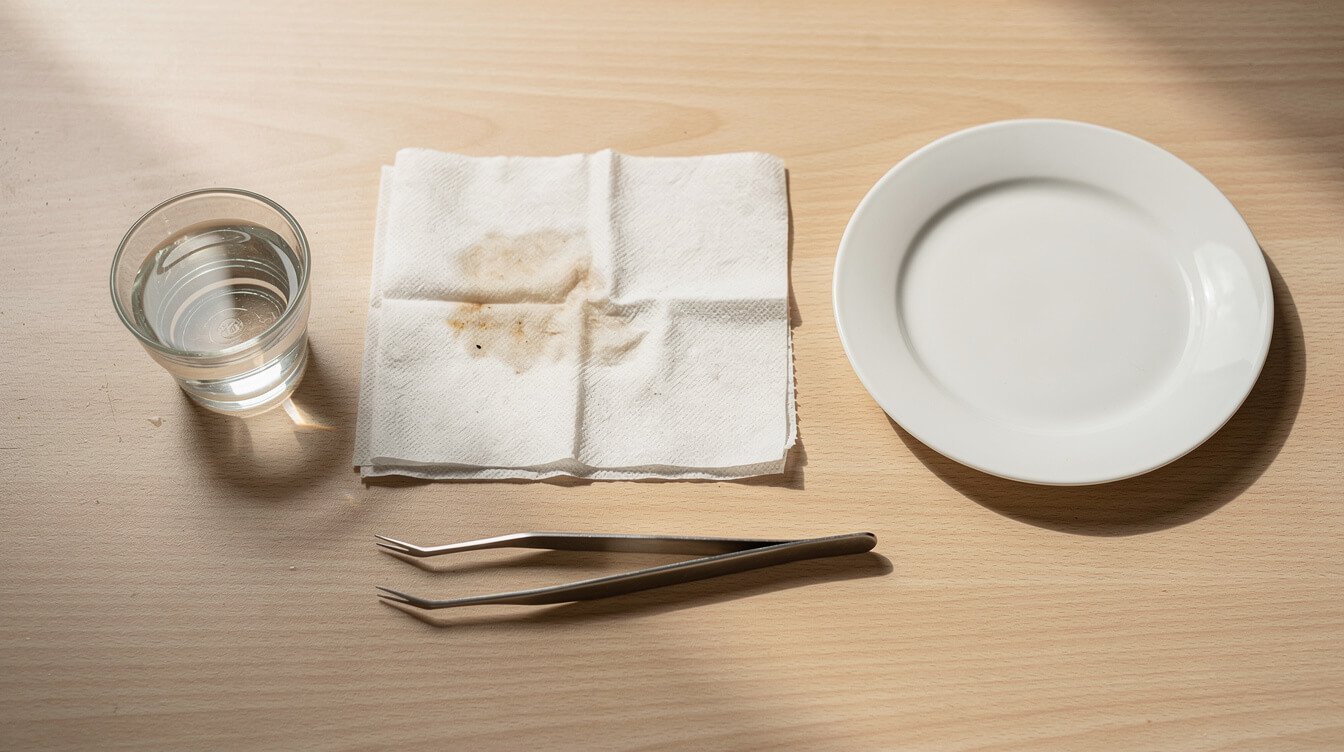
You don’t need a kit. You need:
- Clean water — distilled or filtered is ideal. Straight tap water is usually fine too, but if yours is heavily chlorinated, let it sit out uncovered for 24 hours first so the chlorine can dissipate.
- Paper towels or your final growing medium — soil, coco coir, or a starter cube, depending on which method you pick below.
- A small container with a lid — a plate with a cover, a sealed sandwich bag, or a shot glass, depending on method.
- A warm spot — on top of a router, near (not under) a grow light, or on a seedling heat mat. Anywhere that holds a steady 70–80°F works.
- Patience and a light touch — genuinely the two most important supplies. The taproot bruises easily, and rushing the next step is where most seeds are lost.
That’s the full list. Germination stations, heating domes, and root-boosting solutions can help at scale if you’re starting dozens of seeds at once, but for one to a handful of seeds, none of it is necessary. A ten-dollar seedling heat mat is a genuinely useful upgrade if your house runs cold in winter — it’s the one piece of gear on this list actually worth buying rather than improvising. Everything else, a paper towel and a drawer will do the exact same job as a branded “germination kit.”
How to germinate cannabis seeds with the paper towel method
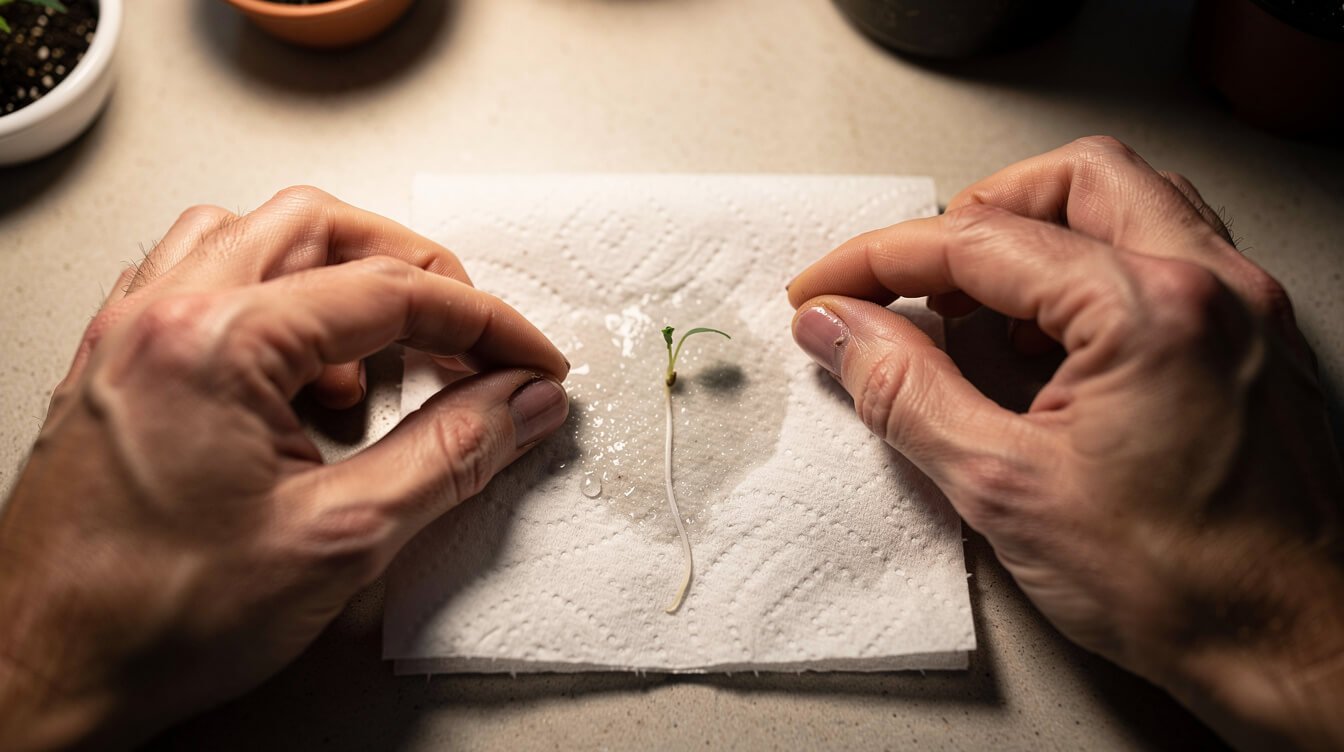
This is the method most home growers default to, mostly because it lets you actually see what’s happening.
- Fold a paper towel in half and dampen it thoroughly with room-temperature water — wet enough to hold together, not dripping when you squeeze it.
- Lay your seeds on one half, spaced an inch or two apart, then fold the other half over them.
- Place the damp towel on a plate and cover it loosely with a second plate, a lid, or plastic wrap with a couple of small air holes. You’re trapping humidity, not sealing the seeds in.
- Set the plate somewhere warm and dark — a cabinet, a drawer, anywhere out of direct light.
- Check twice a day. Re-moisten the towel the moment it starts to feel dry; it should never fully dry out or turn soggy.
- Within 24–120 hours, you’ll see the white taproot emerge. Once it’s about a quarter to a half inch long, it’s ready to plant — don’t wait for it to get longer.
The appeal here is visibility: you know exactly which seeds sprouted and when. The tradeoff is that you now have to transfer a fragile, exposed taproot into growing medium without damaging it — which is where the direct-to-soil method below has an edge.
Three other ways to germinate cannabis seeds (and which one fits you)
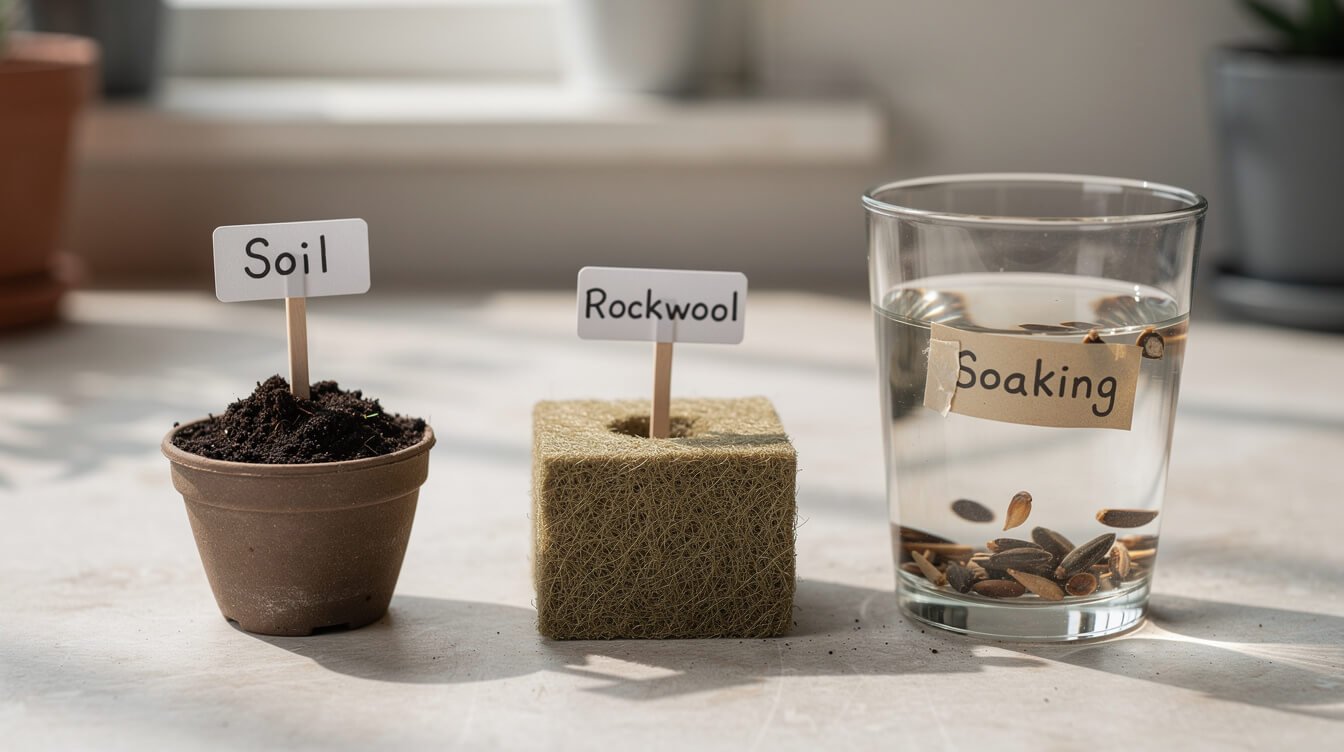
The paper towel method isn’t the only option, and honestly, it isn’t even the best one for most first-time growers. Here’s an honest comparison of the alternatives.
Direct-to-soil
Plant the seed straight into its final pot, about a knuckle deep (roughly half an inch), in moist but not waterlogged soil or coco. Keep the medium consistently damp and warm until a seedling breaks the surface, usually within a week.
This is the method we’d actually recommend for most beginners. You never touch or transplant a delicate taproot, which removes the single biggest way seedlings get damaged. The tradeoff is you can’t see what’s happening underground, so it takes a little trust.
Starter cubes or seedling plugs
Push the seed into the precut hole of a peat pellet, rockwool cube, or similar starter plug, keep it moist, and let it sprout in place. This gives you the low-handling benefit of direct-to-soil with a bit more structure, and it transplants into a larger pot cleanly once roots show through the bottom.
Overnight soak
Drop seeds in a glass of room-temperature water for 12–24 hours before using the paper towel or direct-to-soil method. This softens the shell and can speed up older or unusually hard seeds. It’s a helpful add-on, not a standalone method — seeds still need to go into towel or medium afterward.
Skip the “float test” some guides recommend for checking seed viability before you start. It’s not reliable — plenty of seeds that sink are duds, and plenty that float sprout just fine. The only real test is trying to germinate the seed.
GanjaTech, weekly
Cannabis, explained. In your inbox.
One email a week: the clearest explainers, honest gear picks, and what the science actually says. 21+ only. No spam, unsubscribe anytime.
How many seeds should you actually germinate?
If you only need one plant, germinate two or three seeds anyway, and plan to keep the strongest one. Even healthy, fresh seed doesn’t sprout at a perfect rate — losing one out of three to a slow taproot or a handling mistake is normal, not a sign you did something wrong. Starting a couple extra costs nothing and saves you from having zero seedlings a week in.
The flip side: don’t start more than you’re actually prepared to grow. Every extra seedling needs its own light, space, and attention, and a windowsill or single small tent gets crowded fast. If more than one sprouts and you only have room for one plant, it’s fine to keep the healthiest-looking seedling and let the rest go rather than trying to squeeze all of them into a space built for one.
How to plant a germinated seed without killing the taproot
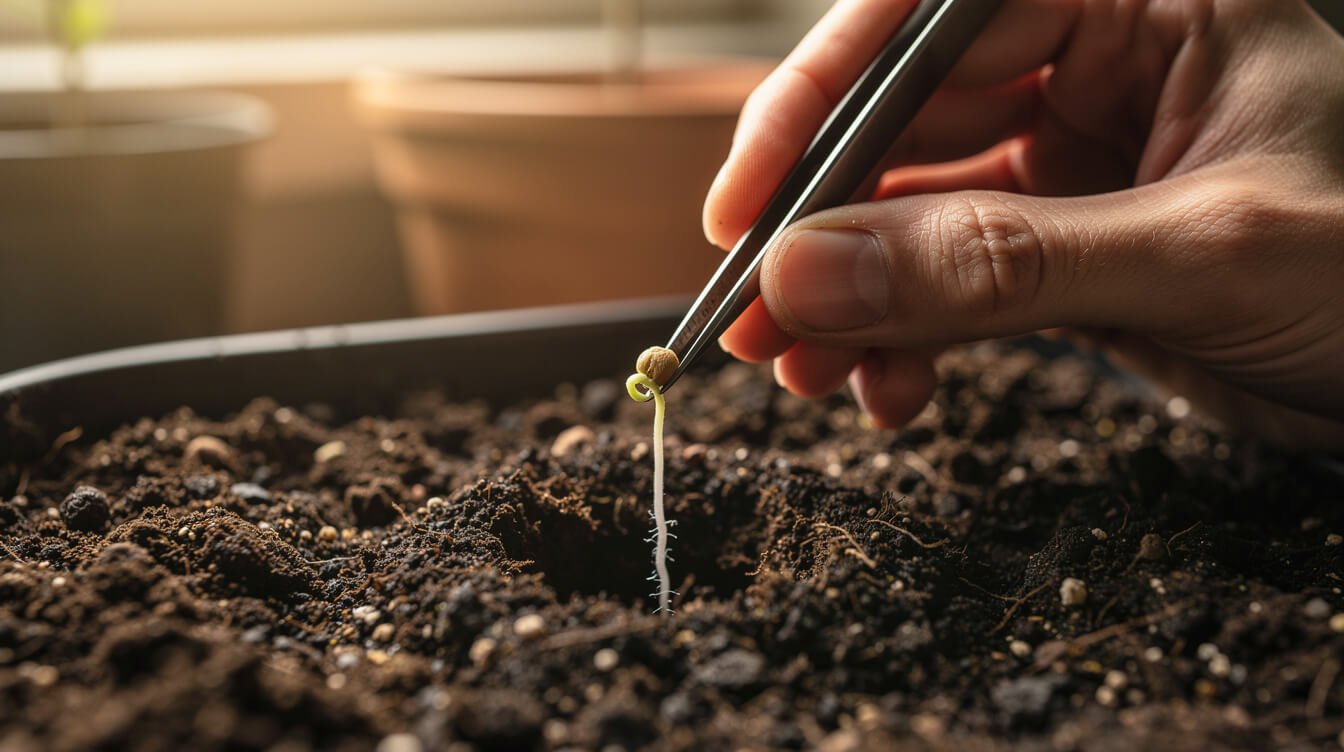
If you used the paper towel method, this step is where most losses actually happen — not during germination itself.
- Never touch the taproot with your fingers. Use tweezers, or better, gently tip the seed off the towel so it drops into place on its own.
- Root down, always. Make a hole about a half inch deep, set the seed in with the taproot pointing downward, and cover it loosely — don’t pack the soil down firmly.
- Move it once. If it’s already in a starter cube, transplant straight into the final pot when roots show through the bottom, rather than stepping it up through two or three pot sizes. Every transplant is stress the seedling has to recover from.
- Water gently immediately after planting — a light misting, not a heavy pour that could shift the seed or compact the soil around it.
- If you’re growing an autoflowering variety, plant it straight into its final container from the start. Autoflowers run on an internal clock and don’t handle transplant stress well; every extra move costs you growth time you can’t get back later.
Germination timeline: how long it actually takes
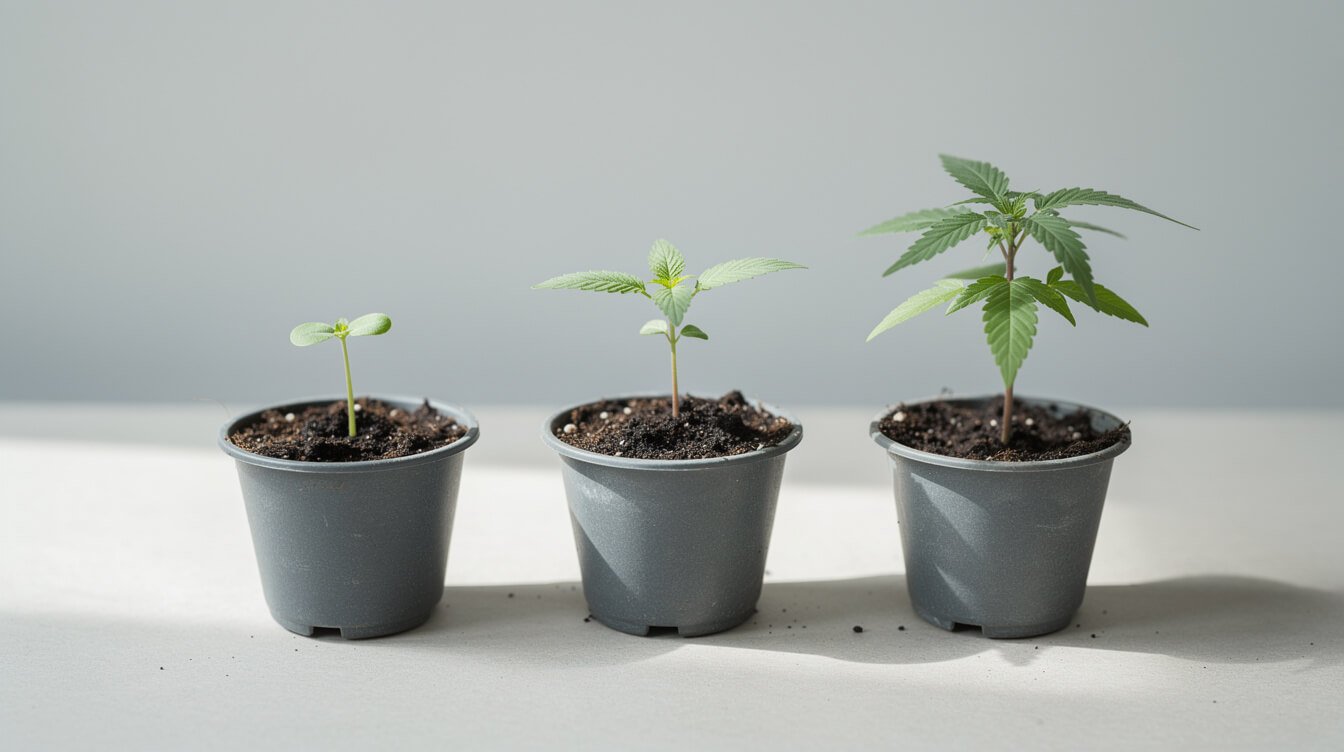
Here’s the honest timeline, not the optimistic one some guides give:
- 24–72 hours: Normal for most healthy, fresh seeds. This is where the majority land.
- 3–5 days: Still completely normal, especially for older seeds or slightly cooler rooms.
- 5–7 days: Slower, but not a lost cause yet. Check that your towel or soil hasn’t dried out and that the spot is actually warm enough — a room that feels comfortable to you (68°F) can be on the cool side for a seed.
- 10–14 days with no taproot: At this point, it’s reasonable to consider the seed non-viable. Seeds occasionally do sprout later than this, but it’s the exception, not the rule.
Once the taproot appears and the seed is planted, expect a seedling to break the soil surface within 3–7 more days, and the first true, jagged-edged leaves (as opposed to the rounder cotyledons) within another week after that — which is your cue that it’s ready for normal seedling care and, eventually, a full light schedule.
Common mistakes that kill seeds before they sprout
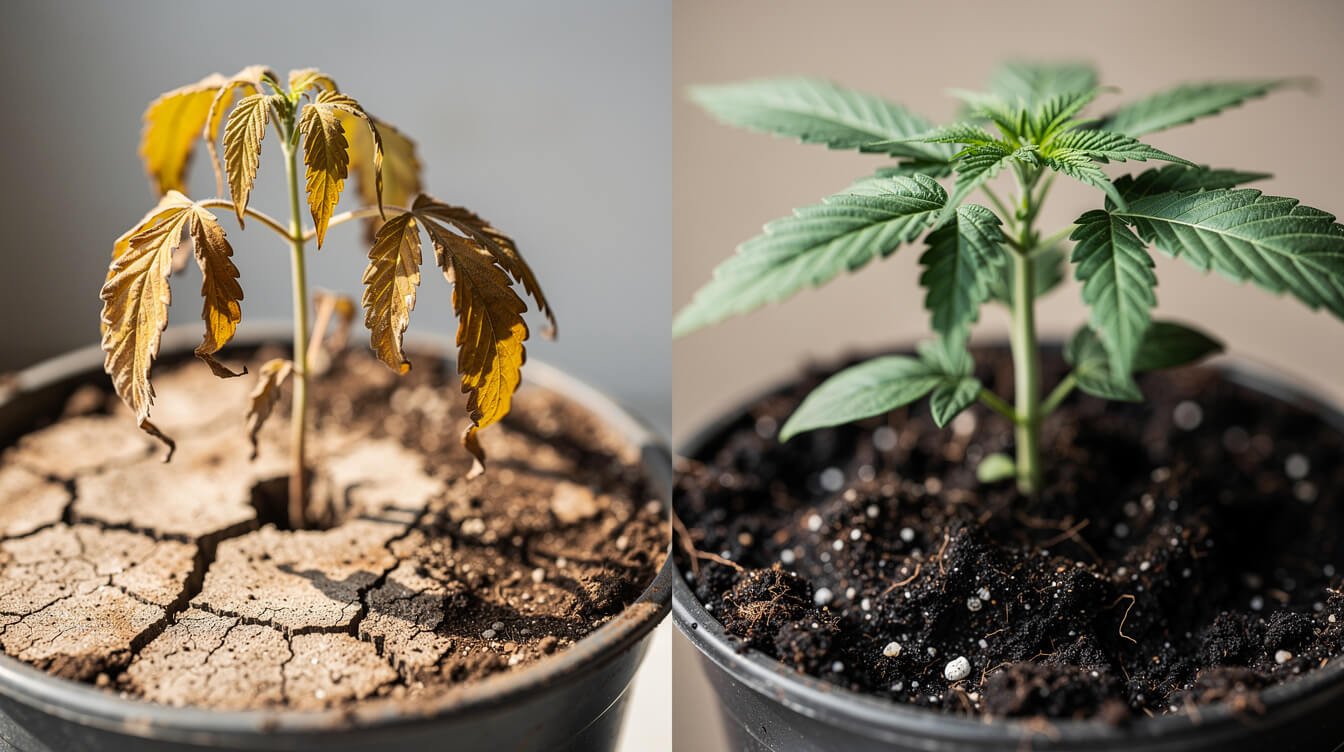
Nearly every failed germination traces back to one of these:
- Letting the paper towel dry out. Even a few hours dry can kill an emerging taproot. Check twice daily, not once.
- Overwatering. Soaked, waterlogged soil or a dripping-wet towel starves the seed of oxygen and invites rot. Damp, not drenched.
- Planting too deep. A half inch is plenty. Buried too deep, a seedling can exhaust its energy reserves before reaching light.
- Rough handling of the taproot. It bruises and snaps easily. Tweezers or a gentle tip-and-drop, never fingers.
- Room too cold. Below roughly 65°F, germination slows dramatically or stalls out completely. A seedling heat mat or a spot near (not directly under, which can overheat and dry things out) a grow light solves this.
- Too many transplants. Every move from towel to cube to small pot to big pot is a stress event. Fewer moves, less shock.
- Giving up too early. Five days with no taproot isn’t a failure yet — see the timeline above before you toss a seed.
- Using soil that’s already loaded with strong nutrients. “Hot” soil formulated for mature plants can be too intense for a seedling with no root system yet to handle it. A light seed-starting mix or plain, unfertilized soil is the safer choice for the first one to two weeks.
- Direct, harsh light on a fresh seedling. The moment a seedling breaks the surface, it needs light — but a powerful grow light blasting at full intensity from six inches away can stress or bleach it. Start with the light further back, or at reduced power, and bring it closer as the seedling establishes its first true leaves.
FAQ: quick answers on germinating cannabis seeds
Do cannabis seeds need light to germinate?
No — the opposite, actually. Germination happens best in the dark. Light matters once the seedling breaks the surface and needs to photosynthesize, not before.
Can I use tap water?
Usually, yes. If your water is heavily chlorinated, let it sit out uncovered for 24 hours first, or use distilled water to be safe.
What if the taproot grows into the paper towel?
It happens, especially if you check late. Tear the towel gently around the root rather than pulling it free — a small piece of towel stuck to the root won’t hurt anything once it’s in soil.
Is it normal for the seed shell to still be stuck to the first leaves?
Yes, this is common and usually resolves on its own within a day or two as the leaves push it off. Don’t pull it off by force — very occasionally misting it can help loosen it.
Do autoflower and photoperiod seeds germinate differently?
No — the germination process itself is identical. The difference shows up after: autoflowers should go straight into their final pot since they’re more sensitive to transplant stress and run on a fixed internal timeline.
My seed cracked but nothing else happened. Is it dead?
Give it a few more days before writing it off, as long as it’s staying consistently moist and warm. If there’s still no taproot after 10–14 days total, it’s reasonable to move on.
Can I germinate seeds that are a few years old?
Often, yes. Cannabis seeds stored somewhere cool, dark, and dry can stay viable for several years, though germination rates and speed both tend to drop with age. An overnight soak before the paper towel method gives older seeds a better shot by softening a shell that’s had years to harden.
Should I use a rooting hormone or root-boosting gel?
Not necessary for germination itself — cannabis seeds don’t need it to sprout. Some growers use a light root-boosting solution once a seedling is planted and establishing, but it’s an optional accelerant, not a requirement, and skipping it entirely produces perfectly healthy seedlings.
Final thoughts
Germinating a cannabis seed isn’t the hard part of growing — it’s the part with the most guides overcomplicating it. Keep it warm, keep it consistently moist, handle the taproot as little as possible, and give it a reasonable window before you assume it’s failed. Once you’ve got a sprouted seedling in soil, the real learning curve — light, nutrients, training — is still ahead of you, but you’ve cleared the step most people worry about most.
If you’re planning your first grow from here, our honest first-grow walkthrough picks up exactly where this leaves off, and it’s worth knowing what to look for in a grow light sized for a single plant before your seedling outgrows a windowsill. If you’re still deciding what to plant, our breakdown of beginner-friendly strains is a good next stop, and keep nutrient burn bookmarked for later — it’s one of the first issues new growers run into once seedlings start feeding.
One more thing worth saying plainly: whether you’re even allowed to germinate cannabis seeds at home depends entirely on where you live, even in places where cannabis itself is legal — home cultivation rules vary by state and country, and some places that allow possession don’t allow growing. Check your local law before you start.
Before you go
Get the next explainer first
We publish a new one every day. The best of the week, plus what's new in the shop, lands in one short email.