Ruderalis Weed Plant Explained: The Weedy Cannabis Behind Autoflowers (and Why It’s Probably Not a Separate Species)
A ruderalis weed plant is the small, scrappy, wild-type form of cannabis that flowers on its own clock instead of waiting for the days to get shorter. That one trait, called autoflowering or day-neutral flowering, is why ruderalis matters at all: it’s where most of the “autoflower” genetics in modern home grows are said to come from. Wild ruderalis itself is low in THC and not something anyone grows for the high.
That’s the answer you’ll find everywhere. Here’s the nuance most sites skip. The plant that botanist D. E. Janischevsky named in 1924 doesn’t look much like the ruderalis weed plant pictured on seed-bank pages. Genetic studies now point to all cannabis being one very diverse species. And “autoflower” isn’t one trait inherited from one plant. Plant geneticists have mapped more than one separate gene that can switch off a cannabis plant’s sensitivity to day length. Below we cover what ruderalis actually is, where the name comes from, what the genetics say, and what any of it means if you’re growing one plant in a closet where that’s legal.
What is a ruderalis weed plant? The short answer
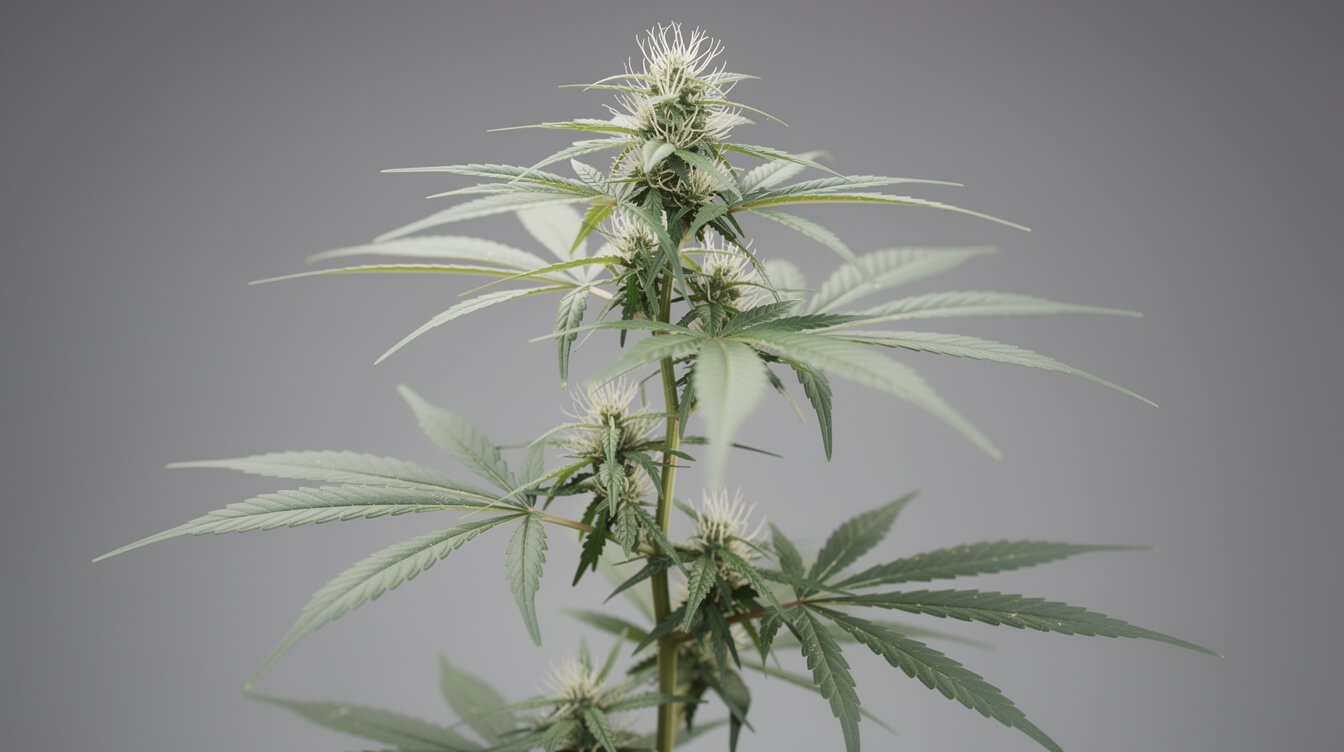
Most cannabis is a short-day plant. It grows leaves and stems while nights are short, then switches to flowering once the night reaches a critical length. Indoors, growers fake that autumn signal by flipping the lights to 12 hours on and 12 off. A ruderalis weed plant skips the signal. It starts flowering when it reaches a certain age, usually a few weeks after sprouting, whether the lights run 12 hours a day or 20.
Here is what the name usually refers to, in practice:
- Wild or feral, day-neutral cannabis from high-latitude regions of Eastern Europe, Russia, and Central Asia, where summers are short and a plant that waited for long nights could freeze before it finished seeding.
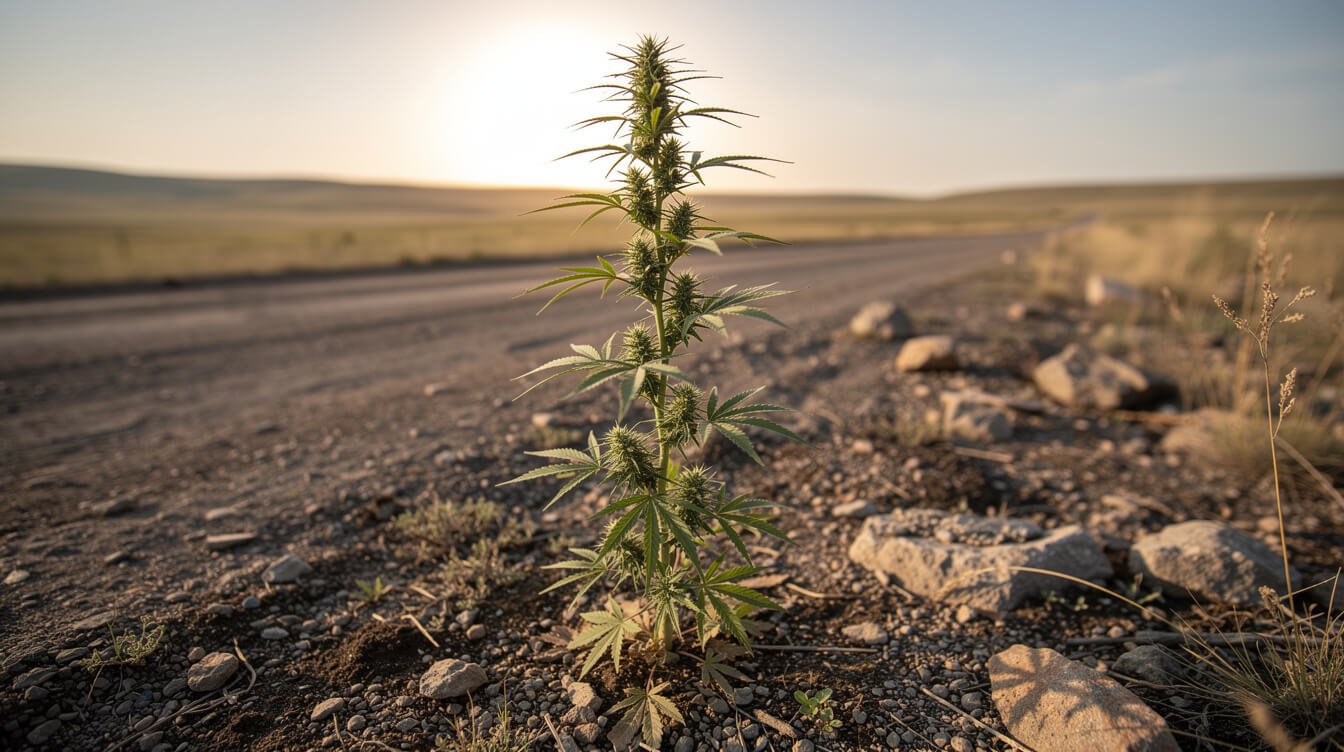
- A weedy growth habit: it colonizes disturbed ground such as roadsides, field edges, and rubble.
- Low THC: wild and feral populations of this type tend to be low in THC and often have as much CBD as THC, or more.
- The breeder’s shorthand for the source of autoflowering genetics, which were crossed into drug-type cannabis to make modern “autos.”
The last point causes most of the confusion. When a grow guide says a plant “has ruderalis genetics,” it almost always means “it autoflowers,” not “it descends from a documented wild Siberian population.” Those are different claims, and the second one is rarely checkable.
Is it a different plant from regular weed?
Not really, and that’s the headline of the modern science (more in a minute). A ruderalis-type plant can cross freely with any other cannabis, and its offspring are fertile. What sets it apart is a small set of traits, mainly day-neutral flowering, small stature, and low THC. It is not a separate kind of organism.
Where the name comes from: “ruderal” means rubble
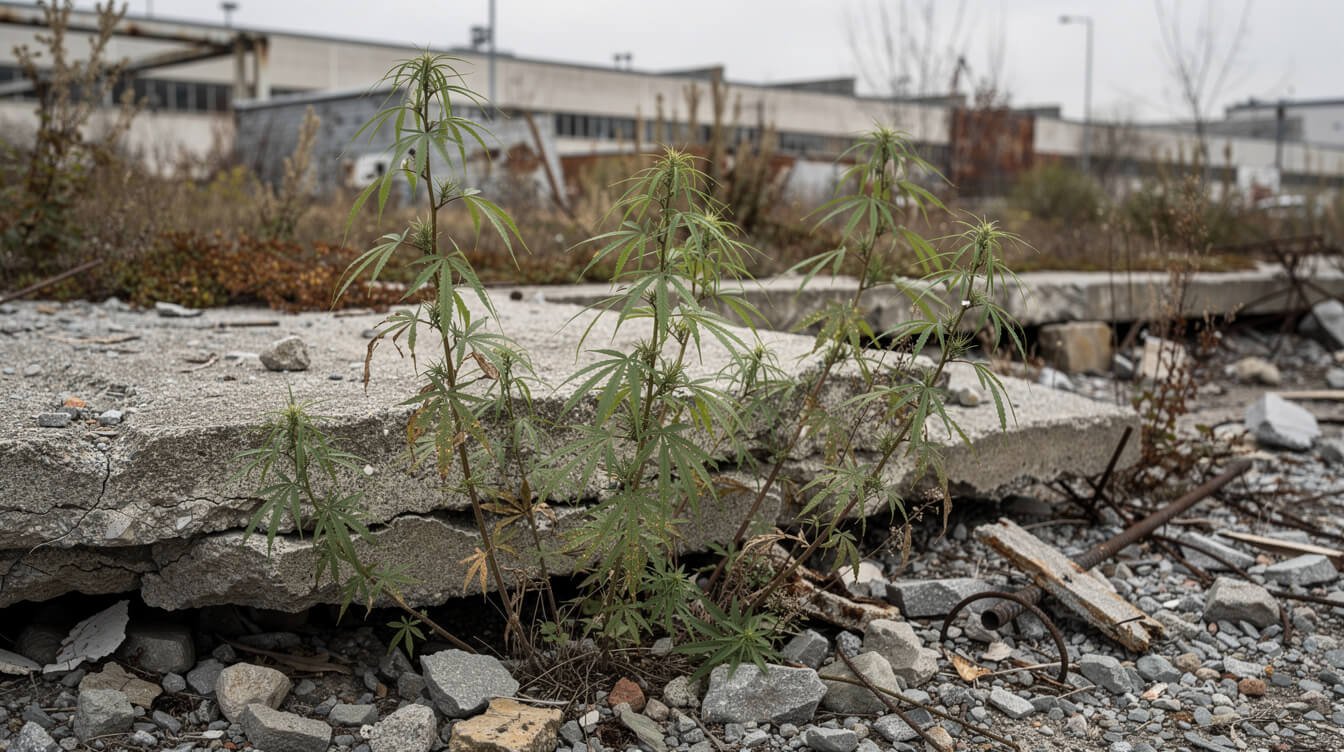
“Ruderalis” comes from the Latin rudus, meaning rubble. In botany, a ruderal plant is one that grows in rubbish, poor soil, or disturbed ground, the kind of plant that volunteers in a construction lot or along a ditch before anything else moves in. Dandelions, plantain, and lamb’s quarters are classic ruderals.
That name describes a lifestyle, not a lineage. Ruderal plants succeed by being fast and opportunistic. They sprout, flower, and set seed before the ground gets disturbed again or the season closes. A cannabis plant that flowers by age instead of waiting for September nights fits that strategy perfectly.
The 1924 description
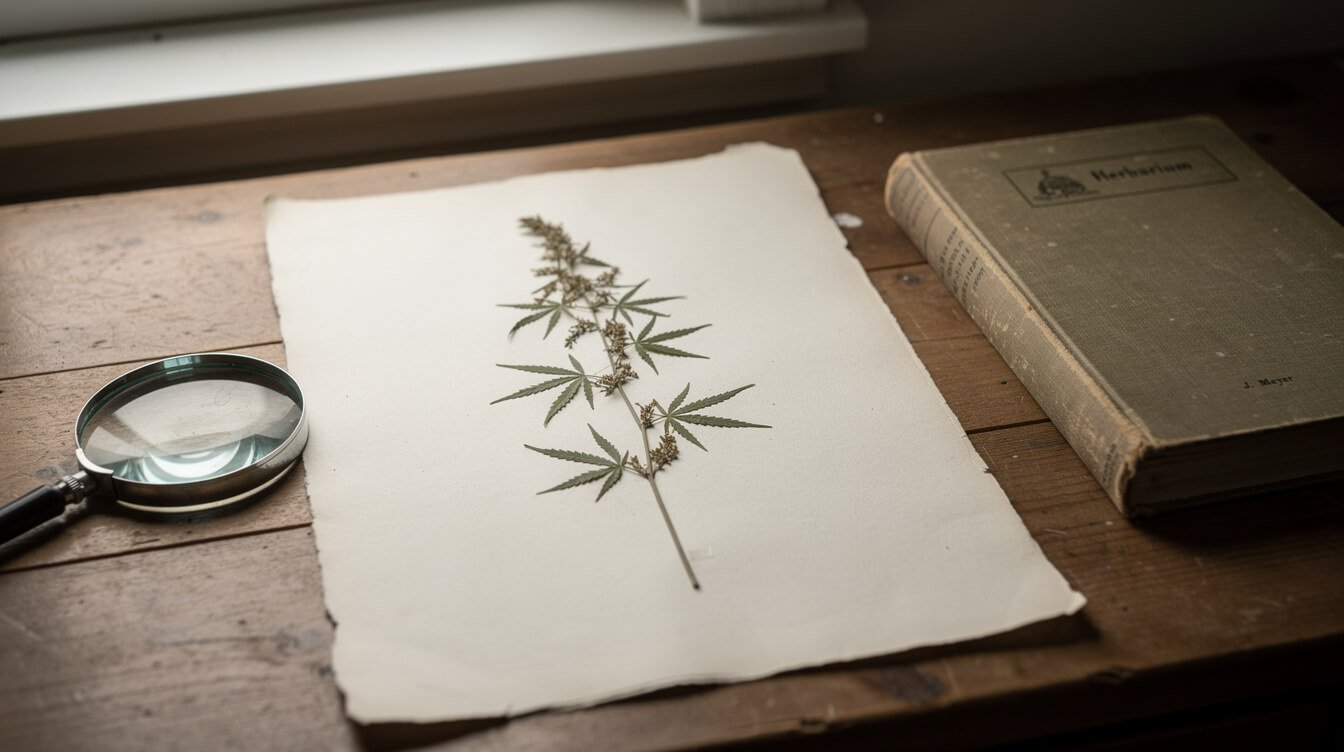
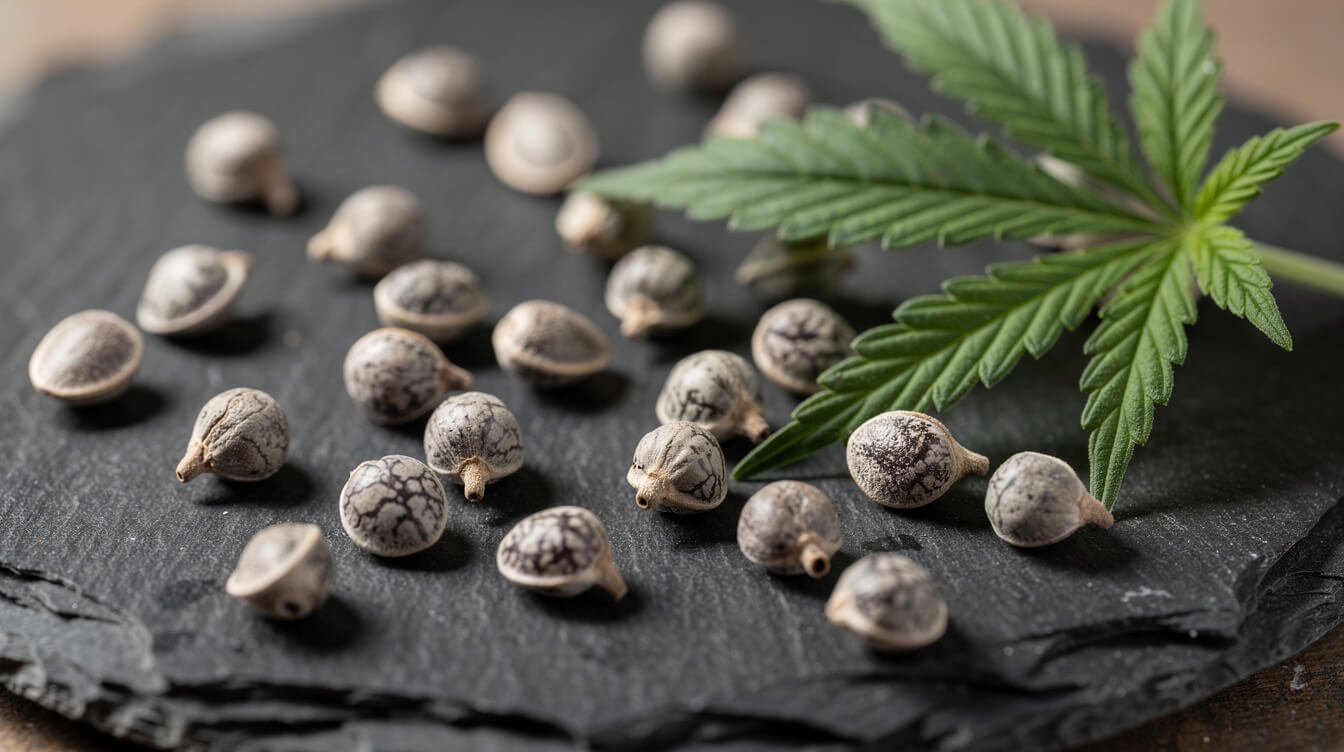
Janischevsky described the plant from wild populations in the Volga region of southeastern European Russia. We cover the Saratov backstory in our guide to where weed grows naturally, so here’s the part that matters for this article. He separated it from cultivated hemp largely on differences in its seeds (botanically, achenes): their shape and size. He offered species rank, Cannabis ruderalis, but hedged in the same breath. According to McPartland’s 2018 review of cannabis systematics, Janischevsky wrote, “I am inclined to consider it a well marked variety.” Two years earlier, Nikolai Vavilov had already named the wild Russian plants a variety, spontanea, and that earlier name has formal priority.
So from day one, the man who named the “third species” wasn’t sure it was a species.
Species, subspecies, or feral hemp? What the genetics say now

For most of the 20th century, cannabis taxonomy came down to who you asked. Some botanists counted one species, others two, and some three (sativa, indica, and ruderalis). Old classifications leaned on what plants looked like and where they grew. Genome sequencing has since given researchers a much sharper tool, and it has mostly pushed the field toward one answer.
The current read: one diverse species
A 2023 review in the journal Genome by Lapierre, Monthony, and Torkamaneh walked through the history from Linnaeus (C. sativa, 1753) and Lamarck (C. indica, 1785) to Janischevsky (C. ruderalis, 1924). It concluded that the latest evidence “points towards the genus Cannabis consisting of a highly diverse monotypic species.” Monotypic means one species. A 2025 pangenome study in Nature by Lynch and colleagues built a pangenome from 193 genomes and found regions “surprisingly diverse for a single species.” That is diverse, but still treated as a single species.
The Cornell hemp researchers who mapped the main autoflower gene put it even more directly. In Toth et al. 2022, they note that autoflowering “is often ascribed in the gray literature as derived from C. ruderalis, but the most recent and in-depth genomic studies do not support the existence of this group.”
So what is a ruderalis weed plant, botanically?
The most defensible description: a weedy, feral or wild-type, often day-neutral form of Cannabis sativa. McPartland’s review sums up the vernacular use well. Today “Ruderalis” gets applied to plants showing one to three traits: roughly equal CBD and THC, wild-type growth form, or early (day-neutral) flowering. He adds that the seed-catalog “Ruderalis” plants photographed near the Hungary–Ukraine border look most like escaped cultivated hemp. His one-line summary of the whole sativa/indica/ruderalis mess: “‘Ruderalis’ is usually sativa.”
That doesn’t make the plant less interesting. It means the useful thing about ruderalis is a trait, not a species badge. If you’ve followed our take on indica vs hybrid labels, this will sound familiar. The folk categories are handy shorthand, but the science underneath is messier and more interesting.
What makes a ruderalis weed plant autoflower: more than one gene
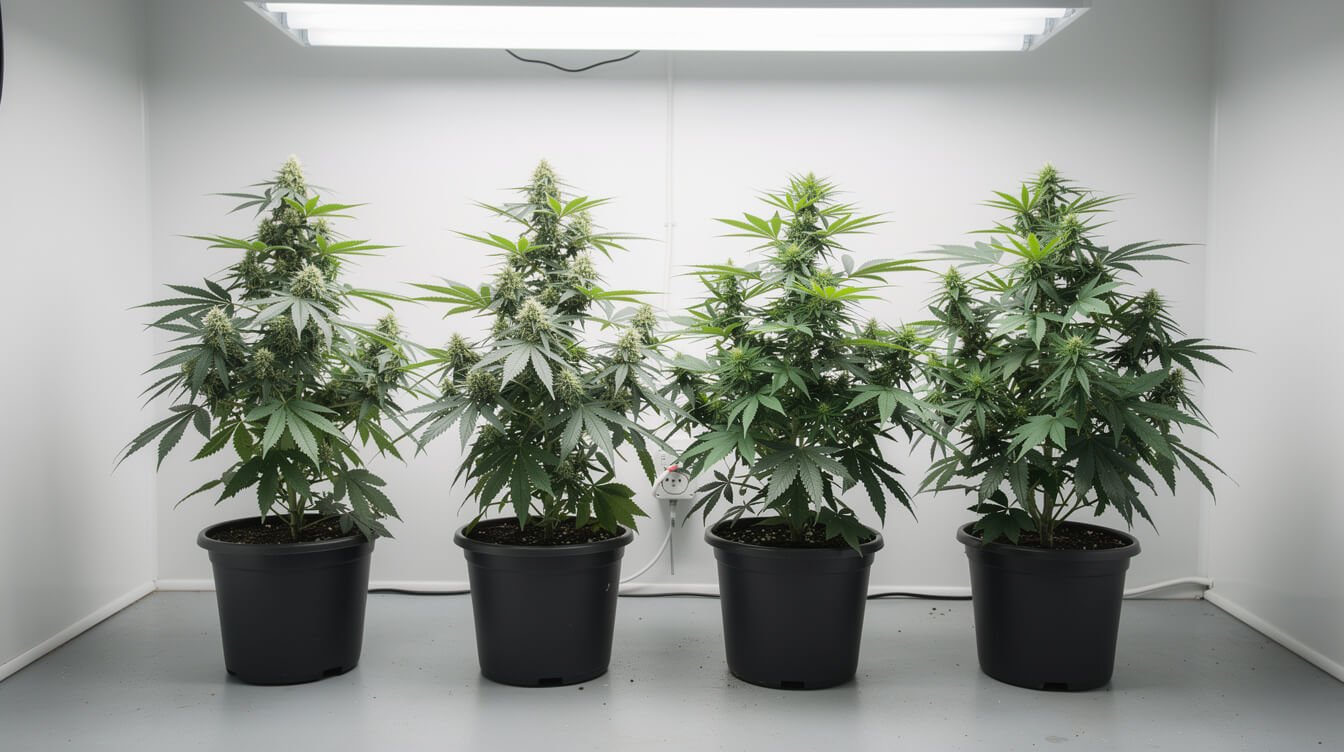
Most articles treat “autoflowering” as one switch that ruderalis carries and hands to its offspring. The genetics papers tell a richer story. Over the last few years, three research groups have pinned down DNA changes that make cannabis ignore day length, and they are not all the same change.
1. Autoflower1: the recessive one (Cornell, 2022)
Toth and colleagues mapped a locus they named Autoflower1. Their data confirmed what breeders long assumed but had rarely published: the trait behaves as a simple recessive. In two populations grown under long (16-hour) days, about a quarter of plants flowered (28 of 88, and 24 of 88). That is the textbook 1-in-4 ratio for a recessive trait. Plants with only one copy didn’t flower under continuous light. Under 16 hours of light, the plants with two copies flowered at about 4 weeks.
2. Autoflower2: a flowering-hormone gene (2024)
A team led by Dowling, working with the same Cornell group, found a second, independent locus. They called it Autoflower2. It contains a cannabis version of FLOWERING LOCUS T (FT), the gene that encodes the mobile “time to flower” signal plants send from leaf to shoot tip. In the photoperiod-insensitive hemp they studied, the gene was duplicated and one copy was more active. Their conclusion, in The Plant Journal: at least two independent loci exist, which “reveals the multiple independent origins of photoperiod insensitivity” in cannabis.
3. A broken clock gene (2024)
Separately, a Canadian team led by Leckie traced autoflowering in drug-type cannabis to a splice-site mutation in a circadian clock gene, PSEUDO-RESPONSE REGULATOR 37 (CsPRR37). In normal plants, that gene holds back FT during long days. In the mutant, the brake fails, so the plant flowers whatever the day length.
Whether the clock-gene mutation and Autoflower1 turn out to be the same locus seen by two labs is still being worked out. What’s settled is that “autoflower” is not one trait. At least two independent genetic routes lead to the same behavior. That fits Dowling’s point that day-neutral flowering likely arose more than once, in more than one population. It doesn’t fit the tidy story of one Siberian weed handing its trait to everyone.
Why this matters beyond trivia
If two autos carry different autoflower genes, crossing them might, in principle, produce offspring that need a light flip. Two recessive traits at different genes can cancel out in the first generation. That’s exactly what Toth’s team tested. They crossed an Autoflower1 plant with ‘Picolo’, a Canadian grain hemp that also flowers under continuous light but carries a different marker at that locus. In this case, all the offspring still flowered under 16-hour days, but on a different schedule: females at about 7 weeks, versus about 4 for the Autoflower1 parent. So the practical lesson isn’t “autos crossed with autos fail.” It’s that different autoflower genetics behave differently, and timing can shift when they’re mixed.
GanjaTech, weekly
Cannabis, explained. In your inbox.
One email a week: the clearest explainers, honest gear picks, and what the science actually says. 21+ only. No spam, unsubscribe anytime.
How to recognize ruderalis and autoflower genetics
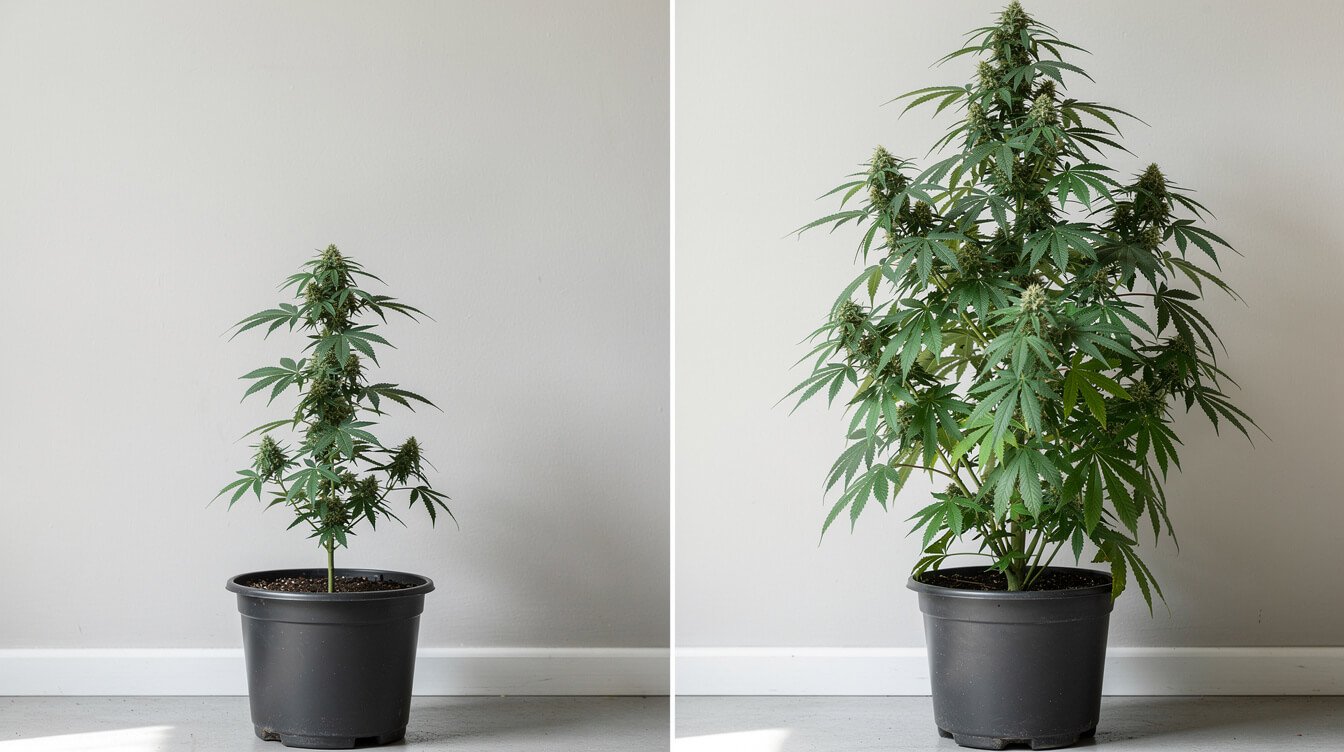
You can’t tell a plant’s genes by looking at it, but you can recognize the traits people mean by “ruderalis.” For general plant ID (leaflets, nodes, pistils, and the look-alikes), see our guide to what a weed plant looks like. Here’s what’s specific to the ruderalis type.
Timing is the real tell
The only reliable field sign of day-neutral genetics is behavior. The plant starts to flower while days are still long, or under an 18- or 20-hour indoor light schedule, typically about three to four weeks after sprouting. Look for small white pistils at the top nodes long before any light change. If the plant does that under long days, it’s day-neutral, whatever its seed packet says.
Size and shape: be careful with the textbook picture
Most articles describe ruderalis as a stubby plant about 1 to 2.5 feet tall, with little branching and thick leaflets. That picture has an odd history. According to McPartland, Janischevsky’s original plants were “relatively tall, laxly branched plants with narrow leaflets from southeastern Europe,” up to 2.1 meters (about 7 feet). Later, Richard Evans Schultes applied the name to “extremely short (≤0.61 m), unbranched plants with broad leaflets from Central Asia.” The popular ruderalis image is essentially Schultes’s plant wearing Janischevsky’s name.
So treat size as a tendency, not a definition. Modern autos are usually compact. Wild day-neutral plants can be tiny on poor soil and much bigger on rich soil.
Quick comparison
| Trait | Wild ruderalis-type | Modern autoflower | Photoperiod cannabis |
|---|---|---|---|
| What triggers flowering | Age | Age | Long nights (12/12 indoors) |
| Typical size | Variable, often small | Compact | Grower-controlled, can be large |
| THC | Low | Bred up; varies by cultivar | Varies by cultivar |
| Grown for | Nothing (wild/feral) | Speed, simplicity | Control, yield |
What ruderalis genes mean in a home grow
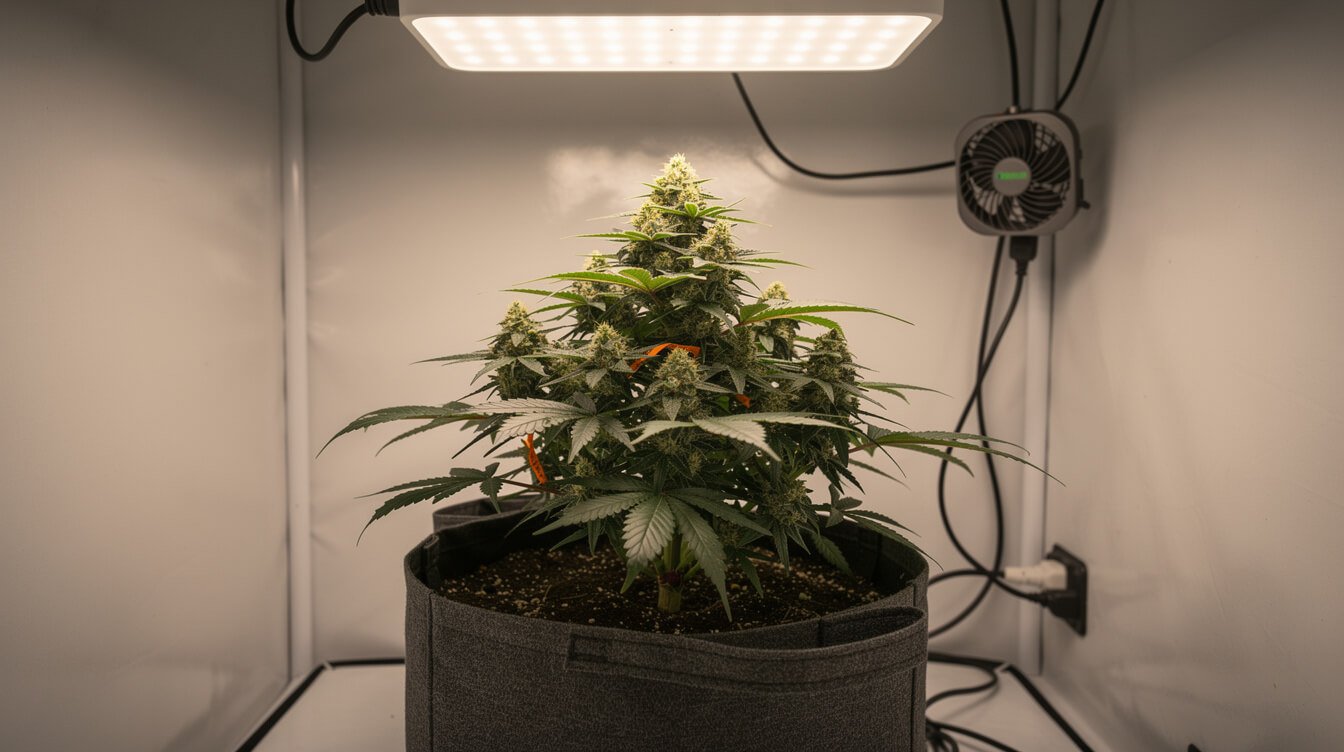
Nobody grows wild ruderalis on purpose. When ruderalis comes up in a home grow, it means autoflowers. First, the obvious note: home growing is legal in some places and a crime in others, and the rules on plant counts, locations, and age differ by state and country. Autoflower or not, check your local law before you plant anything.
No light flip, which is both the perk and the catch
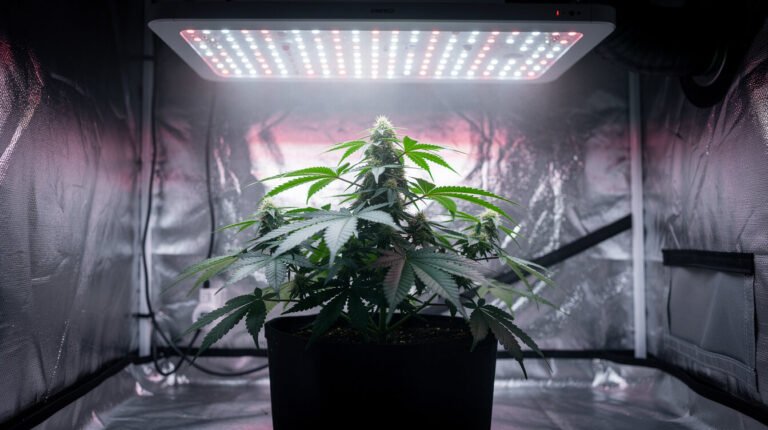
Day-neutral genetics take the flip decision away from you. Because the plant flowers by age, you can run the same light schedule from seed to harvest. Many growers use 18 or 20 hours on, as our indoor grow walkthrough covers. Light leaks into the dark period, which can stress a photoperiod plant, matter much less. The catch is that the vegetative stage is fixed. You can’t keep a plant in veg longer to grow it bigger. If it’s stunted early, there’s no time to recover.
A shorter, fixed timeline
Our grow timeline guide puts a realistic autoflower run at roughly 10 to 14 weeks from seed to a cured jar. Photoperiod plants usually take about 16 to 26. That speed is the big draw, and it’s why autos turn up so often in beginner-friendly picks. Start them right, too: transplant shock costs an auto proportionally more time, so many growers start autos in their final container. Our germination guide has the details.
Training: gentle, early, or not at all
With no stretch of extra veg time, aggressive techniques like heavy topping can cost an autoflower more than they gain. Gentle bending and tying down, explained in our low stress training guide, is the usual compromise. Do it early and keep it light.
The potency trade-off is real, and breeders have been working on it
Leckie’s team noted plainly that the benefits of day-neutral flowering “are counterbalanced by low cannabinoid content and poor flower quality in auto-flowering genotypes.” That’s the ruderalis-type baggage. Breeders have spent decades backcrossing autos into high-THC lines to shed it, and modern autos are far stronger than wild plants. When you harvest, judge ripeness the same way you would for any plant, by reading the trichomes rather than the calendar on the seed pack.
One genetics note for anyone keeping seeds
Because Autoflower1 is recessive, crossing an auto with a photoperiod plant typically gives first-generation offspring that need a light flip again. The trait only reappears in about a quarter of the next generation. That’s why accidental pollination by a stray male photoperiod plant can produce confusing seeds. If you’re not sure which plants are which, our guide to male vs female cannabis plants will help.
Ruderalis myths worth retiring
Myth 1: “Ruderalis is the third species of cannabis”
Janischevsky himself leaned toward calling it a variety, and current genomic reviews point toward one diverse species. “Third species” is a label that stuck in grow culture, not a scientific consensus.
Myth 2: “Ruderalis is always high in CBD”
Partly true, oversold. Hemp-type cannabis from Europe, the group wild ruderalis most resembles, tends toward low THC. In Hillig and Mahlberg’s 2004 chemistry survey of 157 cannabis accessions, high-THC plants made up less than a quarter of most accessions in the hemp-type group. But “low THC” doesn’t automatically mean “high CBD.” Many wild plants are simply low in cannabinoids overall, and the published numbers for truly wild ruderalis populations are thin. Be skeptical of any site quoting a precise percentage. And whatever the CBD level, a plant’s chemistry is not a health claim. Talk to a doctor about health decisions, not a seed description.
Myth 3: “Autoflowers are weak because they’re ruderalis”
That was fair 20 years ago. Today, a well-bred auto can be just as potent as photoperiod flower, while some are still mild. Potency depends on the specific cultivar and the grow, not on whether it autoflowers. Treat any unfamiliar flower as an unknown, and start low.
Myth 4: “All autoflowers trace back to the same wild ruderalis”
The genetics argue against a single source. At least two independent loci cause day-neutral flowering, and the trait has turned up in grain hemp cultivars and feral populations as well as drug-type autos. “Ruderalis genetics” has become shorthand for “day-neutral,” not a traced pedigree.
Myth 5: “Ruderalis only grows in Siberia”
Day-neutral, weedy cannabis has been reported across a broad band of Eastern Europe, Russia, and Central Asia. Feral cannabis also grows in many other places, including US “ditch weed,” which descends mostly from old fiber hemp. Most of that isn’t ruderalis in any meaningful sense. And either way, it’s not something to pick. Who owns the plant, and how the law classifies it, both vary by place, a point we cover in our wild cannabis guide.
Ruderalis weed plant FAQ
Can a ruderalis weed plant get you high?
A wild ruderalis weed plant, realistically, no, or only barely. It’s low in THC, and it’s harsh, mostly seed and leaf. The autoflowers sold for home growing are a different story. They are hybrids bred specifically to carry high THC alongside day-neutral flowering, and they can be every bit as strong as photoperiod flower. If you’re 21 or older and somewhere it’s legal, treat their potency like any other flower’s: start low and don’t drive.
Can you smoke ruderalis?
You physically can, but there’s very little upside. Wild plants are low in THC, and burning mostly leaf and seed makes for harsh smoke. Smoking any plant material irritates the lungs. There’s also the legal side: a wild plant’s legal status depends on where you are, not on how weak it looks. Leave wild plants where they grow.
What kind of weed is ruderalis?
It’s a wild or feral, day-neutral form of cannabis, best understood today as a weedy type of Cannabis sativa rather than its own species. In grow culture, “ruderalis” almost always just means “autoflowering genetics.”
Is ruderalis indica or sativa?
Neither, in the dispensary sense. In formal botany, McPartland’s review concludes that “Ruderalis” is usually sativa, meaning the formal, hemp-leaning C. sativa, not the “sativa” label on a jar. Commercial autos are typically crossed with indica- or sativa-labeled lines, so a given auto might be sold as either.
What is an autoflower weed plant?
An autoflower is any cannabis plant that switches to flowering based on age rather than night length. Most commercial autos get that trait from day-neutral genetics associated with the ruderalis weed plant, crossed into high-THC lines over many generations.
Do all autoflowers come from ruderalis?
That’s the popular story, but the genetics say “it’s complicated.” Researchers have identified at least two independent genetic causes of day-neutral flowering in cannabis, plus a clock-gene mutation that may overlap with one of them. Some grain hemp varieties are also photoperiod-insensitive. “From ruderalis” is shorthand, not a documented family tree.
How long does a ruderalis-type plant take to flower?
Day-neutral plants commonly start flowering three to four weeks after sprouting. Under long days in Toth’s study, plants with two copies of Autoflower1 flowered at about four weeks. Modern autos usually reach harvest in roughly 8 to 11 weeks from seed, or about 10 to 14 weeks to a cured jar.
Final thoughts
The ruderalis weed plant is a great example of cannabis culture running ahead of the science, then the science catching up and complicating things in the best way. The name means “the plant from the rubble.” The botanist who named it thought it was probably a variety. The picture most sites use looks like a different botanist’s plant. And the trait everyone cares about, flowering without waiting for the season to turn, turns out to have more than one genetic origin.
None of that makes autoflowers any less useful. If anything, it’s a better reason to judge a plant by what it does rather than what the label claims. Watch when it flowers, read the trichomes, and learn its quirks. Know your local laws, keep it adult, and enjoy the botany. It’s one of the more interesting stories in the plant’s long history with people.
Before you go
Get the next explainer first
We publish a new one every day. The best of the week, plus what's new in the shop, lands in one short email.