How to Clean a Weed Pipe (Glass, Metal, Wood, Silicone) Without Cracking It
Here’s how to clean a weed pipe, short version: soak it in 91% or stronger isopropyl alcohol with a spoonful of coarse salt, shake it, push a pipe cleaner through the stem, rinse it with warm water, and let it dry completely before you light it again. That handles most glass pipes in about 20 minutes. The rest of this guide is the nuance other guides skip: why salt and alcohol work so well together, which household hacks are mostly fizz, and how the rules change when your pipe is metal, wood, silicone, or stone.
One note before the gunk: this is for adults 21+, and paraphernalia rules vary by state and country, so know yours. Now, the resin.
How to clean a weed pipe: the fast answer
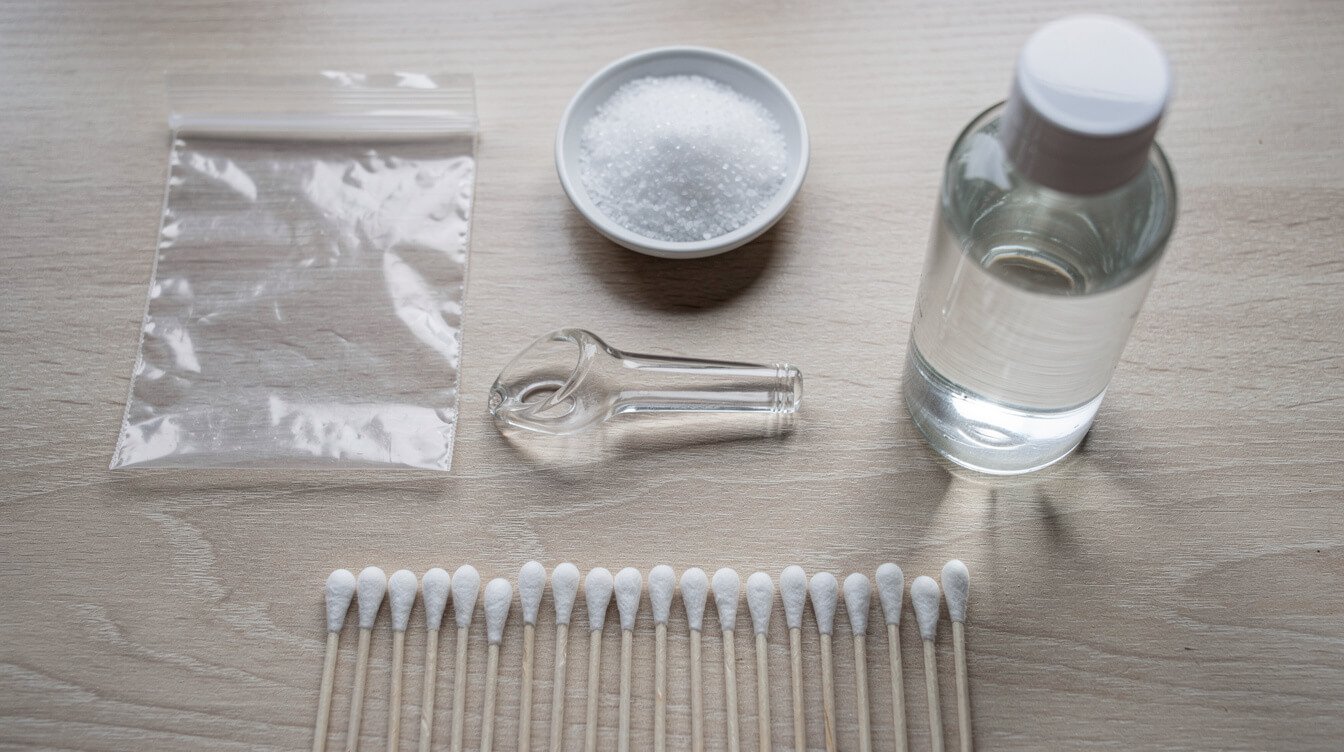
If you just want the pipe clean and don’t care about the chemistry, this is the method. It works on glass, which is what most hand pipes are made of.
- Knock it out. Tap out the ash and any loose chunks. Run a dry pipe cleaner through once to clear the worst of it.
- Bag it. Drop the pipe into a zip-top bag or a lidded container. Add enough 91–99% isopropyl alcohol to cover it, plus a tablespoon or two of coarse salt.
- Shake and soak. Seal it and shake for a minute or two. Let it sit 10–30 minutes, depending on how bad it is, shaking every so often.
- Detail the tight spots. Pull the pipe out and push a pipe cleaner or cotton swab dipped in the alcohol through the stem, the carb, and the bowl.
- Rinse and dry. Rinse with warm (not hot) water until it no longer smells like alcohol. Then let it air dry fully, ideally a few hours.
That’s it for a typical glass spoon. A light weekly clean might only need steps 4 and 5; a pipe ignored since summer might need the soak twice. Two details matter more than they look: alcohol strength (91–99% beats 70%, explained below) and drying, because isopropyl is flammable. If your pipe isn’t glass, read the materials section first. Wood should never take a soak.
What you need, and why each thing works
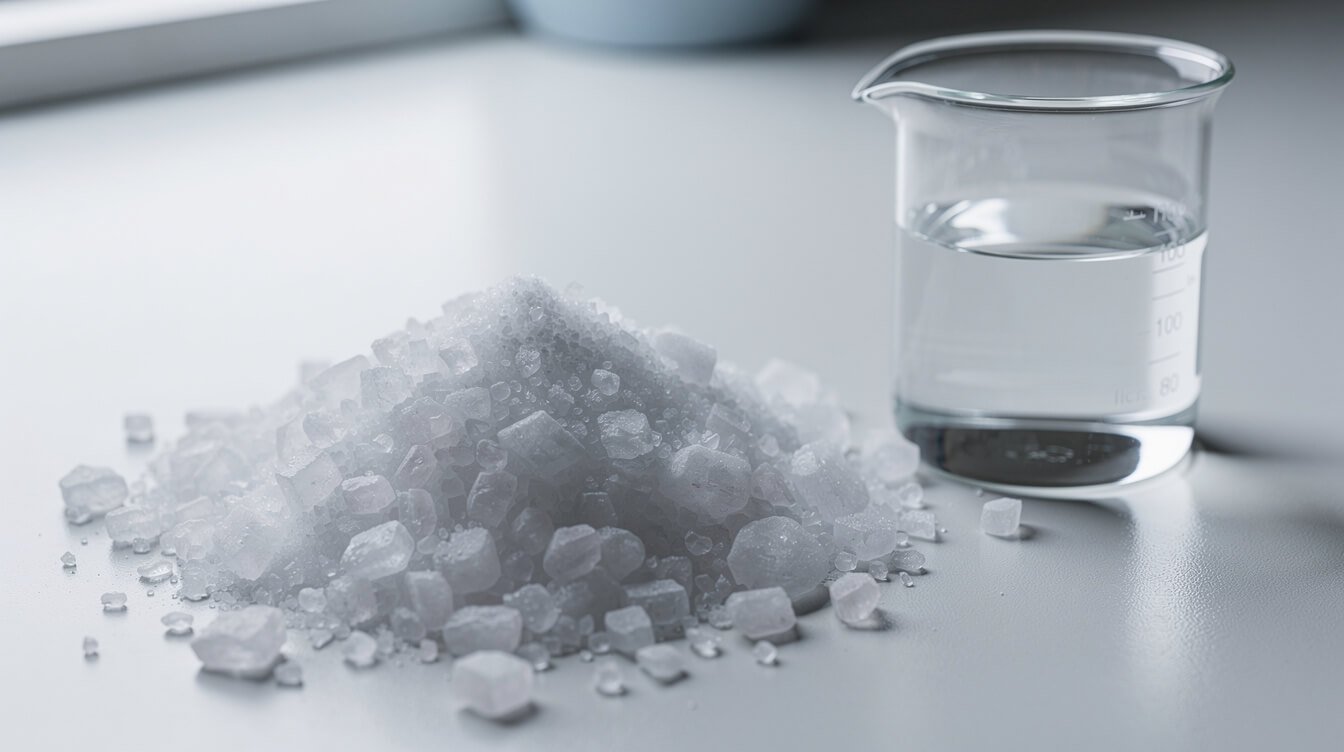
Every guide on how to clean a weed pipe lists the same kit. Almost none explain it, and the explanation tells you when you can improvise.
- Isopropyl alcohol, 91% or higher. The solvent.
- Coarse salt. Kosher salt, sea salt, or rock salt. The scrubber.
- A zip-top bag or lidded container. Something you can shake without spilling.
- Pipe cleaners and cotton swabs. For the stem and carb, where shaking can’t reach.
- Warm water and a towel. For rinsing and drying.
Why alcohol dissolves resin when water won’t
Pipe resin is a sticky mix of partly burned plant material: cannabinoids, plant waxes, tar, and ash. Most of it is oily and nonpolar, chemistry-speak for “doesn’t mix with water.” It’s the same reason water alone won’t shift grease from a pan. Isopropyl alcohol dissolves that oily, waxy residue, so it loosens resin that hot water slides right over.
Why the salt doesn’t dissolve (and why that’s the point)
Here’s the part nobody explains. Salt dissolves beautifully in water: about 36 grams in 100 grams of water at room temperature, per PubChem’s reference data. In alcohol, it barely dissolves at all. PubChem lists just 0.065 grams per 100 grams of ethanol, and isopropyl alcohol is even less polar than ethanol, so it holds even less.
That mismatch is the whole trick. In strong isopropyl, the salt stays as hard, gritty crystals that scrub the glass while the alcohol softens the resin. One ingredient dissolves the gunk; the other sandpapers it off.
Why 91% beats 70%
Rubbing alcohol labeled 70% is about 30% water. That water does two unhelpful things. It dissolves some of your salt, so you lose grit. And it dilutes the solvent, so the resin softens more slowly. 70% still works on a lightly used pipe, just slower. If you see two layers form when 70% meets a lot of salt, that’s the salt pulling water out of the alcohol, an effect chemists call “salting out.” Harmless, and a sign to buy stronger alcohol next time.
Can you swap ingredients?
Mostly, if you keep the logic. Any coarse, hard salt works; fine table salt scrubs less. Uncooked rice scrubs fine but doesn’t rinse away like salt, so you’ll be fishing grains out of the stem. Some guides suggest acetone. It dissolves resin aggressively, but it’s more flammable than iso and damages plastic, acrylic, painted finishes, and silicone, with little advantage over 99% iso on glass. We’d skip it.
How to clean a weed pipe with iso and salt, step by step
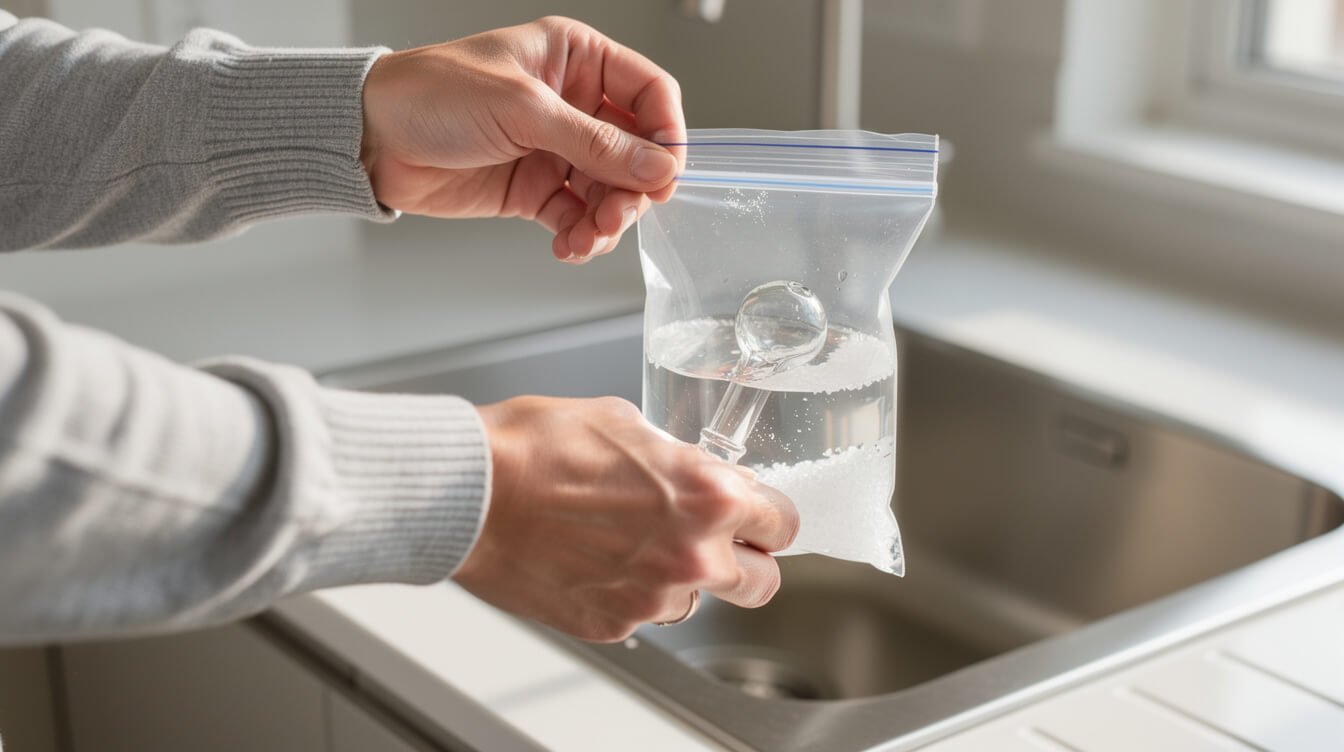
This is the detailed version, with the small things that separate “mostly clean” from “looks new.”
1. Pre-clean the loose stuff
Knock the bowl out and run a dry pipe cleaner through the stem. If resin plugs the bowl’s hole, break it up with a wooden toothpick rather than anything sharp and metal, which can scratch glass. The goal is an open airway so alcohol can flow through the pipe, not just sit on the outside.
2. Soak with alcohol and salt
Start with a pipe that’s cool to the touch; liquid on warm glass is a small version of the temperature swing that cracks pipes.
Put the pipe in a zip-top bag (double-bag it if you’re nervous about leaks) or a container with a tight lid. Add enough 91–99% isopropyl to cover it and one to two tablespoons of coarse salt. Seal it, then shake firmly for a minute or two. The alcohol turns amber almost right away; that color is dissolved resin.
A lightly used pipe needs about 10 minutes, a heavily caked one an hour or more, with a shake now and then. If the alcohol goes dark and the pipe still isn’t clean, repeat with fresh alcohol and salt. Two short soaks beat one long one.
3. Detail the stem, carb, and bowl
Take the pipe out (gloves are a good idea; isopropyl dries out your skin). Dip a pipe cleaner in clean alcohol and work it back and forth through the stem. Use cotton swabs in the bowl and carb. This is where most of the final cleaning happens, since shaking can’t fully scour the narrow parts.
4. Rinse thoroughly
Rinse inside and out with warm tap water, not hot. Run water straight through the stem until it no longer smells like alcohol. This removes salt crystals, dissolved resin, and, most importantly, leftover alcohol.
5. Dry completely before lighting
This step is the safety step. PubChem lists the flash point of pure isopropyl alcohol at 53°F, and 91% isopropyl at about 75°F (open cup). In plain terms, at or near normal room temperature, the vapor coming off it can catch fire. A pipe still wet with alcohol and a lighter flame is a bad combination. After rinsing, shake out the water, stand the pipe upright or upside down on a towel, and give it a few hours, or overnight if the stem is narrow. Do all of this in a ventilated room, away from stoves, candles, and cigarettes.
What to do with the dirty alcohol
Some guides say to flush it down the toilet. We’d skip that. Used isopropyl is still a flammable liquid, and disposal rules vary; many places treat it as household hazardous waste, so check your local guidance. Many people let it settle in a sealed jar and reuse it for the next soak.
No-alcohol methods: hot water, and why baking soda plus vinegar is mostly fizz
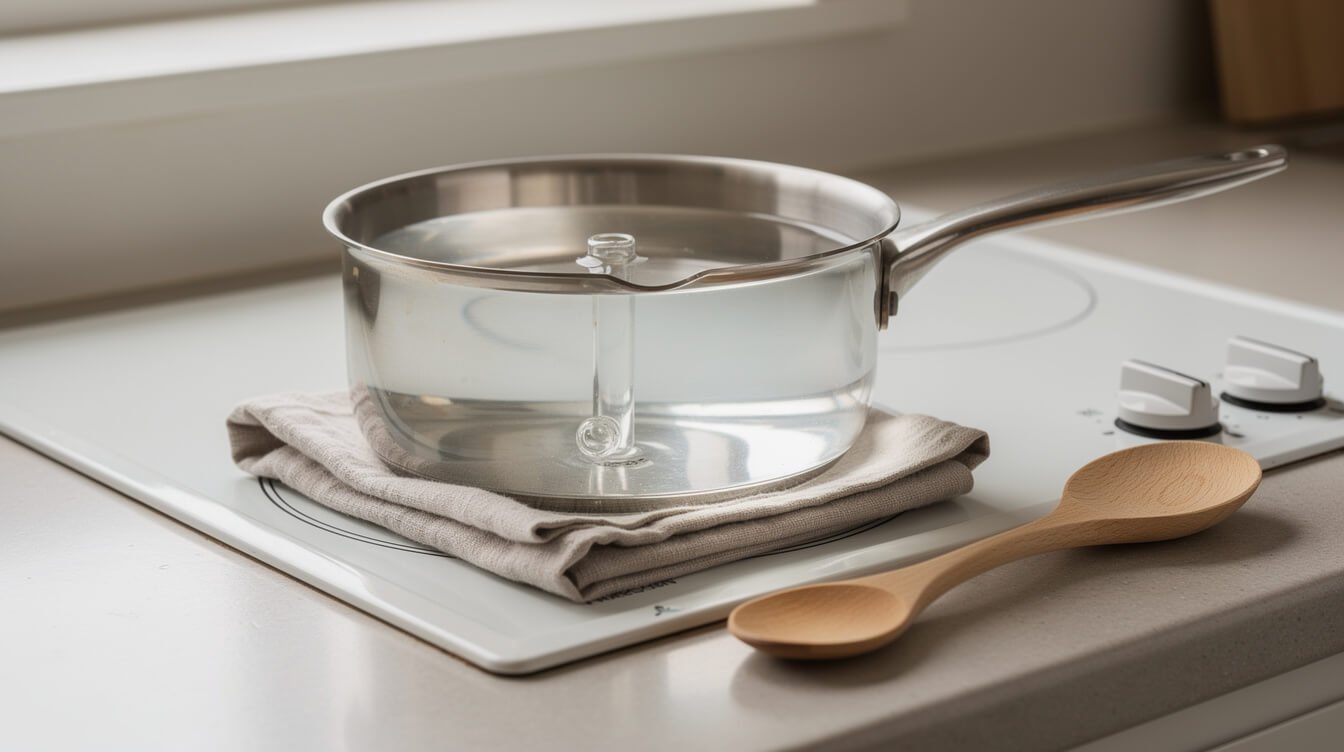
Out of iso, or rather not use it? Some alternatives work well. One mostly just looks like it’s working.
The hot water method (done safely)
Heat softens resin, and a simmer can loosen a surprising amount of it. A common version of the advice is “place the pipe in boiling water and simmer for 20–30 minutes.” The problem is the order. Putting a room-temperature glass pipe into water that’s already boiling is exactly the kind of sudden temperature change that cracks glass.
Here’s the safer version:
- Lay a folded cloth or a silicone mat in the bottom of a pot so the pipe doesn’t rattle against the hot metal.
- Put the pipe in the pot first, then cover it with cool water.
- Heat the water and pipe together to a gentle simmer, not a rolling boil.
- Simmer 20–30 minutes.
- Turn off the heat and let the pipe cool down in the water. Don’t pull a hot pipe out and run it under cold water.
- Finish with pipe cleaners and a warm rinse.
Use a pot you don’t cook in, or clean it well afterward.
Why temperature swings crack glass
Glass expands when it heats and shrinks when it cools. If one part heats faster than another (say, the outer surface hits boiling water while the inside is still room temperature), the two parts pull against each other. Thick spots and joins, where the glassblower fused pieces together, are where the stress builds and cracks start. Good borosilicate glass, the kind most quality pipes are made from, expands only about a third as much as ordinary soda-lime glass when heated, which is why it tolerates heat well. But “tolerates heat” isn’t the same as “tolerates sudden swings,” and a cheap pipe may not be borosilicate at all. Gradual heating and gradual cooling protect every kind.
Baking soda and vinegar: satisfying, not very effective
This shows up in a lot of guides, and we get the appeal: it fizzes dramatically and looks powerful. Chemically, though, an acid (vinegar) and a base (baking soda) are cancelling each other out. The fizz is carbon dioxide gas leaving the reaction. What’s left when it stops is mostly water with a little dissolved sodium acetate, which does very little to oily resin.
The bubbling can knock loose light, flaky buildup, so it’s not useless on a lightly used pipe. On real resin it’s mostly show. Hot water does more, and alcohol does far more.
Can you clean a pipe with just water?
Cool water does very little. The simmer method above does a reasonable job on glass, followed by pipe cleaners, and warm soapy water handles light residue and silicone. For baked-on buildup, water alone means a lot of scrubbing.
GanjaTech, weekly
Cannabis, explained. In your inbox.
One email a week: the clearest explainers, honest gear picks, and what the science actually says. 21+ only. No spam, unsubscribe anytime.
Cleaning by material: glass, metal, wood, silicone, and stone
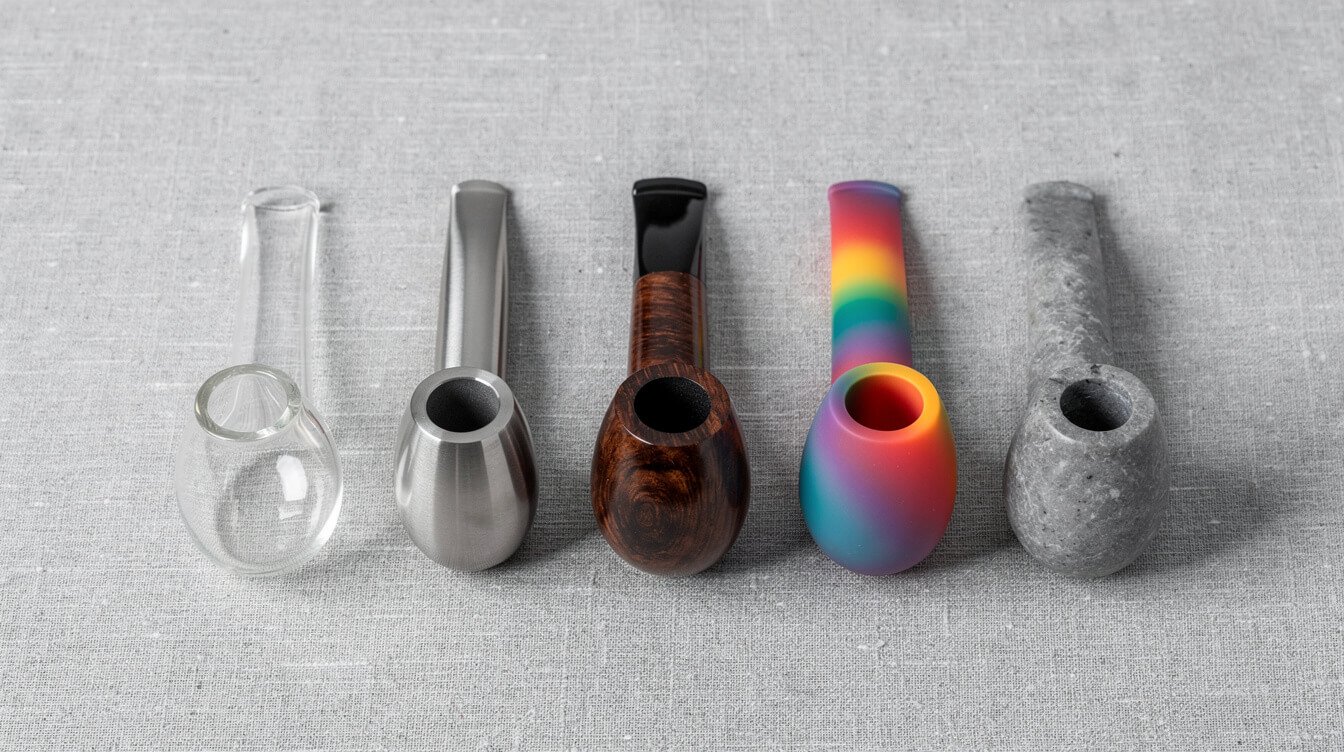
Most advice on how to clean a weed pipe assumes it’s glass. If yours isn’t, some of that advice will damage it.
| Material | Best method | Avoid |
|---|---|---|
| Glass (borosilicate) | Iso and salt soak; gradual simmer | Sudden hot/cold swings; scraping with metal |
| Metal (aluminum, brass, steel) | Take apart; iso soak or swab; brush | Steel wool or harsh abrasives on anodized or coated finishes |
| Wood and briar | Iso-dampened pipe cleaner; wipe; air dry | Any soak, in water or alcohol; boiling |
| Silicone | Warm soapy water; dishwasher only if the maker says so | Long solvent soaks unless the maker approves |
| Stone and ceramic | Gentle iso swab; warm soapy rinse | Boiling; sudden temperature changes; long soaks for porous stone |
Glass
Everything above applies, and you can see exactly when you’re done. The real risks are temperature shock and dropping it in the sink; a towel in the sink solves the second.
Metal
Metal pipes usually come apart, and that’s a gift: unscrew every piece and clean them separately. Isopropyl is fine on bare metal. A small brush or pipe cleaners handle the threads and channels. Many aluminum pipes are anodized (that colored finish), and steel wool or abrasive pads will scratch it off. Dry the threads completely before you put it back together.
Wood and briar
Wood is the one material where the classic soak is a mistake. Soaking wood in water or alcohol can swell it, crack it, raise the grain, and strip the finish. Instead, dampen (don’t drench) a pipe cleaner with alcohol and run it through the stem and bowl, then wipe the bowl with a cloth. Let it air dry thoroughly before using it again. Traditional tobacco-pipe care works the same way: gently, often, and never in a bath.
Silicone
Silicone pipes are the easiest to clean. Warm water and dish soap with a small brush handle most of it, and you can often flex the pipe to crack off dried buildup. Many makers say their silicone is dishwasher-safe, but not all, so check the maker’s guidance before you try it. Most silicone pipes have a glass or metal bowl insert; pop it out and clean it on its own using the method for its material. A quick wipe with alcohol is generally fine, but skip long solvent soaks unless the maker says it’s okay.
Stone and ceramic
Soapstone and unglazed ceramic are porous and can crack from heat shock. Use alcohol on a swab or pipe cleaner rather than a long soak, follow with warm soapy water, and dry slowly at room temperature. Glazed ceramic is more forgiving, but treat it gently all the same.
Stubborn spots: the carb, the stem, and the screen
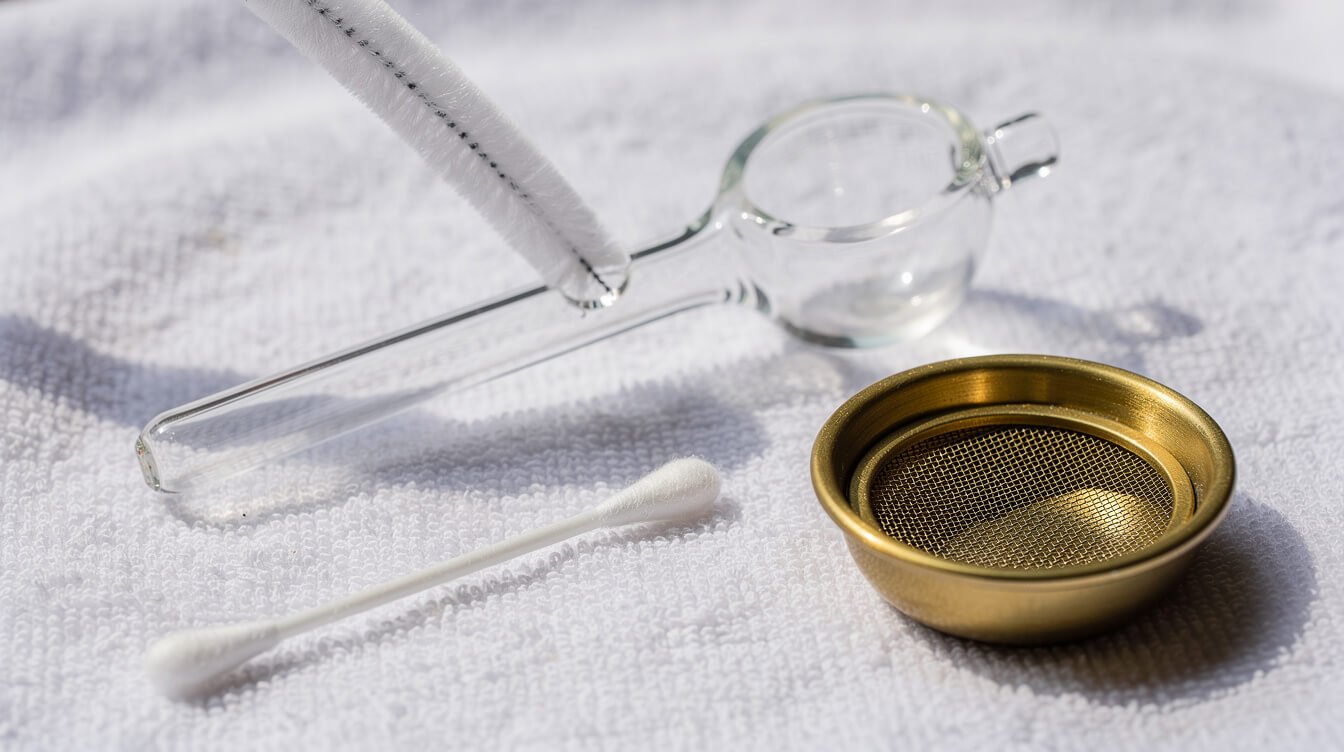
Soaking does most of the work. The last 10% is detail work in the narrow spots.
The stem
The stem is the channel from the bowl to the mouthpiece, and it’s where resin builds thickest because smoke cools as it travels. Soak first, then work a pipe cleaner through from both ends. For a stubborn clog, fold the pipe cleaner in half for more bristle, or twist two together. If you can’t get through at all, soak again before you force anything; jamming a pipe cleaner can leave fibers stuck inside.
The carb
The carb is the small side hole you cover while inhaling and release to clear the smoke. It’s tiny, so it clogs easily. An alcohol-dipped swab handles the outside; a pipe cleaner pushed through from inside the bowl handles the channel.
Screens
A small metal or glass screen in the bowl keeps ash out of the stem. Metal screens clog quickly; soak one with the pipe, but once it’s warped or caked, replace it. Glass screens clean up like the pipe. Either way, a screen slows down how fast the stem gunks up.
Don’t smoke the resin
Some people scrape out pipe resin and smoke it. We’d skip it. Resin is already-burned residue (mostly tar, ash, and char along with some leftover cannabinoids), and it tastes about how that sounds. The harsh stuff you’re cleaning out is exactly what a clean pipe helps you avoid inhaling. Scrape it, toss it, move on.
How often to clean a pipe, and how to keep it cleaner longer
It depends on use. A reasonable starting point:
- Daily use: a quick alcohol swab of the stem every few days, and a full soak every week or two.
- A few times a week: a full soak every two to four weeks.
- Occasional use: clean it after a session or two, before resin has time to harden.
Better than any calendar: clean it when the draw feels restricted, the taste turns harsh, or you can see a dark film through the glass. Fresh resin comes off far more easily than months-old resin, so frequent light cleans are less work overall.
Why it matters
Resin adds a burnt, bitter flavor that drowns out the terpenes, the aroma compounds that make one cultivar taste different from another. It also restricts airflow, so you pull harder for less. Knowing how to clean a weed pipe properly is mostly about getting the flavor back.
How to keep it cleaner longer
- Swab after sessions. A cotton swab with a drop of alcohol, once the pipe is cool, takes 30 seconds and prevents most buildup.
- Use a screen. It keeps ash and fragments out of the stem.
- Grind evenly. Even, consistent grind burns more evenly and leaves fewer fragments in the bowl. If you’re shopping for one, our guide to the best weed grinder covers what actually matters, and the stainless steel grinder breakdown explains when a metal grinder is worth it.
- Don’t overpack. A loosely packed bowl burns more cleanly than one jammed full.
- Store it in a case or pouch. Less dust and fewer accidental drops.
Your grinder needs the same kind of care, because resin and sticky plant material build up in its teeth too. The good news is the residue in its pollen catcher isn’t gunk at all; it’s trichome dust, and our explainer on what kief is covers what to do with it. And if you’d rather skip pipe cleaning altogether, a rolled joint means no glass to clean. The best rolling papers guide and our blunt vs spliff vs joint breakdown cover that route.
Frequently asked questions
What’s the best thing to clean a weed pipe with?
For glass, 91–99% isopropyl alcohol with coarse salt. The alcohol dissolves the oily resin and the salt, which doesn’t dissolve in strong alcohol, scrubs it off. For wood, use an alcohol-dampened pipe cleaner only. For silicone, warm soapy water.
How do you get resin out of a pipe?
Soak the pipe in strong isopropyl alcohol and coarse salt, shake it, then work pipe cleaners through the stem and swabs through the bowl and carb. Heavy, hardened resin may need two soaks. A gradual simmer in water (start cold, heat together, cool in the water) is the alcohol-free alternative for glass.
How to clean a weed pipe without alcohol?
Use the simmer method for glass: pipe into cool water, heat to a gentle simmer, hold 20–30 minutes, cool in the water, then scrub with pipe cleaners. Dish soap and warm water work for light residue and silicone. Baking soda and vinegar fizz impressively but do little to real resin.
Is 70% isopropyl alcohol good enough?
It works on lightly used pipes, just more slowly. The 30% water in it dilutes the solvent and dissolves some of the salt, so you get less scrubbing power. For a heavily caked pipe, 91% or 99% is worth it.
How do you clean a bubbler?
A bubbler is a small water pipe, so it’s the same method with one extra rule: dump the water after every session. Standing water picks up residue and can grow slime within days. For a deep clean, empty it, plug the openings, and shake it with isopropyl and salt just like a hand pipe, then rinse thoroughly and dry.
Can you put a glass pipe in the dishwasher?
We wouldn’t. Heat cycles are a temperature swing, the jets can knock glass into other dishes, and water won’t dissolve oily resin anyway. Some silicone pipes are dishwasher-safe per their makers.
Final thoughts
That’s how to clean a weed pipe without guesswork. Strong alcohol dissolves the resin, coarse salt scrubs it because it doesn’t dissolve in that alcohol, pipe cleaners handle the narrow spots, and a thorough rinse and full dry make it safe to light again. Hot water works if you heat and cool it gradually. Baking soda and vinegar mostly put on a show.
The bigger lesson is to clean for your material. Glass can take a soak. Wood never should. Silicone just wants soap. And whatever you’re cleaning, small, frequent cleans beat a once-a-year resin excavation every time.
A clean pipe tastes like the cultivar instead of last month’s ash. Treat your gear well, know your local laws, and enjoy responsibly.
Before you go
Get the next explainer first
We publish a new one every day. The best of the week, plus what's new in the shop, lands in one short email.