List of Terpenes and Effects: A Practical, Honest Reference
If you’ve ever heard “this one’s more of a body-relaxing strain” and wondered what’s actually behind that claim, the honest answer is usually: terpenes, not the indica/sativa label on the jar. This list of terpenes and effects breaks down the eight terpenes that actually show up in cannabis lab reports, what’s reported about each one, and — just as important — how confident we should be about those reports. No hype, no “this terpene cures anxiety” nonsense. Just the straight answer, then the nuance.
By the end, you’ll be able to read a certificate of analysis (COA) or a dispensary terpene chart and actually know what you’re looking at, instead of just trusting a strain name.
What terpenes actually are (and why they matter more than the strain name)
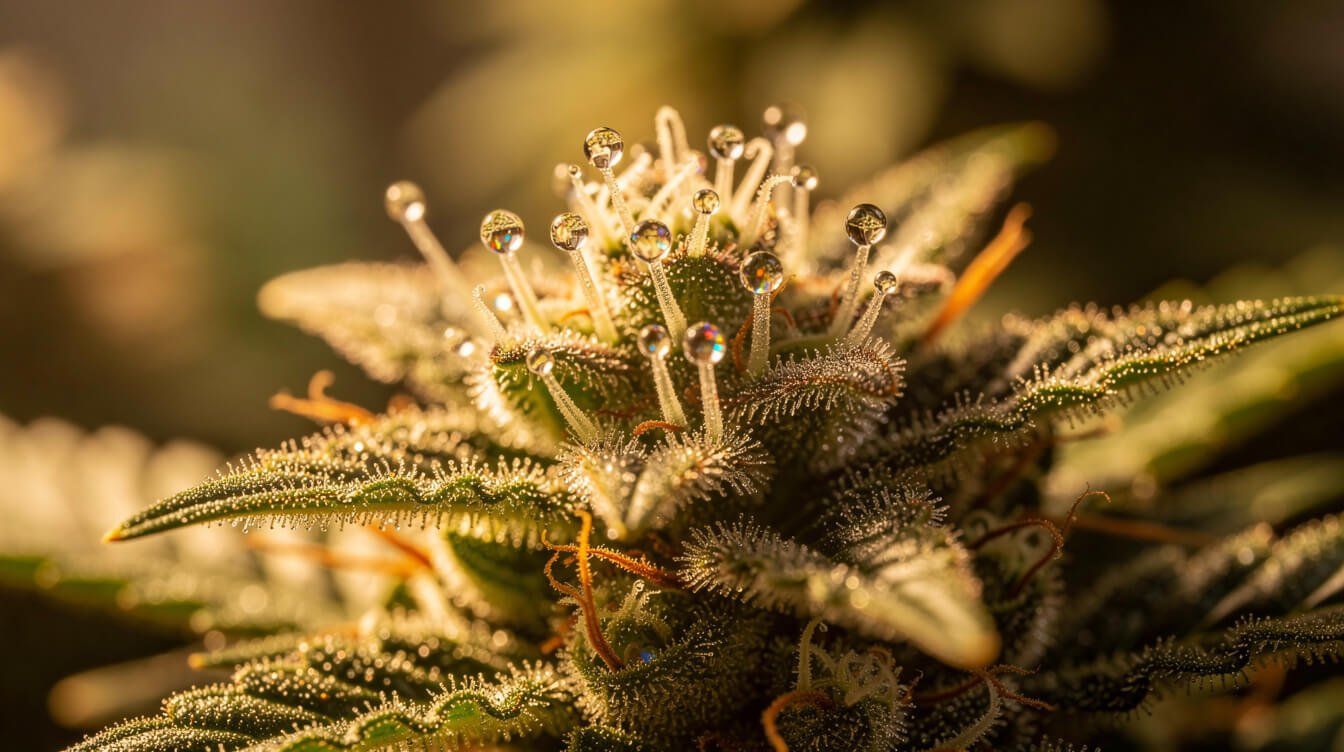
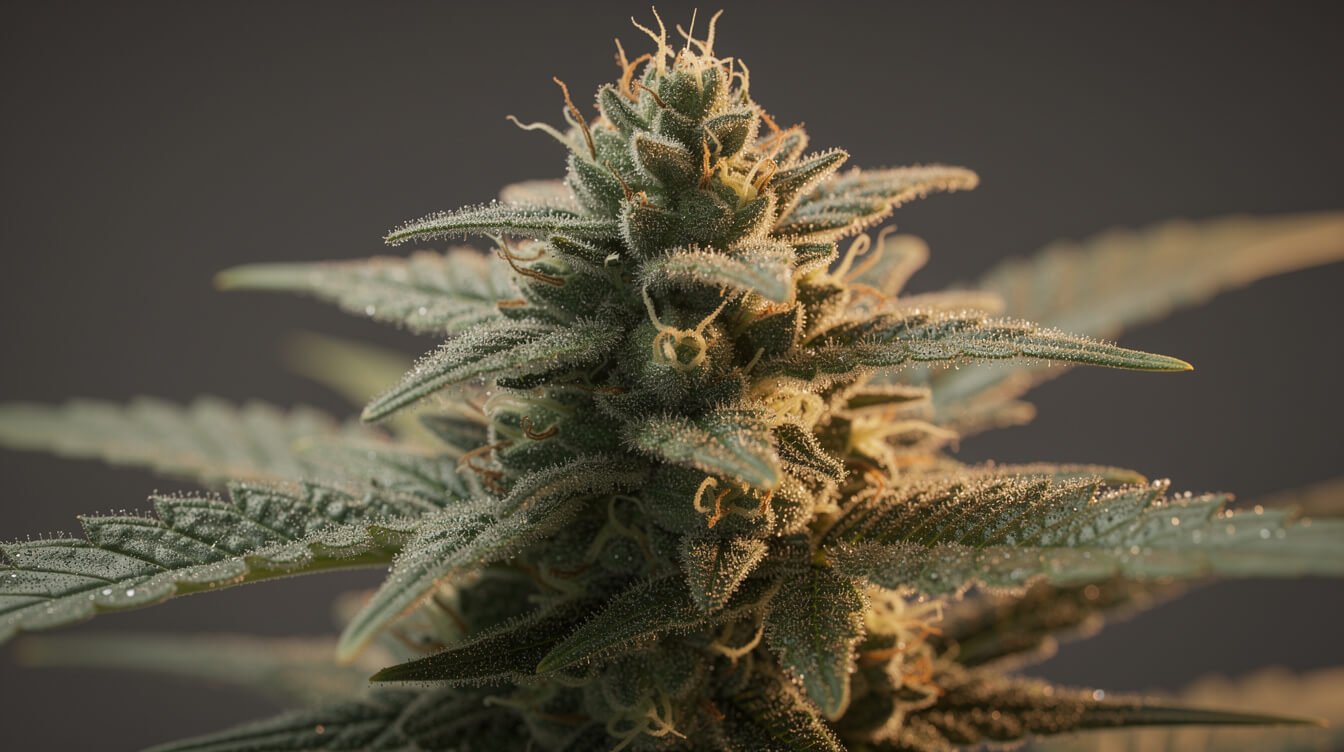
Terpenes are aromatic compounds produced in the same trichomes — the frosty little resin glands — that make THC and CBD. They’re not unique to cannabis; the same or similar molecules show up in lavender, black pepper, citrus peel, and pine needles. In cannabis specifically, terpenes are responsible for a cultivar’s smell, a good chunk of its flavor, and — this is the part that matters — they appear to shape how a given chemical profile feels, alongside THC, CBD, and the rest of the cannabinoids.
That’s the real story terpenes tell. “Indica vs sativa” is mostly a marketing holdover from plant shape, not a reliable predictor of effect (we go deeper on that in our indica vs hybrid breakdown). Terpene profile — combined with cannabinoid ratio — is a far better predictor, which is exactly why more dispensaries and cultivators now print terpene percentages on the label.
Where terpenes come from, briefly
Cannabis produces over 150 known terpenes, but only a handful show up in meaningful, consistent concentrations. Heat, light, curing method, and even how the flower is trimmed all affect which terpenes survive to the jar — which is one reason a proper cure matters (see our guide to curing cannabis the right way). The eight below are the ones you’ll actually see on a lab report often enough to matter.
List of terpenes and effects: the honest breakdown
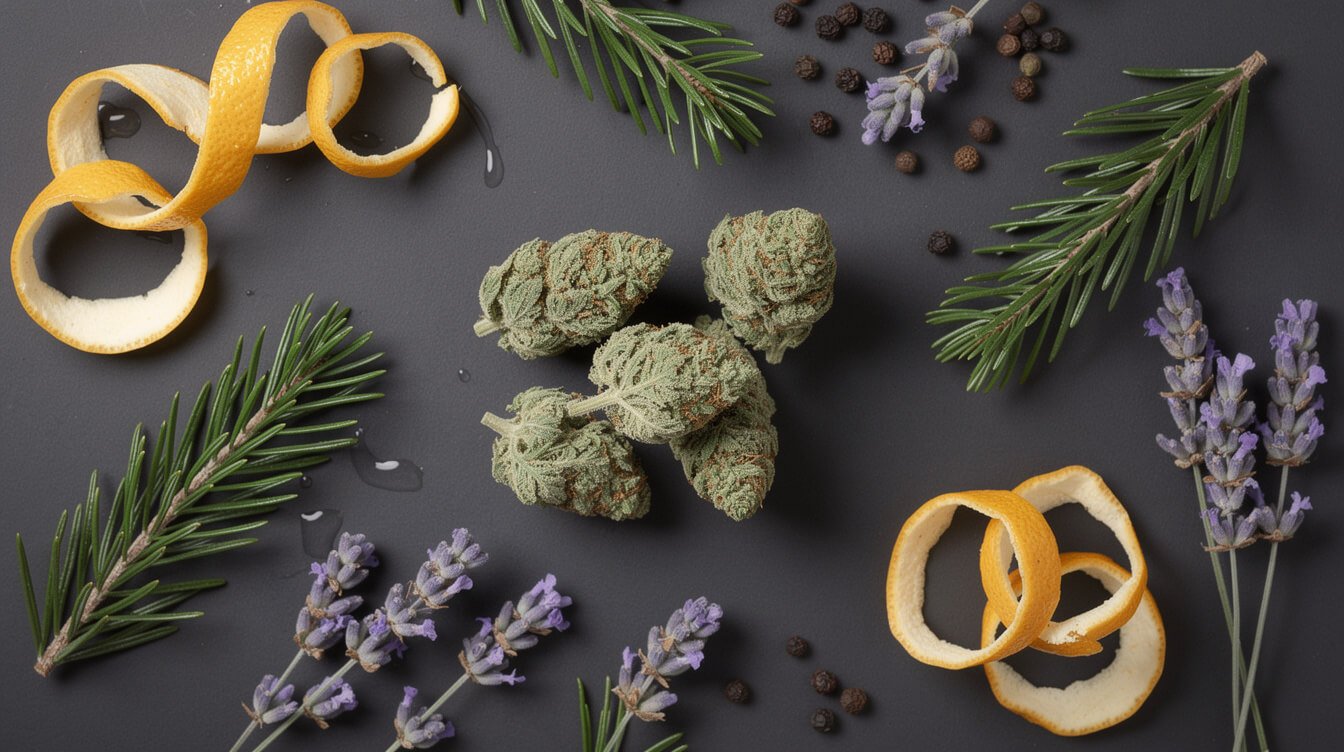
A quick note before the list: most of what’s “known” about terpene effects comes from aromatherapy research, animal studies, or anecdotal reporting — not large human clinical trials on cannabis specifically. We’ll flag that honestly for each one, because a site that pretends otherwise isn’t doing you any favors.
Myrcene
Aroma: Earthy, musky, a little like ripe mango. Reported effects: Commonly associated with a heavier, more sedating, “couch-lock” feeling — often the terpene behind cultivars people describe as relaxing. It’s also the most abundant terpene in cannabis overall, which is part of why so many cultivars get called “relaxing” regardless of their indica/sativa label. Evidence level: Mostly anecdotal and rodent-study based; human data is thin, and the popular claim that myrcene “increases THC absorption across the blood-brain barrier” traces back to a single decades-old rodent study, not confirmed human pharmacology. Commonly found in: Mango, hops, lemongrass — and cultivars like Granddaddy Purple.
Limonene
Aroma: Bright citrus — think orange peel. Reported effects: Users often describe an uplifted, mood-brightening feeling, and it’s one of the more commonly cited terpenes in cultivars marketed as “energizing” or “daytime.” Evidence level: Some preclinical (animal) research on mood and stress markers; limited human cannabis-specific data, though limonene’s use in aromatherapy for mood is reasonably well studied outside of cannabis. Commonly found in: Citrus rinds, juniper — and cultivars like Do-Si-Dos.
Pinene (alpha and beta)
Aroma: Sharp pine, like walking through a fresh-cut Christmas tree lot. Reported effects: Associated with alertness and a clearer-headed feeling; some report it counteracts the “foggy” side of THC, and it’s the terpene most often name-checked by people trying to avoid feeling groggy. Evidence level: Interesting animal and cell-line research on bronchodilation and memory; human studies specifically isolating pinene’s role in a cannabis high haven’t caught up yet. Commonly found in: Pine needles, rosemary — and cultivars like Jack Herer.
Linalool
Aroma: Floral, a little like lavender. Reported effects: Frequently tied to calm, and — anecdotally — easier sleep onset; often paired with myrcene in cultivars marketed for evening use. Evidence level: Lavender’s calming effect has decent human research behind it as a standalone aromatherapy compound; linalool’s specific contribution inside a cannabis high is inferred by analogy, not directly tested at scale. Commonly found in: Lavender, coriander — and cultivars like Lavender Kush.
Caryophyllene
Aroma: Peppery, spicy, a little woody. Reported effects: The one true outlier on this list — caryophyllene actually binds to CB2 receptors directly, meaning it behaves a bit like a cannabinoid rather than just “along for the ride.” Reported as grounding, warm, sometimes described as easing physical tension. Evidence level: Better preclinical mechanism data than most terpenes here (the CB2 binding is real, published pharmacology), but still not the same as a controlled human trial proving a specific felt effect. Commonly found in: Black pepper, cloves — and cultivars like GSC.
Humulene
Aroma: Earthy, woody, slightly hoppy (it’s named for hops, appropriately). Reported effects: Often grouped with myrcene as a relaxing terpene; some describe it as appetite-neutral or mildly appetite-suppressing, the opposite of myrcene’s reputation for triggering hunger. Evidence level: Thin and mostly anecdotal, though it shares a biosynthetic pathway with caryophyllene and the two are almost always found together on a COA. Commonly found in: Hops, sage, ginseng — and cultivars like Headband.
Terpinolene
Aroma: Complex — a little floral, a little herbal, a little citrus. Reported effects: Less “couch-lock,” more described as uplifting or slightly energizing, though it shows up less often as the single dominant terpene compared to myrcene or limonene. Evidence level: Very limited human data; most of what circulates is inference from its chemical similarity to pinene and limonene. Commonly found in: Lilac, nutmeg, apples — and cultivars like Jack Herer (pinene and terpinolene often travel together).
Ocimene
Aroma: Sweet, herbaceous, a little woody-citrus. Reported effects: Often described anecdotally as uplifting; rarely a dominant terpene on its own, more often a supporting note in a broader profile. Evidence level: Minimal cannabis-specific research — most of what’s known comes from its role as an insect-deterrent compound in other plants, not from human-effect studies. Commonly found in: Mint, parsley, orchids.
A quick word on flavonoids
You’ll sometimes see flavonoids mentioned alongside terpenes on more detailed lab reports. They’re a separate class of compound — cannaflavins are unique to cannabis — that contribute to color and, theoretically, their own set of effects. The research on cannabis flavonoids is even earlier-stage than terpene research, so we’re leaving them out of the reverse-lookup below rather than overstating what’s known.
Looking for a specific feeling? Reverse-lookup by effect

Most terpene charts online are organized terpene-first — which is backwards for how people actually shop. You don’t walk in wanting “more linalool.” You walk in wanting to relax, or to feel a little sharper, or to actually fall asleep. Here’s the honest reverse-lookup, with the same caveat as above: this is reported/anecdotal pattern-matching, not a guarantee.
- Want to wind down / relax: Look for myrcene- or linalool-dominant profiles.
- Want to stay social and upbeat: Limonene- or terpinolene-forward cultivars are the more commonly reported pick.
- Want mental clarity without the fog: Pinene is the terpene most associated with that, anecdotally.
- Want help easing into sleep: Myrcene and linalool again, often together, later in the day.
- Want something for physical tension after a long day: Caryophyllene-heavy profiles are the most commonly reported choice — and it’s the terpene with the most mechanistic evidence (CB2 binding) behind why.
One practical note: none of this replaces reading the actual lab report. A cultivar advertised as “sativa” with a myrcene-dominant terpene profile will very likely feel more relaxing than the label implies. Terpene percentage on the COA is a better predictor than the marketing category.
How real is the “entourage effect”? The honest science section
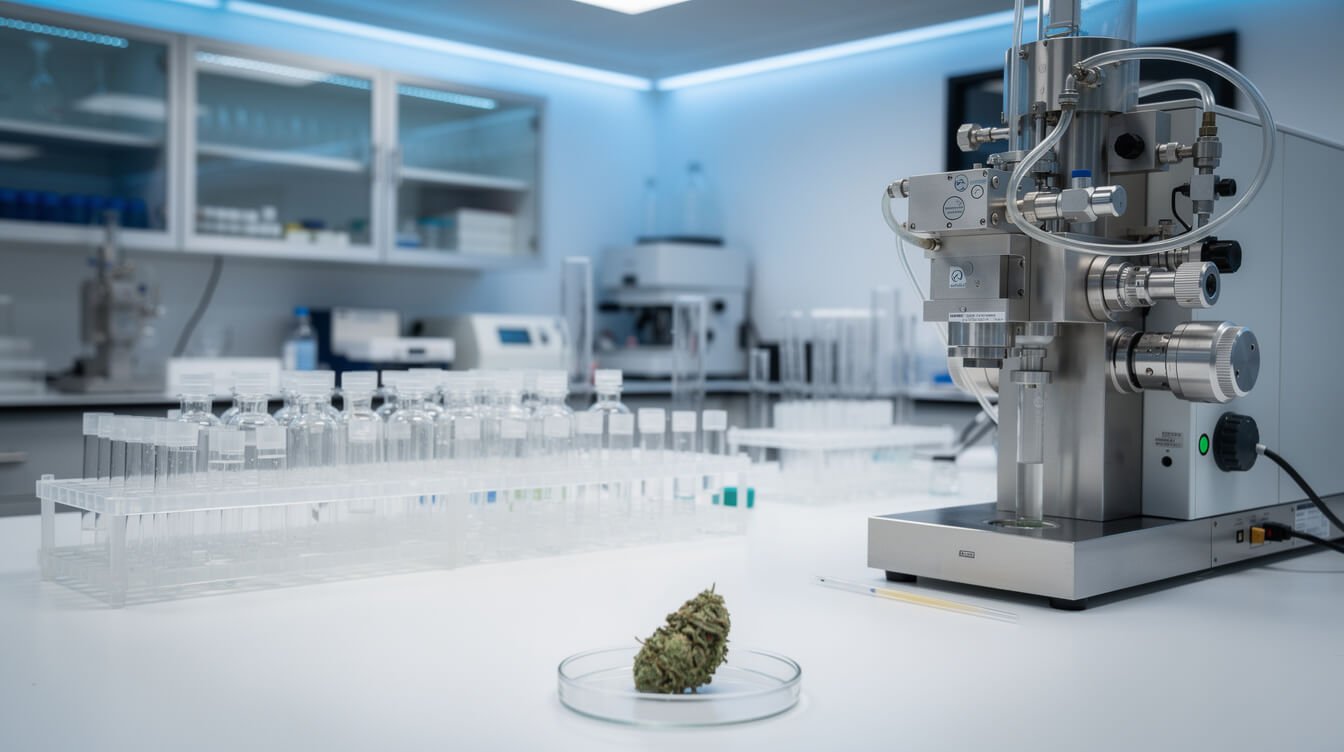
The “entourage effect” is the theory that terpenes and cannabinoids work together to shape the overall experience, rather than THC or CBD acting alone. It’s a genuinely useful framework — and it’s also more theory than settled fact right now.
Here’s the honest state of the research: there’s solid chemistry showing terpenes and cannabinoids interact at the level of absorption and receptor binding (caryophyllene’s direct CB2 activity is the clearest example). What’s much thinner is large-scale, controlled human research proving specific terpene-cannabinoid combinations produce specific, predictable effects in people. A lot of what circulates online — including on some of the sites you’ll find searching this exact topic — presents anecdotal pattern-matching as if it were settled clinical science. It isn’t, yet.
That doesn’t mean terpenes don’t matter. It means “reported to feel more relaxing” is an honest way to describe user experience, while “myrcene will relax you” overstates what anyone can currently prove. This isn’t medical advice, and terpenes — like the rest of cannabis — aren’t a treatment for any diagnosed condition. If you’re managing a real health concern, that conversation belongs with a doctor, not a terpene chart.
It’s also worth separating two different research tracks that get blended together online: isolated-terpene research (testing a single compound like linalool by itself, often in a lab dish or on rodents) and whole-plant research (testing actual cannabis flower with its full terpene-cannabinoid mix on human subjects). The entourage effect hypothesis specifically claims the whole-plant combination outperforms any single isolated compound — but whole-plant human research is harder to run, slower to fund, and far less common than either isolated-compound studies or anecdotal reporting from dispensary staff and online communities. Until that research catches up, the honest label for most terpene-effect claims — including several on this page — is “reported and plausible,” not “proven.”
Terpene myths worth retiring
A few claims show up on nearly every terpene chart online, repeated so often they start to sound settled. They aren’t. Here’s the honest version:
“Indica terpenes” and “sativa terpenes” aren’t a real category
You’ll see charts labeling myrcene as “the indica terpene” and limonene as “the sativa terpene.” Terpene production is driven by genetics and growing conditions, not by whether a plant grows short and bushy or tall and lanky. A sativa-leaning cultivar can absolutely be myrcene-dominant. The terpene profile is the signal; the plant-shape category is not.
“This terpene percentage guarantees this effect”
No single number on a COA guarantees a felt outcome. Dose, individual tolerance, other cannabinoids present, consumption method, and even your mood going in all interact with terpene profile. Treat terpene data as a strong hint, not a prescription.
“More terpenes always means a better high”
A high total terpene percentage isn’t automatically better — it’s about which terpenes and in what ratio, plus how they pair with the cannabinoid content. A cultivar with a modest total terpene percentage but a clean myrcene-linalool pairing can feel more precisely “relaxing” than one with a higher total percentage spread thin across a dozen compounds.
“Terpenes are just for flavor”
The opposite overcorrection also shows up — some sites downplay terpenes as purely aromatic. The CB2-binding activity of caryophyllene alone disproves that; terpenes can have real pharmacological activity, even if the full human-effect picture isn’t mapped yet.
How to actually use this when you shop
Once you know what you’re looking for, using terpene data gets simple:
1. Ask for (or look up) the COA
Licensed dispensaries in legal markets are generally required to provide a certificate of analysis showing cannabinoid and terpene percentages. If it’s not printed on the label, ask the budtender — most menus link to it now.
2. Look at the top two or three terpenes, not just one
Effects come from a profile, not a single molecule. A cultivar that’s myrcene-dominant but has a meaningful amount of limonene often feels different than one that’s myrcene alone.
3. Track what actually works for you
This is the most reliable method there is: keep informal notes on which terpene profiles matched which reported effect, for you specifically. Individual response varies — genetics, tolerance, and even mood on a given day all factor in.
4. Remember the consumption method changes the math
Terpenes are volatile — they evaporate at relatively low temperatures compared to cannabinoids. Smoking or vaping preserves more of the original terpene profile than baking. If you’re making cannabutter or other edibles, expect the terpene contribution to the experience to be much smaller than the cannabinoid contribution — the flavor may survive decarboxylation better than the reported “entourage” effect does.
Frequently asked questions about terpenes and effects
Do terpenes get you high?
No. Terpenes aren’t intoxicating on their own — THC is what produces the psychoactive “high.” Terpenes are reported to shape or modulate the overall experience alongside cannabinoids, not create it by themselves.
Are terpenes safe?
The terpenes in this list are common in food, cosmetics, and everyday plants (citrus, pepper, lavender) and are generally recognized as safe at the concentrations found in cannabis. As with anything you inhale or ingest, individual sensitivities exist — if you notice an adverse reaction, stop use and talk to a doctor.
Do CBD products have the same terpenes as THC products?
They can. Terpene content depends on the plant and processing, not on whether the product is THC- or CBD-dominant. See our CBD vs THC gummies breakdown for how that plays out in edibles specifically.
Can I trust terpene percentages on a dispensary label?
Generally yes in regulated, legal markets with mandatory lab testing — though testing rigor varies by state, and legality itself varies by where you live, so always check your local laws before assuming anything about availability or legality.
Why do two jars of the “same strain” smell different?
Terpene expression shifts with growing conditions, curing, and even the specific phenotype grown — genetics is a starting point, not a guarantee. That’s part of why lab-reported terpene percentages are more reliable than the name on the jar.
How are terpenes actually measured on a lab report?
Most testing labs use gas chromatography (often paired with mass spectrometry — GC-MS) to separate and identify individual terpenes by weight percentage of the total flower sample. That’s why you’ll see terpene content listed as a percentage, similar to THC and CBD, rather than a vague “high/medium/low” rating. Total terpene content in well-cured flower commonly falls somewhere in the 1–4% range by weight; anything reported meaningfully higher is worth a second look at the testing methodology.
Does storage affect terpene content over time?
Yes — terpenes degrade faster than cannabinoids. Heat, light, and air exposure all accelerate the loss, which is why a jar that smelled vivid on day one can smell noticeably flatter a few months later even if it hasn’t visibly degraded otherwise. Airtight, cool, dark storage preserves terpene content longest — the same curing principles that protect flavor during the initial cure keep protecting it in storage.
Final thoughts
The short version: skip the indica/sativa label and start reading terpene percentages instead. Myrcene and linalool lean relaxing, limonene and terpinolene lean upbeat, pinene leans clear-headed, and caryophyllene is the one with real receptor-level science behind its reported effect on physical tension. All of it is reported and anecdotal rather than clinically proven at the individual-compound level — and none of it replaces a conversation with a doctor for an actual health concern.
Want more of this kind of straight-answer explainer? Browse our growing and curing guides or the strain breakdowns for the next honest answer.